
SLR Photography Camera Settings and Exposure What is
- Slides: 24
SLR Photography Camera Settings and Exposure
What is exposure? n In photography, exposure is the total amount of light allowed to fall on the film (or electronic sensor in the case of digital photography) during the process of taking a photograph. Exposure is measured in exposure value (ev), with higher values denoting more light.
How is exposure controlled? Three factors control the exposure of the image: n Shutter Speed n Aperture (f-stop) n Film Speed (ISO) n
Shutter Speed Shutter speed refers to how long the camera shutter opens up to let light in. It is expressed in fractions of a second or full seconds (i. e 1/60 th, 1/500 th, 1/1000 th). n The higher the number, the faster the shutter. A faster shutter means less light is let in. n
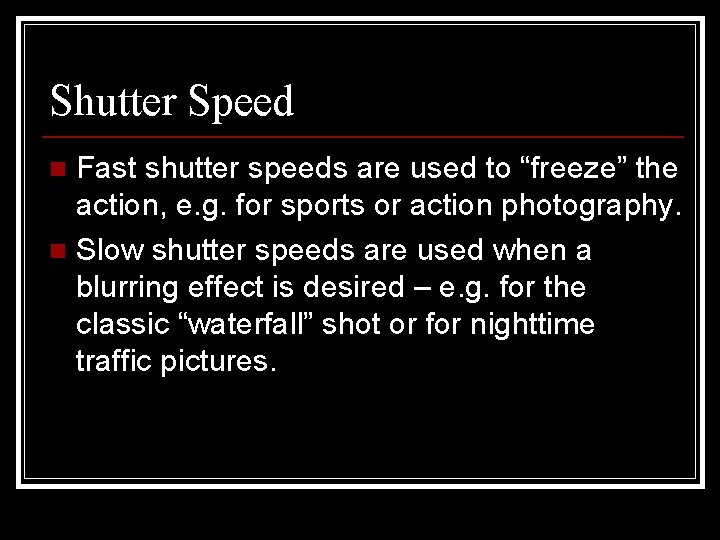
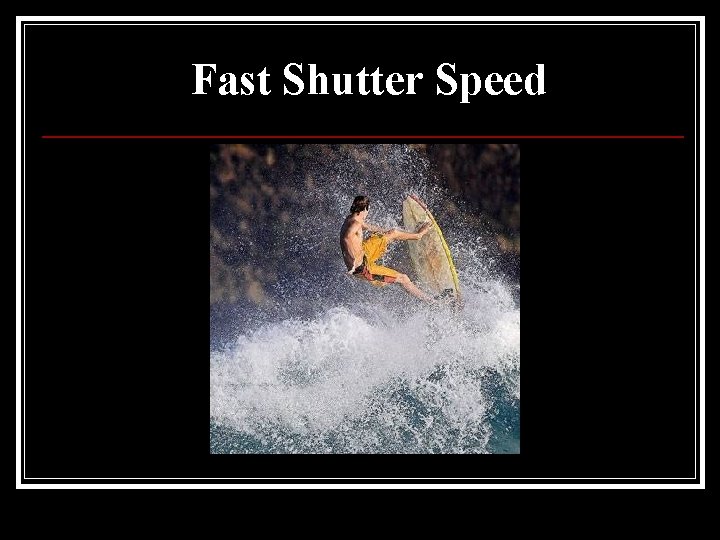
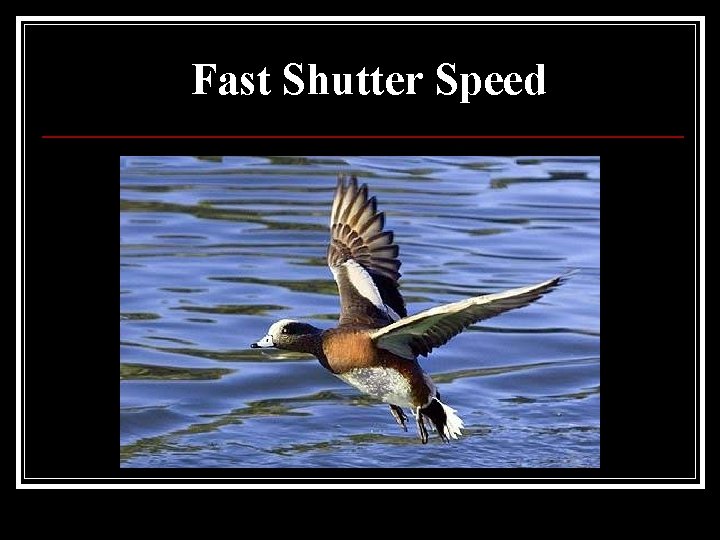
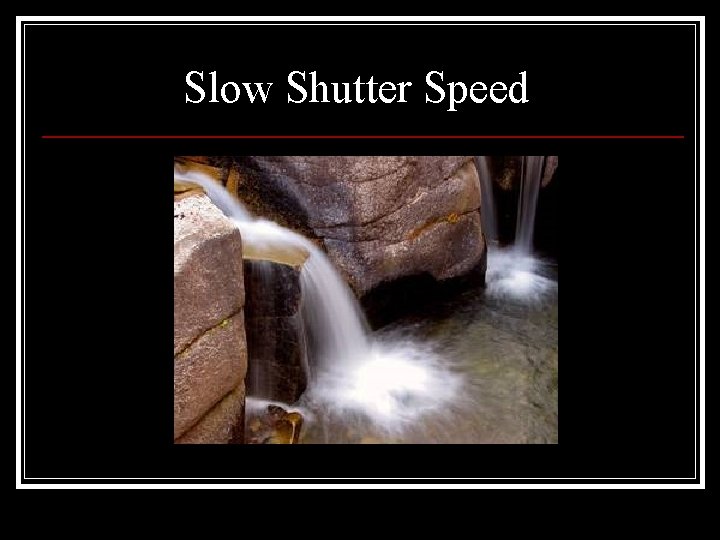
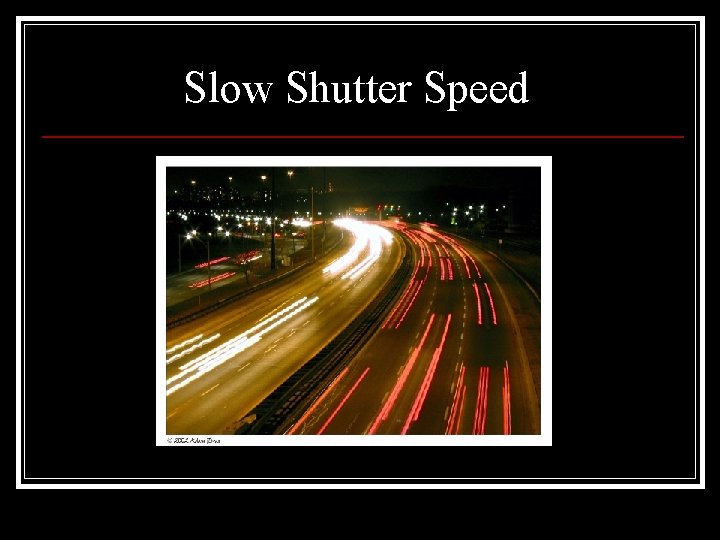
Shutter Speed Fast shutter speeds are used to “freeze” the action, e. g. for sports or action photography. n Slow shutter speeds are used when a blurring effect is desired – e. g. for the classic “waterfall” shot or for nighttime traffic pictures. n
Fast Shutter Speed
Fast Shutter Speed
Slow Shutter Speed
Slow Shutter Speed
Aperture (or f-stop) refers to how much light is let into the camera. There a series of blades built in to the camera lens that open and close to let more or less light in. n Aperture settings are standardized, and expressed as numbers such as 2. 8, 4, 5. 6, 8, 11. The lower the number, the wider the aperture/more light let in. n
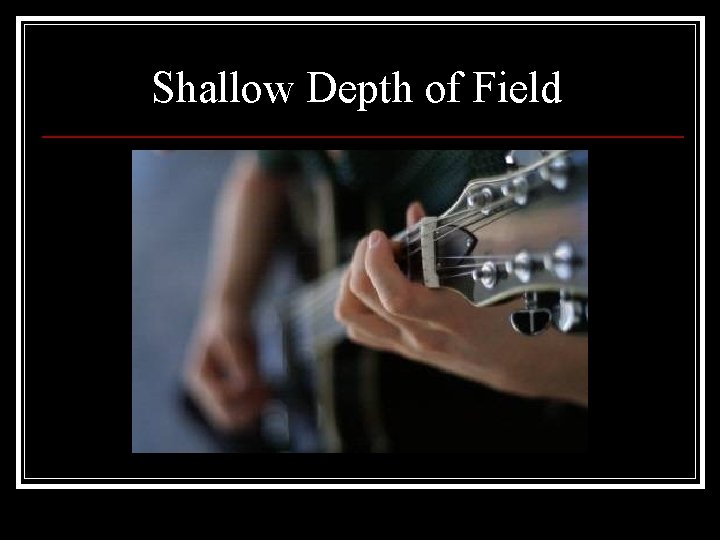
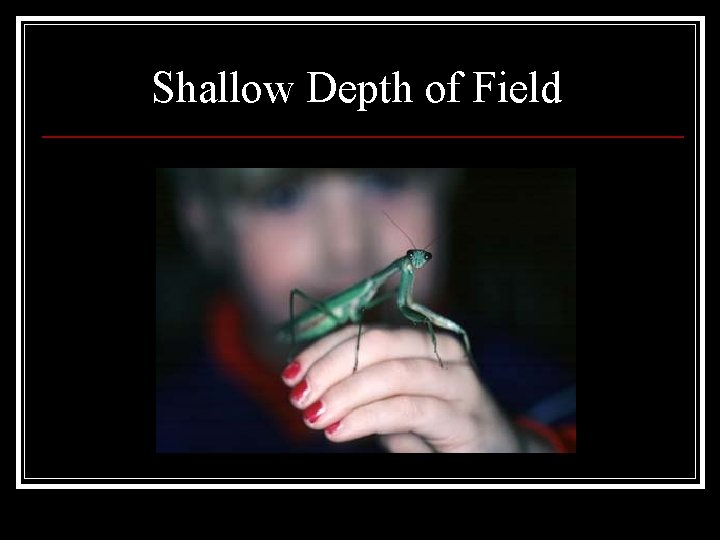
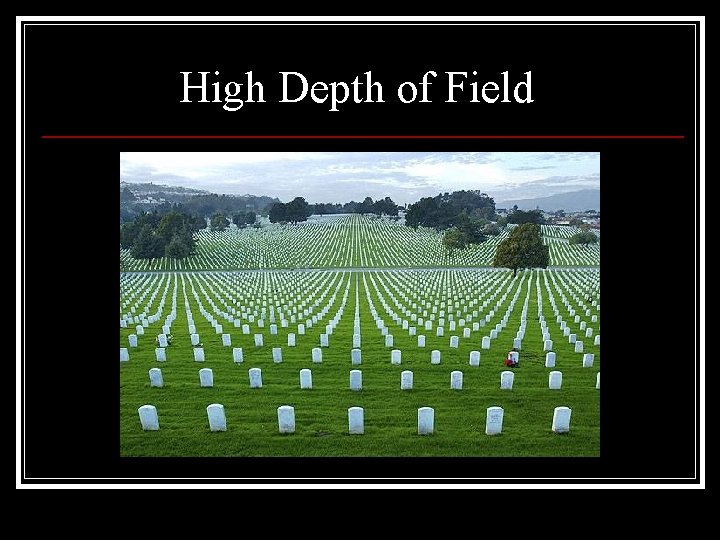
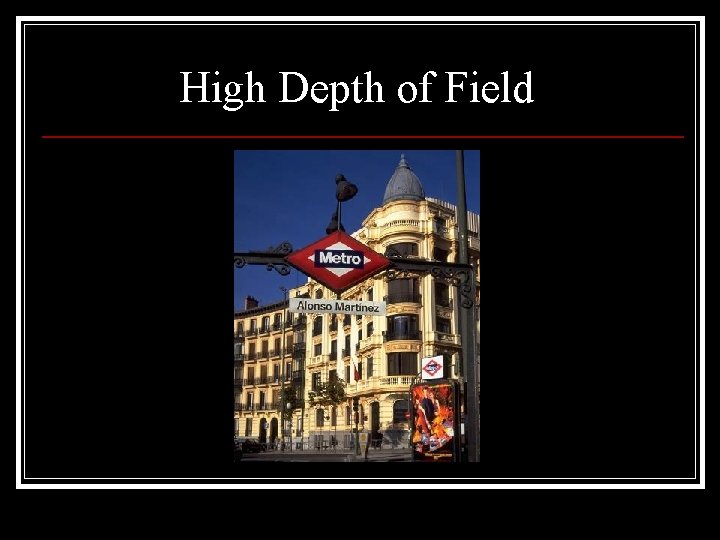
Aperture Wider apertures cause a shallow “depth of field”. n Depth of field refers to the area of the photograph that is in full focus. n Wide apertures allow you to have an out of focus background for more aesthetically pleasing portraits. n
Shallow Depth of Field
Shallow Depth of Field
High Depth of Field
High Depth of Field
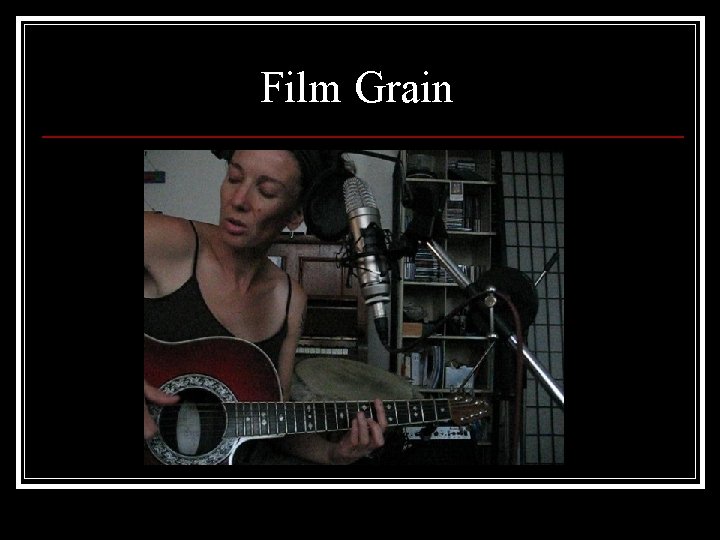
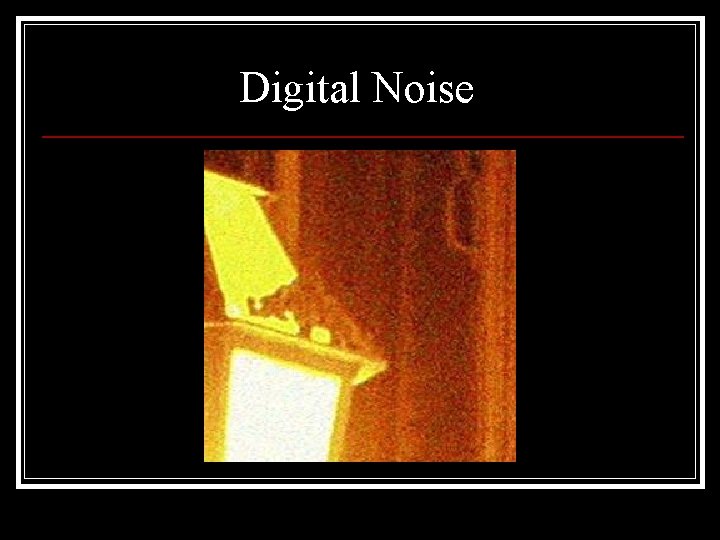
Film Speed (ISO) Film Speed refers to the sensitivity of the film or image sensor to light – that is, how fast it is able to capture the image. n Expressed in ISO numbers e. g. 50, 100, 200, 400, 800. n The higher the number, the faster the image is captured - faster film tends to be “grainier” though. n
Film Grain
Digital Noise
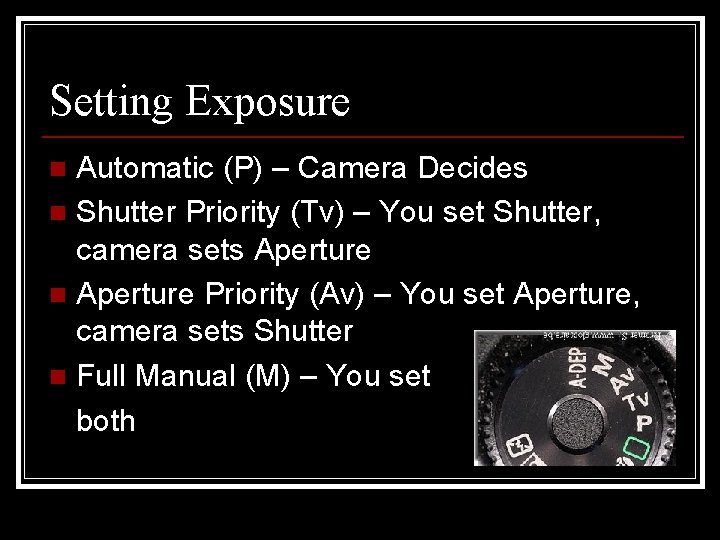
Setting Exposure Automatic (P) – Camera Decides n Shutter Priority (Tv) – You set Shutter, camera sets Aperture n Aperture Priority (Av) – You set Aperture, camera sets Shutter n Full Manual (M) – You set both n
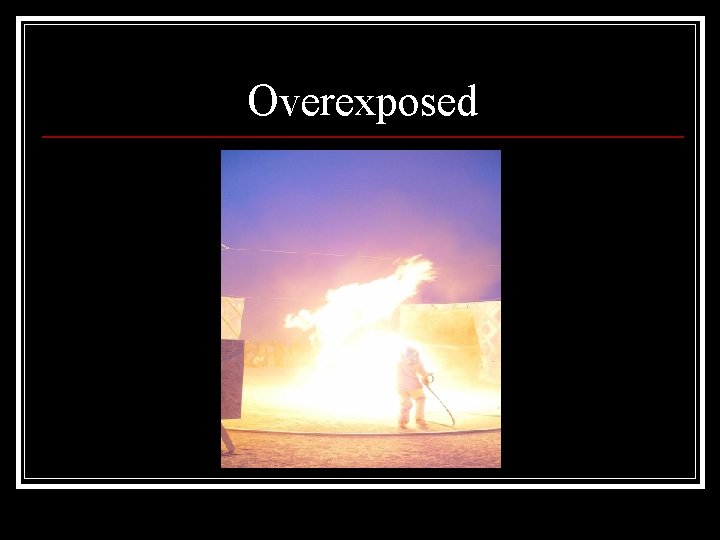
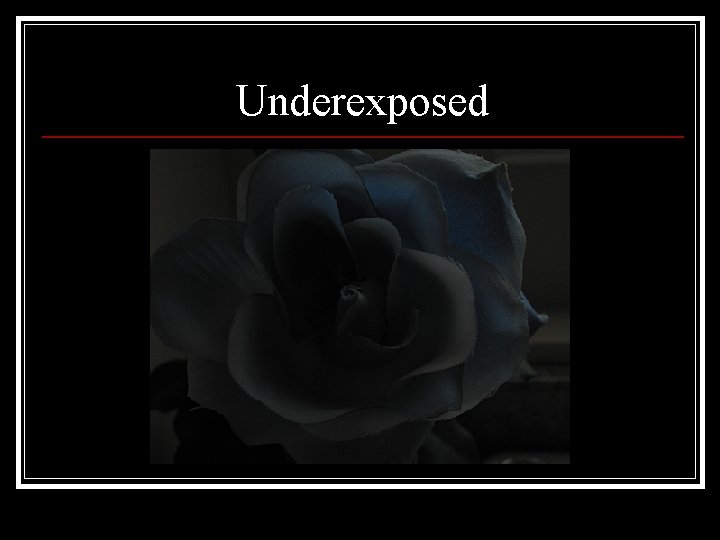
Under and Over Exposure Camera sets exposure based on 18% grey reflectiveness n Overexposure occurs when too much light is let in to camera – picture is bright n Underexposure occurs when not enough light is let in – picture is dark n
Overexposed
Underexposed
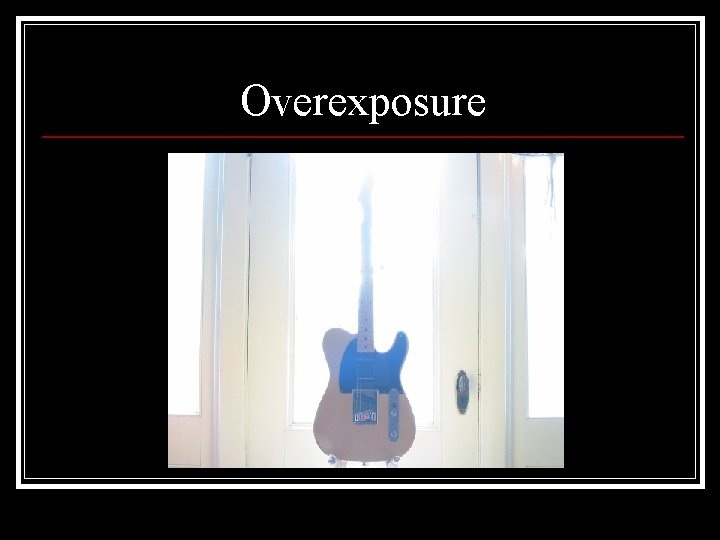
Difficult Exposure Situations Subject in front of bright window – hard to get even exposure (subject too dark or background too bright) n Taking pictures on snow or ice – Camera is fooled, snow may look greyish. n
Overexposure