
Slow Earthquakes and associated seismic signals Part I

- Slides: 19
Slow Earthquakes and associated seismic signals Part I. Observations Zhichao Shen & Benjamin Idini #1
Outline • Discovery of slow earthquakes • Low Frequency Earthquake (LFEs) • Tectonic tremor • Slow slip events (SSEs) • Episodic Tremor and Slips • Cascadia • Japan • Tremor: a swarm of LFEs • Very low frequency earthquakes #2
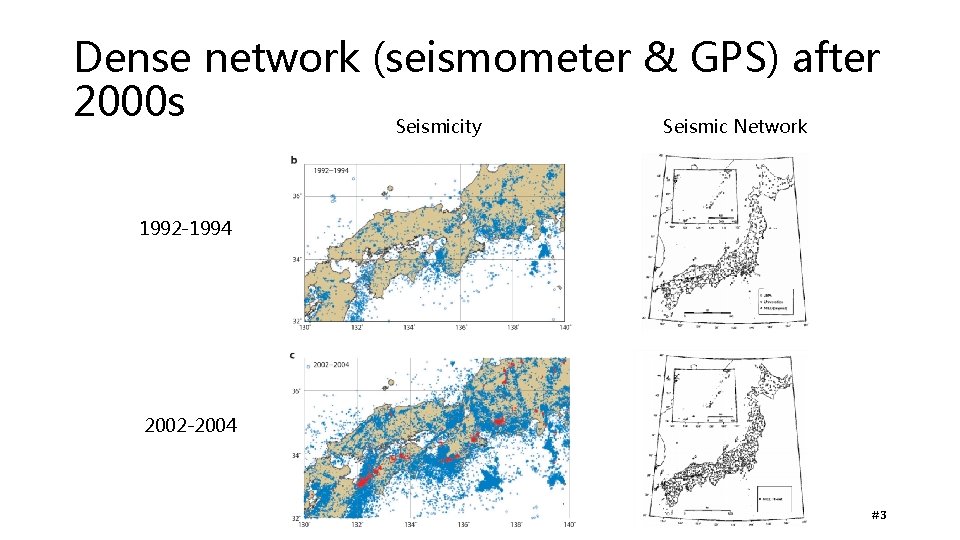
Dense network (seismometer & GPS) after 2000 s Seismicity Seismic Network 1992 -1994 2002 -2004 #3
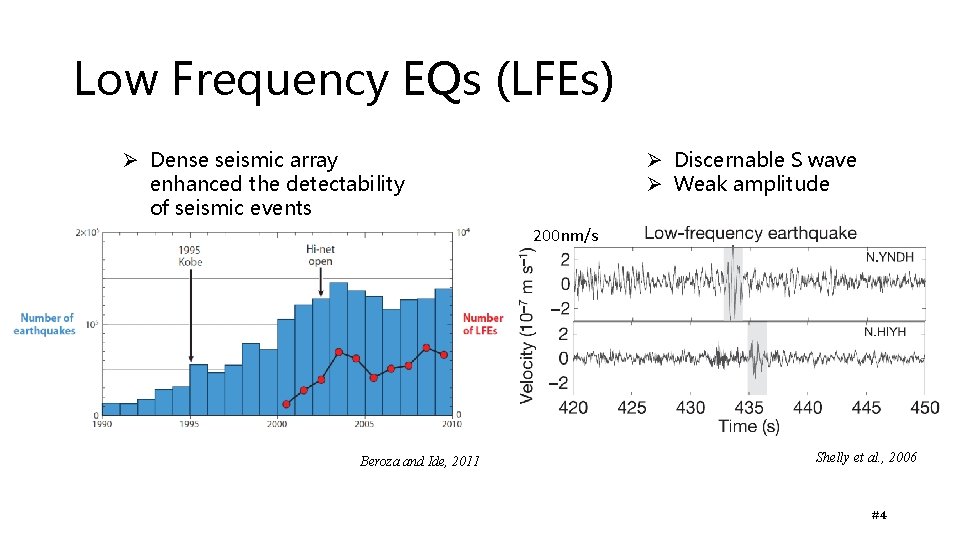
Low Frequency EQs (LFEs) Ø Dense seismic array enhanced the detectability of seismic events Ø Discernable S wave Ø Weak amplitude 200 nm/s Beroza and Ide, 2011 Shelly et al. , 2006 #4
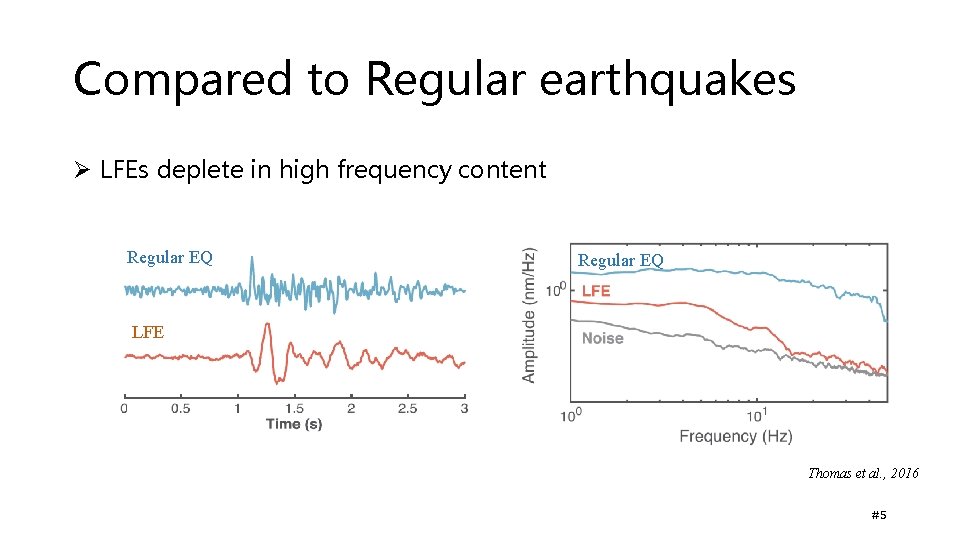
Compared to Regular earthquakes Ø LFEs deplete in high frequency content Regular EQ LFE Thomas et al. , 2016 #5
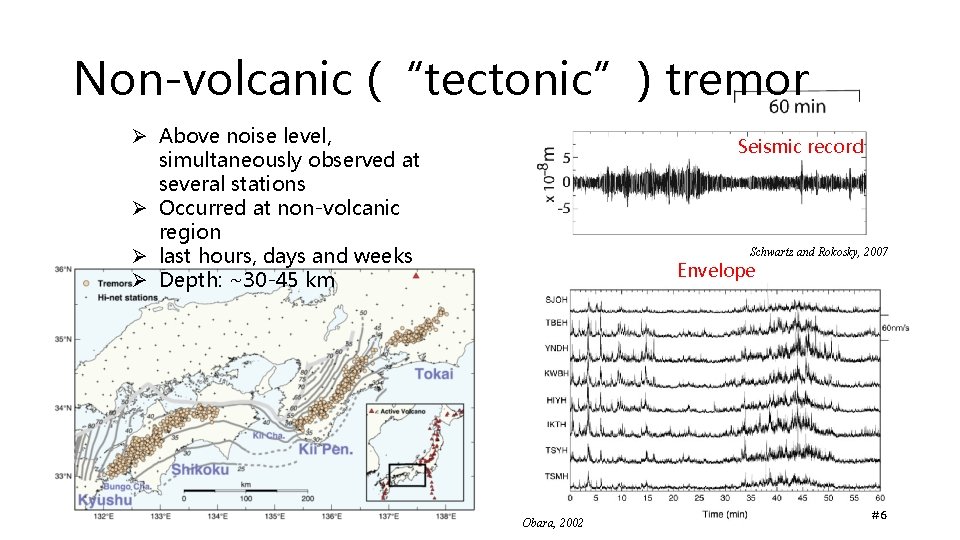
Non-volcanic (“tectonic”) tremor Ø Above noise level, simultaneously observed at several stations Ø Occurred at non-volcanic region Ø last hours, days and weeks Ø Depth: ~30 -45 km Seismic record Schwartz and Rokosky, 2007 Envelope Obara, 2002 #6
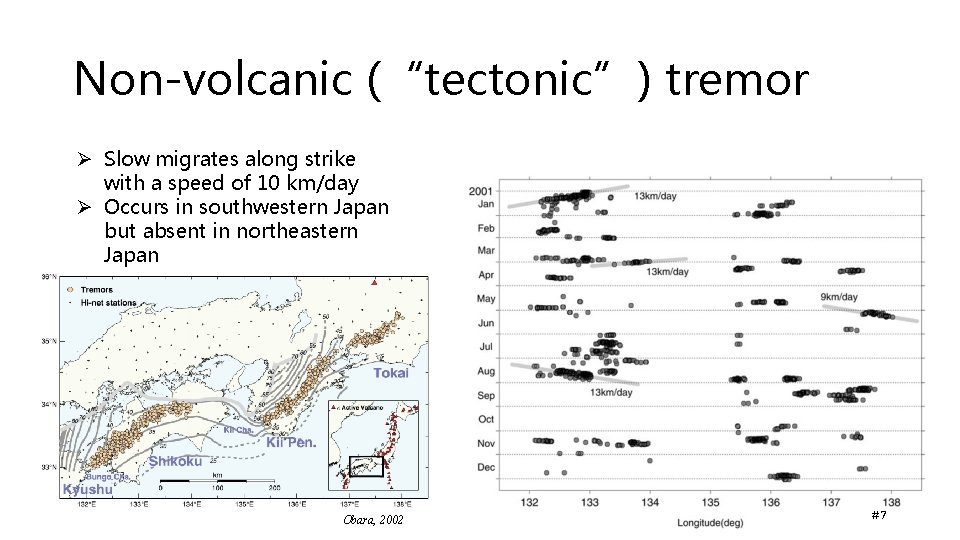
Non-volcanic (“tectonic”) tremor Ø Slow migrates along strike with a speed of 10 km/day Ø Occurs in southwestern Japan but absent in northeastern Japan Obara, 2002 #7
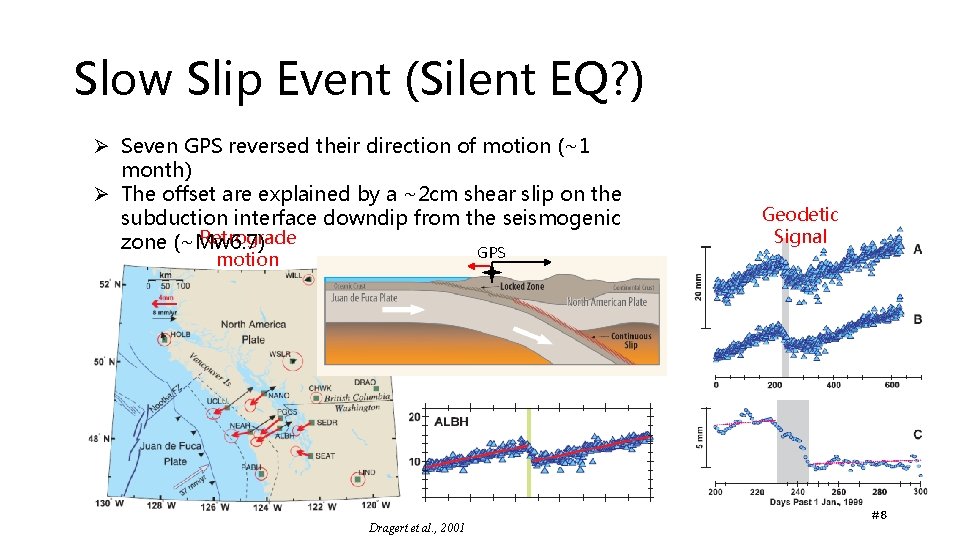
Slow Slip Event (Silent EQ? ) Ø Seven GPS reversed their direction of motion (~1 month) Ø The offset are explained by a ~2 cm shear slip on the subduction interface downdip from the seismogenic Retrograde zone (~Mw 6. 7) GPS motion Dragert et al. , 2001 Geodetic Signal #8
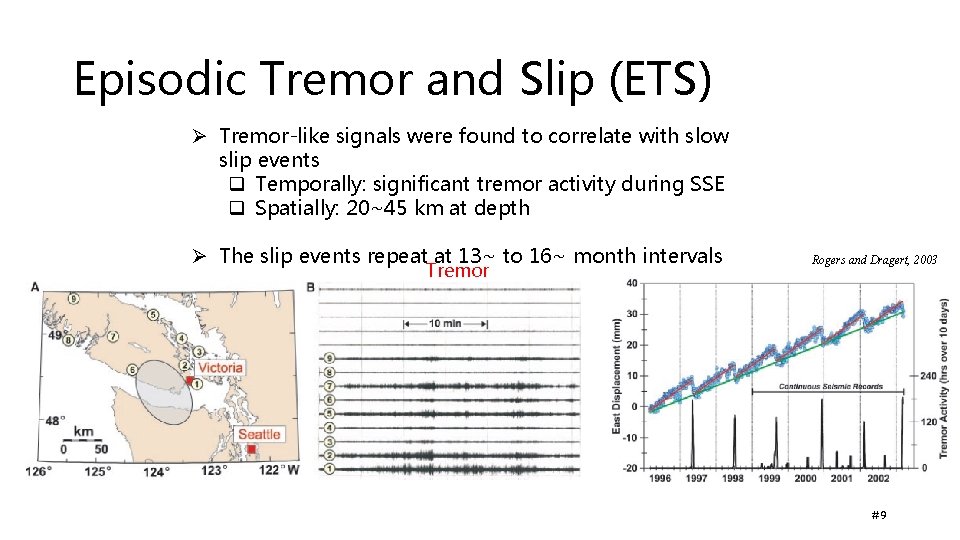
Episodic Tremor and Slip (ETS) Ø Tremor-like signals were found to correlate with slow slip events q Temporally: significant tremor activity during SSE q Spatially: 20~45 km at depth Ø The slip events repeat at 13~ to 16~ month intervals Tremor Rogers and Dragert, 2003 #9
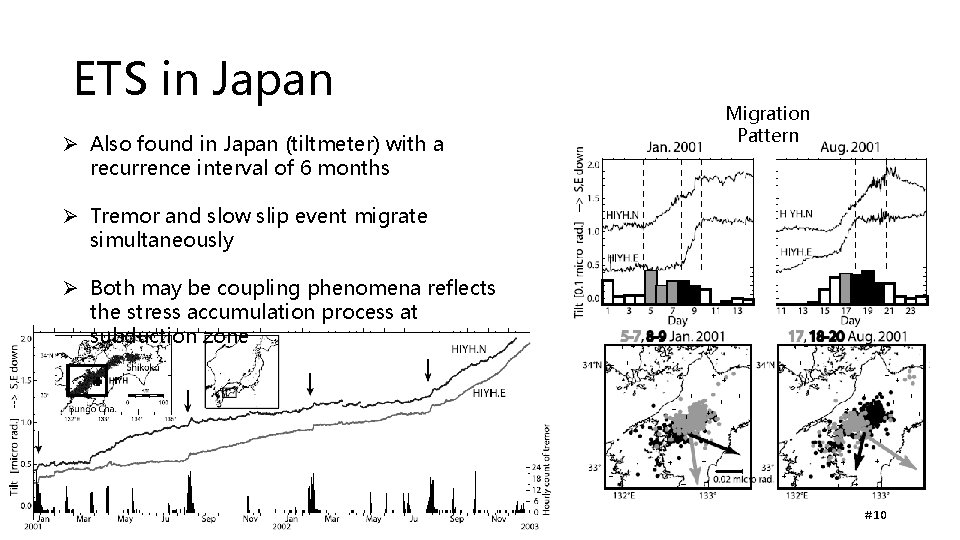
ETS in Japan Ø Also found in Japan (tiltmeter) with a recurrence interval of 6 months Migration Pattern Ø Tremor and slow slip event migrate simultaneously Ø Both may be coupling phenomena reflects the stress accumulation process at subduction zone #10
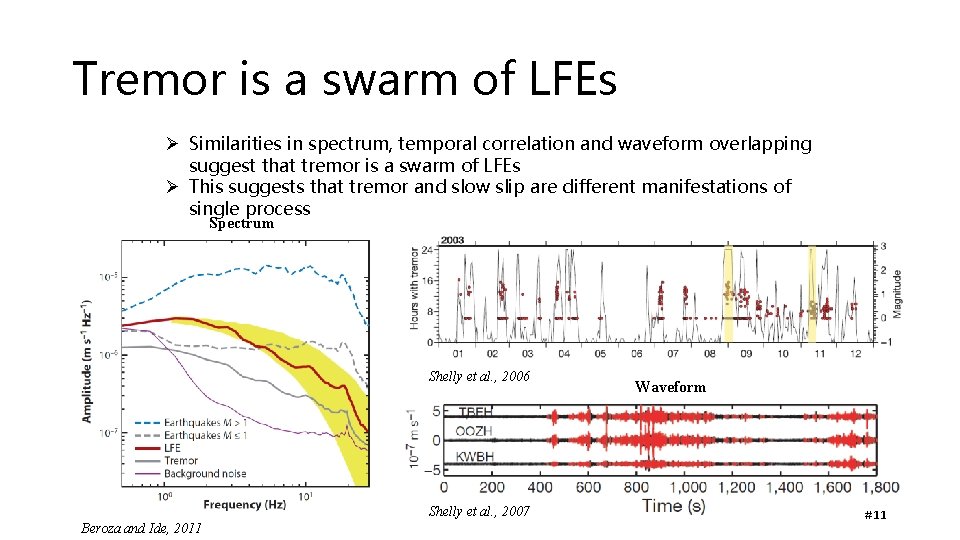
Tremor is a swarm of LFEs Ø Similarities in spectrum, temporal correlation and waveform overlapping suggest that tremor is a swarm of LFEs Ø This suggests that tremor and slow slip are different manifestations of single process Spectrum Shelly et al. , 2006 Shelly et al. , 2007 Beroza and Ide, 2011 Waveform #11
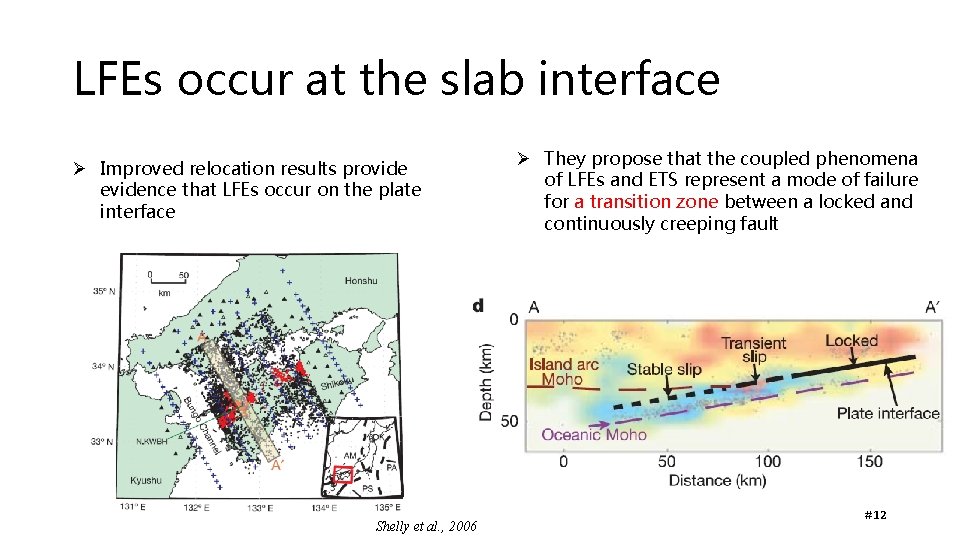
LFEs occur at the slab interface Ø Improved relocation results provide evidence that LFEs occur on the plate interface Shelly et al. , 2006 Ø They propose that the coupled phenomena of LFEs and ETS represent a mode of failure for a transition zone between a locked and continuously creeping fault #12
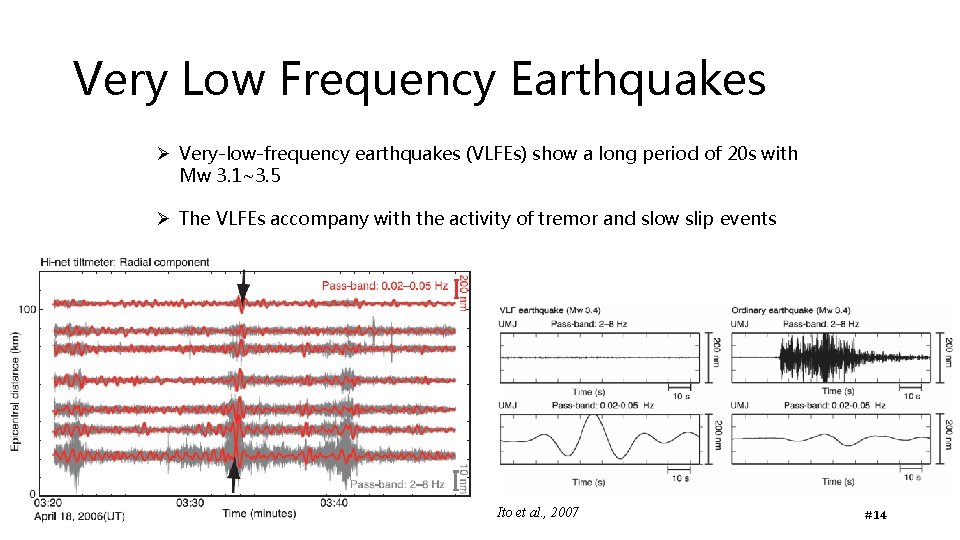
Very Low Frequency Earthquakes Ø Very-low-frequency earthquakes (VLFEs) show a long period of 20 s with Mw 3. 1~3. 5 Ø The VLFEs accompany with the activity of tremor and slow slip events Ito et al. , 2007 #14
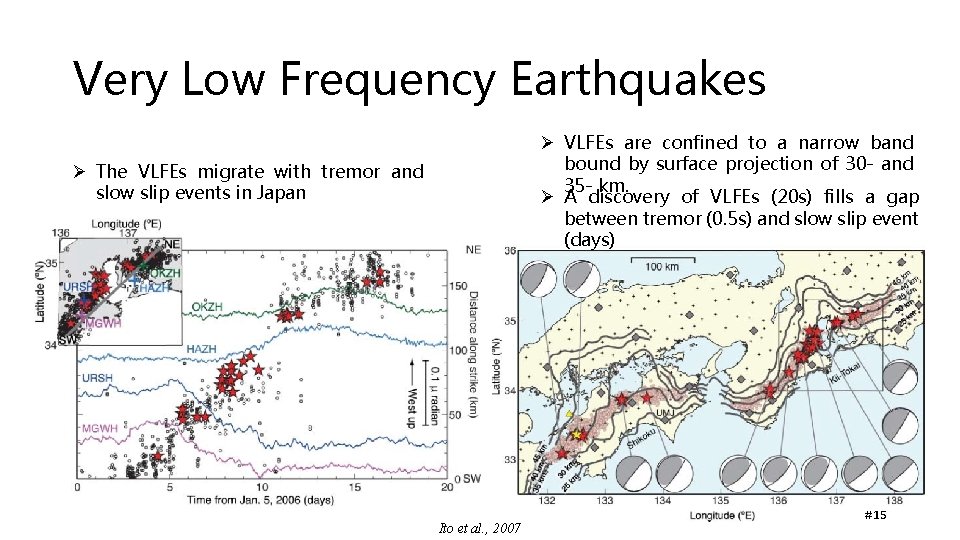
Very Low Frequency Earthquakes Ø VLFEs are confined to a narrow band bound by surface projection of 30 - and 35 - km. Ø A discovery of VLFEs (20 s) fills a gap between tremor (0. 5 s) and slow slip event (days) Ø The VLFEs migrate with tremor and slow slip events in Japan Ito et al. , 2007 #15
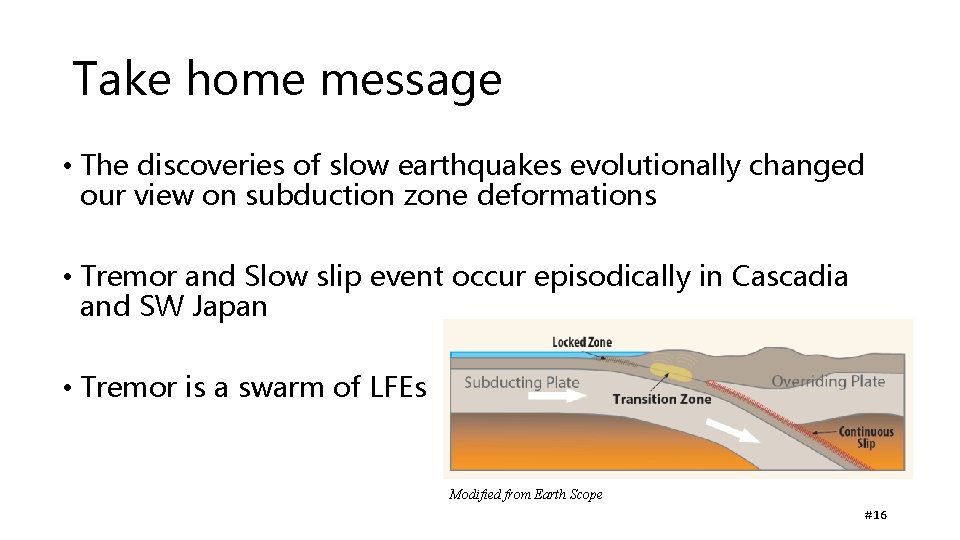
Take home message • The discoveries of slow earthquakes evolutionally changed our view on subduction zone deformations • Tremor and Slow slip event occur episodically in Cascadia and SW Japan • Tremor is a swarm of LFEs Modified from Earth Scope #16
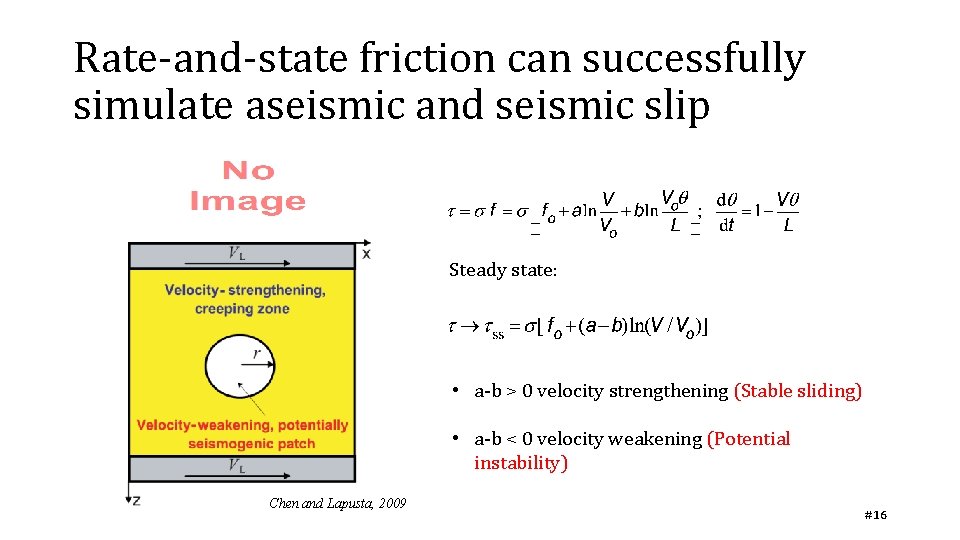
Rate-and-state friction can successfully simulate aseismic and seismic slip Steady state: • a-b > 0 velocity strengthening (Stable sliding) • a-b < 0 velocity weakening (Potential instability) Chen and Lapusta, 2009 #16
Controlling Parameter: r/h* r: Radius of Velocity Weakening patch h*: half length of nucleation size Ampuero and Rubin, 2005 Threshold for radiating waves r/h*=0. 60 Slip Velocity [log(V)] Typical threshold for seismic event Slip Velocity [log(V)] r/h*=1. 20 #17
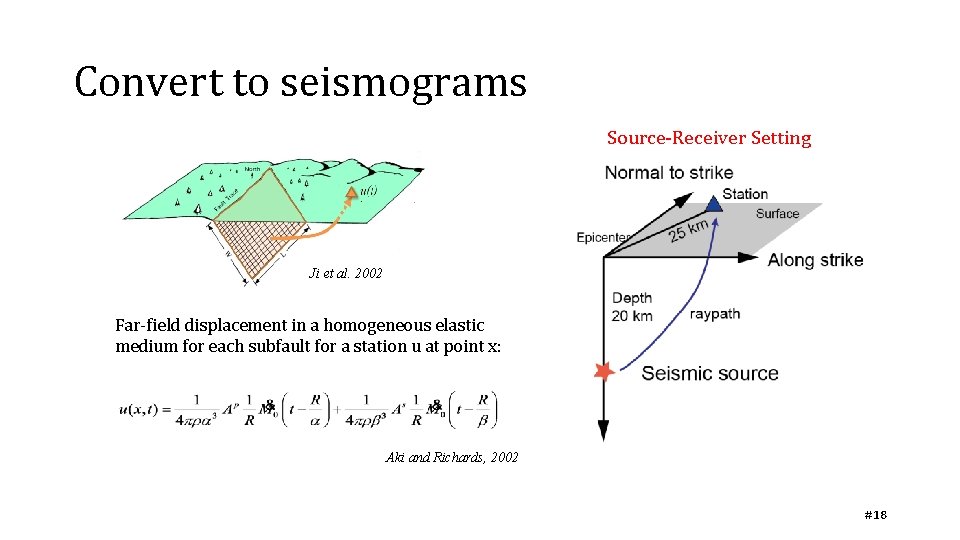
Convert to seismograms Source-Receiver Setting Ji et al. 2002 Far-field displacement in a homogeneous elastic medium for each subfault for a station u at point x: Aki and Richards, 2002 #18
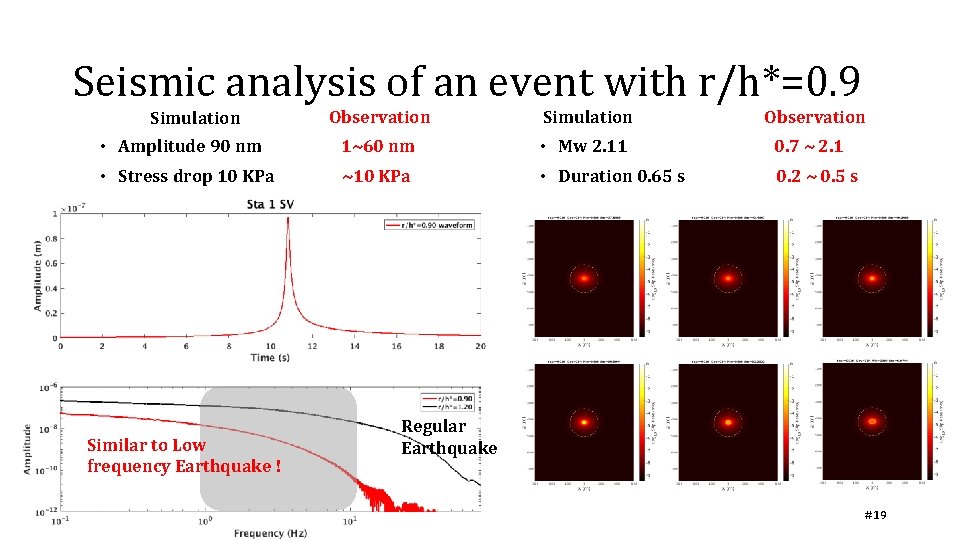
Seismic analysis of an event with r/h*=0. 9 Observation Simulation • Amplitude 90 nm 1~60 nm • Mw 2. 11 0. 7 ~ 2. 1 • Stress drop 10 KPa ~10 KPa • Duration 0. 65 s 0. 2 ~ 0. 5 s Simulation Similar to Low frequency Earthquake ! Observation Regular Earthquake #19