
Slips Trips and Falls Enough is better than
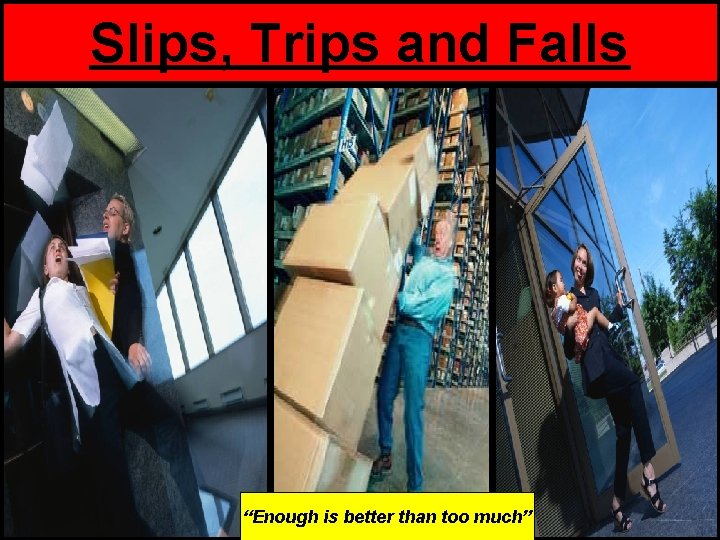
Slips, Trips and Falls “Enough is better than too much”
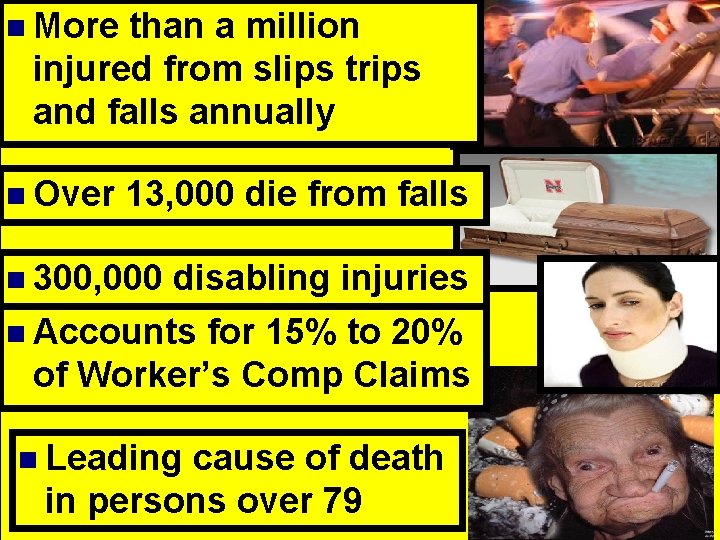
n More than a million injured from slips trips and falls annually n Over 13, 000 die from falls n 300, 000 disabling injuries n Accounts for 15% to 20% of Worker’s Comp Claims n Leading cause of death in persons over 79
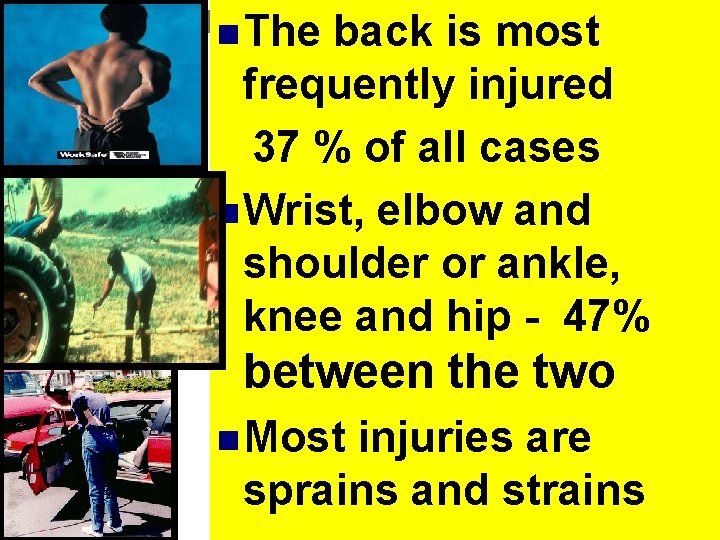
n The back is most frequently injured 37 % of all cases n Wrist, elbow and shoulder or ankle, knee and hip - 47% between the two n Most injuries are sprains and strains
The average direct cost of a disabling injury is $28, 000 The average direct cost of a fatality is $940, 000 8 million ER visits for fall related injuries annually Over 1. 8 million ER visits for seniors annually Approximately 425, 000 hospital admissions. $19, 000, 000 in direct medical costs. Add these to personal and family costs, it’s evident that slips, trips, and falls should be avoided

INJURY PREVENTION You take hundreds of steps every day, but how many of those steps do you take seriously? By taking a few minutes to understand how slips, trips, and falls happen, you can prevent needless and painful injuries.
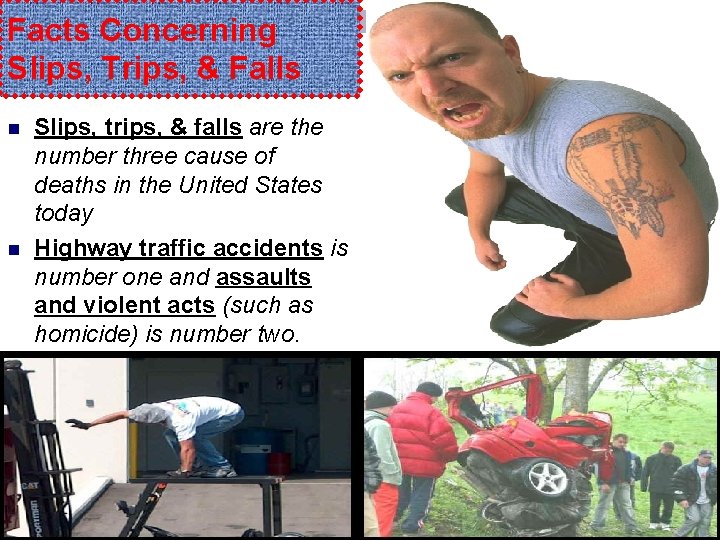
Facts Concerning Slips, Trips, & Falls n n Slips, trips, & falls are the number three cause of deaths in the United States today Highway traffic accidents is number one and assaults and violent acts (such as homicide) is number two.
What causes you to slip trip or fall?
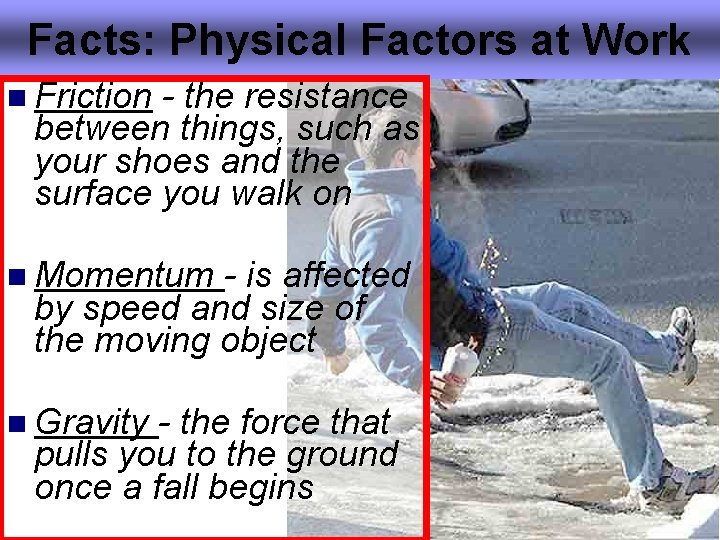
Facts: Physical Factors at Work n Friction - the resistance between things, such as your shoes and the surface you walk on n Momentum - is affected by speed and size of the moving object n Gravity - the force that pulls you to the ground once a fall begins
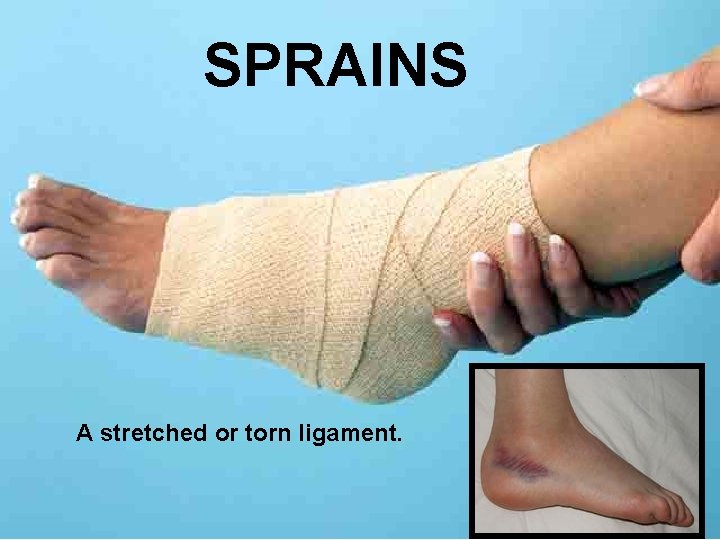
SPRAINS A stretched or torn ligament.
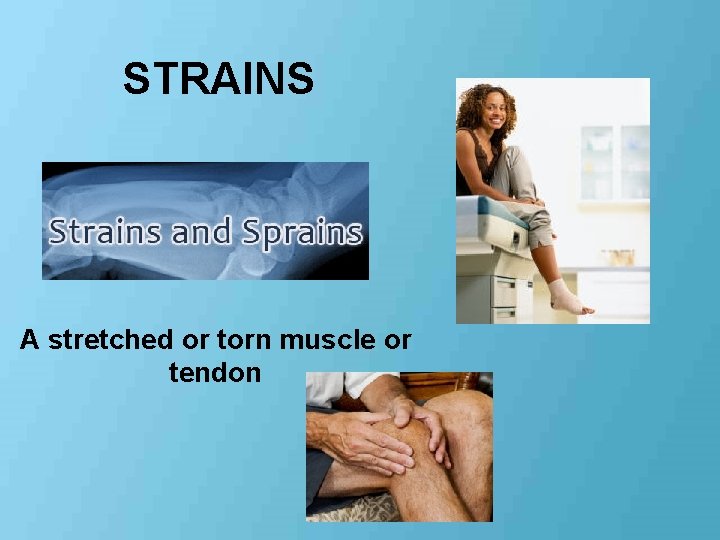
STRAINS A stretched or torn muscle or tendon
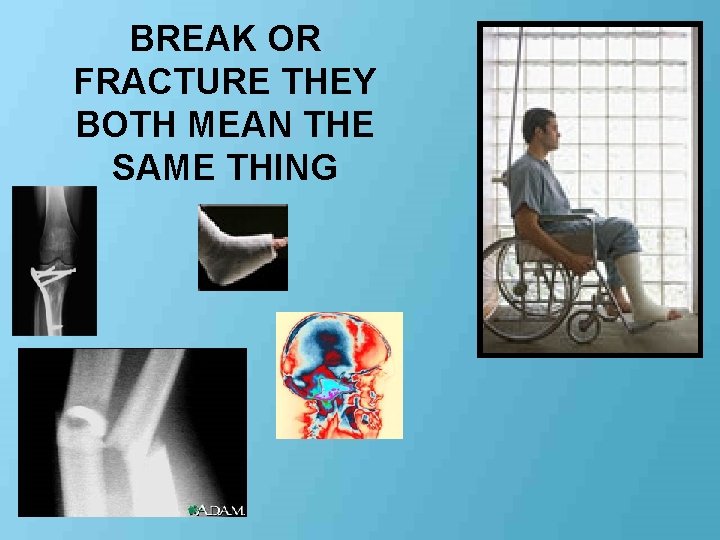
BREAK OR FRACTURE THEY BOTH MEAN THE SAME THING
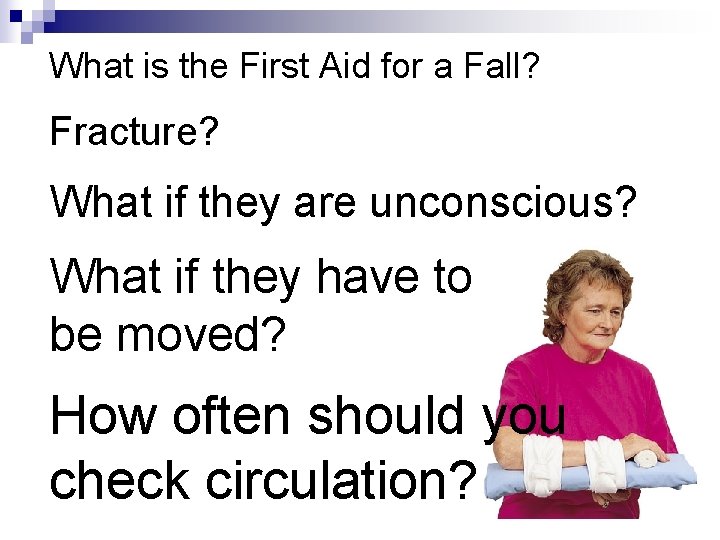
What is the First Aid for a Fall? Fracture? What if they are unconscious? What if they have to be moved? How often should you check circulation?

What is the First Aid for a Fall? Sprain? RICE PRINCE How often should you check circulation?
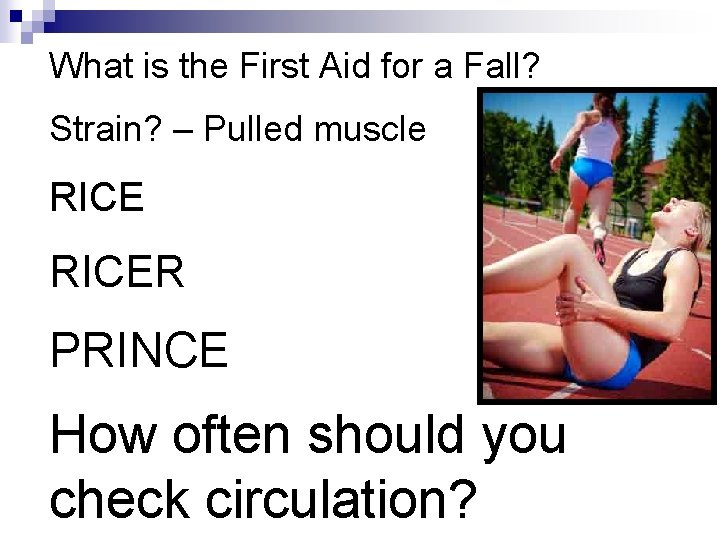
What is the First Aid for a Fall? Strain? – Pulled muscle RICER PRINCE How often should you check circulation?
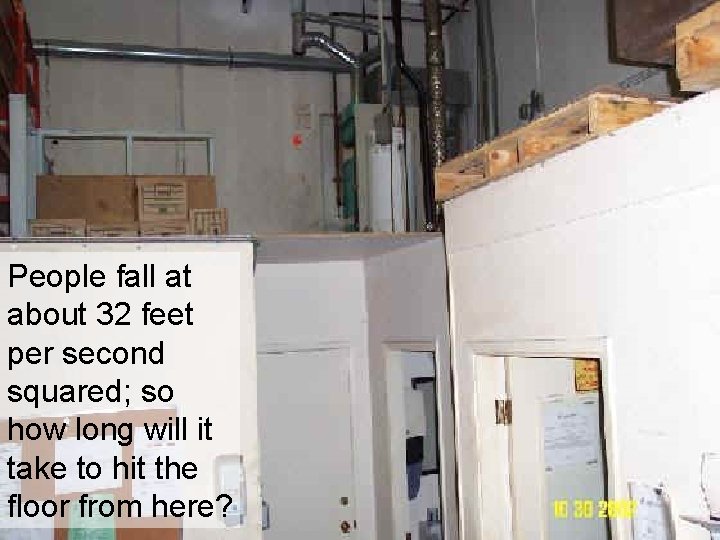
People fall at about 32 feet per second squared; so how long will it take to hit the floor from here?
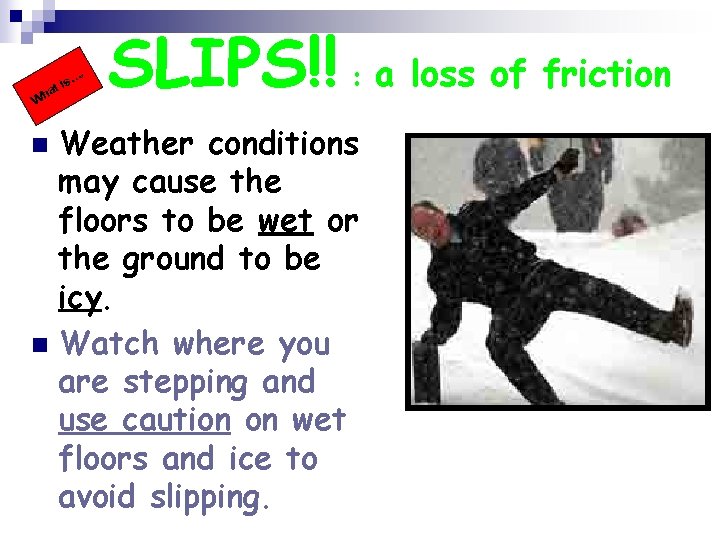
. … is at Wh SLIPS!! : a loss of friction Weather conditions may cause the floors to be wet or the ground to be icy. n Watch where you are stepping and use caution on wet floors and ice to avoid slipping. n
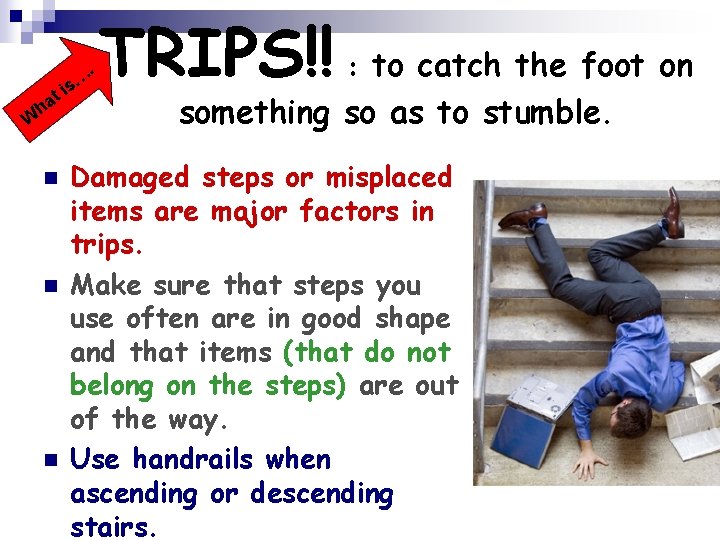
i t a h W n n n s… . TRIPS!! : to catch the foot on something so as to stumble. Damaged steps or misplaced items are major factors in trips. Make sure that steps you use often are in good shape and that items (that do not belong on the steps) are out of the way. Use handrails when ascending or descending stairs.
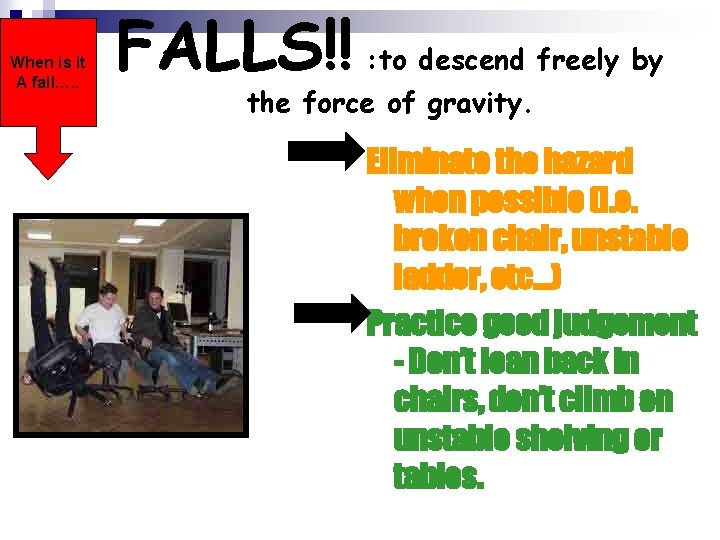
When is it A fall…. . FALLS!! : to descend freely by the force of gravity. Eliminate the hazard when possible (i. e. broken chair, unstable ladder, etc. . . ) Practice good judgement - Don’t lean back in chairs, don’t climb on unstable shelving or tables.
FOOTWEAR Use good judgment with regard to footwear while on the job and at home. Be certain footwear is in good condition and appropriate to your job function and outside weather condition.
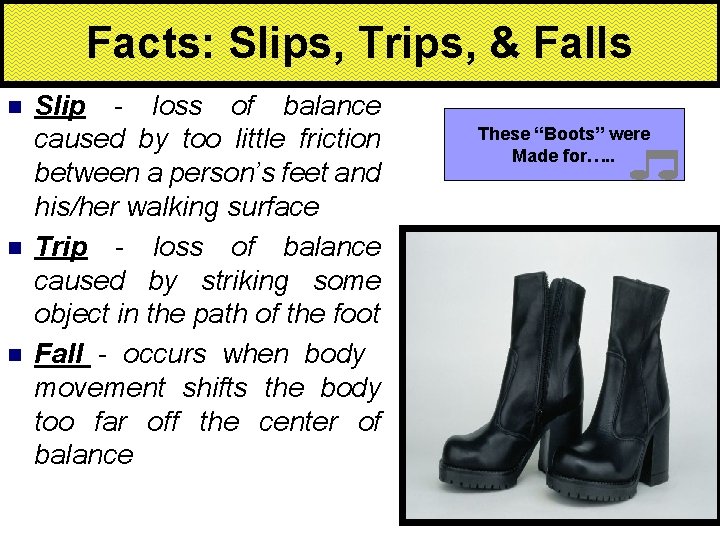
Facts: Slips, Trips, & Falls n n n Slip - loss of balance caused by too little friction between a person’s feet and his/her walking surface Trip - loss of balance caused by striking some object in the path of the foot Fall - occurs when body movement shifts the body too far off the center of balance These “Boots” were Made for…. .

Hazards & Causes How do Accidents Happen? n Irregular surfaces n Smooth surfaces n Loose, unanchored rugs or mats n Ladders n Stairs or hidden steps
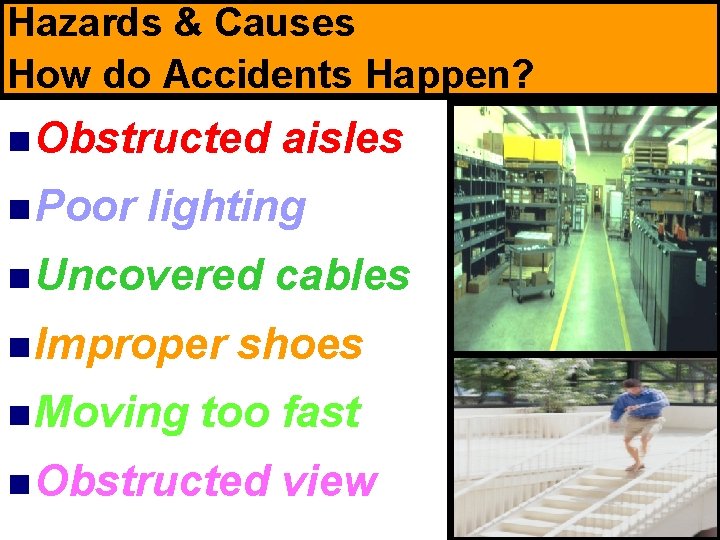
Hazards & Causes How do Accidents Happen? n Obstructed n Poor aisles lighting n Uncovered n Improper n Moving cables shoes too fast n Obstructed view
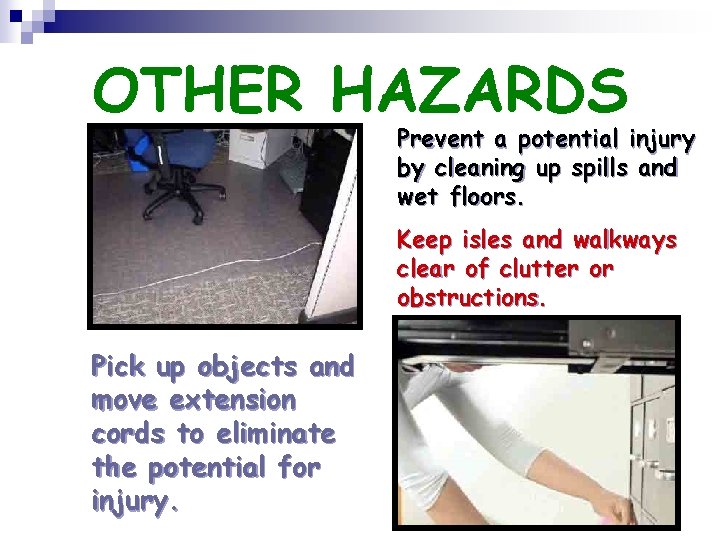
OTHER HAZARDS Prevent a potential injury by cleaning up spills and wet floors. Keep isles and walkways clear of clutter or obstructions. Pick up objects and move extension cords to eliminate the potential for injury.
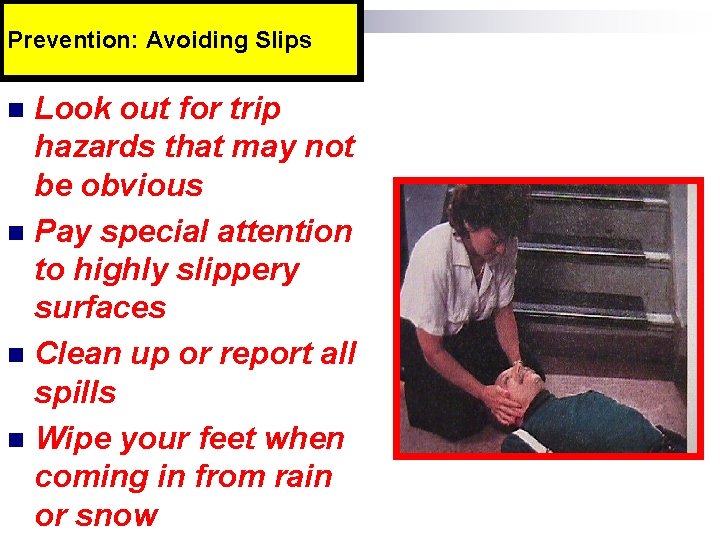
Prevention: Avoiding Slips Look out for trip hazards that may not be obvious n Pay special attention to highly slippery surfaces n Clean up or report all spills n Wipe your feet when coming in from rain or snow n
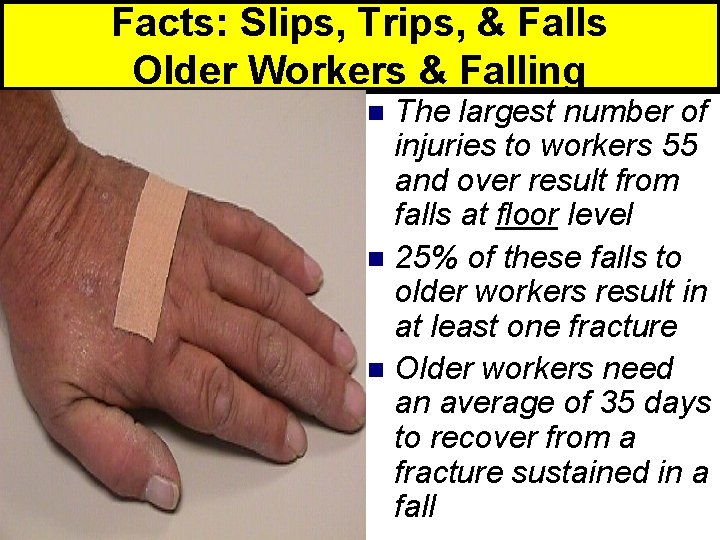
Facts: Slips, Trips, & Falls Older Workers & Falling The largest number of injuries to workers 55 and over result from falls at floor level n 25% of these falls to older workers result in at least one fracture n Older workers need an average of 35 days to recover from a fracture sustained in a fall n
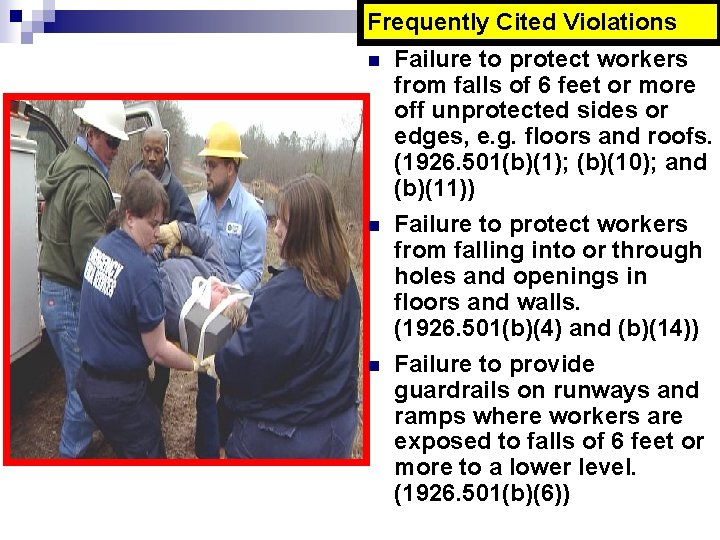
Frequently Cited Violations n n n Failure to protect workers from falls of 6 feet or more off unprotected sides or edges, e. g. floors and roofs. (1926. 501(b)(1); (b)(10); and (b)(11)) Failure to protect workers from falling into or through holes and openings in floors and walls. (1926. 501(b)(4) and (b)(14)) Failure to provide guardrails on runways and ramps where workers are exposed to falls of 6 feet or more to a lower level. (1926. 501(b)(6))
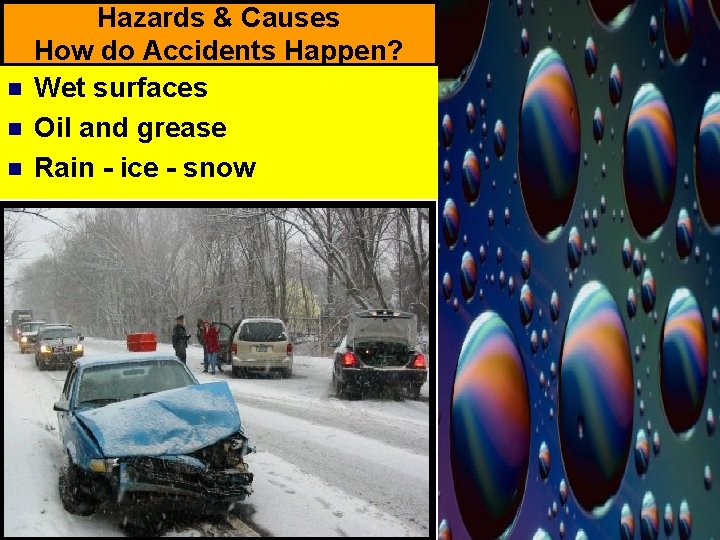
n n n Hazards & Causes How do Accidents Happen? Wet surfaces Oil and grease Rain - ice - snow
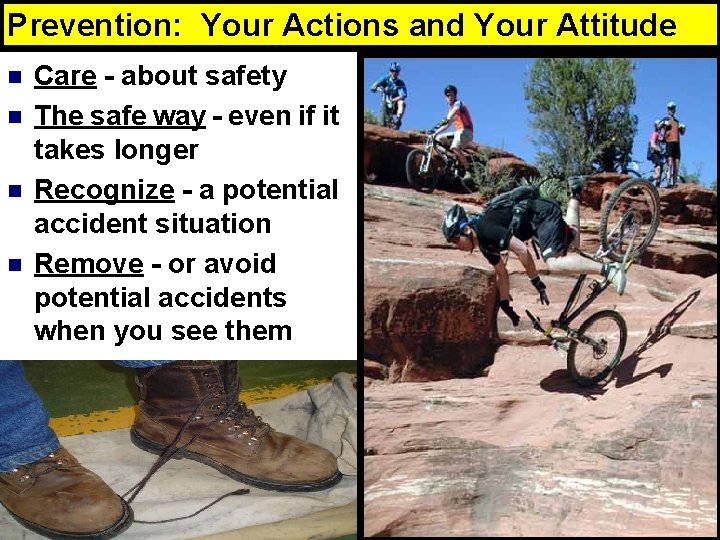
Prevention: Your Actions and Your Attitude n n Care - about safety The safe way - even if it takes longer Recognize - a potential accident situation Remove - or avoid potential accidents when you see them
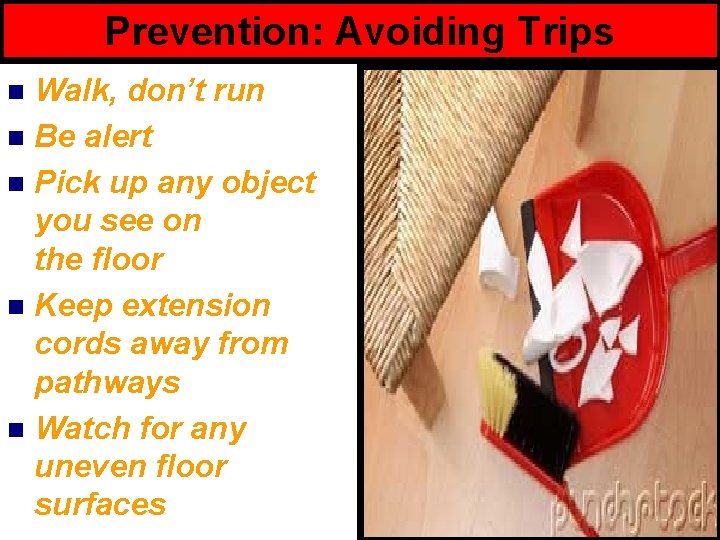
Prevention: Avoiding Trips Walk, don’t run n Be alert n Pick up any object you see on the floor n Keep extension cords away from pathways n Watch for any uneven floor surfaces n
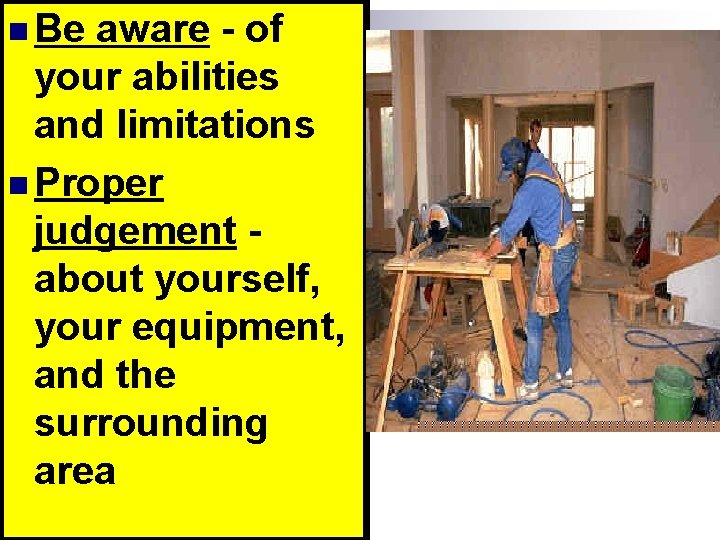
n Be aware - of your abilities and limitations n Proper judgement about yourself, your equipment, and the surrounding area

Minimize Injuries in a Fall Relax. Avoid sharp objects. Protect your head. Land on feet with knees bent. Roll.
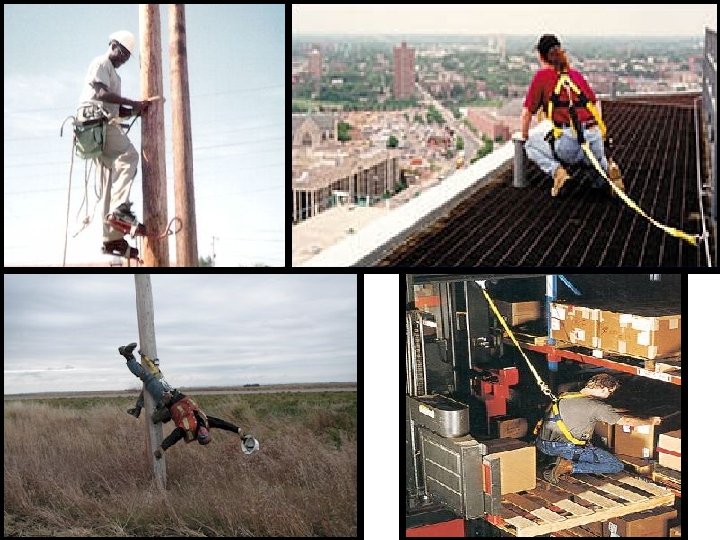
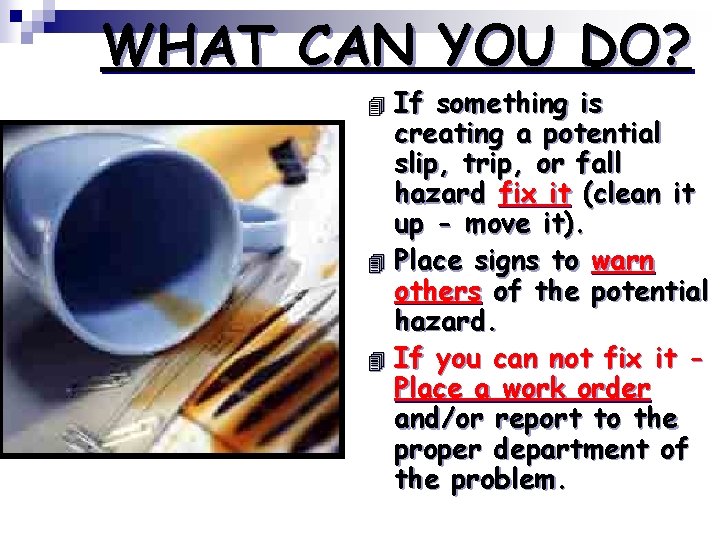
WHAT CAN YOU DO? If something is creating a potential slip, trip, or fall hazard fix it (clean it up - move it). 4 Place signs to warn others of the potential hazard. 4 If you can not fix it Place a work order and/or report to the proper department of the problem. 4
Prevention: Avoiding Falls n Keep work areas and walkways well lit. n Don’t carry a stack of objects too tall to see over. n Wear good nonskid shoes. n Always use the handrail. n Report any hazardous floors.
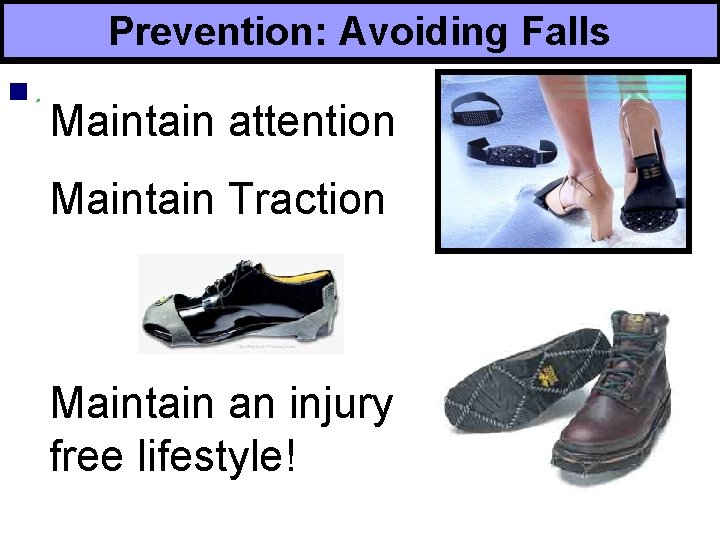
Prevention: Avoiding Falls n. Maintain attention Maintain Traction Maintain an injury free lifestyle!
Fall related facts that we may not want to hear! 1 in 3 people over 65 13. 7% of falls 80% of the fatalities. Older adults are five times more likely to be hospitalized for falls. . . The 85 are 5 times more likely to fall than those 65.
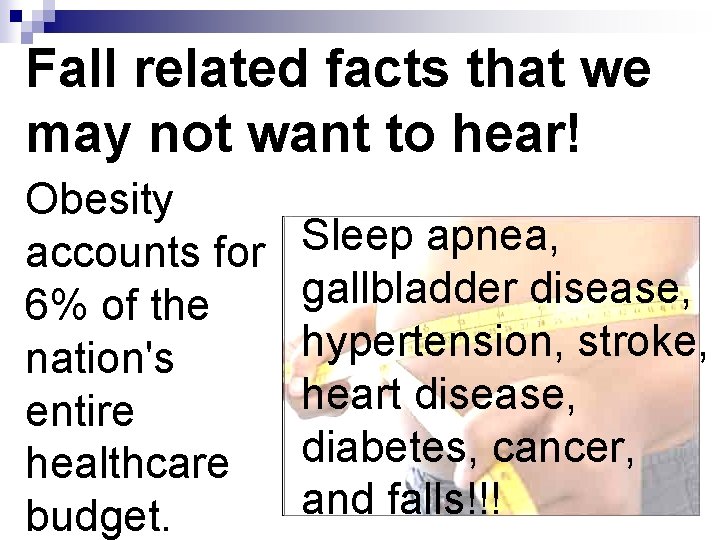
Fall related facts that we may not want to hear! Obesity accounts for 6% of the nation's entire healthcare budget. Sleep apnea, gallbladder disease, hypertension, stroke, heart disease, diabetes, cancer, and falls!!!
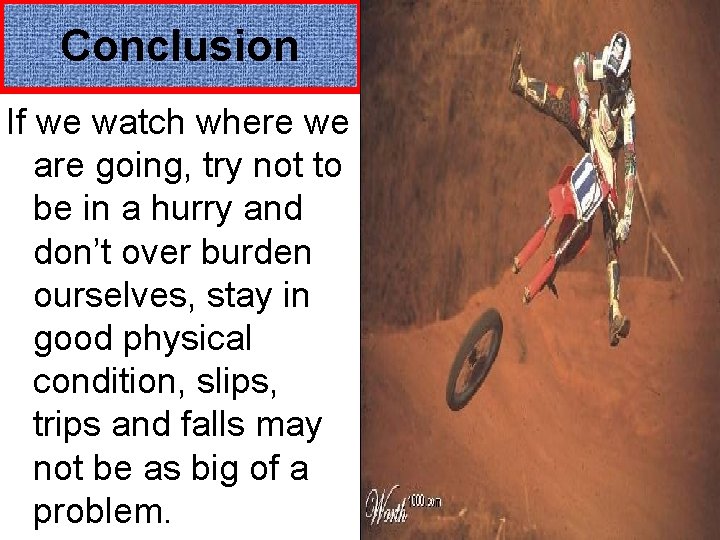
Conclusion If we watch where we are going, try not to be in a hurry and don’t over burden ourselves, stay in good physical condition, slips, trips and falls may not be as big of a problem.
- Slides: 38