
Slides for Chapter 21 Designing Distributed Systems Google
Slides for Chapter 21: Designing Distributed Systems: Google Case Study From Coulouris, Dollimore, Kindberg and Blair Distributed Systems: Concepts and Design Edition 5, © Addison-Wesley 2012
Google Company • Google is a US-based corporation with its headquarter in Mountain View, CA. offering Internet search and broader web applications and earning revenue largely from advertising associated with such services. • The name is a play on the word googol, the number 10^100 ( or 1 followed by a hundred zeros), emphasizing the sheer scale of information in Internet today. • Google was born out of a research project at Standford with the company launched in 1998. 2

Google Distributed System: Design Strategy • Google has diversified and as well as providing a search engine is now a major player in cloud computing. • 88 billion queries a month by the end of 2010. The user can expect query result in 0. 2 seconds. • Good performance in terms of scalability, reliability, performance and openness. • We will examine the strategies and design decision behind that success, and provide insight into design of complex distributed system. 3
Google Search Engine • Consist of a set of services • Crawling: to locate and retrieve the contents of the web and pass the content onto the indexing subsystem. Performed by a software called Googlebot. • Indexing: produce an index for the contents of the web that is similar to an index at the back of a book, but on a much larger scale. Indexing produces what is known as an inverted index mapping words appearing in web pages and other textual web resources onto the position where they occur in documents. In addition, index of links is also maintained to keep track of links to a given site. • Ranking: Relevance of the retrieved links. Ranking algorithm is called Page. Rank inspired by citation number for academic papers. A page will be viewed as important if it is linked to by a large number of other pages. 4
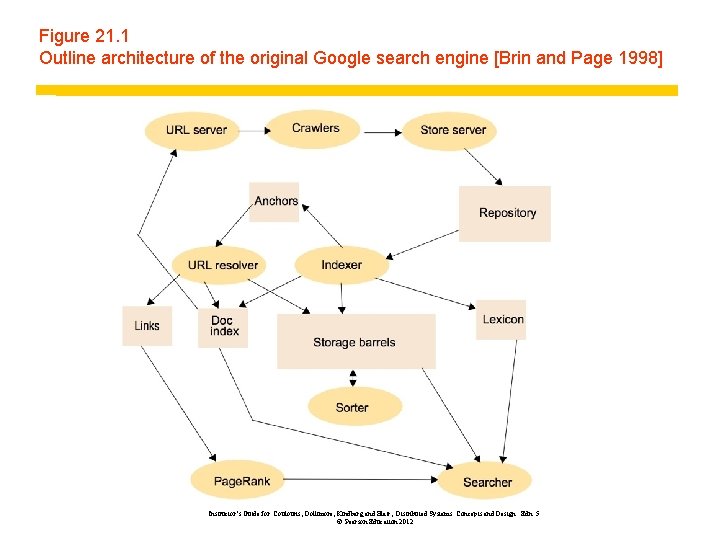
Figure 21. 1 Outline architecture of the original Google search engine [Brin and Page 1998] Instructor’s Guide for Coulouris, Dollimore, Kindberg and Blair, Distributed Systems: Concepts and Design Edn. 5 © Pearson Education 2012
Google as a cloud provider • Google is now a major player in cloud computing which is defined as “a set of Internet-based application, storage and computing services sufficient to support most user's needs, thus enabling them to largely or totally dispense with local data storage and application software. • Software as a service: offering application-level software over the Internet as web application. A prime example is a set of web-based applications including Gmail, Google Docs, Google Talk and Google Calendar. Aims to replace traditional office suites. ( more examples in the following table) • Platform as a service: concerned with offering distributed system APIs and services across the Internet, with these APIs used to support the development and hosting of web applications. With the launch of Google App Engine, Google went beyond software as a service and now offers it distributed system infrastructure as as a cloud service. Other organizations to run their own web applications on the Google platform. 6
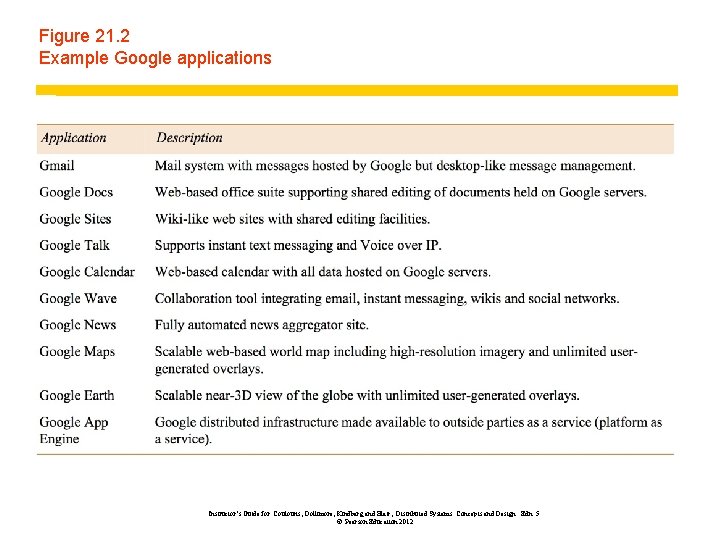
Figure 21. 2 Example Google applications Instructor’s Guide for Coulouris, Dollimore, Kindberg and Blair, Distributed Systems: Concepts and Design Edn. 5 © Pearson Education 2012
• Google Physical model The key philosophy of Google in terms of physical infrastructure is to use very large numbers of commodity PCs to produce a cost-effective environment for distributed storage and computation. Purchasing decision are based on obtained the best performance per dollar rather than absolute performance. When Brin and Page built the first Google search engine from spare hardware scavenged from around the lab at Standford university. • Typical spend is $1 k per PC unit with 2 Terabytes of disk storage and 16 gigabytes of memory and run a cut-down version of Linux kernel. • Physical Architecture of Google is constructed as: • • • Commodity PCs are organized in racks with between 40 to 80 PCs in a given rack. Each rack has a Ethernet Switch. 30 or more Racks are organized into a cluster, which are a key unit of management for placement and replication of services. Each cluster has two switched connected the outside world or other data centers. Clusters are housed in data centers that spread around the world. 8
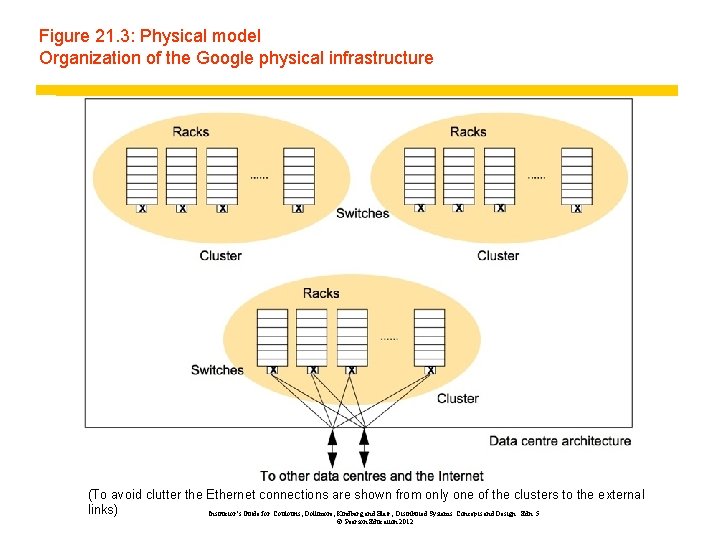
Figure 21. 3: Physical model Organization of the Google physical infrastructure (To avoid clutter the Ethernet connections are shown from only one of the clusters to the external links) Instructor’s Guide for Coulouris, Dollimore, Kindberg and Blair, Distributed Systems: Concepts and Design Edn. 5 © Pearson Education 2012
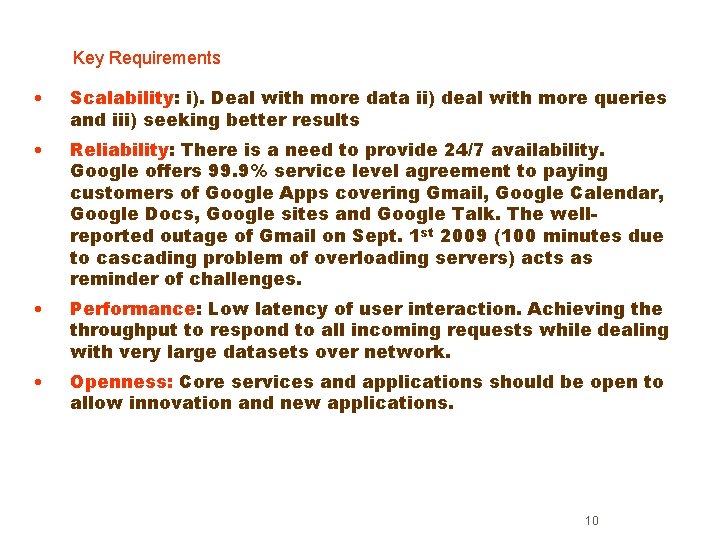
Key Requirements • Scalability: i). Deal with more data ii) deal with more queries and iii) seeking better results • Reliability: There is a need to provide 24/7 availability. Google offers 99. 9% service level agreement to paying customers of Google Apps covering Gmail, Google Calendar, Google Docs, Google sites and Google Talk. The wellreported outage of Gmail on Sept. 1 st 2009 (100 minutes due to cascading problem of overloading servers) acts as reminder of challenges. • Performance: Low latency of user interaction. Achieving the throughput to respond to all incoming requests while dealing with very large datasets over network. • Openness: Core services and applications should be open to allow innovation and new applications. 10
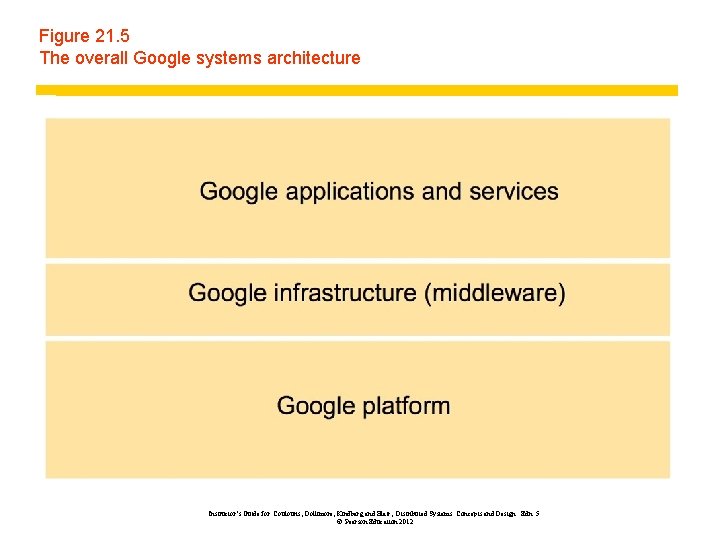
Figure 21. 5 The overall Google systems architecture Instructor’s Guide for Coulouris, Dollimore, Kindberg and Blair, Distributed Systems: Concepts and Design Edn. 5 © Pearson Education 2012
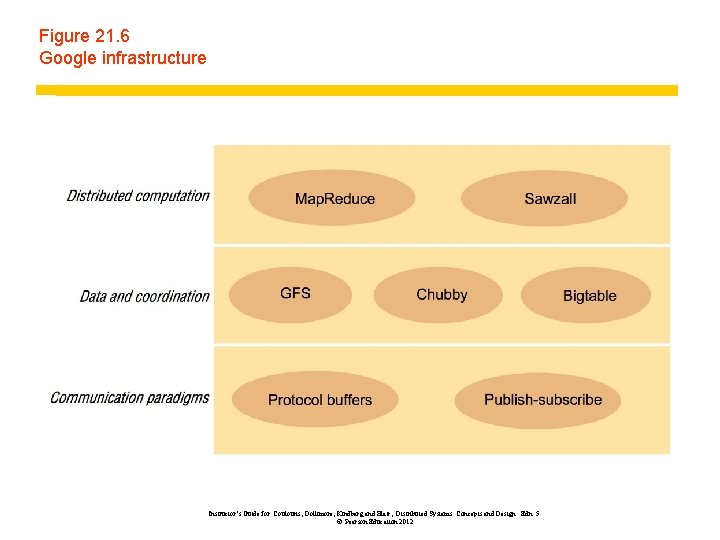
Figure 21. 6 Google infrastructure Instructor’s Guide for Coulouris, Dollimore, Kindberg and Blair, Distributed Systems: Concepts and Design Edn. 5 © Pearson Education 2012
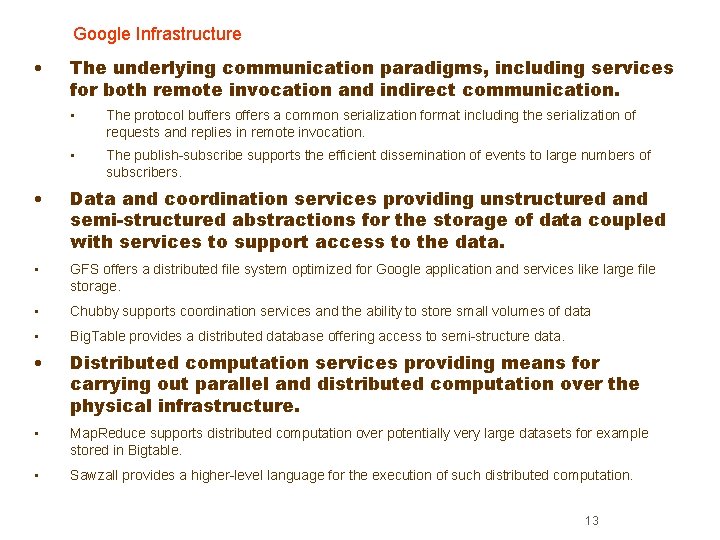
Google Infrastructure • The underlying communication paradigms, including services for both remote invocation and indirect communication. • The protocol buffers offers a common serialization format including the serialization of requests and replies in remote invocation. • The publish-subscribe supports the efficient dissemination of events to large numbers of subscribers. • Data and coordination services providing unstructured and semi-structured abstractions for the storage of data coupled with services to support access to the data. • GFS offers a distributed file system optimized for Google application and services like large file storage. • Chubby supports coordination services and the ability to store small volumes of data • Big. Table provides a distributed database offering access to semi-structure data. • Distributed computation services providing means for carrying out parallel and distributed computation over the physical infrastructure. • Map. Reduce supports distributed computation over potentially very large datasets for example stored in Bigtable. • Sawzall provides a higher-level language for the execution of such distributed computation. 13
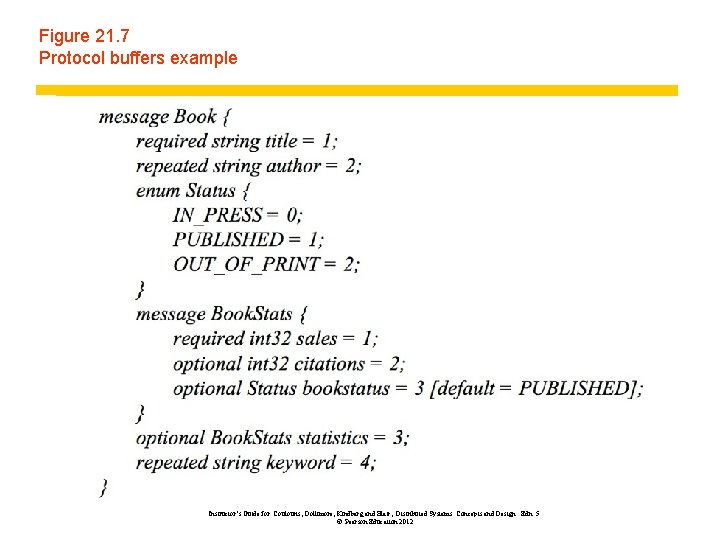
Figure 21. 7 Protocol buffers example Instructor’s Guide for Coulouris, Dollimore, Kindberg and Blair, Distributed Systems: Concepts and Design Edn. 5 © Pearson Education 2012
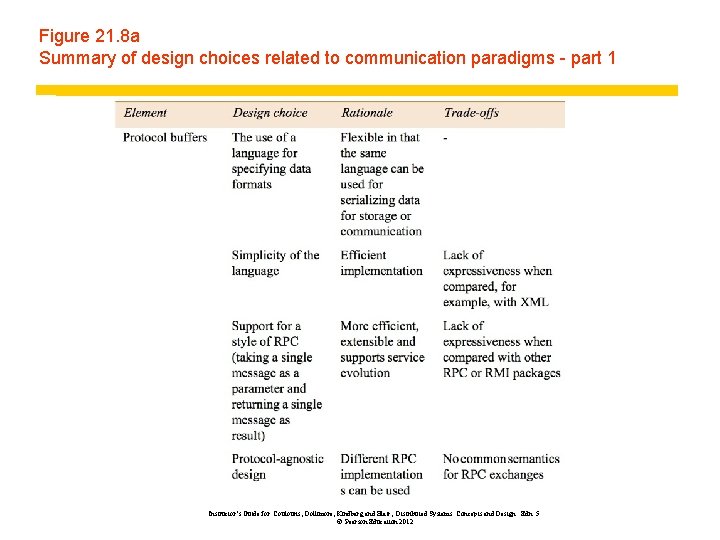
Figure 21. 8 a Summary of design choices related to communication paradigms - part 1 Instructor’s Guide for Coulouris, Dollimore, Kindberg and Blair, Distributed Systems: Concepts and Design Edn. 5 © Pearson Education 2012
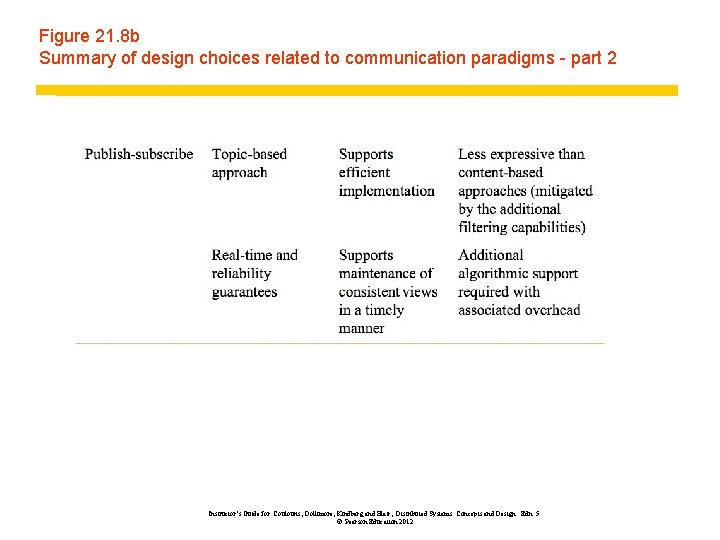
Figure 21. 8 b Summary of design choices related to communication paradigms - part 2 Instructor’s Guide for Coulouris, Dollimore, Kindberg and Blair, Distributed Systems: Concepts and Design Edn. 5 © Pearson Education 2012
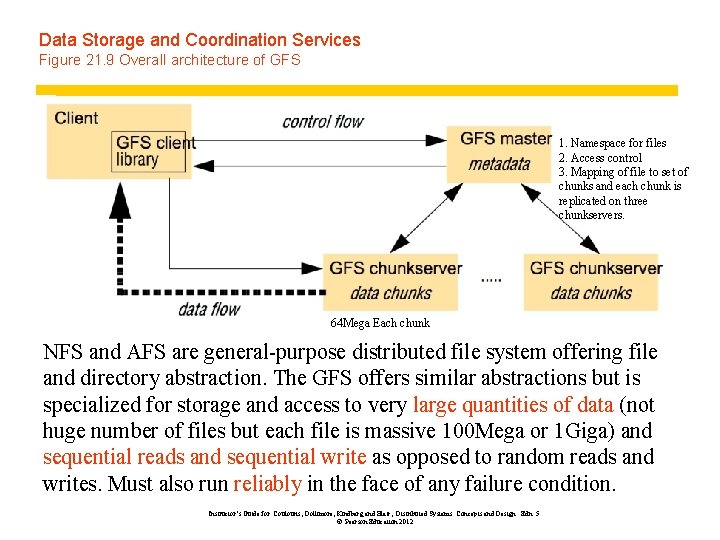
Data Storage and Coordination Services Figure 21. 9 Overall architecture of GFS 1. Namespace for files 2. Access control 3. Mapping of file to set of chunks and each chunk is replicated on three chunkservers. 64 Mega Each chunk NFS and AFS are general-purpose distributed file system offering file and directory abstraction. The GFS offers similar abstractions but is specialized for storage and access to very large quantities of data (not huge number of files but each file is massive 100 Mega or 1 Giga) and sequential reads and sequential write as opposed to random reads and writes. Must also run reliably in the face of any failure condition. Instructor’s Guide for Coulouris, Dollimore, Kindberg and Blair, Distributed Systems: Concepts and Design Edn. 5 © Pearson Education 2012
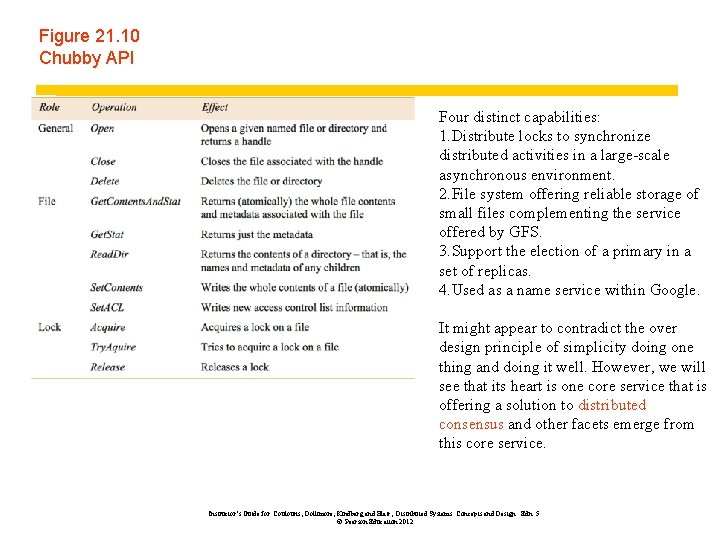
Figure 21. 10 Chubby API Four distinct capabilities: 1. Distribute locks to synchronize distributed activities in a large-scale asynchronous environment. 2. File system offering reliable storage of small files complementing the service offered by GFS. 3. Support the election of a primary in a set of replicas. 4. Used as a name service within Google. It might appear to contradict the over design principle of simplicity doing one thing and doing it well. However, we will see that its heart is one core service that is offering a solution to distributed consensus and other facets emerge from this core service. Instructor’s Guide for Coulouris, Dollimore, Kindberg and Blair, Distributed Systems: Concepts and Design Edn. 5 © Pearson Education 2012
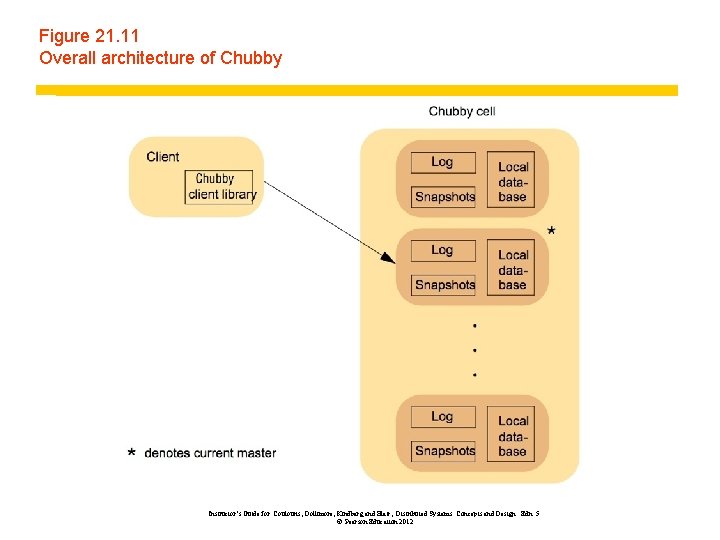
Figure 21. 11 Overall architecture of Chubby Instructor’s Guide for Coulouris, Dollimore, Kindberg and Blair, Distributed Systems: Concepts and Design Edn. 5 © Pearson Education 2012
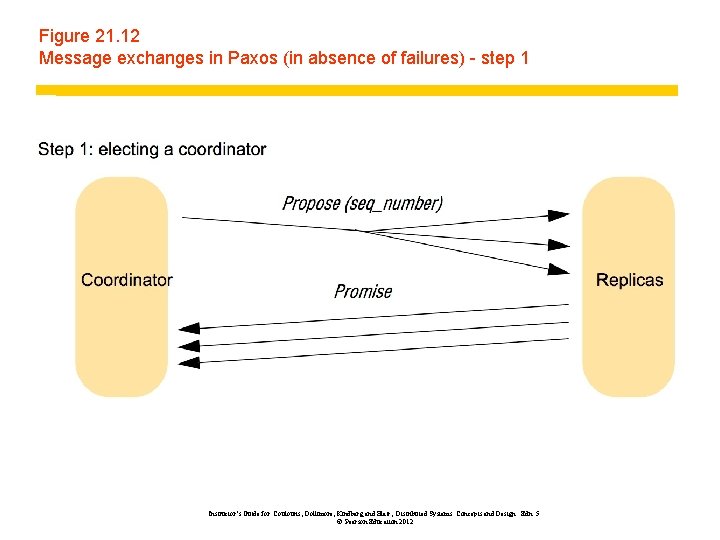
Figure 21. 12 Message exchanges in Paxos (in absence of failures) - step 1 Instructor’s Guide for Coulouris, Dollimore, Kindberg and Blair, Distributed Systems: Concepts and Design Edn. 5 © Pearson Education 2012
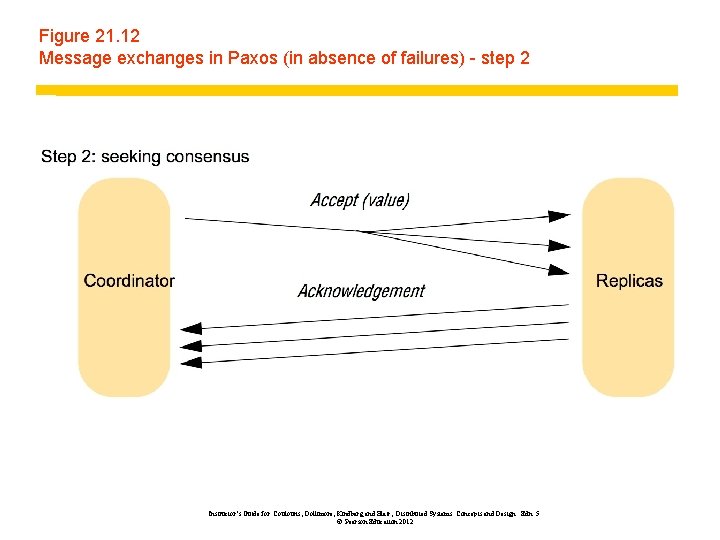
Figure 21. 12 Message exchanges in Paxos (in absence of failures) - step 2 Instructor’s Guide for Coulouris, Dollimore, Kindberg and Blair, Distributed Systems: Concepts and Design Edn. 5 © Pearson Education 2012
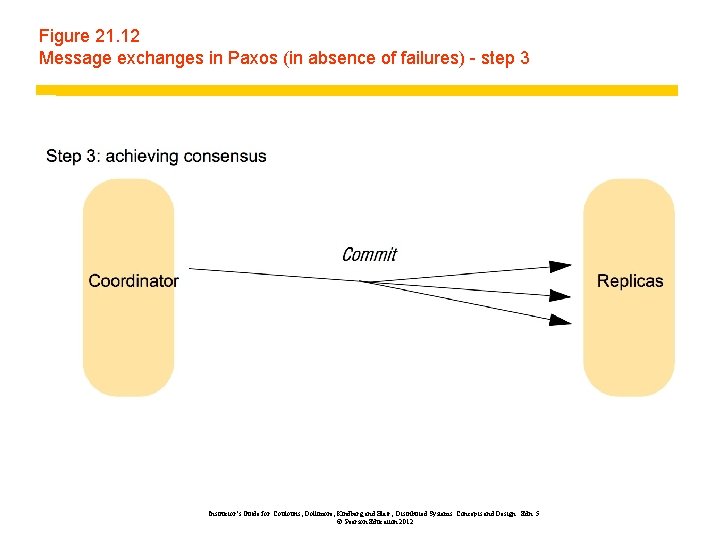
Figure 21. 12 Message exchanges in Paxos (in absence of failures) - step 3 Instructor’s Guide for Coulouris, Dollimore, Kindberg and Blair, Distributed Systems: Concepts and Design Edn. 5 © Pearson Education 2012
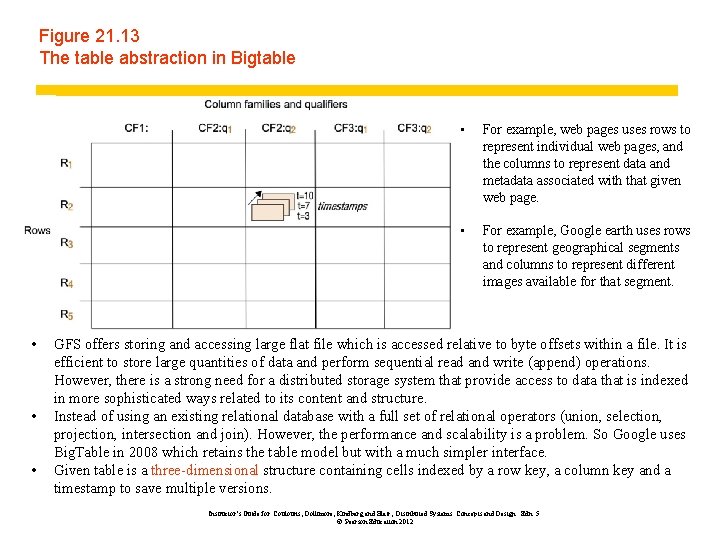
Figure 21. 13 The table abstraction in Bigtable • • For example, web pages uses rows to represent individual web pages, and the columns to represent data and metadata associated with that given web page. • For example, Google earth uses rows to represent geographical segments and columns to represent different images available for that segment. GFS offers storing and accessing large flat file which is accessed relative to byte offsets within a file. It is efficient to store large quantities of data and perform sequential read and write (append) operations. However, there is a strong need for a distributed storage system that provide access to data that is indexed in more sophisticated ways related to its content and structure. Instead of using an existing relational database with a full set of relational operators (union, selection, projection, intersection and join). However, the performance and scalability is a problem. So Google uses Big. Table in 2008 which retains the table model but with a much simpler interface. Given table is a three-dimensional structure containing cells indexed by a row key, a column key and a timestamp to save multiple versions. Instructor’s Guide for Coulouris, Dollimore, Kindberg and Blair, Distributed Systems: Concepts and Design Edn. 5 © Pearson Education 2012
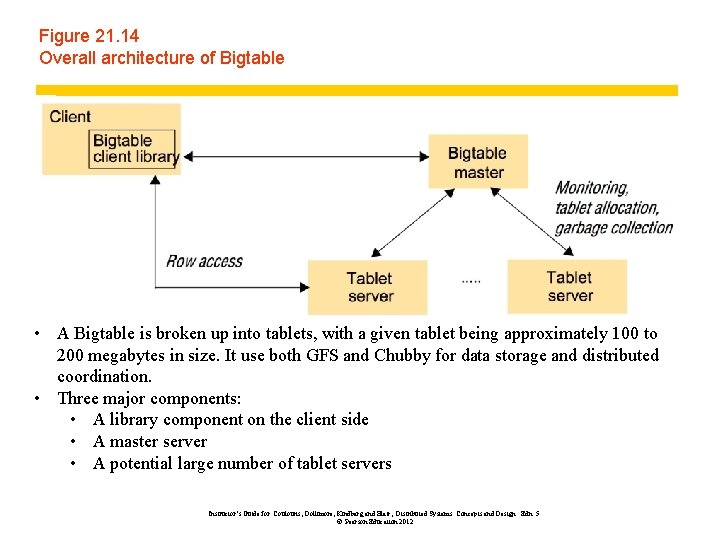
Figure 21. 14 Overall architecture of Bigtable • A Bigtable is broken up into tablets, with a given tablet being approximately 100 to 200 megabytes in size. It use both GFS and Chubby for data storage and distributed coordination. • Three major components: • A library component on the client side • A master server • A potential large number of tablet servers Instructor’s Guide for Coulouris, Dollimore, Kindberg and Blair, Distributed Systems: Concepts and Design Edn. 5 © Pearson Education 2012
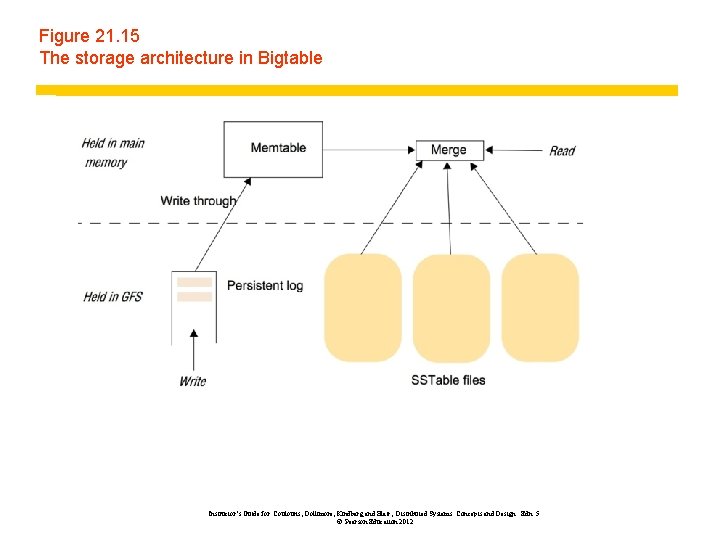
Figure 21. 15 The storage architecture in Bigtable Instructor’s Guide for Coulouris, Dollimore, Kindberg and Blair, Distributed Systems: Concepts and Design Edn. 5 © Pearson Education 2012
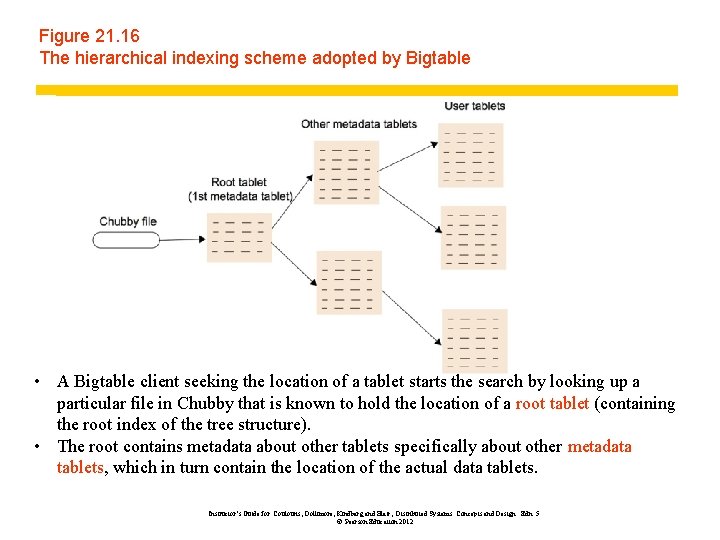
Figure 21. 16 The hierarchical indexing scheme adopted by Bigtable • A Bigtable client seeking the location of a tablet starts the search by looking up a particular file in Chubby that is known to hold the location of a root tablet (containing the root index of the tree structure). • The root contains metadata about other tablets specifically about other metadata tablets, which in turn contain the location of the actual data tablets. Instructor’s Guide for Coulouris, Dollimore, Kindberg and Blair, Distributed Systems: Concepts and Design Edn. 5 © Pearson Education 2012
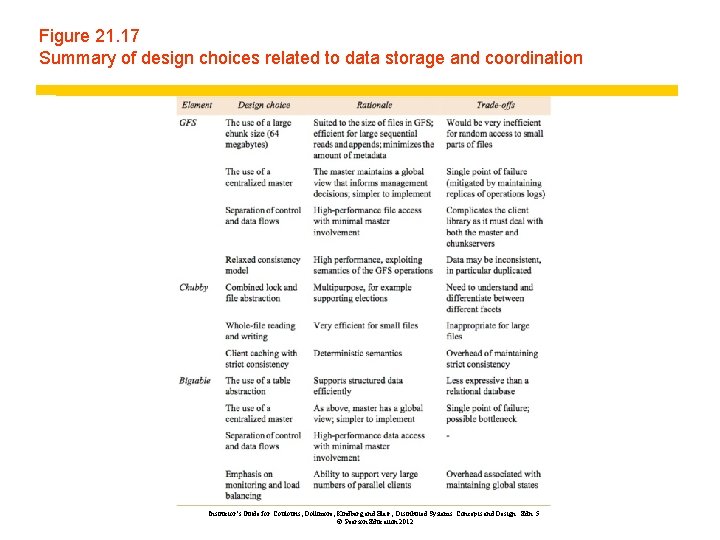
Figure 21. 17 Summary of design choices related to data storage and coordination Instructor’s Guide for Coulouris, Dollimore, Kindberg and Blair, Distributed Systems: Concepts and Design Edn. 5 © Pearson Education 2012
Distributed Computation Services • • • It is important to support high performance distributed computation over the large datasets stored in GFS and Bigtable. The Google infrastructure supports distributed computation through Map. Reduce service and also the higher level Sawzall language. Carry out distributed computation by breaking up the data into smaller fragments and carrying out analyses (sorting, searching and constructing inverted indexes) of such fragments in parallel, making use of the physical architecture. Map. Reduce {Dean and Ghemawat 2008} is a simple programming model to support the development of such application, hiding underlying detail from the programmer including details related to the parallelization of the computation, monitoring and recovery from failure, data management and load balancing onto the underlying physical infrastructure. • Key principle behind Map. Reduce is that many parallel computations share the same overall pattern– that is: • Break the input data into a number of chunks • Carry out initial processing on these chunks of data to produce intermediary results ( map function) • Combine the intermediary results to produce the final output. (reduce function) Instructor’s Guide for Coulouris, Dollimore, Kindberg and Blair, Distributed Systems: Concepts and Design Edn. 5 © Pearson Education 2012
Distributed Computation Services: Map. Reduce • For example, search web with words “distributed system book”: • Assume map and reduce function is supplied with a web page name and its contents as input, the map function searches linearly through the contents, emitting a key-value pair consisting of the phrase followed by the name of the web document containing this phrase. • The reduce function is in this case is trivial, simply emitting the intermediary ressults ready to be collated together into a complete index. • The Map. Reduce implementation is responsible for breaking the data into chunks, creating multiple instances of the map and reduce function, allocating and activating them on available machines in the physical infrastructure, monitoring the computations for any failures and implementing appropriate recovery strategies, dispatching intermediary results and ensuring optimal performance of the whole system. • Google reimplemented the main production indexing system in 2003 and reduced the number of lines of C++ code in Map. Reduce from 3, 800 to 700, a significant reduction, albeit in a relatively small system. Instructor’s Guide for Coulouris, Dollimore, Kindberg and Blair, Distributed Systems: Concepts and Design Edn. 5 © Pearson Education 2012
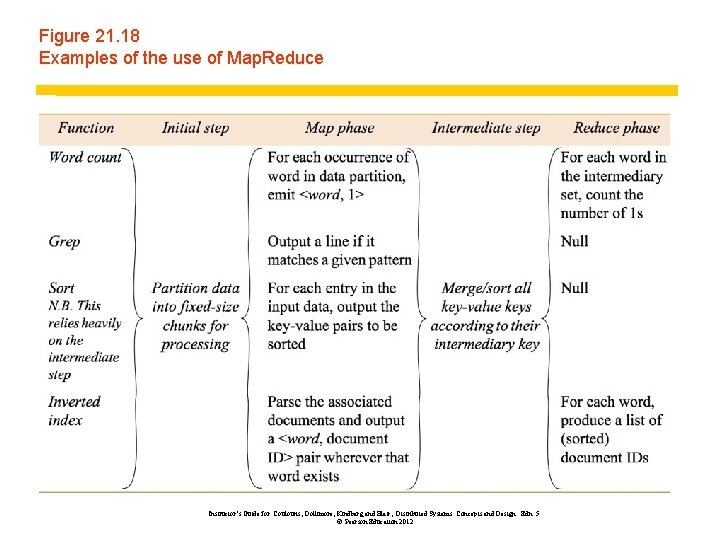
Figure 21. 18 Examples of the use of Map. Reduce Instructor’s Guide for Coulouris, Dollimore, Kindberg and Blair, Distributed Systems: Concepts and Design Edn. 5 © Pearson Education 2012
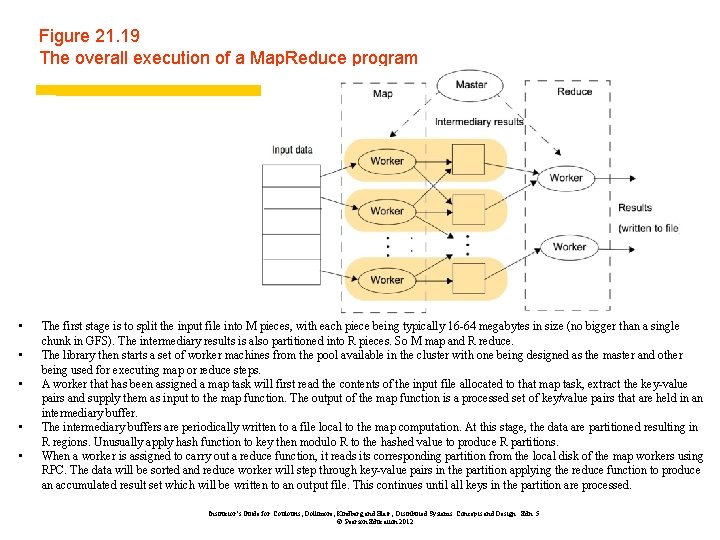
Figure 21. 19 The overall execution of a Map. Reduce program • • • The first stage is to split the input file into M pieces, with each piece being typically 16 -64 megabytes in size (no bigger than a single chunk in GFS). The intermediary results is also partitioned into R pieces. So M map and R reduce. The library then starts a set of worker machines from the pool available in the cluster with one being designed as the master and other being used for executing map or reduce steps. A worker that has been assigned a map task will first read the contents of the input file allocated to that map task, extract the key-value pairs and supply them as input to the map function. The output of the map function is a processed set of key/value pairs that are held in an intermediary buffer. The intermediary buffers are periodically written to a file local to the map computation. At this stage, the data are partitioned resulting in R regions. Unusually apply hash function to key then modulo R to the hashed value to produce R partitions. When a worker is assigned to carry out a reduce function, it reads its corresponding partition from the local disk of the map workers using RPC. The data will be sorted and reduce worker will step through key-value pairs in the partition applying the reduce function to produce an accumulated result set which will be written to an output file. This continues until all keys in the partition are processed. Instructor’s Guide for Coulouris, Dollimore, Kindberg and Blair, Distributed Systems: Concepts and Design Edn. 5 © Pearson Education 2012
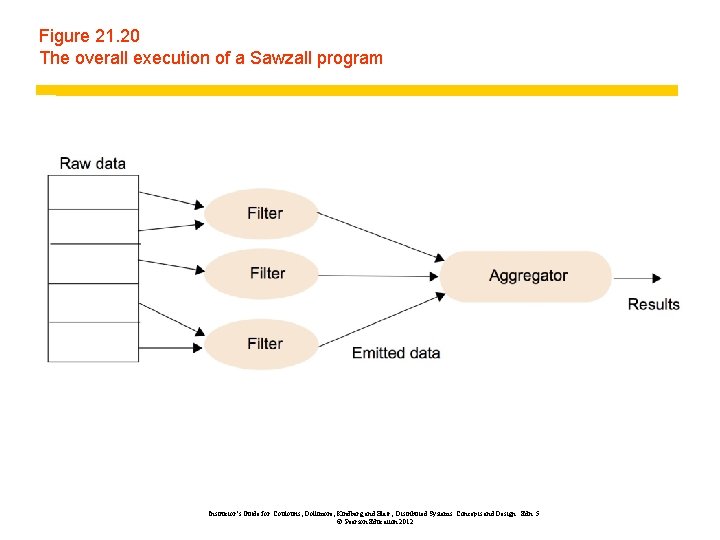
Figure 21. 20 The overall execution of a Sawzall program Instructor’s Guide for Coulouris, Dollimore, Kindberg and Blair, Distributed Systems: Concepts and Design Edn. 5 © Pearson Education 2012
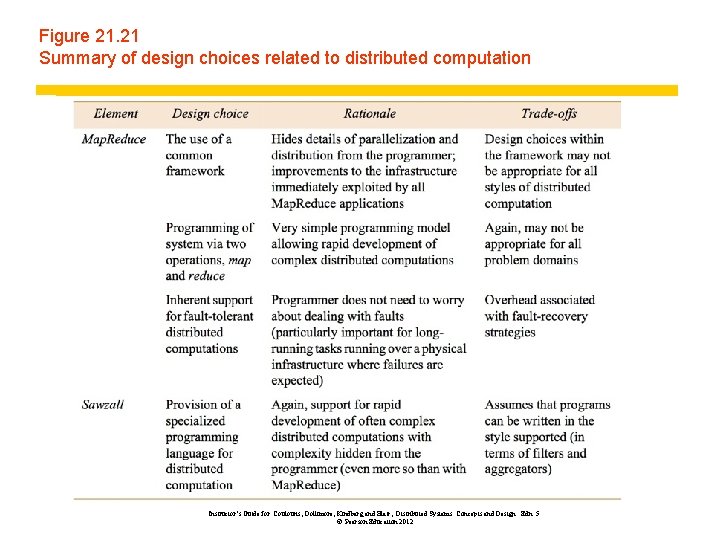
Figure 21. 21 Summary of design choices related to distributed computation Instructor’s Guide for Coulouris, Dollimore, Kindberg and Blair, Distributed Systems: Concepts and Design Edn. 5 © Pearson Education 2012
- Slides: 33