
Slides 3 The Systems Development Life Cycle and
- Slides: 16
Slides 3 The Systems Development Life Cycle and Information Engineering: An Introduction
Systems Development Life Cycle: A Logical Framework • A systematic and orderly approach to solving systems problems • Defines the phases that are essential to any systems development project
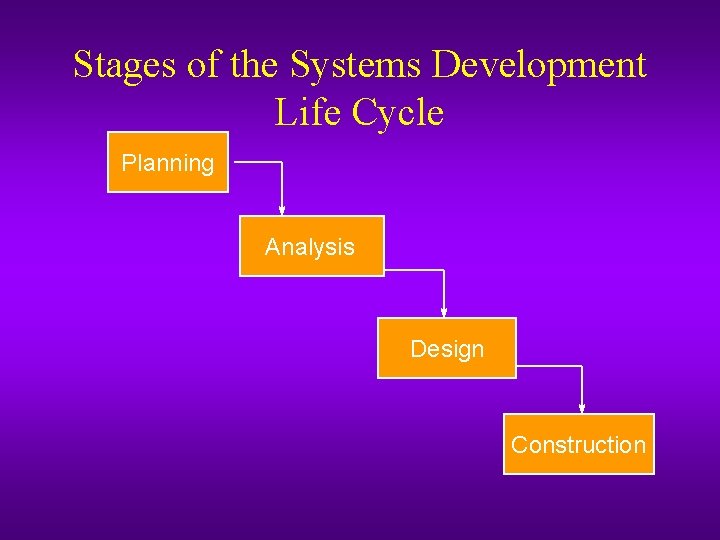
Stages of the Systems Development Life Cycle Planning Analysis Design Construction
Information Engineering • Implements the SDLC framework • An integrated set of methodologies designed to create and operate an information system for the organization as a whole or for a significant part such as a division, rather than on an ad-hoc, project-by-project basis • It is data-centered and relies on fully normalized data models (a “picture” of database)
Information Engineering (cont. ) • These data models are kept in computerized form, and workstations use computerized tools (e. g. , COOL: Gen & Oracle Designer) to build applications that use the data • Although IE is data-centered, it is also a process-sensitive • The overall strategy is model-driven systems development (the MO in MOTE)
Modeling • A model is a representation of reality • Systems analysts try to understand a business by drawing “pictures” or models of the business and its workings. • Three primary types of models: (1) a data model, (2) activity models, and (3) interaction models
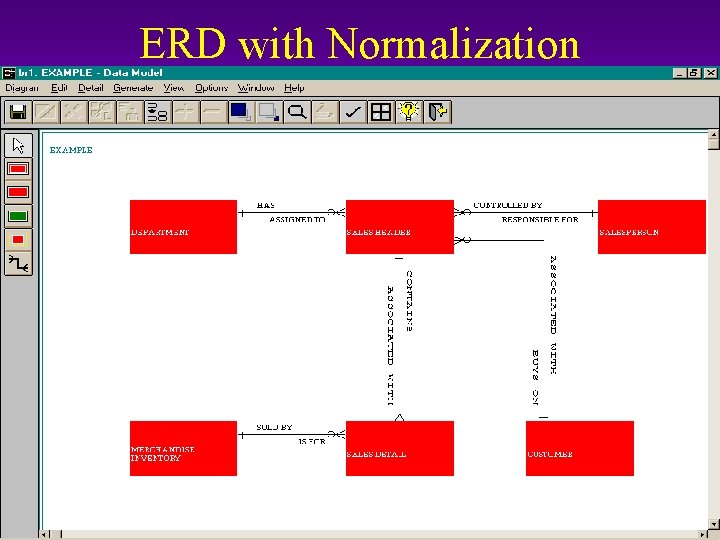
Types of Models • Data model: One type is the ERD that depicts data (entities, attributes) and the relationships enforcing business rules between entities. • The primary goal is to accurately portray the fundamental elements of the business information system. • The data model is implemented as a database in a developed system (central to the IS)
ERD with Normalization
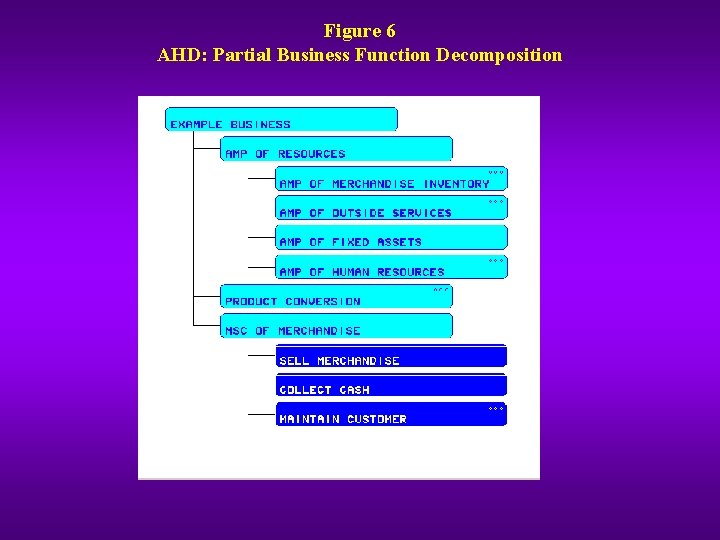
Types of Models • Activity models: Records the activities of interest to the business (i. e. , the things the business does or should do) • Involves decomposition of business processes from the highest level (AMP of Resources, Conversion Processes, MSC Processes) to the lowest (elementary processes) • Also involves the specification of process dependency events, to refine decomposition of the processes
Figure 6 AHD: Partial Business Function Decomposition
Types of Models • Interaction models: Define how things the business does (activities/events) affect things of interest to the business (data) • The REAL model, to be introduced in the next set of slides, is an interaction model • Faculty at OU have combined the IE notation of an interaction model with the accounting REAL model • Interaction modeling provides a detailed basis for the next stage of systems development, which is systems design.
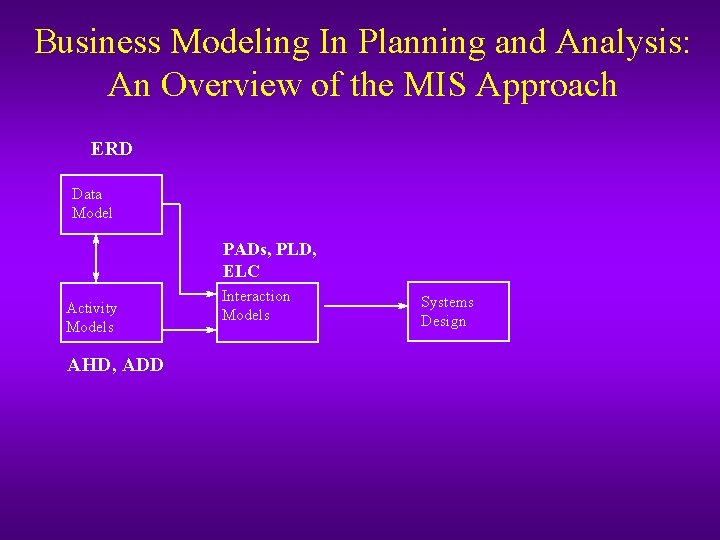
Business Modeling In Planning and Analysis: An Overview of the MIS Approach ERD Data Model PADs, PLD, ELC Activity Models AHD, ADD Interaction Models Systems Design
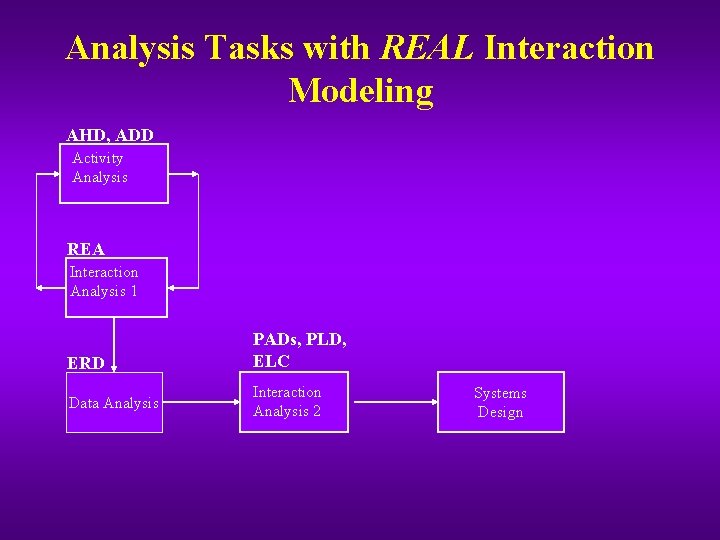
Analysis Tasks with REAL Interaction Modeling AHD, ADD Activity Analysis REA Interaction Analysis 1 ERD Data Analysis PADs, PLD, ELC Interaction Analysis 2 Systems Design
Information. Week Online • Business Snapshot (main link): “Business modeling tools help companies align their business and technology goals” (and related link: “Business modeling delivers twofold benefits”) • http: //www. informationweek. com/730/30 iubus 2. htm
Information. Week Online: Discussion Questions: Main Link • According to some adopters, what are the advantages of business modeling? • What were the IT problems that Belk Stores was experiencing? • How were these problems solved?
Information. Week Online: Discussion Question: Related Link • What advantages did business modeling bring for Williams Field Services?