
Slides 2 Criticisms of the Traditional Accounting System
- Slides: 21
Slides 2 Criticisms of the Traditional Accounting System Architecture and a Solution
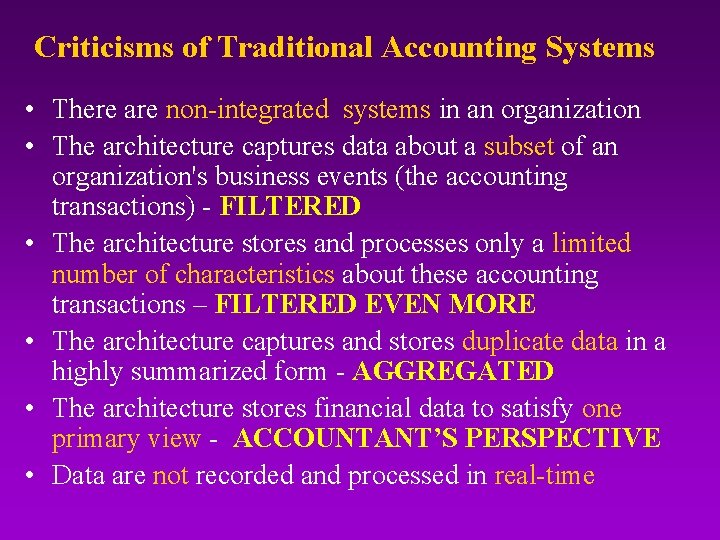
Criticisms of Traditional Accounting Systems • There are non-integrated systems in an organization • The architecture captures data about a subset of an organization's business events (the accounting transactions) - FILTERED • The architecture stores and processes only a limited number of characteristics about these accounting transactions – FILTERED EVEN MORE • The architecture captures and stores duplicate data in a highly summarized form - AGGREGATED • The architecture stores financial data to satisfy one primary view - ACCOUNTANT’S PERSPECTIVE • Data are not recorded and processed in real-time
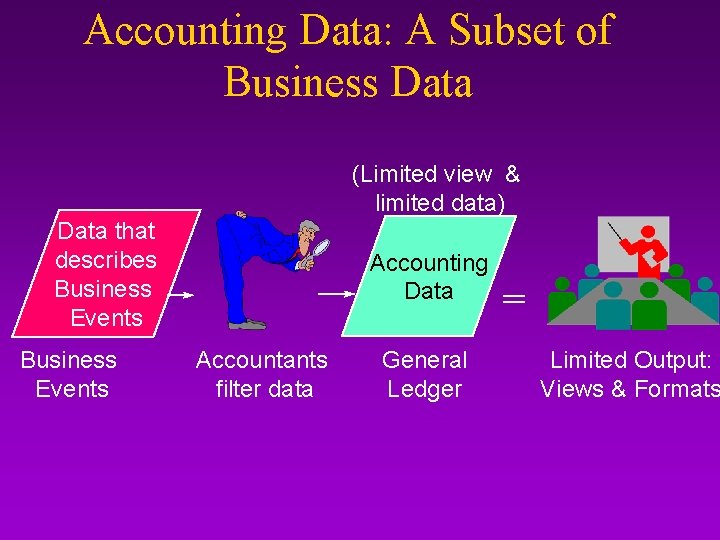
Accounting Data: A Subset of Business Data (Limited view & limited data) Data that describes Business Events Accounting Data Accountants filter data General Ledger Limited Output: Views & Formats
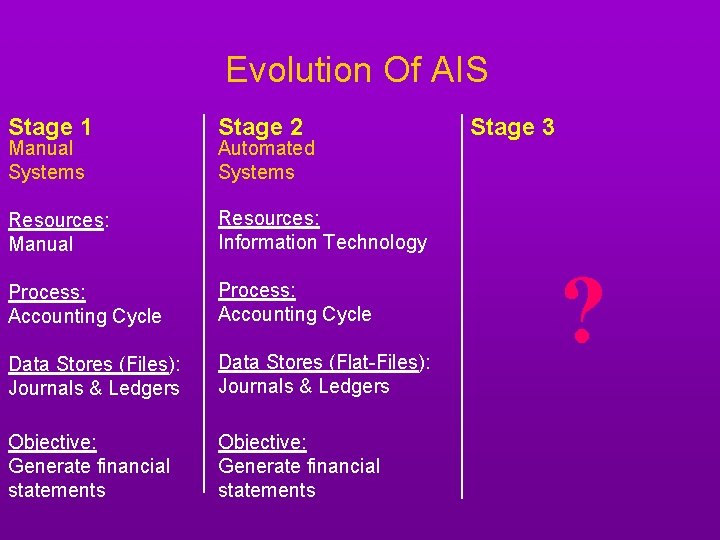
Evolution Of AIS Stage 1 Stage 2 Resources: Manual Resources: Information Technology Process: Accounting Cycle Data Stores (Files): Journals & Ledgers Data Stores (Flat-Files): Journals & Ledgers Objective: Generate financial statements Manual Systems Automated Systems Stage 3 ?
The solution: An event-driven, enterprise-wide information system, sitting on top of a relational database management system
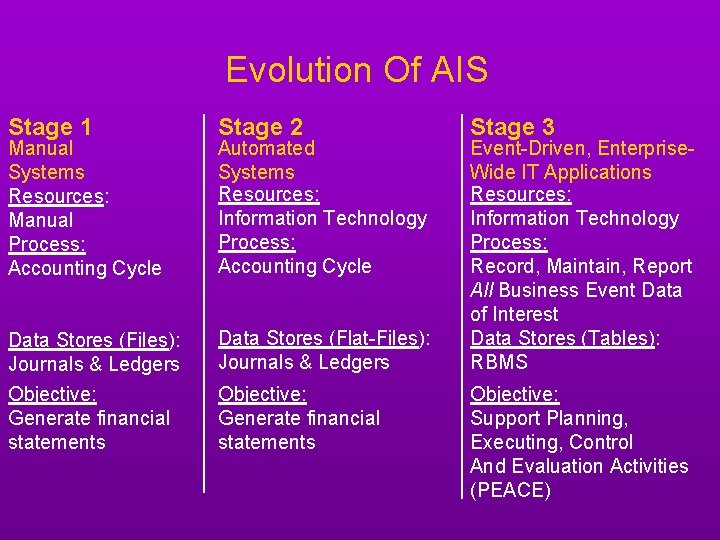
Evolution Of AIS Stage 1 Stage 2 Data Stores (Files): Journals & Ledgers Objective: Generate financial statements Data Stores (Flat-Files): Journals & Ledgers Manual Systems Resources: Manual Process: Accounting Cycle Automated Systems Resources: Information Technology Process: Accounting Cycle Objective: Generate financial statements Stage 3 Event-Driven, Enterprise. Wide IT Applications Resources: Information Technology Process: Record, Maintain, Report All Business Event Data of Interest Data Stores (Tables): RBMS Objective: Support Planning, Executing, Control And Evaluation Activities (PEACE)
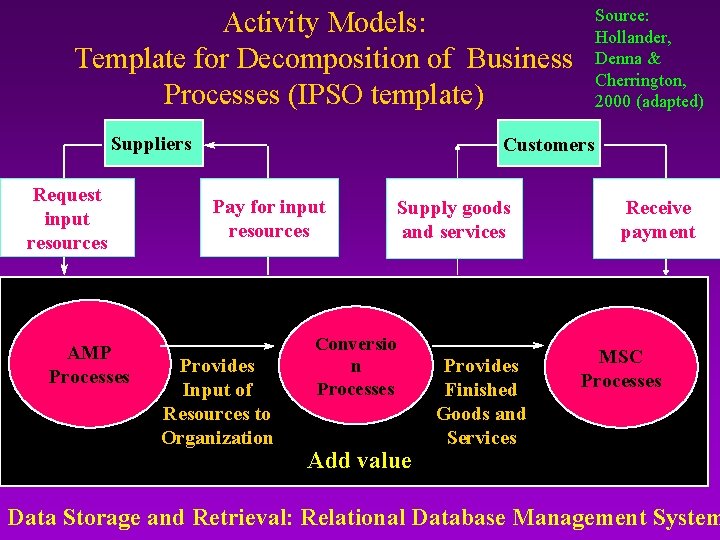
Source: Hollander, Denna & Cherrington, 2000 (adapted) Activity Models: Template for Decomposition of Business Processes (IPSO template) Suppliers Request input resources Customers Pay for input resources Supply goods and services Receive payment ORGANIZATION AMP Processes Provides Input of Resources to Organization Conversio n Processes Add value Provides Finished Goods and Services MSC Processes Data Storage and Retrieval: Relational Database Management System
Creating Value Organizations add value by converting resources to develop and provide the goods and services that customers desire.
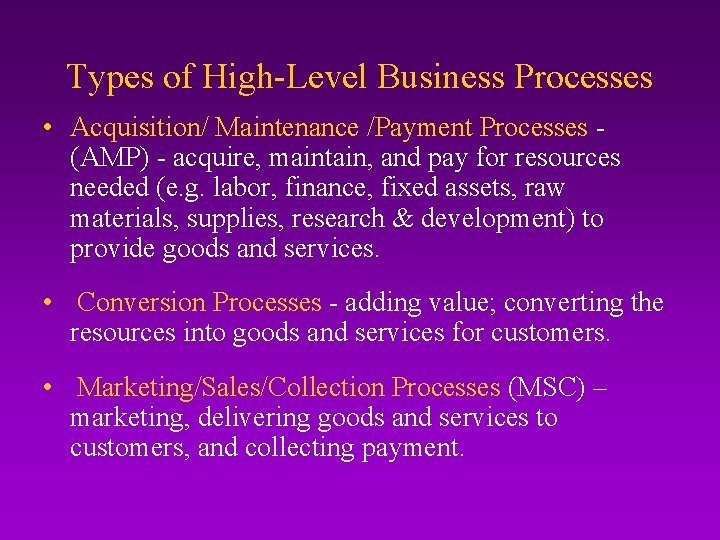
Types of High-Level Business Processes • Acquisition/ Maintenance /Payment Processes (AMP) - acquire, maintain, and pay for resources needed (e. g. labor, finance, fixed assets, raw materials, supplies, research & development) to provide goods and services. • Conversion Processes - adding value; converting the resources into goods and services for customers. • Marketing/Sales/Collection Processes (MSC) – marketing, delivering goods and services to customers, and collecting payment.
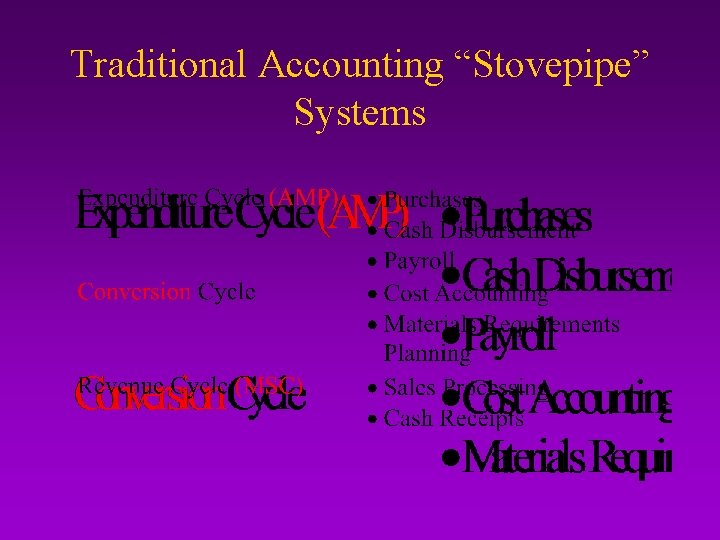
Traditional Accounting “Stovepipe” Systems
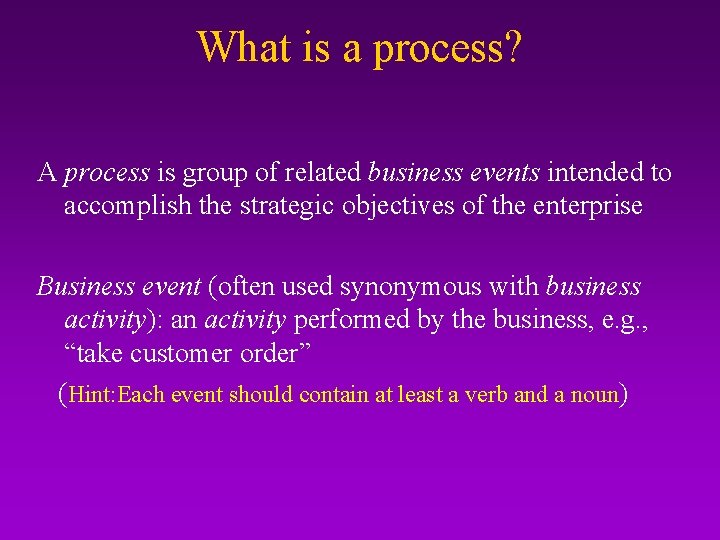
What is a process? A process is group of related business events intended to accomplish the strategic objectives of the enterprise Business event (often used synonymous with business activity): an activity performed by the business, e. g. , “take customer order” (Hint: Each event should contain at least a verb and a noun)
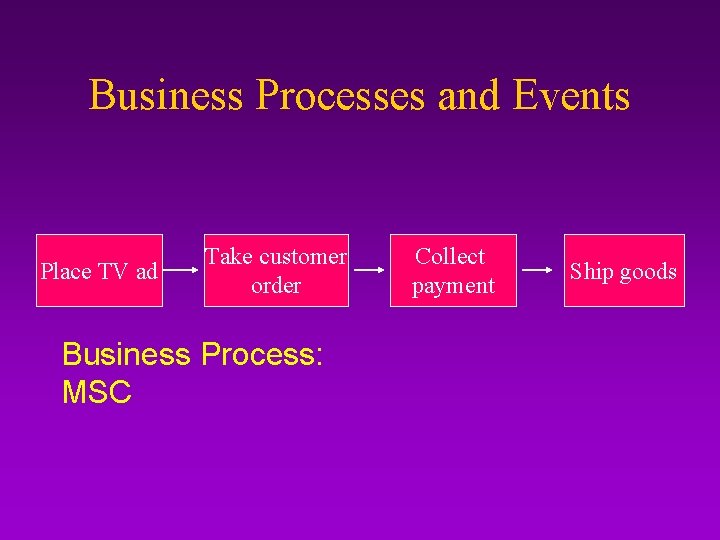
Business Processes and Events Place TV ad Take customer order Business Process: MSC Collect payment Ship goods
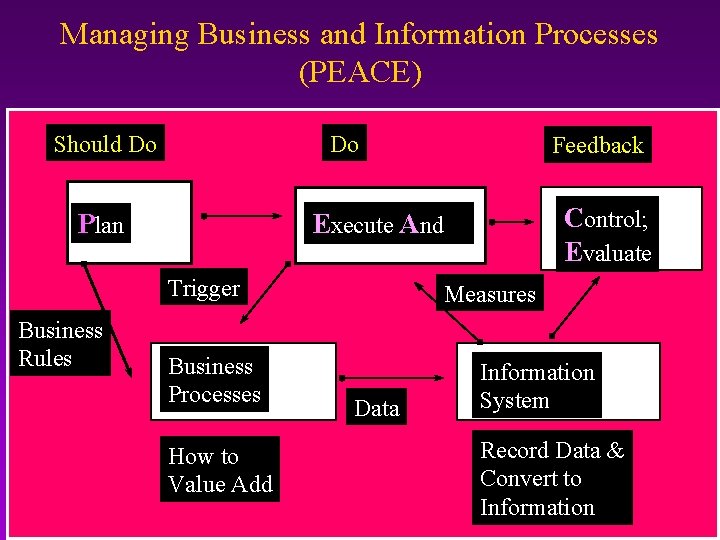
Managing Business and Information Processes (PEACE) Should Do Do Plan Control; Evaluate Execute And Trigger Business Rules Feedback Business Processes How to Value Add Measures Data Information System Record Data & Convert to Information
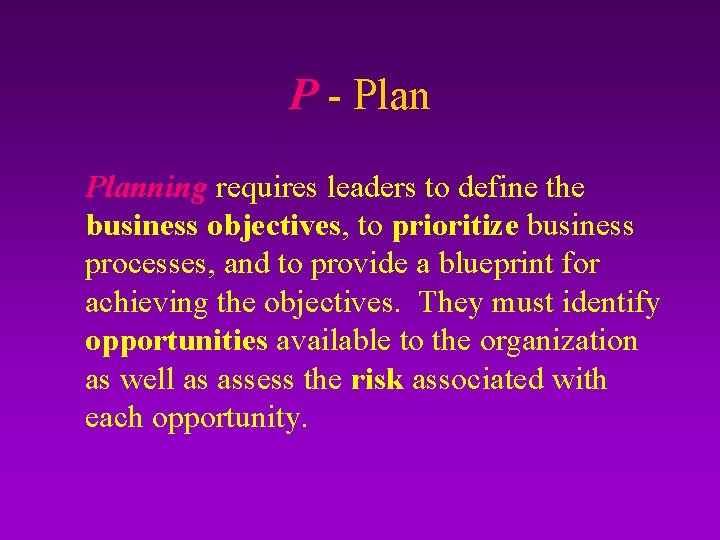
P - Planning requires leaders to define the business objectives, to prioritize business processes, and to provide a blueprint for achieving the objectives. They must identify opportunities available to the organization as well as assess the risk associated with each opportunity.
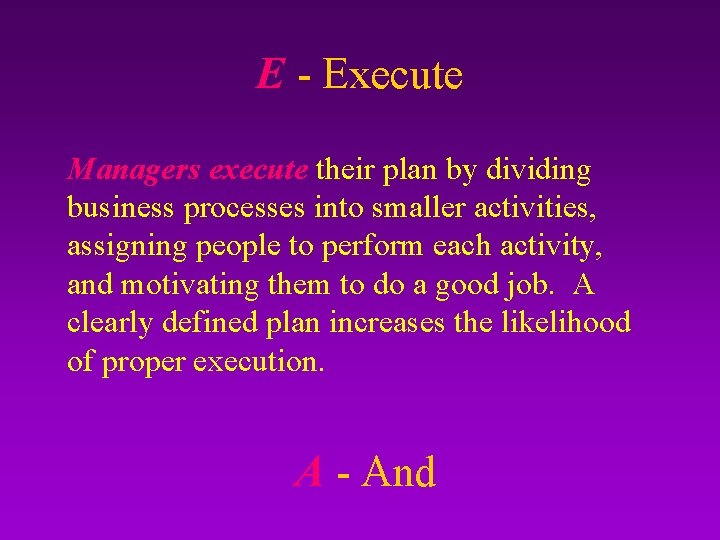
E - Execute Managers execute their plan by dividing business processes into smaller activities, assigning people to perform each activity, and motivating them to do a good job. A clearly defined plan increases the likelihood of proper execution. A - And
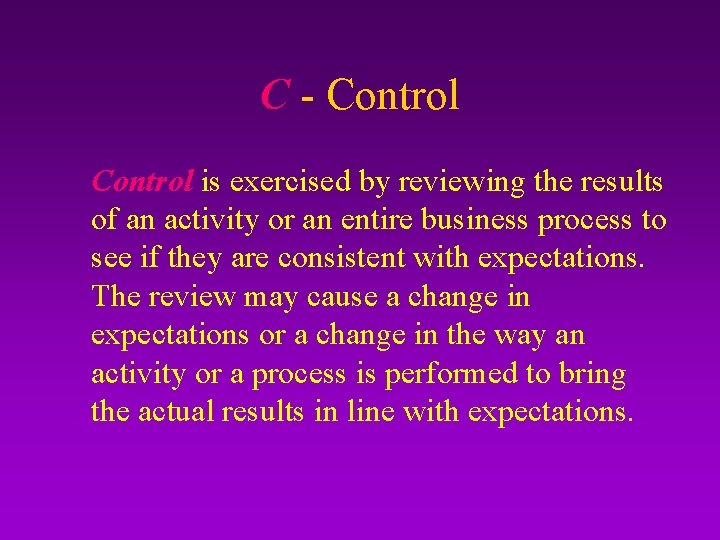
C - Control is exercised by reviewing the results of an activity or an entire business process to see if they are consistent with expectations. The review may cause a change in expectations or a change in the way an activity or a process is performed to bring the actual results in line with expectations.
E - Evaluate Periodically, managers evaluate the operating results to see if the business processes are achieving the organization's objectives. The results of the evaluation are used to modify the plans, objectives, and expectations.
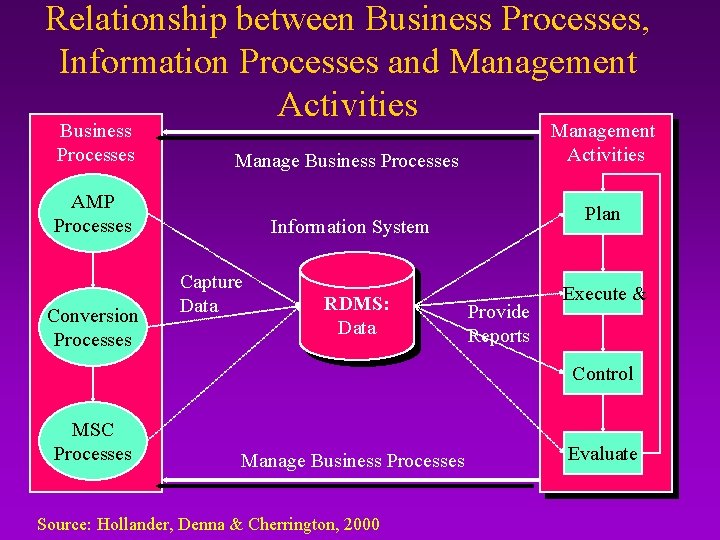
Relationship between Business Processes, Information Processes and Management Activities Business Processes Manage Business Processes AMP Processes Information System Conversion Processes Capture Data RDMS: Data Management Activities Plan Provide Reports Execute & Control MSC Processes Manage Business Processes Source: Hollander, Denna & Cherrington, 2000 Evaluate
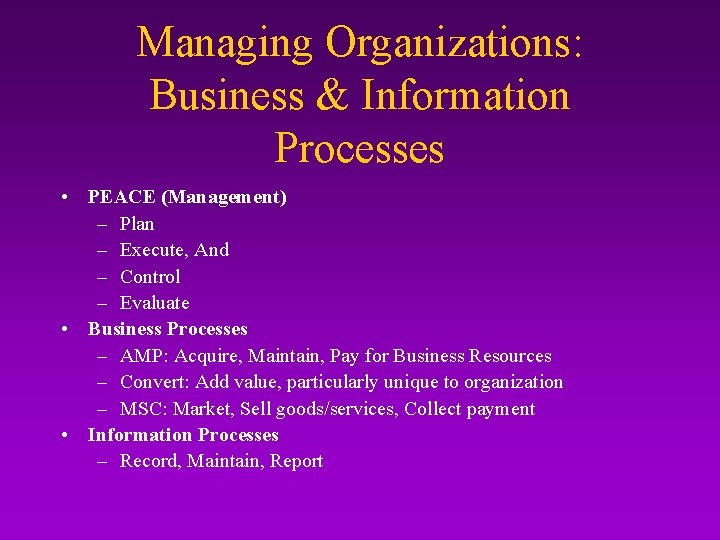
Managing Organizations: Business & Information Processes • PEACE (Management) – Plan – Execute, And – Control – Evaluate • Business Processes – AMP: Acquire, Maintain, Pay for Business Resources – Convert: Add value, particularly unique to organization – MSC: Market, Sell goods/services, Collect payment • Information Processes – Record, Maintain, Report
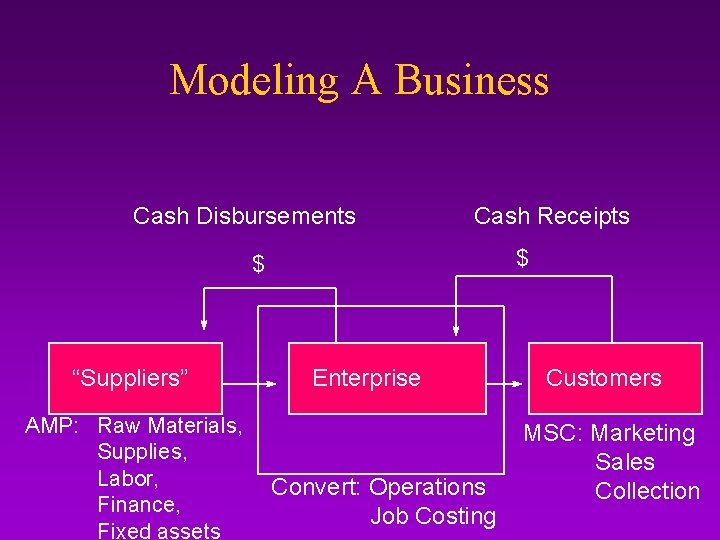
Modeling A Business Cash Disbursements Cash Receipts $ $ “Suppliers” AMP: Raw Materials, Supplies, Labor, Finance, Fixed assets Enterprise Convert: Operations Job Costing Customers MSC: Marketing Sales Collection
How Can Accountants Add Value In The Information Age? – Provide useful information for decision makers who are responsible for planning, executing, controlling or evaluating activities of an organization – Help embed information processes in the business processes (to capture and store data about the processes in real time) – Help embed controls in the business processes – Help management define business rules or policies that shape the nature of its business processes