
Slide Deck Municipalities What is a municipality How
- Slides: 14
Slide Deck: Municipalities
What is a municipality? How do municipalities influence communities?
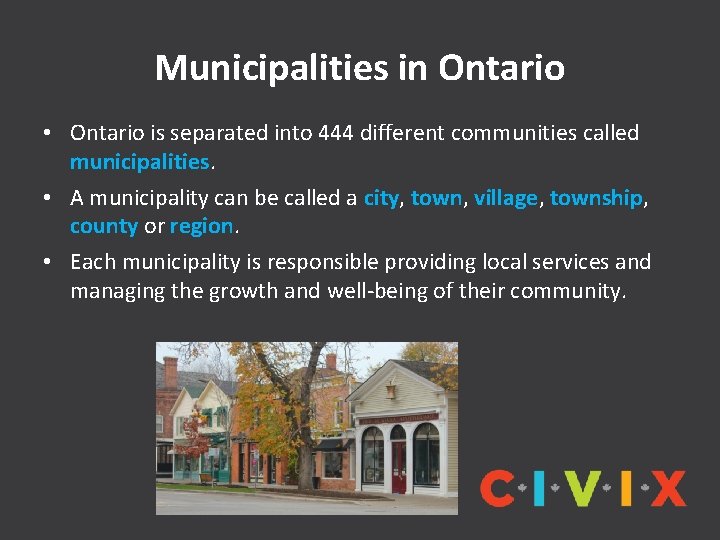
Municipalities in Ontario • Ontario is separated into 444 different communities called municipalities. • A municipality can be called a city, town, village, township, county or region. • Each municipality is responsible providing local services and managing the growth and well-being of their community.
Is our municipality called a city, town, village, township, county or region?
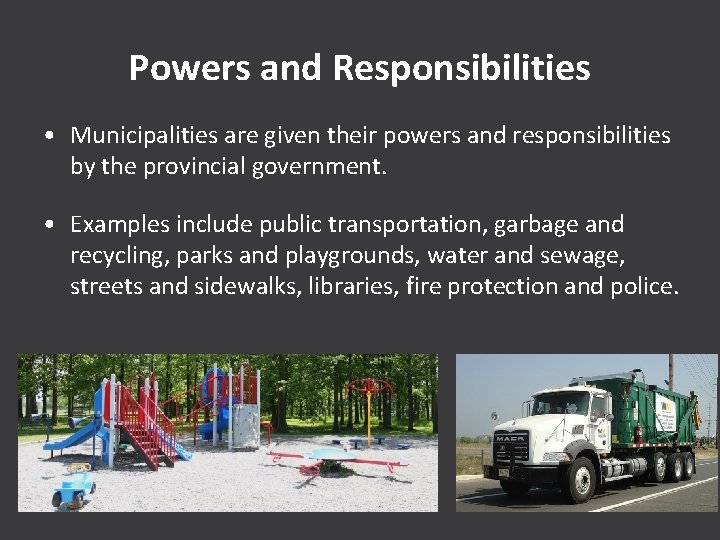
Powers and Responsibilities • Municipalities are given their powers and responsibilities by the provincial government. • Examples include public transportation, garbage and recycling, parks and playgrounds, water and sewage, streets and sidewalks, libraries, fire protection and police.
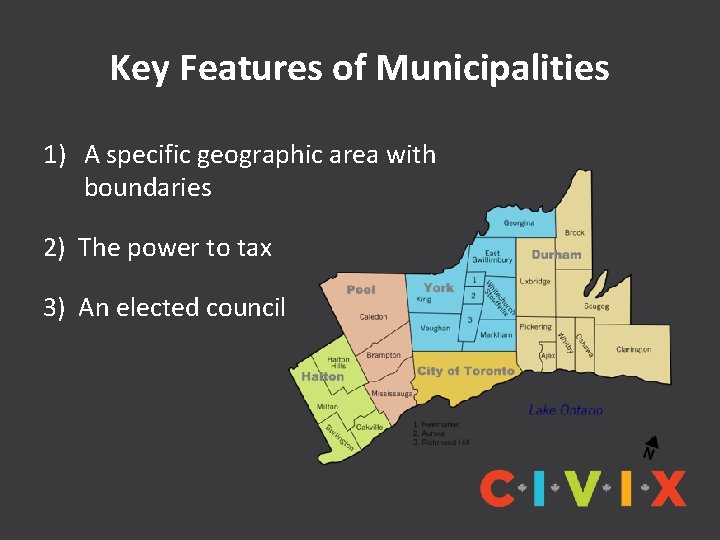
Key Features of Municipalities 1) A specific geographic area with boundaries 2) The power to tax 3) An elected council
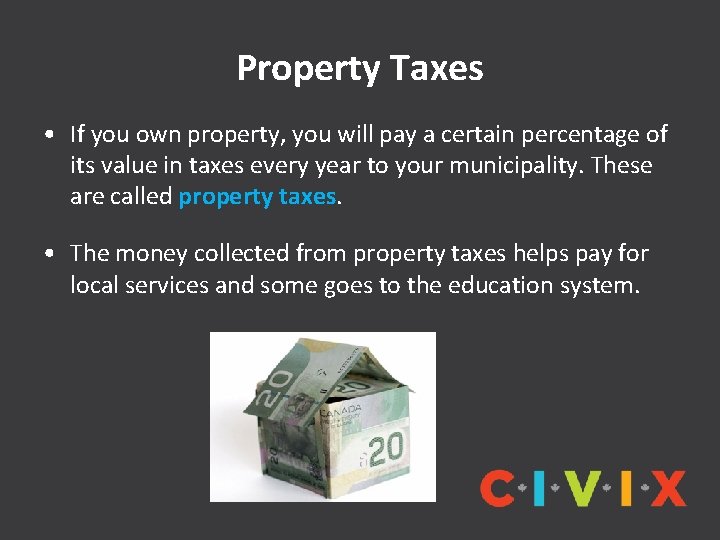
Property Taxes • If you own property, you will pay a certain percentage of its value in taxes every year to your municipality. These are called property taxes. • The money collected from property taxes helps pay for local services and some goes to the education system.
Types of Municipalities • There are three types of municipalities in Ontario. One level system: – A single-tier municipality has one government and local council and it operates on its own. Two level system: – A lower-tier municipality has a local council and government (similar to a single-tier municipality). – An upper-tier municipality has a regional council and government, and provides services for two or more lower-tier municipalities.
Single-tier Municipalities • There are 173 single-tier municipalities in Ontario. Some examples include:
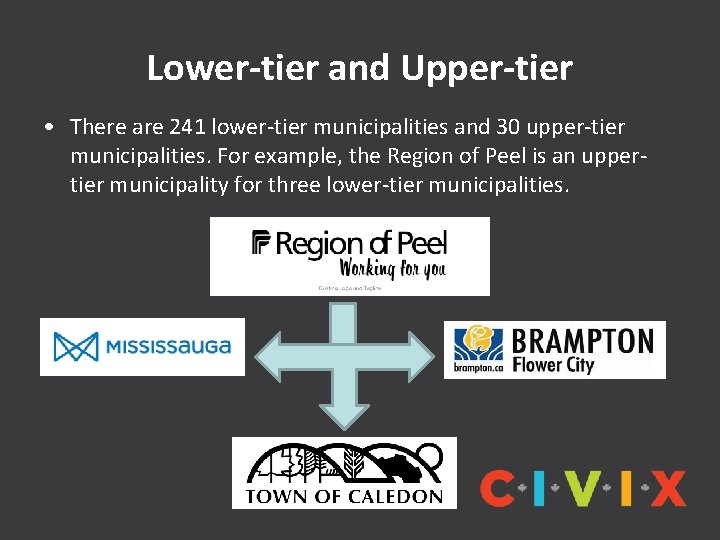
Lower-tier and Upper-tier • There are 241 lower-tier municipalities and 30 upper-tier municipalities. For example, the Region of Peel is an uppertier municipality for three lower-tier municipalities.
Is our municipality a lower-tier or singletier municipality? Are we part of an upper-tier municipality?
Local Councils • Each local council (single-tier or upper-tier) is made up of a head of council, known as the mayor or reeve, and other council members, known as councillors or aldermen. • Mayors and reeves are elected by all voters in the municipality. This is called a at-large system. • Councillors and aldermen can be elected either atlarge or by a ward system of voting (where the municipality is broken down into smaller sections).
The Role of Council members govern their municipality through the following activities: • Listening to the concerns and ideas of their constituents (people living in their community) • Attending meetings • Reviewing reports from municipal officials • Creating, debating and voting on by-laws (rules) they believe will improve their municipality.
Final Thoughts • What would you change about your municipality and why? • What actions could you as a citizen take to address an issue in the community? • Why is it important to be an active and engaged member of the community?