
Slide 7 1 FROM MODULES TO OBJECTS Overview
Slide 7. 1 FROM MODULES TO OBJECTS
Overview l l l l l Slide 7. 2 What is a module? Cohesion Coupling Data encapsulation Abstract data types Information hiding Objects Inheritance, polymorphism, and dynamic binding The object-oriented paradigm
7. 1 What Is a Module? l Slide 7. 3 A lexically contiguous sequence of program statements, bounded by boundary elements, with an aggregate identifier – “Lexically contiguous” » Adjoining in the code – “Boundary elements” » {. . . } » begin. . . end – “Aggregate identifier” » A name for the entire module
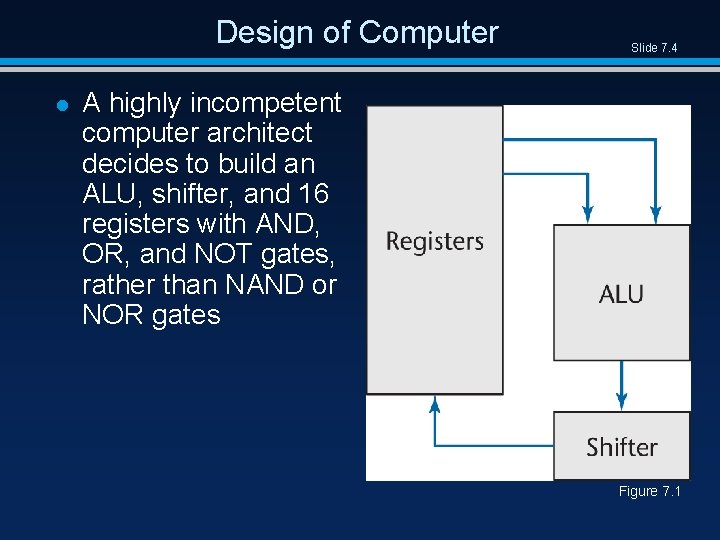
Design of Computer l Slide 7. 4 A highly incompetent computer architect decides to build an ALU, shifter, and 16 registers with AND, OR, and NOT gates, rather than NAND or NOR gates Figure 7. 1
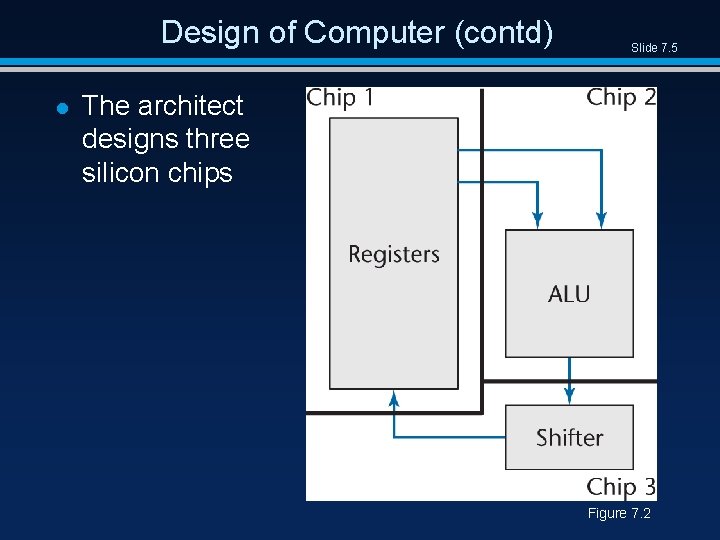
Design of Computer (contd) l Slide 7. 5 The architect designs three silicon chips Figure 7. 2
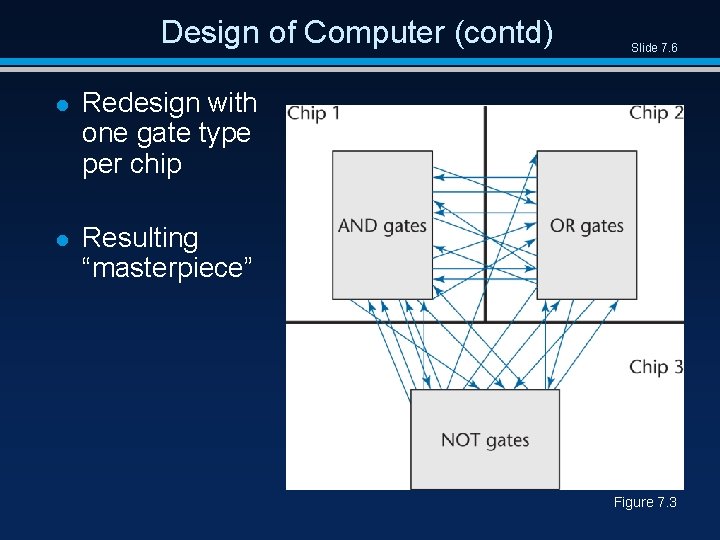
Design of Computer (contd) l Redesign with one gate type per chip l Resulting “masterpiece” Slide 7. 6 Figure 7. 3
Computer Design (contd) l The two designs are functionally equivalent – The second design is » » l Hard to understand Hard to locate faults Difficult to extend or enhance Cannot be reused in another product Modules must be like the first design – Maximal relationships within modules, and – Minimal relationships between modules Slide 7. 7
Composite/Structured Design l A method for breaking up a product into modules to achieve – Maximal interaction within a module, and – Minimal interaction between modules l Module cohesion – Degree of interaction within a module l Slide 7. 8 Module coupling – Degree of interaction between modules
Function, Logic, and Context of a Module Slide 7. 9 l In C/SD, the name of a module is its function l Example: – A module computes the square root of double precision integers using Newton’s algorithm. The module is named compute_square_root l The underscores denote that the classical paradigm is used here
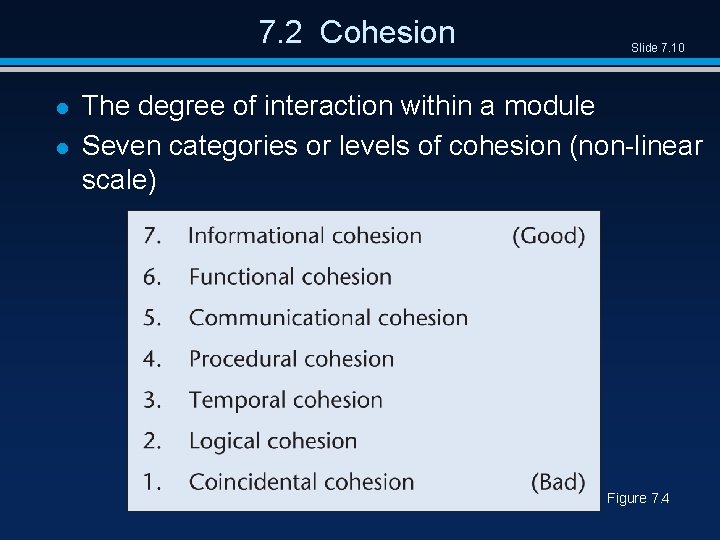
7. 2 Cohesion l l Slide 7. 10 The degree of interaction within a module Seven categories or levels of cohesion (non-linear scale) Figure 7. 4
7. 2. 1 Coincidental Cohesion Slide 7. 11 l A module has coincidental cohesion if it performs multiple, completely unrelated actions l Example: – print_next_line, reverse_string_of_characters_comprising_second_ parameter, add_7_to_fifth_parameter, convert_fourth_parameter_to_floating_point l Such modules arise from rules like – “Every module will consist of between 35 and 50 statements”
Why Is Coincidental Cohesion So Bad? Slide 7. 12 l It degrades maintainability l A module with coincidental cohesion is not reusable l The problem is easy to fix – Break the module into separate modules, each performing one task
7. 2. 2 Logical Cohesion l Slide 7. 13 A module has logical cohesion when it performs a series of related actions, one of which is selected by the calling module
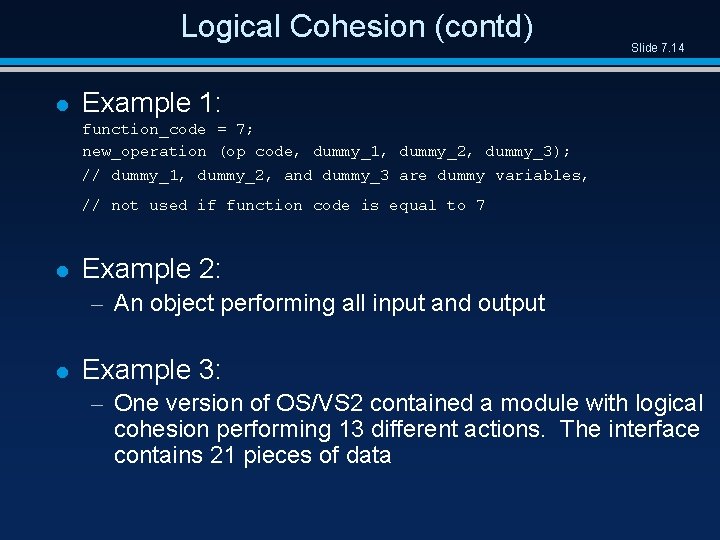
Logical Cohesion (contd) l Slide 7. 14 Example 1: function_code = 7; new_operation (op code, dummy_1, dummy_2, dummy_3); // dummy_1, dummy_2, and dummy_3 are dummy variables, // not used if function code is equal to 7 l Example 2: – An object performing all input and output l Example 3: – One version of OS/VS 2 contained a module with logical cohesion performing 13 different actions. The interface contains 21 pieces of data
Why Is Logical Cohesion So Bad? Slide 7. 15 l The interface is difficult to understand l Code for more than one action may be intertwined l Difficult to reuse
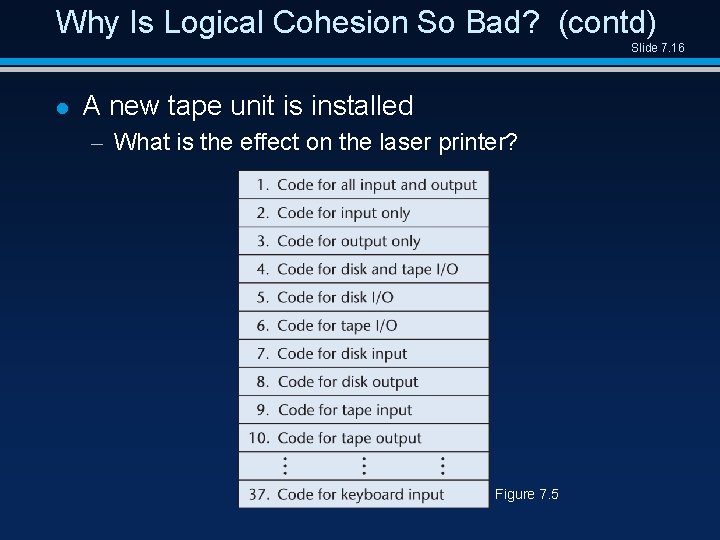
Why Is Logical Cohesion So Bad? (contd) Slide 7. 16 l A new tape unit is installed – What is the effect on the laser printer? Figure 7. 5
7. 2. 3 Temporal Cohesion Slide 7. 17 l A module has temporal cohesion when it performs a series of actions related in time l Example: – open_old_master_file, new_master_file, transaction_file, and print_file; initialize_sales_district_table, read_first_transaction_record, read_first_old_master_record (a. k. a. perform_initialization)
Why Is Temporal Cohesion So Bad? l The actions of this module are weakly related to one another, but strongly related to actions in other modules – Consider l Slide 7. 18 sales_district_table Not reusable
7. 2. 4 Procedural Cohesion Slide 7. 19 l A module has procedural cohesion if it performs a series of actions related by the procedure to be followed by the product l Example: – read_part_number_and_update_repair_record_on_ master_file
Why Is Procedural Cohesion So Bad? l Slide 7. 20 The actions are still weakly connected, so the module is not reusable
7. 2. 5 Communicational Cohesion Slide 7. 21 l A module has communicational cohesion if it performs a series of actions related by the procedure to be followed by the product, but in addition all the actions operate on the same data l Example 1: update_record_in_database_and_write_it_to_audit_trail l Example 2: calculate_new_coordinates_and_send_them_to_terminal
Why Is Communicational Cohesion So Bad? Slide 7. 22 l Still lack of reusability
7. 2. 6 Functional Cohesion l A module with functional cohesion performs exactly one action Slide 7. 23
7. 2. 6 Functional Cohesion l Example 1: – get_temperature_of_furnace l Example 2: – compute_orbital_of_electron l Example 3: – write_to_diskette l Example 4: – calculate_sales_commission Slide 7. 24
Why Is Functional Cohesion So Good? Slide 7. 25 l More reusable l Corrective maintenance is easier – Fault isolation – Fewer regression faults l Easier to extend a product
7. 2. 7 Informational Cohesion l Slide 7. 26 A module has informational cohesion if it performs a number of actions, each with its own entry point, with independent code for each action, all performed on the same data structure
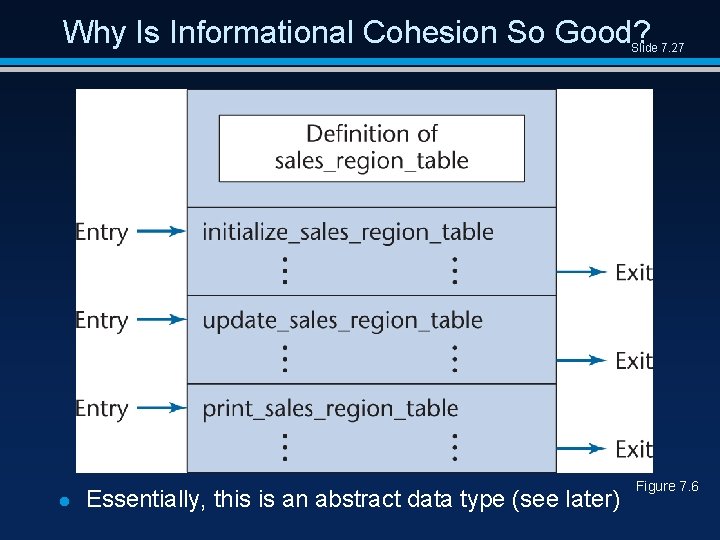
Why Is Informational Cohesion So Good? Slide 7. 27 l Essentially, this is an abstract data type (see later) Figure 7. 6
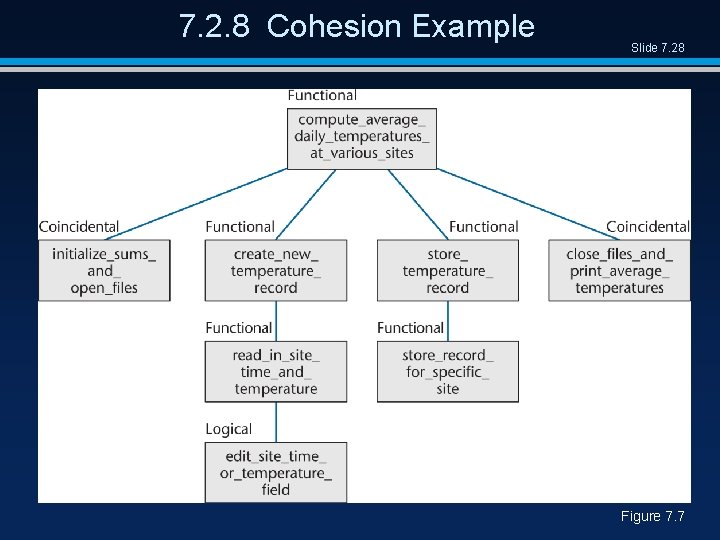
7. 2. 8 Cohesion Example Slide 7. 28 Figure 7. 7
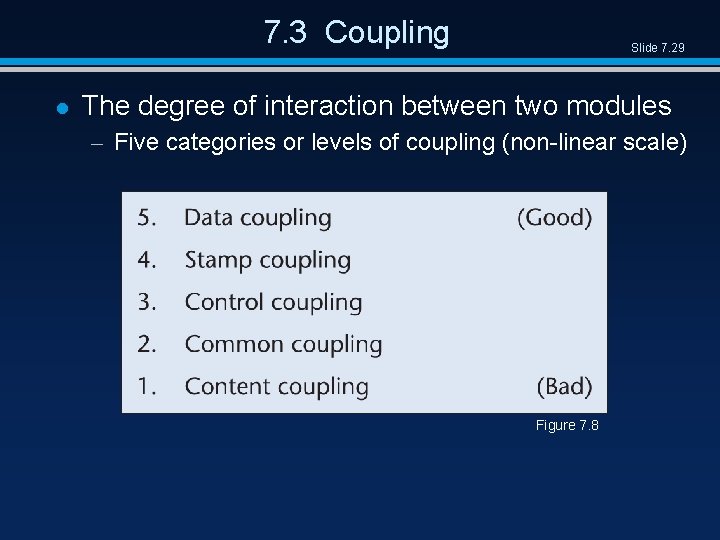
7. 3 Coupling l Slide 7. 29 The degree of interaction between two modules – Five categories or levels of coupling (non-linear scale) Figure 7. 8
7. 3. 1 Content Coupling Slide 7. 30 l Two modules are content coupled if one directly references contents of the other l Example 1: – Module l p modifies a statement of module q Example 2: – Module p refers to local data of module q in terms of some numerical displacement within q l Example 3: – Module p branches into a local label of module q
Why Is Content Coupling So Bad? l Slide 7. 31 Almost any change to module q, even recompiling q with a new compiler or assembler, requires a change to module p
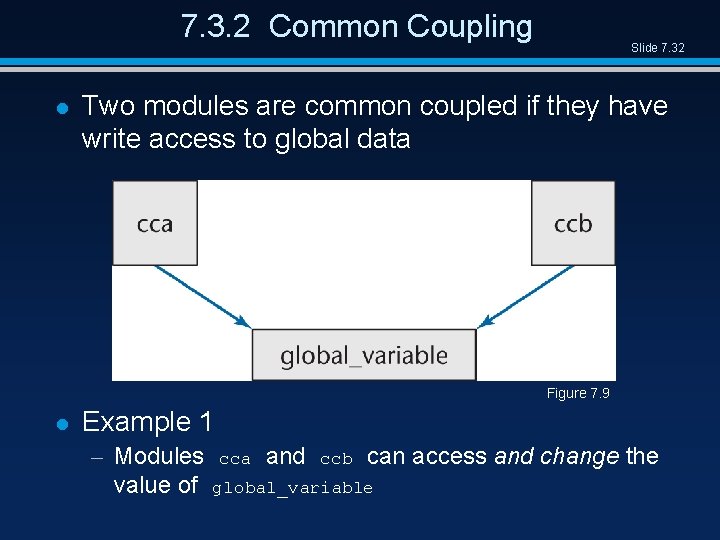
7. 3. 2 Common Coupling l Slide 7. 32 Two modules are common coupled if they have write access to global data Figure 7. 9 l Example 1 – Modules value of cca and ccb can access and change the global_variable
7. 3. 2 Common Coupling (contd) l Slide 7. 33 Example 2: – Modules cca and ccb both have access to the same database, and can both read and write the same record l Example 3: – FORTRAN common – COBOL common (nonstandard) – COBOL-80 global
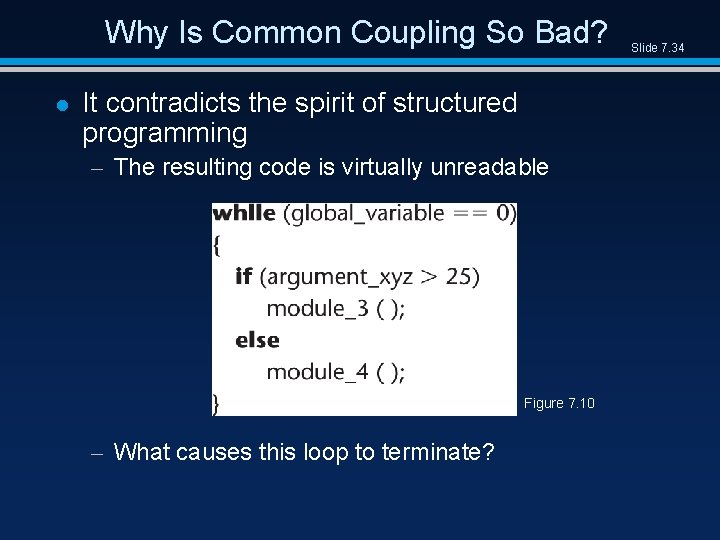
Why Is Common Coupling So Bad? l It contradicts the spirit of structured programming – The resulting code is virtually unreadable Figure 7. 10 – What causes this loop to terminate? Slide 7. 34
Why Is Common Coupling So Bad? (contd) Slide 7. 35 l Modules can have side-effects – This affects their readability – Example: edit_this_transaction (record_7) – The entire module must be read to find out what it does l A change during maintenance to the declaration of a global variable in one module necessitates corresponding changes in other modules l Common-coupled modules are difficult to reuse
Why Is Common Coupling So Bad? (contd) Slide 7. 36 l Common coupling between a module p and the rest of the product can change without changing in any way p – Clandestine common coupling – Example: The Linux kernel l A module is exposed to more data than necessary – This can lead to computer crime
7. 3. 3 Control Coupling Slide 7. 37 l Two modules are control coupled if one passes an element of control to the other l Example 1: – An operation code is passed to a module with logical cohesion l Example 2: – A control switch passed as an argument
Control Coupling (contd) l Module p calls module l Message: – I have failed l Slide 7. 38 q — data Message: – I have failed, so write error message ABC 123 — control
Why Is Control Coupling So Bad? l Slide 7. 39 The modules are not independent – Module q (the called module) must know the internal structure and logic of module p – This affects reusability l Associated with modules of logical cohesion
7. 3. 4 Stamp Coupling l Slide 7. 40 Some languages allow only simple variables as parameters – part_number – satellite_altitude – degree_of_multiprogramming l Many languages also support the passing of data structures – part_record – satellite_coordinates – segment_table
Stamp Coupling (contd) l Slide 7. 41 Two modules are stamp coupled if a data structure is passed as a parameter, but the called module operates on some but not all of the individual components of the data structure
Why Is Stamp Coupling So Bad? l Slide 7. 42 It is not clear, without reading the entire module, which fields of a record are accessed or changed – Example calculate_withholding (employee_record) l Difficult to understand l Unlikely to be reusable l More data than necessary is passed – Uncontrolled data access can lead to computer crime
Why Is Stamp Coupling So Bad? (contd) Slide 7. 43 l However, there is nothing wrong with passing a data structure as a parameter, provided that all the components of the data structure accessed and/or changed l Examples: invert_matrix (original_matrix, inverted_matrix); print_inventory_record (warehouse_record);
7. 3. 5 Data Coupling Slide 7. 44 l Two modules are data coupled if all parameters are homogeneous data items (simple parameters, or data structures all of whose elements are used by called module) l Examples: – display_time_of_arrival (flight_number); – compute_product (first_number, second_number); – get_job_with_highest_priority (job_queue);
Why Is Data Coupling So Good? Slide 7. 45 l The difficulties of content, common, control, and stamp coupling are not present l Maintenance is easier
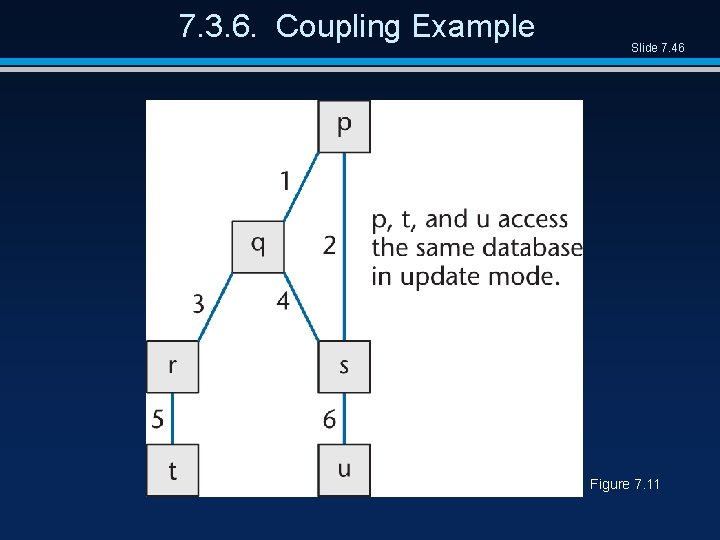
7. 3. 6. Coupling Example Slide 7. 46 Figure 7. 11
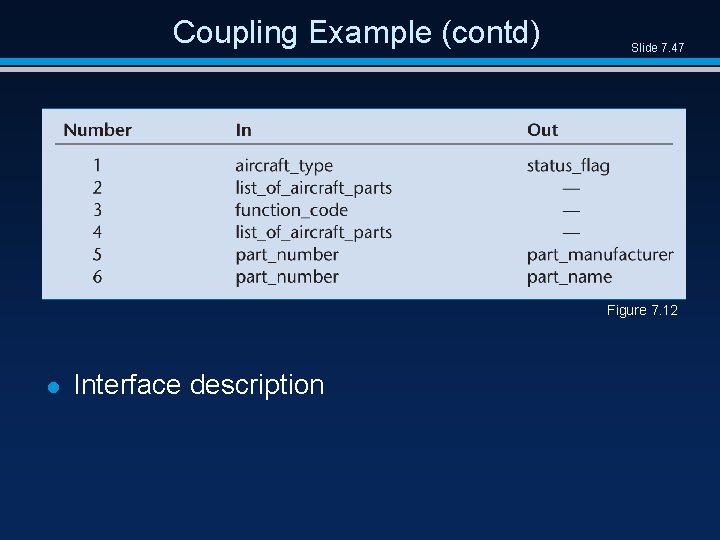
Coupling Example (contd) Slide 7. 47 Figure 7. 12 l Interface description
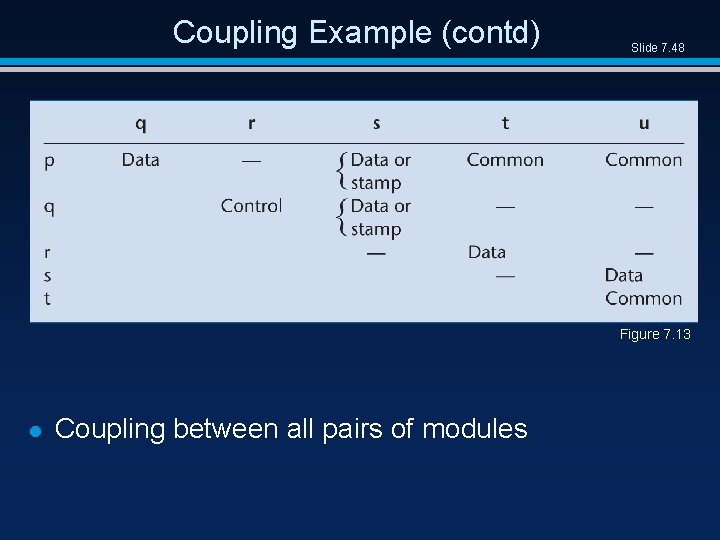
Coupling Example (contd) Slide 7. 48 Figure 7. 13 l Coupling between all pairs of modules
7. 3. 7 The Importance of Coupling l Slide 7. 49 As a result of tight coupling – A change to module p can require a corresponding change to module q – If the corresponding change is not made, this leads to faults l Good design has high cohesion and low coupling – What else characterizes good design? (see over)
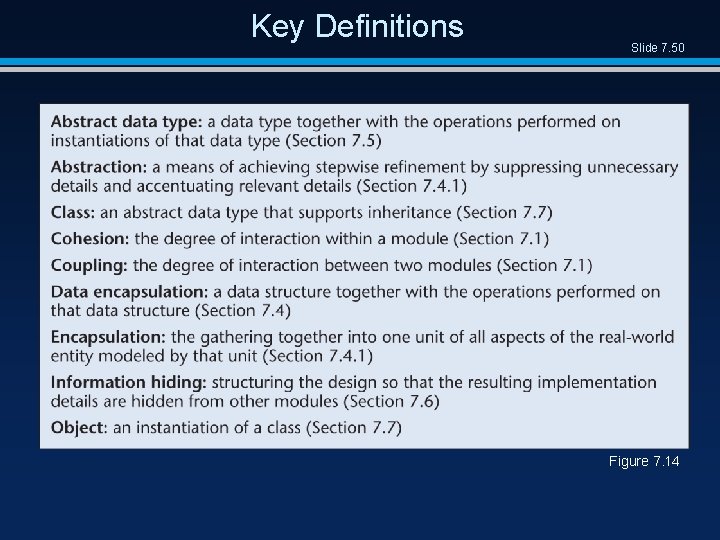
Key Definitions Slide 7. 50 Figure 7. 14
7. 4 Data Encapsulation l Slide 7. 51 Example – Design an operating system for a large mainframe computer. Batch jobs submitted to the computer will be classified as high priority, medium priority, or low priority. There must be three queues for incoming batch jobs, one for each job type. When a job is submitted by a user, the job is added to the appropriate queue, and when the operating system decides that a job is ready to be run, it is removed from its queue and memory is allocated to it l Design 1 (Next slide) – Low cohesion — operations on job queues are spread all over the product
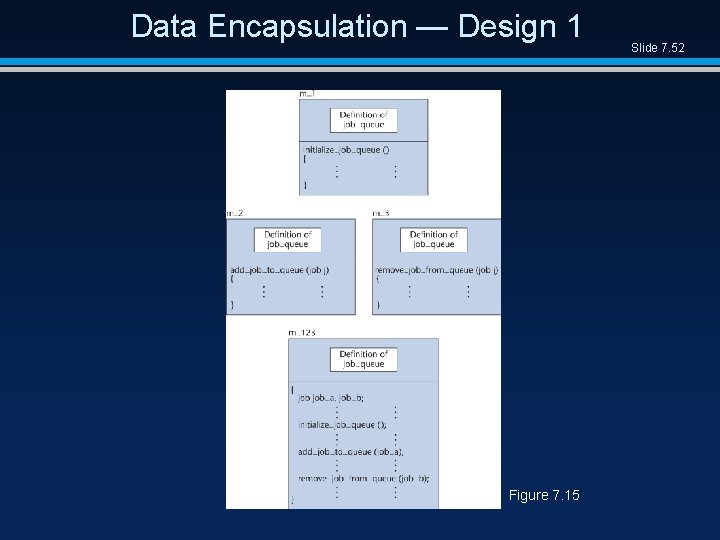
Data Encapsulation — Design 1 Figure 7. 15 Slide 7. 52
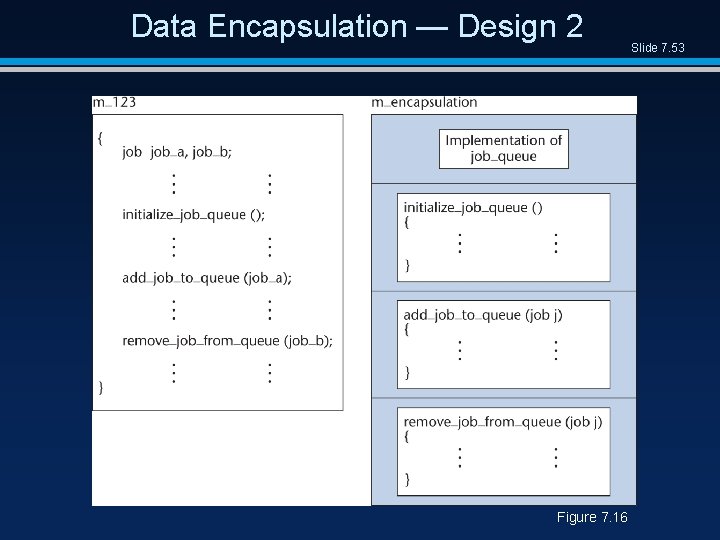
Data Encapsulation — Design 2 Figure 7. 16 Slide 7. 53
Data Encapsulation (contd) l m_encapsulation has informational cohesion l m_encapsulation is an implementation of data Slide 7. 54 encapsulation – A data structure (job_queue) together with operations performed on that data structure l Advantages – Development – Maintenance
Data Encapsulation and Development Slide 7. 55 l Data encapsulation is an example of abstraction l Job queue example: – Data structure » job_queue – Three new functions » initialize_job_queue » add_job_to_queue » delete_job_from_queue
7. 4. 1 Data Encapsulation and Development Slide 7. 56 l Abstraction – Conceptualize problem at a higher level » Job queues and operations on job queues – Not a lower level » Records or arrays
Stepwise Refinement 1. Design the product in terms of higher level concepts – It is irrelevant how job queues are implemented 2. Then design the lower level components – Totally ignore what use will be made of them Slide 7. 57
Stepwise Refinement (contd) l Slide 7. 58 In the 1 st step, assume the existence of the lower level – Our concern is the behavior of the data structure » job_queue l In the 2 nd step, ignore the existence of the higher level – Our concern is the implementation of that behavior l In a larger product, there will be many levels of abstraction
7. 4. 2 Data Encapsulation and Maintenance Slide 7. 59 l Identify the aspects of the product that are likely to change l Design the product so as to minimize the effects of change – Data structures are unlikely to change – Implementation details may change l Data encapsulation provides a way to cope with change
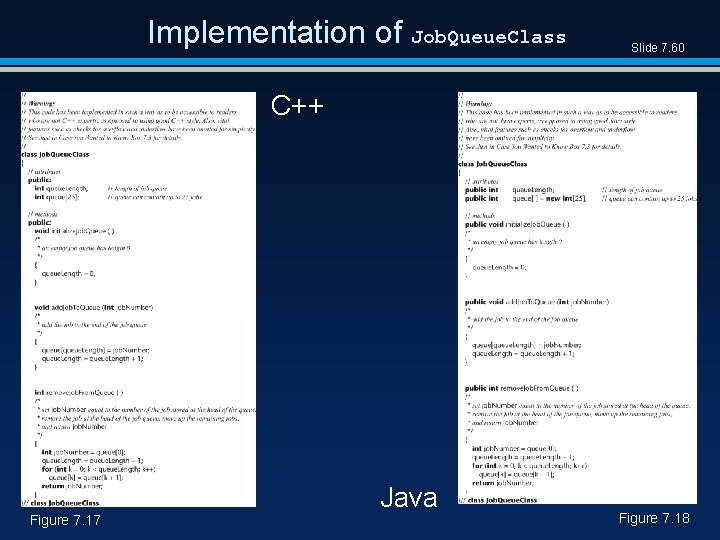
Implementation of Job. Queue. Class Slide 7. 60 C++ Figure 7. 17 Java Figure 7. 18
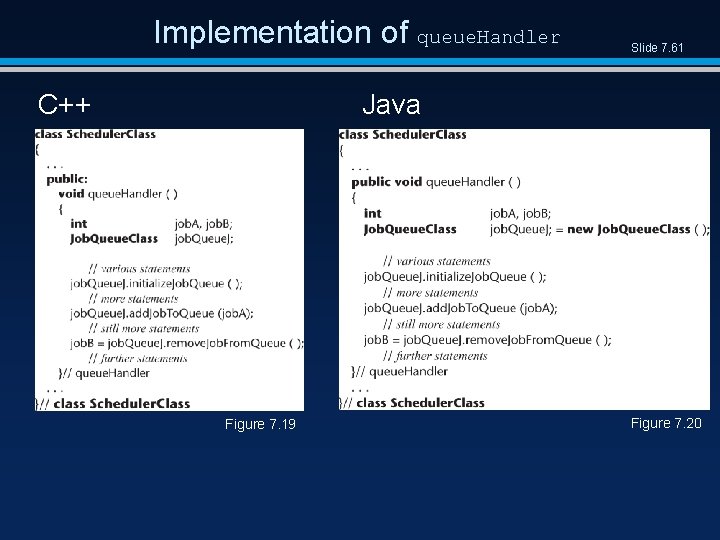
Implementation of queue. Handler C++ Slide 7. 61 Java Figure 7. 19 Figure 7. 20
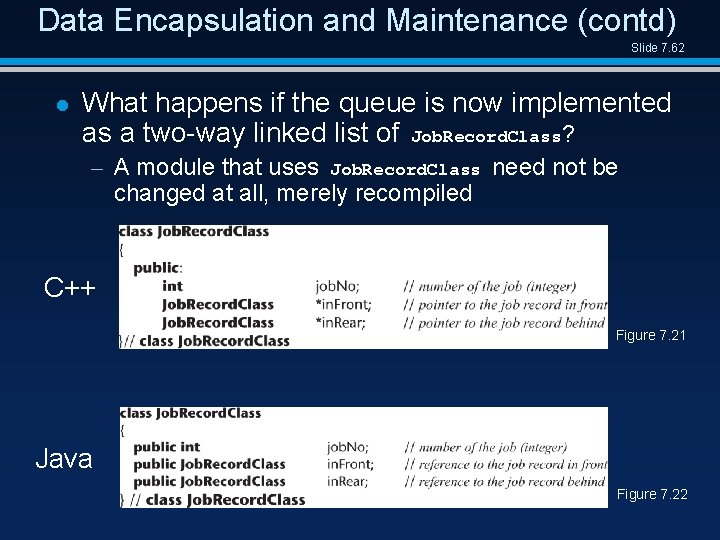
Data Encapsulation and Maintenance (contd) Slide 7. 62 l What happens if the queue is now implemented as a two-way linked list of Job. Record. Class? – A module that uses Job. Record. Class need not be changed at all, merely recompiled C++ Figure 7. 21 Java Figure 7. 22
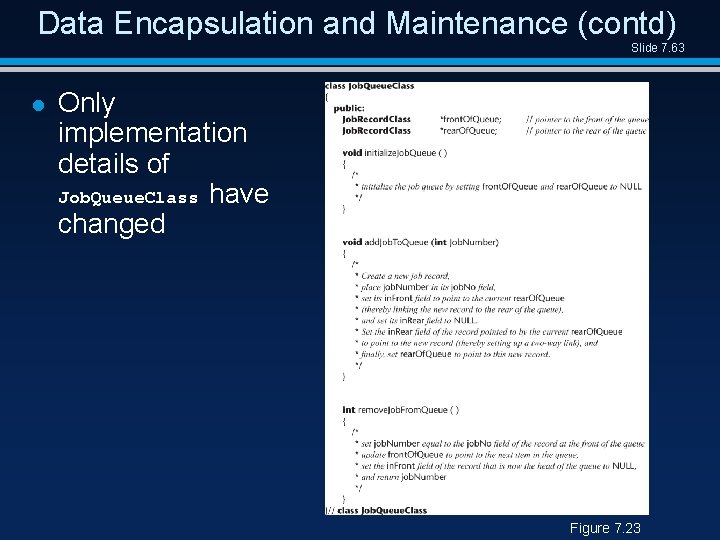
Data Encapsulation and Maintenance (contd) Slide 7. 63 l Only implementation details of Job. Queue. Class have changed Figure 7. 23
7. 5 Abstract Data Types l Slide 7. 64 The problem with both implementations – There is only one queue, not three l We need: – Data type + operations performed on instantiations of that data type l Abstract data type
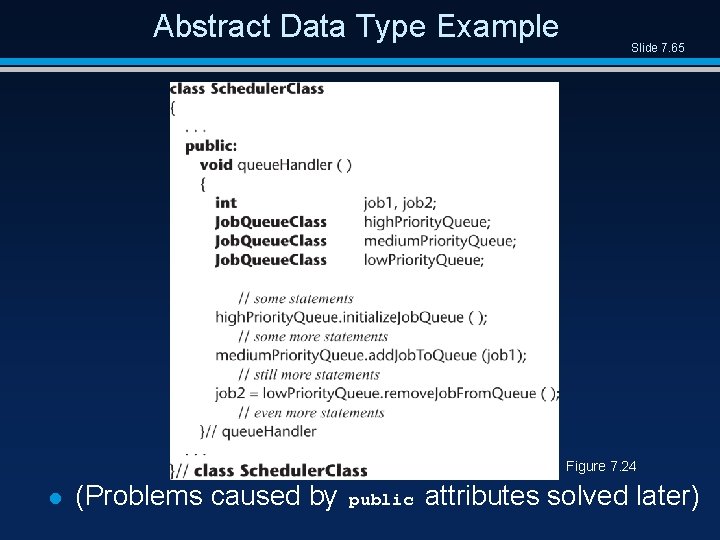
Abstract Data Type Example Slide 7. 65 Figure 7. 24 l (Problems caused by public attributes solved later)
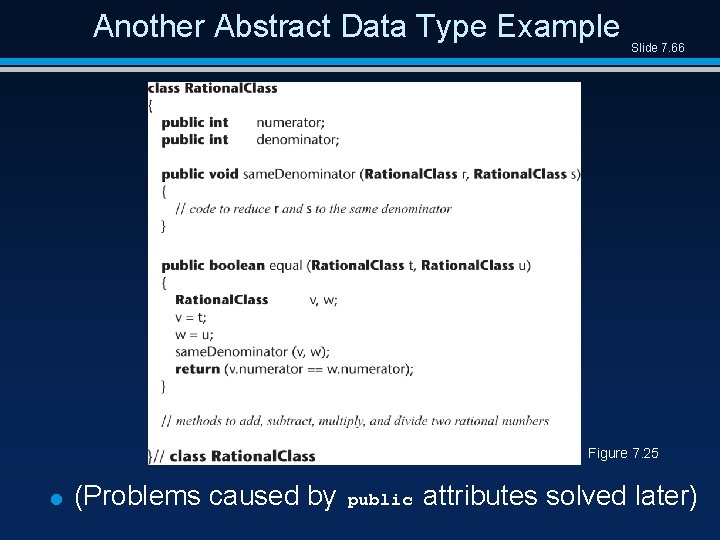
Another Abstract Data Type Example Slide 7. 66 Figure 7. 25 = (Problems caused by public attributes solved later)
7. 6 Information Hiding l Slide 7. 67 Data abstraction – The designer thinks at the level of an ADT l Procedural abstraction – Define a procedure — extend the language l Both are instances of a more general design concept, information hiding – Design the modules in a way that items likely to change are hidden – Future change is localized – Changes cannot affect other modules
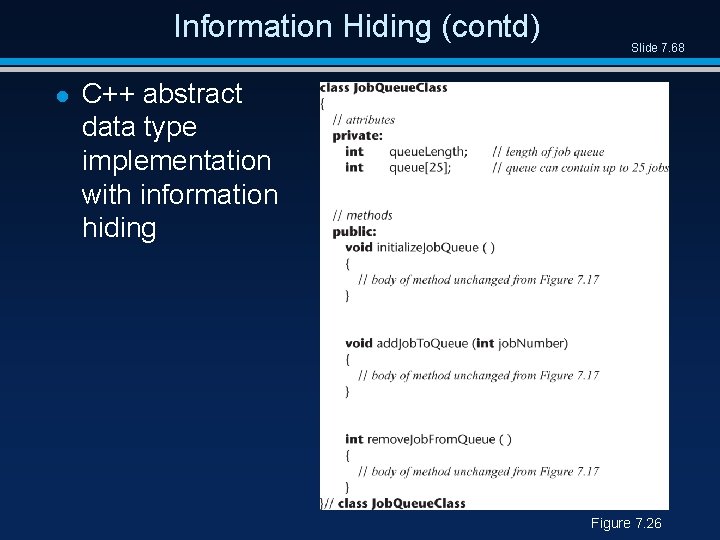
Information Hiding (contd) l Slide 7. 68 C++ abstract data type implementation with information hiding Figure 7. 26
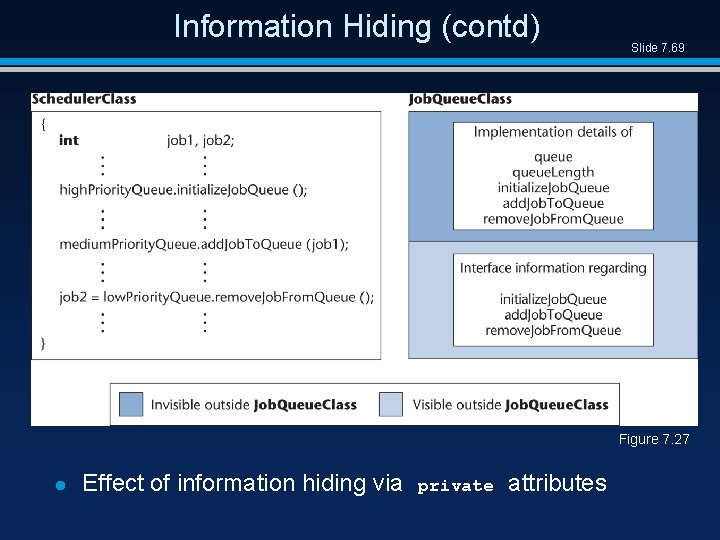
Information Hiding (contd) Slide 7. 69 Figure 7. 27 l Effect of information hiding via private attributes
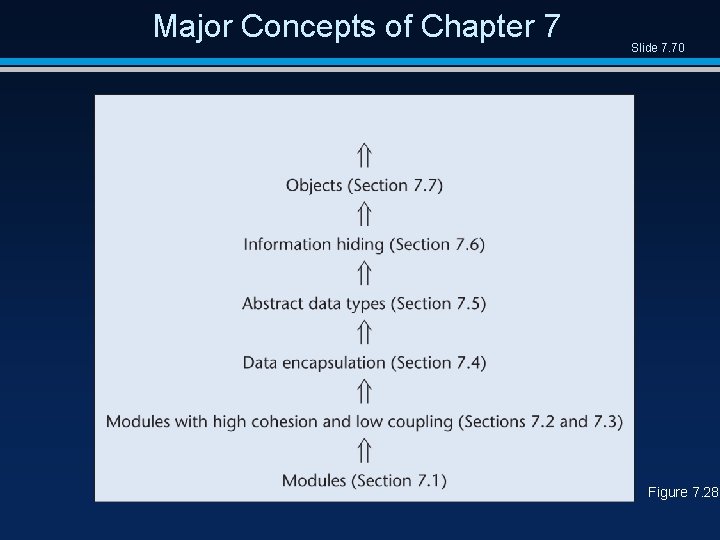
Major Concepts of Chapter 7 Slide 7. 70 Figure 7. 28
7. 7 Objects l Slide 7. 71 First refinement – The product is designed in terms of abstract data types – Variables (“objects”) are instantiations of abstract data types l Second refinement – Class: an abstract data type that supports inheritance – Objects are instantiations of classes

Inheritance l Define Human. Being. Class – An instance of Slide 7. 72 to be a class Human. Being. Class » age, height, gender has attributes, such as – Assign values to the attributes when describing an object

Inheritance (contd) l Define Parent. Class to be a subclass of Slide 7. 73 Human. Being. Class – An instance of Parent. Class has all the attributes of an instance of Human. Being. Class, plus attributes of his/her own » name. Of. Oldest. Child, number. Of. Children – An instance of Parent. Class inherits all attributes of Human. Being. Class

Inheritance (contd) l The property of inheritance is an essential feature of all object-oriented languages – Such as Smalltalk, C++, Ada 95, Java l Slide 7. 74 But not of classical languages – Such as C, COBOL or FORTRAN
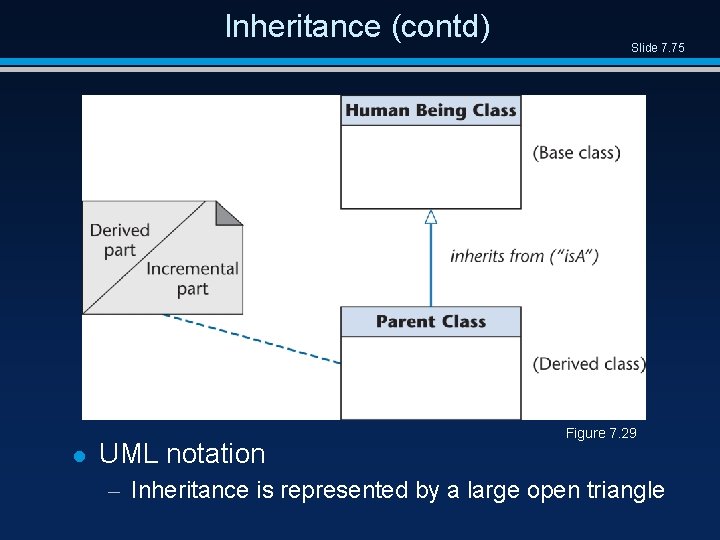
Inheritance (contd) l UML notation Slide 7. 75 Figure 7. 29 – Inheritance is represented by a large open triangle
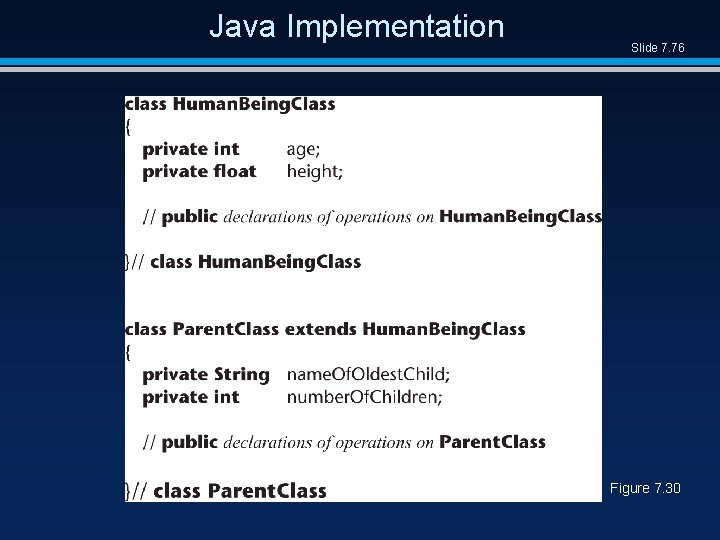
Java Implementation Slide 7. 76 Figure 7. 30
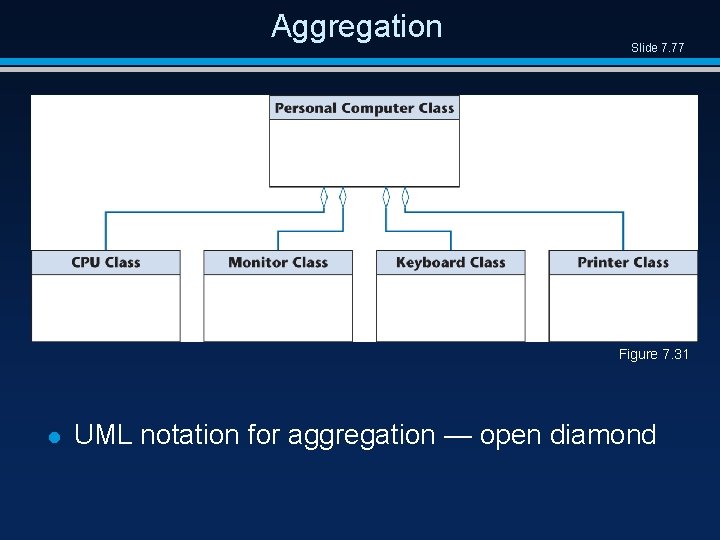
Aggregation Slide 7. 77 Figure 7. 31 l UML notation for aggregation — open diamond
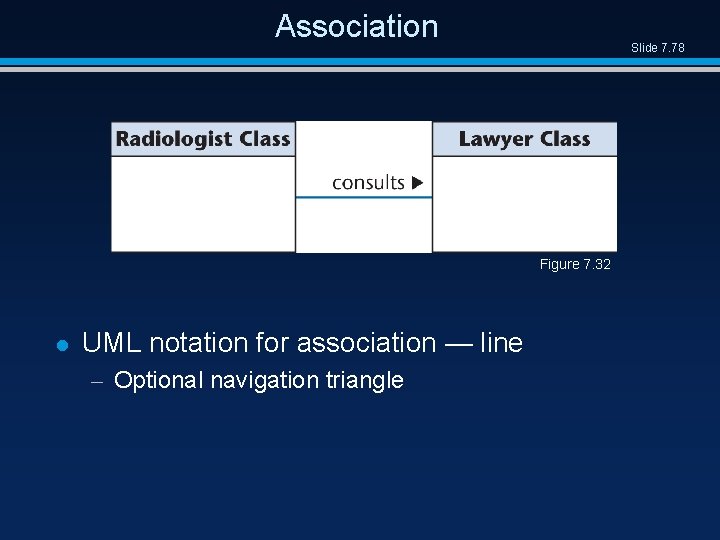
Association Slide 7. 78 Figure 7. 32 l UML notation for association — line – Optional navigation triangle
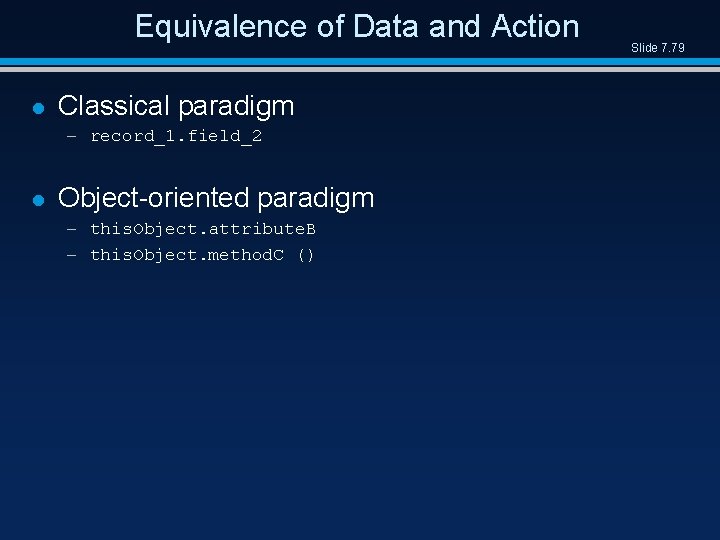
Equivalence of Data and Action l Classical paradigm – record_1. field_2 l Object-oriented paradigm – this. Object. attribute. B – this. Object. method. C () Slide 7. 79
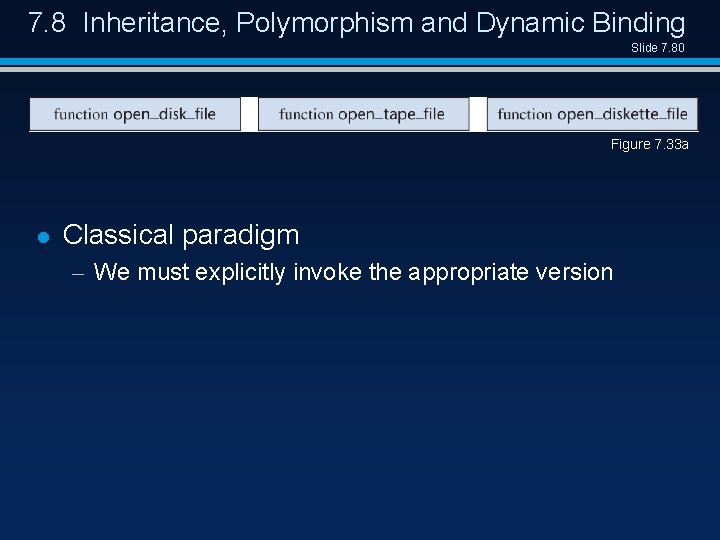
7. 8 Inheritance, Polymorphism and Dynamic Binding Slide 7. 80 Figure 7. 33 a l Classical paradigm – We must explicitly invoke the appropriate version
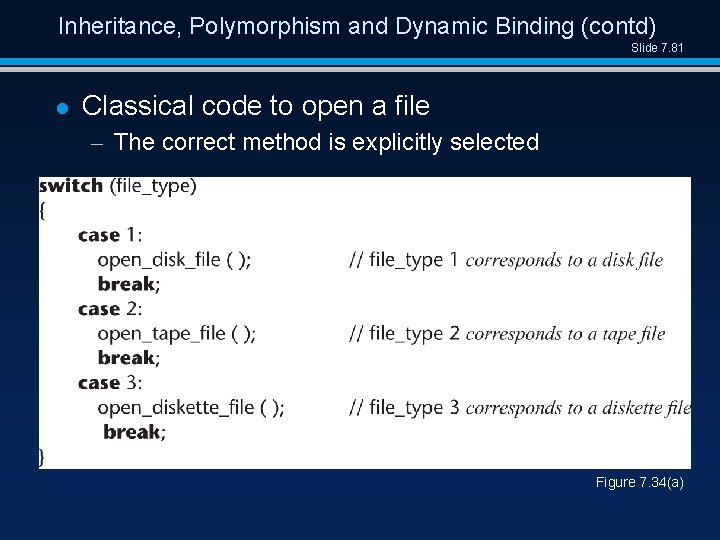
Inheritance, Polymorphism and Dynamic Binding (contd) Slide 7. 81 l Classical code to open a file – The correct method is explicitly selected Figure 7. 34(a)
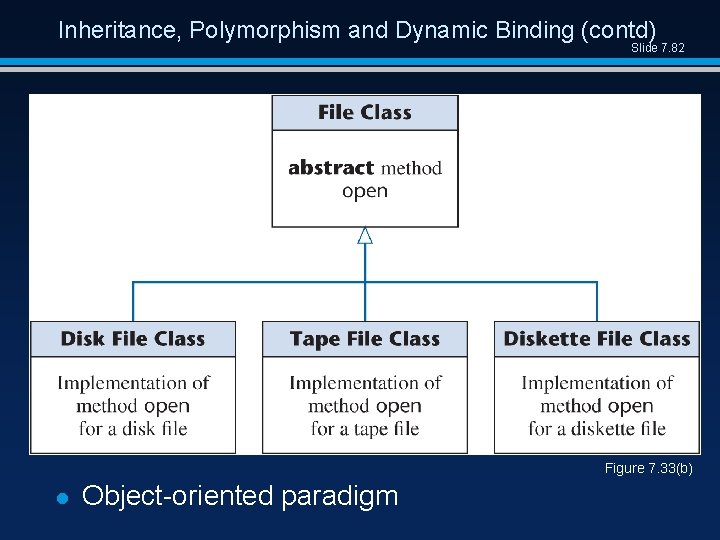
Inheritance, Polymorphism and Dynamic Binding (contd) Slide 7. 82 Figure 7. 33(b) l Object-oriented paradigm
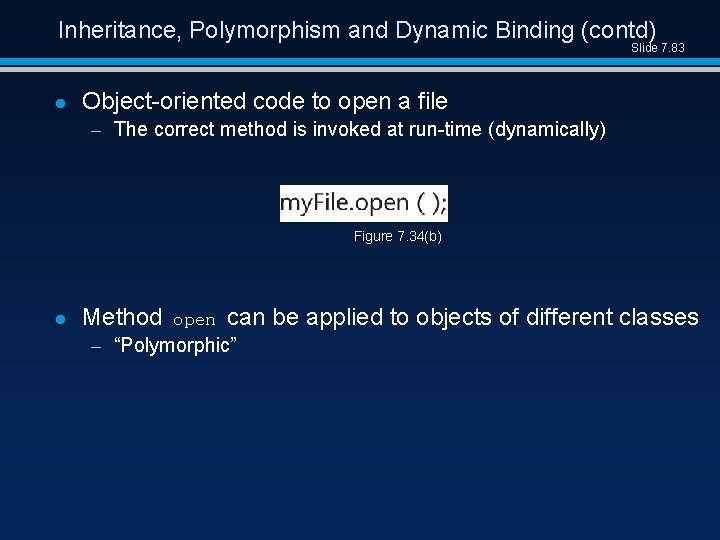
Inheritance, Polymorphism and Dynamic Binding (contd) Slide 7. 83 l Object-oriented code to open a file – The correct method is invoked at run-time (dynamically) Figure 7. 34(b) l Method open can be applied to objects of different classes – “Polymorphic”
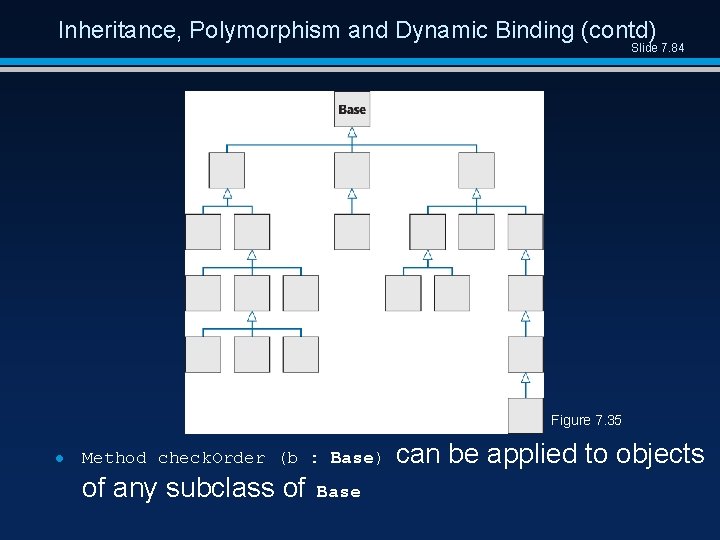
Inheritance, Polymorphism and Dynamic Binding (contd) Slide 7. 84 Figure 7. 35 l Method check. Order (b : Base) of any subclass of Base can be applied to objects
Inheritance, Polymorphism and Dynamic Binding (contd) Slide 7. 85 l Polymorphism and dynamic binding – Can have a negative impact on maintenance » The code is hard to understand if there are multiple possibilities for a specific method l Polymorphism and dynamic binding – A strength and a weakness of the object-oriented paradigm
7. 9 The Object-Oriented Paradigm l Slide 7. 86 Reasons for the success of the object-oriented paradigm – The object-oriented paradigm gives overall equal attention to data and operations » At any one time, data or operations may be favored – A well-designed object (high cohesion, low coupling) models all the aspects of one physical entity – Implementation details are hidden
The Object-Oriented Paradigm (contd) l Slide 7. 87 The reason why the structured paradigm worked well at first – The alternative was no paradigm at all

The Object-Oriented Paradigm (contd) l Slide 7. 88 How do we know that the object-oriented paradigm is the best current alternative? – We don’t – However, most reports are favorable » Experimental data (e. g. , IBM [1994]) » Survey of programmers (e. g. , Johnson [2000])

Weaknesses of the Object-Oriented Paradigm Slide 7. 89 l Development effort and size can be large l One’s first object-oriented project can be larger than expected – Even taking the learning curve into account – Especially if there is a GUI l However, some classes can frequently be reused in the next project – Especially if there is a GUI
Weaknesses of the Object-Oriented Paradigm (contd) Slide 7. 90 l Inheritance can cause problems – The fragile base class problem – To reduce the ripple effect, all classes need to be carefully designed up front l Unless explicitly prevented, a subclass inherits all its parent’s attributes – Objects lower in the tree can become large – “Use inheritance where appropriate” – Exclude unneeded inherited attributes
Weaknesses of the Object-Oriented Paradigm (contd) Slide 7. 91 l As already explained, the use of polymorphism and dynamic binding can lead to problems l It is easy to write bad code in any language – It is especially easy to write bad object-oriented code

The Object-Oriented Paradigm (contd) l Some day, the object-oriented paradigm will undoubtedly be replaced by something better – Aspect-oriented programming is one possibility – But there are many other possibilities Slide 7. 92
- Slides: 92