
Slide 6 1 Chapter 6 Supply Chain Management
- Slides: 20
Slide 6. 1 Chapter 6 Supply Chain Management David Chaffey, E-Business & E-Commerce Management, 5 th Edition, © Marketing Insights Limited 2012
Slide 6. 2 Learning Outcomes • Identify the main elements of supply chain management and their relationship to the value chain and value networks • Assess the potential of information systems to support supply chain management and the value chain. David Chaffey, E-Business & E-Commerce Management, 5 th Edition, © Marketing Insights Limited 2012
Slide 6. 3 Management Issues • Which technologies should we deploy for supply chain management and how should they be prioritized? • Which elements of the supply chain should be managed within and beyond the organization and how can technology be used to facilitate this? • What are the practical issues with online supply chain management? David Chaffey, E-Business & E-Commerce Management, 5 th Edition, © Marketing Insights Limited 2012
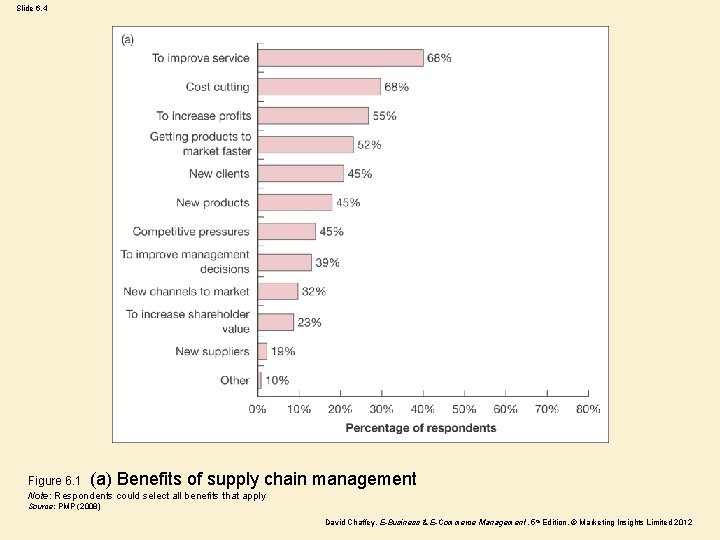
Slide 6. 4 Figure 6. 1 (a) Benefits of supply chain management Note: Respondents could select all benefits that apply Source: PMP (2008) David Chaffey, E-Business & E-Commerce Management, 5 th Edition, © Marketing Insights Limited 2012
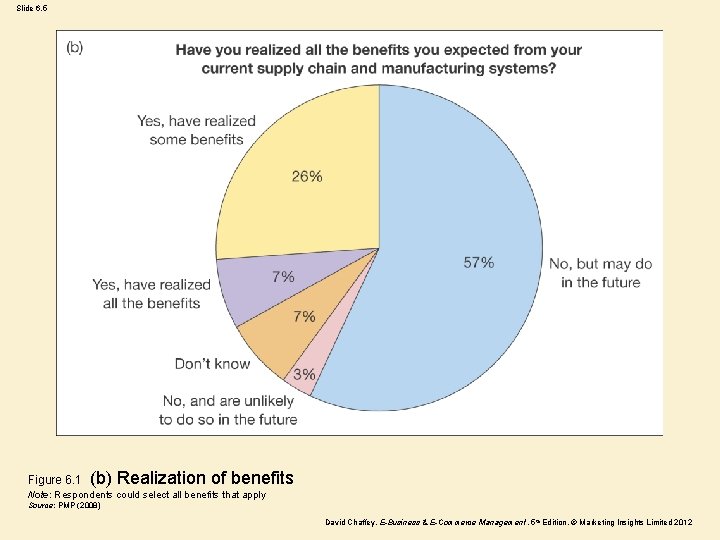
Slide 6. 5 Figure 6. 1 (b) Realization of benefits Note: Respondents could select all benefits that apply Source: PMP (2008) David Chaffey, E-Business & E-Commerce Management, 5 th Edition, © Marketing Insights Limited 2012
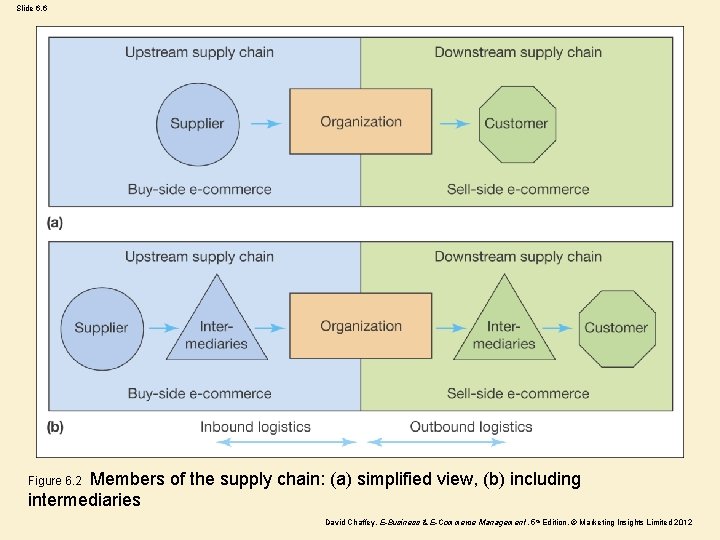
Slide 6. 6 Members of the supply chain: (a) simplified view, (b) including intermediaries Figure 6. 2 David Chaffey, E-Business & E-Commerce Management, 5 th Edition, © Marketing Insights Limited 2012
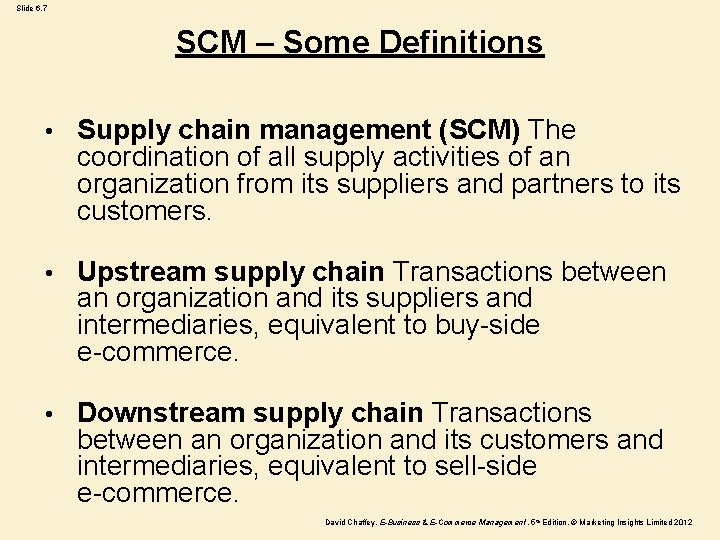
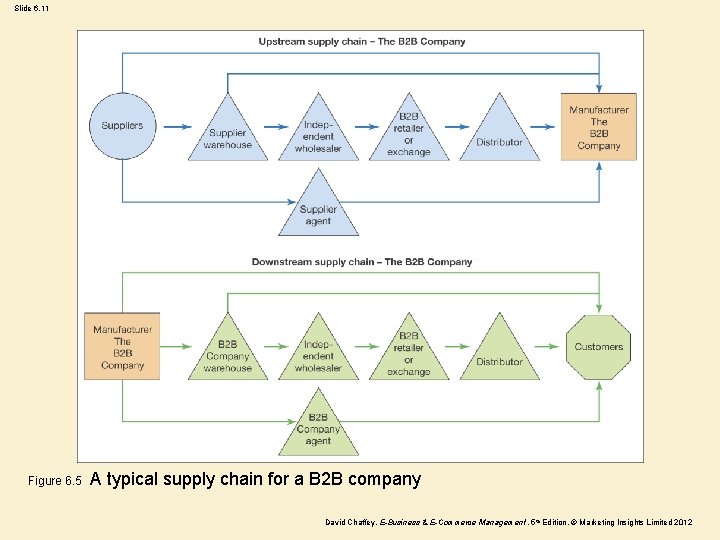
Slide 6. 7 SCM – Some Definitions • Supply chain management (SCM) The coordination of all supply activities of an organization from its suppliers and partners to its customers. • Upstream supply chain Transactions between an organization and its suppliers and intermediaries, equivalent to buy-side e-commerce. • Downstream supply chain Transactions between an organization and its customers and intermediaries, equivalent to sell-side e-commerce. David Chaffey, E-Business & E-Commerce Management, 5 th Edition, © Marketing Insights Limited 2012
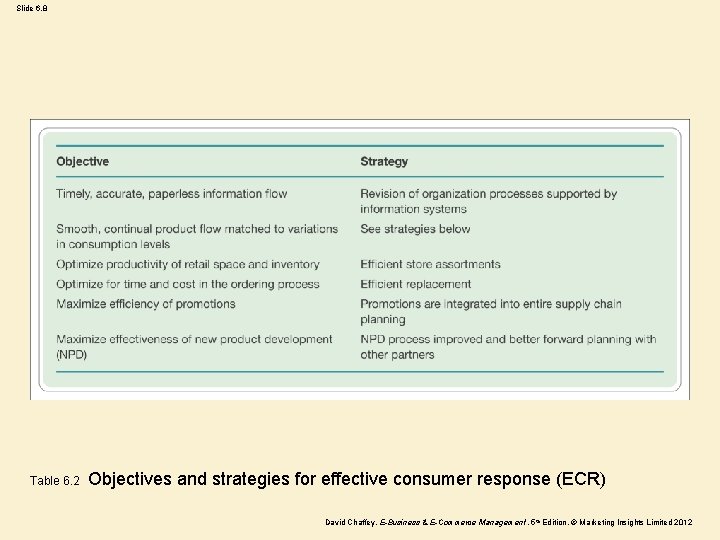
Slide 6. 8 Table 6. 2 Objectives and strategies for effective consumer response (ECR) David Chaffey, E-Business & E-Commerce Management, 5 th Edition, © Marketing Insights Limited 2012
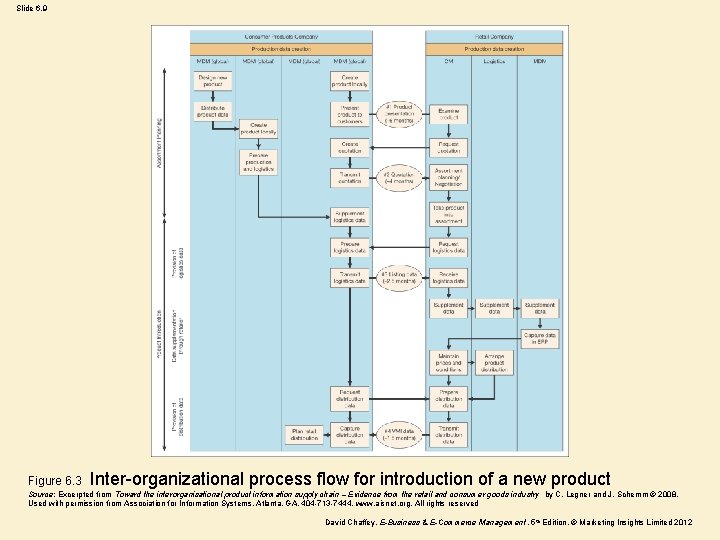
Slide 6. 9 Figure 6. 3 Inter-organizational process flow for introduction of a new product Source: Excerpted from Toward the interorganisational product information supply chain – Evidence from the retail and consumer goods industry by C. Legner and J. Schemm © 2008. Used with permission from Association for Information Systems, Atlanta, GA, 404 -713 -7444, www. aisnet. org. All rights reserved David Chaffey, E-Business & E-Commerce Management, 5 th Edition, © Marketing Insights Limited 2012
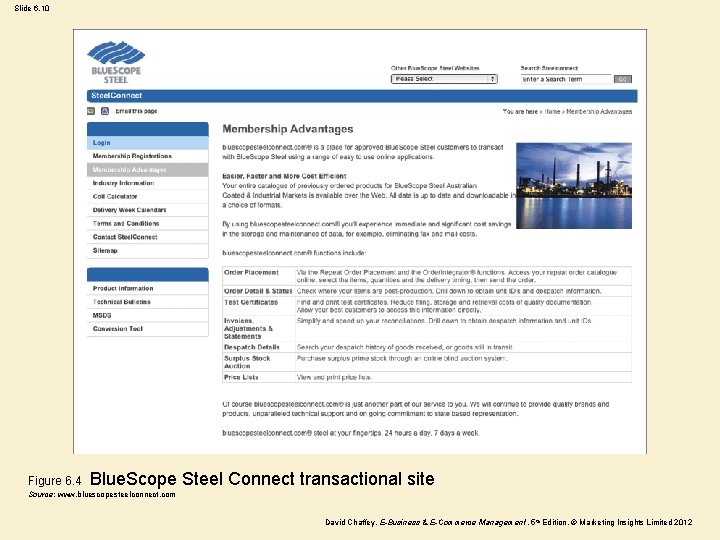
Slide 6. 10 Figure 6. 4 Blue. Scope Steel Connect transactional site Source: www. bluescopesteelconnect. com David Chaffey, E-Business & E-Commerce Management, 5 th Edition, © Marketing Insights Limited 2012
Slide 6. 11 Figure 6. 5 A typical supply chain for a B 2 B company David Chaffey, E-Business & E-Commerce Management, 5 th Edition, © Marketing Insights Limited 2012
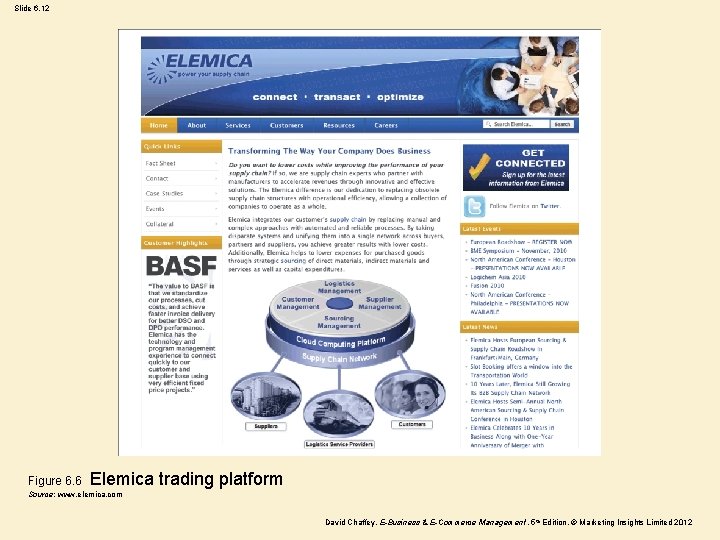
Slide 6. 12 Figure 6. 6 Elemica trading platform Source: www. elemica. com David Chaffey, E-Business & E-Commerce Management, 5 th Edition, © Marketing Insights Limited 2012
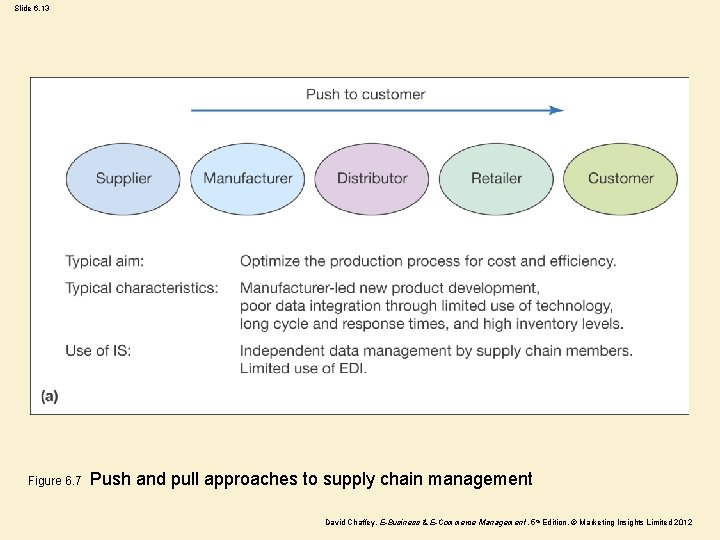
Slide 6. 13 Figure 6. 7 Push and pull approaches to supply chain management David Chaffey, E-Business & E-Commerce Management, 5 th Edition, © Marketing Insights Limited 2012
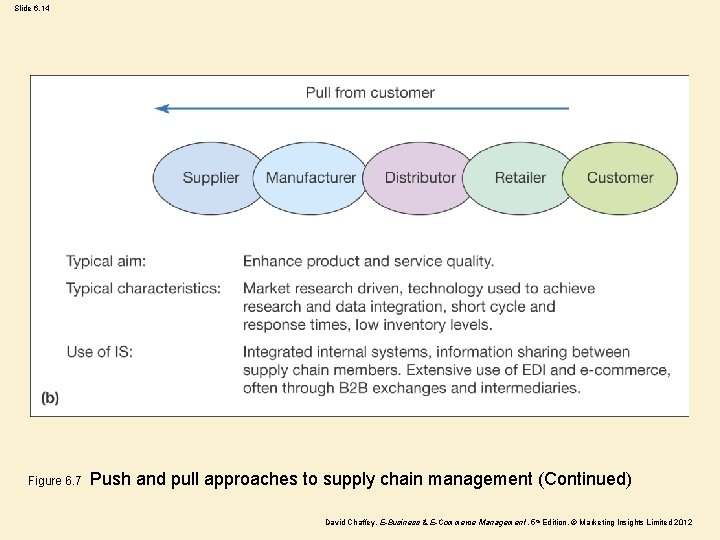
Slide 6. 14 Figure 6. 7 Push and pull approaches to supply chain management (Continued) David Chaffey, E-Business & E-Commerce Management, 5 th Edition, © Marketing Insights Limited 2012
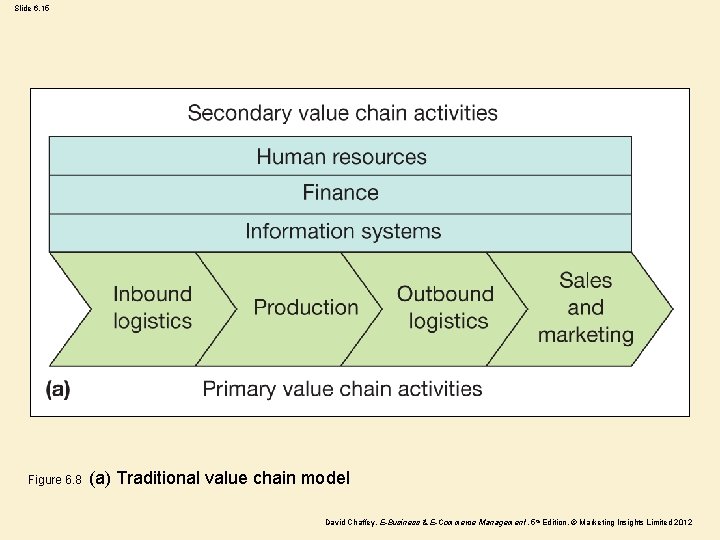
Slide 6. 15 Figure 6. 8 (a) Traditional value chain model David Chaffey, E-Business & E-Commerce Management, 5 th Edition, © Marketing Insights Limited 2012
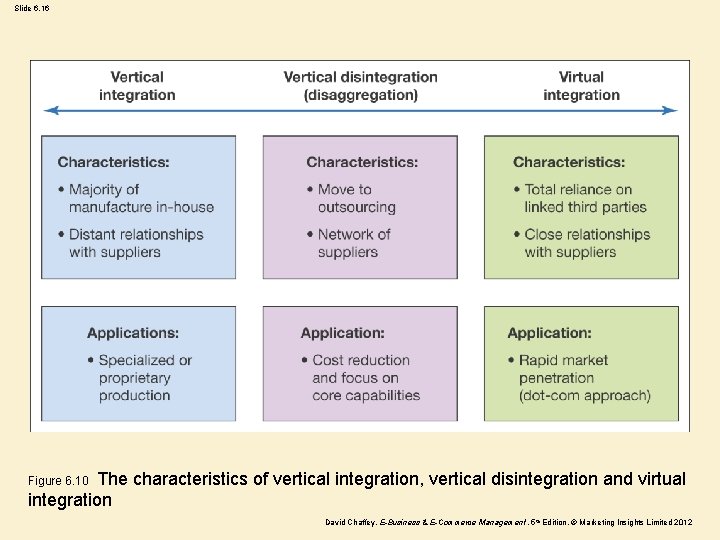
Slide 6. 16 The characteristics of vertical integration, vertical disintegration and virtual integration Figure 6. 10 David Chaffey, E-Business & E-Commerce Management, 5 th Edition, © Marketing Insights Limited 2012
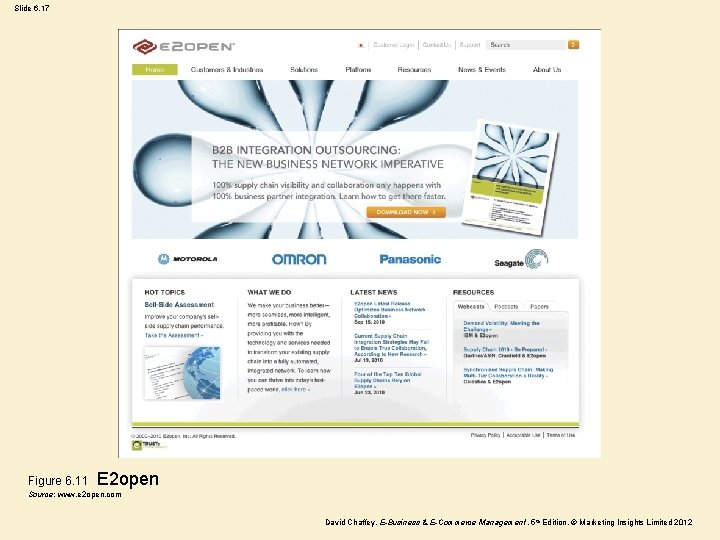
Slide 6. 17 Figure 6. 11 E 2 open Source: www. e 2 open. com David Chaffey, E-Business & E-Commerce Management, 5 th Edition, © Marketing Insights Limited 2012
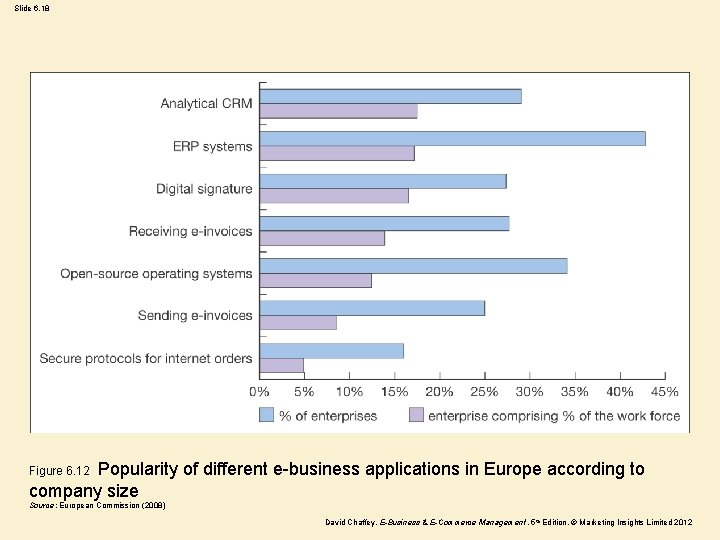
Slide 6. 18 Popularity of different e-business applications in Europe according to company size Figure 6. 12 Source: European Commission (2008) David Chaffey, E-Business & E-Commerce Management, 5 th Edition, © Marketing Insights Limited 2012
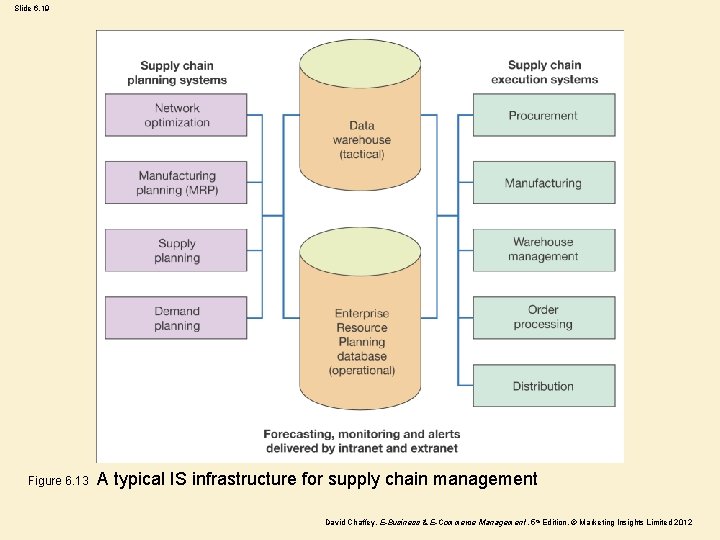
Slide 6. 19 Figure 6. 13 A typical IS infrastructure for supply chain management David Chaffey, E-Business & E-Commerce Management, 5 th Edition, © Marketing Insights Limited 2012
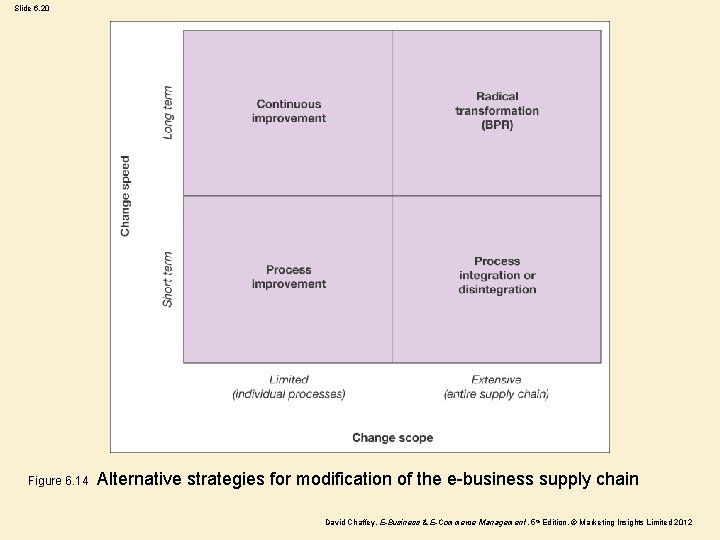
Slide 6. 20 Figure 6. 14 Alternative strategies for modification of the e-business supply chain David Chaffey, E-Business & E-Commerce Management, 5 th Edition, © Marketing Insights Limited 2012