
Slide 4 1 Lecture 4 Understanding research philosophies
- Slides: 14
Slide 4. 1 Lecture 4 Understanding research philosophies and approaches Saunders, Lewis and Thornhill, Research Methods for Business Students , 5 th Edition, © Mark Saunders, Philip Lewis and Adrian Thornhill 2009
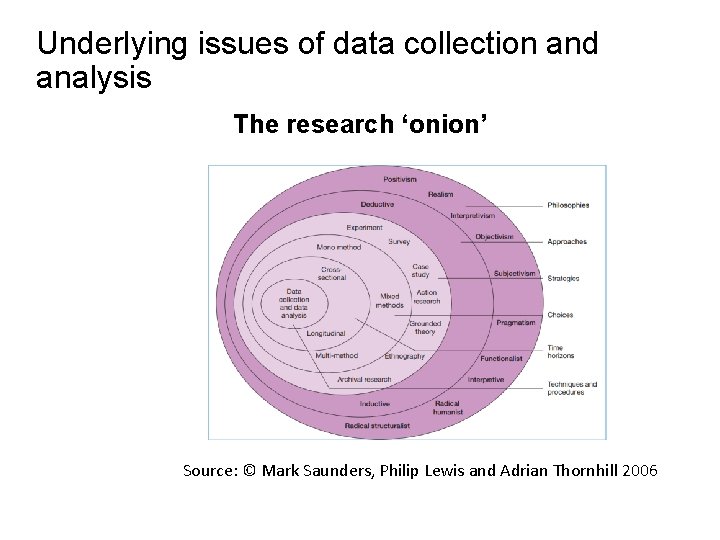
Slide 4. 2 Underlying issues of data collection and analysis The research ‘onion’ Source: © Mark Saunders, Philip Lewis and Adrian Thornhill 2006 Figure 4. 1 The research ‘onion’ Saunders, Lewis and Thornhill, Research Methods for Business Students , 5 th Edition, © Mark Saunders, Philip Lewis and Adrian Thornhill 2009
Slide 4. 3 Understanding your research philosophy (1) ‘Research philosophy is an over-arching term relating to the development of knowledge and the nature of that knowledge’ Adapted from Saunders et al, (2009) Saunders, Lewis and Thornhill, Research Methods for Business Students , 5 th Edition, © Mark Saunders, Philip Lewis and Adrian Thornhill 2009
Slide 4. 4 Understanding your research philosophy (2) Thinking about research philosophy • Ontology • Epistemology • Pragmatism Saunders, Lewis and Thornhill, Research Methods for Business Students , 5 th Edition, © Mark Saunders, Philip Lewis and Adrian Thornhill 2009
Slide 4. 5 Understanding your research philosophy (3) Aspects of ontology • Objectivism • Subjectivism Saunders, Lewis and Thornhill, Research Methods for Business Students , 5 th Edition, © Mark Saunders, Philip Lewis and Adrian Thornhill 2009
Slide 4. 6 Understanding your research philosophy (4) Aspects of philosophy • Positivism - the stance of the natural scientist • Realism - direct and critical realism • Interpretivism – researchers as ‘social actors’ • Axiology – studies judgements about value Saunders, Lewis and Thornhill, Research Methods for Business Students , 5 th Edition, © Mark Saunders, Philip Lewis and Adrian Thornhill 2009
Slide 4. 7 Research paradigms Definition ‘A way of examining social phenomenon from which particular understandings of these phenomena can be gained and explanations attempted’ Saunders et al. (2009) Saunders, Lewis and Thornhill, Research Methods for Business Students , 5 th Edition, © Mark Saunders, Philip Lewis and Adrian Thornhill 2009
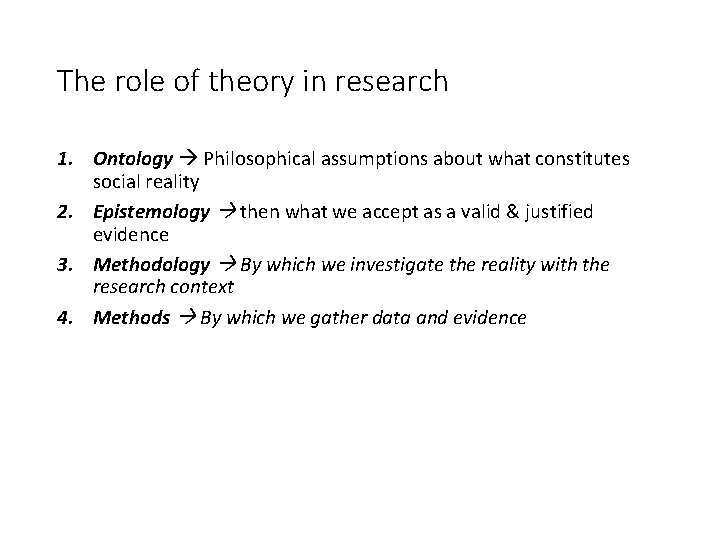
Slide 4. 8 The role of theory in research 1. Ontology Philosophical assumptions about what constitutes social reality 2. Epistemology then what we accept as a valid & justified evidence 3. Methodology By which we investigate the reality with the research context 4. Methods By which we gather data and evidence Saunders, Lewis and Thornhill, Research Methods for Business Students , 5 th Edition, © Mark Saunders, Philip Lewis and Adrian Thornhill 2009
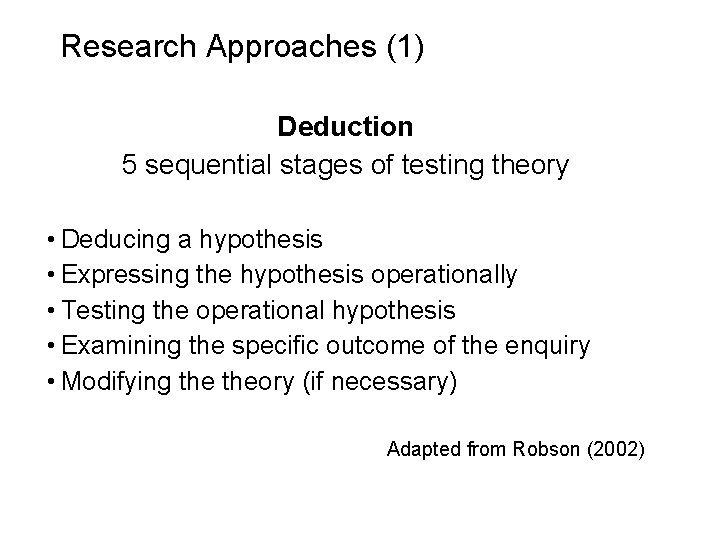
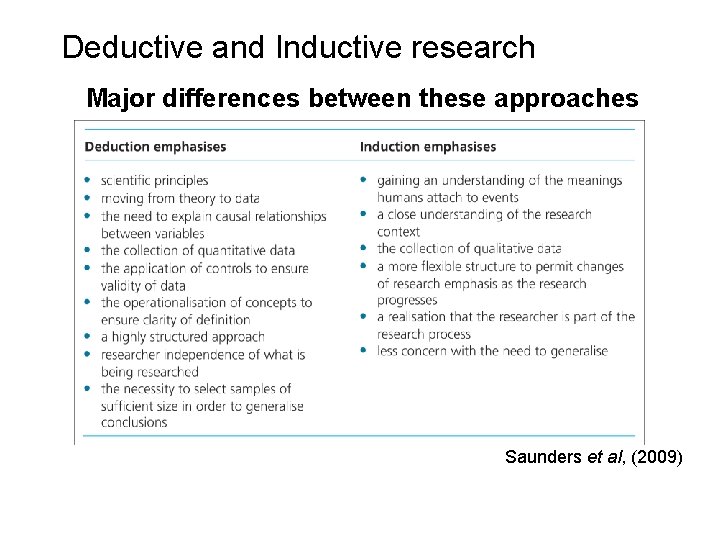
Slide 4. 9 Research Approaches (1) Deduction 5 sequential stages of testing theory • Deducing a hypothesis • Expressing the hypothesis operationally • Testing the operational hypothesis • Examining the specific outcome of the enquiry • Modifying theory (if necessary) Adapted from Robson (2002) Saunders, Lewis and Thornhill, Research Methods for Business Students , 5 th Edition, © Mark Saunders, Philip Lewis and Adrian Thornhill 2009
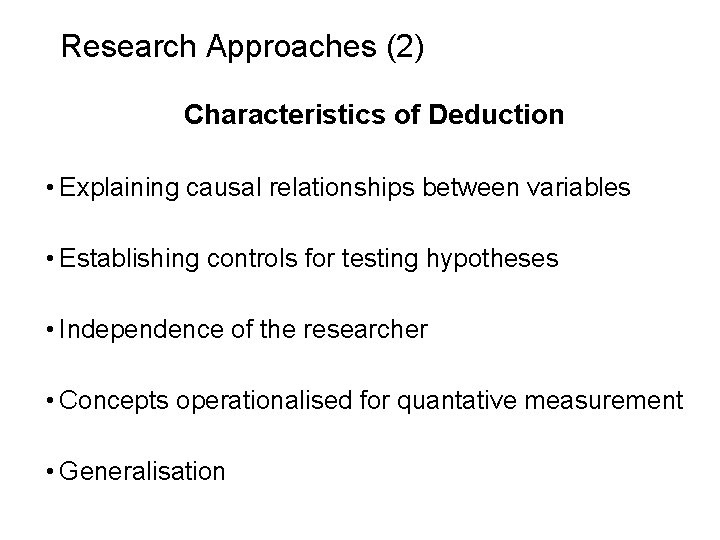
Slide 4. 10 Research Approaches (2) Characteristics of Deduction • Explaining causal relationships between variables • Establishing controls for testing hypotheses • Independence of the researcher • Concepts operationalised for quantative measurement • Generalisation Saunders, Lewis and Thornhill, Research Methods for Business Students , 5 th Edition, © Mark Saunders, Philip Lewis and Adrian Thornhill 2009
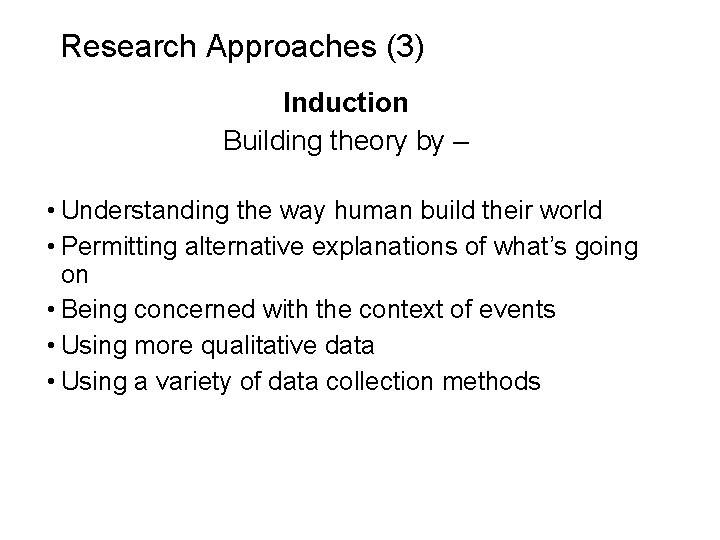
Slide 4. 11 Research Approaches (3) Induction Building theory by – • Understanding the way human build their world • Permitting alternative explanations of what’s going on • Being concerned with the context of events • Using more qualitative data • Using a variety of data collection methods Saunders, Lewis and Thornhill, Research Methods for Business Students , 5 th Edition, © Mark Saunders, Philip Lewis and Adrian Thornhill 2009
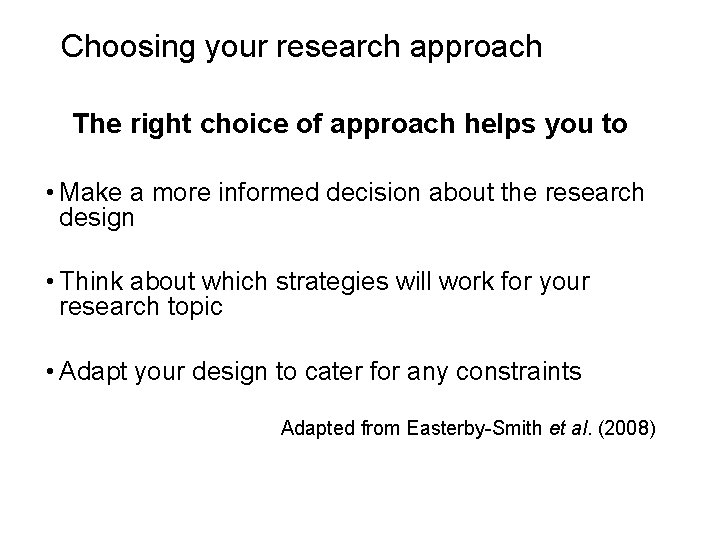
Slide 4. 12 Choosing your research approach The right choice of approach helps you to • Make a more informed decision about the research design • Think about which strategies will work for your research topic • Adapt your design to cater for any constraints Adapted from Easterby-Smith et al. (2008) Saunders, Lewis and Thornhill, Research Methods for Business Students , 5 th Edition, © Mark Saunders, Philip Lewis and Adrian Thornhill 2009
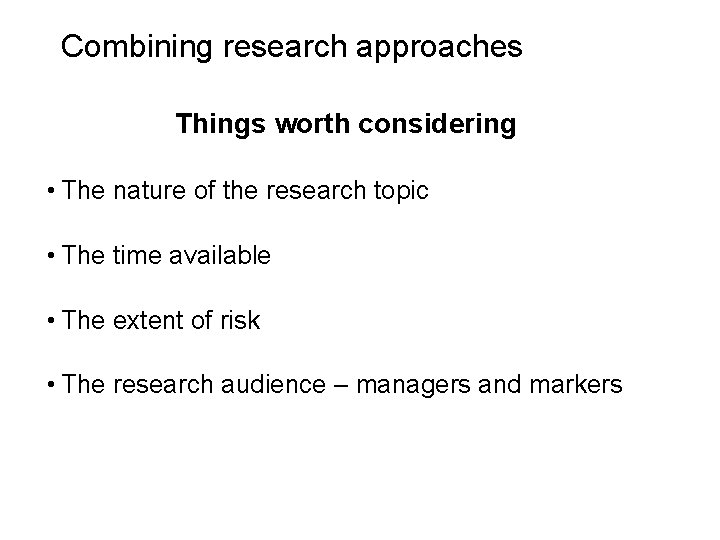
Slide 4. 13 Combining research approaches Things worth considering • The nature of the research topic • The time available • The extent of risk • The research audience – managers and markers Saunders, Lewis and Thornhill, Research Methods for Business Students , 5 th Edition, © Mark Saunders, Philip Lewis and Adrian Thornhill 2009
Slide 4. 14 Deductive and Inductive research Major differences between these approaches Saunders et al, (2009) Table 4. 2 Major differences between deductive and inductive approaches to research Saunders, Lewis and Thornhill, Research Methods for Business Students , 5 th Edition, © Mark Saunders, Philip Lewis and Adrian Thornhill 2009