
Slide 27 34 of 34 APPENDIX Blind tube
Slide 27 -34 of 34
APPENDIX • Blind tube off cecum • No important digestive functions in humans
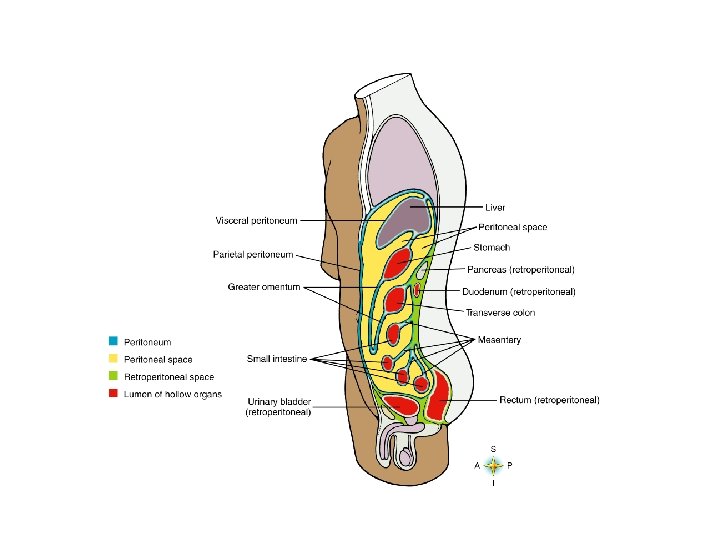
PERITONEUM (FIGURE 15 -14) • Definitions—peritoneum, serous membrane lining abdominal cavity and covering abdominal organs; parietal layer of peritoneum lines abdominal cavity; visceral layer of peritoneum covers abdominal organs; peritoneal space lies between parietal and visceral layers • Extensions—largest are the mesentery and greater omentum – Mesentery is extension of parietal peritoneum, which attaches most of small intestine to posterior abdominal wall – Greater omentum, or “lace apron, ” hangs down from lower edge of stomach and transverse colon over intestines • X-ray studies of the GI tract—radiopaque contrast medium used to help visualize structures in study images
DIGESTION (TABLE 15 -2) • Definition—transforms foods into substances that can be absorbed and used by cells – Mechanical digestion—chewing (mastication), swallowing (deglutition), and peristalsis break food into tiny particles, mix them well with digestive juices, and move them along the digestive tract – Chemical digestion—breaks up large food molecules into compounds that have smaller molecules; brought about by digestive enzymes (Figure 15 -15) • Enzymes and chemical digestion – Enzymes are specialized protein molecules that act as catalysts – Breakdown process called hydrolysis
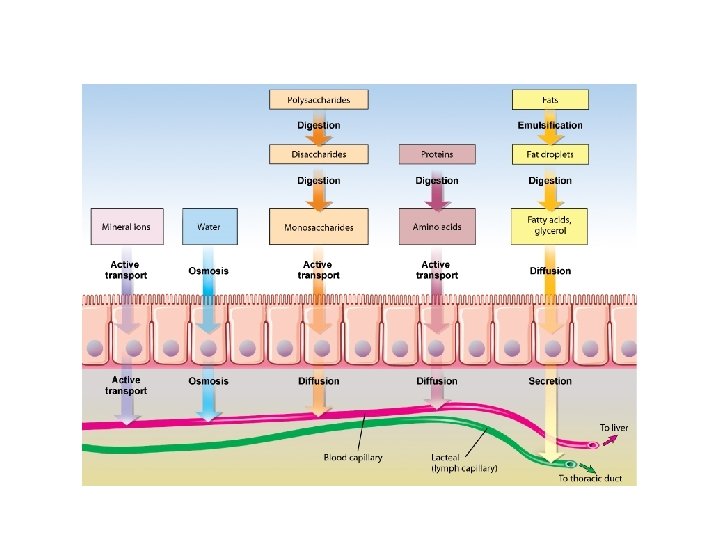
DIGESTION • Carbohydrate digestion—mainly in small intestine – Pancreatic amylase—breaks polysaccharides down to disaccharides – Intestinal juice enzymes • Maltase—changes maltose to glucose • Sucrase—changes sucrose to glucose • Lactase—changes lactose to glucose
DIGESTION • Protein digestion—starts in stomach; completed in small intestine – Gastric juice enzyme pepsin partially digests proteins – Pancreatic enzyme, trypsin, continues digestion of proteins – Intestinal enzymes, peptidases, complete digestion of partially digested proteins and convert them to amino acids • Fat digestion – Bile contains no enzymes but emulsifies fats (breaks fat droplets into very small droplets) – Pancreatic lipase changes emulsified fats to fatty acids and glycerol in small intestine
ABSORPTION • Definition—process by which digested food moves from intestine into blood or lymph • Foods and most water minerals and vitamins are absorbed from small intestine; some water and vitamin K also absorbed from large intestine • Surface area absorption – Structural adaptations increase absorptive surface area – Fractal geometry—study of fragmented geometric irregular shapes such as those in lining of intestine
- Slides: 9