
Slide 2 1 Chapter 2 The Recording Process

- Slides: 33
Slide 2 -1
Chapter 2 The Recording Process Financial Accounting, IFRS Edition Weygandt Kimmel Kieso Slide 2 -2
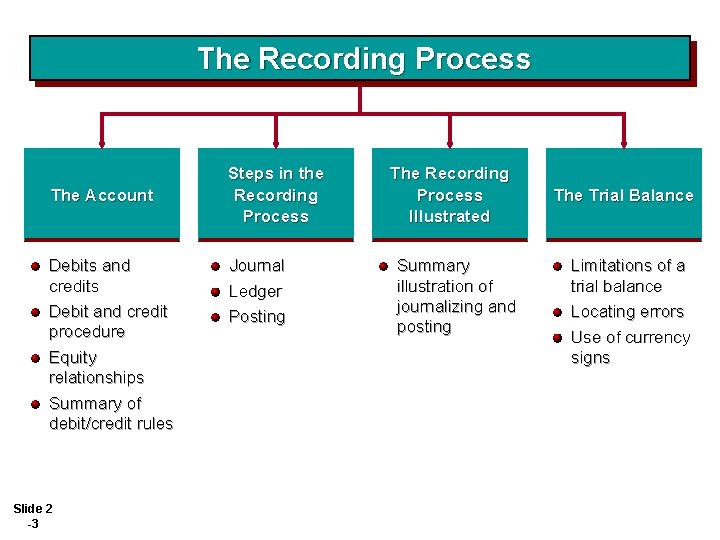
The Recording Process The Account Debits and credits Debit and credit procedure Equity relationships Summary of debit/credit rules Slide 2 -3 Steps in the Recording Process Journal Ledger Posting The Recording Process Illustrated Summary illustration of journalizing and posting The Trial Balance Limitations of a trial balance Locating errors Use of currency signs
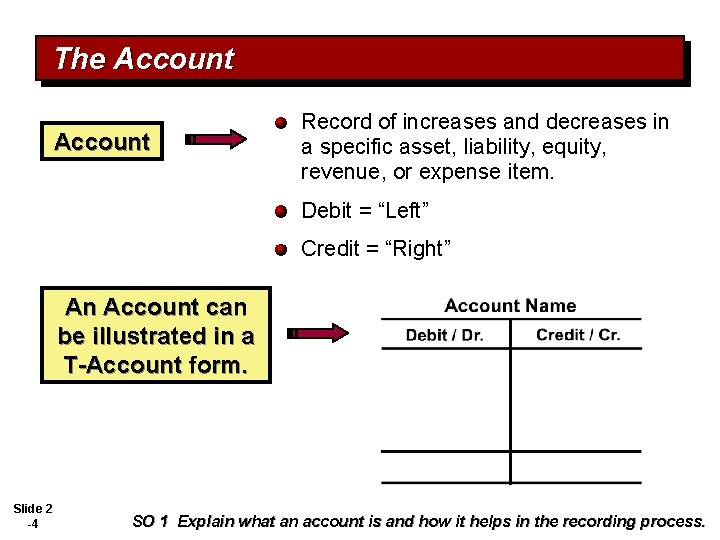
The Account Record of increases and decreases in a specific asset, liability, equity, revenue, or expense item. Debit = “Left” Credit = “Right” An Account can be illustrated in a T-Account form. Slide 2 -4 SO 1 Explain what an account is and how it helps in the recording process.
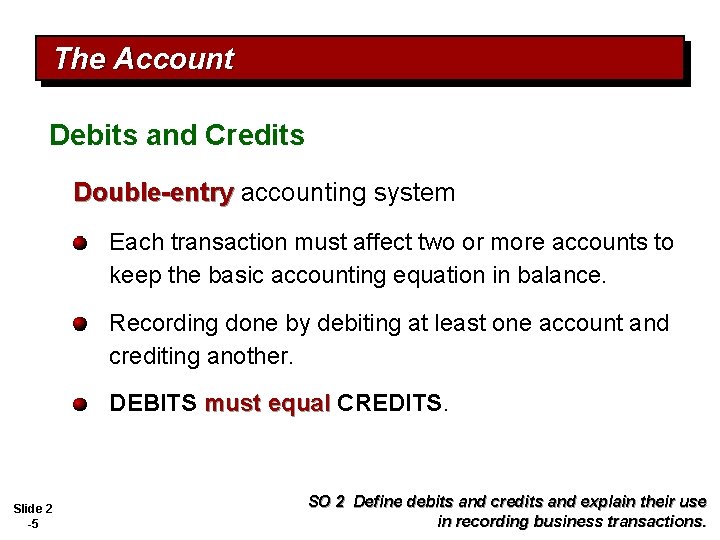
The Account Debits and Credits Double-entry accounting system Each transaction must affect two or more accounts to keep the basic accounting equation in balance. Recording done by debiting at least one account and crediting another. DEBITS must equal CREDITS. Slide 2 -5 SO 2 Define debits and credits and explain their use in recording business transactions.
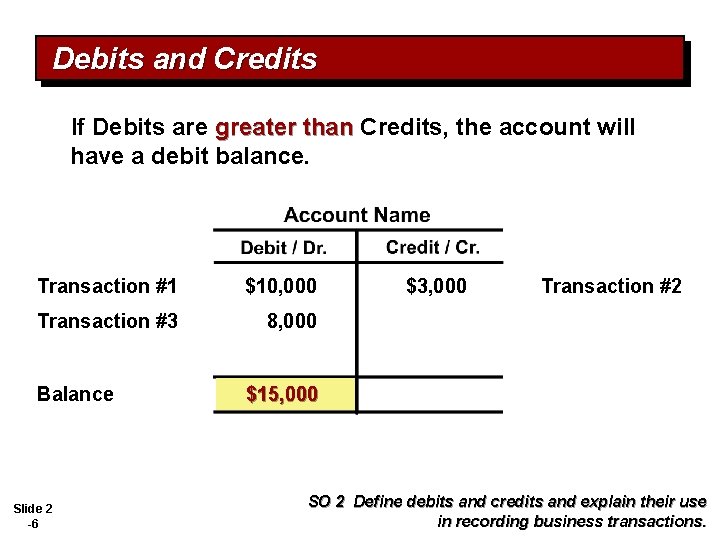
Debits and Credits If Debits are greater than Credits, the account will have a debit balance. Transaction #1 $10, 000 Transaction #3 8, 000 Balance Slide 2 -6 $3, 000 Transaction #2 $15, 000 SO 2 Define debits and credits and explain their use in recording business transactions.
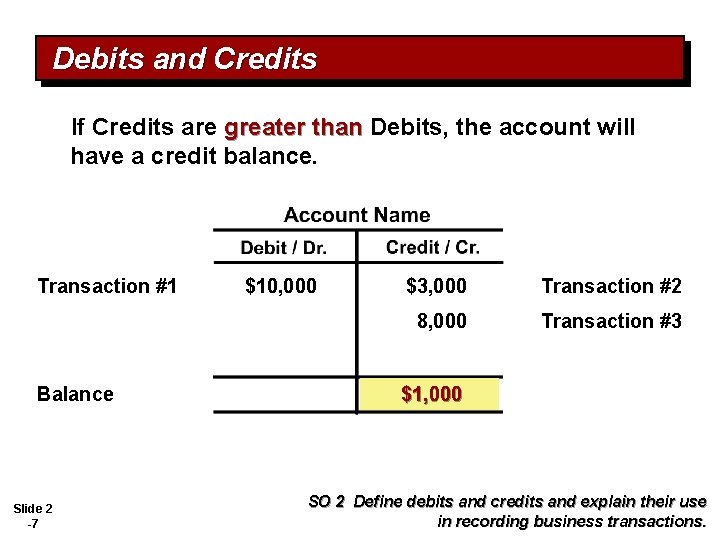
Debits and Credits If Credits are greater than Debits, the account will have a credit balance. Transaction #1 Balance Slide 2 -7 $10, 000 $3, 000 Transaction #2 8, 000 Transaction #3 $1, 000 SO 2 Define debits and credits and explain their use in recording business transactions.
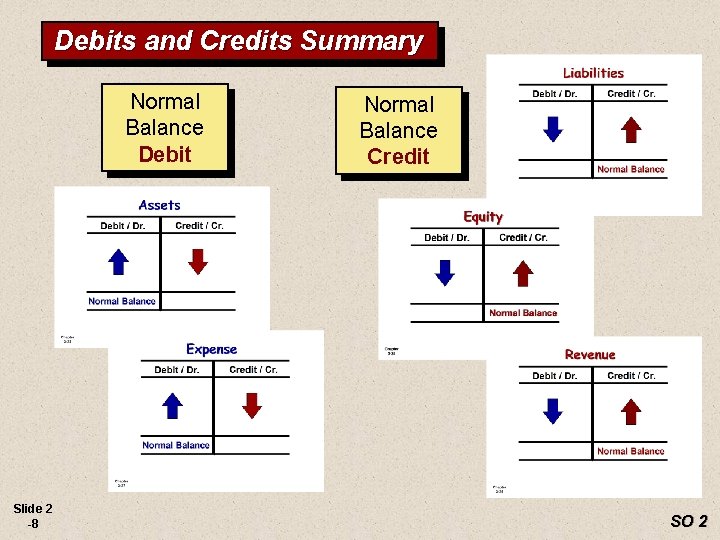
Debits and Credits Summary Normal Balance Debit Slide 2 -8 Normal Balance Credit SO 2
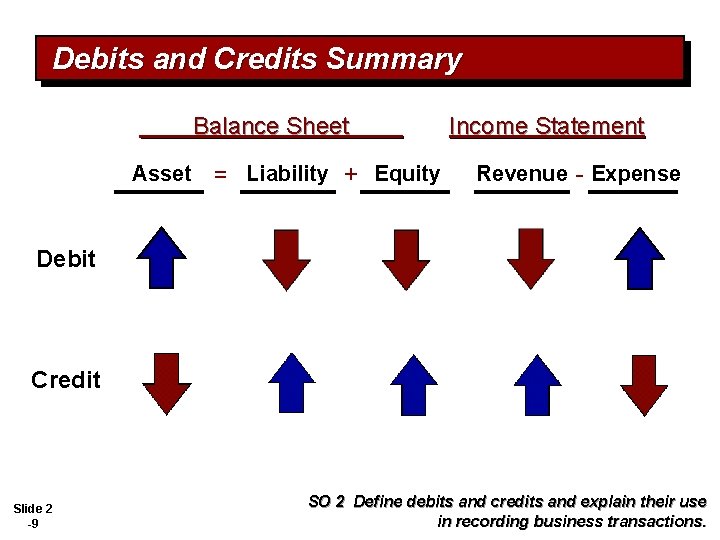
Debits and Credits Summary Balance Sheet Asset = Liability + Equity Income Statement Revenue - Expense Debit Credit Slide 2 -9 SO 2 Define debits and credits and explain their use in recording business transactions.
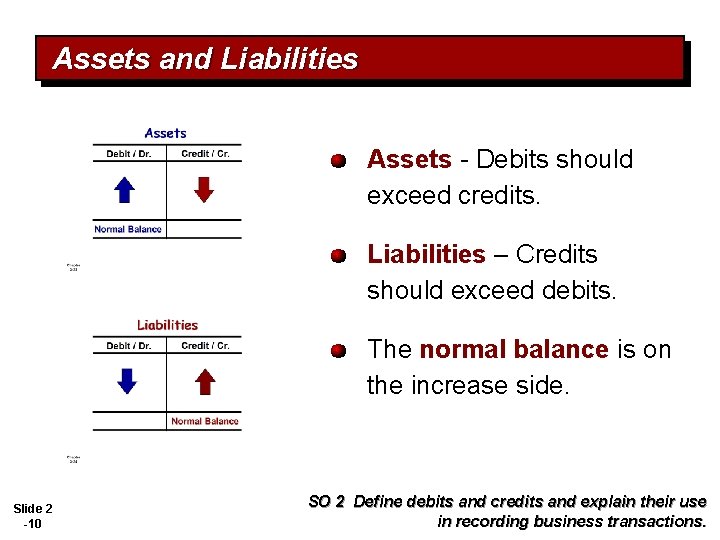
Assets and Liabilities Assets - Debits should exceed credits. Liabilities – Credits should exceed debits. The normal balance is on the increase side. Slide 2 -10 SO 2 Define debits and credits and explain their use in recording business transactions.
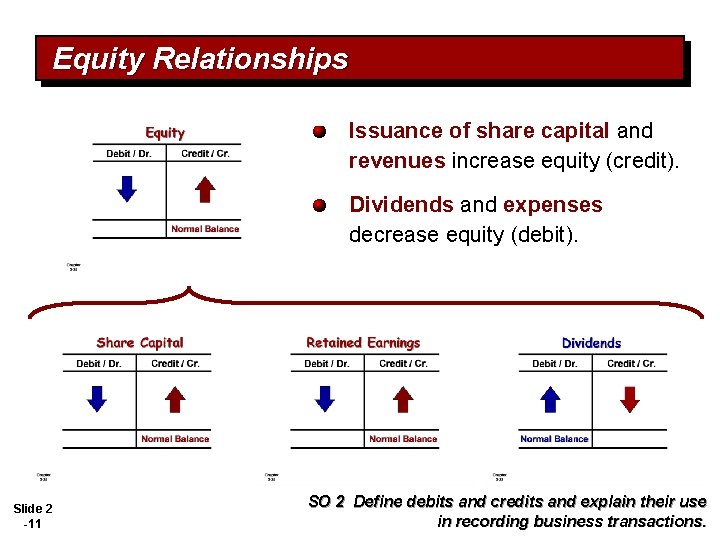
Equity Relationships Issuance of share capital and revenues increase equity (credit). Dividends and expenses decrease equity (debit). Slide 2 -11 SO 2 Define debits and credits and explain their use in recording business transactions.
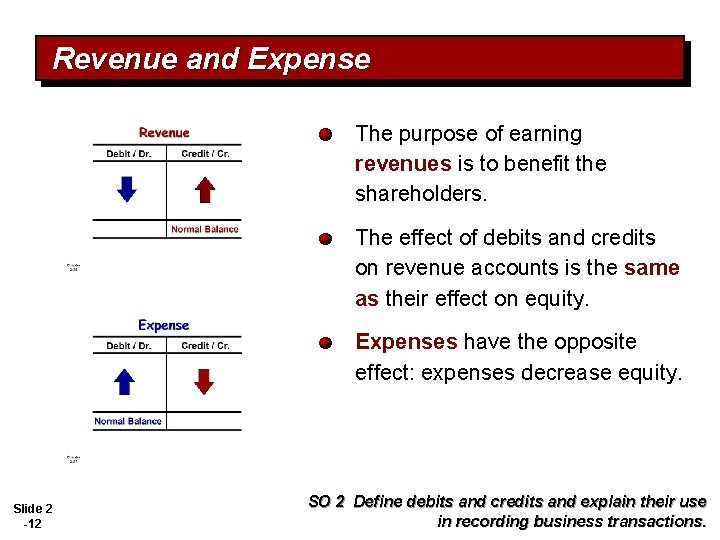
Revenue and Expense The purpose of earning revenues is to benefit the shareholders. The effect of debits and credits on revenue accounts is the same as their effect on equity. Expenses have the opposite effect: expenses decrease equity. Slide 2 -12 SO 2 Define debits and credits and explain their use in recording business transactions.
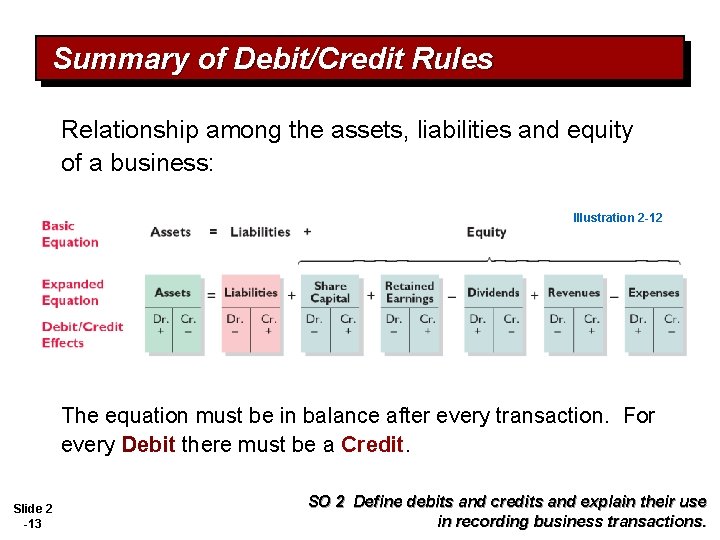
Summary of Debit/Credit Rules Relationship among the assets, liabilities and equity of a business: Illustration 2 -12 The equation must be in balance after every transaction. For every Debit there must be a Credit. Slide 2 -13 SO 2 Define debits and credits and explain their use in recording business transactions.
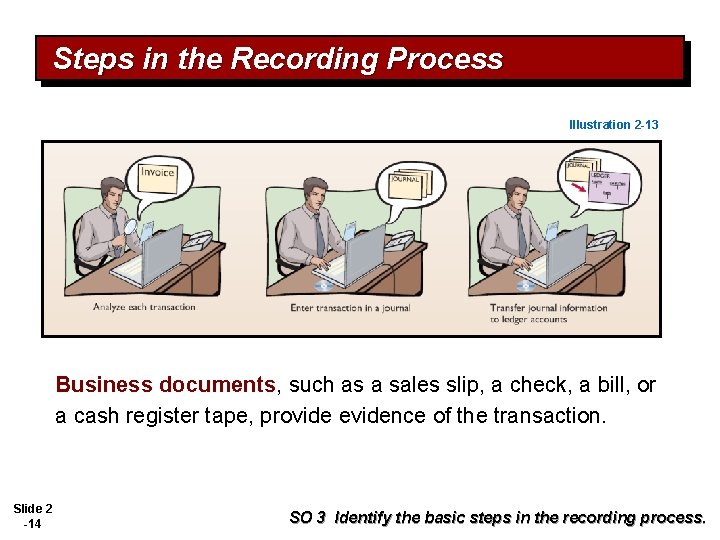
Steps in the Recording Process Illustration 2 -13 Analyze each transaction Enter transaction in a journal Transfer journal information to ledger accounts Business documents, such as a sales slip, a check, a bill, or a cash register tape, provide evidence of the transaction. Slide 2 -14 SO 3 Identify the basic steps in the recording process.
Steps in the Recording Process Journalizing Book of original entry. Transactions recorded in chronological order. Contributions to the recording process: 1. Discloses the complete effects of a transaction. 2. Provides a chronological record of transactions. 3. Helps to prevent or locate errors because the debit and credit amounts can be easily compared. Slide 2 -15 SO 4 Explain what a journal is and how it helps in the recording process.
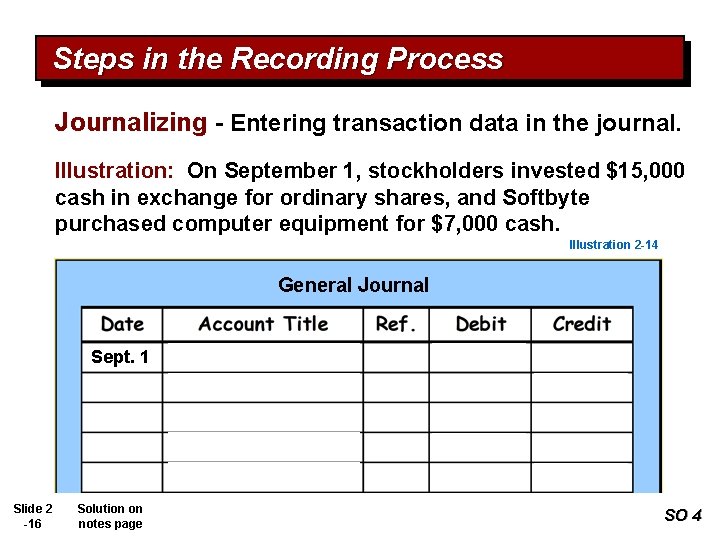
Steps in the Recording Process Journalizing - Entering transaction data in the journal. Illustration: On September 1, stockholders invested $15, 000 cash in exchange for ordinary shares, and Softbyte purchased computer equipment for $7, 000 cash. Illustration 2 -14 General Journal Sept. 1 Cash 15, 000 Share capital Computer equipment Cash Slide 2 -16 Solution on notes page 15, 000 7, 000 SO 4
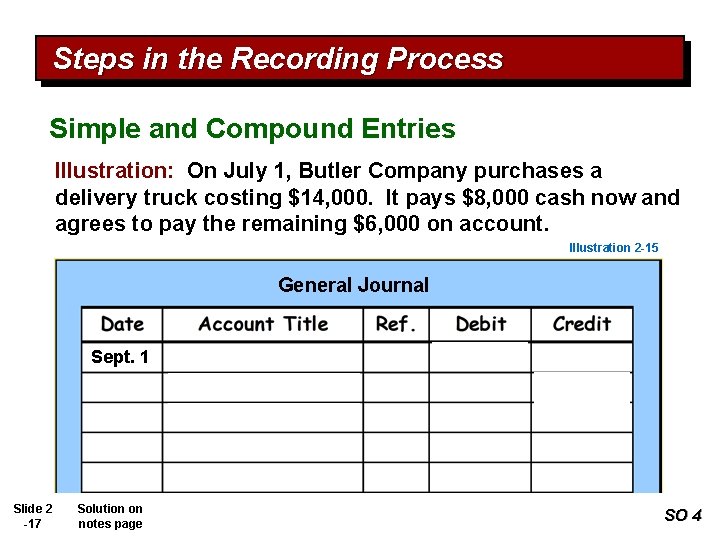
Steps in the Recording Process Simple and Compound Entries Illustration: On July 1, Butler Company purchases a delivery truck costing $14, 000. It pays $8, 000 cash now and agrees to pay the remaining $6, 000 on account. Illustration 2 -15 General Journal Sept. 1 Slide 2 -17 Solution on notes page Delivery equipment 14, 000 Cash 8, 000 Accounts payable 6, 000 SO 4
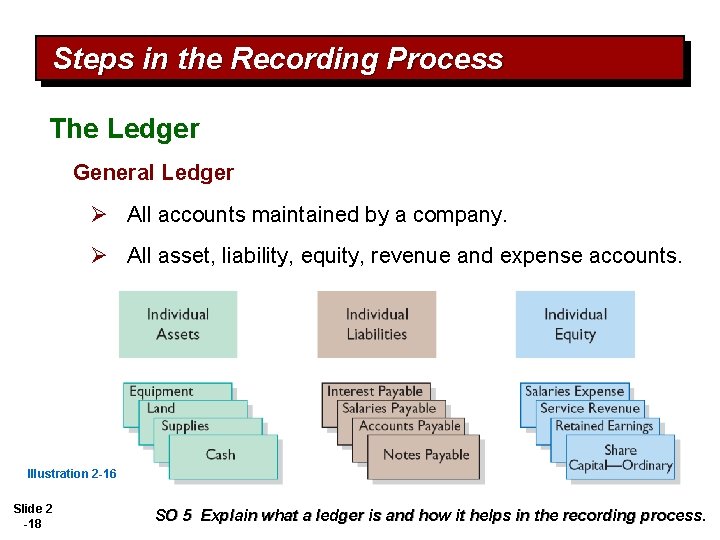
Steps in the Recording Process The Ledger General Ledger Ø All accounts maintained by a company. Ø All asset, liability, equity, revenue and expense accounts. Illustration 2 -16 Slide 2 -18 SO 5 Explain what a ledger is and how it helps in the recording process.
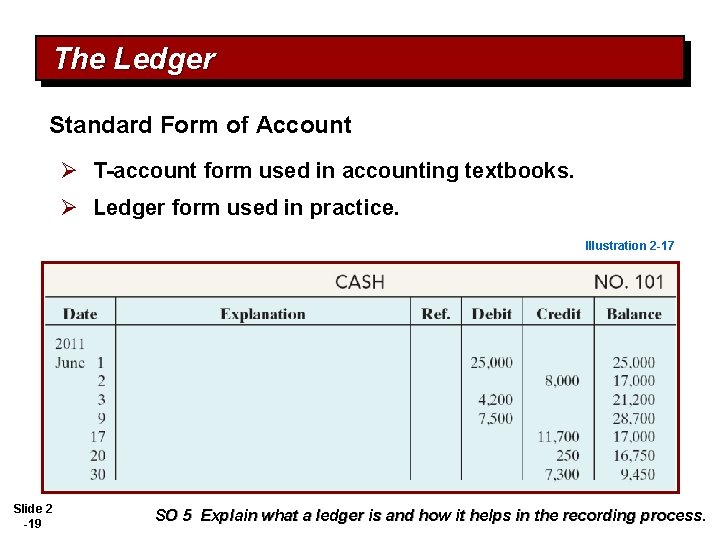
The Ledger Standard Form of Account Ø T-account form used in accounting textbooks. Ø Ledger form used in practice. Illustration 2 -17 Slide 2 -19 SO 5 Explain what a ledger is and how it helps in the recording process.
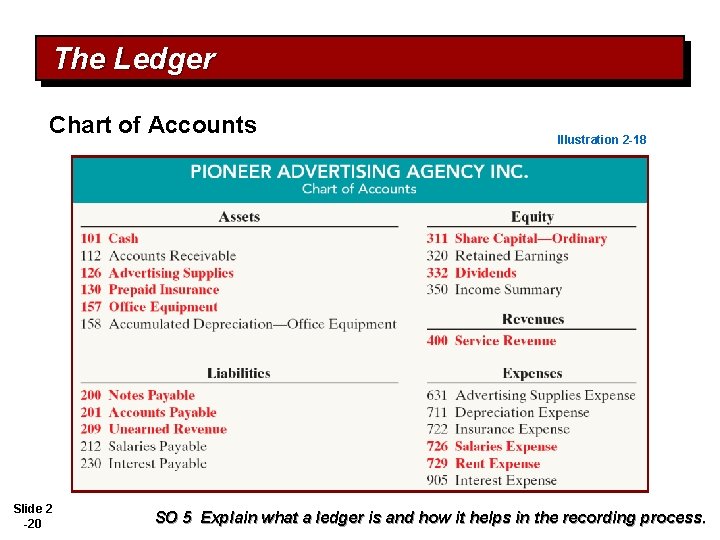
The Ledger Chart of Accounts Slide 2 -20 Illustration 2 -18 SO 5 Explain what a ledger is and how it helps in the recording process.
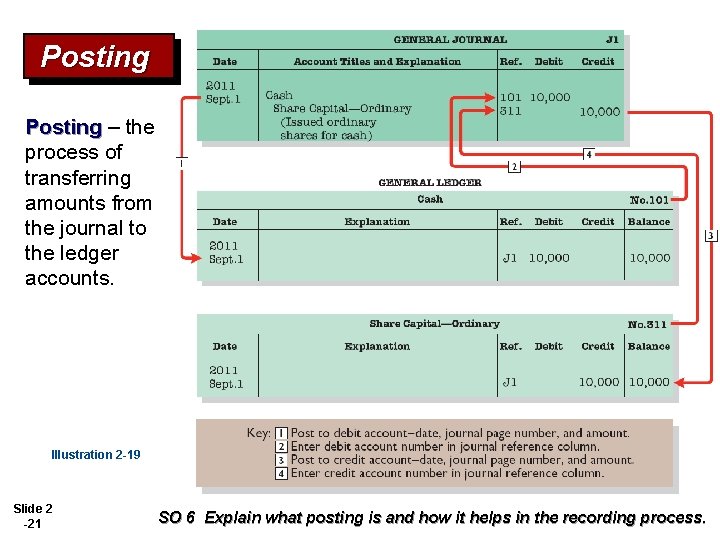
Posting – the process of transferring amounts from the journal to the ledger accounts. Illustration 2 -19 Slide 2 -21 SO 6 Explain what posting is and how it helps in the recording process.
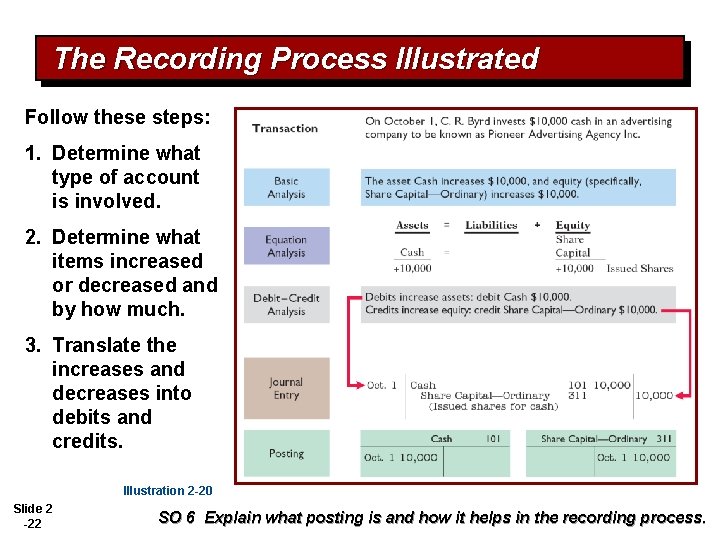
The Recording Process Illustrated Follow these steps: 1. Determine what type of account is involved. 2. Determine what items increased or decreased and by how much. 3. Translate the increases and decreases into debits and credits. Illustration 2 -20 Slide 2 -22 SO 6 Explain what posting is and how it helps in the recording process.
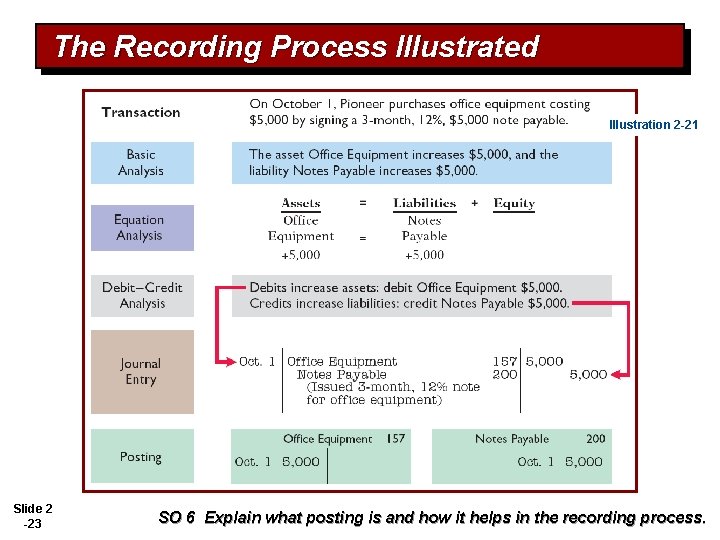
The Recording Process Illustrated Illustration 2 -21 Slide 2 -23 SO 6 Explain what posting is and how it helps in the recording process.
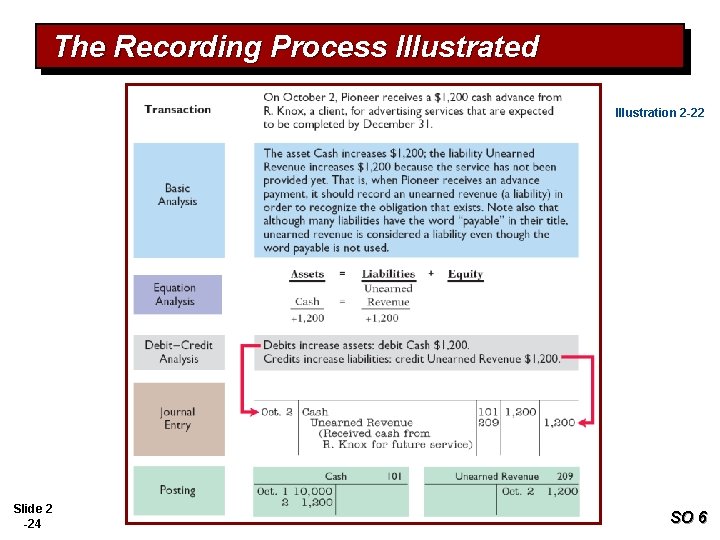
The Recording Process Illustrated Illustration 2 -22 Slide 2 -24 SO 6
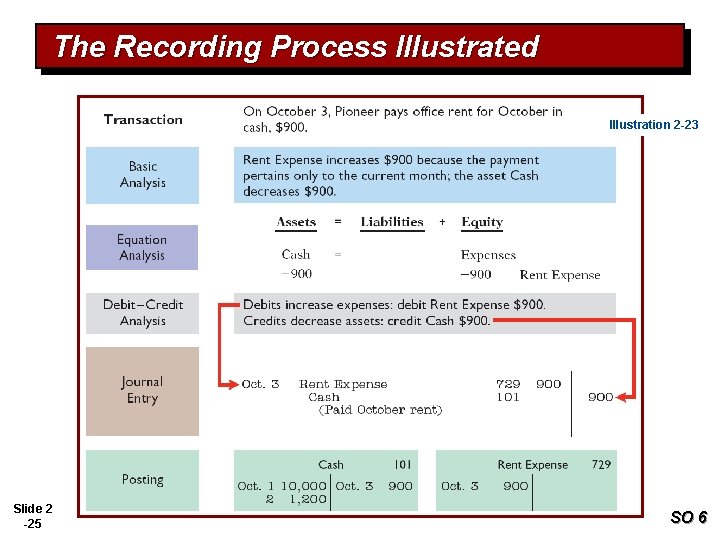
The Recording Process Illustrated Illustration 2 -23 Slide 2 -25 SO 6
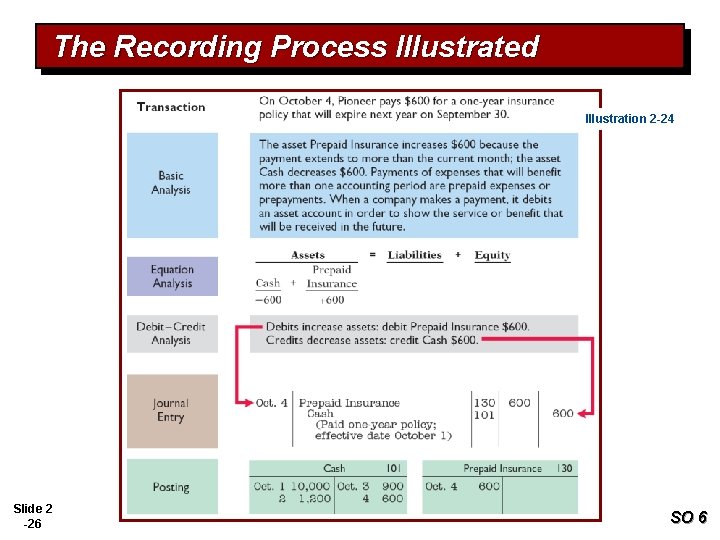
The Recording Process Illustrated Illustration 2 -24 Slide 2 -26 SO 6
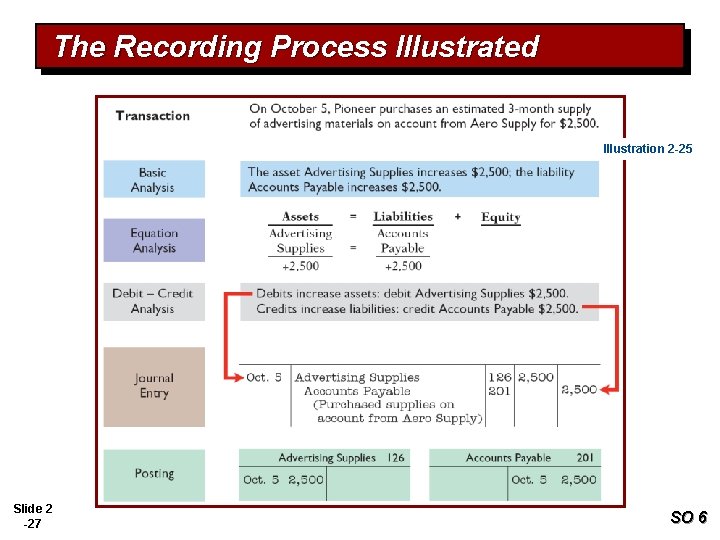
The Recording Process Illustrated Illustration 2 -25 Slide 2 -27 SO 6
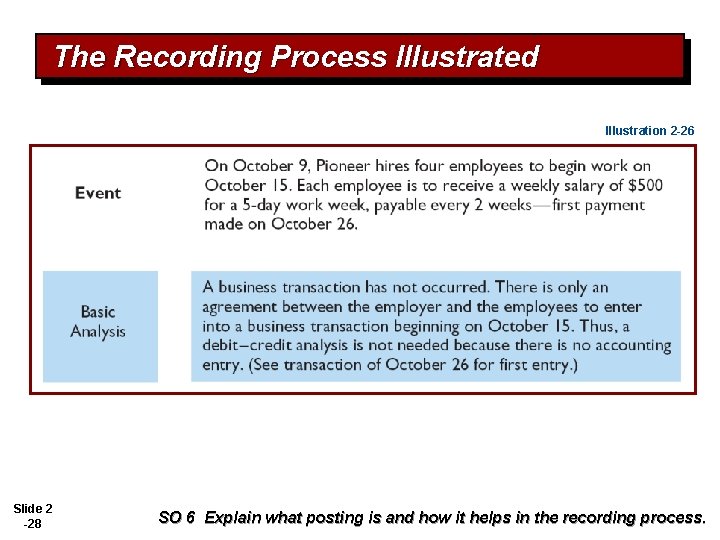
The Recording Process Illustrated Illustration 2 -26 Slide 2 -28 SO 6 Explain what posting is and how it helps in the recording process.
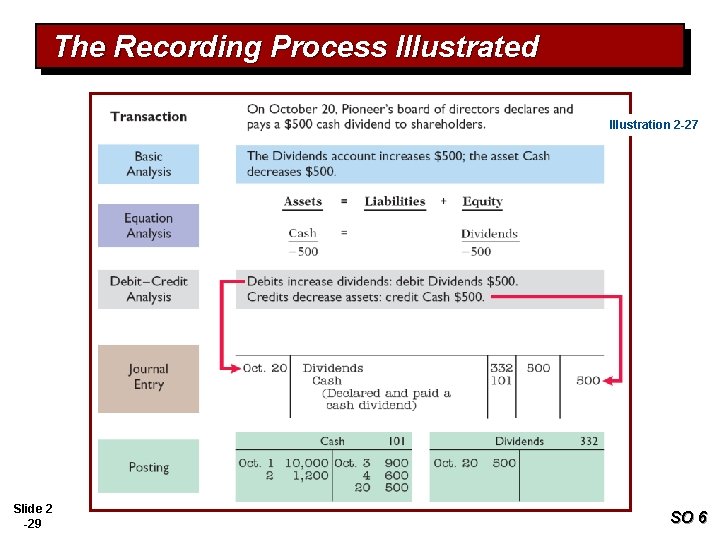
The Recording Process Illustrated Illustration 2 -27 Slide 2 -29 SO 6
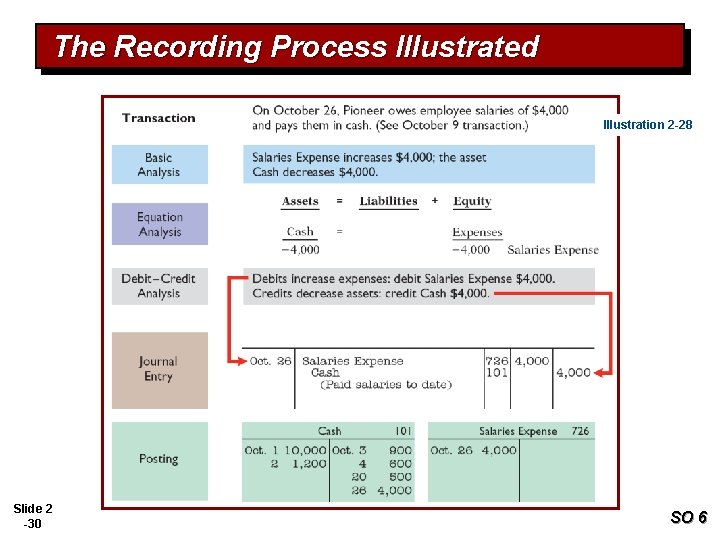
The Recording Process Illustrated Illustration 2 -28 Slide 2 -30 SO 6
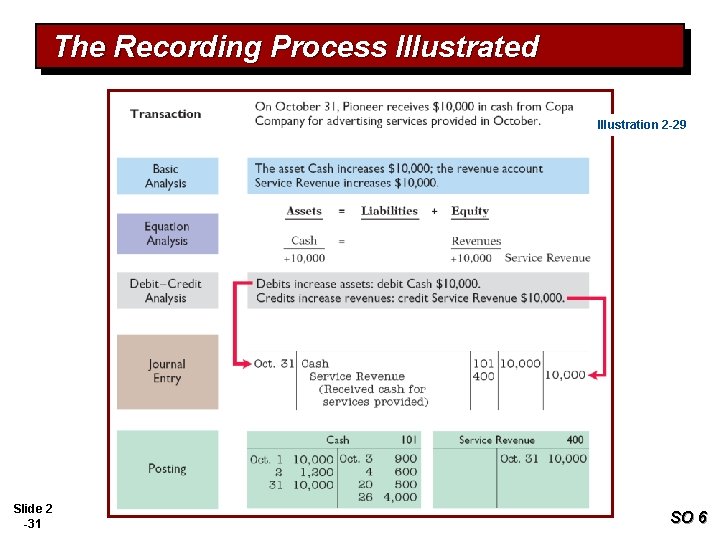
The Recording Process Illustrated Illustration 2 -29 Slide 2 -31 SO 6
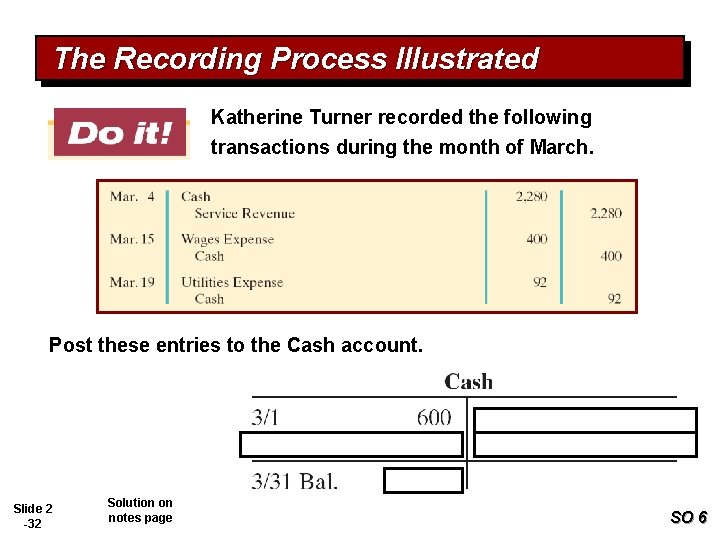
The Recording Process Illustrated Katherine Turner recorded the following transactions during the month of March. Post these entries to the Cash account. Slide 2 -32 Solution on notes page SO 6
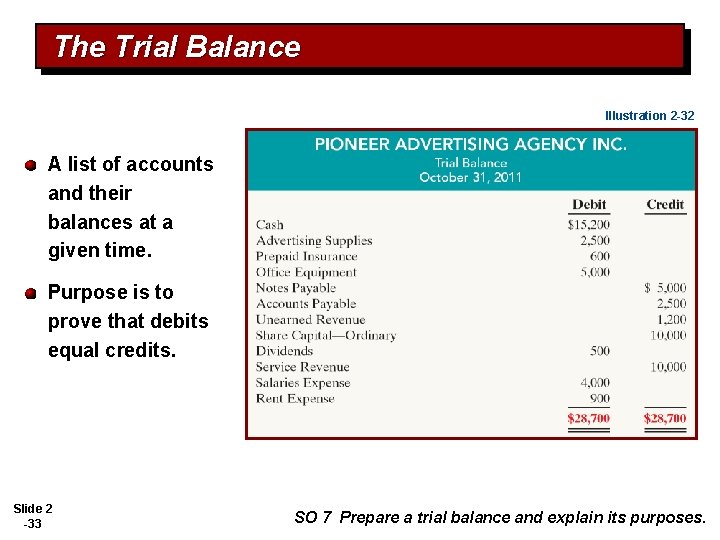
The Trial Balance Illustration 2 -32 A list of accounts and their balances at a given time. Purpose is to prove that debits equal credits. Slide 2 -33 SO 7 Prepare a trial balance and explain its purposes.