
Slide 12 20 of 33 TRACHEA Structure Figure
- Slides: 10
Slide 12 -20 of 33
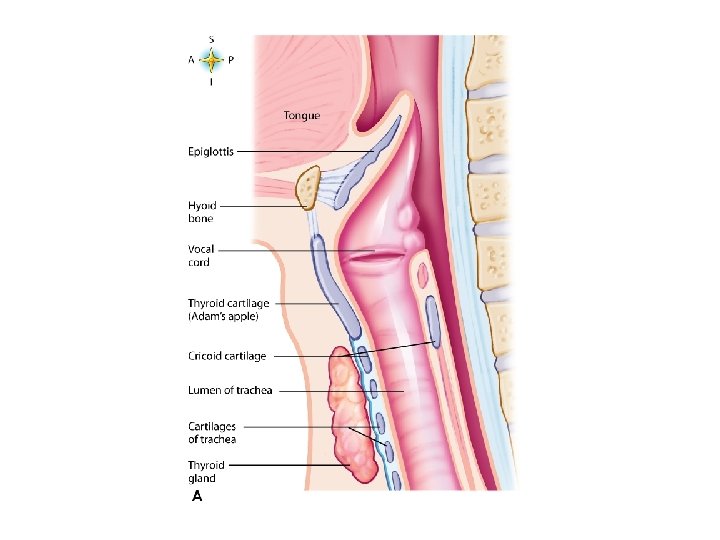
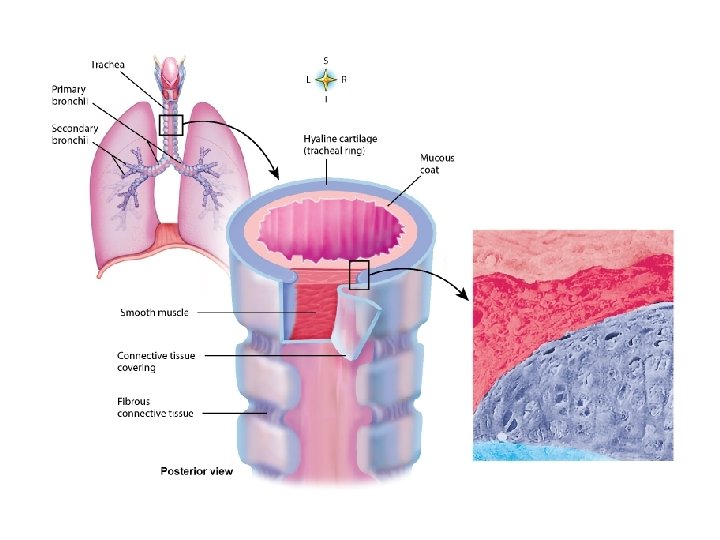
TRACHEA • Structure (Figure 14 -6) – Tube about 11 cm (4. 5 inches) long that extends from larynx into the thoracic cavity – Mucous lining – C-shaped rings of cartilage hold trachea open • Function—passageway for air to move to and from lungs • Obstruction – Blockage of trachea occludes the airway, and if blockage is complete, causes death in minutes – Tracheal obstruction causes more than 4000 deaths annually in the United States
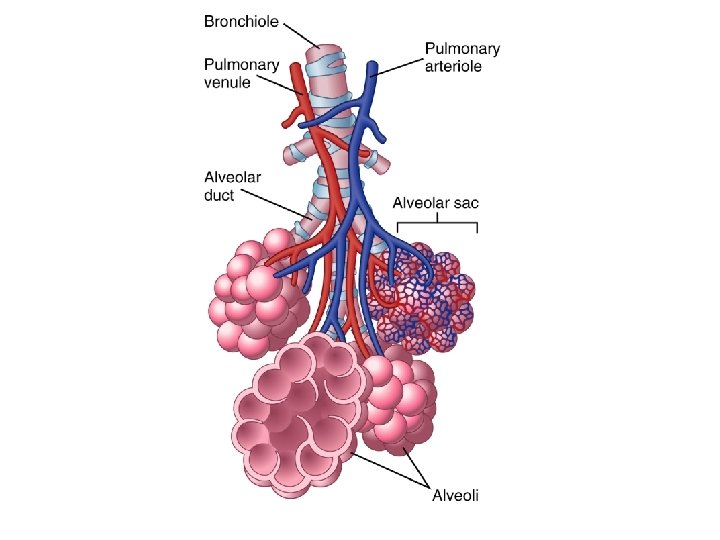
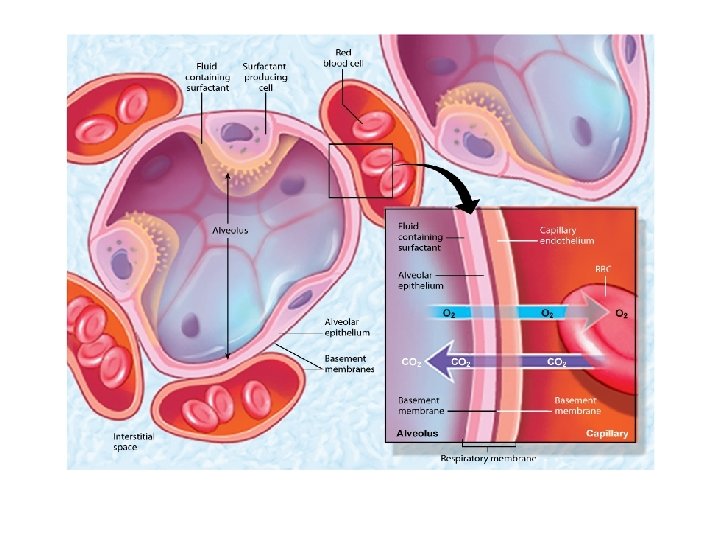
BRONCHI, BRONCHIOLES, AND ALVEOLI • Structure – Trachea branches into right and left bronchi – Each bronchus branches into smaller and smaller tubes eventually leading to bronchioles – Bronchioles end in clusters of microscopic alveolar sacs, the walls of which are made up of alveoli (Figure 14 -7) • Function – Bronchi and bronchioles—air distribution; passageway for air to move to and from alveoli – Alveoli—exchange of gases between air and blood (Figure 14 -8)
LUNGS AND PLEURA • Structure (Figure 14 -9) – Size—large enough to fill the chest cavity, except for middle space occupied by heart and large blood vessels – Apex—narrow upper part of each lung, under collarbone – Base—broad lower part of each lung; rests on diaphragm – Pleura—moist, smooth, slippery membrane that lines chest cavity and covers outer surface of lungs; reduces friction between the lungs and chest wall during breathing (Figure 14 -10) • Function—breathing (pulmonary ventilation)