
Slide 11 1 Issuance of Par Value Stock

- Slides: 16
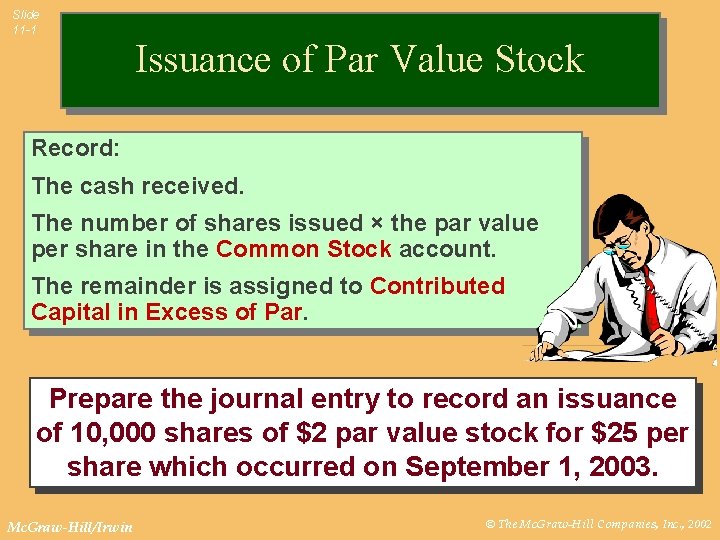
Slide 11 -1 Issuance of Par Value Stock Record: The cash received. The number of shares issued × the par value per share in the Common Stock account. The remainder is assigned to Contributed Capital in Excess of Par. Prepare the journal entry to record an issuance of 10, 000 shares of $2 par value stock for $25 per share which occurred on September 1, 2003. Mc. Graw-Hill/Irwin © The Mc. Graw-Hill Companies, Inc. , 2002
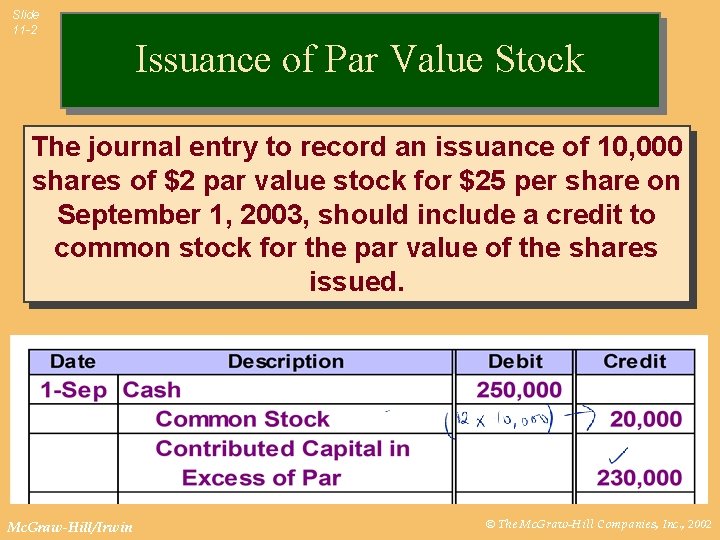
Slide 11 -2 Issuance of Par Value Stock The journal entry to record an issuance of 10, 000 shares of $2 par value stock for $25 per share on September 1, 2003, should include a credit to common stock for the par value of the shares issued. Mc. Graw-Hill/Irwin © The Mc. Graw-Hill Companies, Inc. , 2002
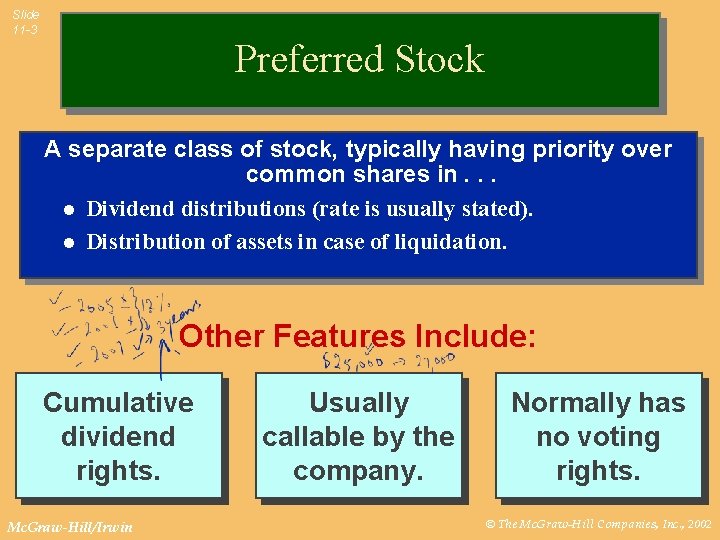
Slide 11 -3 Preferred Stock A separate class of stock, typically having priority over common shares in. . . l Dividend distributions (rate is usually stated). l Distribution of assets in case of liquidation. Other Features Include: Cumulative dividend rights. Mc. Graw-Hill/Irwin Usually callable by the company. Normally has no voting rights. © The Mc. Graw-Hill Companies, Inc. , 2002
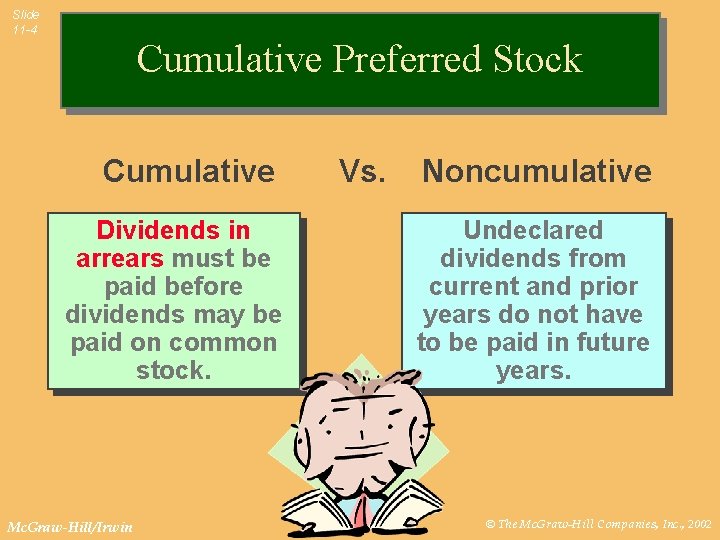
Slide 11 -4 Cumulative Preferred Stock Cumulative Dividends in arrears must be paid before dividends may be paid on common stock. Mc. Graw-Hill/Irwin Vs. Noncumulative Undeclared dividends from current and prior years do not have to be paid in future years. © The Mc. Graw-Hill Companies, Inc. , 2002
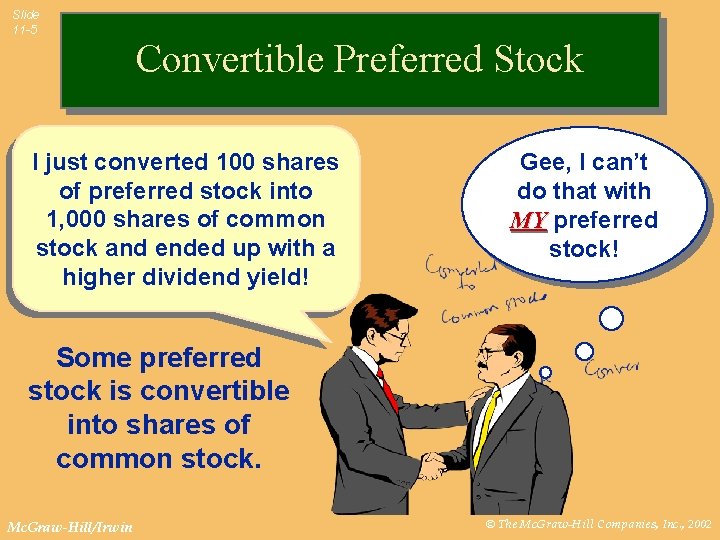
Slide 11 -5 Convertible Preferred Stock I just converted 100 shares of preferred stock into 1, 000 shares of common stock and ended up with a higher dividend yield! Gee, I can’t do that with MY preferred stock! Some preferred stock is convertible into shares of common stock. Mc. Graw-Hill/Irwin © The Mc. Graw-Hill Companies, Inc. , 2002
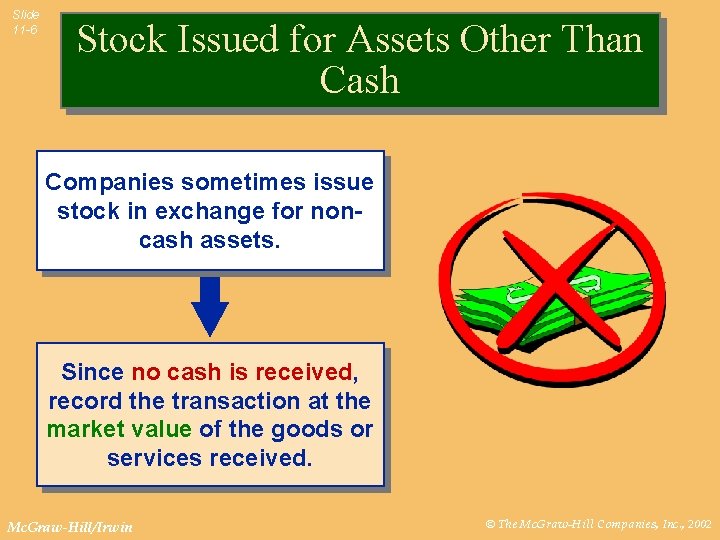
Slide 11 -6 Stock Issued for Assets Other Than Cash Companies sometimes issue stock in exchange for noncash assets. Since no cash is received, record the transaction at the market value of the goods or services received. Mc. Graw-Hill/Irwin © The Mc. Graw-Hill Companies, Inc. , 2002
Slide 11 -7 I love this stuff! Can we do some more? Mc. Graw-Hill/Irwin © The Mc. Graw-Hill Companies, Inc. , 2002
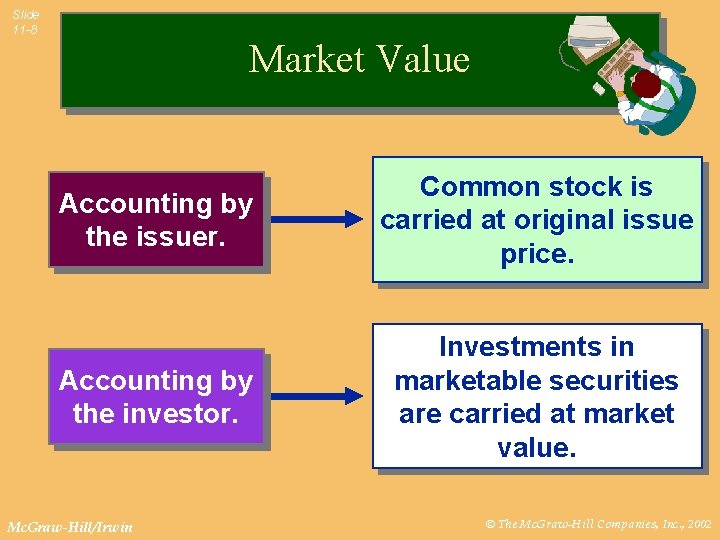
Slide 11 -8 Market Value Accounting by the issuer. Common stock is carried at original issue price. Accounting by the investor. Investments in marketable securities are carried at market value. Mc. Graw-Hill/Irwin © The Mc. Graw-Hill Companies, Inc. , 2002
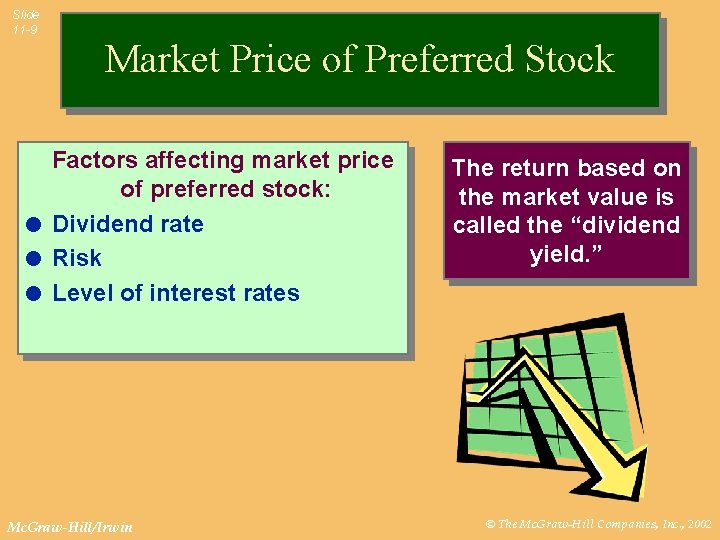
Slide 11 -9 Market Price of Preferred Stock Factors affecting market price of preferred stock: l Dividend rate l Risk l Level of interest rates Mc. Graw-Hill/Irwin The return based on the market value is called the “dividend yield. ” © The Mc. Graw-Hill Companies, Inc. , 2002
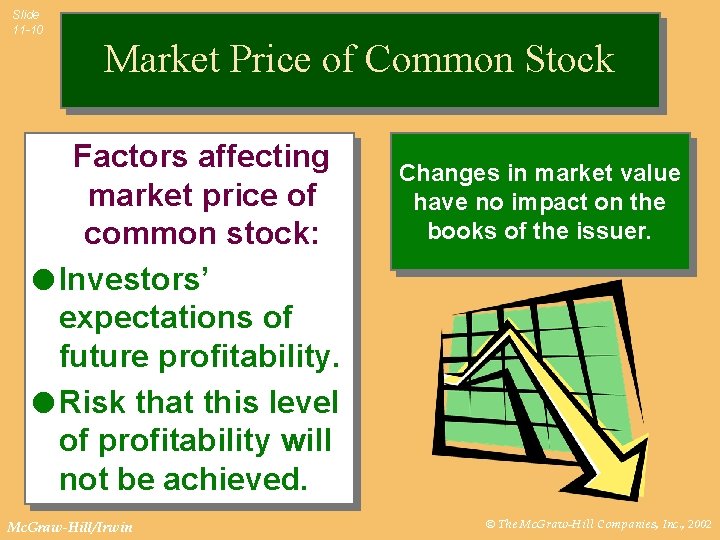
Slide 11 -10 Market Price of Common Stock Factors affecting market price of common stock: l Investors’ expectations of future profitability. l Risk that this level of profitability will not be achieved. Mc. Graw-Hill/Irwin Changes in market value have no impact on the books of the issuer. © The Mc. Graw-Hill Companies, Inc. , 2002
Slide 11 -11 Stock Splits l Companies use stock splits to reduce market price. l Outstanding shares increase, but par value is decreased proportionately. Mc. Graw-Hill/Irwin Ice Cream Parlor Banana Splits On Sale Now © The Mc. Graw-Hill Companies, Inc. , 2002
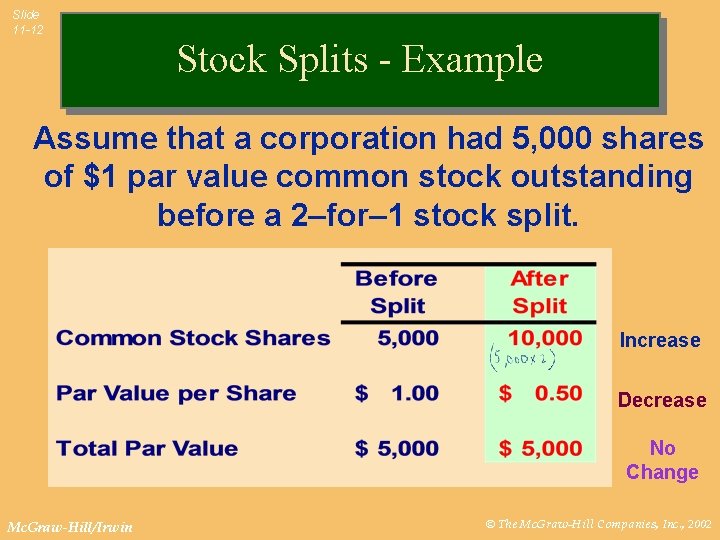
Slide 11 -12 Stock Splits - Example Assume that a corporation had 5, 000 shares of $1 par value common stock outstanding before a 2–for– 1 stock split. Increase Decrease No Change Mc. Graw-Hill/Irwin © The Mc. Graw-Hill Companies, Inc. , 2002
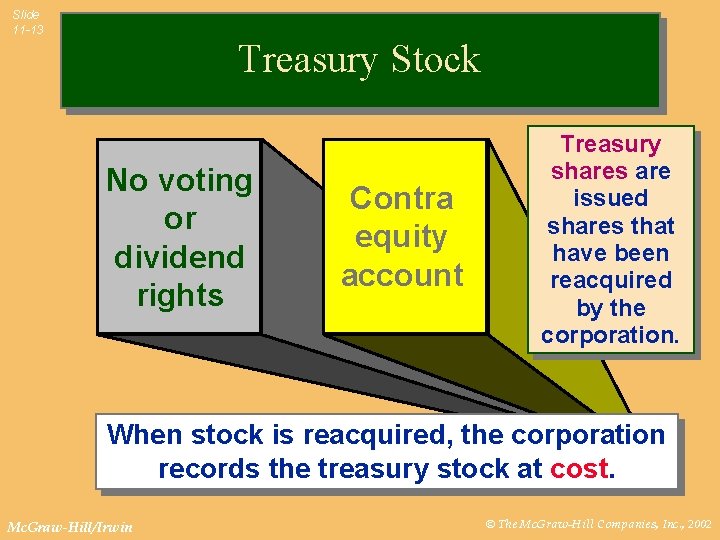
Slide 11 -13 Treasury Stock No voting or dividend rights Contra equity account Treasury shares are issued shares that have been reacquired by the corporation. When stock is reacquired, the corporation records the treasury stock at cost. Mc. Graw-Hill/Irwin © The Mc. Graw-Hill Companies, Inc. , 2002
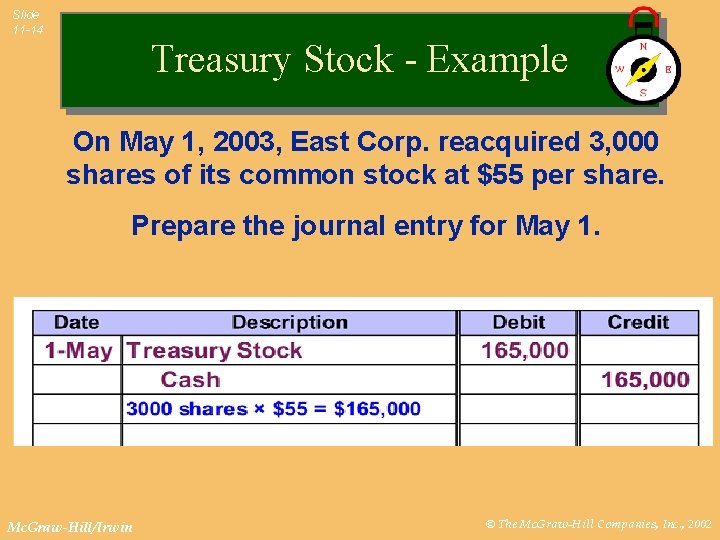
Slide 11 -14 Treasury Stock - Example On May 1, 2003, East Corp. reacquired 3, 000 shares of its common stock at $55 per share. Prepare the journal entry for May 1. Mc. Graw-Hill/Irwin © The Mc. Graw-Hill Companies, Inc. , 2002
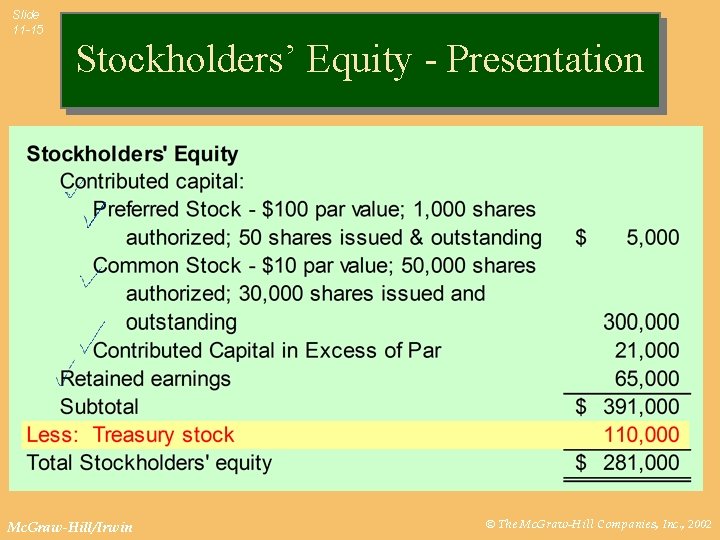
Slide 11 -15 Stockholders’ Equity - Presentation Mc. Graw-Hill/Irwin © The Mc. Graw-Hill Companies, Inc. , 2002
Slide 11 -16 This isn’t what I meant when I asked for stock for my birthday! Mc. Graw-Hill/Irwin © The Mc. Graw-Hill Companies, Inc. , 2002