
Slide 1 1 Chapter 2 The Internet microenvironment





















- Slides: 53
Slide 1. 1 Chapter 2 The Internet micro-environment Situation analysis Chaffey, Internet Marketing 4 th Edition, © Pearson Education Limited 2009
Slide 1. 2 Learning objectives • Identify the different elements of the Internet environment that impact on an organisation’s Internet marketing strategy • Complete an online marketplace analysis to assess customer, intermediary and competitor use of the Internet as part of strategy development • Evaluate the relevance of changes in trading patterns and business models enabled by digital channels Chaffey, Internet Marketing 4 th Edition, © Pearson Education Limited 2009
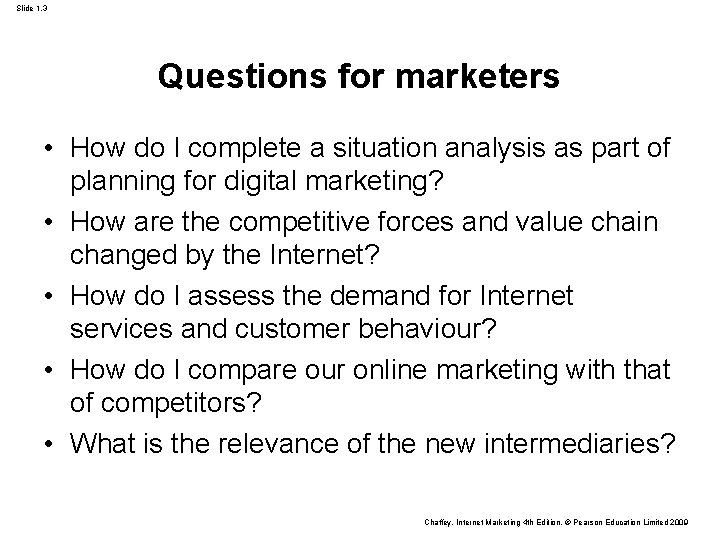
Slide 1. 3 Questions for marketers • How do I complete a situation analysis as part of planning for digital marketing? • How are the competitive forces and value chain changed by the Internet? • How do I assess the demand for Internet services and customer behaviour? • How do I compare our online marketing with that of competitors? • What is the relevance of the new intermediaries? Chaffey, Internet Marketing 4 th Edition, © Pearson Education Limited 2009
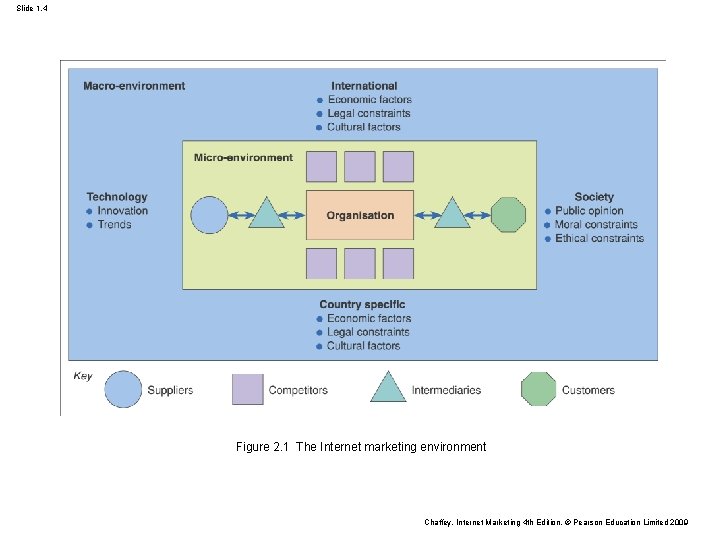
Slide 1. 4 Figure 2. 1 The Internet marketing environment Chaffey, Internet Marketing 4 th Edition, © Pearson Education Limited 2009
Slide 1. 5 Figure 2. 2 An online marketplace map Chaffey, Internet Marketing 4 th Edition, © Pearson Education Limited 2009
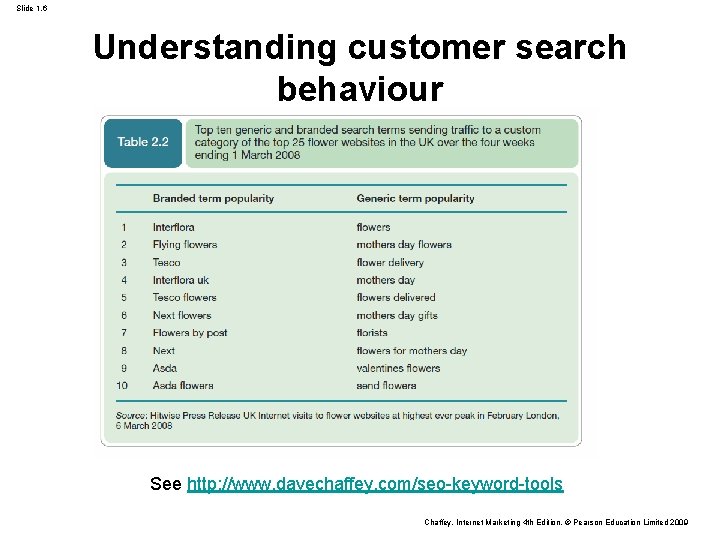
Slide 1. 6 Understanding customer search behaviour See http: //www. davechaffey. com/seo-keyword-tools Chaffey, Internet Marketing 4 th Edition, © Pearson Education Limited 2009
Slide 1. 7 Figure 2. 3 A model of the Internet marketing conversion process Chaffey, Internet Marketing 4 th Edition, © Pearson Education Limited 2009
Slide 1. 8 Figure 2. 4 An example of a conversion model Chaffey, Internet Marketing 4 th Edition, © Pearson Education Limited 2009
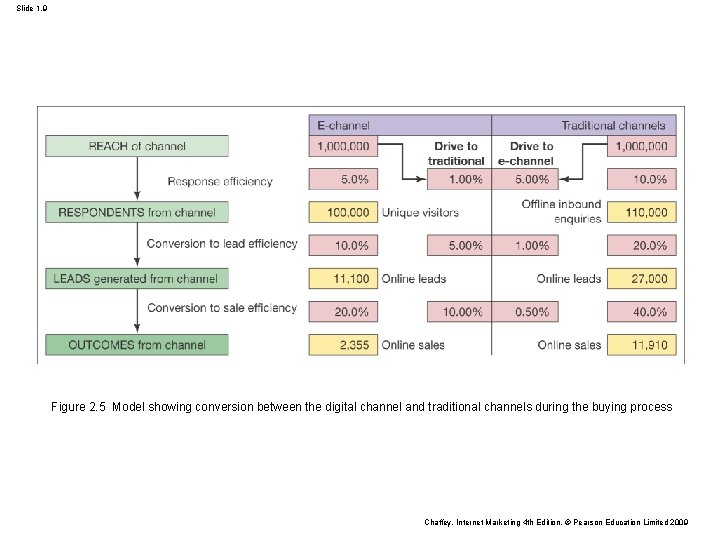
Slide 1. 9 Figure 2. 5 Model showing conversion between the digital channel and traditional channels during the buying process Chaffey, Internet Marketing 4 th Edition, © Pearson Education Limited 2009
Slide 1. 10 Figure 2. 6 i-to-i showing prominent phone numbers (http: //www. i-to-i. com) Chaffey, Internet Marketing 4 th Edition, © Pearson Education Limited 2009
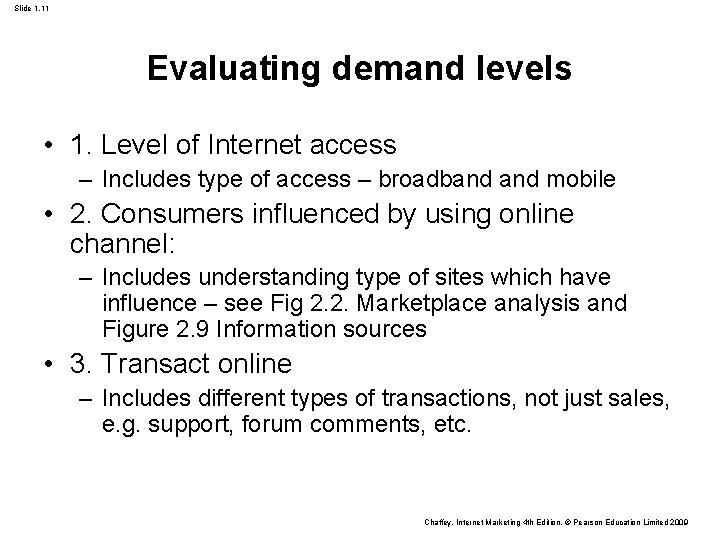
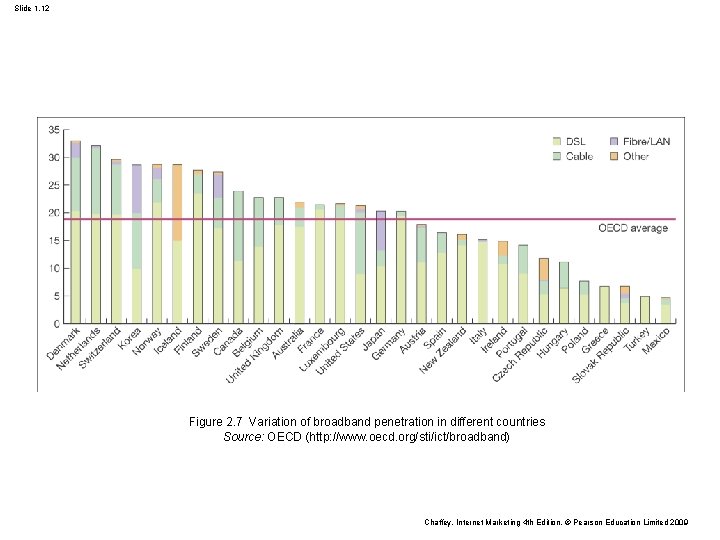
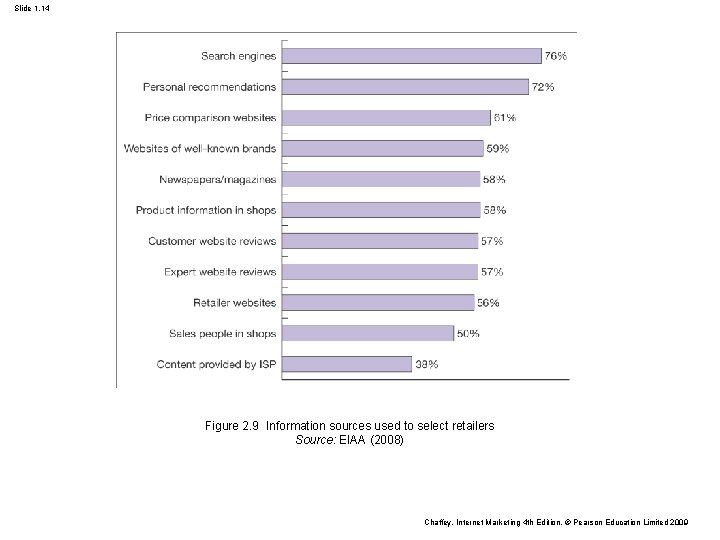
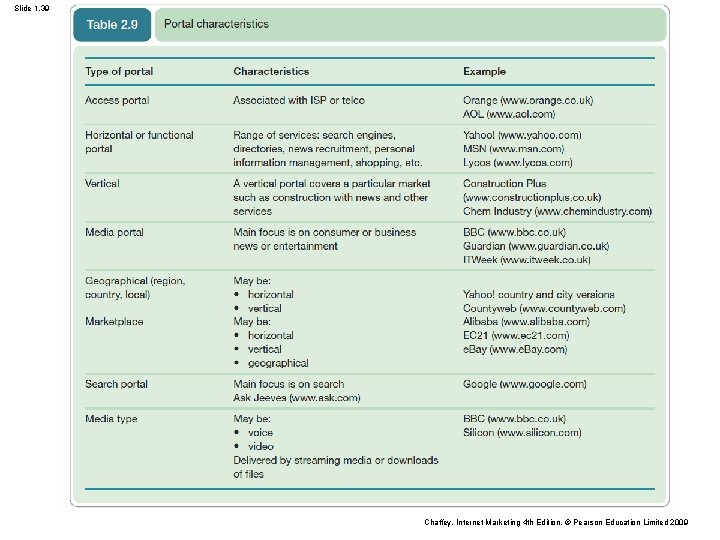
Slide 1. 11 Evaluating demand levels • 1. Level of Internet access – Includes type of access – broadband mobile • 2. Consumers influenced by using online channel: – Includes understanding type of sites which have influence – see Fig 2. 2. Marketplace analysis and Figure 2. 9 Information sources • 3. Transact online – Includes different types of transactions, not just sales, e. g. support, forum comments, etc. Chaffey, Internet Marketing 4 th Edition, © Pearson Education Limited 2009
Slide 1. 12 Figure 2. 7 Variation of broadband penetration in different countries Source: OECD (http: //www. oecd. org/sti/ict/broadband) Chaffey, Internet Marketing 4 th Edition, © Pearson Education Limited 2009
Slide 1. 13 Figure 2. 8 Usage of mobile phones in Europe and US (data for 3 -month period ending August 2006) Source: M: Metrics, 2006 Chaffey, Internet Marketing 4 th Edition, © Pearson Education Limited 2009
Slide 1. 14 Figure 2. 9 Information sources used to select retailers Source: EIAA (2008) Chaffey, Internet Marketing 4 th Edition, © Pearson Education Limited 2009
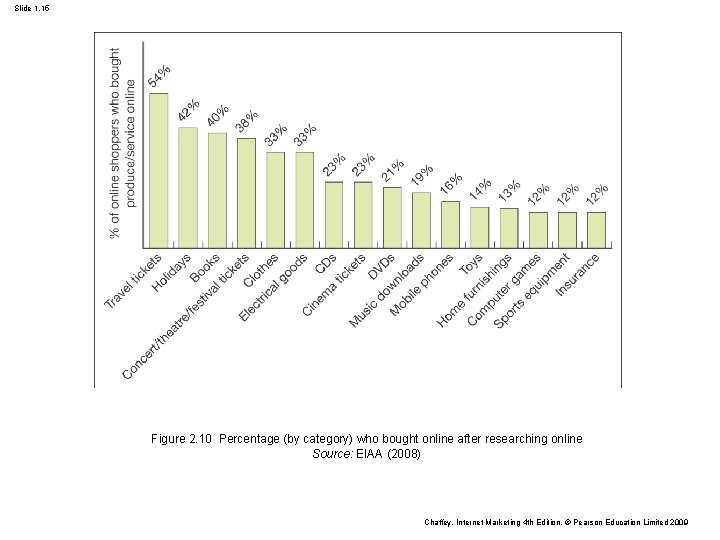
Slide 1. 15 Figure 2. 10 Percentage (by category) who bought online after researching online Source: EIAA (2008) Chaffey, Internet Marketing 4 th Edition, © Pearson Education Limited 2009
Slide 1. 16 2. 11 Chaffey, Internet Marketing 4 th Edition, © Pearson Education Limited 2009
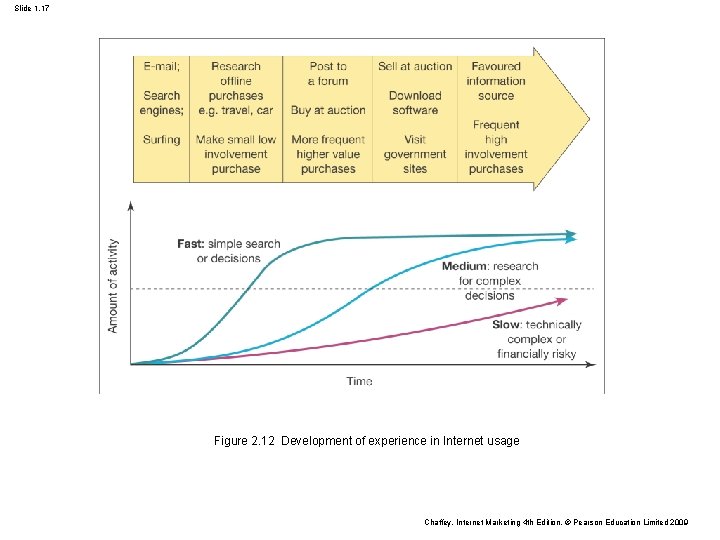
Slide 1. 17 Figure 2. 12 Development of experience in Internet usage Chaffey, Internet Marketing 4 th Edition, © Pearson Education Limited 2009
Slide 1. 18 Consumer characteristics • Demographics: – Age, gender, social group • Webographics – Access methods and times • Personas: – Dulux example Chaffey, Internet Marketing 4 th Edition, © Pearson Education Limited 2009
Slide 1. 19 Dulux persona example • Aims: – The aim was to position Dulux. co. uk (Figure 2. 13) as “the online destination for colour scheming and visualisation to help you achieve your individual style from the comfort of your home”. Specific outcomes on the site are to browse colours, add colours to a personal scrapbook, use the paint calculator and find a stockist. Further aims were to ‘win the war before the store’i. e. to provide colour help tools that can help develop a preference for Dulux before consumers are in-store and to prompt other ideas to sell more than one colour at a time. – Specific SMART objectives were to increase the number of Unique Visitors from 1 M p. a. in 2003 to 3. 5 M p. a. in 2006 and To drive 12% of visitors to a desired outcome (e. g. ordering swatches). Chaffey, Internet Marketing 4 th Edition, © Pearson Education Limited 2009
Slide 1. 20 Target audience variation Based on research, it was found that the main audience for the site was female with these typical demographics and psychographics: • Would be adventurous 25 -44 women, online • Lack of confidence with previous site: • - Gap between inspiration (TV, magazines, advertising) and lived experience (Large DIY sheds, nervous discomfort) • - No guidance or reassurance previously available currently on their journey • Colours and colour combining is key • Online is a well-used channel for help and guidance on other topics • 12 month decorating cycle • Propensity to socialise • Quality, technical innovation and scientific proficiency of Dulux is a given Chaffey, Internet Marketing 4 th Edition, © Pearson Education Limited 2009
Slide 1. 21 Example personas • First time buyer. – Penny Edwards, Age: 27, Partner: Ben, Location: North London, Occupation: Sales Assistant • Part time Mum. – Jane Lawrence, Age: 37, Husband: Joe, Location: Manchester, Occupation: Part time PR consultant • Single Mum. – Rachel Wilson, Age: 40, Location: Reading, Occupation: Business Analyst Chaffey, Internet Marketing 4 th Edition, © Pearson Education Limited 2009
Slide 1. 22 Figure 2. 13 Dulux site (www. dulux. co. uk) Chaffey, Internet Marketing 4 th Edition, © Pearson Education Limited 2009
Slide 1. 23 Business consumer characteristics • Variation in organisation characteristics – – size of company (employees or turnover) industry sector and products organisation type (private, public, government, not-for-profit) application of service (which business activities do purchased products and services support? ) – country and region. • Individual role – role and responsibility from job title, function or number of staff managed – role in buying decision (purchasing influence) – department – product interest – demographics: age, sex and possibly social group. Chaffey, Internet Marketing 4 th Edition, © Pearson Education Limited 2009
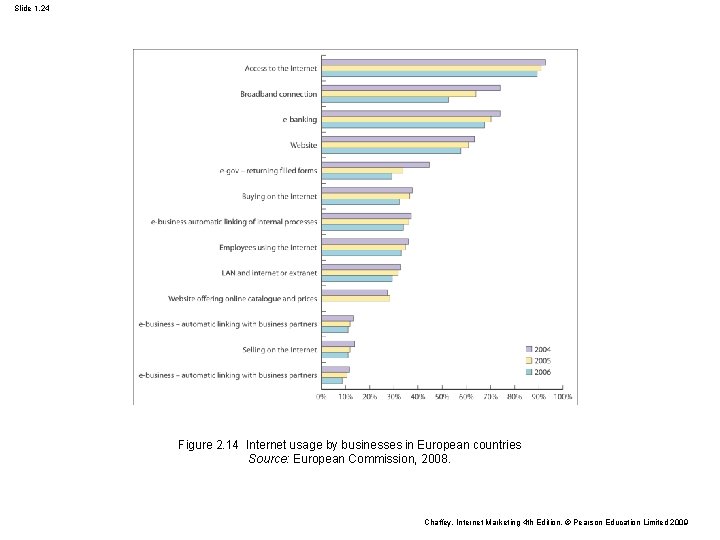
Slide 1. 24 Figure 2. 14 Internet usage by businesses in European countries Source: European Commission, 2008. Chaffey, Internet Marketing 4 th Edition, © Pearson Education Limited 2009
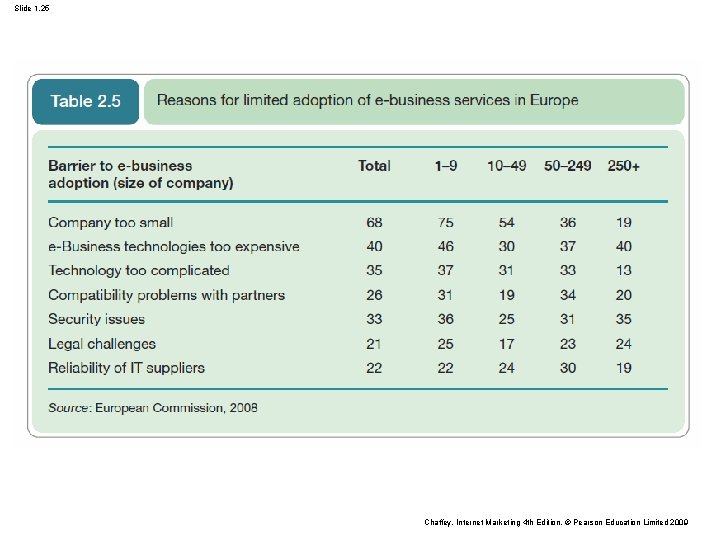
Slide 1. 25 Chaffey, Internet Marketing 4 th Edition, © Pearson Education Limited 2009
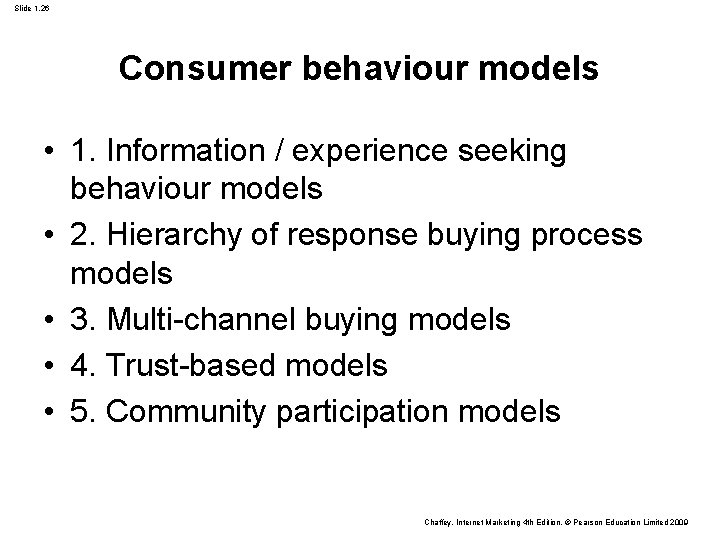
Slide 1. 26 Consumer behaviour models • 1. Information / experience seeking behaviour models • 2. Hierarchy of response buying process models • 3. Multi-channel buying models • 4. Trust-based models • 5. Community participation models Chaffey, Internet Marketing 4 th Edition, © Pearson Education Limited 2009
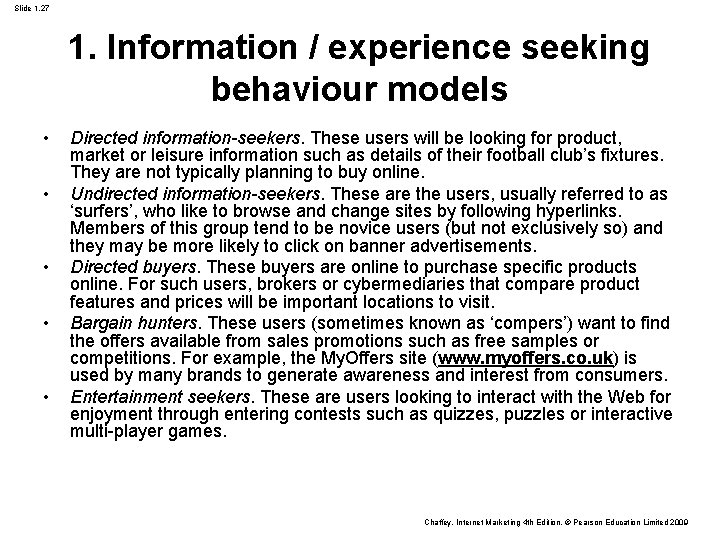
Slide 1. 27 1. Information / experience seeking behaviour models • • • Directed information-seekers. These users will be looking for product, market or leisure information such as details of their football club’s fixtures. They are not typically planning to buy online. Undirected information-seekers. These are the users, usually referred to as ‘surfers’, who like to browse and change sites by following hyperlinks. Members of this group tend to be novice users (but not exclusively so) and they may be more likely to click on banner advertisements. Directed buyers. These buyers are online to purchase specific products online. For such users, brokers or cybermediaries that compare product features and prices will be important locations to visit. Bargain hunters. These users (sometimes known as ‘compers’) want to find the offers available from sales promotions such as free samples or competitions. For example, the My. Offers site (www. myoffers. co. uk) is used by many brands to generate awareness and interest from consumers. Entertainment seekers. These are users looking to interact with the Web for enjoyment through entering contests such as quizzes, puzzles or interactive multi-player games. Chaffey, Internet Marketing 4 th Edition, © Pearson Education Limited 2009
Slide 1. 28 2. Hierarchy of response buying process models Figure 2. 15 A summary of how the Internet can impact on the buying process for a new purchaser Chaffey, Internet Marketing 4 th Edition, © Pearson Education Limited 2009
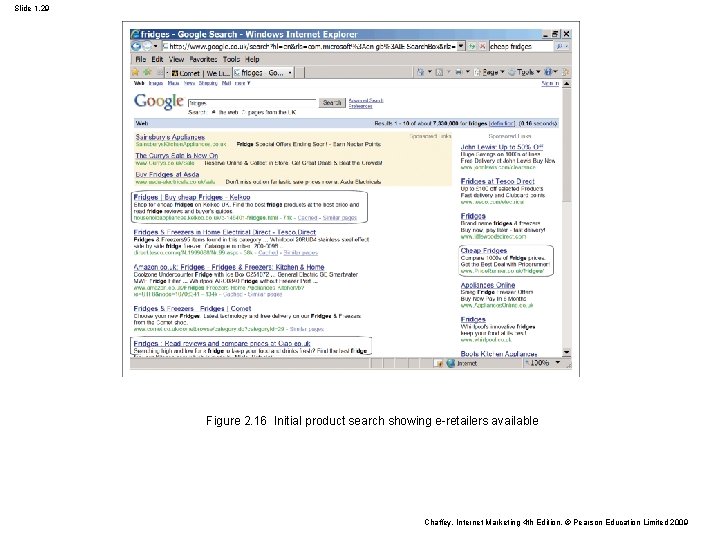
Slide 1. 29 Figure 2. 16 Initial product search showing e-retailers available Chaffey, Internet Marketing 4 th Edition, © Pearson Education Limited 2009
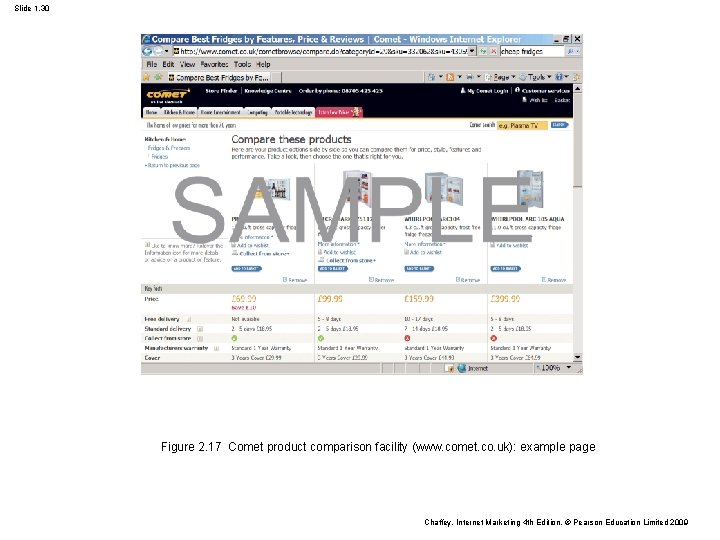
Slide 1. 30 Figure 2. 17 Comet product comparison facility (www. comet. co. uk): example page Chaffey, Internet Marketing 4 th Edition, © Pearson Education Limited 2009
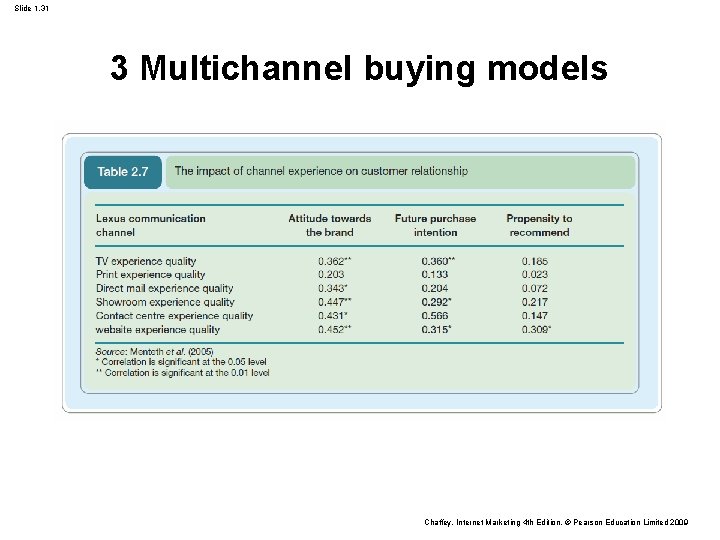
Slide 1. 31 3 Multichannel buying models Chaffey, Internet Marketing 4 th Edition, © Pearson Education Limited 2009
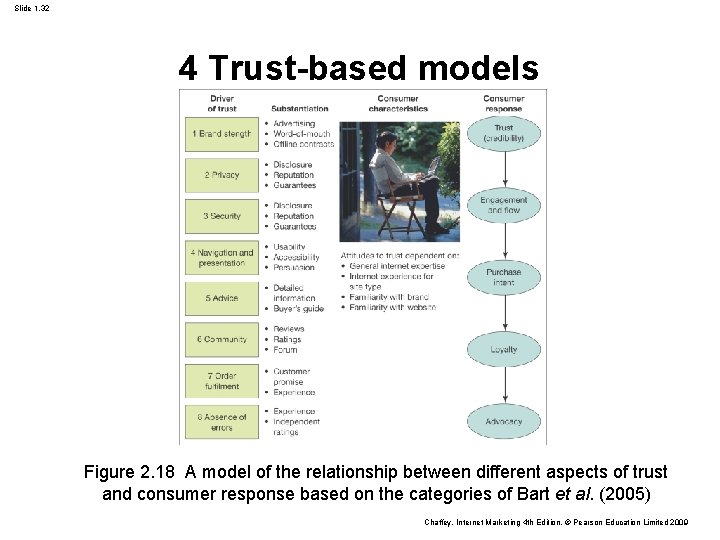
Slide 1. 32 4 Trust-based models Figure 2. 18 A model of the relationship between different aspects of trust and consumer response based on the categories of Bart et al. (2005) Chaffey, Internet Marketing 4 th Edition, © Pearson Education Limited 2009
Slide 1. 33 Figure 2. 19 Segmentation based on information need and trust Source: Adapted from Forrester (2006) Teleconference Driving Sales With Segmentation Analyst: Benjamin Ensor of Forrester Research, February 27 th 2006 Chaffey, Internet Marketing 4 th Edition, © Pearson Education Limited 2009
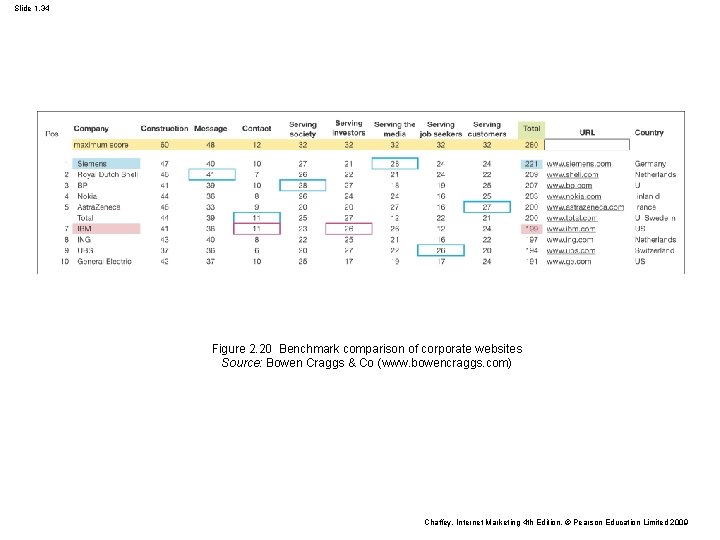
Slide 1. 34 Figure 2. 20 Benchmark comparison of corporate websites Source: Bowen Craggs & Co (www. bowencraggs. com) Chaffey, Internet Marketing 4 th Edition, © Pearson Education Limited 2009
Slide 1. 35 Figure 2. 21 Performance benchmark example for Canadian banks Source: Gomez (http: //www. gomez. com/products/viewbenchmark. php? btype=9) Chaffey, Internet Marketing 4 th Edition, © Pearson Education Limited 2009
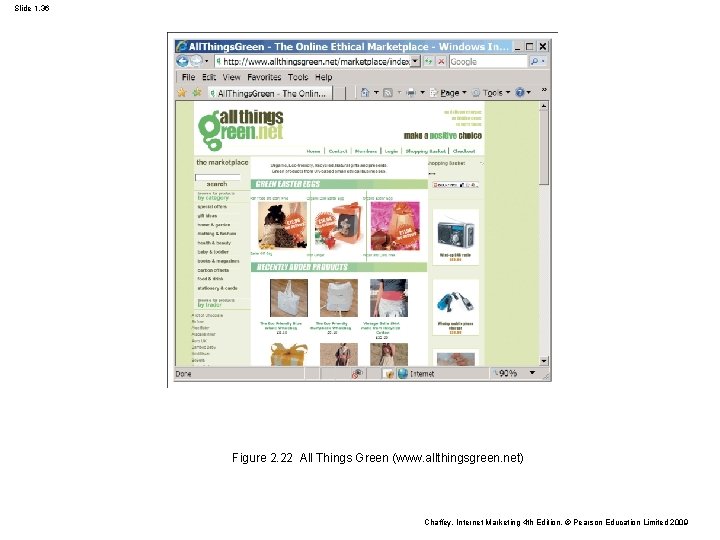
Slide 1. 36 Figure 2. 22 All Things Green (www. allthingsgreen. net) Chaffey, Internet Marketing 4 th Edition, © Pearson Education Limited 2009
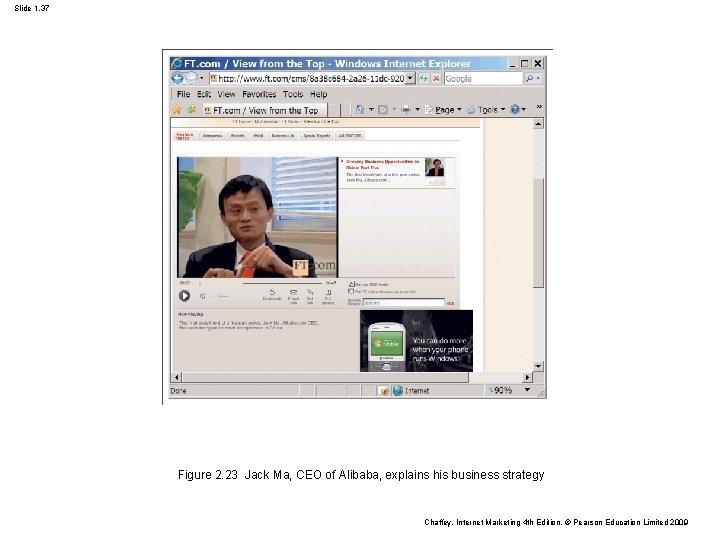
Slide 1. 37 Figure 2. 23 Jack Ma, CEO of Alibaba, explains his business strategy Chaffey, Internet Marketing 4 th Edition, © Pearson Education Limited 2009
Slide 1. 38 Figure 2. 24 Kelkoo. com, a European price comparison site Chaffey, Internet Marketing 4 th Edition, © Pearson Education Limited 2009
Slide 1. 39 Chaffey, Internet Marketing 4 th Edition, © Pearson Education Limited 2009
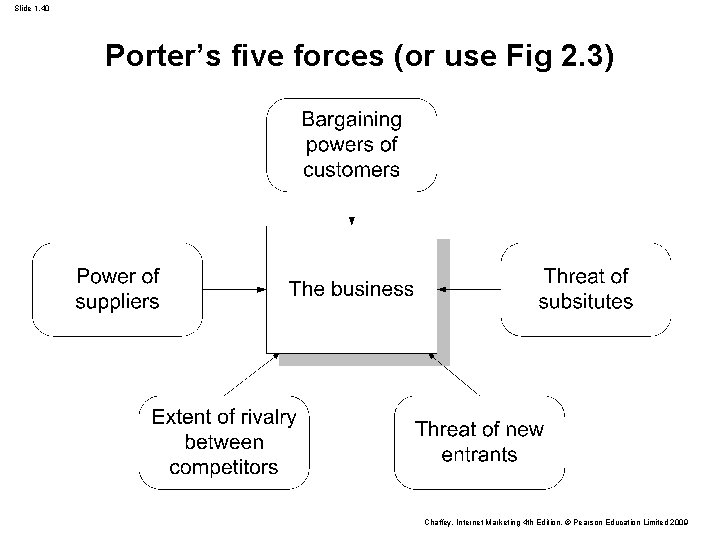
Slide 1. 40 Porter’s five forces (or use Fig 2. 3) Chaffey, Internet Marketing 4 th Edition, © Pearson Education Limited 2009
Slide 1. 41 Figure 2. 25 Value creation model Chaffey, Internet Marketing 4 th Edition, © Pearson Education Limited 2009
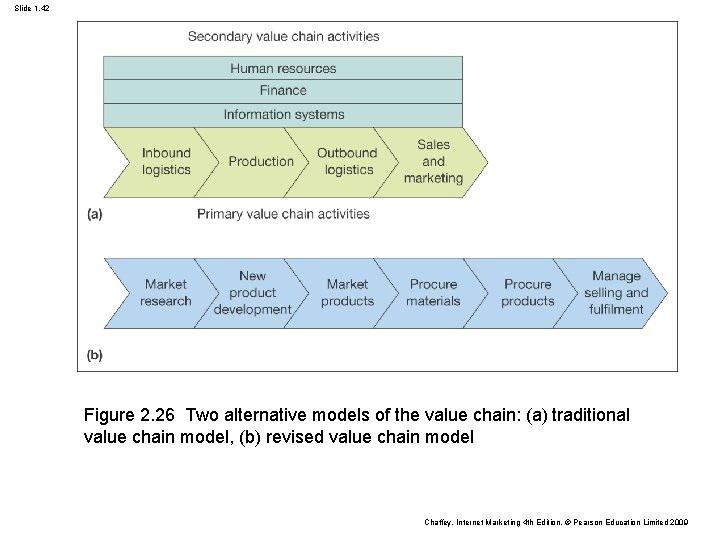
Slide 1. 42 Figure 2. 26 Two alternative models of the value chain: (a) traditional value chain model, (b) revised value chain model Chaffey, Internet Marketing 4 th Edition, © Pearson Education Limited 2009
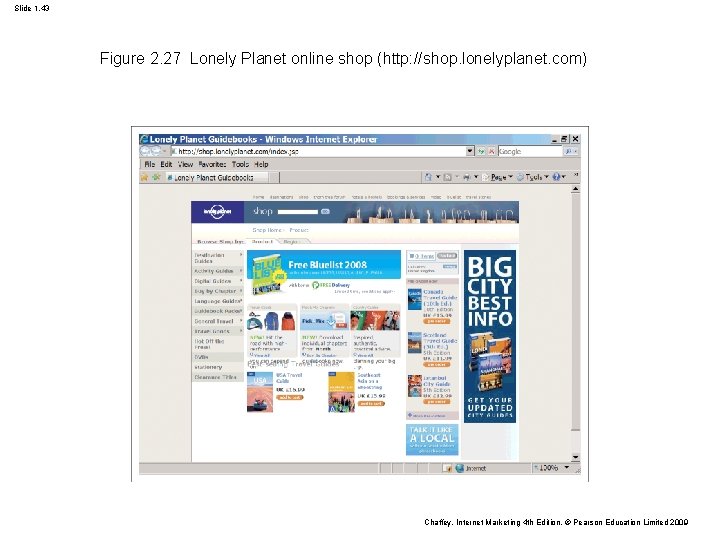
Slide 1. 43 Figure 2. 27 Lonely Planet online shop (http: //shop. lonelyplanet. com) Chaffey, Internet Marketing 4 th Edition, © Pearson Education Limited 2009
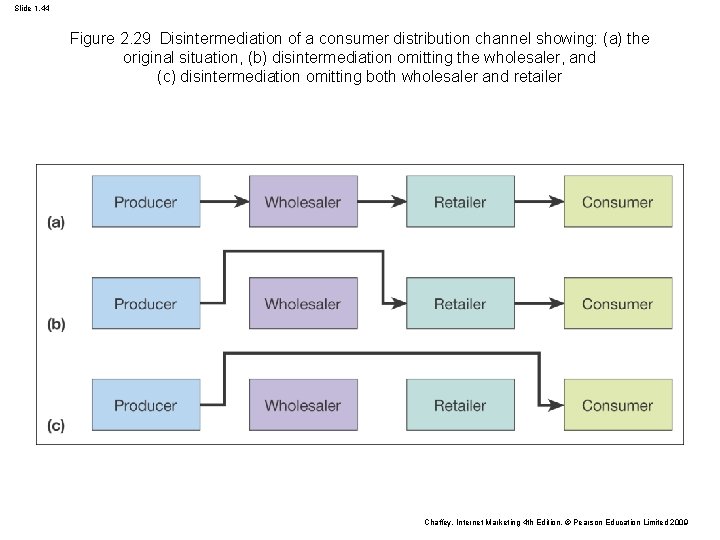
Slide 1. 44 Figure 2. 29 Disintermediation of a consumer distribution channel showing: (a) the original situation, (b) disintermediation omitting the wholesaler, and (c) disintermediation omitting both wholesaler and retailer Chaffey, Internet Marketing 4 th Edition, © Pearson Education Limited 2009
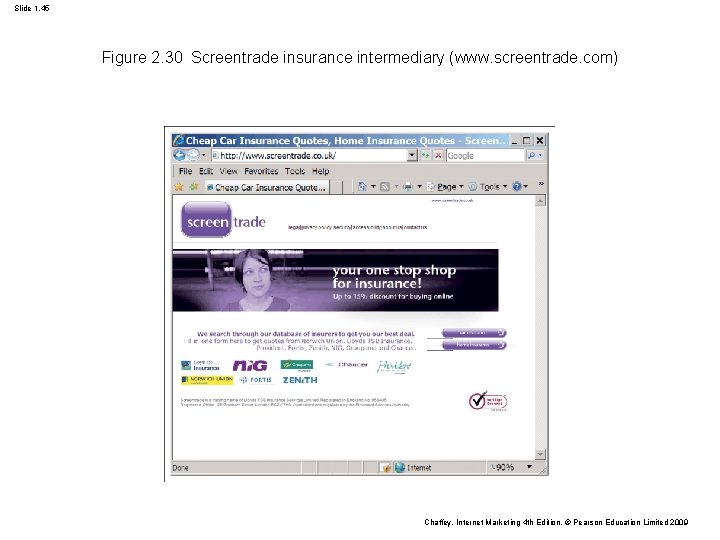
Slide 1. 45 Figure 2. 30 Screentrade insurance intermediary (www. screentrade. com) Chaffey, Internet Marketing 4 th Edition, © Pearson Education Limited 2009
Slide 1. 46 Figure 2. 31 From (a) original situation to (b) disintermediation or (c) reintermediation or countermediation Chaffey, Internet Marketing 4 th Edition, © Pearson Education Limited 2009
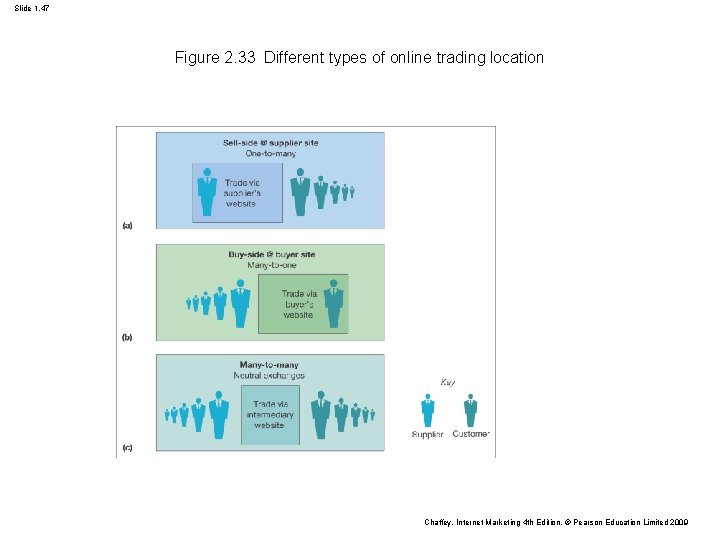
Slide 1. 47 Figure 2. 33 Different types of online trading location Chaffey, Internet Marketing 4 th Edition, © Pearson Education Limited 2009
Slide 1. 48 Figure 2. 34 Alternative perspectives on business models Chaffey, Internet Marketing 4 th Edition, © Pearson Education Limited 2009
Slide 1. 49 Countermediation • Creation of a new intermediary • Example: – B&Q www. diy. com – Opodo www. opodo. com – Boots www. wellbeing. com www. handbag. com Chaffey, Internet Marketing 4 th Edition, © Pearson Education Limited 2009
Slide 1. 50 2. 34 Chaffey, Internet Marketing 4 th Edition, © Pearson Education Limited 2009
Slide 1. 51 Publisher revenue models • • • 1. Revenue from subscription access to content. 2. Revenue from Pay Per View access to documents. 3. Revenue from CPM display advertising on site (e. g. banners ads, skyscrapers or rich media). CPM stands for ‘cost per thousand’ where M denotes ‘Mille’. 4. Revenue from CPC advertising on site (pay per click text ads) CPC stands for ‘Cost Per Click’. Advertisers are charged not simply for the number of times their ads are displayed, but according to the number of times they are clicked. 5. Revenue from Sponsorship of site sections or content types (typically fixed fee for a period) – 6. Affiliate revenue (typically CPA, but could be CPC) Affiliate revenue is commission based, for example if you display links to Amazon books on your site, you can receive around 5% of the cover price as a fee from Amazon. Such an arrangement is sometimes known as Cost Per Acquisition (CPA). Amazon, and others offer a tiered scheme where the affiliate is incentivised to gain more revenue, the more they sell. Hence this is often called a pay-performance ad deal. Chaffey, Internet Marketing 4 th Edition, © Pearson Education Limited 2009
Slide 1. 52 Figure 2. 35 Business-to-business publisher EConsultancy (www. e-consultancy. com) Chaffey, Internet Marketing 4 th Edition, © Pearson Education Limited 2009
Slide 1. 53 Figure 2. 36 Peer-to-peer lending exchange, Zopa (www. zopa. com) Chaffey, Internet Marketing 4 th Edition, © Pearson Education Limited 2009