
Sleep Lab Monitor Jack Page Robyn Hrobsky Lindsey
Sleep Lab Monitor Jack Page, Robyn Hrobsky, Lindsey Carlson, Nicole Daehn BME 400 October 17, 2008
Client: Christopher G. Green, MD Dept of Pediatrics School of Medicine and Public Health Advisor: Willis Tompkins Dept. of Biomedical Engineering University of Wisconsin - Madison
Overview • • • Background Problem Statement Current Devices Design Alternatives Design Matrix Future Work
Sleep Disordered Breathing Affects 18 million Americans • 10 million of which remain undiagnosed • Sleep disrupted 100 s of times each night Behavioral, emotional, and social problems • Irritability, agitation, fatigue • Low alertness, attention deficit Other Health Problems • Delayed mental and physical growth • High blood pressure
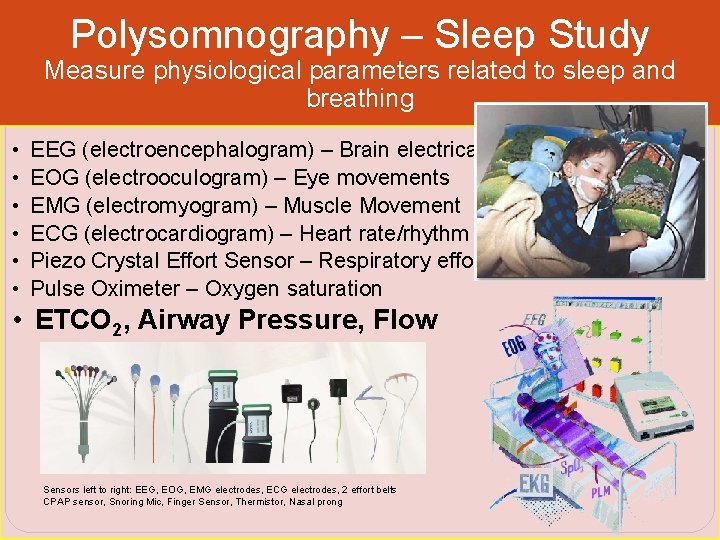
Polysomnography – Sleep Study Measure physiological parameters related to sleep and breathing • • • EEG (electroencephalogram) – Brain electrical activity EOG (electrooculogram) – Eye movements EMG (electromyogram) – Muscle Movement ECG (electrocardiogram) – Heart rate/rhythm Piezo Crystal Effort Sensor – Respiratory effort Pulse Oximeter – Oxygen saturation • ETCO 2, Airway Pressure, Flow Sensors left to right: EEG, EOG, EMG electrodes, ECG electrodes, 2 effort belts CPAP sensor, Snoring Mic, Finger Sensor, Thermistor, Nasal prong
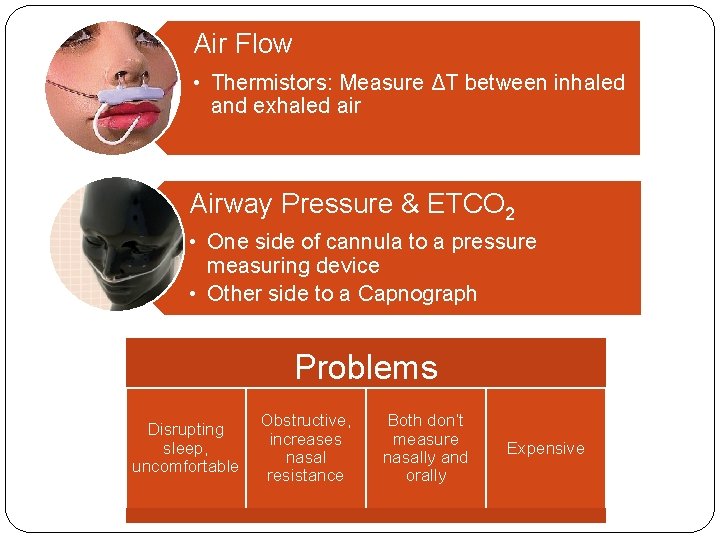
Air Flow • Thermistors: Measure ΔT between inhaled and exhaled air Airway Pressure & ETCO 2 • One side of cannula to a pressure measuring device • Other side to a Capnograph Problems Disrupting sleep, uncomfortable Obstructive, increases nasal resistance Both don’t measure nasally and orally Expensive
Problem Statement Combine ETCO 2, pressure, & flow into one apparatus Samples from both nostrils and the mouth Attach in both a durable & comfortable fashion
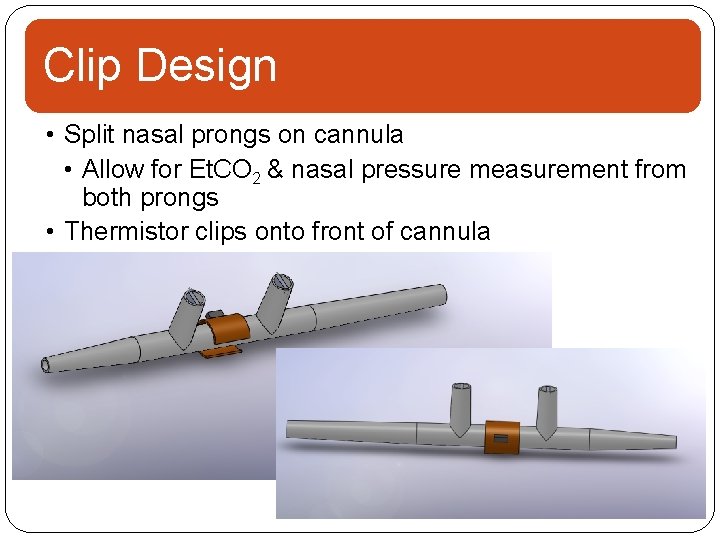
Clip Design • Split nasal prongs on cannula • Allow for Et. CO 2 & nasal pressure measurement from both prongs • Thermistor clips onto front of cannula
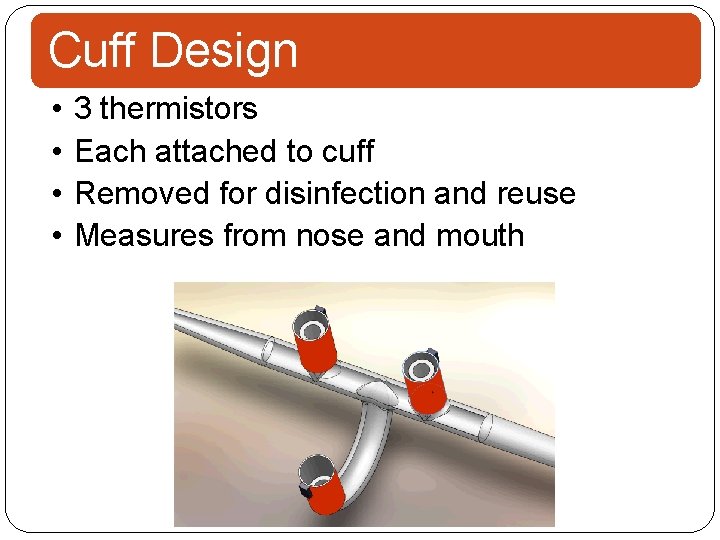
Cuff Design • • 3 thermistors Each attached to cuff Removed for disinfection and reuse Measures from nose and mouth
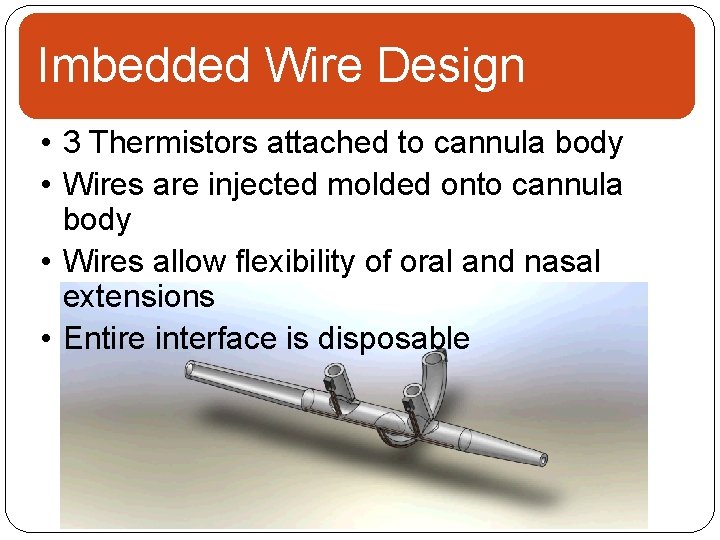
Imbedded Wire Design • 3 Thermistors attached to cannula body • Wires are injected molded onto cannula body • Wires allow flexibility of oral and nasal extensions • Entire interface is disposable
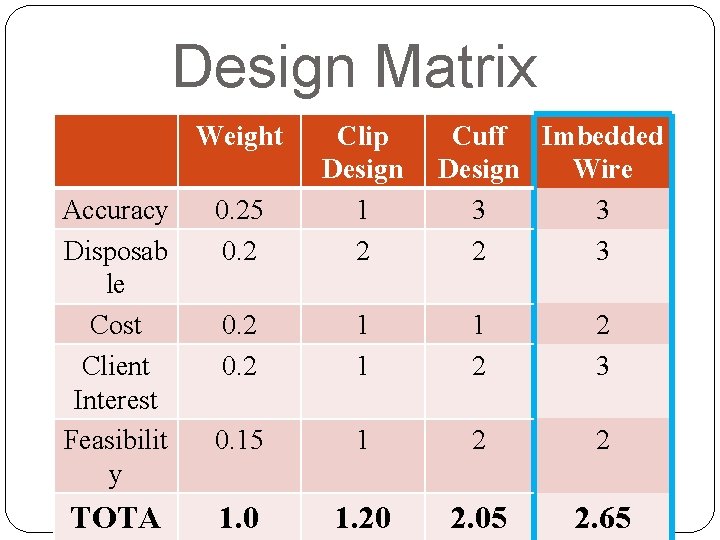
Design Matrix Weight Accuracy Disposab le Cost Client Interest Feasibilit y 0. 25 0. 2 Clip Design 1 2 Cuff Imbedded Design Wire 3 3 2 3 0. 2 1 1 1 2 2 3 0. 15 1 2 2 TOTA 1. 0 1. 20 2. 05 2. 65
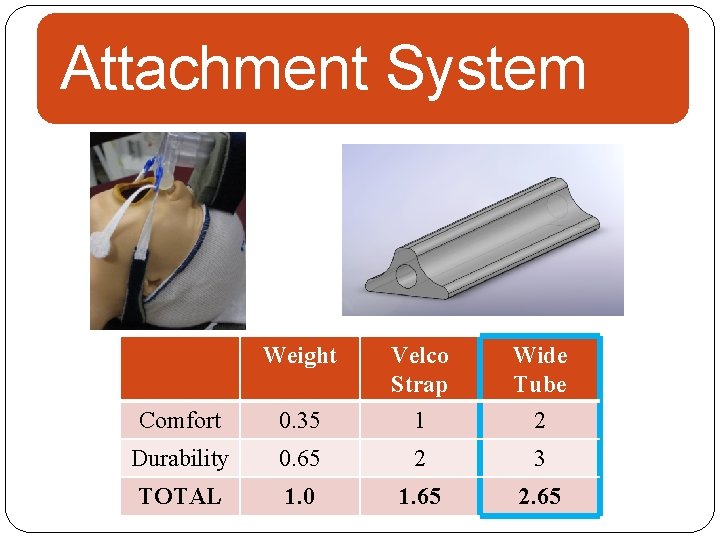
Attachment System Weight Velco Strap Wide Tube Comfort 0. 35 1 2 Durability 0. 65 2 3 TOTAL 1. 0 1. 65 2. 65
Future Work Purchase parts Create prototype Create Lab. VIEW program to monitor temperature changes Test prototype at sleep lab Work with manufacturer to develop device
References Dallas Center for Sleep Disorders. Pediatric Sleep Apnea. Retrieved from http: //www. dallas-sleep. com/pediatric-sleep-apnea. php Dept of Respiratory Care Eduation. KU Medical Center. Polysomnography. Retrieved from http: //classes. kumc. edu/cahe/respcared/cybercas/sleepapnea/trenpoly. ht ml Davey, Margot. The Royal Children’s Hospital of Melbourne. Sleep Studies. Retrieved from http: //www. rch. org. au/sleep/studies. cfm? doc_id=5040 Viasys Healthcare. Sleep. Screen. Retrieved from http: //www. jaegertoennies. com/english/products/sleepdiagnostics/sleepscreening/sleepscreen/ Salter Labs. Growing Steadily on a Quality Foundation. Retrieved from http: //www. salterlabs. com/ Rochester Sleep. Ultra Flow Respiration Monitors. Retrieved from http: //www. rochestersleep. com/Respiration. htm

QUESTIONS? ? ?
- Slides: 15