
Sleep in Medical Education Primary Author Dan Buysee
Sleep in Medical Education Primary Author: Dan Buysee, MD Version 1. 0: Updated June 2020
How to use the WELL Toolkit slides These slide decks were created by the WELL Toolkit Workgroup in 2020. You may use these slides individually or as a set for non-commercial purposes. You are welcome to edit this slide deck to customize it to your setting, including the use of your own logo, but please do not substantively change the content of the work. If you present, reproduce, or distribute these slides, please acknowledge our resource, “WELL Toolkit (2020). ” For additional information and related resources, please visit: https: //gmewellness. upmc. com/
Agenda Physicians and Sleep • Circadian rhythms and health • Alertness and Performance • Fatigue in medical education • Practical interventions

Learning Objectives 1. Describe sources of and factors that contribute to fatigue within the clinical and training environment 2. Discuss the risks and impact of fatigue, both personally and professionally 3. Be able to recognize signs and symptoms of fatigue in oneself and others 4. Be aware of management strategies to help mitigate fatigue
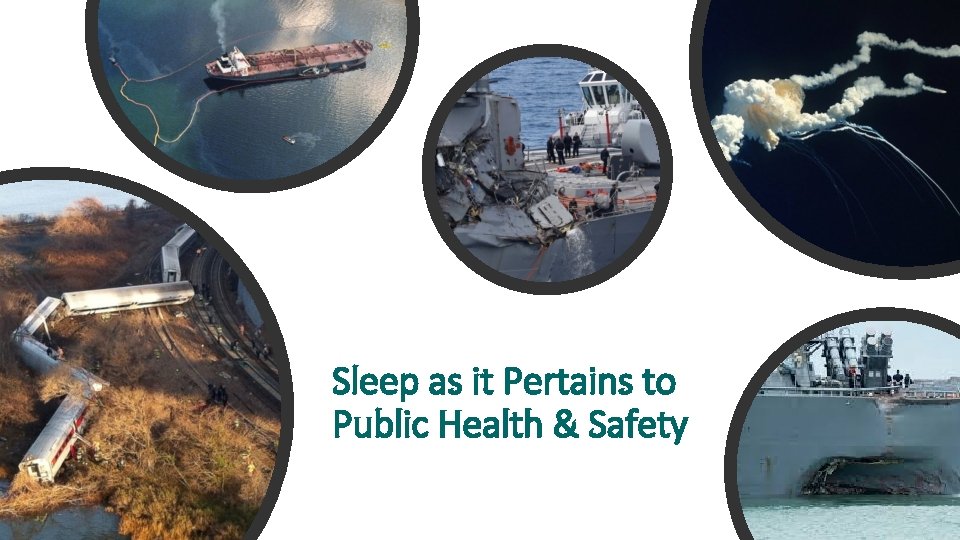
Sleep as it Pertains to Public Health & Safety
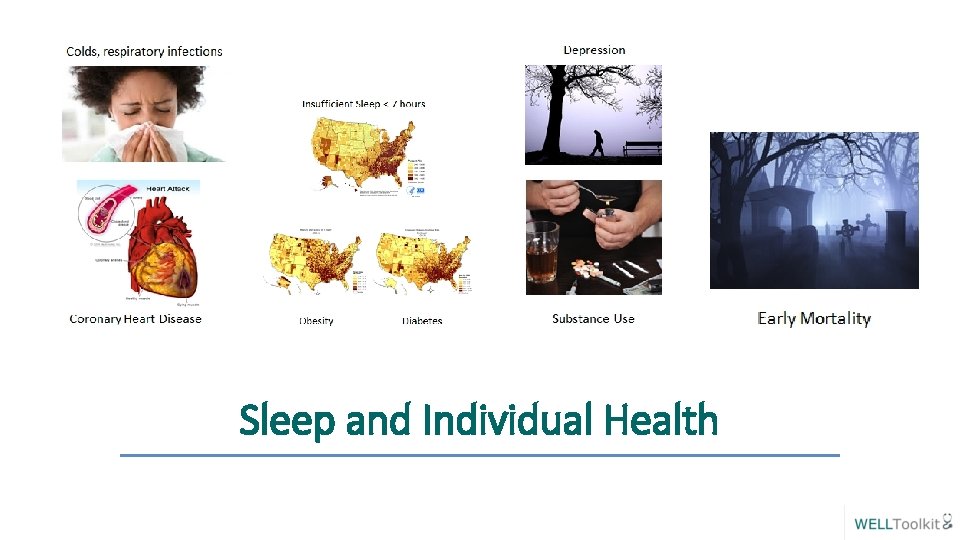
Sleep and Individual Health
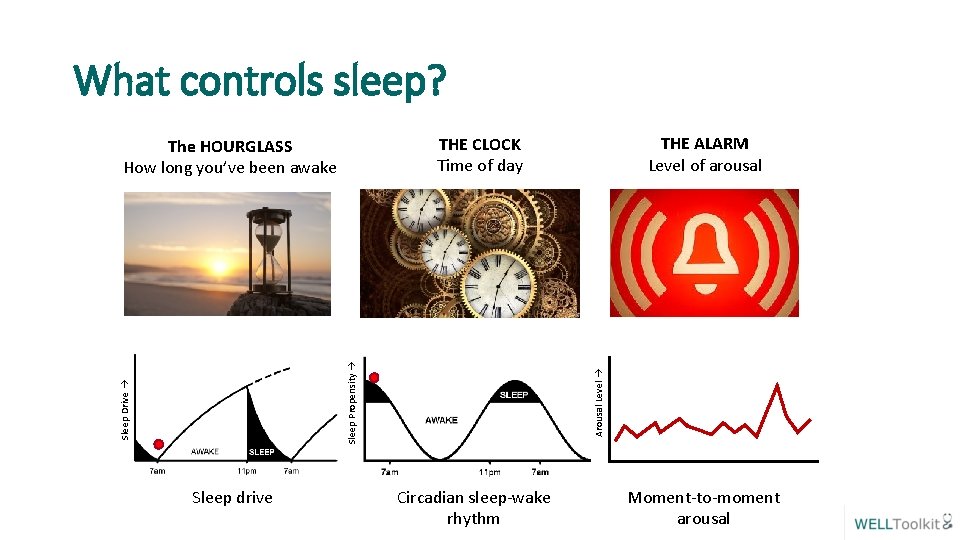
What controls sleep? Arousal Level Sleep Propensity Sleep Drive Sleep drive THE ALARM Level of arousal THE CLOCK Time of day The HOURGLASS How long you’ve been awake Circadian sleep-wake rhythm Moment-to-moment arousal
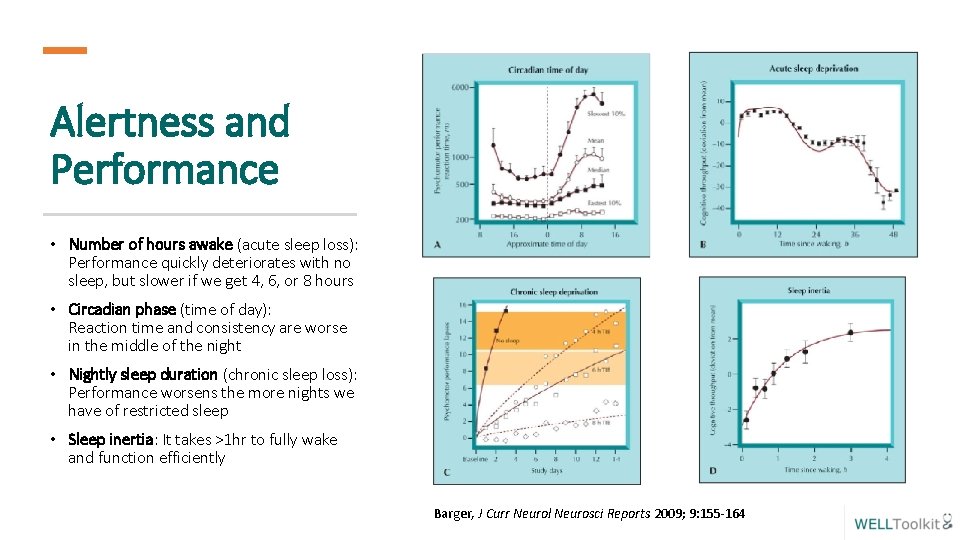
Alertness and Performance • Number of hours awake (acute sleep loss): Performance quickly deteriorates with no sleep, but slower if we get 4, 6, or 8 hours • Circadian phase (time of day): Reaction time and consistency are worse in the middle of the night • Nightly sleep duration (chronic sleep loss): Performance worsens the more nights we have of restricted sleep • Sleep inertia: It takes >1 hr to fully wake and function efficiently Barger, J Curr Neurol Neurosci Reports 2009; 9: 155 -164
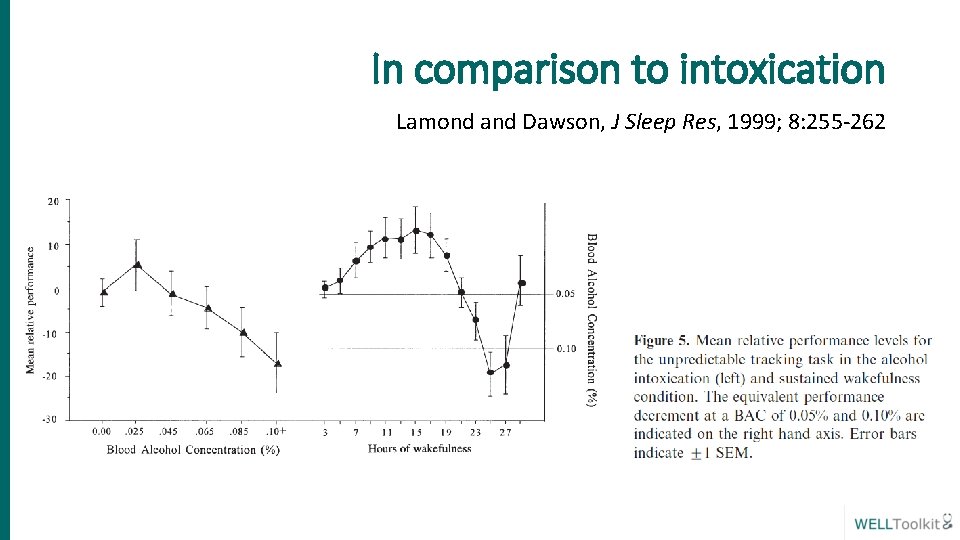
In comparison to intoxication Lamond and Dawson, J Sleep Res, 1999; 8: 255 -262
Factors contributing to fatigue in training – “a perfect storm” • • • 1 Institute Prolonged wakefulness Reduced and disturbed sleep periods Volume and intensity of work Functioning at adverse circadian phase Shift variability Sleep, medical disorders of Medicine, 2008
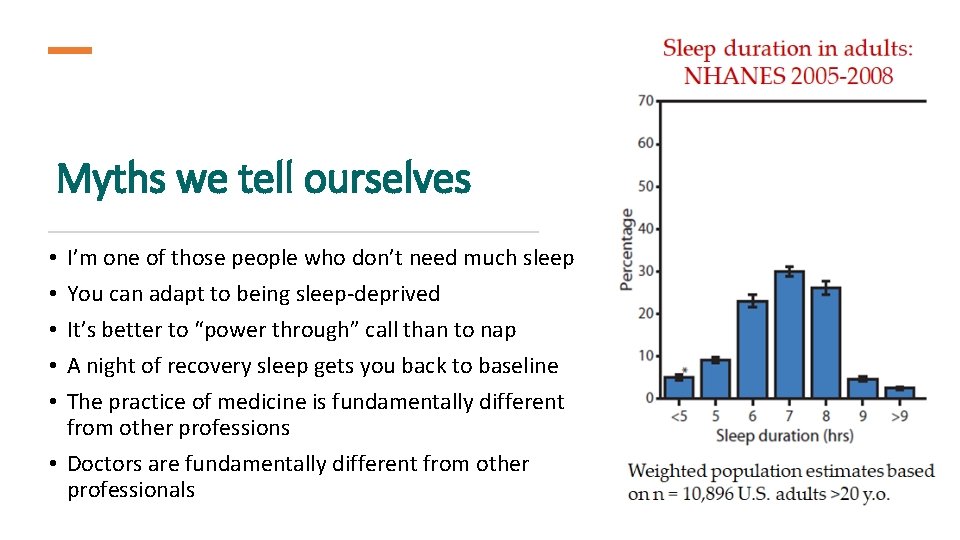
Myths we tell ourselves I’m one of those people who don’t need much sleep You can adapt to being sleep-deprived It’s better to “power through” call than to nap A night of recovery sleep gets you back to baseline The practice of medicine is fundamentally different from other professions • Doctors are fundamentally different from other professionals • • •
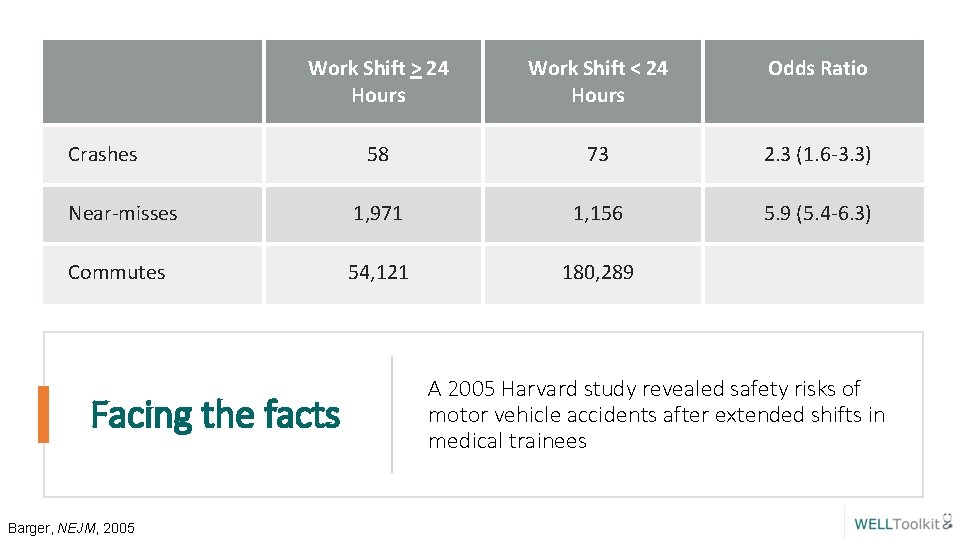
Work Shift > 24 Hours Work Shift < 24 Hours Odds Ratio 58 73 2. 3 (1. 6 -3. 3) Near-misses 1, 971 1, 156 5. 9 (5. 4 -6. 3) Commutes 54, 121 180, 289 Crashes Facing the facts Barger, NEJM, 2005 A 2005 Harvard study revealed safety risks of motor vehicle accidents after extended shifts in medical trainees
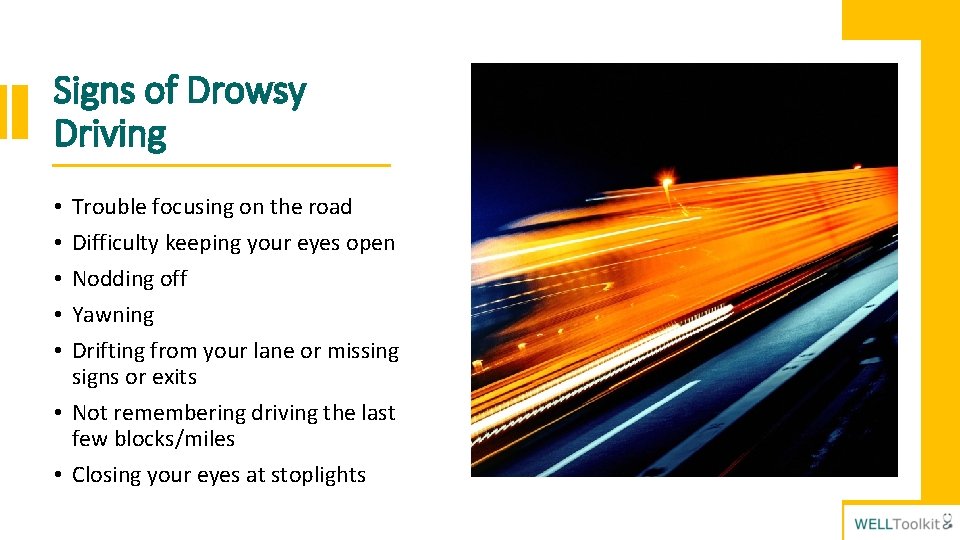
Signs of Drowsy Driving Trouble focusing on the road Difficulty keeping your eyes open Nodding off Yawning Drifting from your lane or missing signs or exits • Not remembering driving the last few blocks/miles • Closing your eyes at stoplights • • •
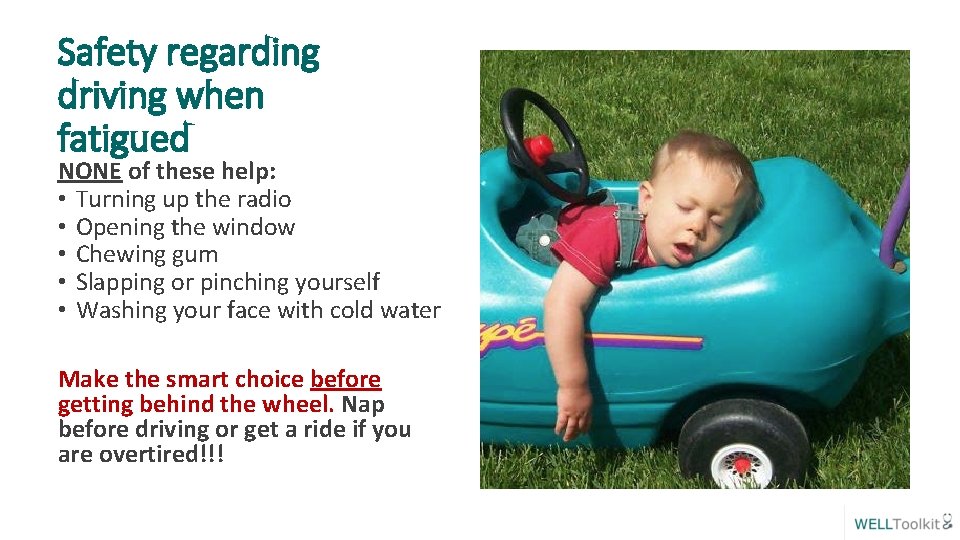
Safety regarding driving when fatigued NONE of these help: • Turning up the radio • Opening the window • Chewing gum • Slapping or pinching yourself • Washing your face with cold water Make the smart choice before getting behind the wheel. Nap before driving or get a ride if you are overtired!!!
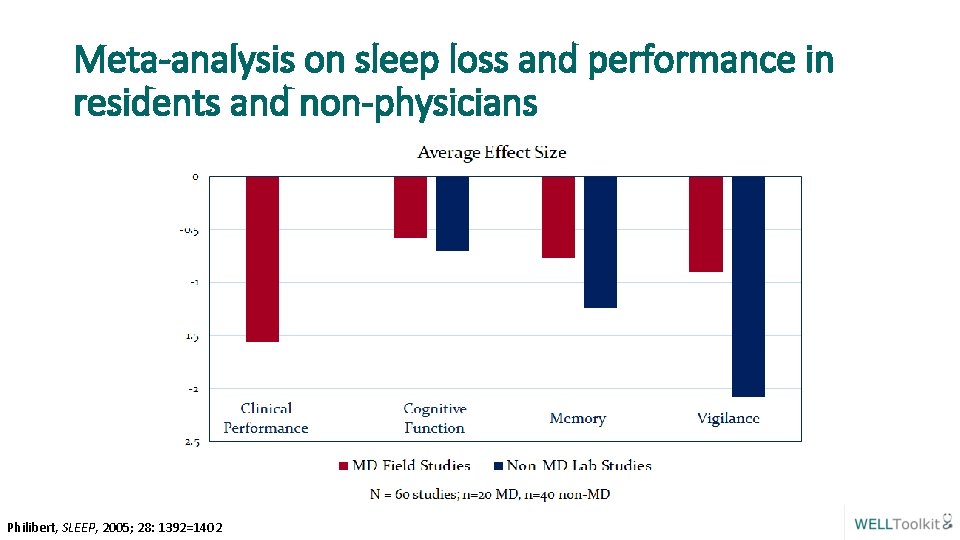
Meta-analysis on sleep loss and performance in residents and non-physicians Philibert, SLEEP, 2005; 28: 1392=1402
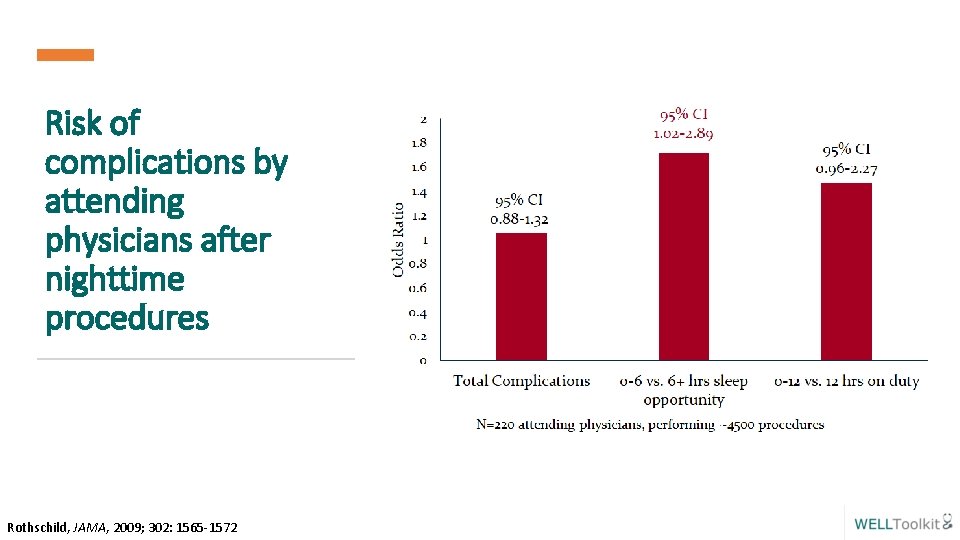
Risk of complications by attending physicians after nighttime procedures Rothschild, JAMA, 2009; 302: 1565 -1572
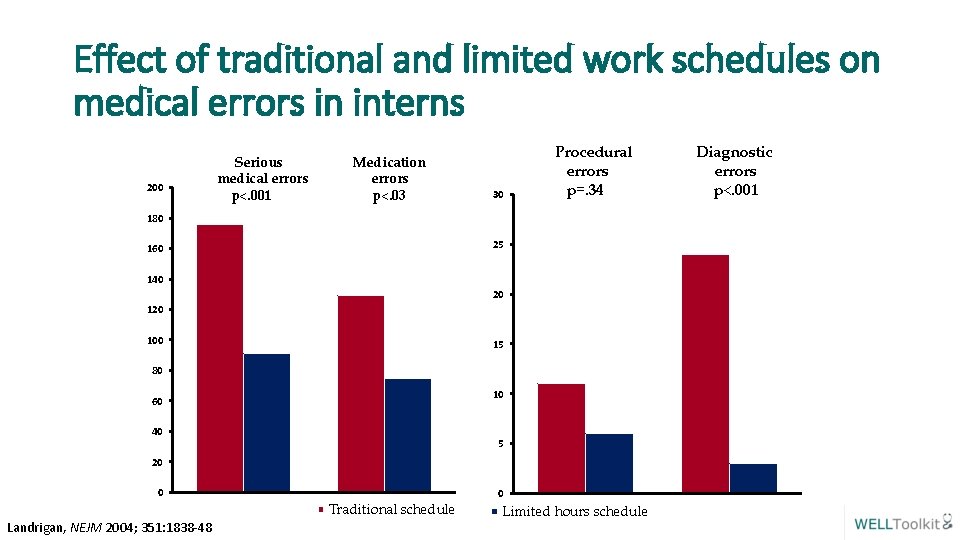
Effect of traditional and limited work schedules on medical errors in interns 200 Serious medical errors p<. 001 Medication errors p<. 03 30 Procedural errors p=. 34 180 25 160 140 20 100 15 80 10 60 40 5 20 0 Traditional schedule Landrigan, NEJM 2004; 351: 1838 -48 0 Limited hours schedule Diagnostic errors p<. 001
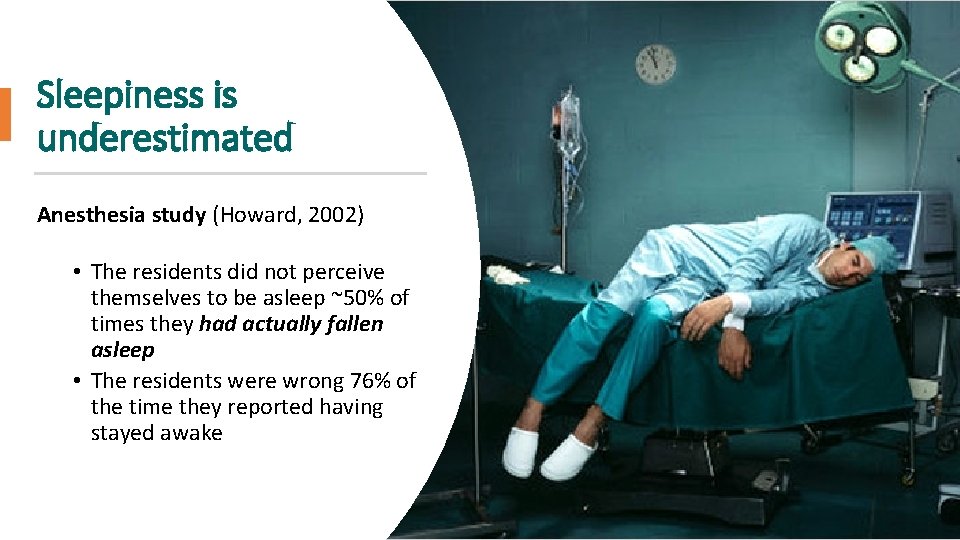
Sleepiness is underestimated Anesthesia study (Howard, 2002) • The residents did not perceive themselves to be asleep ~50% of times they had actually fallen asleep • The residents were wrong 76% of the time they reported having stayed awake
Recognizing sleepiness Since sleepy people underestimate their level of sleepiness and overestimate their alertness, BEHAVIOR is a much better indicator of sleepiness: • • • moodiness irritability impoverished speech or flat affect impaired problem solving sedentary nodding off • medical errors • micro-sleeps (5 -10 second lapses in attention) • repeatedly checking work • difficulty focusing on tasks
Managing Sleepiness: Naps • Preventative (pre-call) vs. Operational (on the job) • Duration • Short naps: < 30 minutes (avoid sleep inertia) • Long naps: 30 to 180 minutes (more restorative) • Timing: Circadian peaks in sleepiness: 0200 -0500, 1400 -1700 • Pros: Some sleep is (almost) always better than no sleep • Cons: Sleep inertia and need adequate recovery time (15 -30 minutes) • Take-Home: Naps help, but do not replace adequate night sleep
Managing Sleepiness: Healthy Sleep Habits • Get adequate duration of sleep (7 to 9 hours) before anticipated sleep loss • Avoid starting out with a sleep deficit • Cumulative sleep duration and sleep loss are important • Maintain regular sleep-wake hours and routines • Appropriate timing (centered on 3: 00 AM) • Protect and prioritize sleep time • Enlist family and friends • Minimize interruptions • Exercise and engage in enjoyable activities
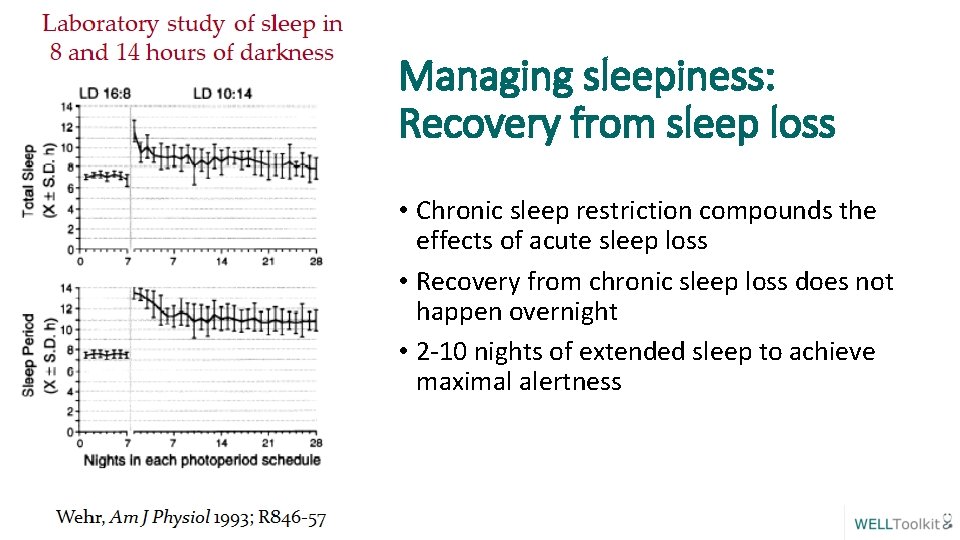
Managing sleepiness: Recovery from sleep loss • Chronic sleep restriction compounds the effects of acute sleep loss • Recovery from chronic sleep loss does not happen overnight • 2 -10 nights of extended sleep to achieve maximal alertness
Managing Sleepiness: Drugs § HYPNOTICS § In certain situations, physicians may benefit from talking to their physician about prescribed medications and/or over the counter agents to help manage sleep-related issues § ALCOHOL § Be aware that while alcohol can induce sleep, it is ill-advised as it can disrupt sleep later on § CAFFEINE § Targeted use of caffeine can improve alertness, but beware because it has a relatively long half-life, and so it is advised to discontinue at least 8 hours prior to planned sleep
Managing Sleepiness: Night Shift • Protect your sleep • Ensure optimal sleep environment • Nap before work • Consider “splitting” daytime sleep into two shorter periods • Get bright light when you need to be alert during night shift (especially first half) • Avoid light exposure in the morning after night shift • Consider using Melatonin for morning sleep
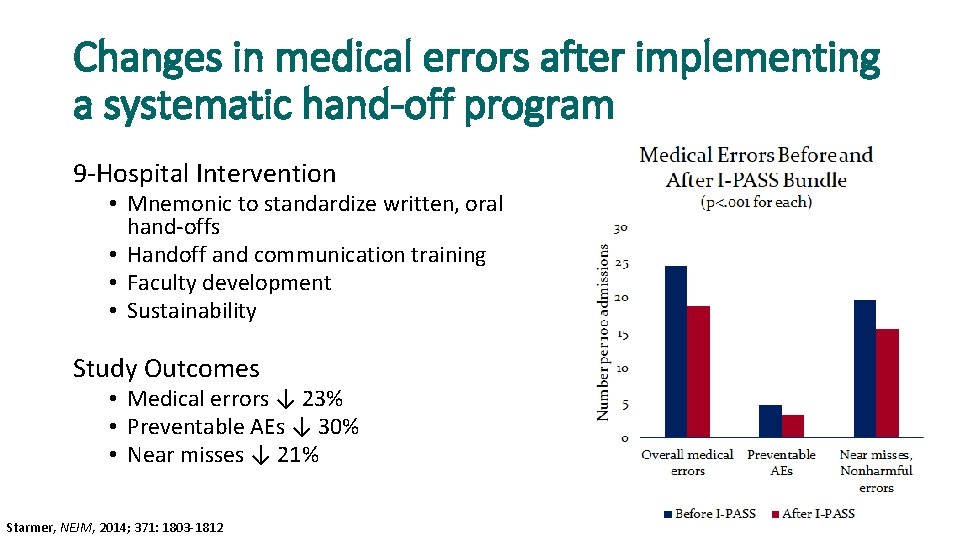
Changes in medical errors after implementing a systematic hand-off program 9 -Hospital Intervention • Mnemonic to standardize written, oral hand-offs • Handoff and communication training • Faculty development • Sustainability Study Outcomes • Medical errors ↓ 23% • Preventable AEs ↓ 30% • Near misses ↓ 21% Starmer, NEJM, 2014; 371: 1803 -1812
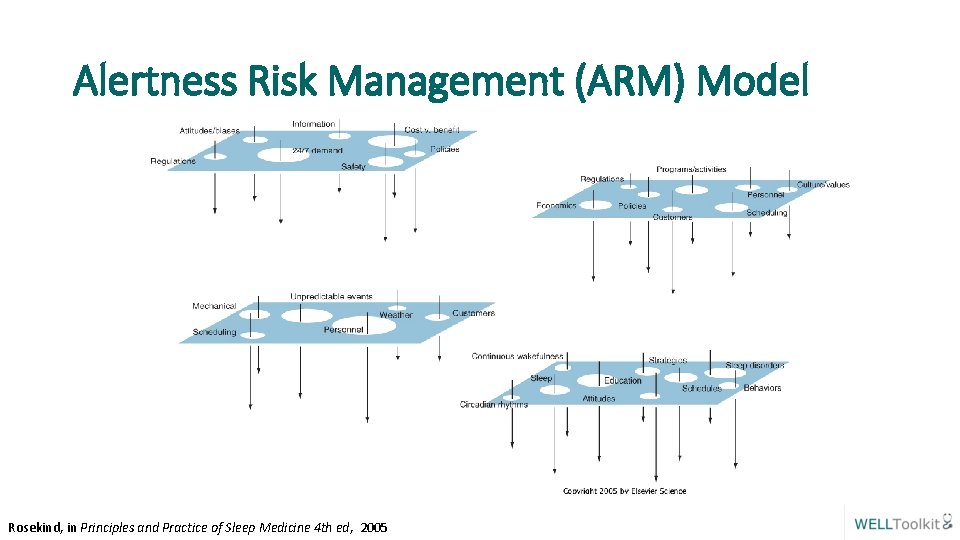
Alertness Risk Management (ARM) Model Rosekind, in Principles and Practice of Sleep Medicine 4 th ed, 2005
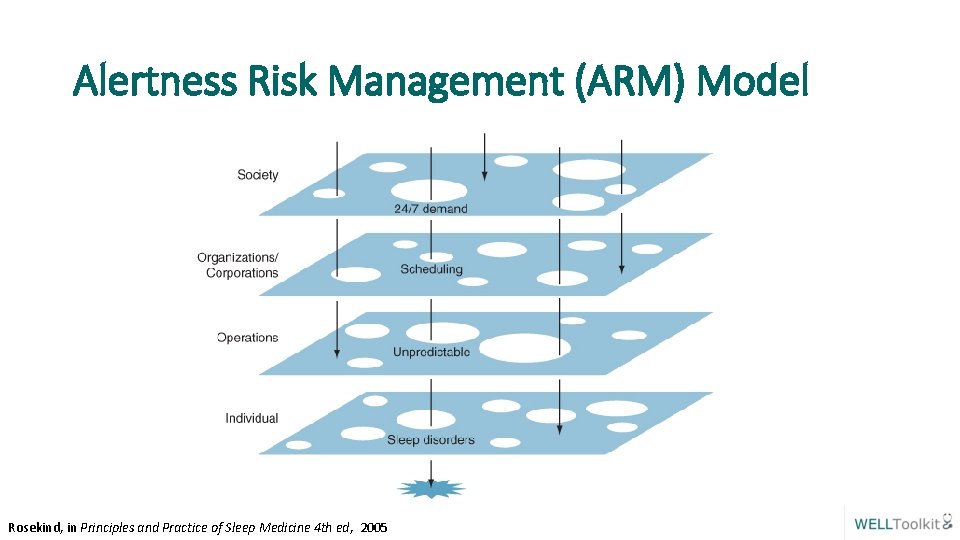
Alertness Risk Management (ARM) Model Rosekind, in Principles and Practice of Sleep Medicine 4 th ed, 2005

In this together!
For more information: Thank you! The WELL Website https: //gmewellness. upmc. com Please email questions to: Sansea Jacobson, M. D. jacobsonsl@upmc. edu Vu Nguyen, M. D. nguyenvt 3@upmc. edu
- Slides: 29