
Sleep and Dreams Why do we need sleep
- Slides: 13
Sleep and Dreams
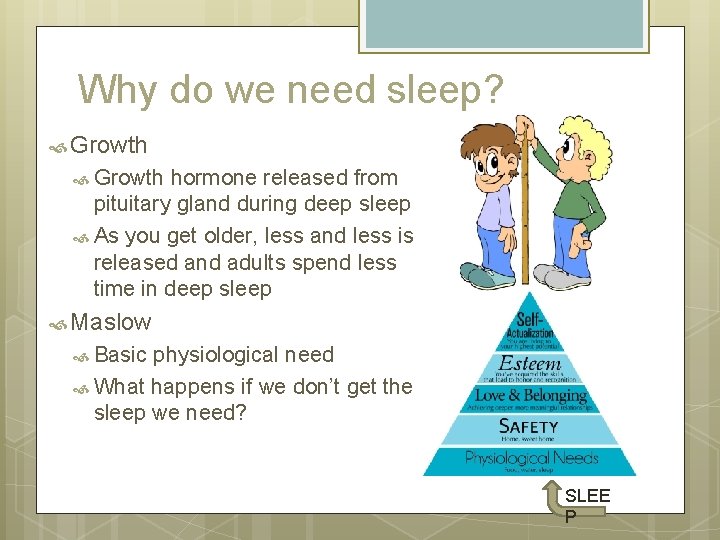
Why do we need sleep? Growth hormone released from pituitary gland during deep sleep As you get older, less and less is released and adults spend less time in deep sleep Maslow Basic physiological need What happens if we don’t get the sleep we need? SLEE P
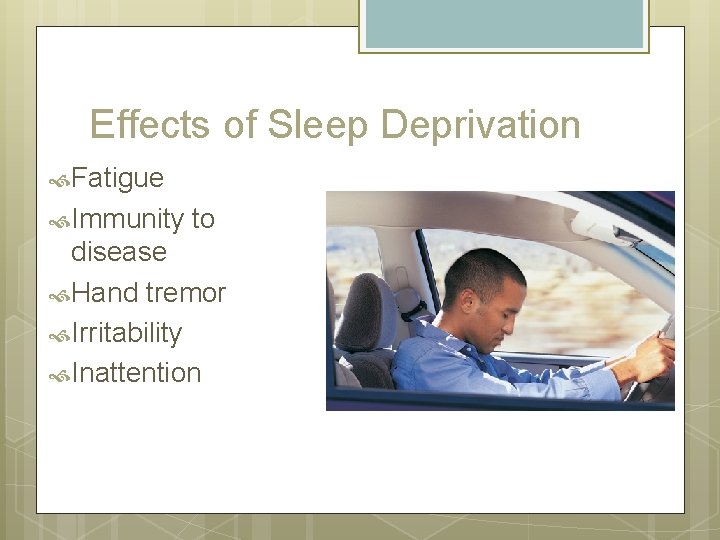
Effects of Sleep Deprivation Fatigue Immunity to disease Hand tremor Irritability Inattention
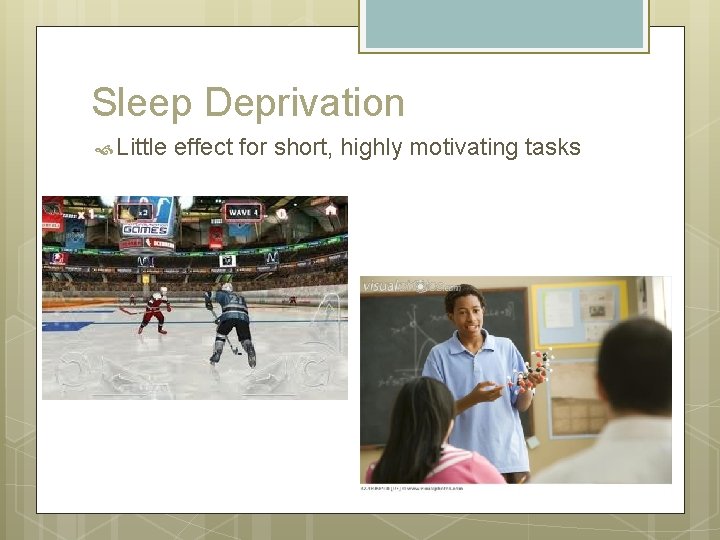
Sleep Deprivation Little effect for short, highly motivating tasks
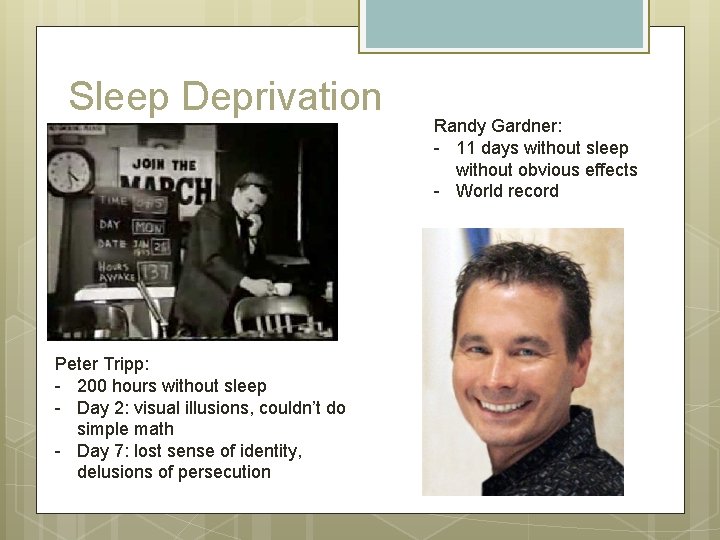
Sleep Deprivation Peter Tripp: - 200 hours without sleep - Day 2: visual illusions, couldn’t do simple math - Day 7: lost sense of identity, delusions of persecution Randy Gardner: - 11 days without sleep without obvious effects - World record
Case Study: With your tablemates, go over the case study about Sleep Deprivation in College/University Students. Answer the questions on the handout Share with the class
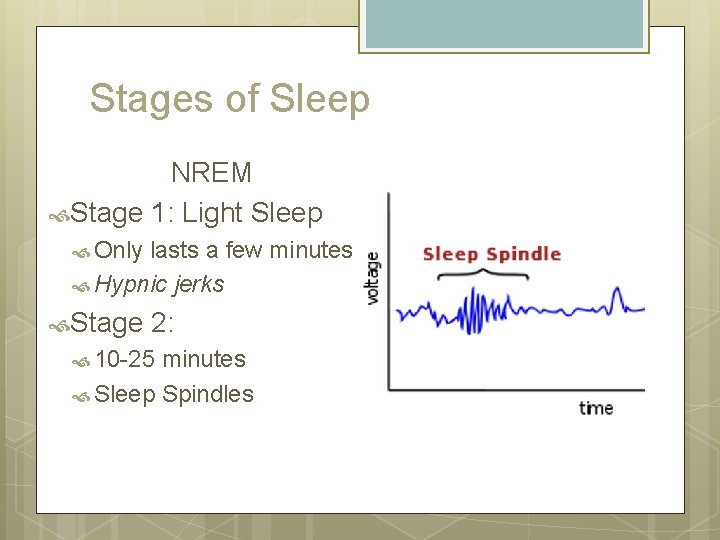
Stages of Sleep NREM Stage 1: Light Sleep Only lasts a few minutes Hypnic jerks Stage 2: 10 -25 minutes Sleep Spindles
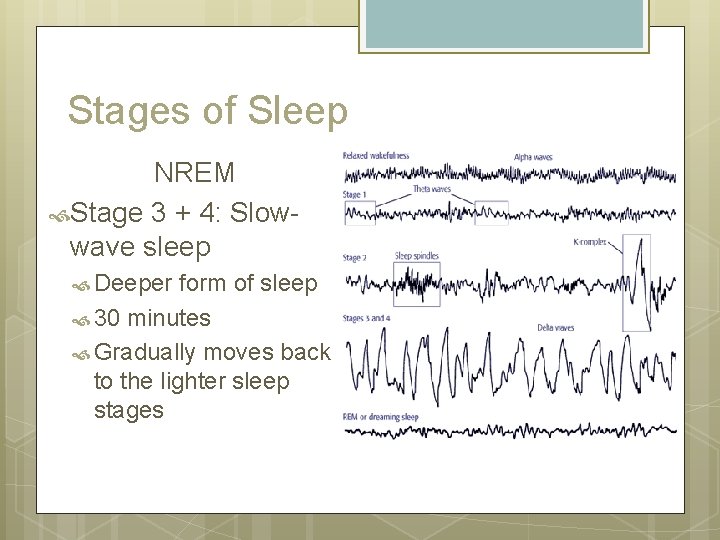
Stages of Sleep NREM Stage 3 + 4: Slowwave sleep Deeper form of sleep 30 minutes Gradually moves back to the lighter sleep stages
Stages of Sleep REM Stage 5: is known as REM sleep Irregular breathing and pulse rate EEG looks like it does when a person is awake Vivid dreams First cycle REM sleep is only a few minutes, subsequent cycles progressively get longer up to 40 -60 minutes
“Problems in the Night” Insomnia: sleep Chronic problems getting adequate Falling asleep Remaining asleep Awake early Causes: Anxiety and stress Health problems Drugs Sedatives
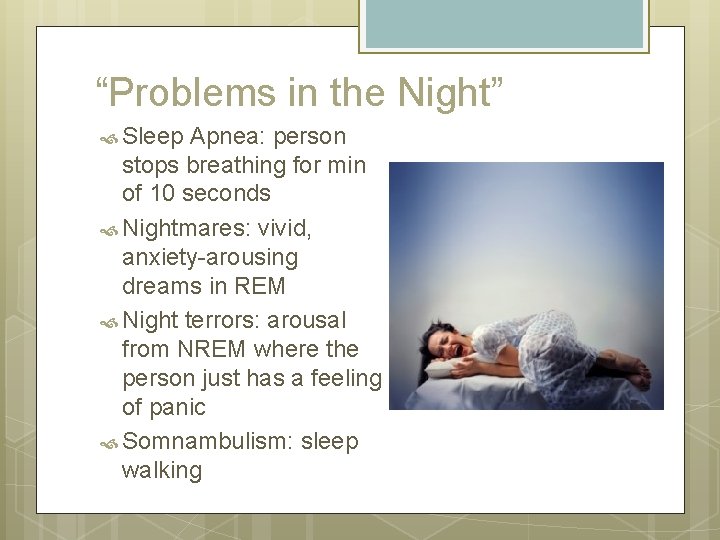
“Problems in the Night” Sleep Apnea: person stops breathing for min of 10 seconds Nightmares: vivid, anxiety-arousing dreams in REM Night terrors: arousal from NREM where the person just has a feeling of panic Somnambulism: sleep walking
Dreams and their Meaning Psychoanalytic Perspective (Freud) Hidden messages from our unconscious Cognitive A Perspective way to sort and organize the day’s events into memory
Sources Sproule, Wayne. Our Social World: An Introduction to Anthropology, Psychology and Sociology. Toronto: Prentice Hall, 2001. Weiten, Wayne and Doug Mc. Cann. Psychology: Themes and Variations. Toronto: Thomas Canada Limited, 2007. http: //academic. pgcc. edu/~mhspear/sleep/sta ges/nrsleep. html