
Sleep and Dreams Circadian Rhythms Biological rhythms that
Sleep and Dreams
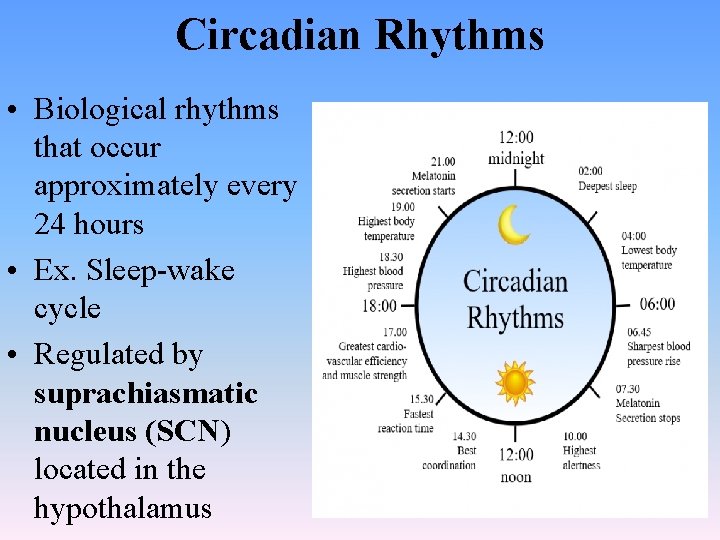
Circadian Rhythms • Biological rhythms that occur approximately every 24 hours • Ex. Sleep-wake cycle • Regulated by suprachiasmatic nucleus (SCN) located in the hypothalamus
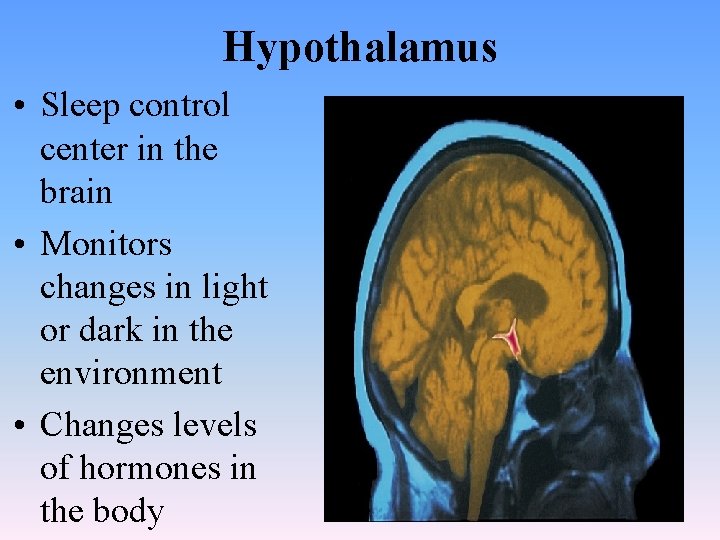
Hypothalamus • Sleep control center in the brain • Monitors changes in light or dark in the environment • Changes levels of hormones in the body
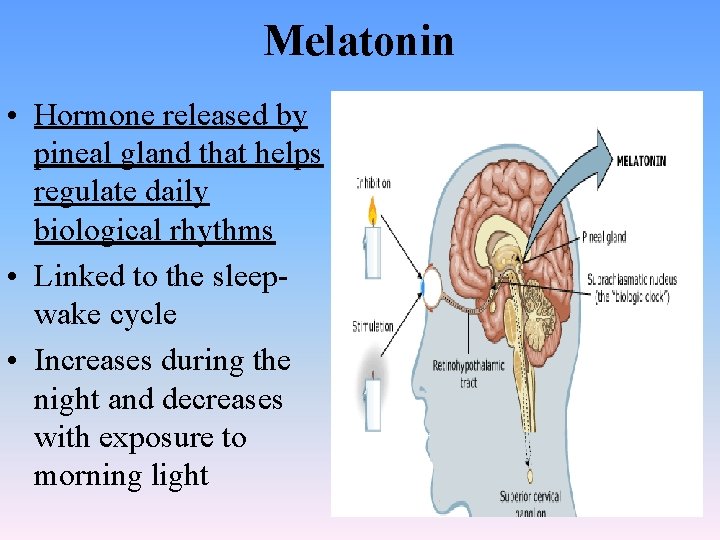
Melatonin • Hormone released by pineal gland that helps regulate daily biological rhythms • Linked to the sleepwake cycle • Increases during the night and decreases with exposure to morning light
Reasons for Sleep – Preservation: keep us protected from the dangers of the night – Restoration: recuperate from the wear and tear of the day – Restore and rebuild memories: strengthens and stabilizes neural memory traces – Feeds creative thinking: dreams inspire – Supports growth: pituitary gland releases growth hormone
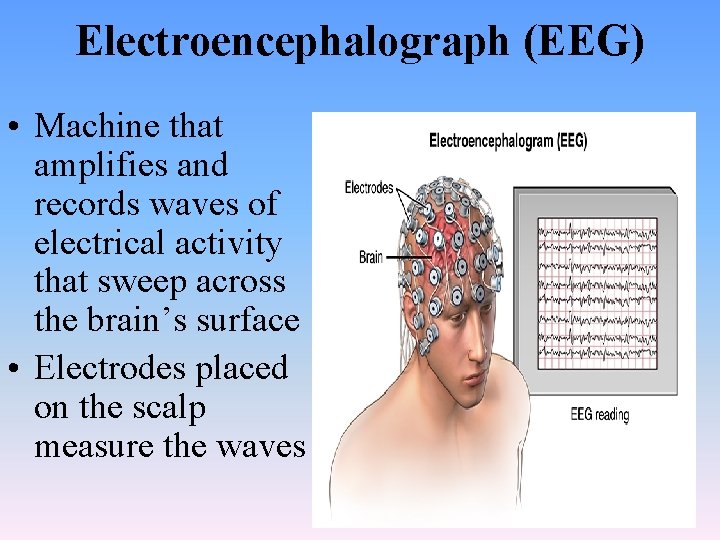
Electroencephalograph (EEG) • Machine that amplifies and records waves of electrical activity that sweep across the brain’s surface • Electrodes placed on the scalp measure the waves
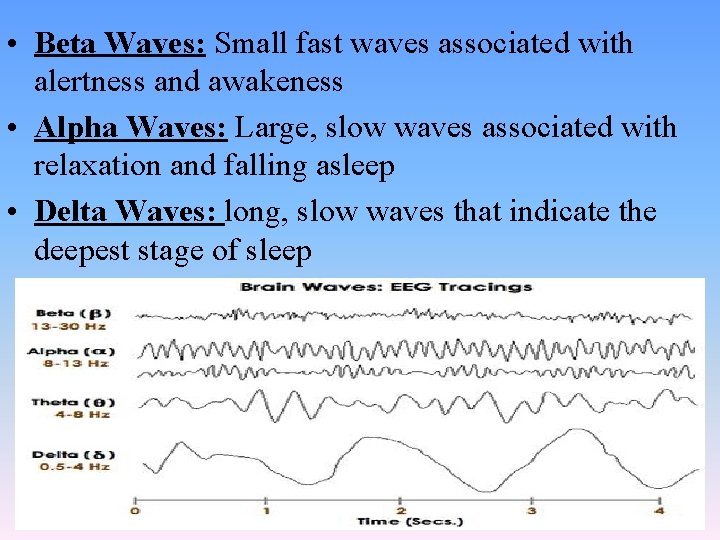
• Beta Waves: Small fast waves associated with alertness and awakeness • Alpha Waves: Large, slow waves associated with relaxation and falling asleep • Delta Waves: long, slow waves that indicate the deepest stage of sleep
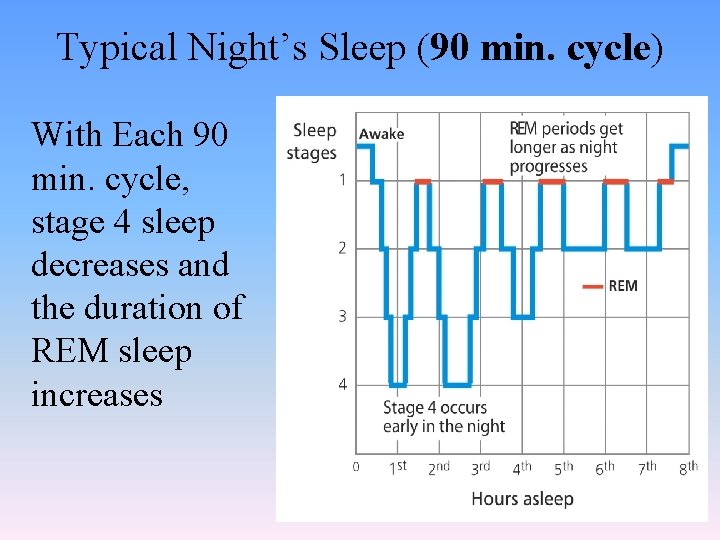
Typical Night’s Sleep (90 min. cycle) With Each 90 min. cycle, stage 4 sleep decreases and the duration of REM sleep increases

Two types of Sleep: NREM & REM
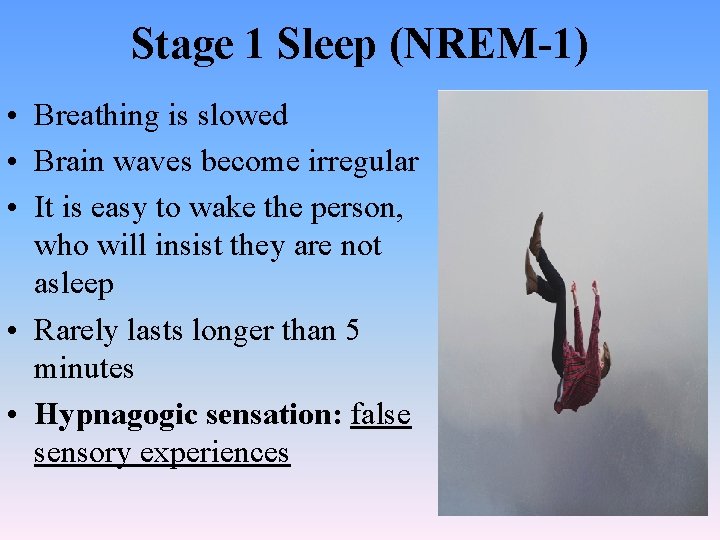
Stage 1 Sleep (NREM-1) • Breathing is slowed • Brain waves become irregular • It is easy to wake the person, who will insist they are not asleep • Rarely lasts longer than 5 minutes • Hypnagogic sensation: false sensory experiences

Stage 2 Sleep (NREM-2) • Brain wave cycle slows --shift to Theta waves • First time through stage 2 last about 20 minutes • Deeper sleep • Sleep spindles-short burst of brain activity • K Complex
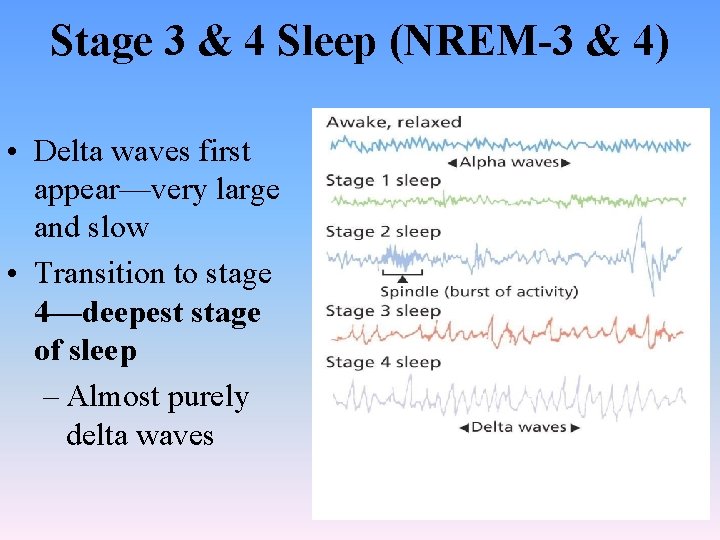
Stage 3 & 4 Sleep (NREM-3 & 4) • Delta waves first appear—very large and slow • Transition to stage 4—deepest stage of sleep – Almost purely delta waves

REM Sleep • Rapid eye movement (REM Sleep) as eyes move quickly back and forth • Vivid dreaming occurs in REM sleep • Considered “paradoxical sleep”
Paradoxical Sleep • During REM sleep brain wave patterns are similar to when a person is awake • Pulse and breathing quickens • Physiology is close to that of being awake (motor cortex is active) but the brainstem blocks all muscle movement
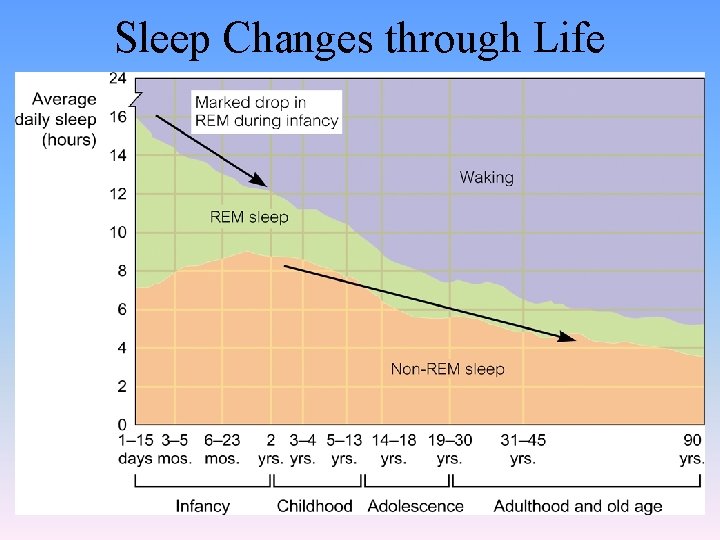
Sleep Changes through Life

Sleep Deprivation https: //www. youtube. com/watch? v=dq. ONk 48 l 5 v. Y&t=94 s
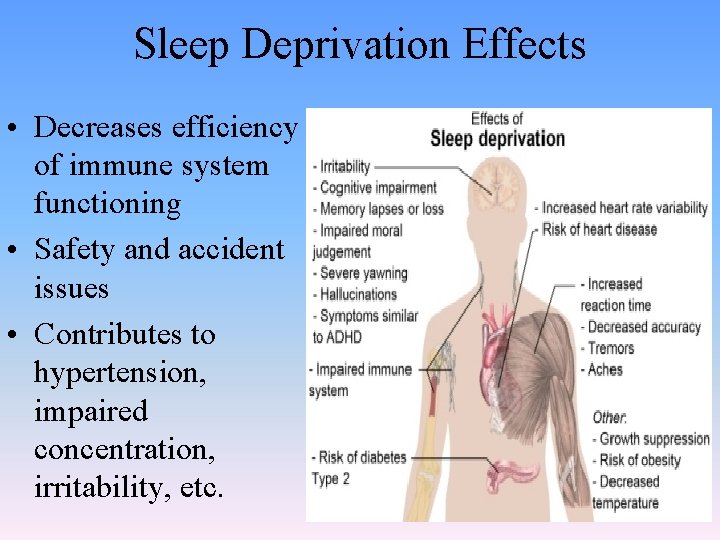
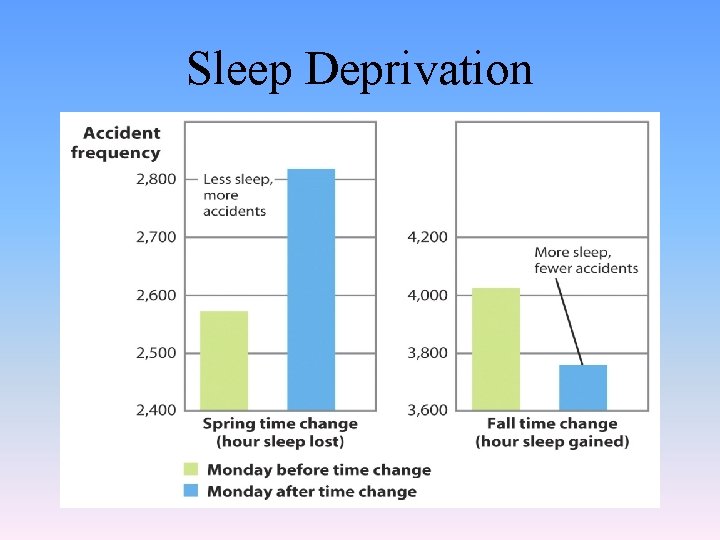
Sleep Deprivation Effects • Decreases efficiency of immune system functioning • Safety and accident issues • Contributes to hypertension, impaired concentration, irritability, etc.
Sleep Deprivation
Sleep Disorders and Sleep Problems
Insomnia • Recurring problems falling asleep or staying asleep • Sleeping pills tend to inhibit or suppress REM sleep; worsen the problem • Alcohol suppresses REM sleep; also worsens the problem • Studies show most people overestimate how long it took them to get to sleep
Narcolepsy • Sleep disorder characterized by uncontrollable sleep attacks • Person may lapse directly into REM sleep • Nervous system getting aroused tends to trigger the sleep attack
Night Terrors • Sleep disorder characterized by high arousal and appearance of being terrified • Unlike nightmares • Happens during stage 4 sleep; mostly children • The children seldom remember the event.
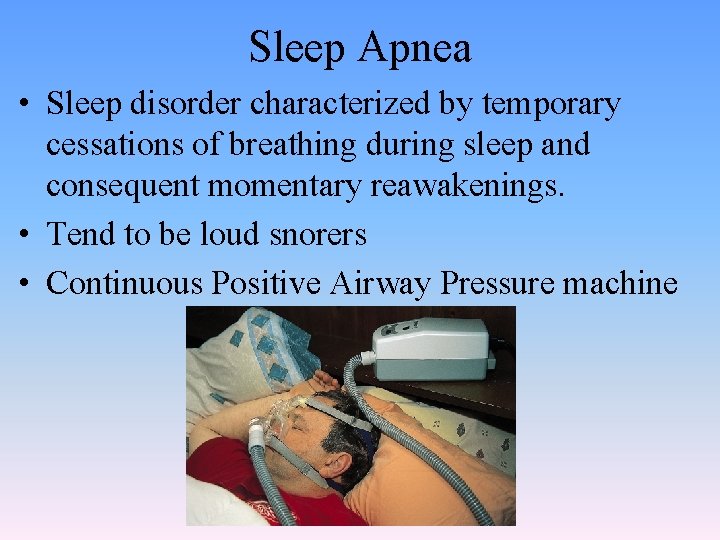
Sleep Apnea • Sleep disorder characterized by temporary cessations of breathing during sleep and consequent momentary reawakenings. • Tend to be loud snorers • Continuous Positive Airway Pressure machine
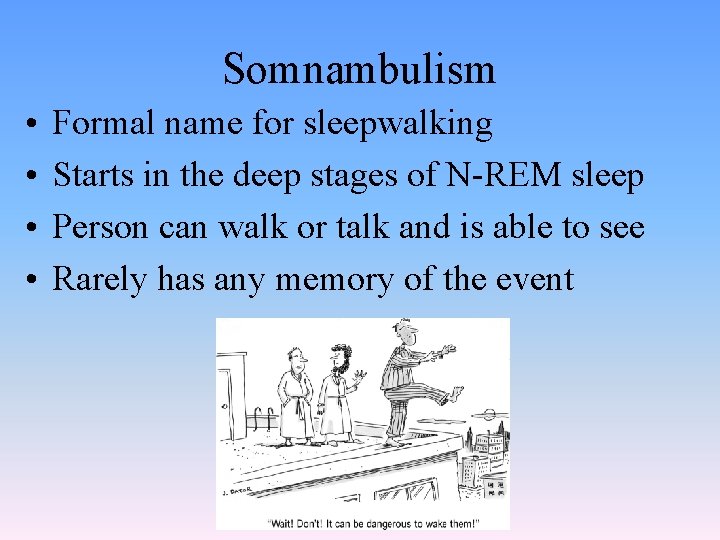
Somnambulism • • Formal name for sleepwalking Starts in the deep stages of N-REM sleep Person can walk or talk and is able to see Rarely has any memory of the event

Theories of Why Do We Dream?
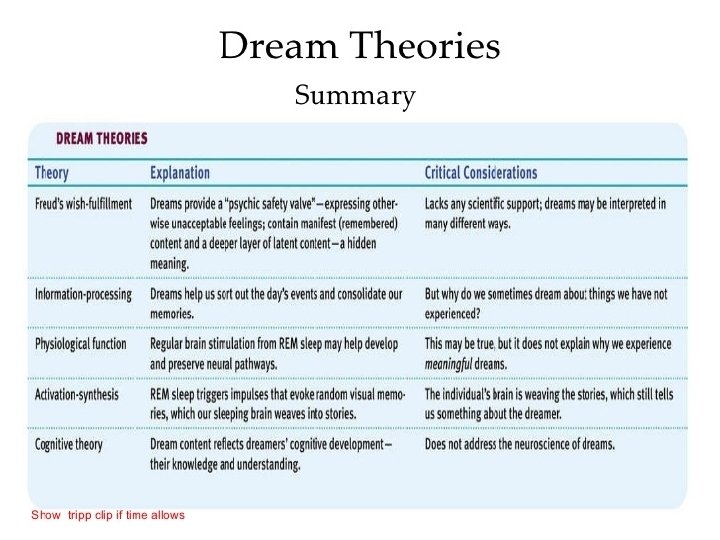
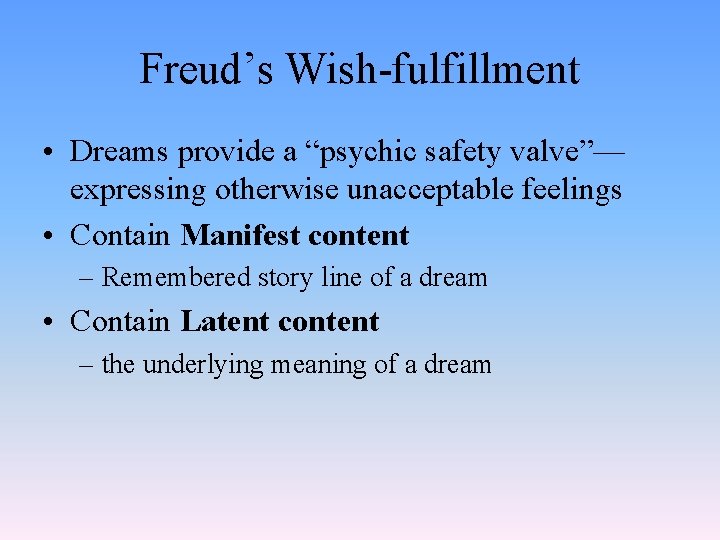
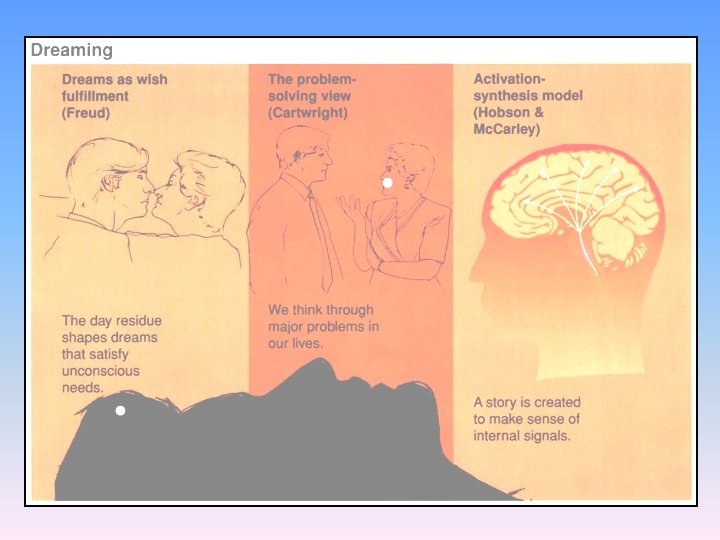
Freud’s Wish-fulfillment • Dreams provide a “psychic safety valve”— expressing otherwise unacceptable feelings • Contain Manifest content – Remembered story line of a dream • Contain Latent content – the underlying meaning of a dream
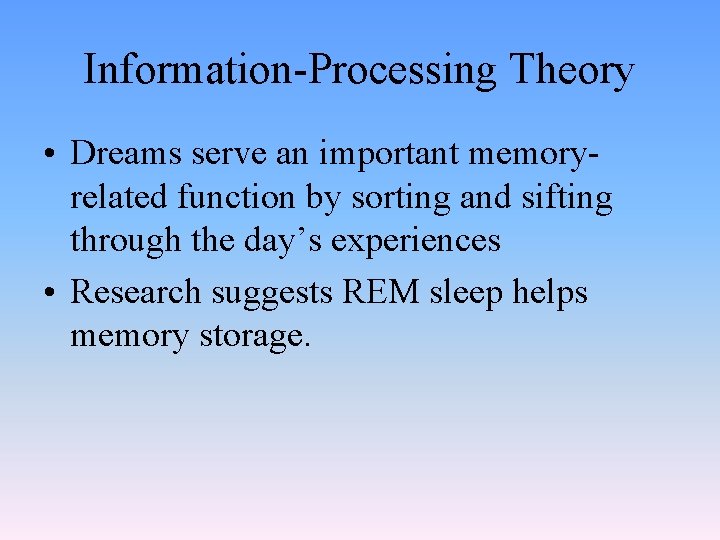
Information-Processing Theory • Dreams serve an important memoryrelated function by sorting and sifting through the day’s experiences • Research suggests REM sleep helps memory storage.
Physiological Function Theory • Neural activity during REM sleep provides periodic stimulation of the brain.
Activation-Synthesis Theory • Dreams are the mind’s attempt to make sense of random neural firings in the brain as one sleeps.
Cognitive Development Theory • Dreams part of the maturation process • Dreams reflect our knowledge • Reflection of normal cognitive development
- Slides: 33