
Slaves captured in Africa Slaves aboard shipMiddle Passage
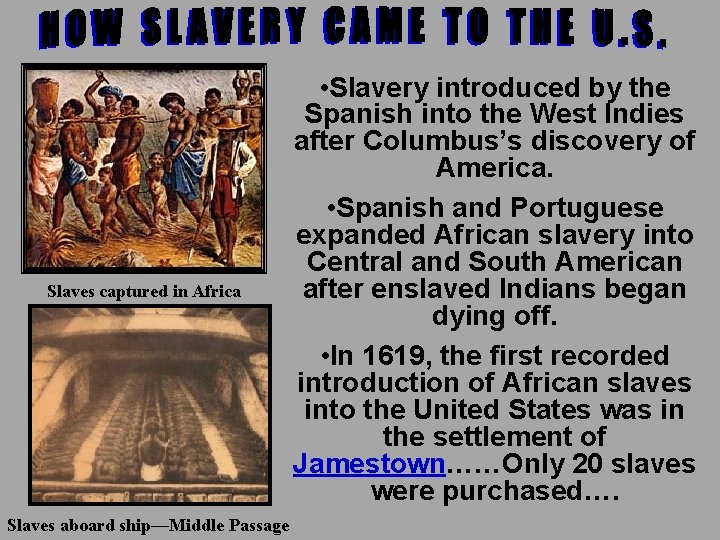
Slaves captured in Africa Slaves aboard ship—Middle Passage • Slavery introduced by the Spanish into the West Indies after Columbus’s discovery of America. • Spanish and Portuguese expanded African slavery into Central and South American after enslaved Indians began dying off. • In 1619, the first recorded introduction of African slaves into the United States was in the settlement of Jamestown……Only 20 slaves were purchased….
Why Not Enslave the Native Population? • Native Americans were highly likely to catch European diseases. • They were familiar with the terrain and could escape easier. • They had political allies that could fight against the “owners. ”
Reasons for Using Enslaved African Labor • Proximity-It only took 2 -6 weeks to get to the colonies from the Caribbean at first. • Experience-They had previous experience and knowledge working in sugar and rice production. • Immunity from diseases-Less likely to get sick due to prolonged contact over centuries. • Low escape possibilities-They did not know the land, had no allies, and were highly visible because of skin color.
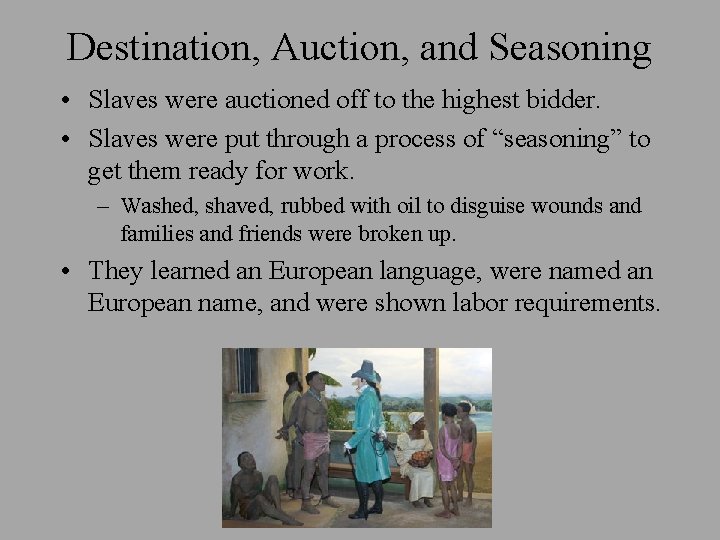
Destination, Auction, and Seasoning • Slaves were auctioned off to the highest bidder. • Slaves were put through a process of “seasoning” to get them ready for work. – Washed, shaved, rubbed with oil to disguise wounds and families and friends were broken up. • They learned an European language, were named an European name, and were shown labor requirements.
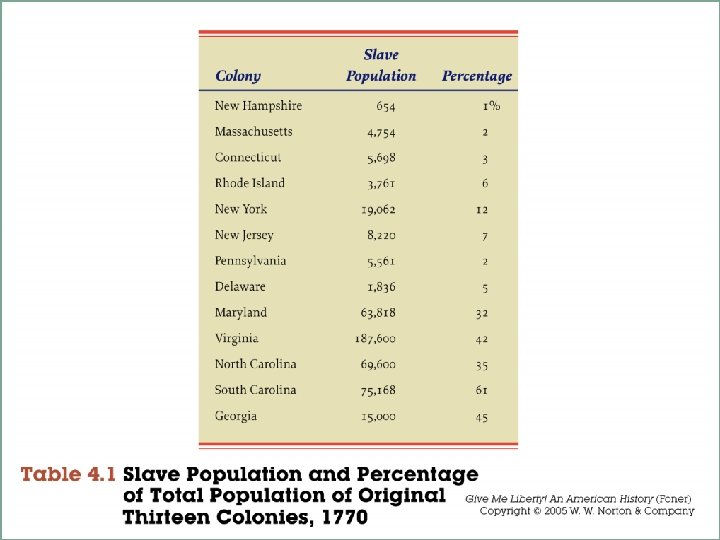
Slavery and the British Empire Slave Systems in the English Colonies – Three distinct slave systems were well entrenched in Britain’s mainland colonies • Chesapeake • South Carolina and Georgia • Non- plantation societies of New England the Middle Colonies – Chesapeake slavery was based on tobacco – Chesapeake plantations tended to be smaller and daily interactions between masters and slaves were more extensive
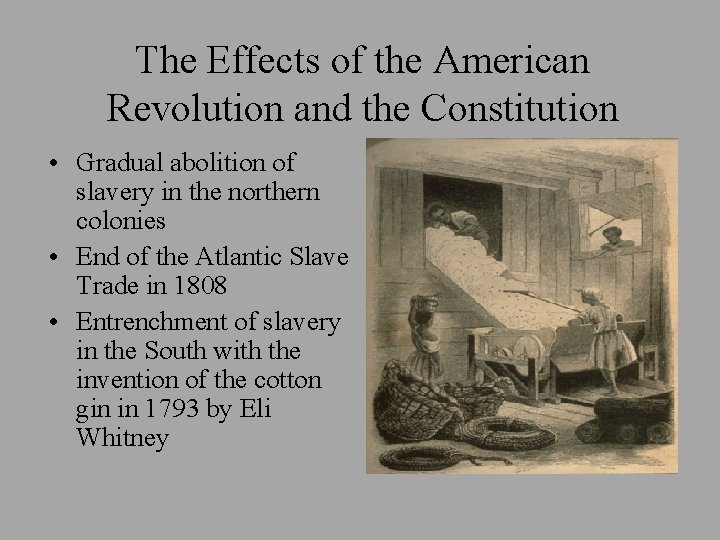
The Effects of the American Revolution and the Constitution • Gradual abolition of slavery in the northern colonies • End of the Atlantic Slave Trade in 1808 • Entrenchment of slavery in the South with the invention of the cotton gin in 1793 by Eli Whitney
Life of a Slave • Most slaves had Sundays off and they went to church. • Most slaves could not read or write, and it was illegal for them to learn. • Slave Codes-They could not: leave their home without a pass, carry a weapon, gather in groups, own property, legally marry, defend themselves against a white person, or speak in court.
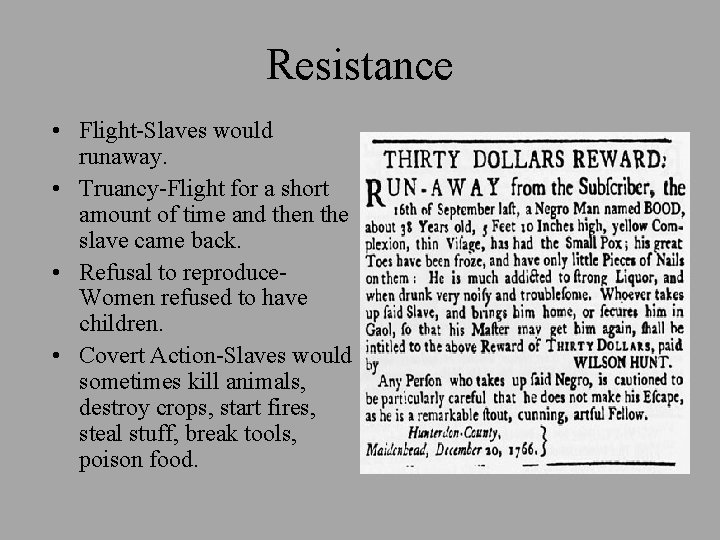
Resistance • Flight-Slaves would runaway. • Truancy-Flight for a short amount of time and then the slave came back. • Refusal to reproduce. Women refused to have children. • Covert Action-Slaves would sometimes kill animals, destroy crops, start fires, steal stuff, break tools, poison food.
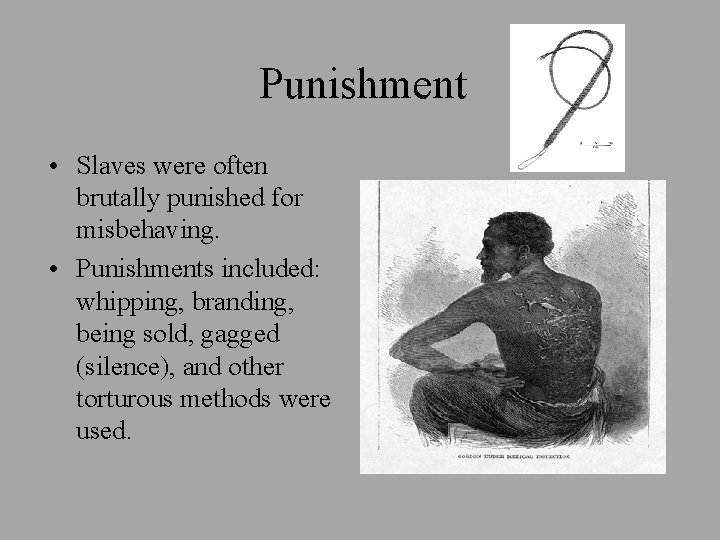
Punishment • Slaves were often brutally punished for misbehaving. • Punishments included: whipping, branding, being sold, gagged (silence), and other torturous methods were used.
- Slides: 11