
Slavery Indentured Servitude Origins of Human Ownership Jamestown

![Tyranny T. Jefferson Each generation “nursed, educated and daily exercised in tyranny. [B]etween master](https://slidetodoc.com/presentation_image_h2/625a2a26a9b936a25268da168ff9a213/image-16.jpg "Tyranny T. Jefferson Each generation “nursed, educated and daily exercised in tyranny. [B]etween master")

- Slides: 26
Slavery
Indentured Servitude Origins of Human Ownership
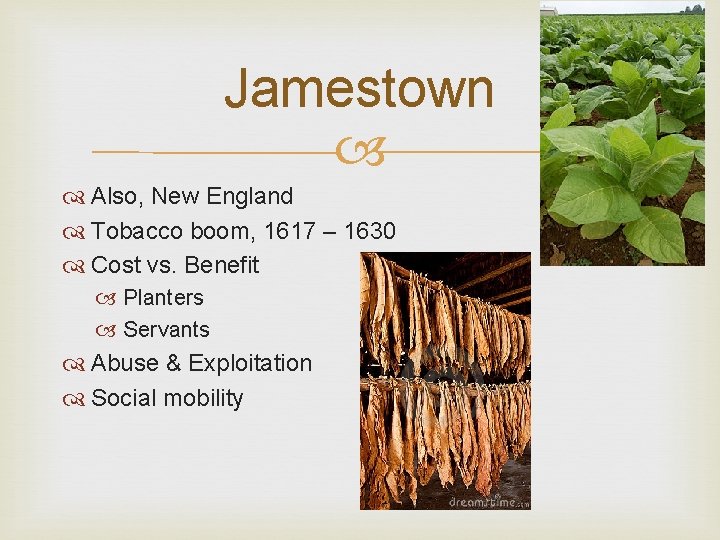
Jamestown Also, New England Tobacco boom, 1617 – 1630 Cost vs. Benefit Planters Servants Abuse & Exploitation Social mobility
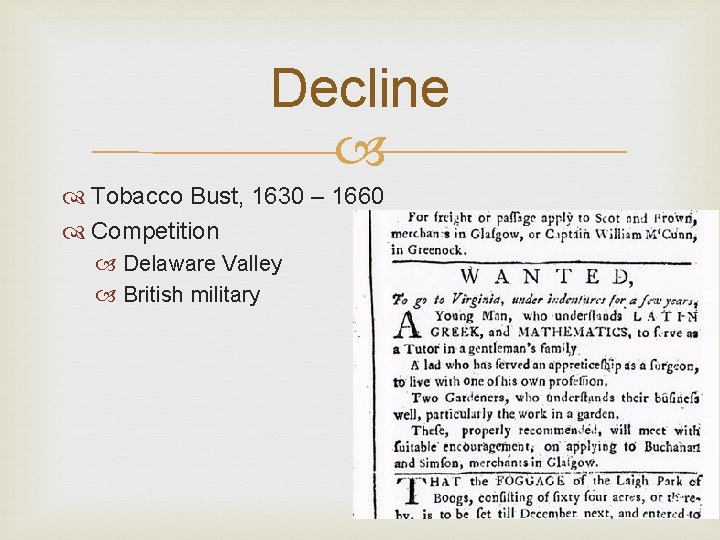
Decline Tobacco Bust, 1630 – 1660 Competition Delaware Valley British military
Rise of Slavery
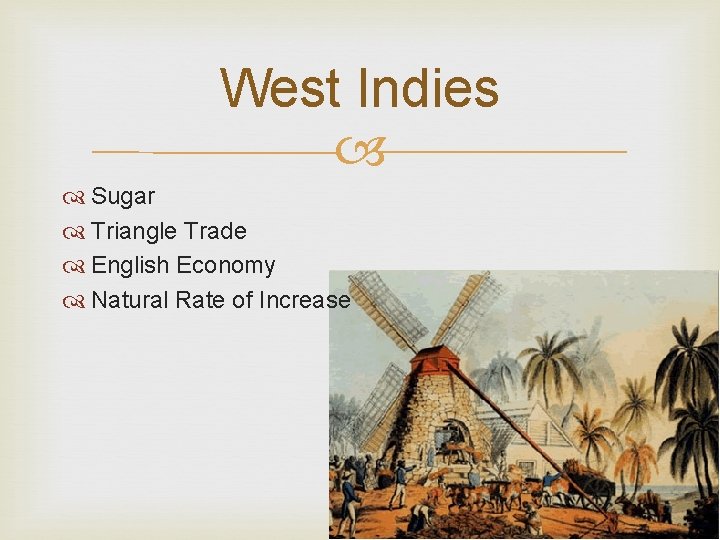
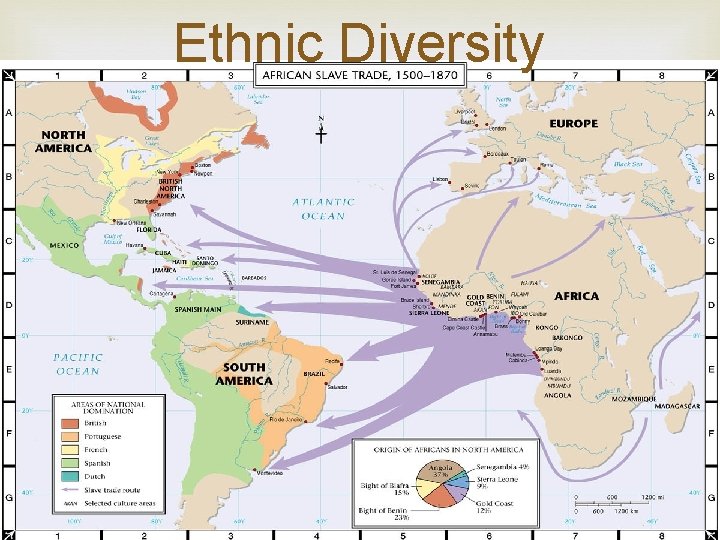
West Indies Sugar Triangle Trade English Economy Natural Rate of Increase
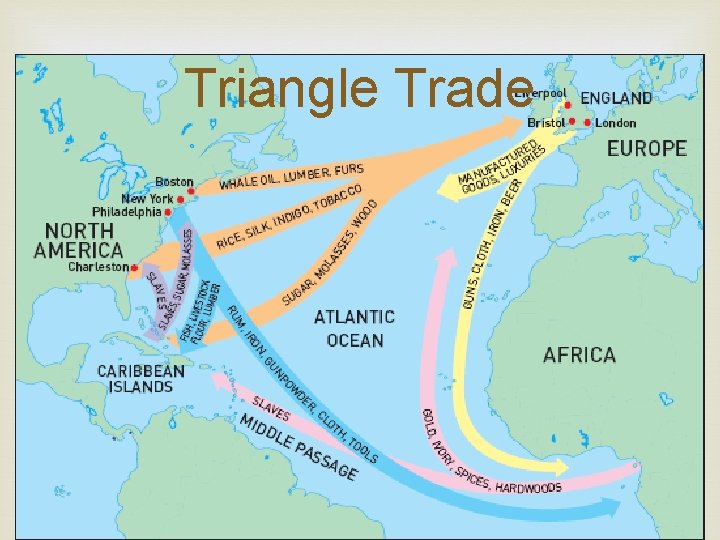
Triangle Trade
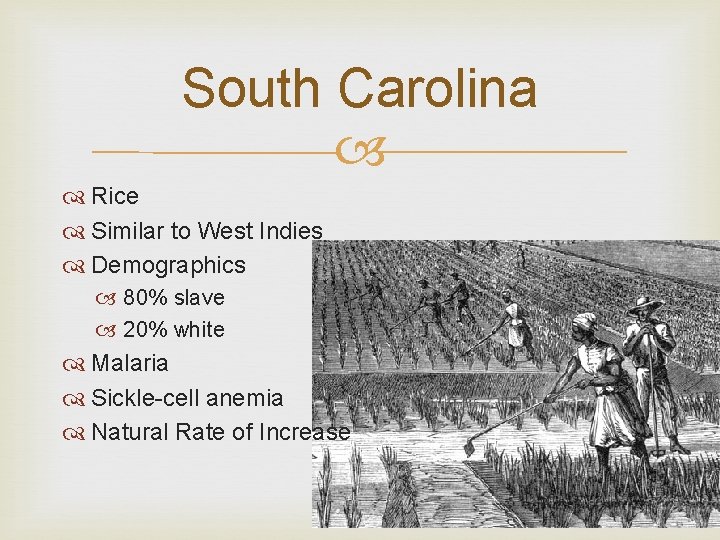
South Carolina Rice Similar to West Indies Demographics 80% slave 20% white Malaria Sickle-cell anemia Natural Rate of Increase
Chesapeake 1740 Africans: 40% of the population Tobacco Treatment of slaves Natural Rate of Increase Why the variation?
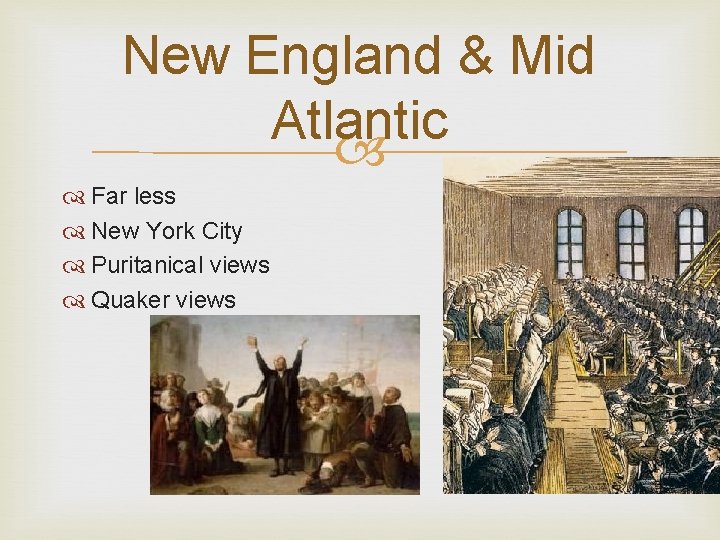
New England & Mid Atlantic Far less New York City Puritanical views Quaker views
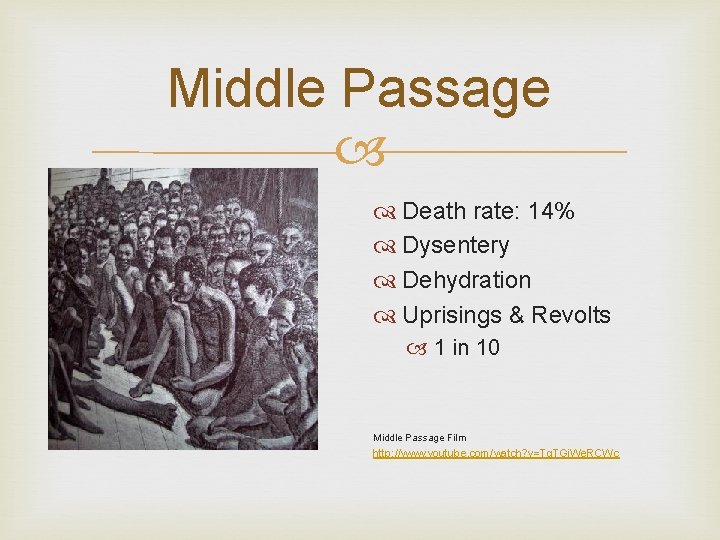
Middle Passage Death rate: 14% Dysentery Dehydration Uprisings & Revolts 1 in 10 Middle Passage Film http: //www. youtube. com/watch? v=Tg. TGi. We. RCWc
Treatment West Indies & S. Carolina Intensive labor crops Harsh treatment Nat’l Rate of Increase Constant Influx Chesapeake Less Intensive crops Not as harsh Nat’l Rate of Increase Birth rate: 1750
Social Effects
Early Social Norms Christian superiority to Paganism Black Freedom (Chesapeake) Interracial marriage Black ownership of slaves/servants
Race 1705, Whipping white servants prohibited Not extended to black servants White ex-servants: 50 acres Prohibition of English and African Sexual Intercourse Outlawed: Blacks owning guns Blacks owning English servants
Tyranny T. Jefferson Each generation “nursed, educated and daily exercised in tyranny. [B]etween master and slave is a perpetual exercise of… despotism on the one part and degrading submission on the other. ” George Mason “Every master is born a petty tyrant. ”
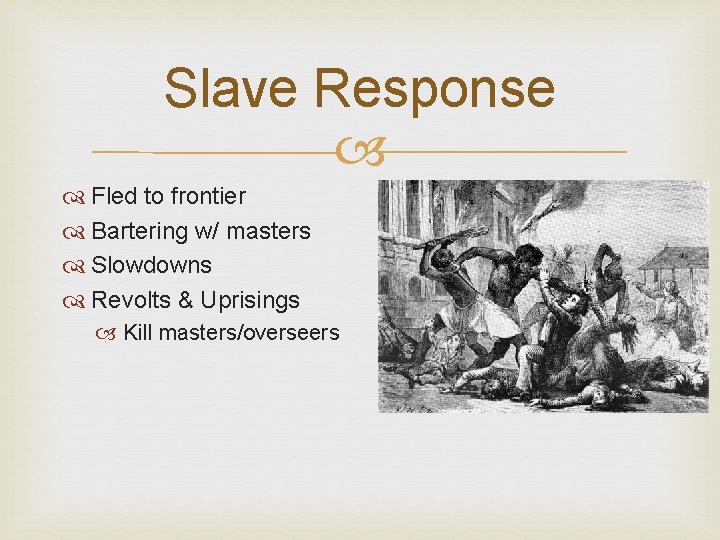
Slave Response Fled to frontier Bartering w/ masters Slowdowns Revolts & Uprisings Kill masters/overseers
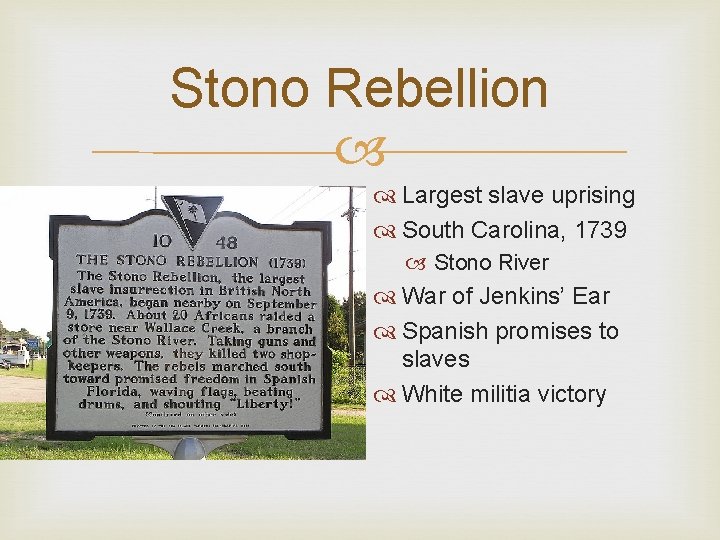
Stono Rebellion Largest slave uprising South Carolina, 1739 Stono River War of Jenkins’ Ear Spanish promises to slaves White militia victory
The Creation of a Southern Slave Society A Enslaved Blacks & Wealthy Whites
Plantations as Slave Communities
Ethnic Diversity
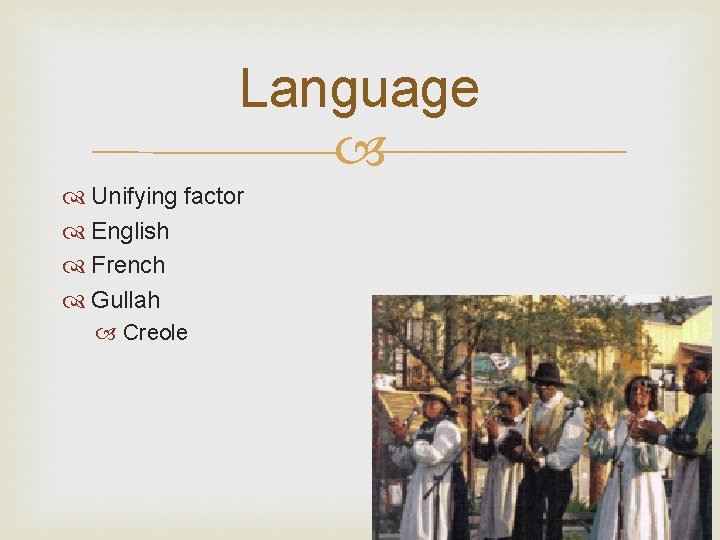
Language Unifying factor English French Gullah Creole
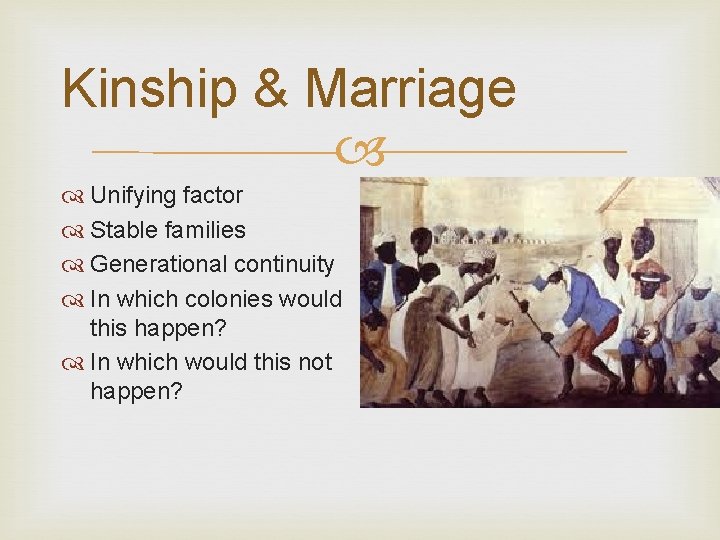
Kinship & Marriage Unifying factor Stable families Generational continuity In which colonies would this happen? In which would this not happen?
White Gentry Wealthy Landowing Elites
Elites Very few families Carter Lee Randolph Robinson Yeomen farmers as collaborators Aristocratic control
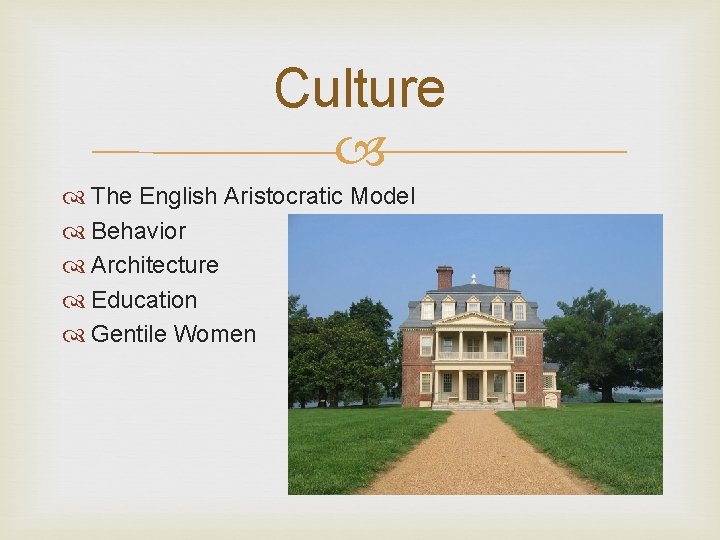
Culture The English Aristocratic Model Behavior Architecture Education Gentile Women