
Slavery in the Colonies Key Concept 2 3

- Slides: 10
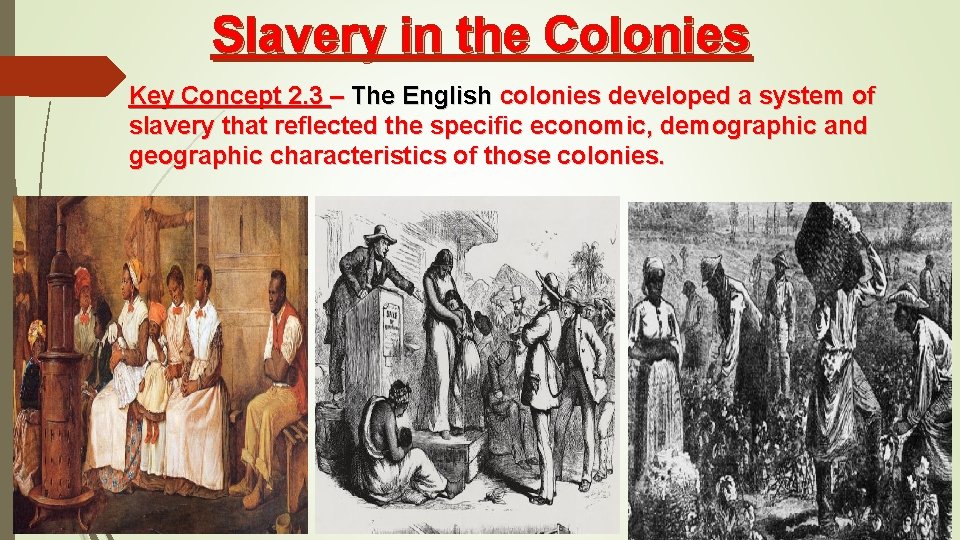
Slavery in the Colonies Key Concept 2. 3 – The English colonies developed a system of slavery that reflected the specific economic, demographic and geographic characteristics of those colonies.
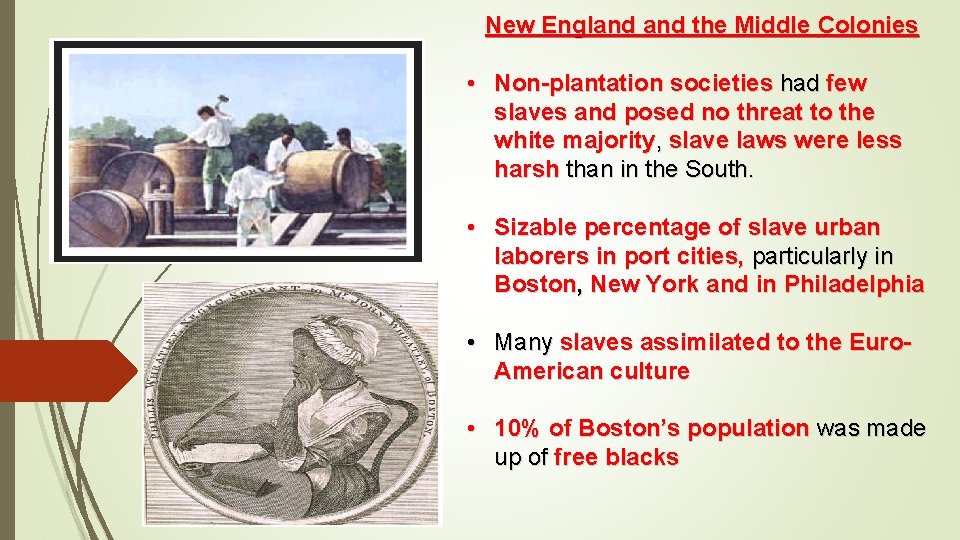
New England the Middle Colonies • Non-plantation societies had few slaves and posed no threat to the white majority, slave laws were less harsh than in the South. • Sizable percentage of slave urban laborers in port cities, particularly in Boston, New York and in Philadelphia • Many slaves assimilated to the Euro. American culture • 10% of Boston’s population was made up of free blacks
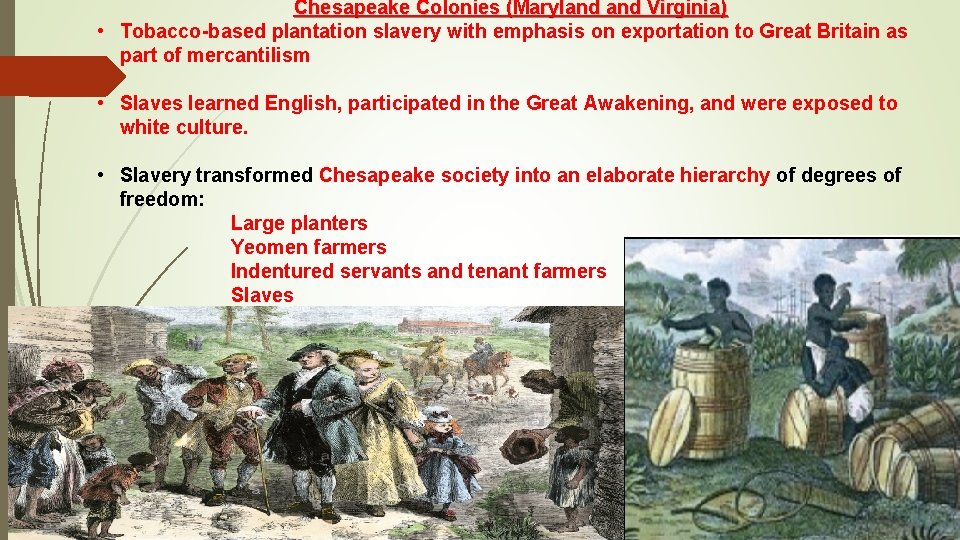
Chesapeake Colonies (Maryland Virginia) • Tobacco-based plantation slavery with emphasis on exportation to Great Britain as part of mercantilism • Slaves learned English, participated in the Great Awakening, and were exposed to white culture. • Slavery transformed Chesapeake society into an elaborate hierarchy of degrees of freedom: Large planters Yeomen farmers Indentured servants and tenant farmers Slaves
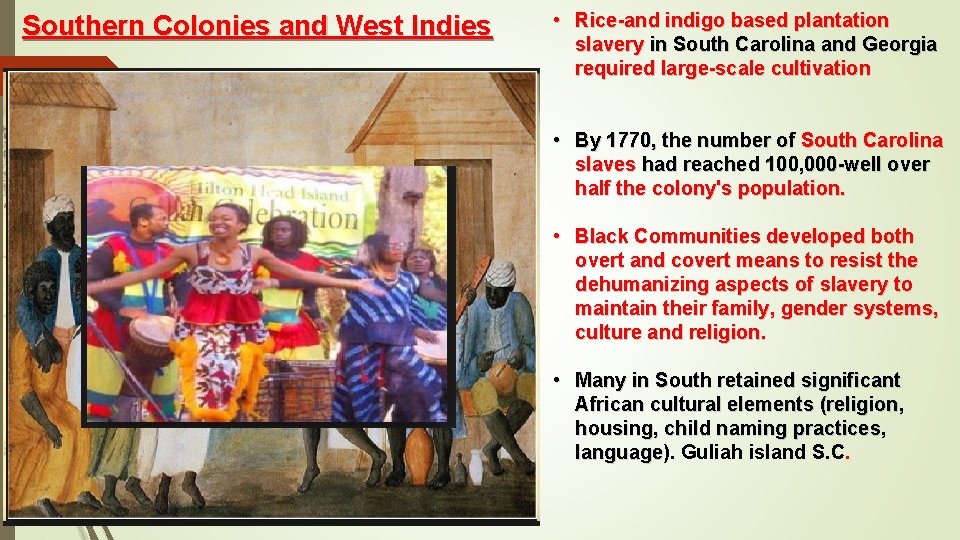
Southern Colonies and West Indies • Rice-and indigo based plantation slavery in South Carolina and Georgia required large-scale cultivation • By 1770, the number of South Carolina slaves had reached 100, 000 -well over half the colony's population. • Black Communities developed both overt and covert means to resist the dehumanizing aspects of slavery to maintain their family, gender systems, culture and religion. • Many in South retained significant African cultural elements (religion, housing, child naming practices, practices language). language Guliah island S. C.
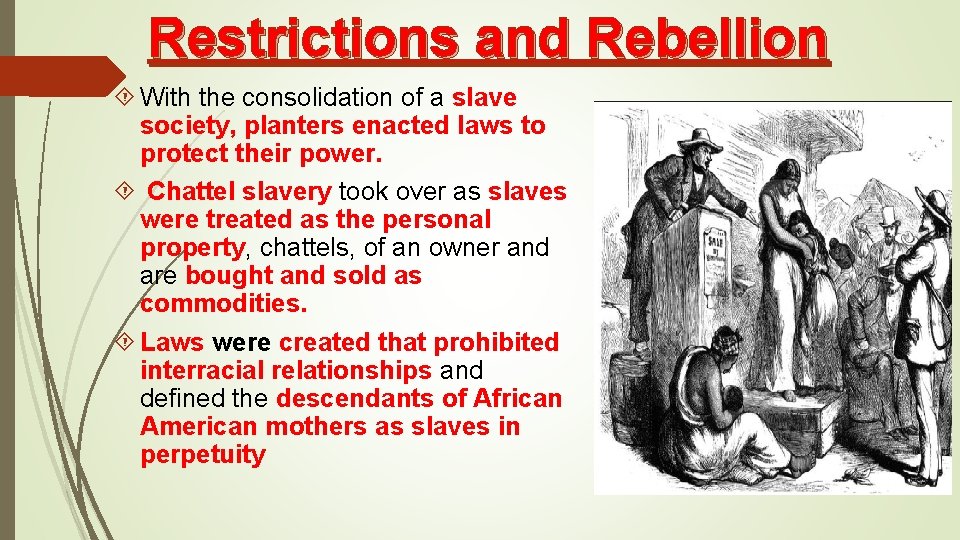
Restrictions and Rebellion With the consolidation of a slave society, planters enacted laws to protect their power. Chattel slavery took over as slaves were treated as the personal property, chattels, of an owner and are bought and sold as commodities. Laws were created that prohibited interracial relationships and defined the descendants of African American mothers as slaves in perpetuity
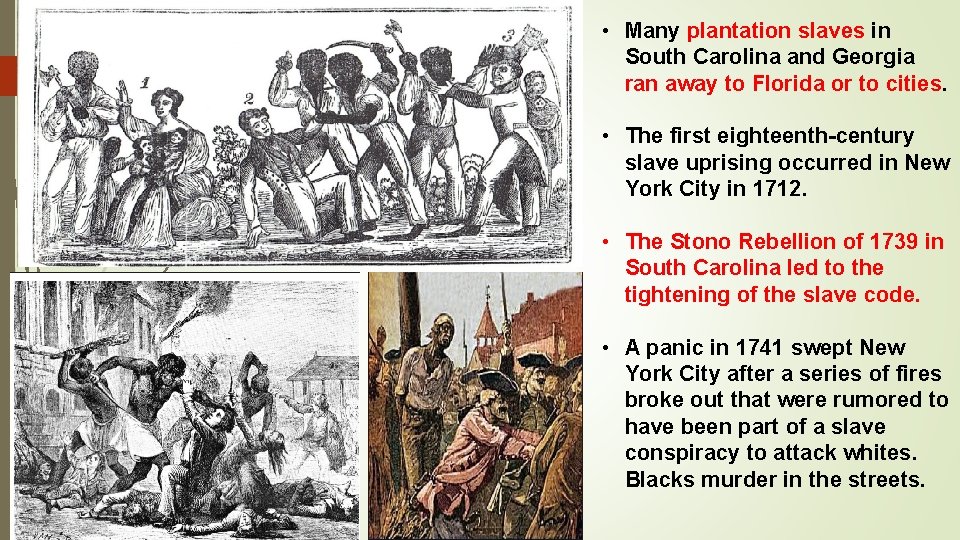
• Many plantation slaves in South Carolina and Georgia ran away to Florida or to cities. • The first eighteenth-century slave uprising occurred in New York City in 1712. • The Stono Rebellion of 1739 in South Carolina led to the tightening of the slave code. • A panic in 1741 swept New York City after a series of fires broke out that were rumored to have been part of a slave conspiracy to attack whites. Blacks murder in the streets.
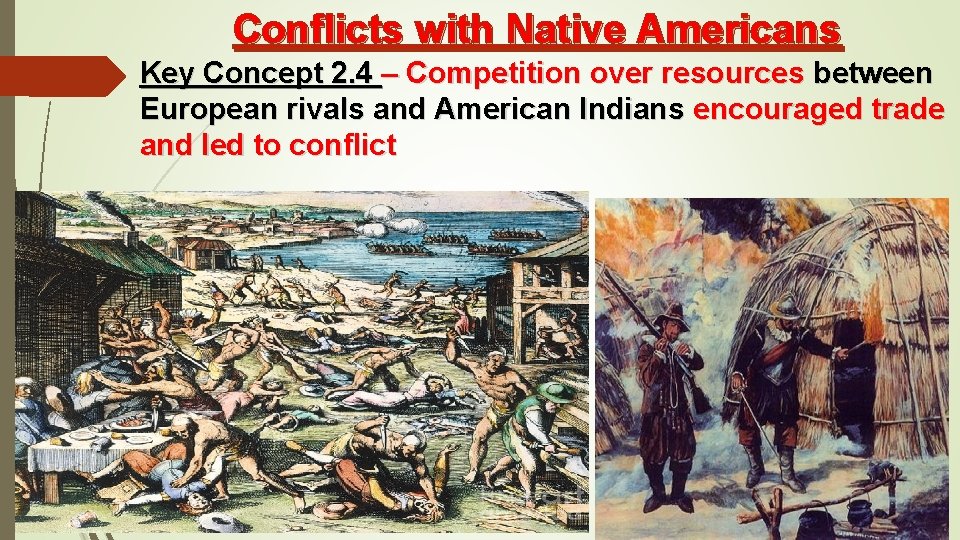
Conflicts with Native Americans Key Concept 2. 4 – Competition over resources between European rivals and American Indians encouraged trade and led to conflict
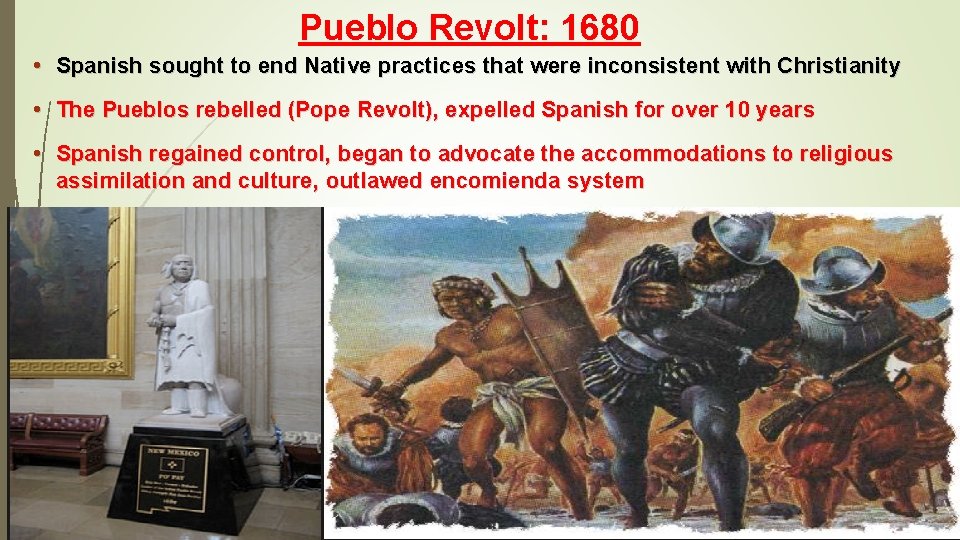
Pueblo Revolt: 1680 • Spanish sought to end Native practices that were inconsistent with Christianity • The Pueblos rebelled (Pope Revolt), expelled Spanish for over 10 years • Spanish regained control, began to advocate the accommodations to religious assimilation and culture, outlawed encomienda system
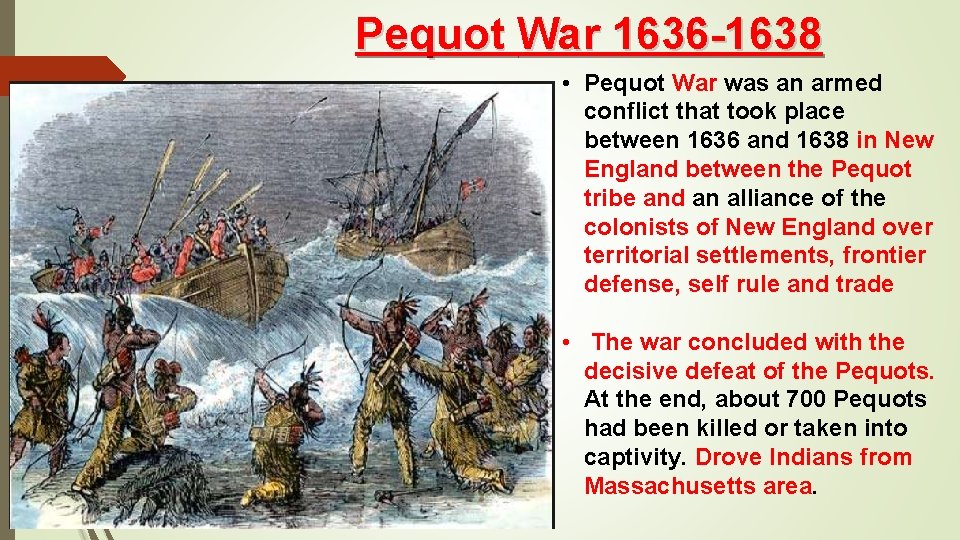
Pequot War 1636 -1638 • Pequot War was an armed conflict that took place between 1636 and 1638 in New England between the Pequot tribe and an alliance of the colonists of New England over territorial settlements, frontier defense, self rule and trade • The war concluded with the decisive defeat of the Pequots. At the end, about 700 Pequots had been killed or taken into captivity. Drove Indians from Massachusetts area.
King Philips War • King Philip's War (1675 -1676) marked the last major effort by the Native Americans of southern New England to drive out the English settlers • Metacom, or "King Philip" as he was called in English was the leader of one of the larger Indian tribes. • Colonists were upset over lack of defense on the frontier • King Philip’s wife and son were captured, . The Puritans drew and quartered Philip’s body and publicly displayed his head on a stake in Plymouth. War drove Indians from New England