
Slavery and the Abolitionist Movement Abolition The movement
Slavery and the Abolitionist Movement
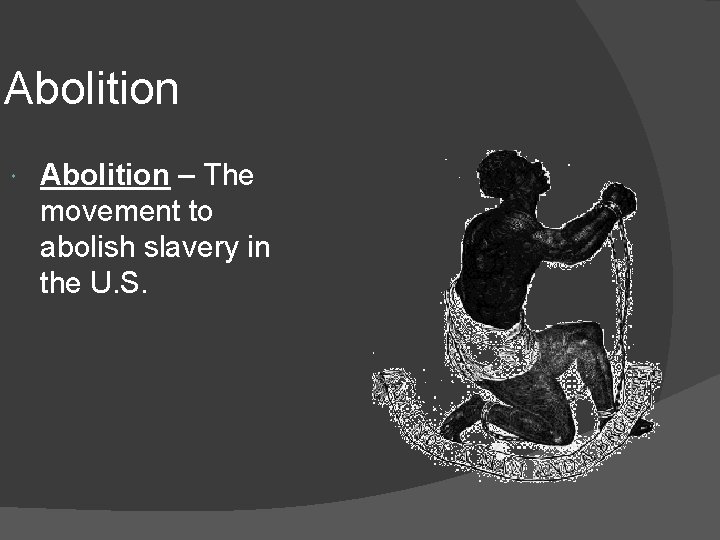
Abolition – The movement to abolish slavery in the U. S.
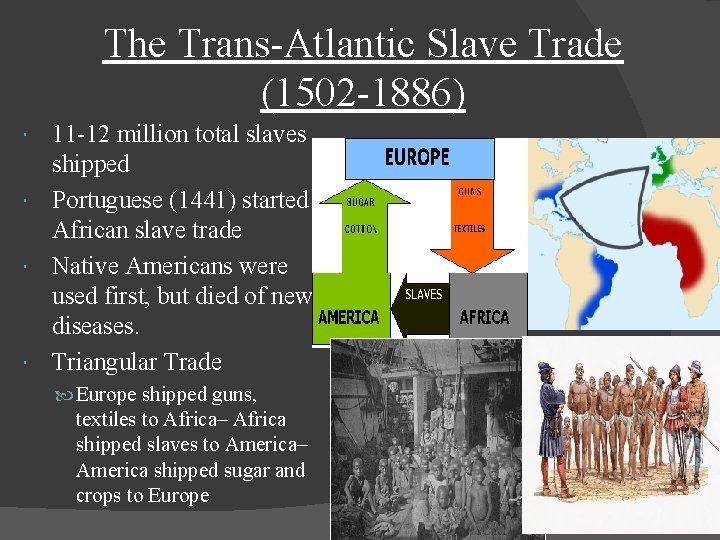
The Trans-Atlantic Slave Trade (1502 -1886) 11 -12 million total slaves shipped Portuguese (1441) started African slave trade Native Americans were used first, but died of new diseases. Triangular Trade Europe shipped guns, textiles to Africa– Africa shipped slaves to America– America shipped sugar and crops to Europe
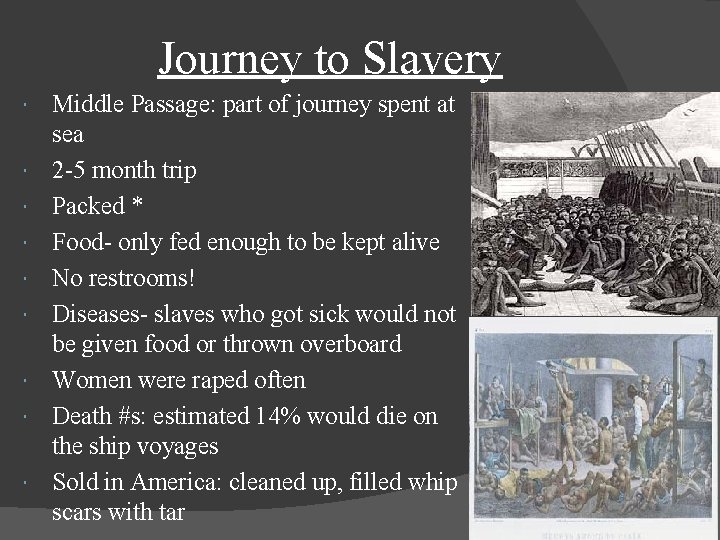
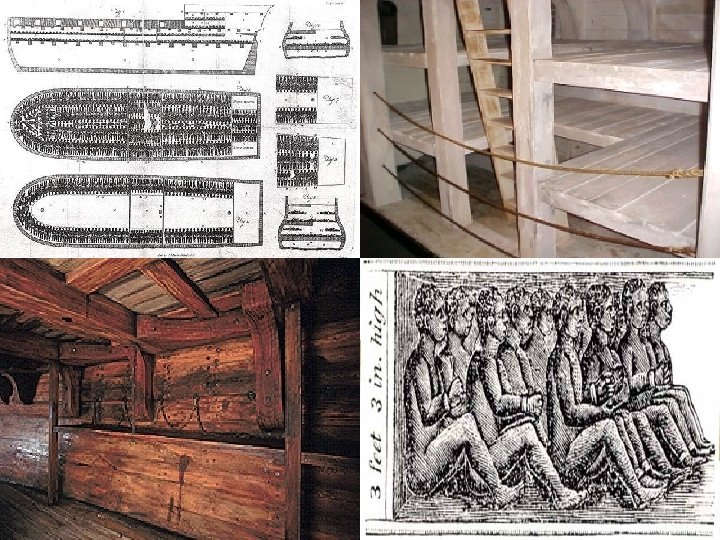
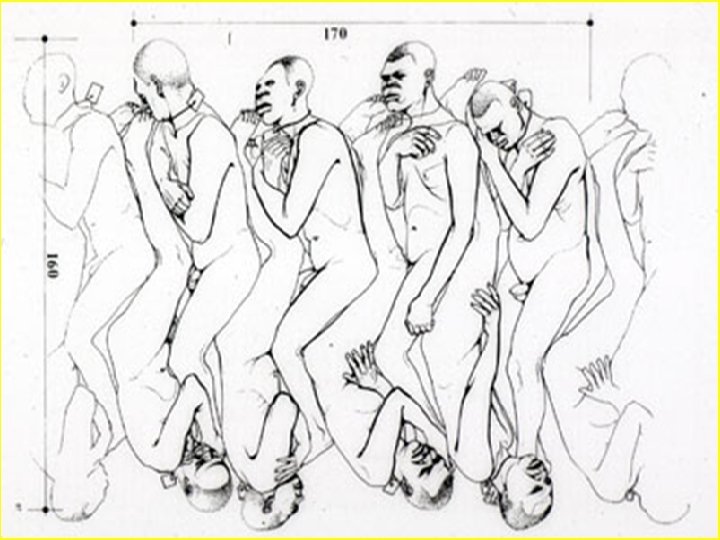
Journey to Slavery Middle Passage: part of journey spent at sea 2 -5 month trip Packed * Food- only fed enough to be kept alive No restrooms! Diseases- slaves who got sick would not be given food or thrown overboard Women were raped often Death #s: estimated 14% would die on the ship voyages Sold in America: cleaned up, filled whip scars with tar
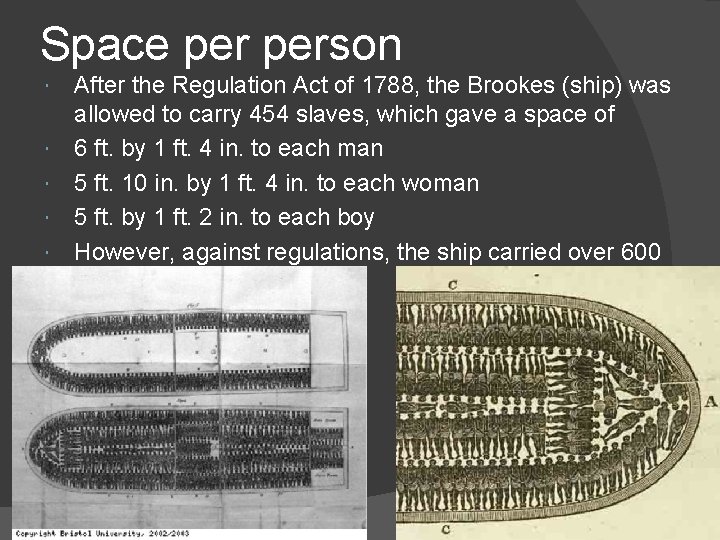
Space person After the Regulation Act of 1788, the Brookes (ship) was allowed to carry 454 slaves, which gave a space of 6 ft. by 1 ft. 4 in. to each man 5 ft. 10 in. by 1 ft. 4 in. to each woman 5 ft. by 1 ft. 2 in. to each boy However, against regulations, the ship carried over 600 slaves.
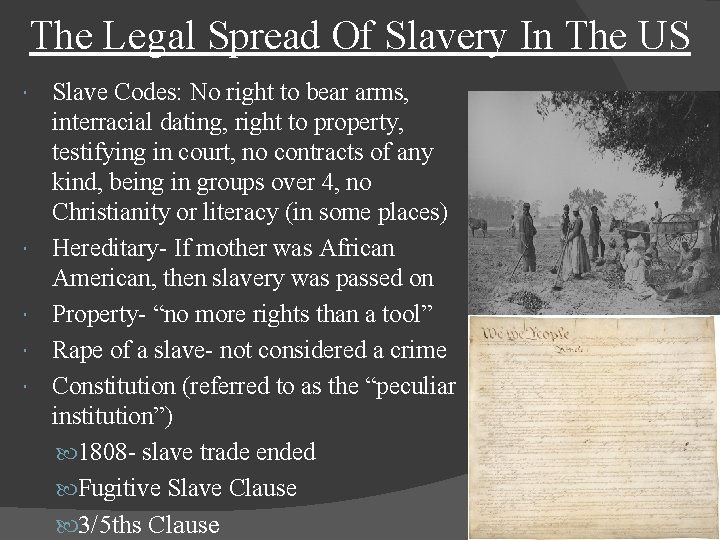
The Legal Spread Of Slavery In The US Slave Codes: No right to bear arms, interracial dating, right to property, testifying in court, no contracts of any kind, being in groups over 4, no Christianity or literacy (in some places) Hereditary- If mother was African American, then slavery was passed on Property- “no more rights than a tool” Rape of a slave- not considered a crime Constitution (referred to as the “peculiar institution”) 1808 - slave trade ended Fugitive Slave Clause 3/5 ths Clause
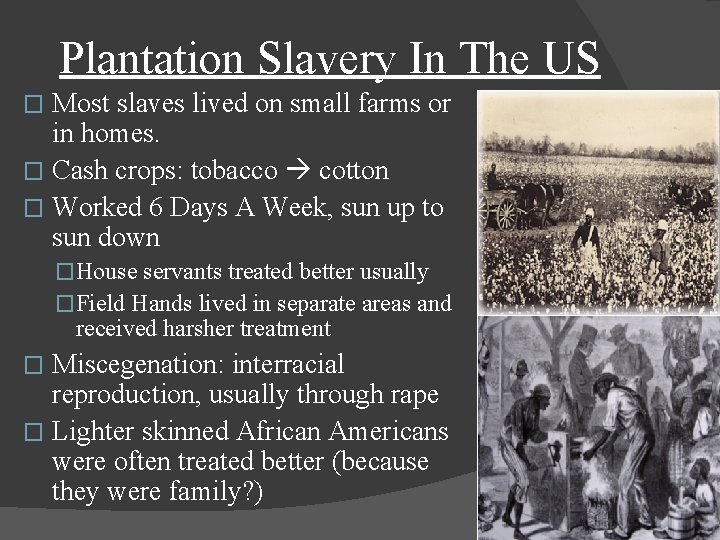
Plantation Slavery In The US Most slaves lived on small farms or in homes. � Cash crops: tobacco cotton � Worked 6 Days A Week, sun up to sun down � �House servants treated better usually �Field Hands lived in separate areas and received harsher treatment Miscegenation: interracial reproduction, usually through rape � Lighter skinned African Americans were often treated better (because they were family? ) �
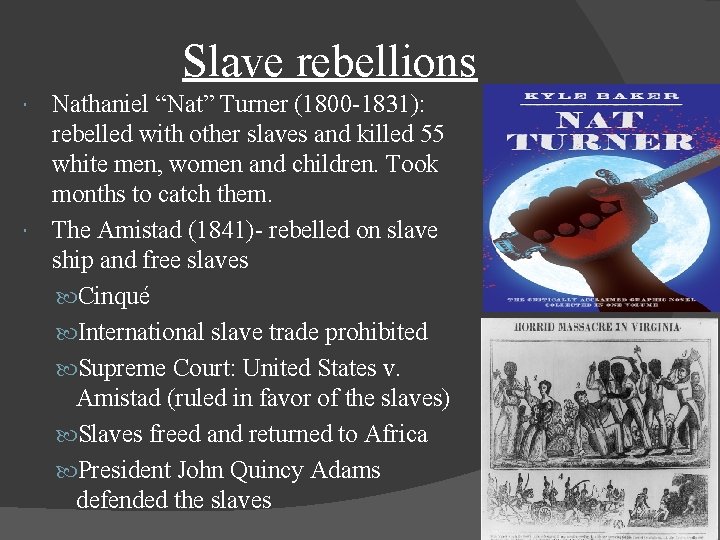
Slave rebellions Nathaniel “Nat” Turner (1800 -1831): rebelled with other slaves and killed 55 white men, women and children. Took months to catch them. The Amistad (1841)- rebelled on slave ship and free slaves Cinqué International slave trade prohibited Supreme Court: United States v. Amistad (ruled in favor of the slaves) Slaves freed and returned to Africa President John Quincy Adams defended the slaves
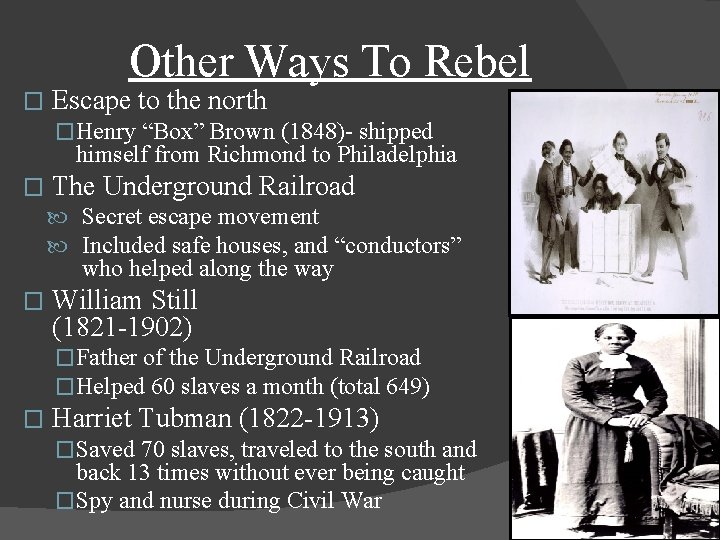
Other Ways To Rebel � Escape to the north �Henry “Box” Brown (1848)- shipped himself from Richmond to Philadelphia � The Underground Railroad Secret escape movement Included safe houses, and “conductors” who helped along the way � William Still (1821 -1902) �Father of the Underground Railroad �Helped 60 slaves a month (total 649) � Harriet Tubman (1822 -1913) �Saved 70 slaves, traveled to the south and back 13 times without ever being caught �Spy and nurse during Civil War
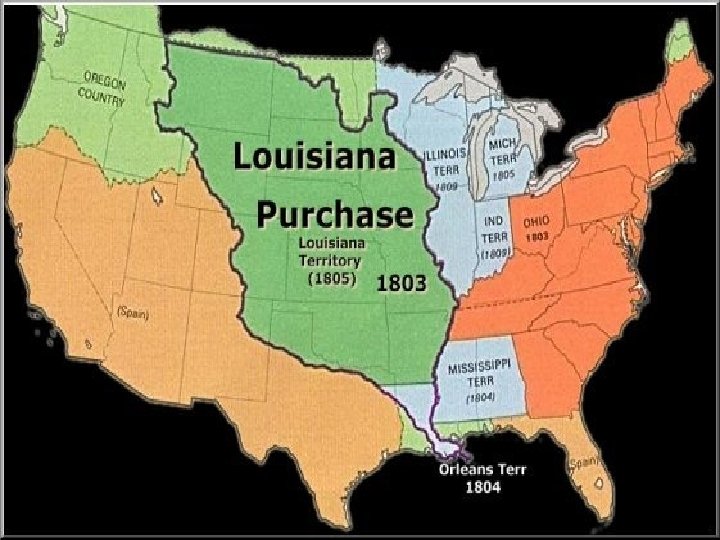
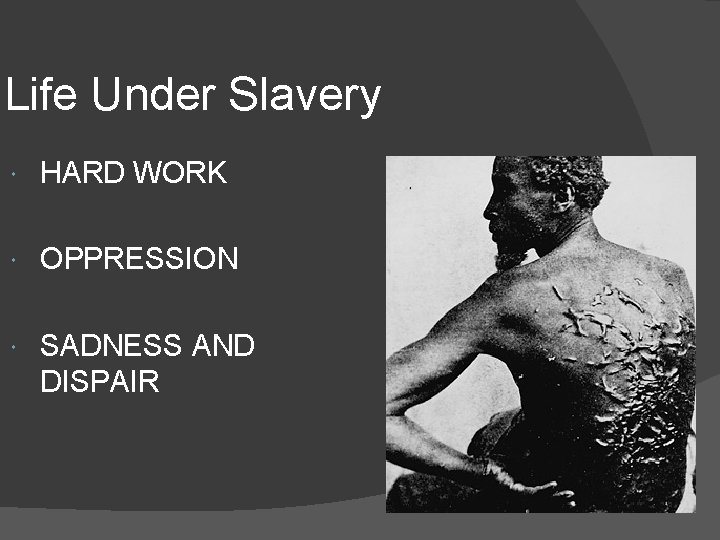
Life Under Slavery HARD WORK OPPRESSION SADNESS AND DISPAIR
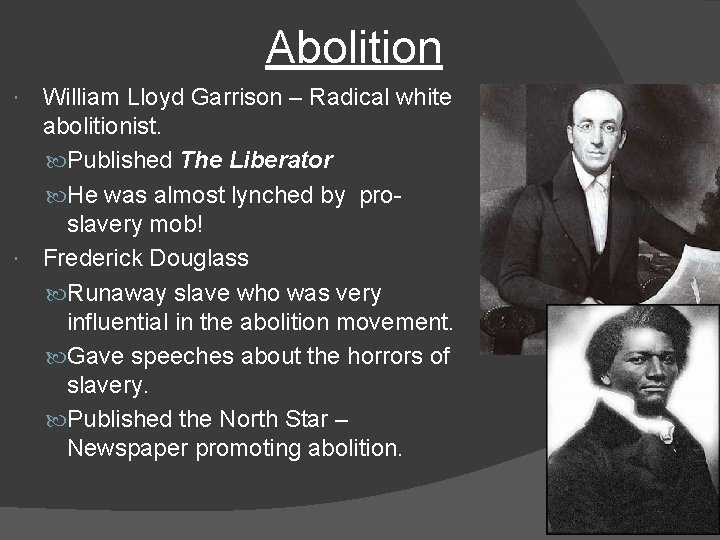
Abolition William Lloyd Garrison – Radical white abolitionist. Published The Liberator He was almost lynched by proslavery mob! Frederick Douglass Runaway slave who was very influential in the abolition movement. Gave speeches about the horrors of slavery. Published the North Star – Newspaper promoting abolition.
Women in Reform Heavily involved in abolition and education reform. Faced discrimination in reform. 1848: Elizabeth Cady Stanton and Lucretia Mott organized the Seneca Falls Convention. Women’s rights convention, wrote the Declaration of Sentiments – Very similar to the Declaration of Independence, called for women’s rights, including the right to vote.
Activity Read the document by William Lloyd Garrison and complete the primary document analysis worksheet. You will have 10 minutes to complete this activity. When you are done, place this worksheet in the class work and homework section of your notebook. William Lloyd Garrison Primary Document Analysis
- Slides: 17