
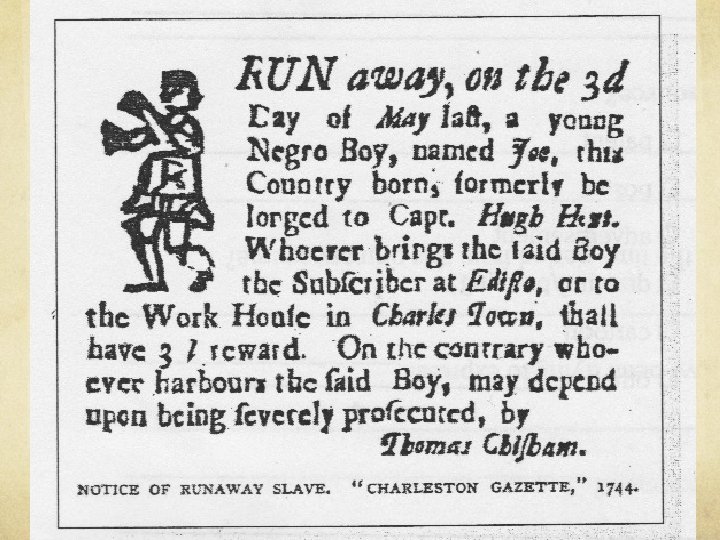
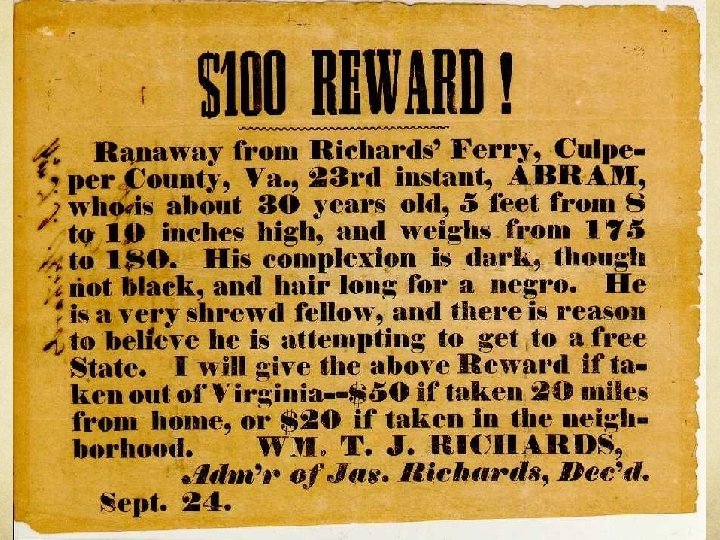
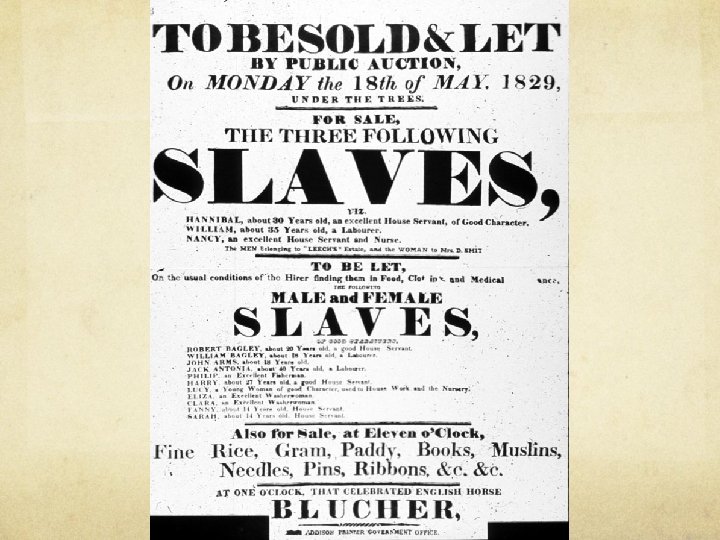
slave codeslaws that set out rules for slaves

- Slides: 19
slave codes—laws that set out rules for slaves’ behavior; treated enslaved Africans as property and denied slaves their basic rights racism—the belief that one race is superior to another
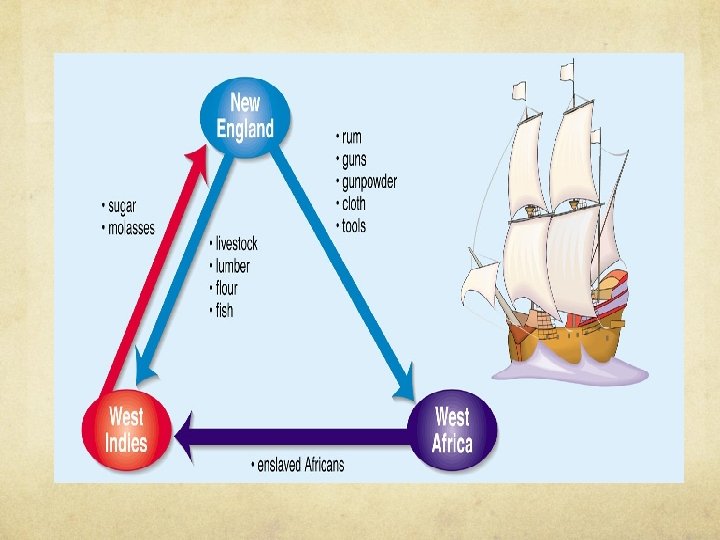
Slave Trade As demand grew European slave traders set up posts along African coast. They offered guns and other foods to African rulers who brought them slaves.
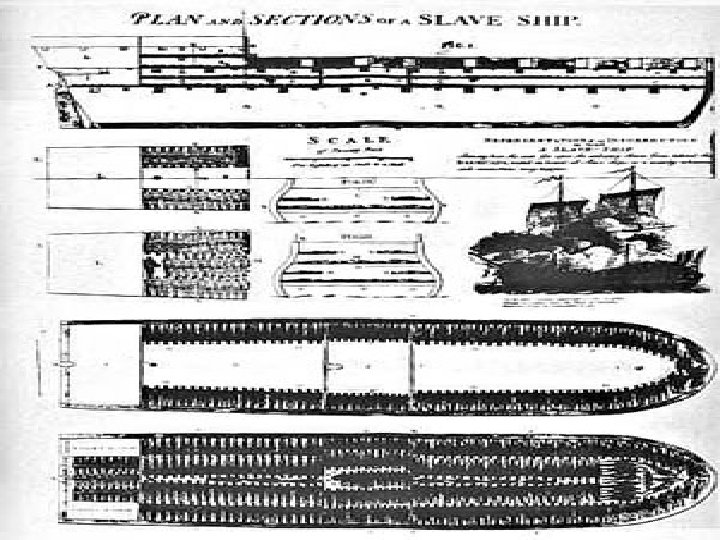
Slave Trade Spanish, Portuguese, Dutch, English, and French all sent ships with slaves to America. called Middle Passage- slave ships travelling west across Atlantic from Africa to the colonies slaves were crammed into small spaces below deck
• Imagine that you were a slave coming from Africa to the colonies in America. • What do you think the trip across the Atlantic would have been like? • What would go through your mind when you arrived? • Write a story about the journey from the point of view of a slave.
Trade imports- good brought into a country exports-goods sent to markets outside the country
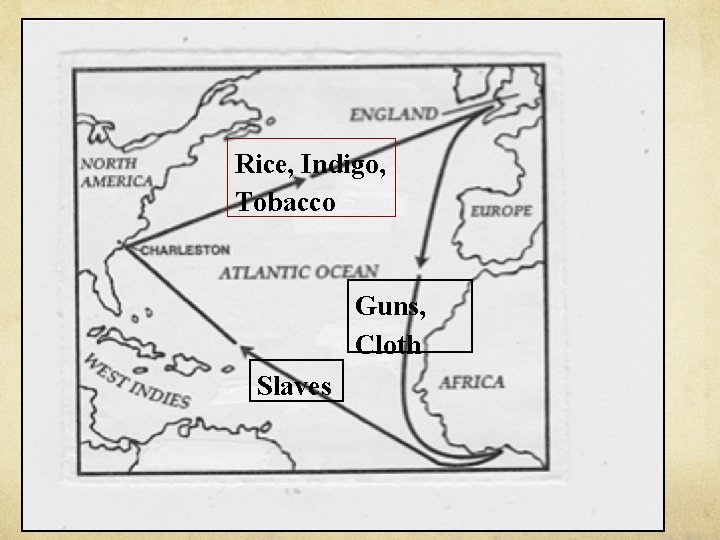
Triangular Trade Colonial merchants developed many trade routes. One route was known as the triangular trade. Colonial merchants sometimes defied the Navigation Acts by buying goods from the Dutch, French, and Spanish West Indies.
Rice, Indigo, Tobacco Guns, Cloth Slaves
Limits on Liberties of Colonists Women had fewer rights than free, white males. Married women had fewer rights than unmarried women and widows. Africans and American Indians had almost no rights.
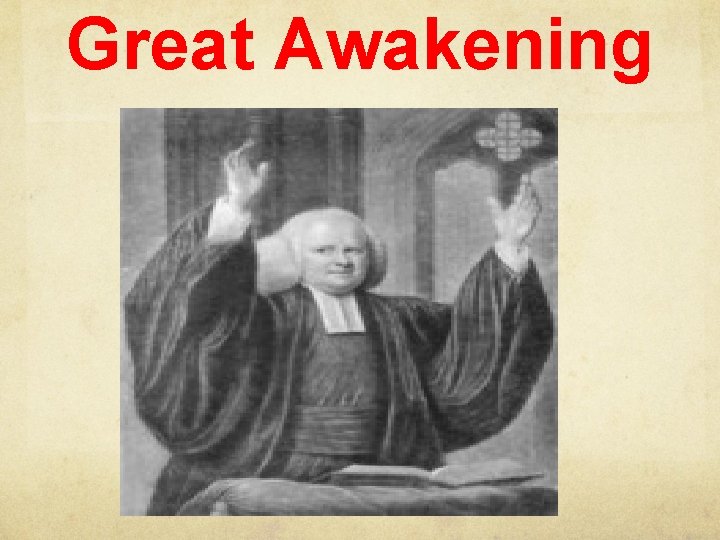
Great Awakening
Great Awakening In the 1730 s and 1740 s, a religious movement known as the Great Awakening swept through the colonies. • began with powerful ministers. • led many people to split from their old churches and start new ones. • growth of so many churches forced people to be more tolerant of different beliefs
Great Awakening • New preachers argued that formal training was less important than a heart filled with the holy spirit. If people could learn to worship on their own, they could govern themselves. People felt freer to challenge political authority.
Enlightenment The Enlightenment was a movement started in Europe by thinkers who applied reason and logic instead of superstition to understand the world. English philosopher John Locke wrote that people could gain knowledge by observing and experimenting.
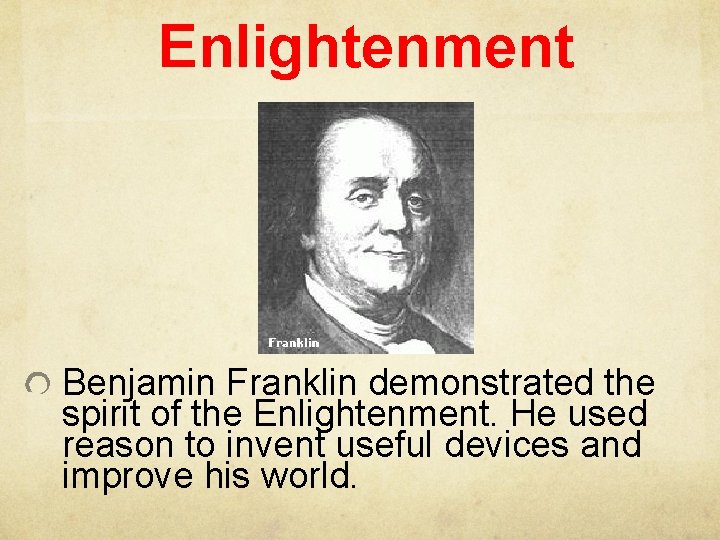
Enlightenment Benjamin Franklin demonstrated the spirit of the Enlightenment. He used reason to invent useful devices and improve his world.