
SLANT Strategy The Learning Strategy Series 2002 The

- Slides: 10
SLANT Strategy The Learning Strategy Series 2002 The University of Kansas Center for Research on Learning Lawrence, Kansas
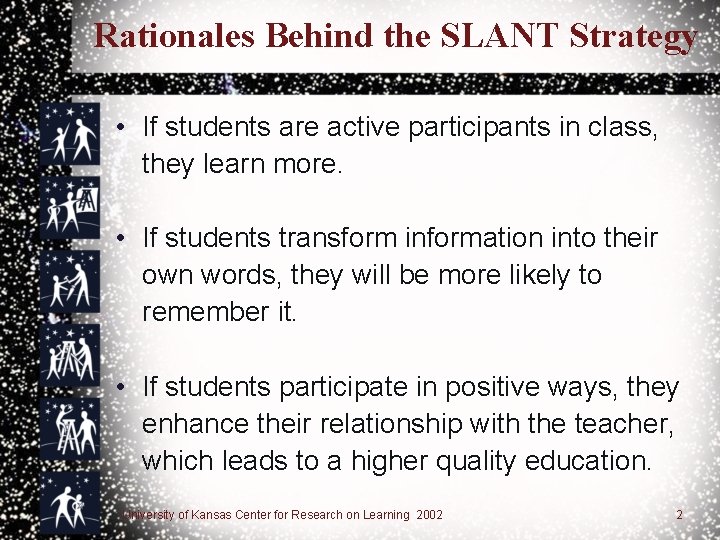
Rationales Behind the SLANT Strategy • If students are active participants in class, they learn more. • If students transform information into their own words, they will be more likely to remember it. • If students participate in positive ways, they enhance their relationship with the teacher, which leads to a higher quality education. University of Kansas Center for Research on Learning 2002 2
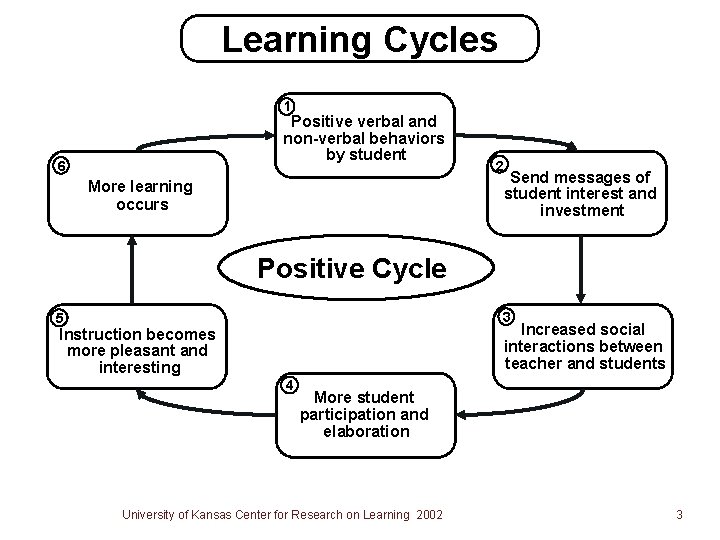
Learning Cycles 1 Positive verbal and non-verbal behaviors by student 6 More learning occurs 2 Send messages of student interest and investment Positive Cycle 3 5 Increased social interactions between teacher and students Instruction becomes more pleasant and interesting 4 More student participation and elaboration University of Kansas Center for Research on Learning 2002 3
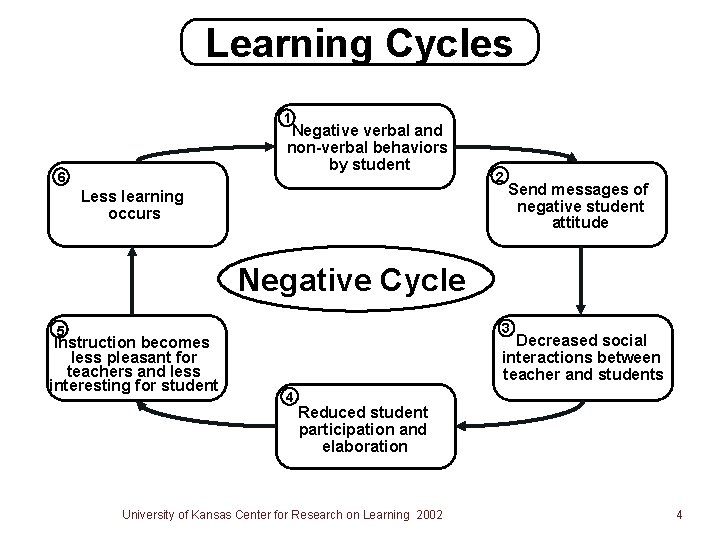
Learning Cycles 1 Negative verbal and non-verbal behaviors by student 6 Less learning occurs 2 Send messages of negative student attitude Negative Cycle 3 5 Instruction becomes less pleasant for teachers and less interesting for student Decreased social interactions between teacher and students 4 Reduced student participation and elaboration University of Kansas Center for Research on Learning 2002 4
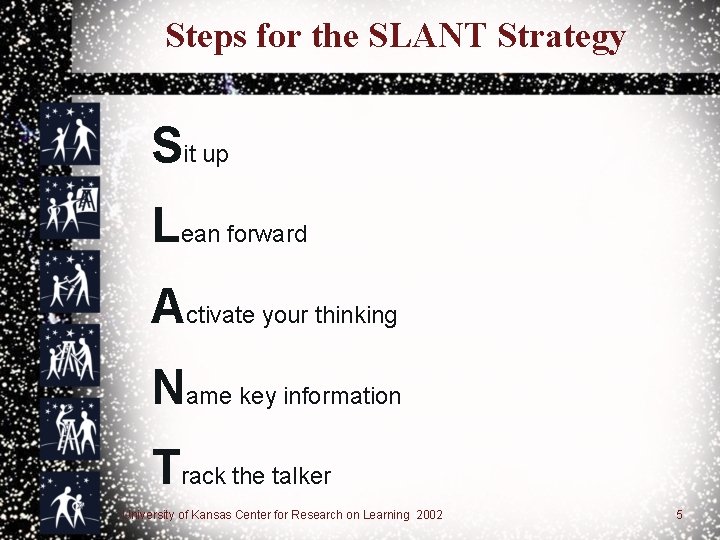
Steps for the SLANT Strategy Sit up Lean forward Activate your thinking Name key information Track the talker University of Kansas Center for Research on Learning 2002 5
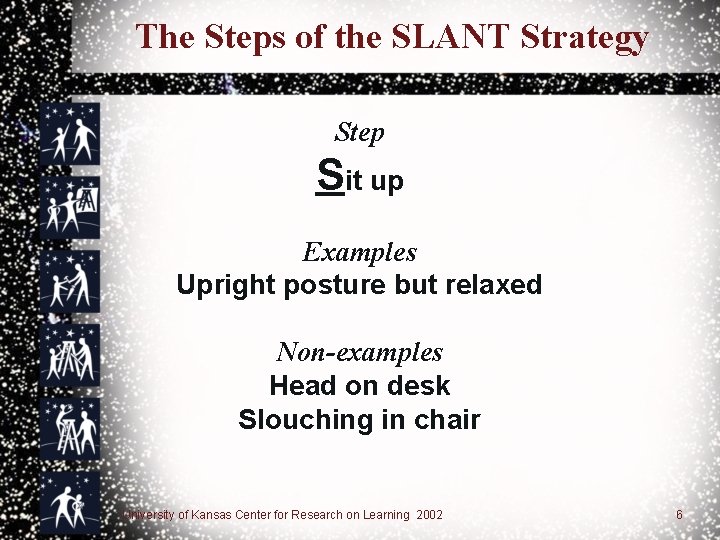
The Steps of the SLANT Strategy Step Sit up Examples Upright posture but relaxed Non-examples Head on desk Slouching in chair University of Kansas Center for Research on Learning 2002 6
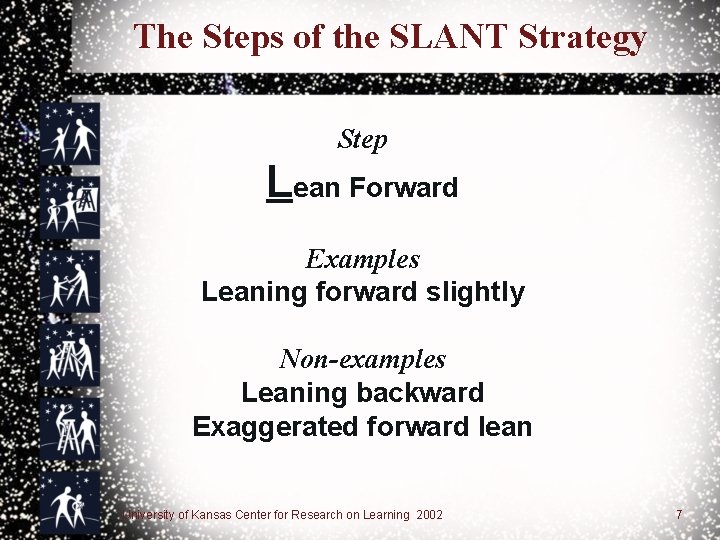
The Steps of the SLANT Strategy Step Lean Forward Examples Leaning forward slightly Non-examples Leaning backward Exaggerated forward lean University of Kansas Center for Research on Learning 2002 7
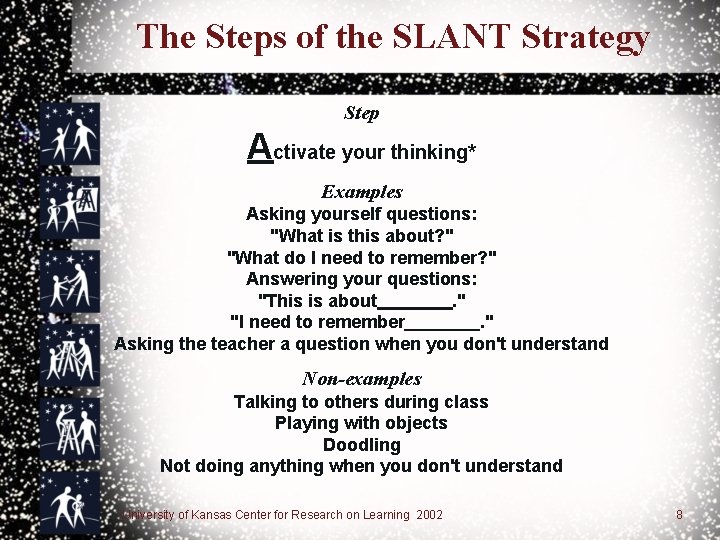
The Steps of the SLANT Strategy Step Activate your thinking* Examples Asking yourself questions: "What is this about? " "What do I need to remember? " Answering your questions: "This is about. " "I need to remember. " Asking the teacher a question when you don't understand Non-examples Talking to others during class Playing with objects Doodling Not doing anything when you don't understand University of Kansas Center for Research on Learning 2002 8
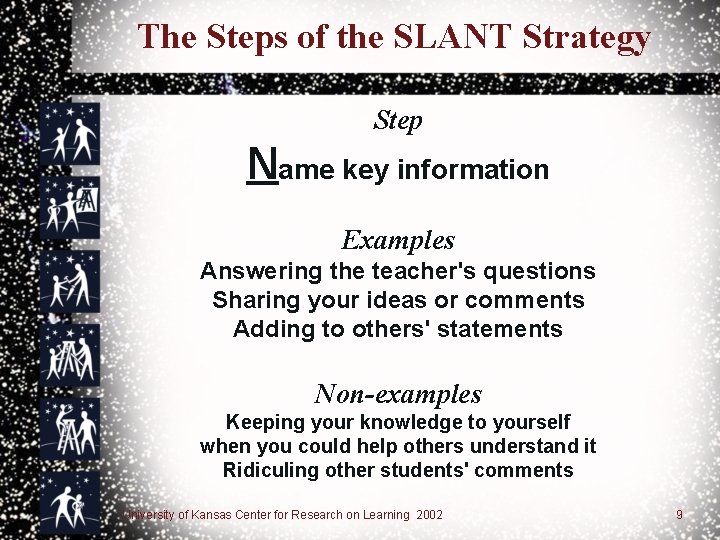
The Steps of the SLANT Strategy Step Name key information Examples Answering the teacher's questions Sharing your ideas or comments Adding to others' statements Non-examples Keeping your knowledge to yourself when you could help others understand it Ridiculing other students' comments University of Kansas Center for Research on Learning 2002 9
The Steps of the SLANT Strategy Step Track the talker Examples Keeping your eyes on the teacher as she speaks Looking at students as they speak Non-examples Staring out the window Looking at your desk or students who aren't contributing University of Kansas Center for Research on Learning 2002 10