
Skin Staphylococcus aureus is the major pathogen for




- Slides: 42
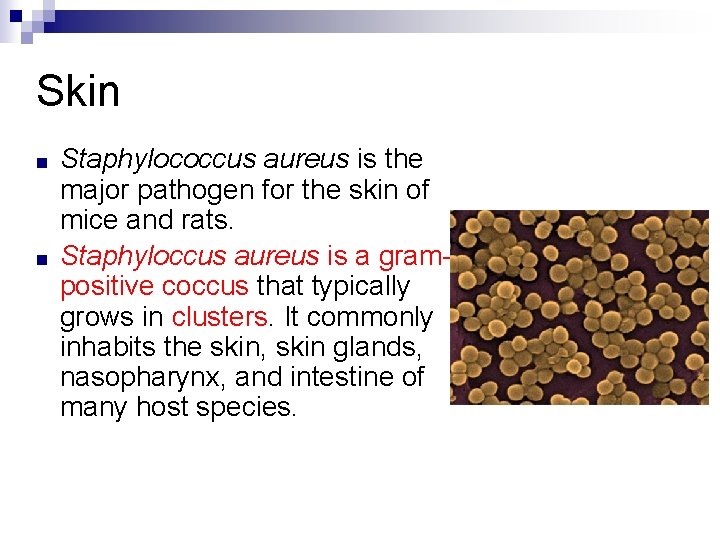
Skin ■ ■ Staphylococcus aureus is the major pathogen for the skin of mice and rats. Staphyloccus aureus is a gram positive coccus that typically grows in clusters. It commonly inhabits the skin, skin glands, nasopharynx, and intestine of many host species.
■ ■ Staph. aureus is a common commensal of many species. It also is common in the environment. Human carriers can be an important source of infection for rodent colonies
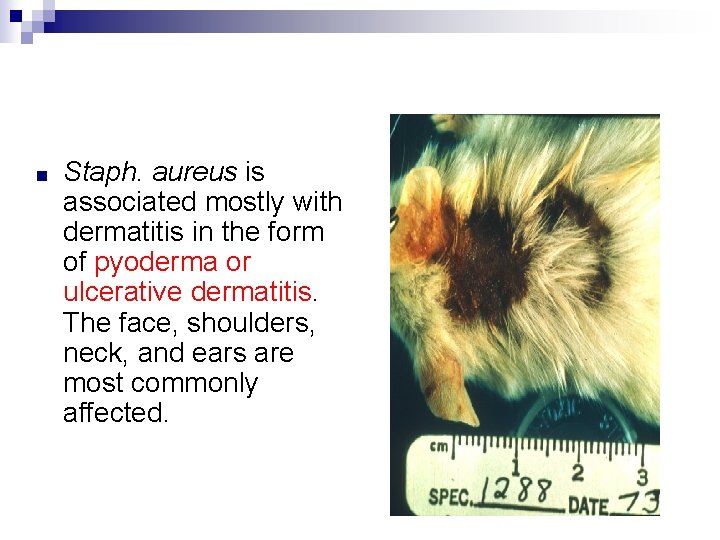
■ Staph. aureus is associated mostly with dermatitis in the form of pyoderma or ulcerative dermatitis. The face, shoulders, neck, and ears are most commonly affected.
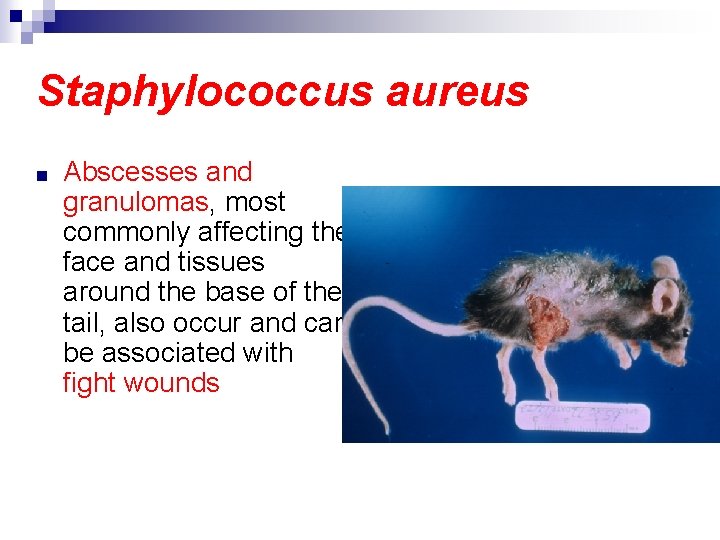
Staphylococcus aureus ■ Abscesses and granulomas, most commonly affecting the face and tissues around the base of the tail, also occur and can be associated with fight wounds
Staphylococcus aureus ■ ■ The best methods of control are improved sanitation, frequent sanitizing of cages and other equipment, and elimination of equipment that could cause skin injury Topical treatment with Nolvasan BID
Viral diseases
SDAV (Sendai Virus) SV ■ Sialodacryoadenitis virus (SDAV), another coronavirus (Parainfluenza 1), is one of the most common viruses found in laboratory rats and mice. It is highly contagious, and is spread by direct contact with infected animals or by respiratory aerosol
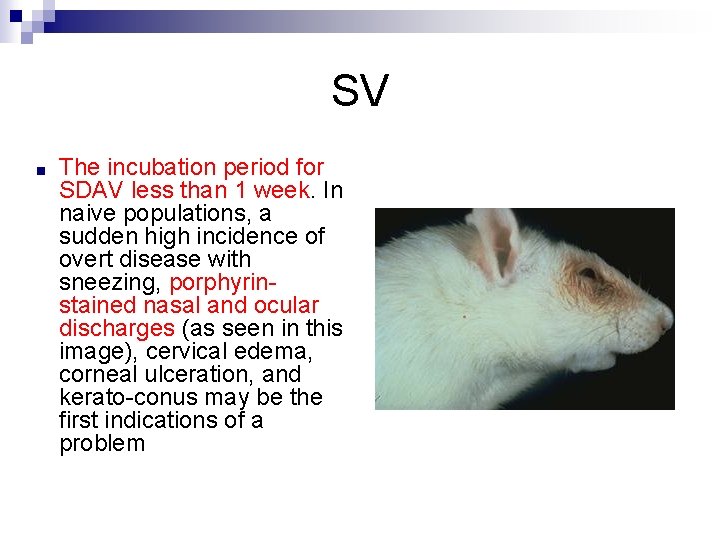
SV ■ The incubation period for SDAV less than 1 week. In naive populations, a sudden high incidence of overt disease with sneezing, porphyrin stained nasal and ocular discharges (as seen in this image), cervical edema, corneal ulceration, and kerato conus may be the first indications of a problem
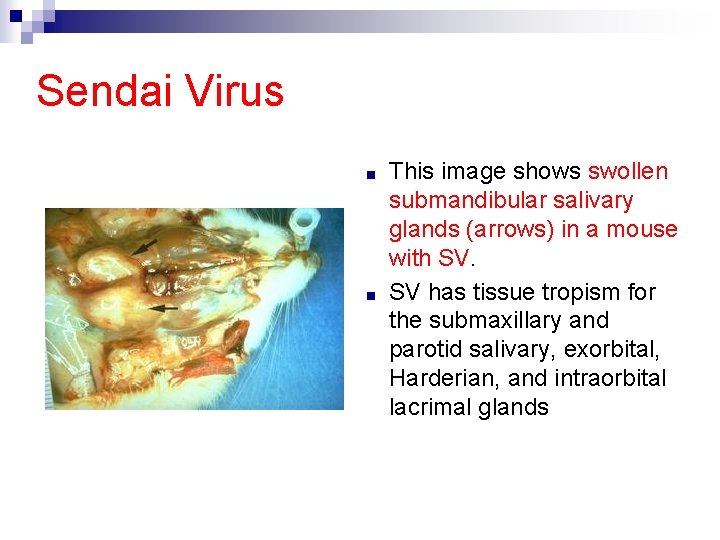
Sendai Virus ■ ■ This image shows swollen submandibular salivary glands (arrows) in a mouse with SV. SV has tissue tropism for the submaxillary and parotid salivary, exorbital, Harderian, and intraorbital lacrimal glands
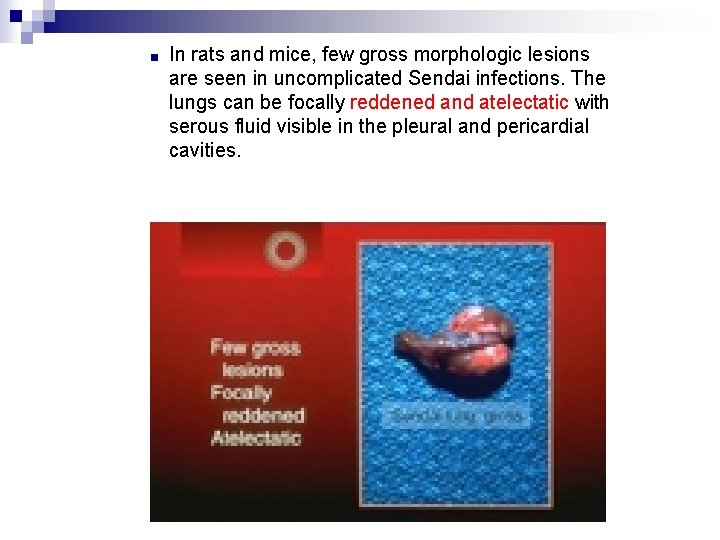
■ In rats and mice, few gross morphologic lesions are seen in uncomplicated Sendai infections. The lungs can be focally reddened and atelectatic with serous fluid visible in the pleural and pericardial cavities.
Mouse Hepatitis Virus (MHV) ■ Mouse hepatitis virus (MHV) and sialodacryoadenitis virus (SDAV) are frequently encountered coronaviruses of mice and rats ■ Some primarily infect the gastrointestinal system; some the respiratory tract; some the brain
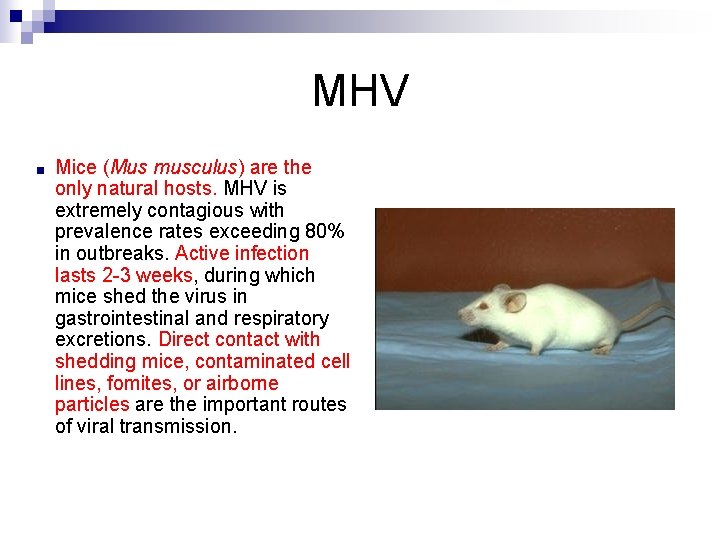
MHV ■ Mice (Mus musculus) are the only natural hosts. MHV is extremely contagious with prevalence rates exceeding 80% in outbreaks. Active infection lasts 2 3 weeks, during which mice shed the virus in gastrointestinal and respiratory excretions. Direct contact with shedding mice, contaminated cell lines, fomites, or airborne particles are the important routes of viral transmission.
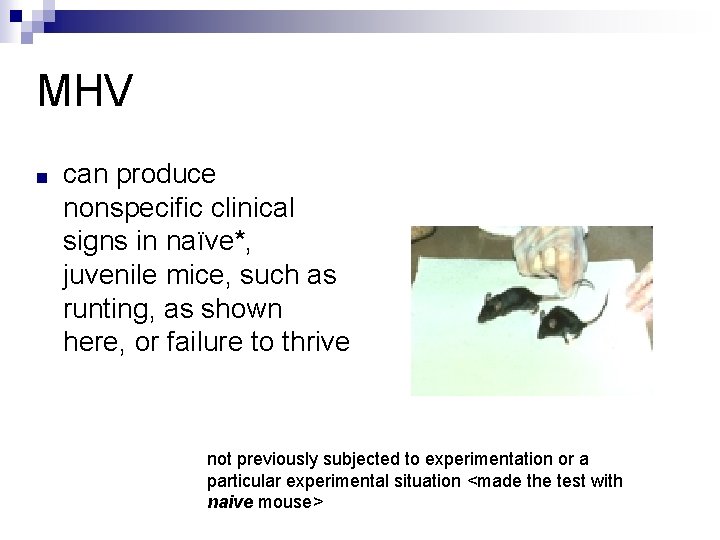
MHV ■ can produce nonspecific clinical signs in naïve*, juvenile mice, such as runting, as shown here, or failure to thrive not previously subjected to experimentation or a particular experimental situation <made the test with naive mouse>
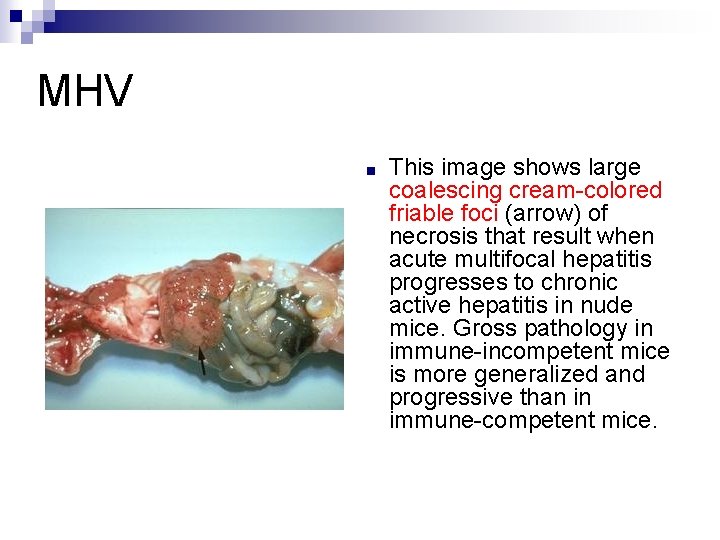
MHV ■ This image shows large coalescing cream colored friable foci (arrow) of necrosis that result when acute multifocal hepatitis progresses to chronic active hepatitis in nude mice. Gross pathology in immune incompetent mice is more generalized and progressive than in immune competent mice.
Mouse Hepatitis Virus ■ ■ ■ ■ Enterotropic versus respiratory strains Extremely contagious by many routes Nursing pups: diarrhea and mortality Weanlings: Obstipation Adults: Hunched posture, weight loss, rough hair coat, variable mortality No latent infections stop breeding ELISA
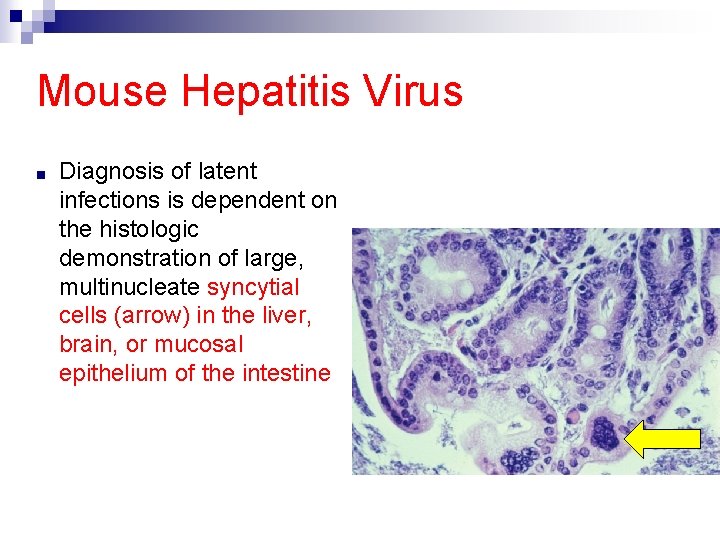
Mouse Hepatitis Virus ■ Diagnosis of latent infections is dependent on the histologic demonstration of large, multinucleate syncytial cells (arrow) in the liver, brain, or mucosal epithelium of the intestine
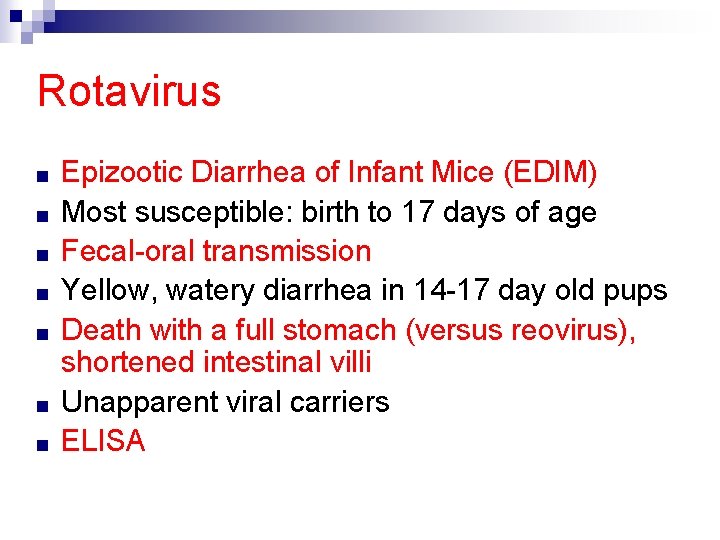
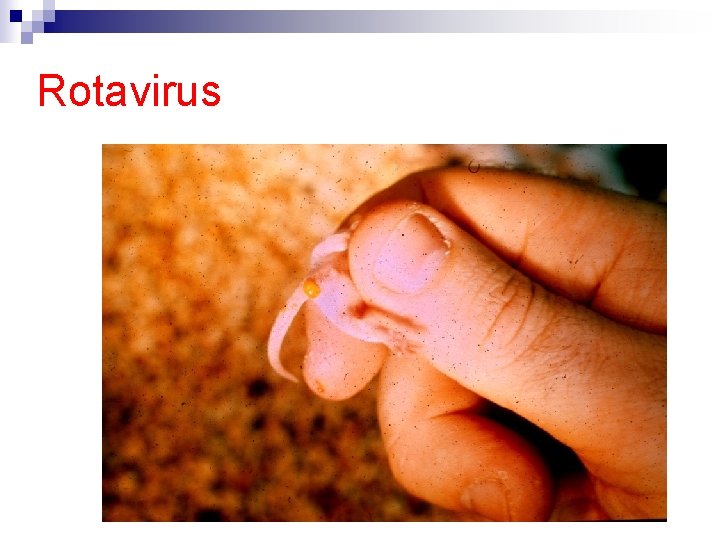
Rotavirus (EDIM) ■ Rotavirus, another genus of the family Reoviridae, is associated with clinical disease. Rotaviruses affecting mice and rats respectively are mouse rotavirus, a group A rotavirus associated with the syndrome, epizootic diarrhea of infant mice (EDIM)
Rotavirus ■ ■ ■ ■ Epizootic Diarrhea of Infant Mice (EDIM) Most susceptible: birth to 17 days of age Fecal oral transmission Yellow, watery diarrhea in 14 17 day old pups Death with a full stomach (versus reovirus), shortened intestinal villi Unapparent viral carriers ELISA
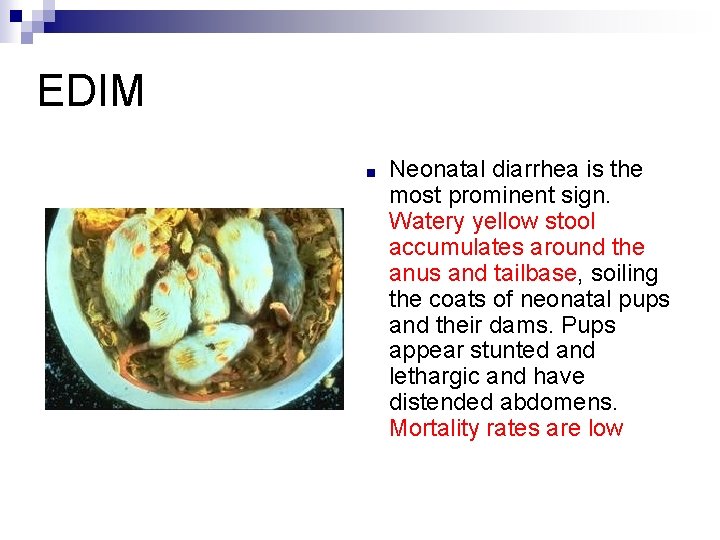
EDIM ■ Neonatal diarrhea is the most prominent sign. Watery yellow stool accumulates around the anus and tailbase, soiling the coats of neonatal pups and their dams. Pups appear stunted and lethargic and have distended abdomens. Mortality rates are low
Rotavirus
Parasites
Myobia musculi, Radfordia affinis, and Myocoptes musculinus ■ ■ ■ Common Transmitted by direct contact May be subclinical, or develop pruritus, scruffy coat, patchy alopecia, self trauma, pyoderma Typically found on back and head Mist with ivermectin (0. 1%) for 3 weekly treatments
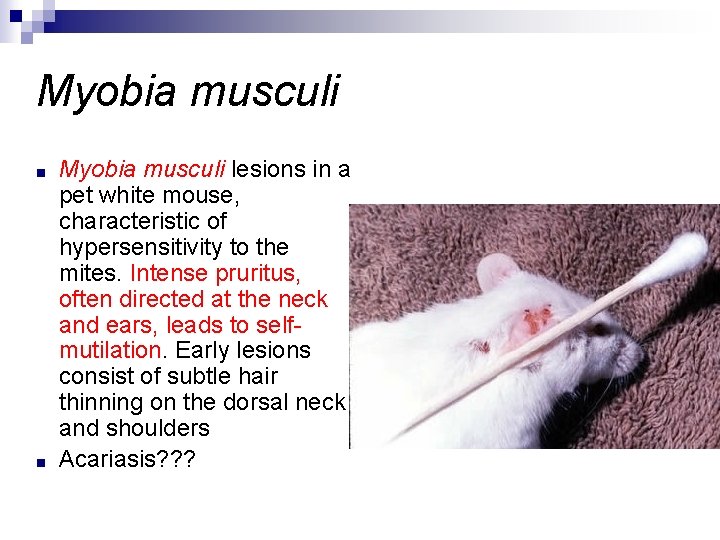
Myobia musculi ■ ■ Myobia musculi lesions in a pet white mouse, characteristic of hypersensitivity to the mites. Intense pruritus, often directed at the neck and ears, leads to self mutilation. Early lesions consist of subtle hair thinning on the dorsal neck and shoulders Acariasis? ? ?
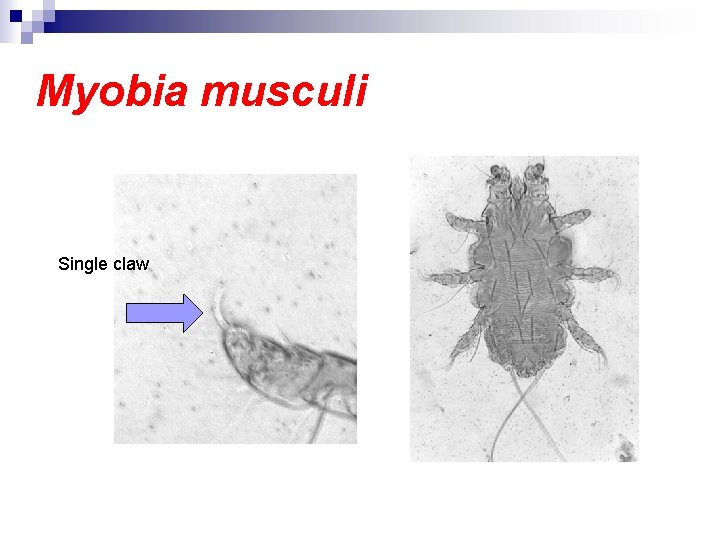
Myobia musculi Single claw
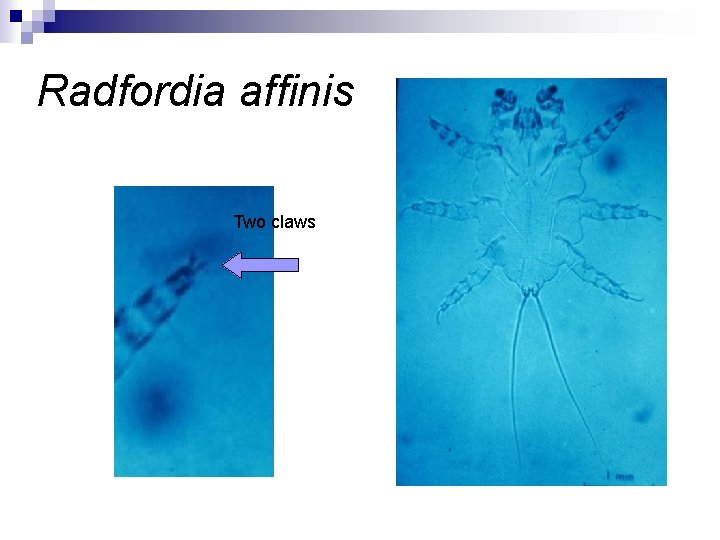
Radfordia affinis Two claws
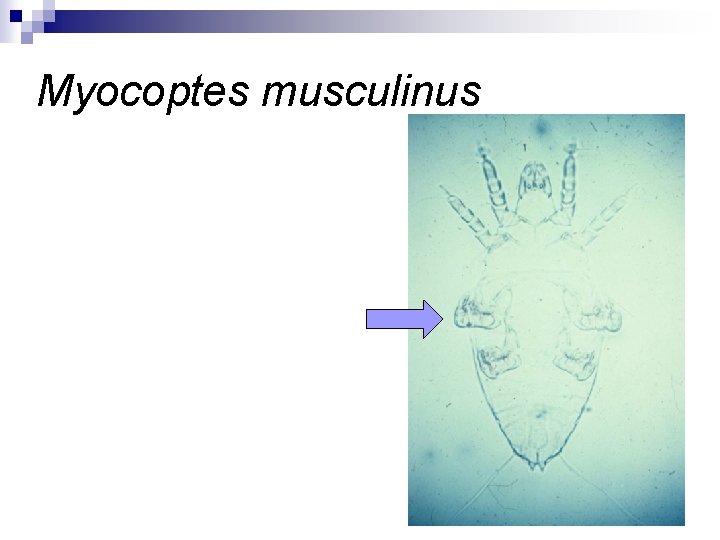
Myocoptes musculinus
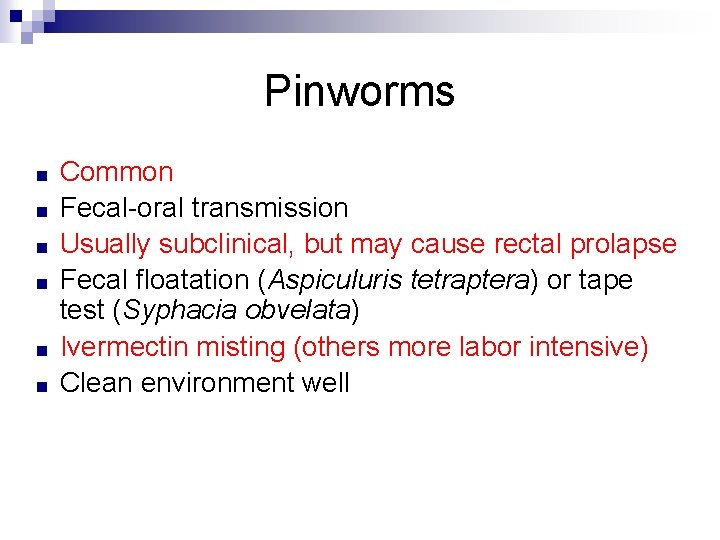
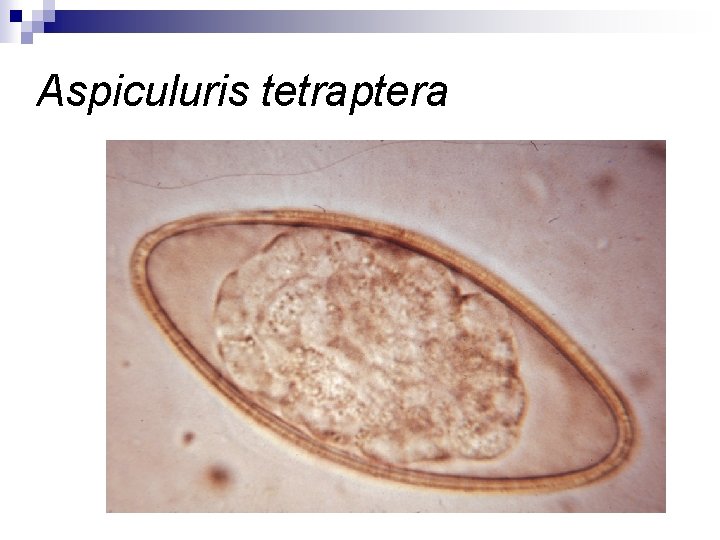
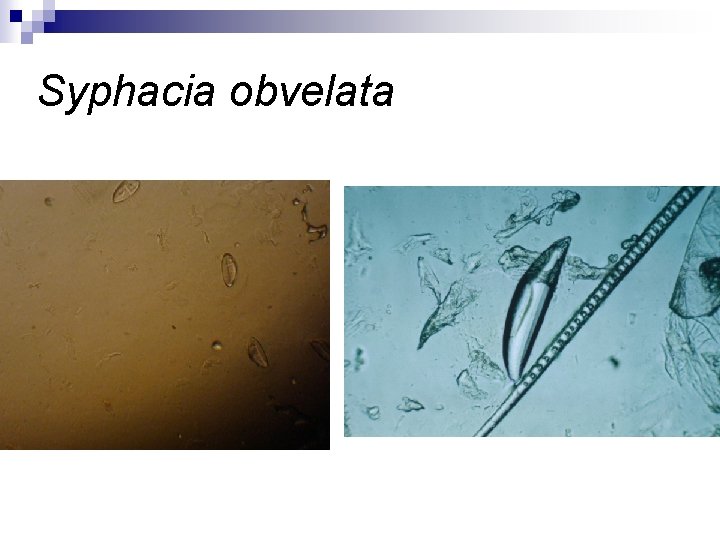
Pinworms ■ ■ ■ Common Fecal oral transmission Usually subclinical, but may cause rectal prolapse Fecal floatation (Aspiculuris tetraptera) or tape test (Syphacia obvelata) Ivermectin misting (others more labor intensive) Clean environment well
Aspiculuris tetraptera
Syphacia obvelata
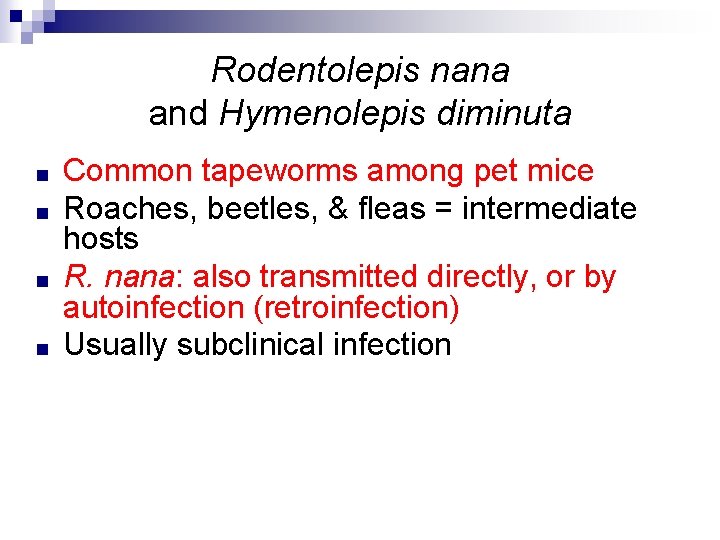
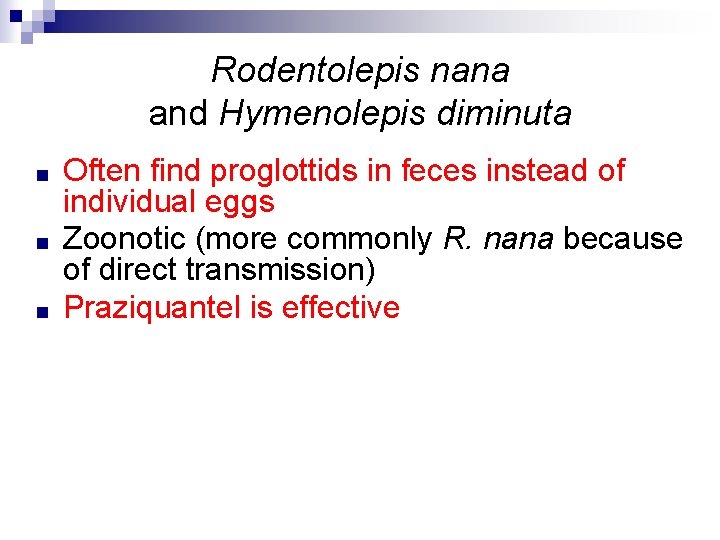
Rodentolepis nana and Hymenolepis diminuta ■ ■ Common tapeworms among pet mice Roaches, beetles, & fleas = intermediate hosts R. nana: also transmitted directly, or by autoinfection (retroinfection) Usually subclinical infection
Rodentolepis nana and Hymenolepis diminuta ■ ■ ■ Often find proglottids in feces instead of individual eggs Zoonotic (more commonly R. nana because of direct transmission) Praziquantel is effective
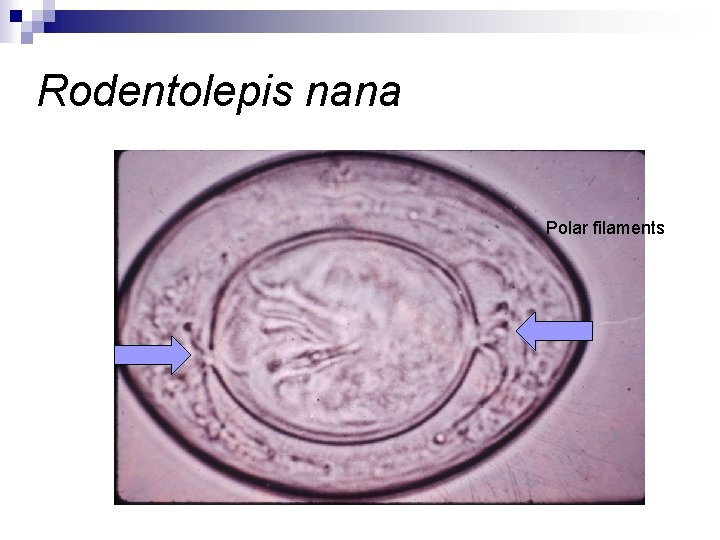
Rodentolepis nana Polar filaments
Tumors
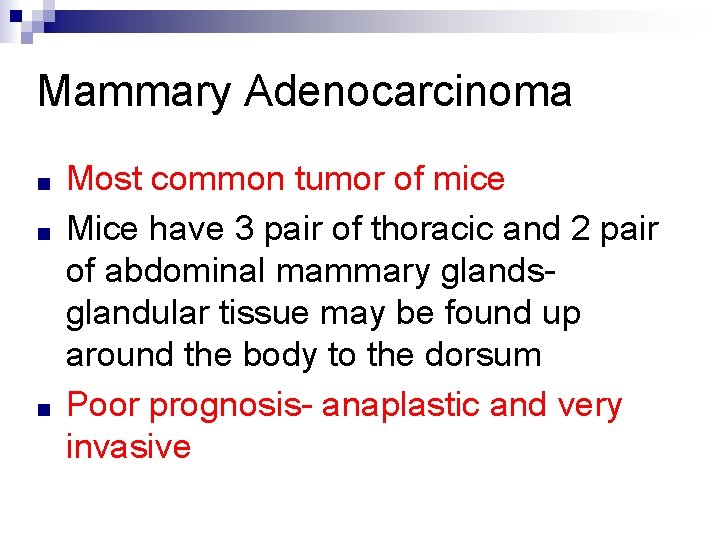
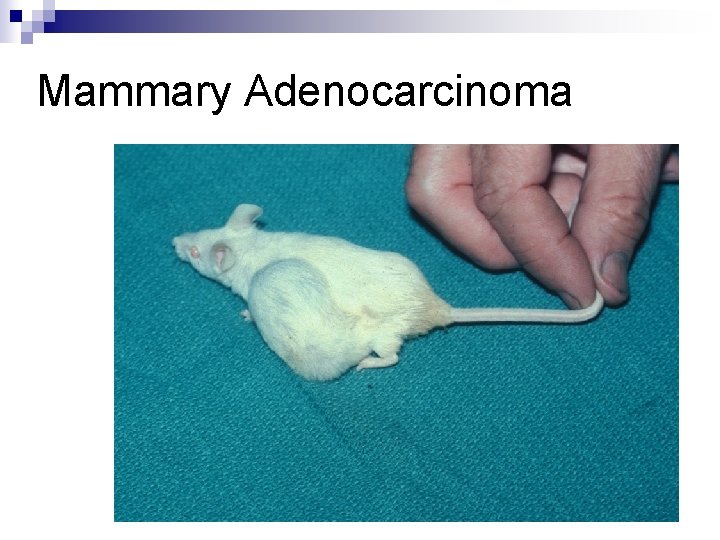
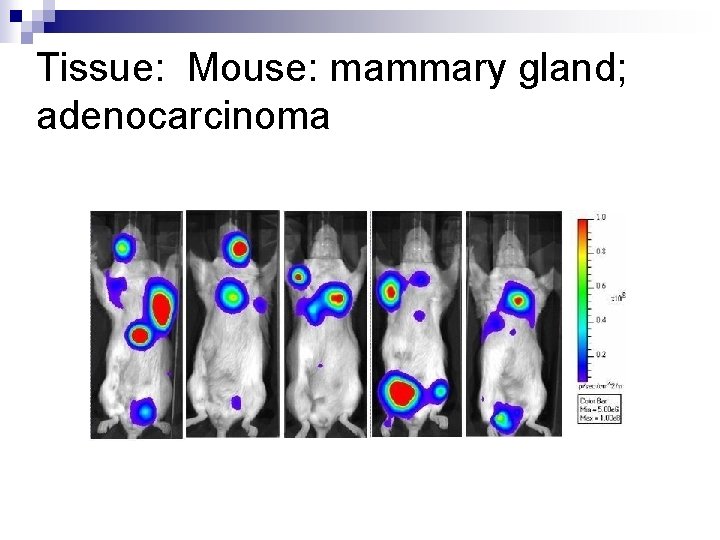
Mammary Adenocarcinoma ■ ■ ■ Most common tumor of mice Mice have 3 pair of thoracic and 2 pair of abdominal mammary glands glandular tissue may be found up around the body to the dorsum Poor prognosis anaplastic and very invasive
Mammary Adenocarcinoma
Tissue: Mouse: mammary gland; adenocarcinoma
Miscellaneous Diseases
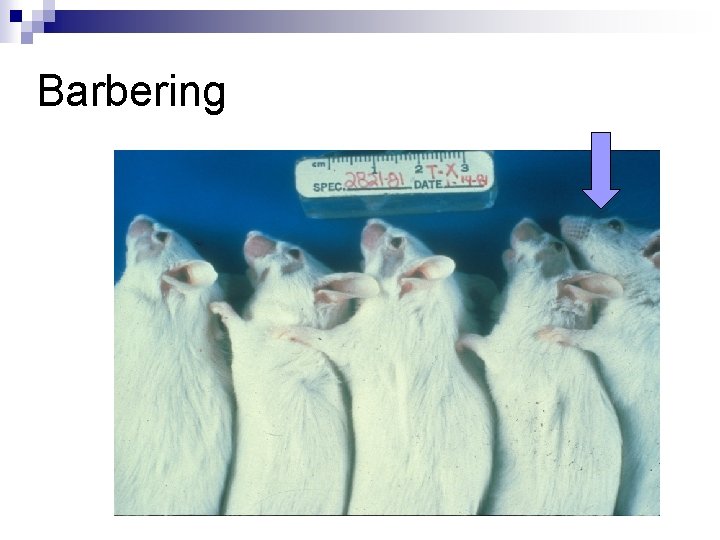
Barbering ■ ■ ■ Animal model of trichotillomania MOBS (“Move Over Buddy” Syndrome) Alopecia (R. O. ectoparasites, dermatophytes, endocrinopathy) Well demarcated area of alopecia without dermatitis exposed skin appears normal Commonly involves hair over the nasal and orbital regions, or over the dorsal cervical area Separate out barber
Barbering
Bite Wounds ■ ■ ■ Males fight and abuse females Bites often found on face, back, and genital area May abscess Nolvasan (+ lance abscesses) Separate offenders Provide enrichment
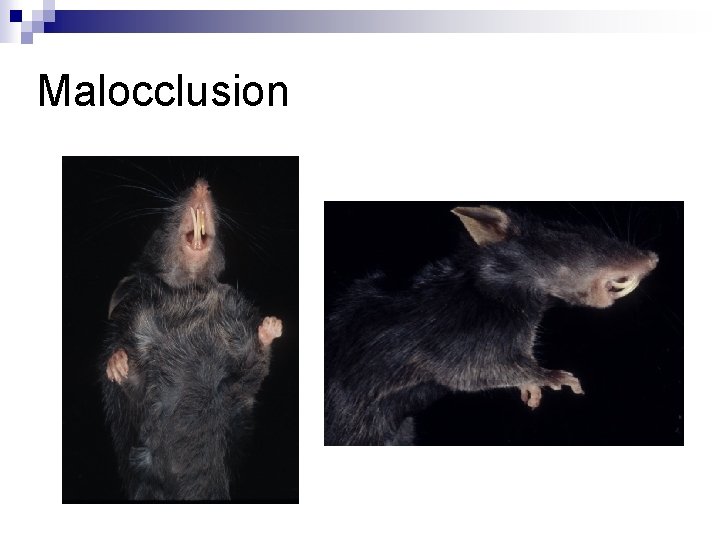
Malocclusion ■ ■ ■ Genetic predisposition (autosomal recessive) Incisors hypsodont Inanition, starvation Trim teeth with nail clippers (no “scissor” action) Do not breed these mice
Malocclusion