
Skin Skin is the largest organ Many functions




- Slides: 34
Skin
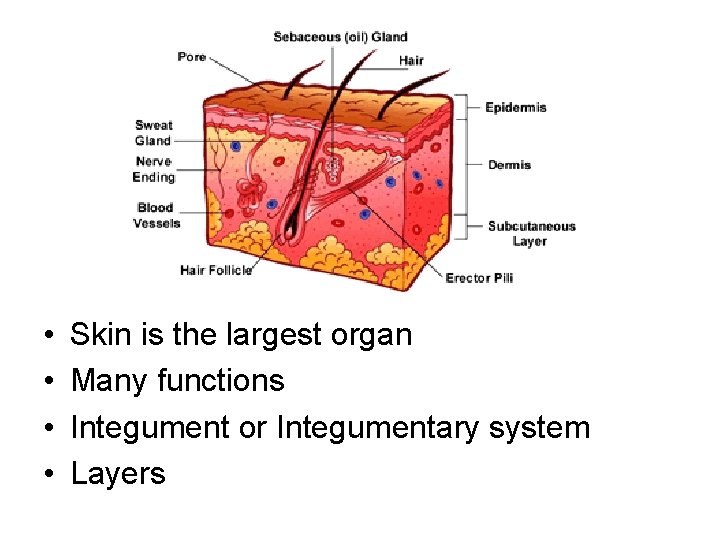
• • Skin is the largest organ Many functions Integument or Integumentary system Layers
Vocabulary • Derma = Skin – Dermatology • Study of skin – Dermatitis • Inflammation of skin • Epi = upon – Epidermis • Top layer of skin • Vascular= pertaining to blood or lots of blood supply
Function of Skin • Cover- protects from germs, dehydration, injury. First line of defense • Regulates body temperature • Manufactures vitamin D • Site of many nerve endings
• Temporary storage of glucose, fat, water and salt. • Protects from UV radiation • Can absorb chemical substances – Nitroglycerin patch – Ointment for rashes
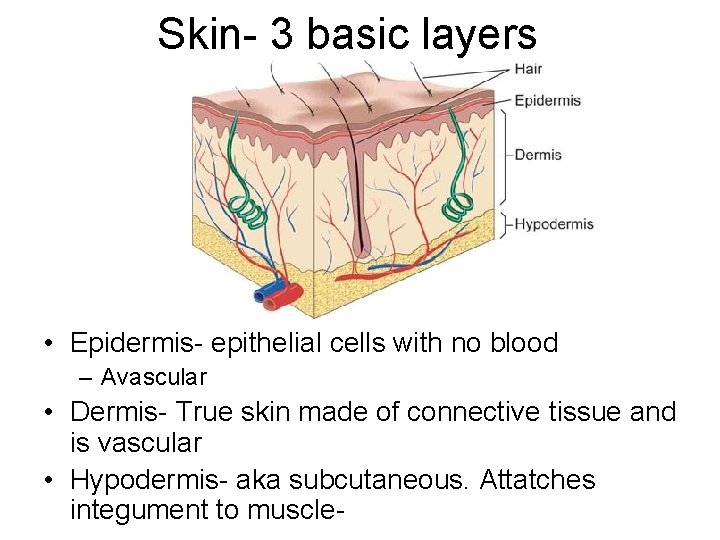
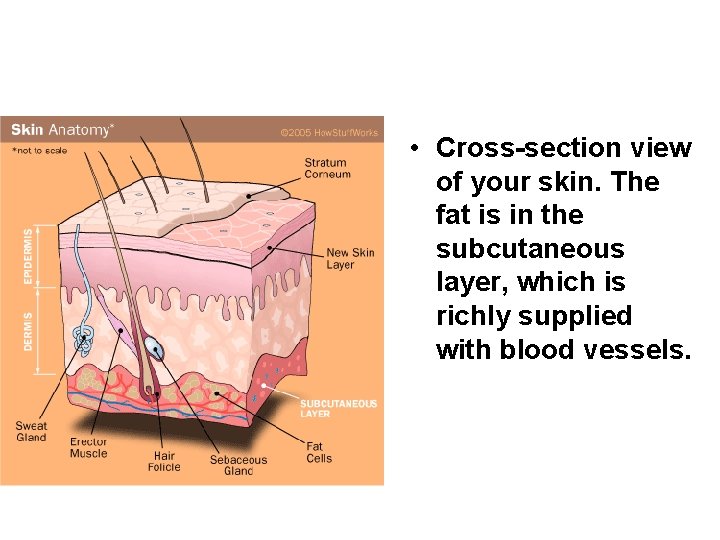
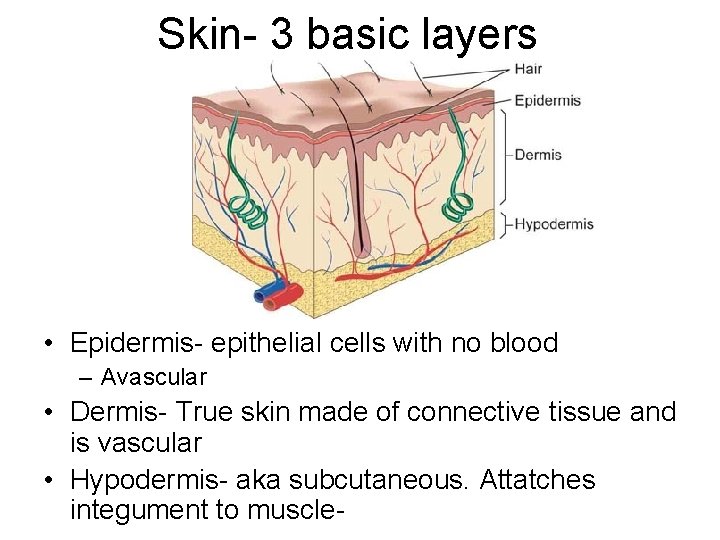
Skin- 3 basic layers • Epidermis- epithelial cells with no blood – Avascular • Dermis- True skin made of connective tissue and is vascular • Hypodermis- aka subcutaneous. Attatches integument to muscle-
• National Geographic site
One Square Centimeter of Skin Contains • • 3, 000 cells 10 hairs. 1 yard of blood vessels. 4 yards of nerves. 700 sweat glands. 200 nerve endings to record pain. 3000 sensory cells at the end of nerve fibers
Epidermis- the layer on top • Even the epidermis has layers! – Very top layer is dead skin cells. Called Stratum Corneum – Protects you • Slightly acidic • Every minute of the day we lose about 30, 000 to 40, 000 dead skin cells off the surface of our skin. – Very bottom layer of the epidermis produces more cells by undergoing continuous cell division. Called Stratum Germinativum
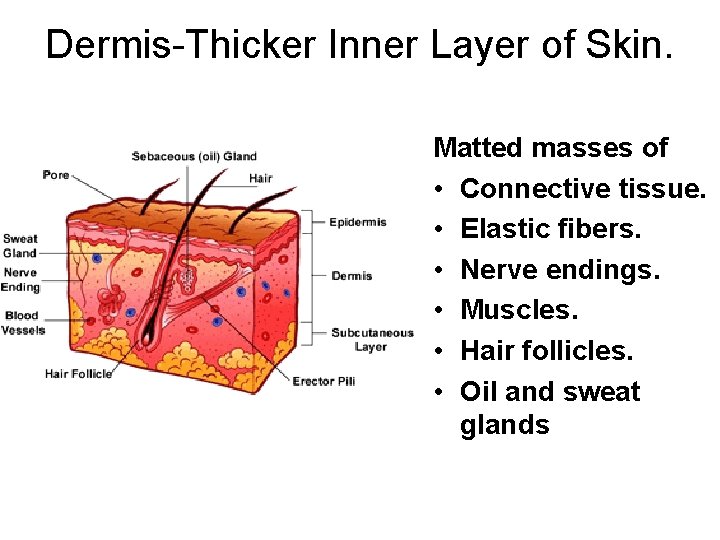
Dermis-Thicker Inner Layer of Skin. Matted masses of • Connective tissue. • Elastic fibers. • Nerve endings. • Muscles. • Hair follicles. • Oil and sweat glands
• Dermis contains lots of sensory cells – Heat, cold, pain and pressure • Blood vessels regulate body temperature – Expand or contract • Sebaceous glands – Lubricated, protected, waterproof • Sweat glands – Cools, protects. • Collagen and elastin • Immune cells
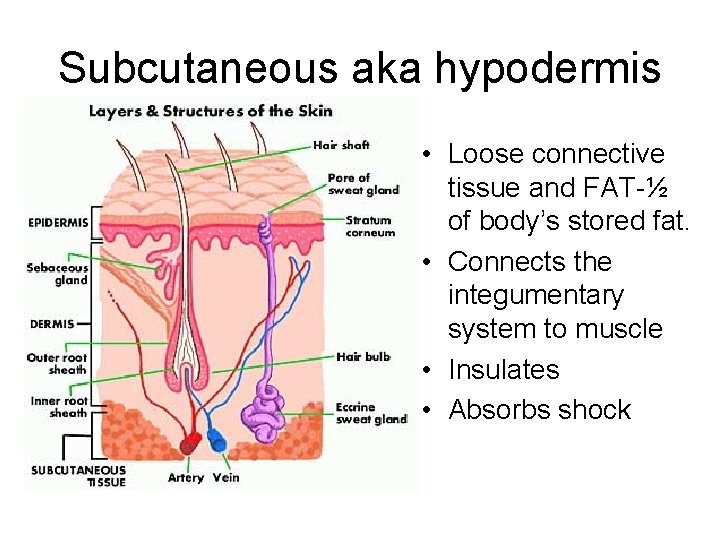
Subcutaneous aka hypodermis • Loose connective tissue and FAT-½ of body’s stored fat. • Connects the integumentary system to muscle • Insulates • Absorbs shock
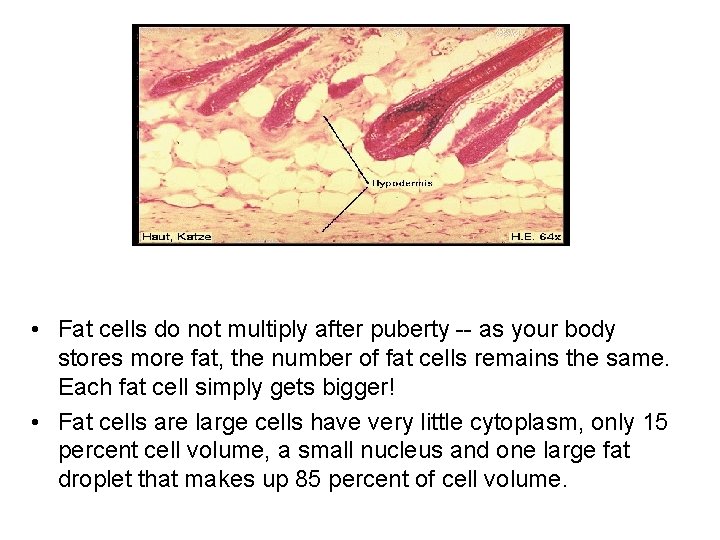
• Fat cells do not multiply after puberty -- as your body stores more fat, the number of fat cells remains the same. Each fat cell simply gets bigger! • Fat cells are large cells have very little cytoplasm, only 15 percent cell volume, a small nucleus and one large fat droplet that makes up 85 percent of cell volume.
• Cross-section view of your skin. The fat is in the subcutaneous layer, which is richly supplied with blood vessels.
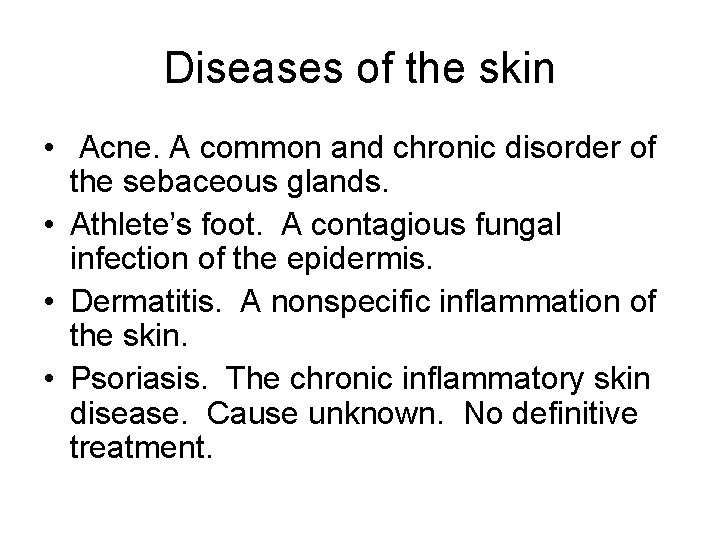
Diseases of the skin • Acne. A common and chronic disorder of the sebaceous glands. • Athlete’s foot. A contagious fungal infection of the epidermis. • Dermatitis. A nonspecific inflammation of the skin. • Psoriasis. The chronic inflammatory skin disease. Cause unknown. No definitive treatment.
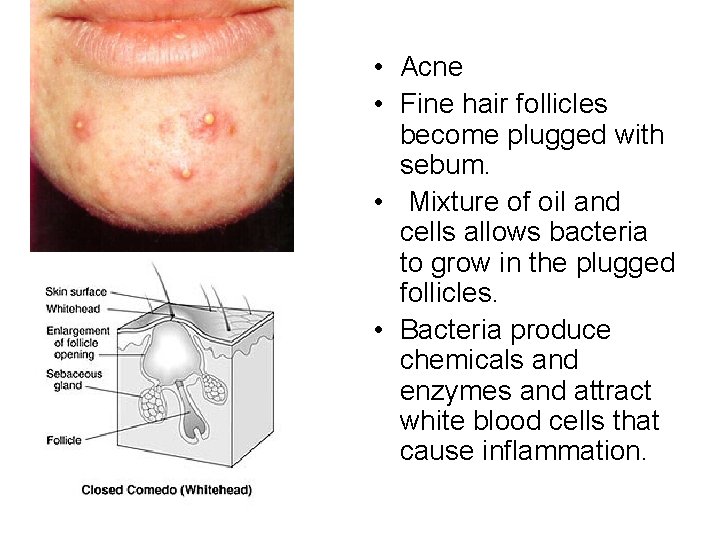
• Acne • Fine hair follicles become plugged with sebum. • Mixture of oil and cells allows bacteria to grow in the plugged follicles. • Bacteria produce chemicals and enzymes and attract white blood cells that cause inflammation.
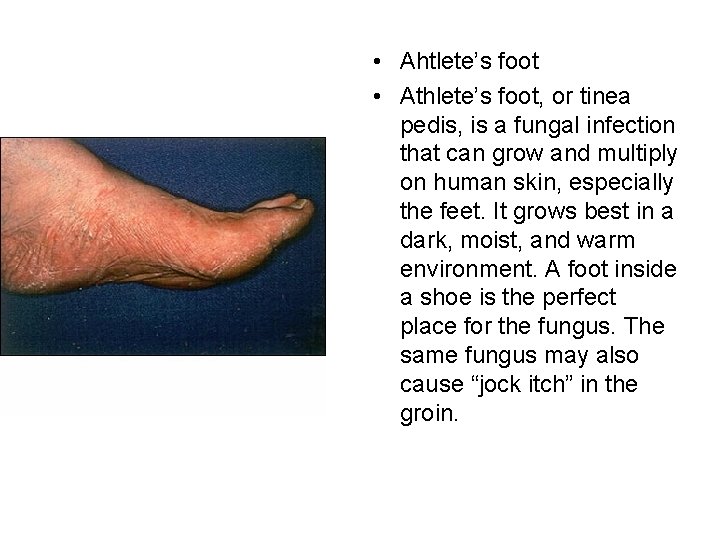
• Ahtlete’s foot • Athlete’s foot, or tinea pedis, is a fungal infection that can grow and multiply on human skin, especially the feet. It grows best in a dark, moist, and warm environment. A foot inside a shoe is the perfect place for the fungus. The same fungus may also cause “jock itch” in the groin.
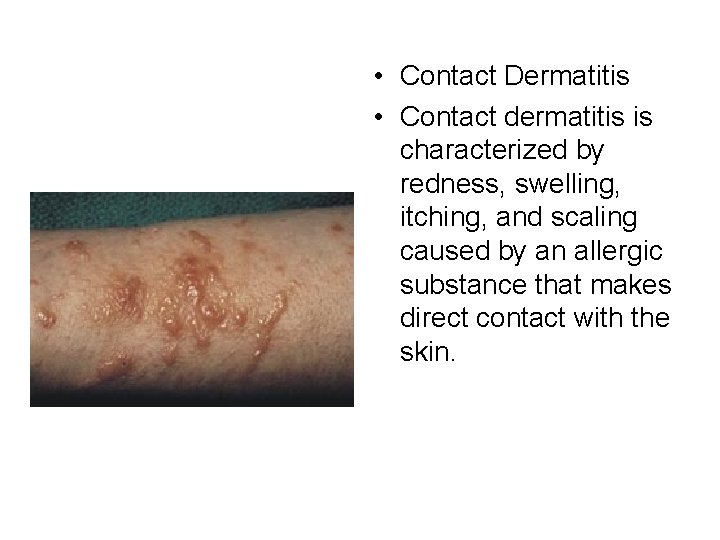
• Contact Dermatitis • Contact dermatitis is characterized by redness, swelling, itching, and scaling caused by an allergic substance that makes direct contact with the skin.
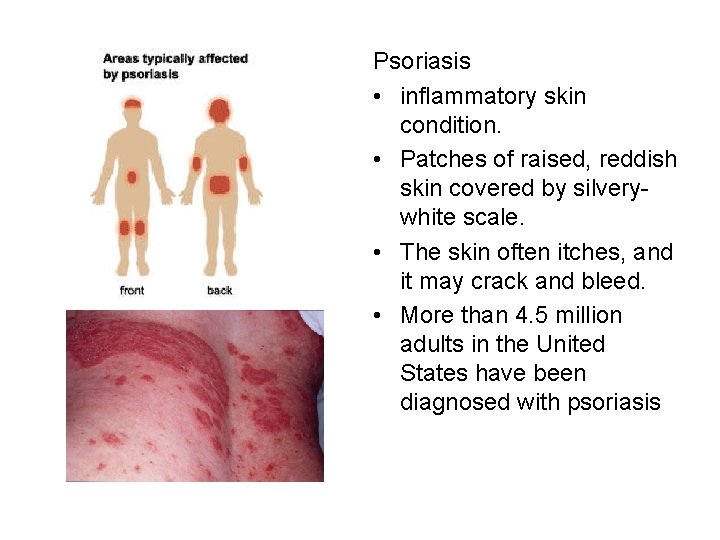
Psoriasis • inflammatory skin condition. • Patches of raised, reddish skin covered by silverywhite scale. • The skin often itches, and it may crack and bleed. • More than 4. 5 million adults in the United States have been diagnosed with psoriasis
Skin cancer • Most common type of cancer. • Associated with exposure to ultraviolet light. • Other factors. – Hereditary – Chemical exposure
• Basal cell carcinoma. Most common, least dangerous. Starts in the epidermis and extends to the dermis or subcutaneous layer. 99% recovery. • Squamous cell carcinoma. Starts in the epidermis. Occurs most frequently on scalp and lower lip. Grows quickly, can spread to lymph nodes. Chances of recovery good if caught early.
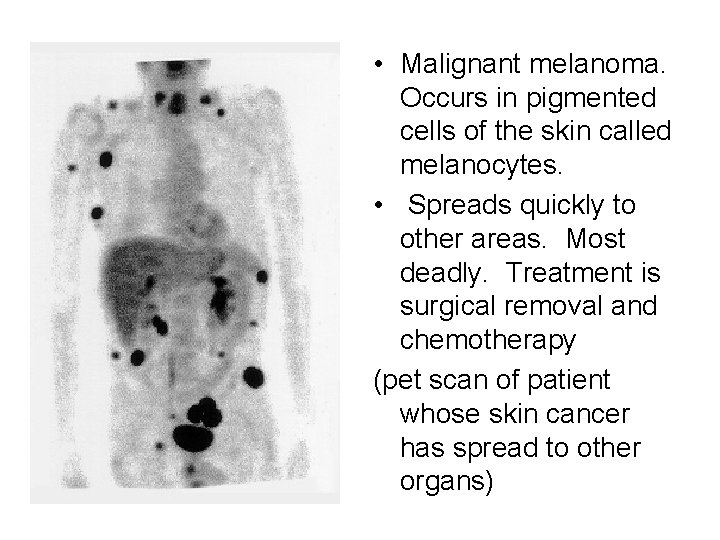
• Malignant melanoma. Occurs in pigmented cells of the skin called melanocytes. • Spreads quickly to other areas. Most deadly. Treatment is surgical removal and chemotherapy (pet scan of patient whose skin cancer has spread to other organs)
• National Geographic
Skin- 3 basic layers • Epidermis- epithelial cells with no blood – Avascular • Dermis- True skin made of connective tissue and is vascular • Hypodermis- aka subcutaneous. Attatches integument to muscle-
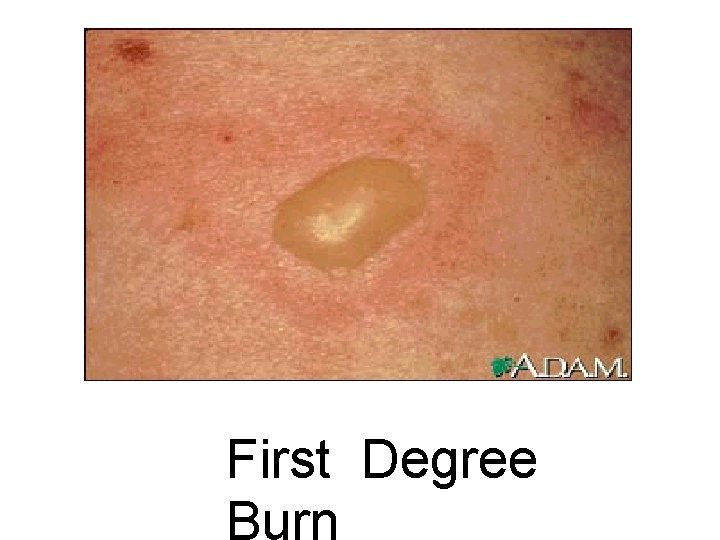
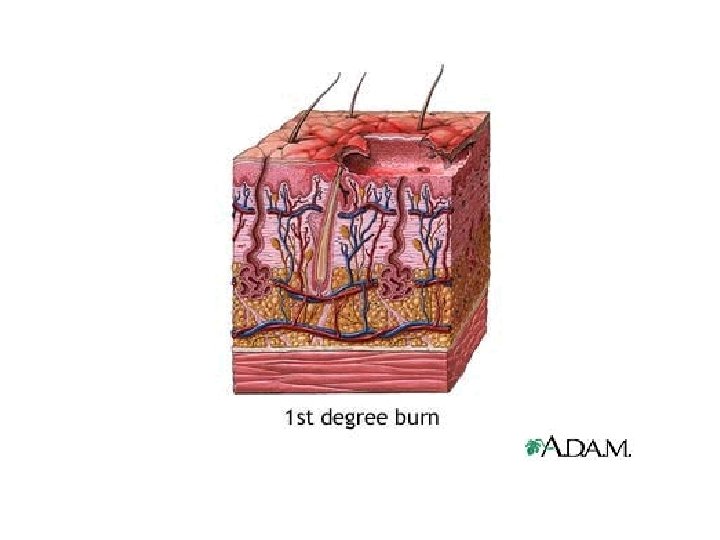
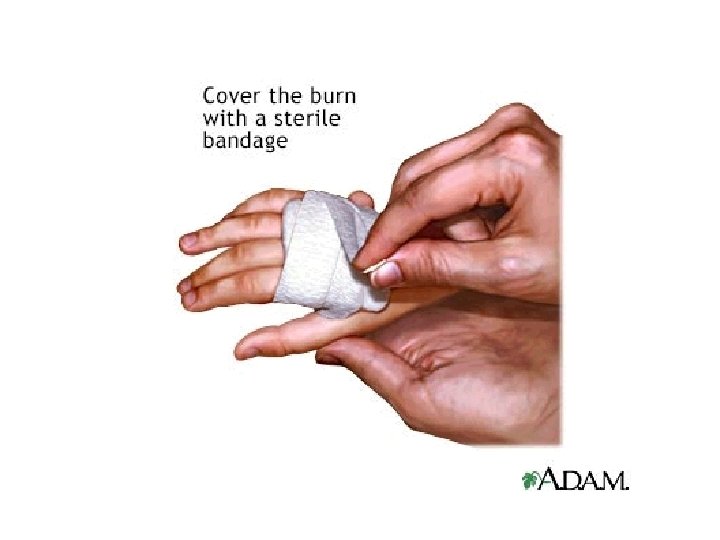
First Degree Burn
http: //www. surgical-tutor. org. uk/defaulthome. htm? core/trauma/burns. htm~right http: //www. emedicine. com/EMERG/topic 72. htm http: //www. surviveoutdoors. com/emergency/burn s. asp
Professions • Dermatologist • Esthetician • RN or LVN in a burn unit • Make-up artist • Cytologist • Histotechnitian
Any questions? Anything you would like to know that I didn’t cover?