
SKIN MICROBIOME SKIN MICROBIOME The establishment Bre ast
SKIN MICROBIOME

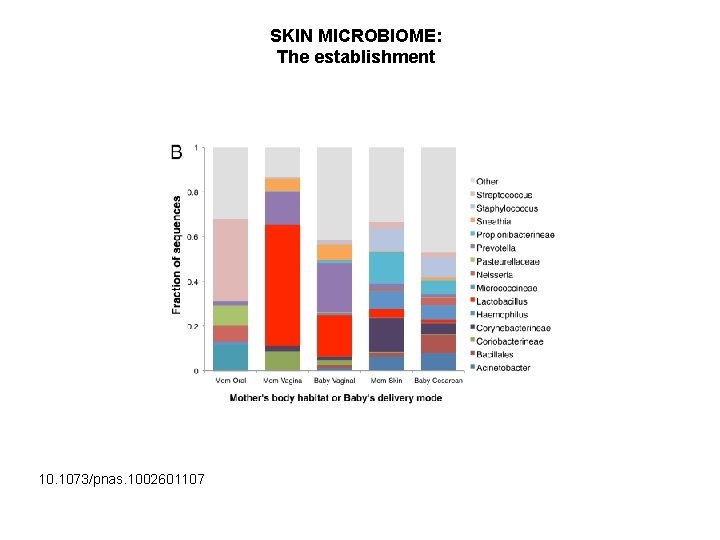
SKIN MICROBIOME: The establishment Bre ast Mode of delivery fee din g Env iron me nt 10. 1073/pnas. 1002601107
SKIN MICROBIOME: The establishment 10. 1073/pnas. 1002601107

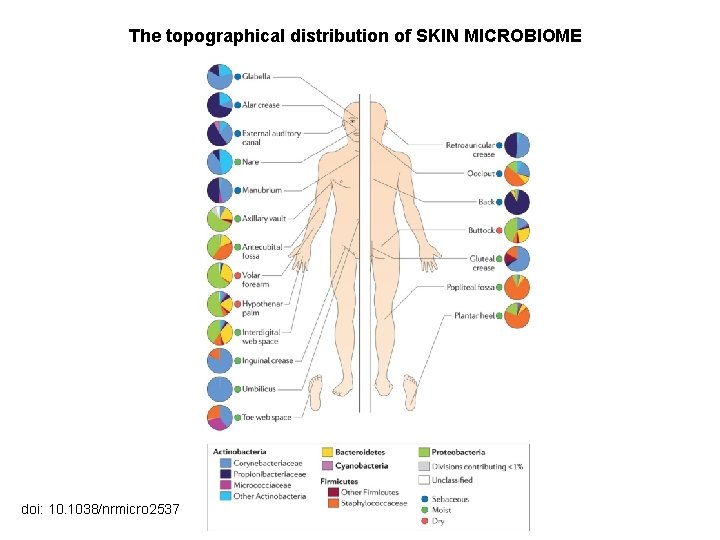
Healthy SKIN MICROBIOME Resident Microorganisms (Core microbiome) + Transient microorgamisms (Tourists) = skin microbiome The most abundant phyla: Actinobacteria, Firmicutes, Proteobacteria, Bacteroidetes The three most common bacterial genera: Corynebacteria, Propionibacteria, Staphylococci Yeast: Malassezia spp. Parasitic arthropod: Demodex spp. doi: 10. 1038/nrmicro 2537
The topographical distribution of SKIN MICROBIOME doi: 10. 1038/nrmicro 2537
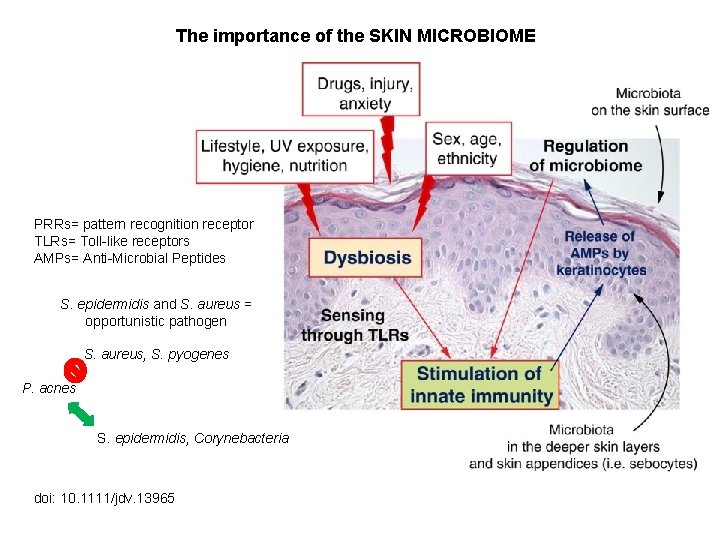
The importance of the SKIN MICROBIOME PRRs= pattern recognition receptor TLRs= Toll-like receptors AMPs= Anti-Microbial Peptides S. epidermidis and S. aureus = opportunistic pathogen S. aureus, S. pyogenes P. acnes S. epidermidis, Corynebacteria doi: 10. 1111/jdv. 13965
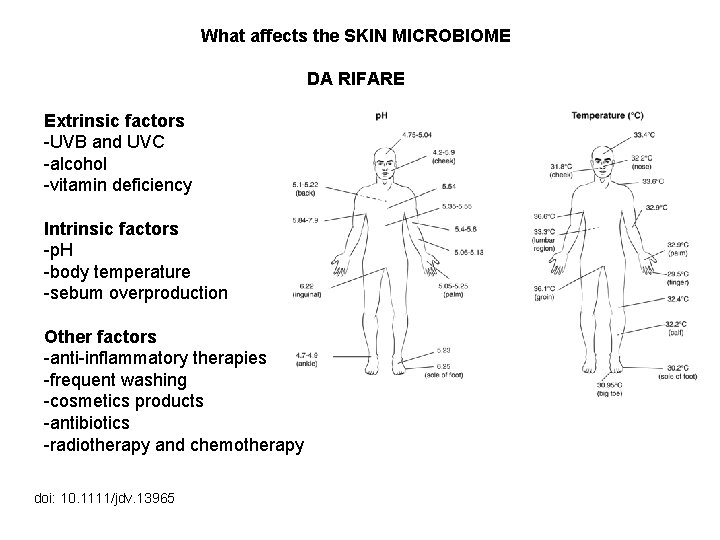
What affects the SKIN MICROBIOME DA RIFARE Extrinsic factors -UVB and UVC -alcohol -vitamin deficiency Intrinsic factors -p. H -body temperature -sebum overproduction Other factors -anti-inflammatory therapies -frequent washing -cosmetics products -antibiotics -radiotherapy and chemotherapy doi: 10. 1111/jdv. 13965

Dysbiotic SKIN MICROBIOME Skin disorders with a correlation to microbiota Seborrheic dermatitis Malassezia spp. doi: 10. 1016/j. jaad. 2003. 12. 034
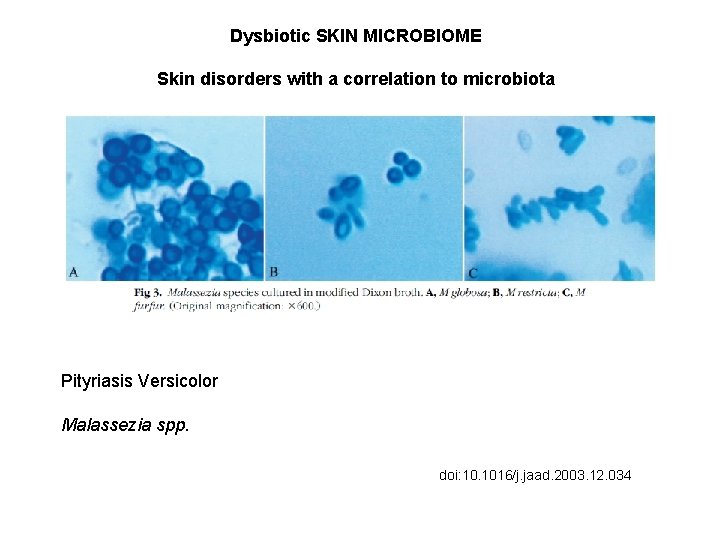
Dysbiotic SKIN MICROBIOME Skin disorders with a correlation to microbiota Pityriasis Versicolor Malassezia spp. doi: 10. 1016/j. jaad. 2003. 12. 034
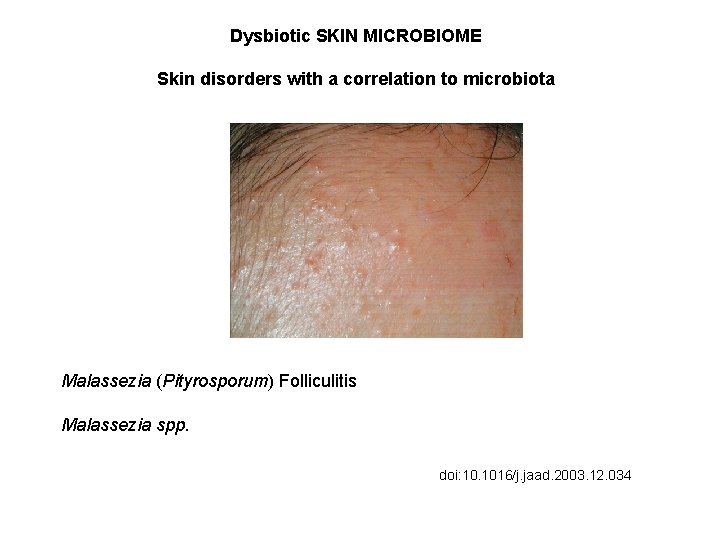
Dysbiotic SKIN MICROBIOME Skin disorders with a correlation to microbiota Malassezia (Pityrosporum) Folliculitis Malassezia spp. doi: 10. 1016/j. jaad. 2003. 12. 034
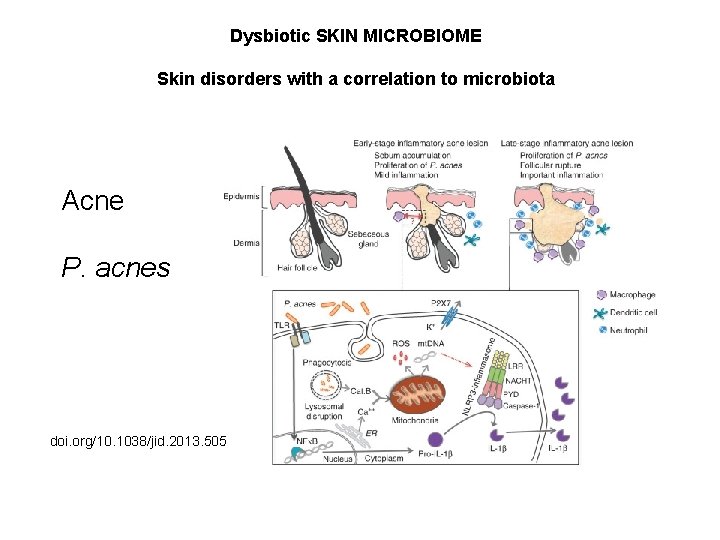
Dysbiotic SKIN MICROBIOME Skin disorders with a correlation to microbiota Acne P. acnes doi. org/10. 1038/jid. 2013. 505
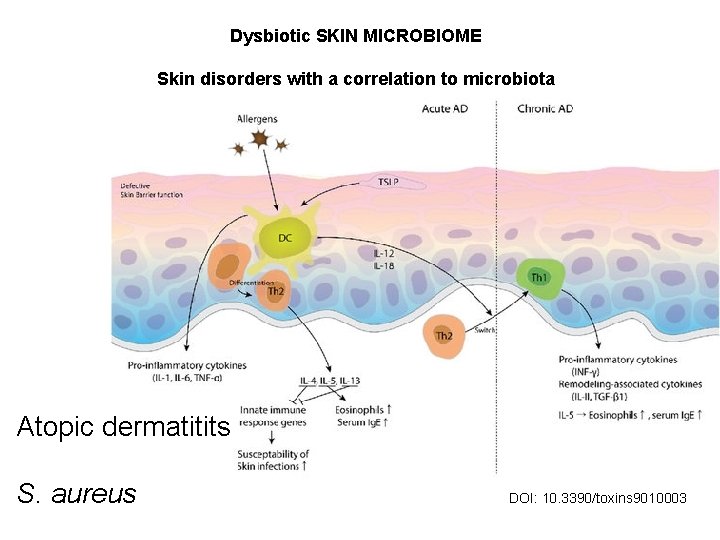
Dysbiotic SKIN MICROBIOME Skin disorders with a correlation to microbiota Atopic dermatitits S. aureus DOI: 10. 3390/toxins 9010003
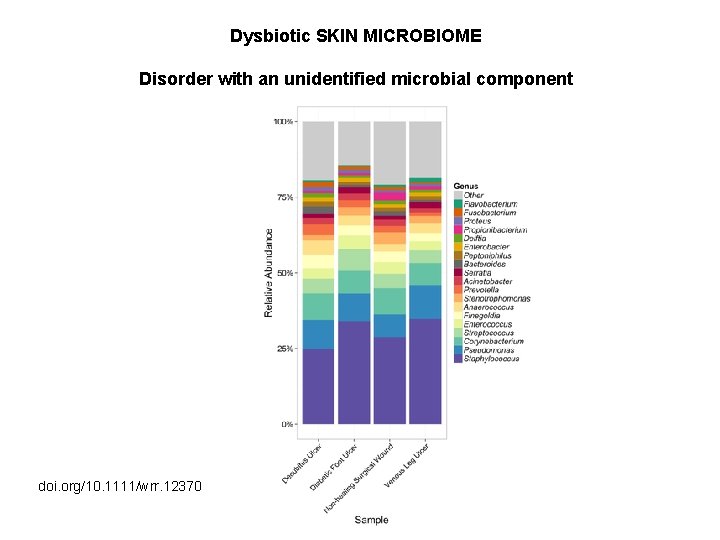
Dysbiotic SKIN MICROBIOME Disorder with an unidentified microbial component doi. org/10. 1111/wrr. 12370
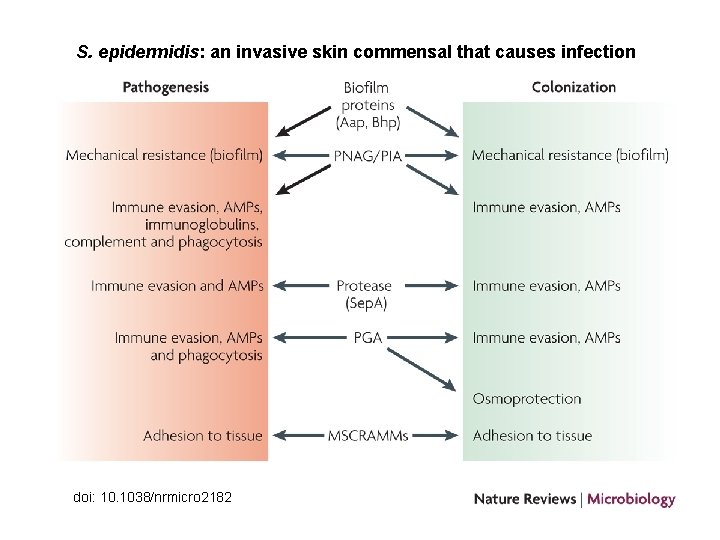
S. epidermidis: an invasive skin commensal that causes infection doi: 10. 1038/nrmicro 2182
Future perspectives • Gut-Skin axis • Probiotics • Emollients and moisturizers enriched with bacterial lysates • and much more…
- Slides: 15