
Skin Glands Skin Gland Types Types Sebaceous oil

Skin Glands
Skin Gland Types • Types: Sebaceous (oil) glands • Sudoriferous (sweat) glands • Ceruminous (ear wax) glands • Mammary (milk) glands (specialized subdoriferous glands)
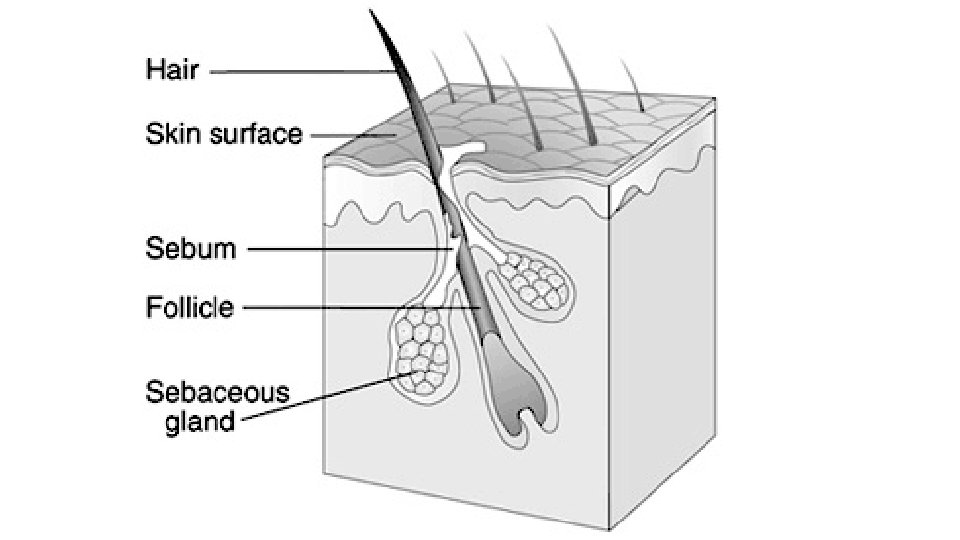
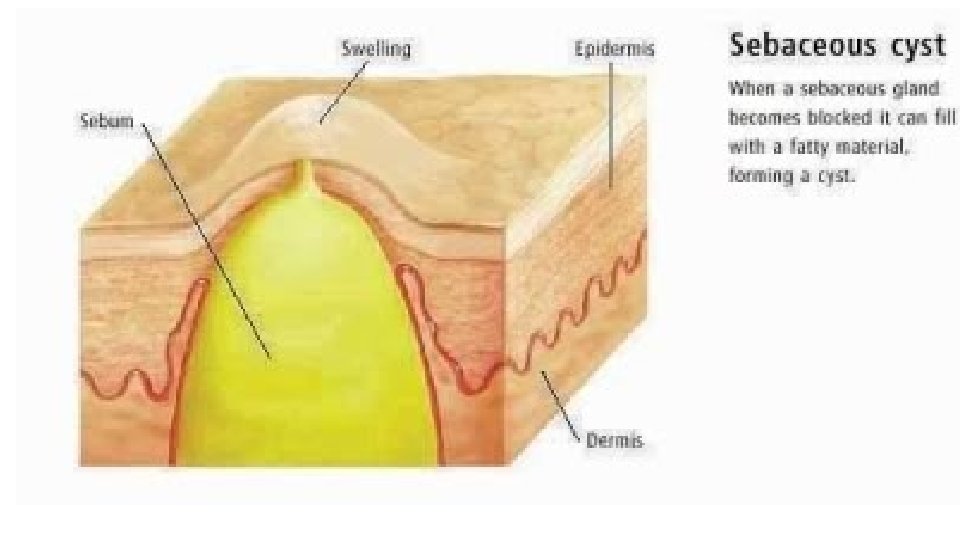
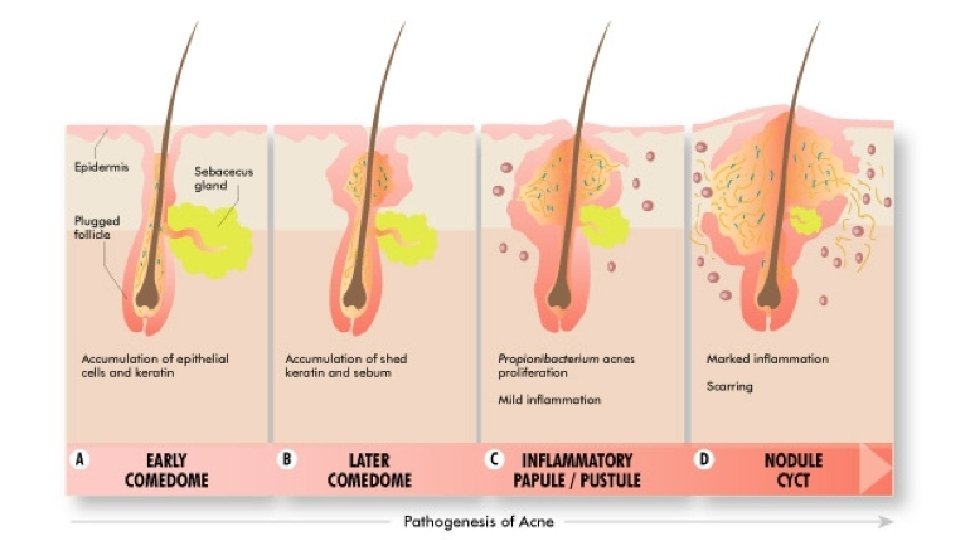
Sebaceous glands: • -branched acinar glands • -usually connected to hair follicles • -secreting portion lies in dermis and generally opens into the neck of the hair follicle • -Open directly to onto skin surface @ lips, glans penis, labia minora and tarsal glands of • eyelids
…continued • -Absent in palms and soles • -Largest in skin of breasts, face, neck and upper chest • -Smallest in most areas of trunk and limbs • -Secrete oily substances called SEBUM; this is a mixture of triglycerides, cholesterol, • proteins and inorganic salts

…continued • -Sebum coats hairs to prevent excess drying and becoming brittle • -Sebum also prevents excessive evaporation of water from skin, keeps skin soft and • pliable, inhibits growth of certain bacterial types
Sudoriferous Glands (sweat glands) • -3 to 4 million of them on average. • -Cells of sweat glands release secretions via exocytosis and empty into hair follicles or directly onto skin surface via pores. • -There are 2 main types of these glands: eccrine and apocrine, this is based on location, structure and secretion type.
…continued • Eccrine (secreting outwardly): • -simple, coiled tubular glands; more common than apocrine • -Distributed throughout skin except for lip margins, nail beds of fingers and toes, glans penis, glans clitoris, labia minora and ear drums • -Most numerous in skin of forehead, palms and soles: density up to 450 per square cm, or 3000 per square inch • -Secretory portion located deep in dermis and sometimes even in upper sub-Q • -Excretory duct projects through dermis and epidermis and ends as a pore on epidermal surface
…continued • -About. 6 L eccrine sweat; consists of water, Na+ and Cl- ions, as well as other ions, urea and uric acid, ammonia, amino acid, glucose, lactic acid • -Function in regulation of body temperature and secretions of bodily wastes • -Begin functioning soon after birth
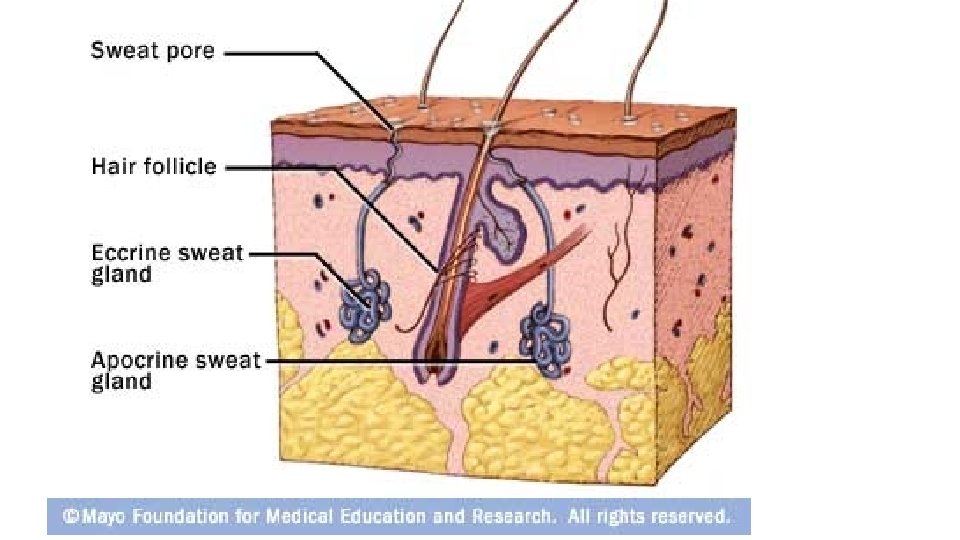
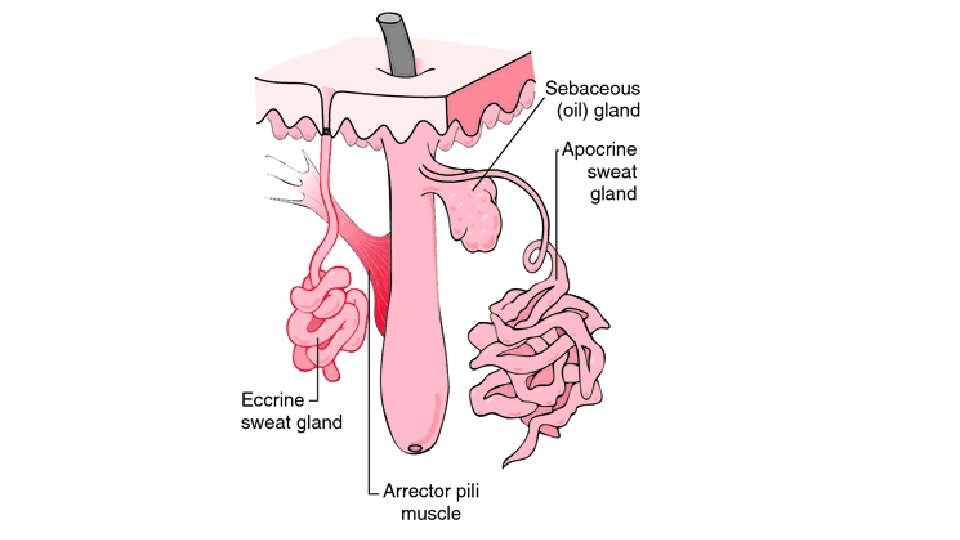
Apocrine Sweat Glands • -Simple, coiled, tubular glands • -Found mainly on skin of axilla (armpit), groin, areolae, bearded regions of face in adult males • -once thought to release secretions in apocrine manner, however it is now known that secretions are released by exocytosis (merocrine manner) • -Secretory portion of these glands located primarily in sub-Q • -Secretion is slightly more viscous than that of eccrine sweat glands
…continued • -Secretions contain same substances as eccrine plus lipids and proteins. • -Women: cells of apocrine glands enlarge about the time of ovulation and shrink during menstruation • -Apocrine glands start to function @ puberty • -Stimulated during emotional stress and sexual excitement; these secretions are often referred to as “cold sweat”
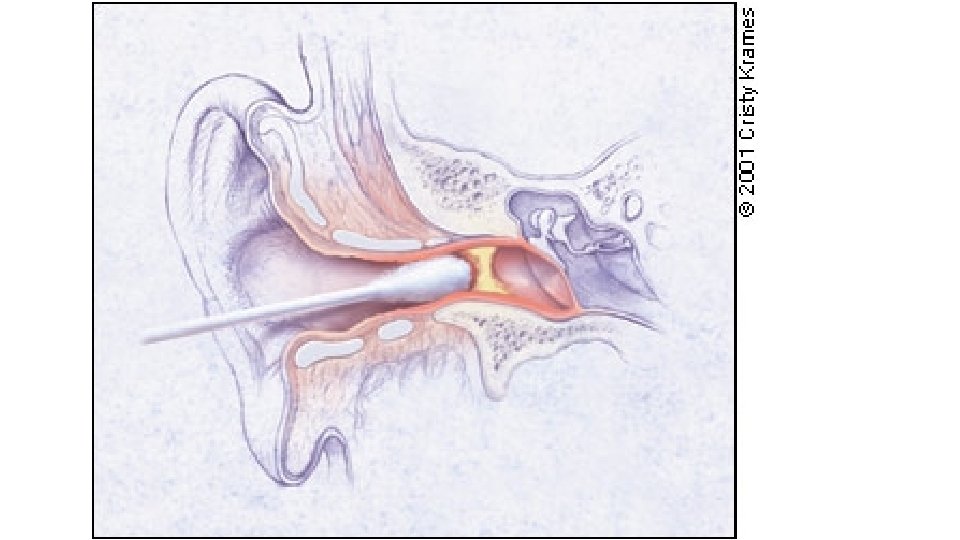
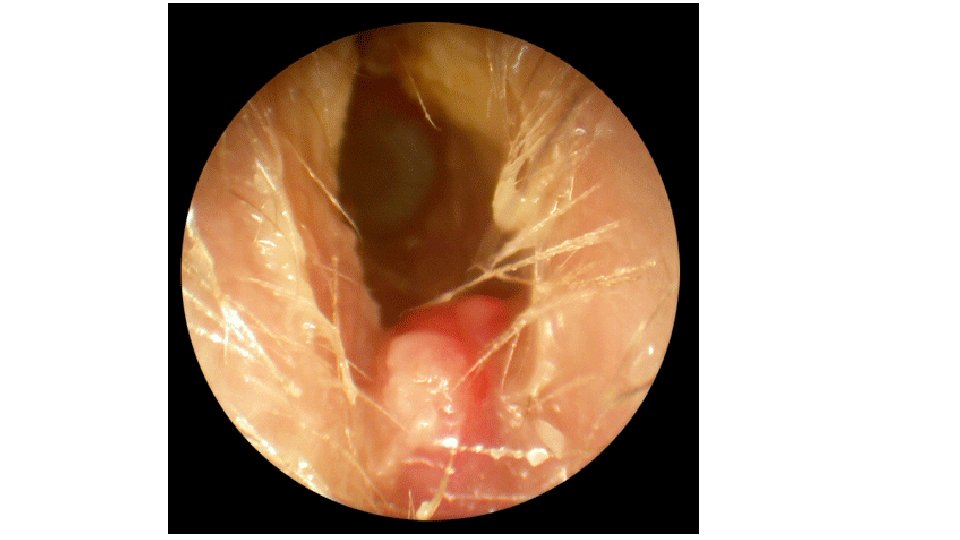
Ceruminous Glands: • -Modified sweat glands in external • -Produce a waxy secretions • -Secretory portions lie in sub-Q, deep to sebaceous glands • -Excretory ducts open either into ducts of sebacous glands or directly onto the surface of the external auditory canal (ear canal) • -The secretions of these glands in combination with those of the sebaceous glands are what is known as cerumen, or “ear wax” • -Ceremun along with hairs in ear canal provide a barrier to foreign substances for the middle and inner ear



- Slides: 23