
Skin Fungal infections Dr Hamed Alzoubi MD Ph
Skin - Fungal infections Dr Hamed Alzoubi, MD, Ph. D, JBCM Associate Prof. / Med. Microbiology
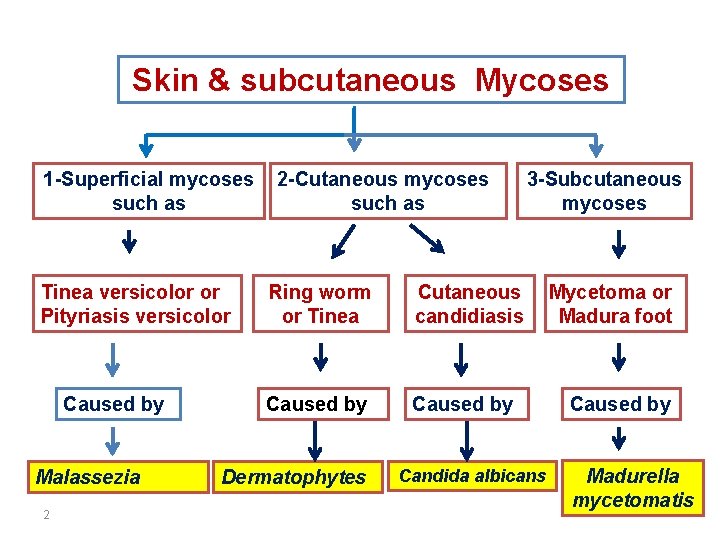
Skin & subcutaneous Mycoses 1 -Superficial mycoses such as Tinea versicolor or Pityriasis versicolor Caused by Malassezia 2 2 -Cutaneous mycoses such as Ring worm or Tinea Cutaneous candidiasis Caused by Dermatophytes 3 -Subcutaneous mycoses Candida albicans Mycetoma or Madura foot Caused by Madurella mycetomatis
Superficial Malessezia infections: • Lipophilic yeast round in shape • Normal commensals of skin • Can cause skin infections and catheter associated infections
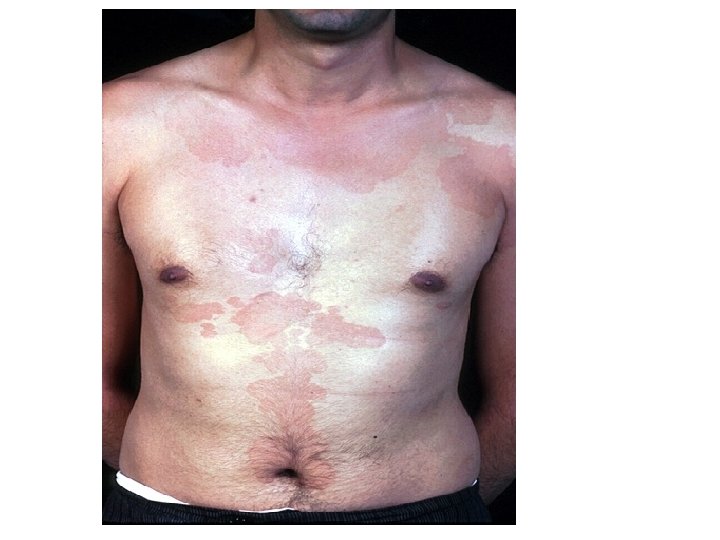
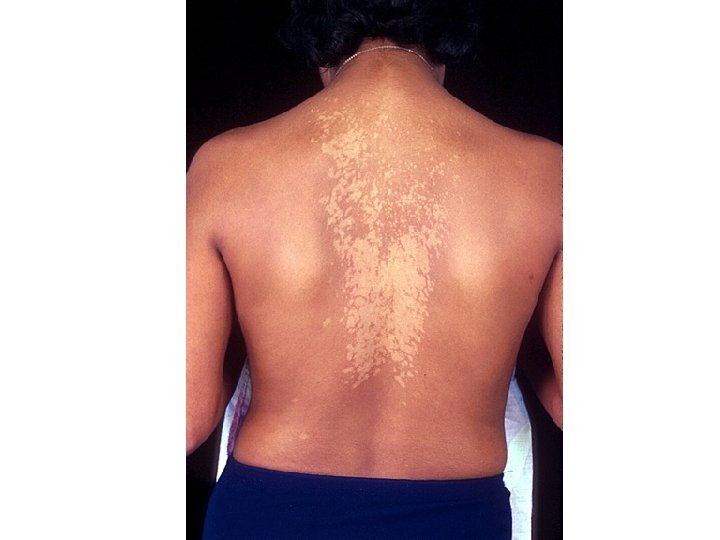
Superficial Malessezia infections Pityriasis versicolor: • Skin (stratum corneum) infection • Usually affects trunk and proximal limbs • M. furfur and M. globosa • Common in tropics and precipitated by sun exposure • Carboxylic acid produced by the yeast causes the depigmentation
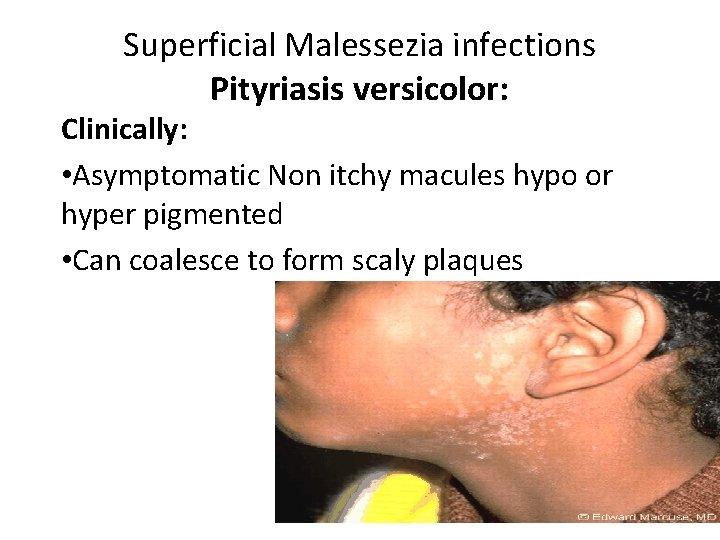
Superficial Malessezia infections Pityriasis versicolor: Clinically: • Asymptomatic Non itchy macules hypo or hyper pigmented • Can coalesce to form scaly plaques
350
Superficial Malessezia infections Pityriasis versicolor: : Diagnosis: • Skin scraping then Ink and KOH staining Ø thick septate hypha • UV light: Wood's ultra-violet light
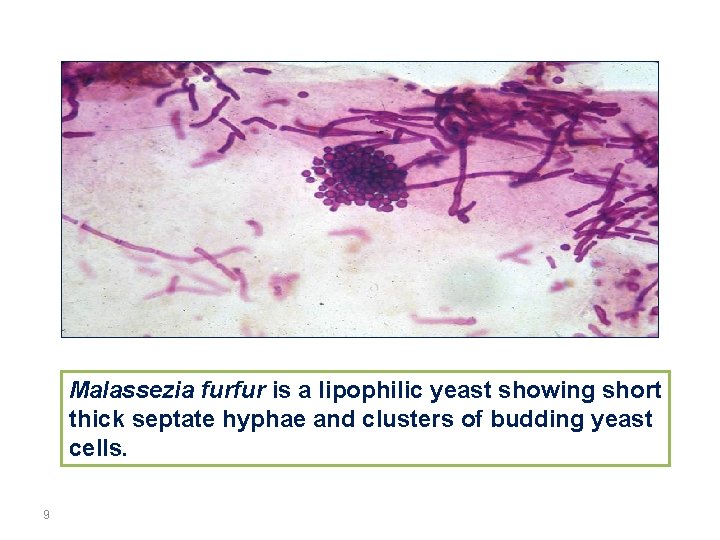
Malassezia furfur is a lipophilic yeast showing short thick septate hyphae and clusters of budding yeast cells. 9
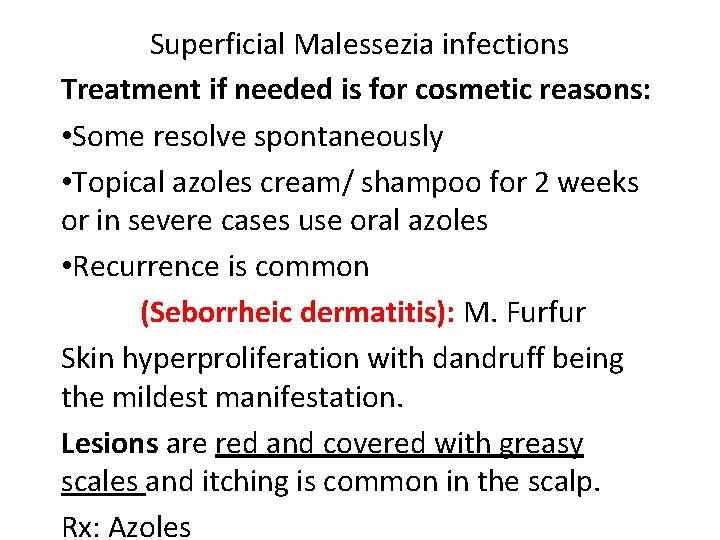
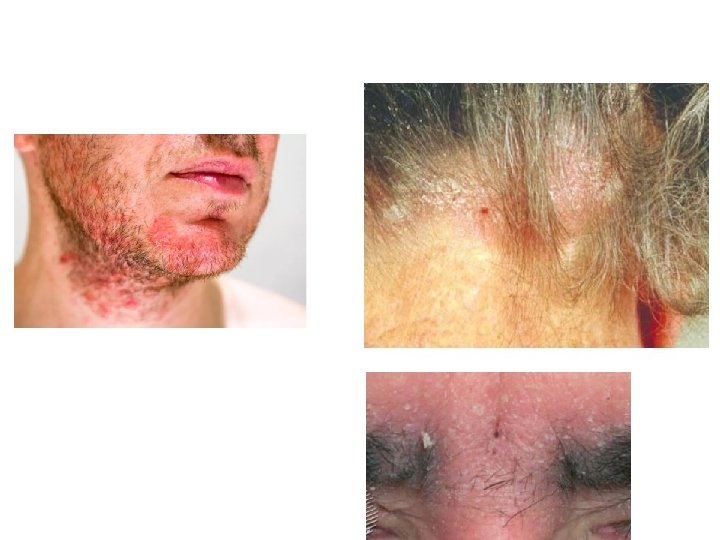
Superficial Malessezia infections Treatment if needed is for cosmetic reasons: • Some resolve spontaneously • Topical azoles cream/ shampoo for 2 weeks or in severe cases use oral azoles • Recurrence is common (Seborrheic dermatitis): M. Furfur Skin hyperproliferation with dandruff being the mildest manifestation. Lesions are red and covered with greasy scales and itching is common in the scalp. Rx: Azoles
Cutaneous Mycoses Ring worm or tinea ØCaused by dermatophytes (filamentous fungi / moulds) which include 3 genera: Microsporum, Trichophyton & Epidermophyton. ØThese fungi affect the keratinized tissues as skin, hair & nails. ØInfection do not spread to deeper tissues. 12
Source of infection 1 - Man to man by direct contact (Anthrophilic) 2 - From animals e. g. dogs and cats (Zoophilic ) 3 - From the soil (Geophilic). N. B. ØThe intact skin is an important barrier against infection. ØHeat, humidity and immunosupp. enhance the infection.
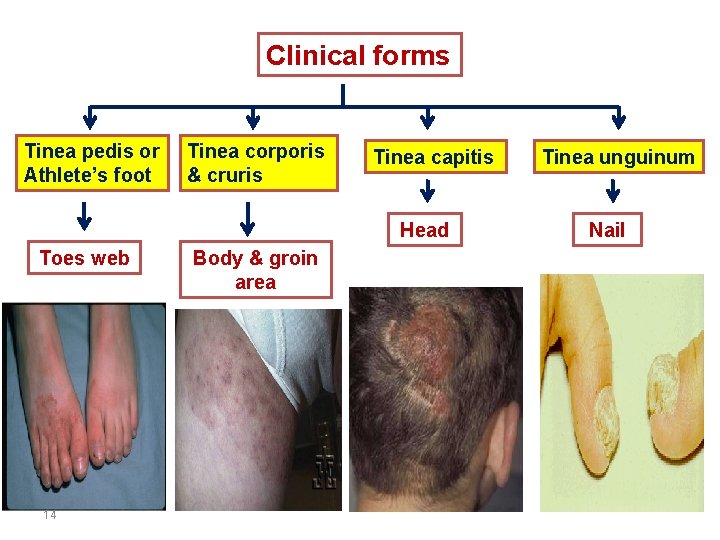
Clinical forms Tinea pedis or Athlete’s foot Tinea corporis & cruris Tinea capitis Head Toes web 14 Body & groin area Tinea unguinum Nail
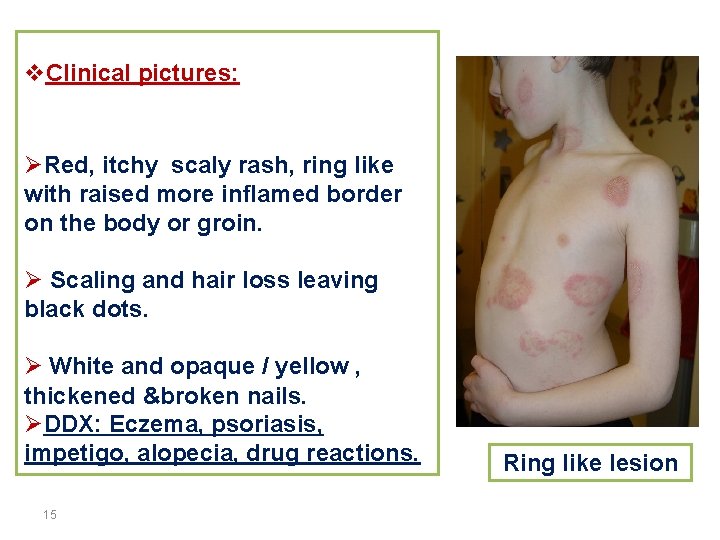
v. Clinical pictures: ØRed, itchy scaly rash, ring like with raised more inflamed border on the body or groin. Ø Scaling and hair loss leaving black dots. Ø White and opaque / yellow , thickened &broken nails. ØDDX: Eczema, psoriasis, impetigo, alopecia, drug reactions. 15 Ring like lesion
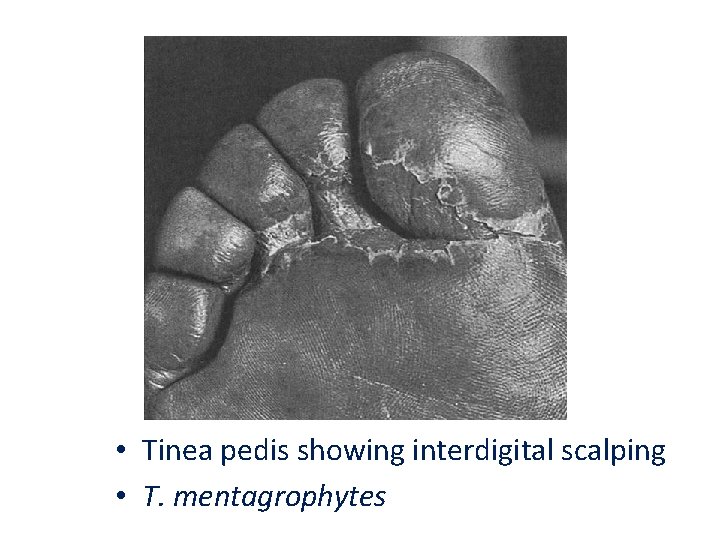
• Tinea pedis showing interdigital scalping • T. mentagrophytes
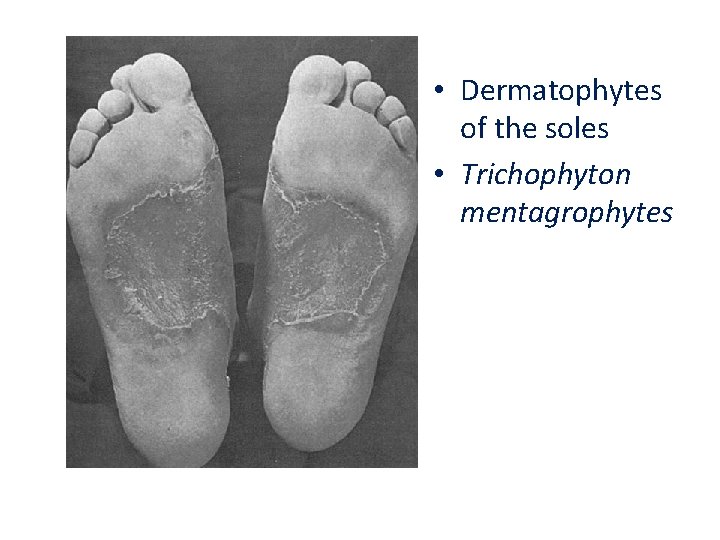
• Dermatophytes of the soles • Trichophyton mentagrophytes
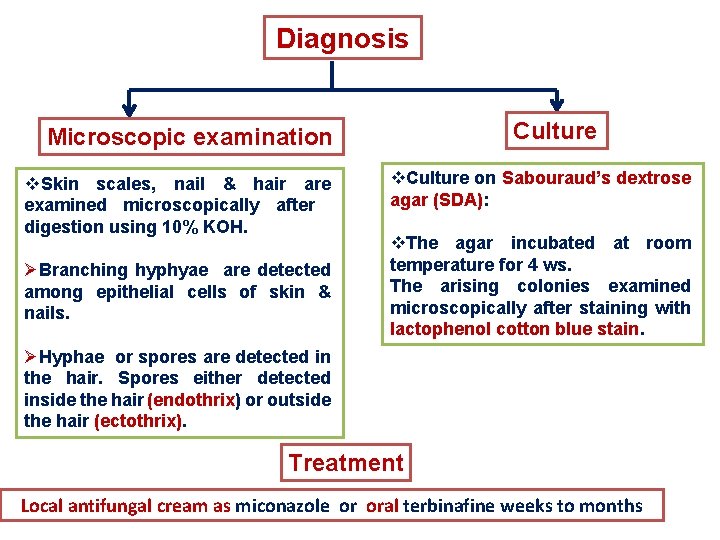
Diagnosis Culture Microscopic examination v. Skin scales, nail & hair are examined microscopically after digestion using 10% KOH. ØBranching hyphyae are detected among epithelial cells of skin & nails. v. Culture on Sabouraud’s dextrose agar (SDA): v. The agar incubated at room temperature for 4 ws. The arising colonies examined microscopically after staining with lactophenol cotton blue stain. ØHyphae or spores are detected in the hair. Spores either detected inside the hair (endothrix) or outside the hair (ectothrix). Treatment Local antifungal cream as miconazole or oral terbinafine weeks to months
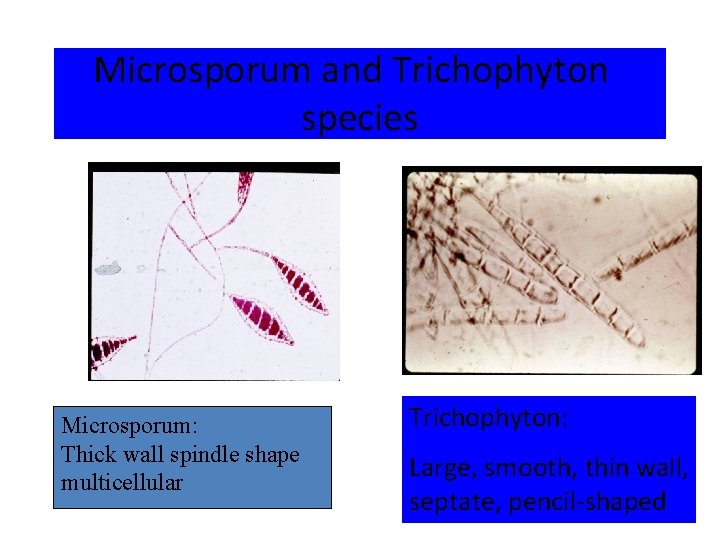
Microsporum and Trichophyton species Microsporum: Thick wall spindle shape multicellular Trichophyton: Large, smooth, thin wall, septate, pencil-shaped
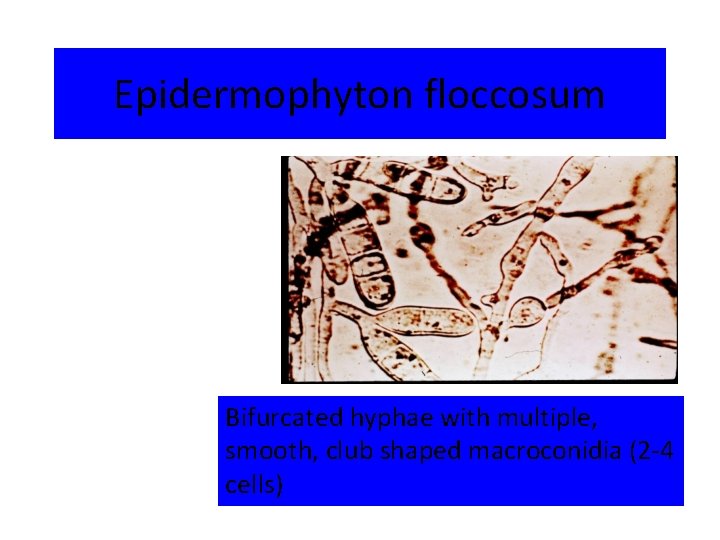
Epidermophyton floccosum Bifurcated hyphae with multiple, smooth, club shaped macroconidia (2 -4 cells)
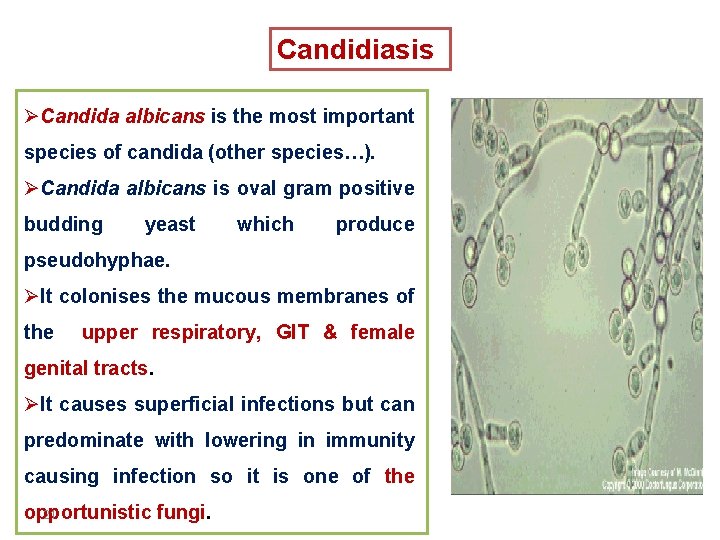
Candidiasis ØCandida albicans is the most important species of candida (other species…). ØCandida albicans is oval gram positive budding yeast which produce pseudohyphae. ØIt colonises the mucous membranes of the upper respiratory, GIT & female genital tracts. ØIt causes superficial infections but can predominate with lowering in immunity causing infection so it is one of the opportunistic fungi. 21
Predisposing factors to Candida infections 1 - Diseases as AIDS & diabetes melllitus. 2 - Drugs: prolonged treatment with broad spectrum antibiotics & corticosteroids. 3 - General debility. 4 - Indwelling urinary catheters. 22
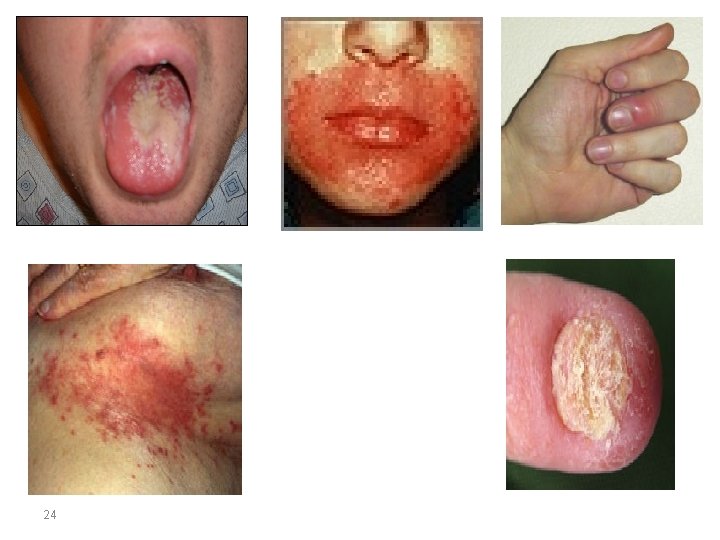
Pathogenesis & Symptomatology Skin invasion Mouth infection -They are red & weeping lesions. -Mainlyaffect worm moist areas. Such as axilla or infra mammary folds. -Mostly in obese & diabetics. -Pseudo diaper rash C. albicans produces white patches in the mouth (oral thrush or moniliasis). 23 Sometimes oral leukoplakia, esophagitis, gastritis Vulvovaginitis -With itching & thick vaginal discharge. -Common with diabetic woman & prolonged use of antibiotics, IUCD, Pregnancy. . Nails infection -Occurs with repeatedly immersing in water (dish washing). -Painful redness , swelling of nail folds , thickening & loss of nail (paronychia). Systemic candidiasis Occure in diabetics & Immuno suppressed persons.
24
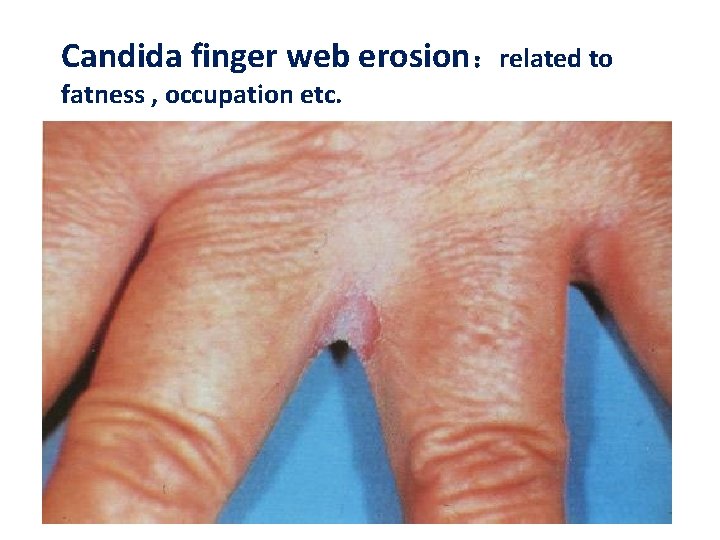
Candida finger web erosion:related to fatness , occupation etc.
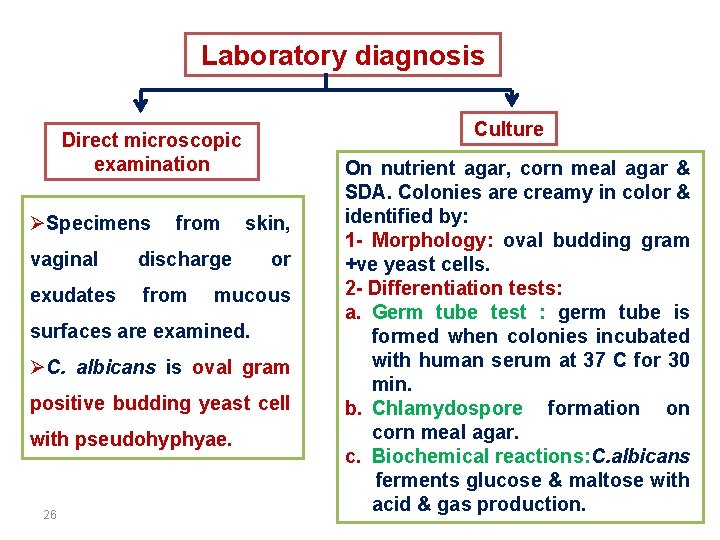
Laboratory diagnosis Culture Direct microscopic examination ØSpecimens from vaginal discharge exudates from skin, or mucous surfaces are examined. ØC. albicans is oval gram positive budding yeast cell with pseudohyphyae. 26 On nutrient agar, corn meal agar & SDA. Colonies are creamy in color & identified by: 1 - Morphology: oval budding gram +ve yeast cells. 2 - Differentiation tests: a. Germ tube test : germ tube is formed when colonies incubated with human serum at 37 C for 30 min. b. Chlamydospore formation on corn meal agar. c. Biochemical reactions: C. albicans ferments glucose & maltose with acid & gas production.
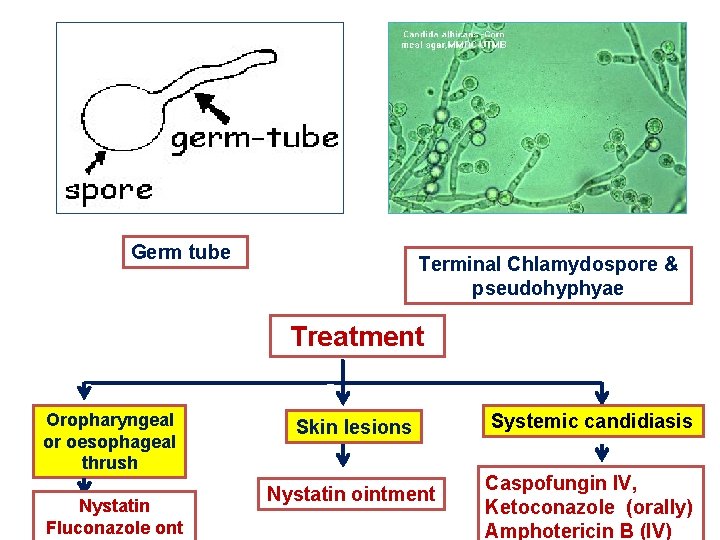
Germ tube Terminal Chlamydospore & pseudohyphyae Treatment Oropharyngeal or oesophageal thrush Nystatin Fluconazole ont Skin lesions Nystatin ointment Systemic candidiasis Caspofungin IV, Ketoconazole (orally) Amphotericin B (IV)
Subcutaneous mycoses Mycetoma (Madura foot) ØThese infection caused by fungi that grow in soil & on decaying vegetations. ØThe fungi introduced into subcutaneous tissues through trauma. ØMycetoma is a chronic granulomatous infection usually affects the lower limbs and hands ØThe disease usually affects farmers. 28
Causative organism of mycetoma 1 - Eumycetoma: caused by fungi Madurella mycetomatis which having true septate hyphae. 2 - Actinomycetoma: caused by species of actinomycetes (filamentous aerobic bacteria). Clinical pictures Swelling following trauma, purplish discolouration & multiple sinuses that drain pus containing yellow, white, red or black granules. 29
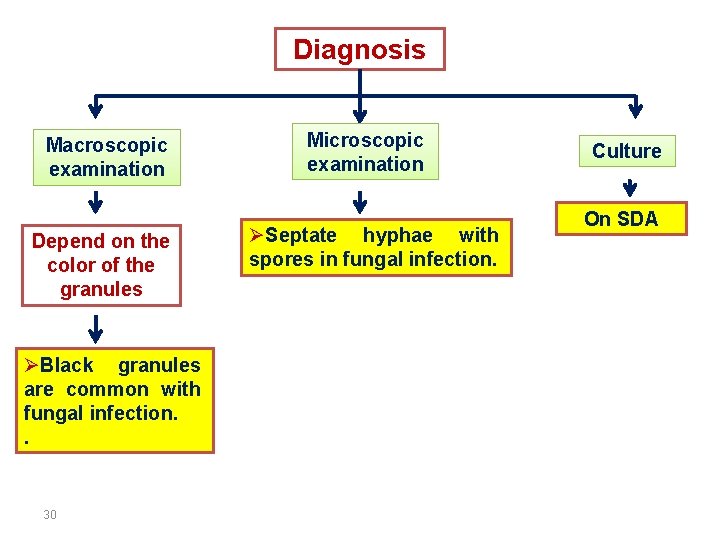
Diagnosis Macroscopic examination Depend on the color of the granules ØBlack granules are common with fungal infection. . 30 Microscopic examination ØSeptate hyphae with spores in fungal infection. Culture On SDA
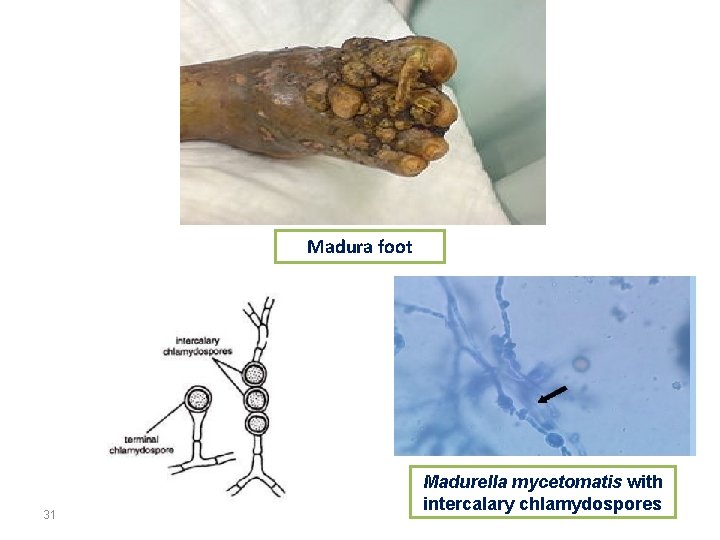
Madura foot 31 Madurella mycetomatis with intercalary chlamydospores
Treatment 1. Medical: • - ketoconazole • - Itraconazole • - Amphotericin B • 2. Surgical.

The End
- Slides: 33