
Skin Functions of Skin MechanicalChemical damage keratin toughens







- Slides: 16
Skin Functions of Skin ► Mechanical/Chemical damage – keratin toughens cells; fats cells cushion blows; and pressure receptors to measure possible damage ► Bacterial damage – skin secretions are acidic and inhibit bacteria. ► Ultraviolet radiation – melanin produced to protect from UV damage
Skin Functions ► Thermal control – regulates body temperature § Heat loss: sweat to cool the skin § Heat retention: prevents blood to rush into capillary beds ► Waterproofing – contains lipids to prevent drying out ► Excretion of waste – urea and uric acid secreted in sweat ► Makes vitamin D – modifies cholesterol molecules in skin and converts it to vitamin D
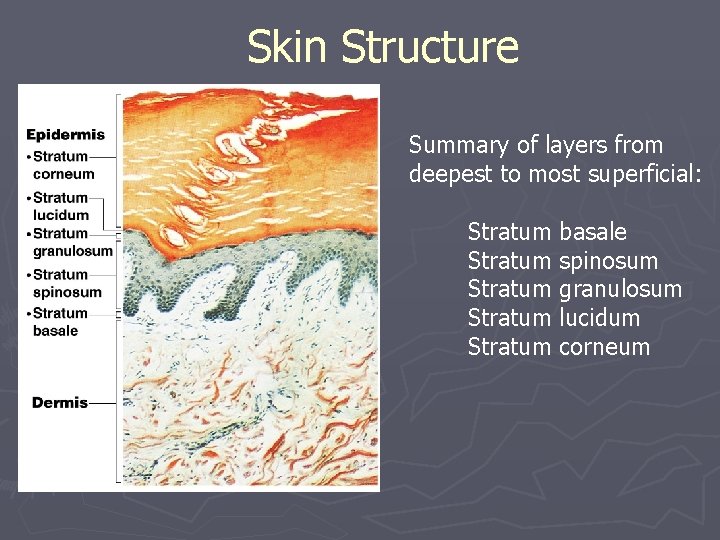
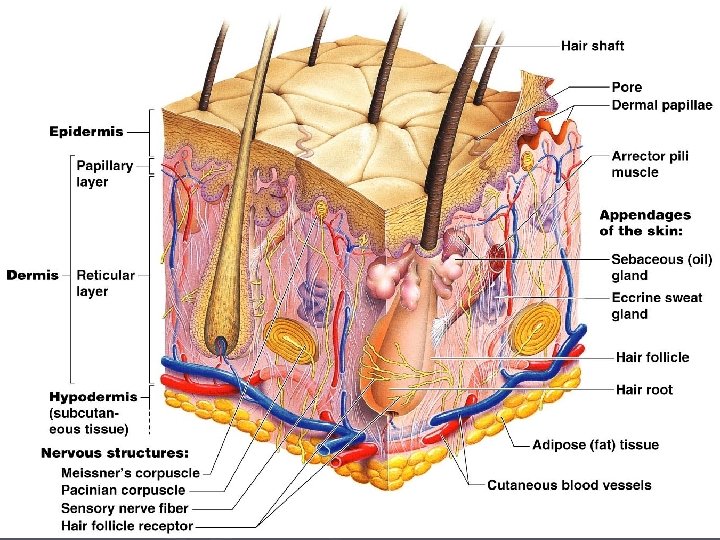
Skin Structure ►Epidermis — outer layer § Stratified squamous epithelium § Often keratinized (hardened by keratin) ►Dermis § Dense connective tissue ►Subcutaneous § hypodermis tissue
Skin Structure Summary of layers from deepest to most superficial: Stratum basale Stratum spinosum Stratum granulosum Stratum lucidum Stratum corneum
Skin Structure ►Subcutaneous § § § tissue (hypodermis) is deep to dermis Not part of the skin Anchors skin to underlying organs, bones and muscles Contains half of the body’s fat; acts as padding and insulation.
Layers of the Epidermis ►Stratum basale § Deepest layer of epidermis § Cells actively undergoing cell division § New cells are pushed upward to become the more superficial layers ►Stratum spinosum – intermediate layer ►Stratum granulosum – another layer
Layers of the Epidermis ►Stratum lucidum § Formed from dead cells of the deeper layers § Occurs only in thick, hairless skin of the palms of hands and soles of feet ►Stratum corneum § Outermost layer of epidermis § Scale-like dead cells are filled with keratin which is a protective protein preventing water loss from skin
Keratinization ► Cells migrate to the epidermis where eventually they fall off. ► As they move upward, keratin is added. ► The cells in the epidermis contain a lot of keratin which resists damage. ► Distinct layers of cells are called strata. A cell takes ~ 40 – 56 from creation to sloughing off
Melanin ►Pigment (melanin) produced by melanocytes ►Melanocytes are mostly in the stratum basale ►Color is yellow to red to brown to black ►Amount of melanin produced depends upon genetics and exposure to sunlight
Melanin continued…. Large amounts of melanin occur in some regions like freckles, moles, and nipples. ► Less melanin occurs in the lips, hands, and soles of the feet. ► All races have the same number of melanoctyes! The amount of melanin produced is determined by genetics. ►
Albinism ►A single mutation cause a deficiency or complete absence of melanin. ► Albinos have fair skin, white hairs, and unpigmented eyes
Dermis ►Two layers § Papillary layer (upper dermal region) ► Projections called dermal papillae § Some contain capillary loops containing blood § Some pain receptors and touch receptors § Reticular layer (deepest skin layer) Blood vessels ► Sweat and oil glands ► Deep pressure receptors ►
What causes Normal Skin Color ►Melanin § Yellow, brown, or black pigments ►Carotene § Orange-yellow pigment from some vegetables ►Hemoglobin § Red coloring from blood cells in dermal capillaries § Oxygen content determines the extent of red coloring
Dermis ►Overall dermis structure § Collagen and elastic fibers located throughout the dermis Collagen fibers give skin its toughness ► Elastic fibers give skin elasticity ► § Dermal papillae – extend toward the epidermis and deliver nutrients, remove waste products (sweat = urea and uric acid) and aid in regulating body temperature.
What causes Normal Skin Color ►Melanin § Yellow, brown, or black pigments ►Carotene § Orange-yellow pigment from some vegetables ►Hemoglobin § Red coloring from blood cells in dermal capillaries § Oxygen content determines the extent of red coloring