
Skin Body Membranes Chapter 4 Classification of Body
Skin & Body Membranes Chapter 4
Classification of Body Membranes • Two major categories (classified by tissue makeup): – Epithelial Tissue – covering and lining membranes; always combined with underlying layer of CT (simple organs!) • Cutaneous membranes • Mucous membranes • Serous membranes – Connective Tissue (contain no epithelial cells) • Synovial membranes
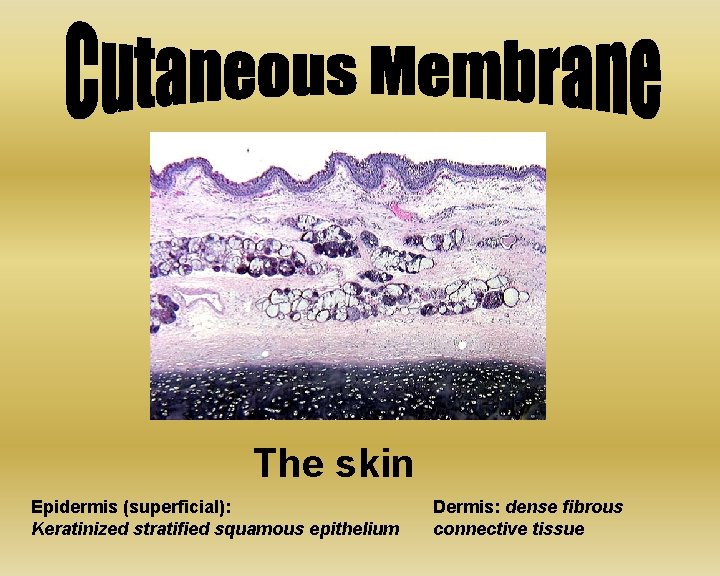
The skin Epidermis (superficial): Keratinized stratified squamous epithelium Dermis: dense fibrous connective tissue
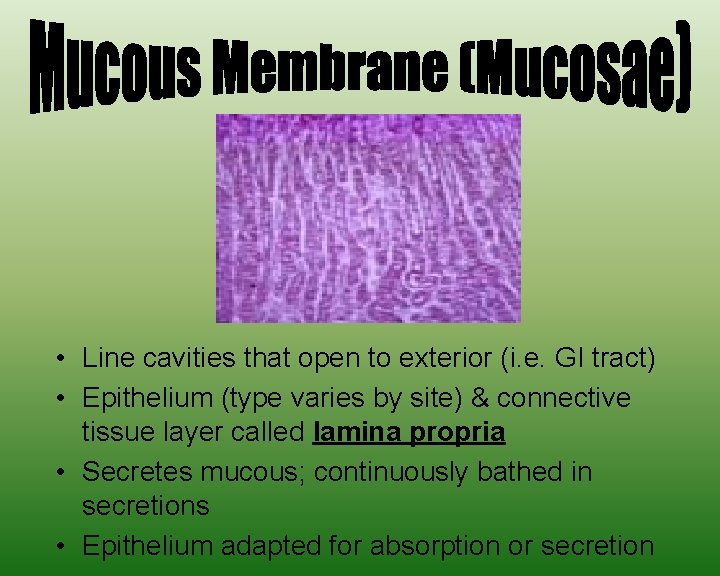
• Line cavities that open to exterior (i. e. GI tract) • Epithelium (type varies by site) & connective tissue layer called lamina propria • Secretes mucous; continuously bathed in secretions • Epithelium adapted for absorption or secretion

• Also known as serosa • Layer of simple squamous epithelium resting on a thin layer of areolar connective tissue • Lines body cavity not open to exterior (pleura, pericardium, peritoneum)- parietal and visceral • Secrete serous fluid (separates membranes)
Connective Tissue Membranes • Synovial Membranes – Soft areolar connective tissue and no epithelial cells – Line fibrous capsules surrounding joints – Provide smooth surface and secrete lubricating fluid – Line small sacs of CT called bursae and tendon sheaths – cushion organs moving against each other during muscle activity
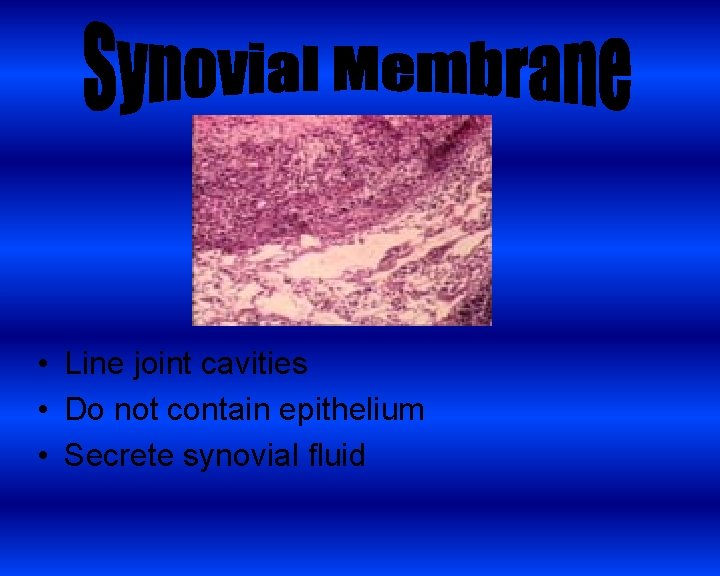
• Line joint cavities • Do not contain epithelium • Secrete synovial fluid
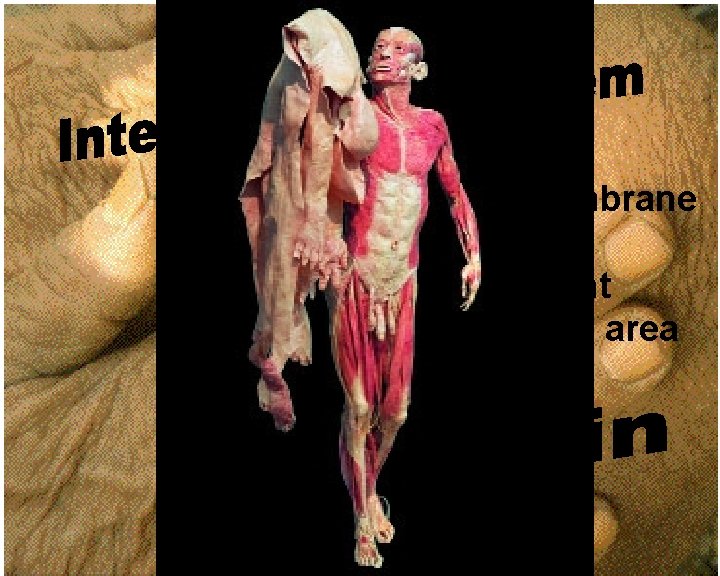
Cutaneous membrane Largest organ 16% body weight 2 square meters area

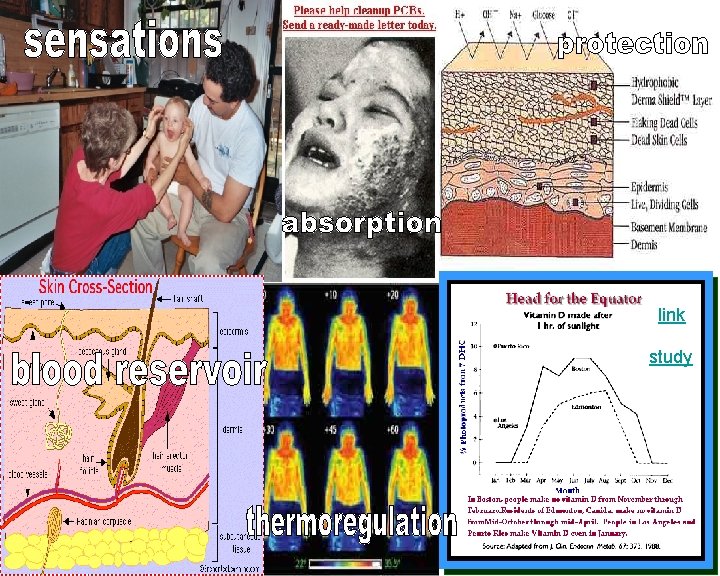
Functions of Integument • Insulates and cushions • Protects from mechanical damage, chemical damage, thermal damage, ultraviolet radiation, bacteria • Keratin – prevents water loss from body surface • Capillary network and sweat glands regulate heat loss • Mini-excretory system: urea, salts, water lost when sweat • Manufactures proteins important to immunity and synthesizes vitamin D • Sensory receptors part of nervous system located here – touch, pressure, temperature, pain – provide
link study
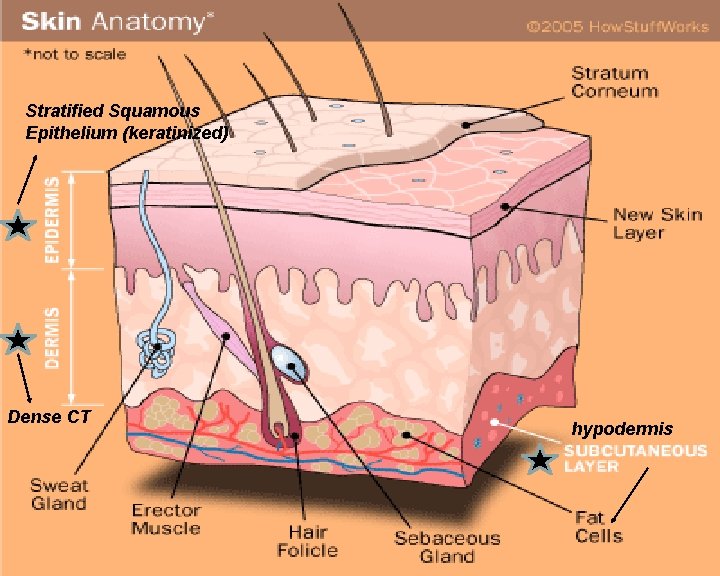
Stratified Squamous Epithelium (keratinized) Dense CT hypodermis

Keratinocytes: 90% produce keratin and lamellar granules Langerhans cells mount immune response Scattered throughout epidermis Merkel cells contact sensory neurons produce pigments to absorb(epidermal/dermal junction) Melanocytes: 8% UV radiation (stratum basale)
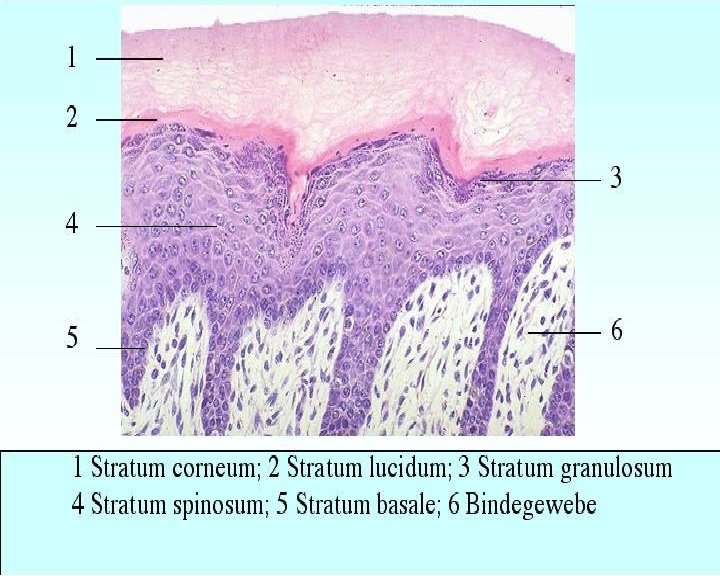
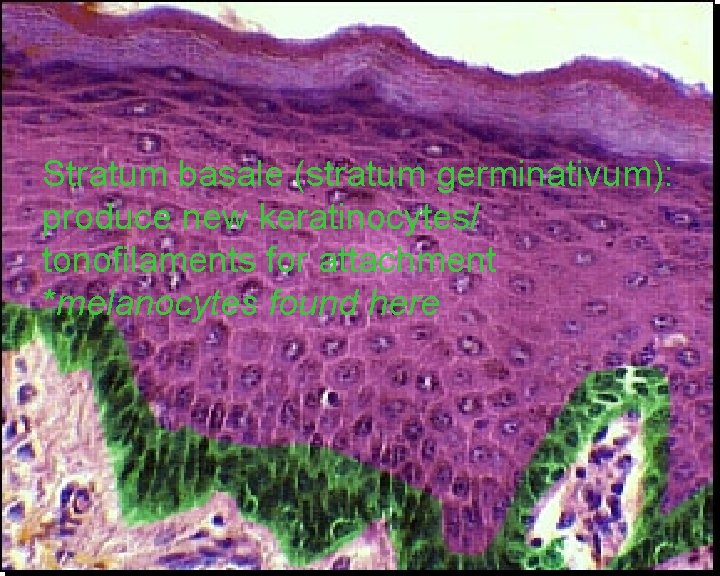
Stratum basale (stratum germinativum): produce new keratinocytes/ tonofilaments for attachment *melanocytes found here

Stratum spinosum: tonofilaments for strength and stability
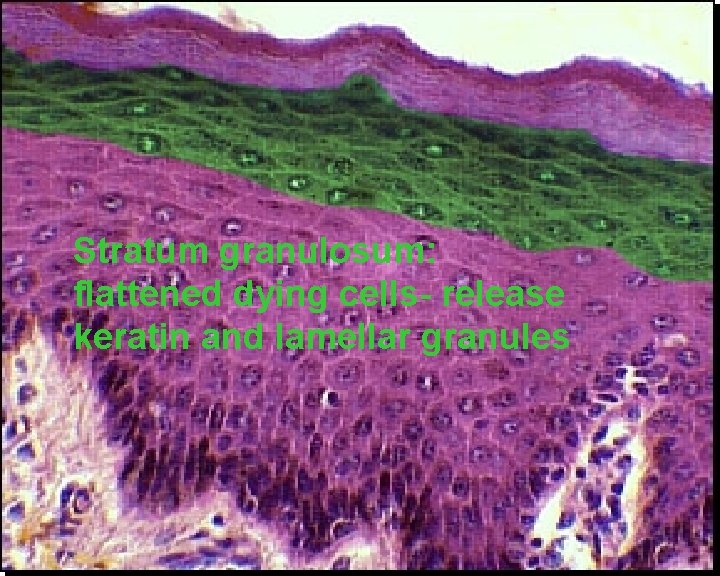
Stratum granulosum: flattened dying cells- release keratin and lamellar granules
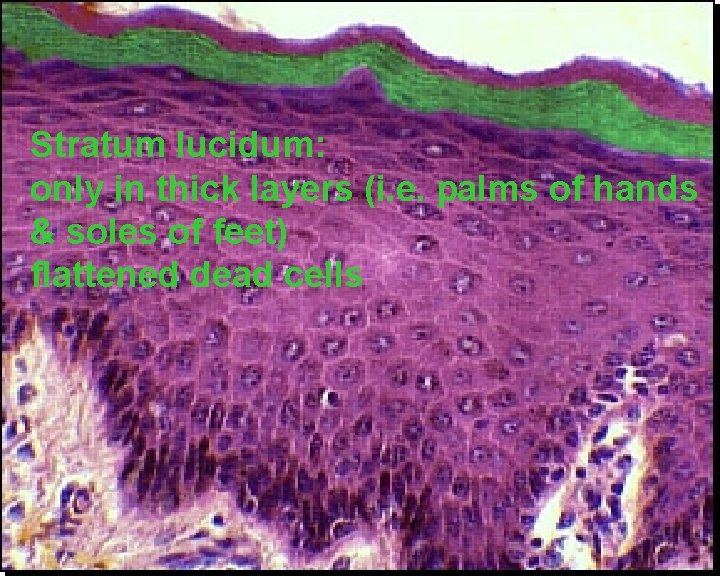
Stratum lucidum: only in thick layers (i. e. palms of hands & soles of feet) flattened dead cells
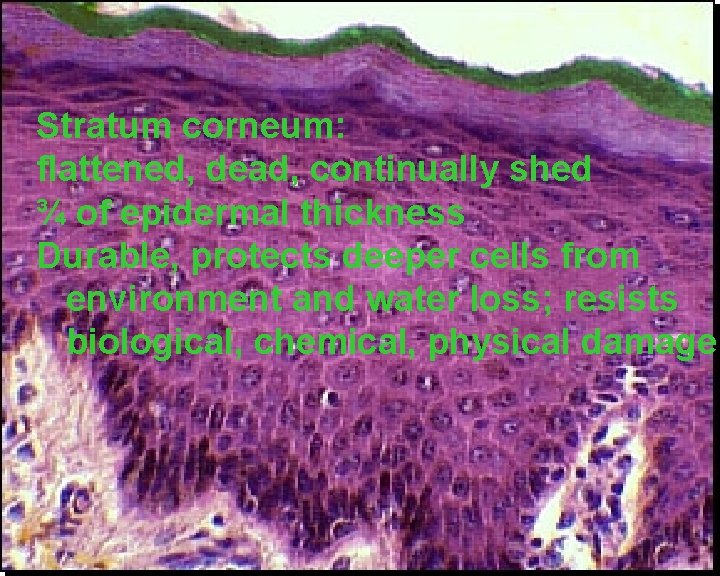
Stratum corneum: flattened, dead, continually shed ¾ of epidermal thickness Durable, protects deeper cells from environment and water loss; resists biological, chemical, physical damage

link
link
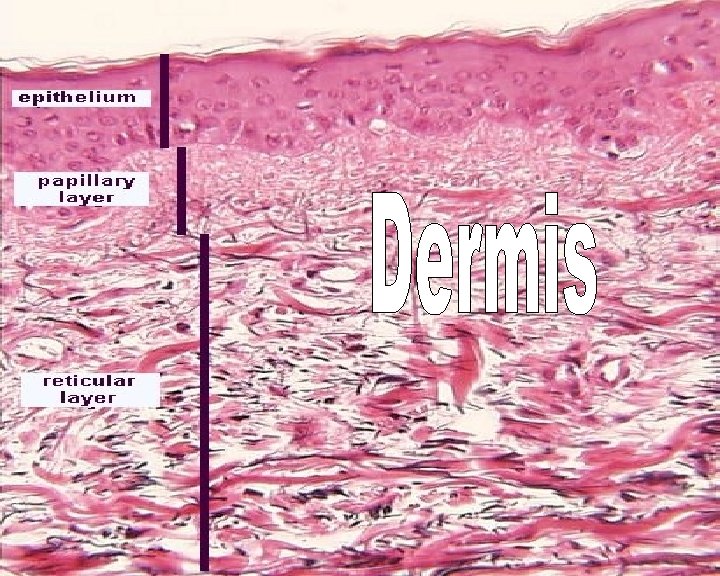
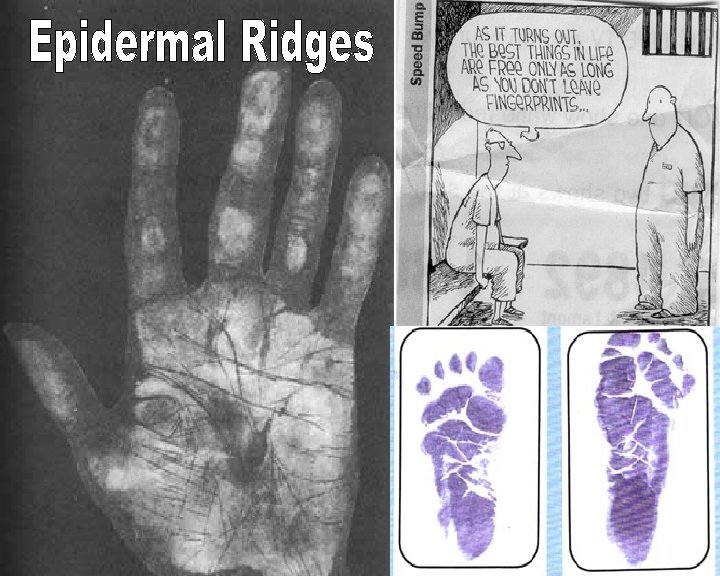
Dermis • Binds the body together • Dense fibrous connective tissue has two major regions: – Papillary: upper dermal region; has dermal papillae that extend into the epidermis • Contain capillary loops to furnish nutrients to the epidermis • House pain receptors (free nerve endings) and touch receptors • Give “fingerprints” (genetically determined) – enhance gripping ability and increase friction – Reticular: deepest skin layer • Contains irregularly arranged CT fibers and blood vessels, sweat, and oil glands • Contains deep pressure receptors called lamellar corpuscles • Phagocytes prevent bacteria to penetrate deeper into body • Varies in thickness • Collagen & elastic fibers found throughout

link
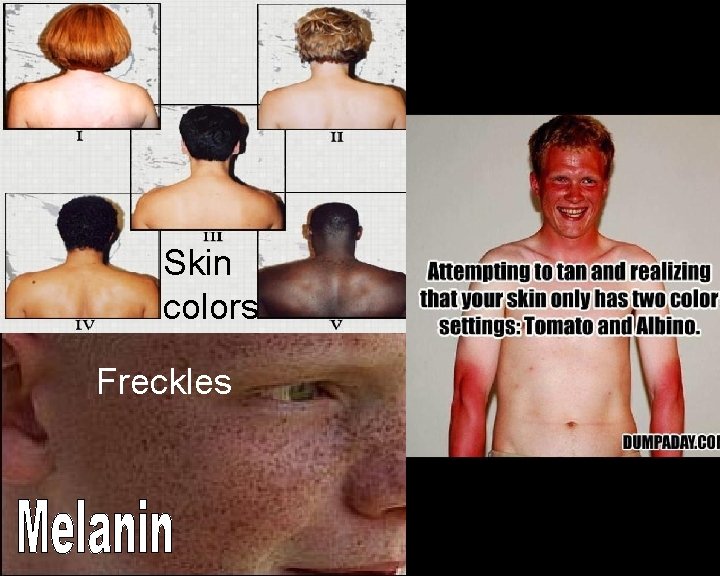
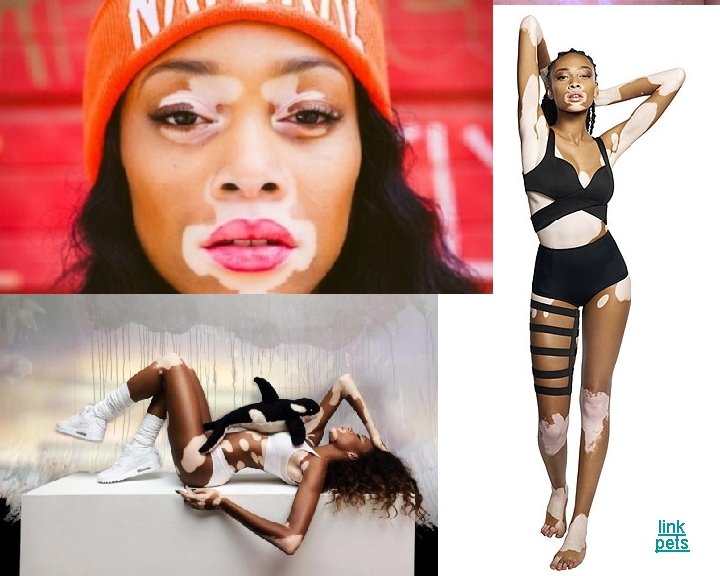
Tanning Skin colors Freckles Moles
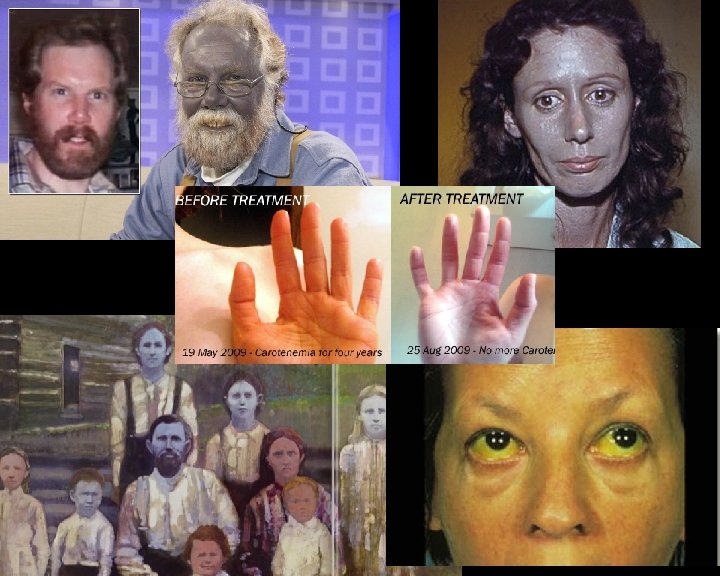
link pets
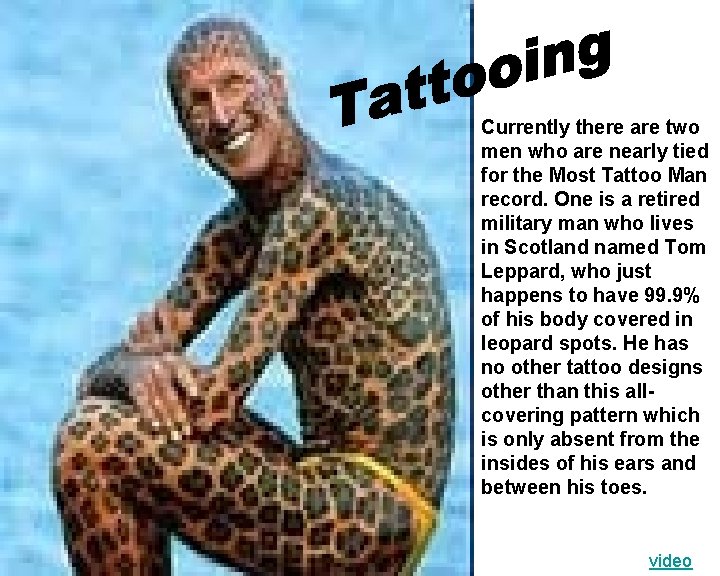
Currently there are two men who are nearly tied for the Most Tattoo Man record. One is a retired military man who lives in Scotland named Tom Leppard, who just happens to have 99. 9% of his body covered in leopard spots. He has no other tattoo designs other than this allcovering pattern which is only absent from the insides of his ears and between his toes. video
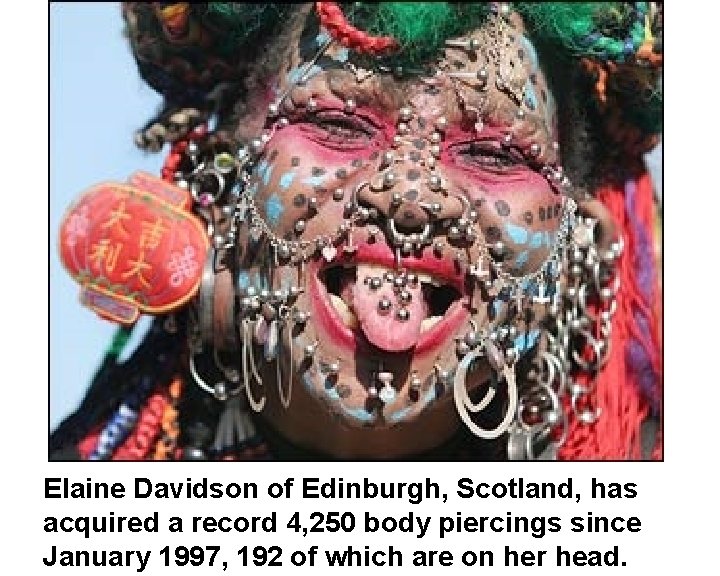
Elaine Davidson of Edinburgh, Scotland, has acquired a record 4, 250 body piercings since January 1997, 192 of which are on her head.
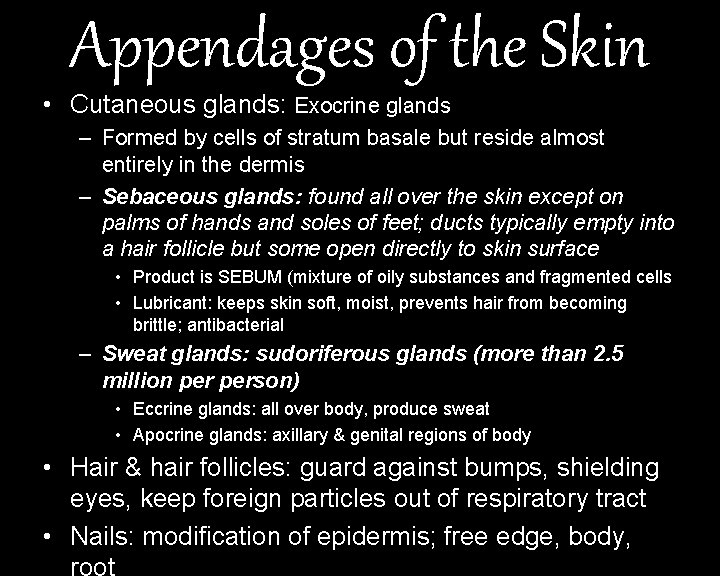
Appendages of the Skin • Cutaneous glands: Exocrine glands – Formed by cells of stratum basale but reside almost entirely in the dermis – Sebaceous glands: found all over the skin except on palms of hands and soles of feet; ducts typically empty into a hair follicle but some open directly to skin surface • Product is SEBUM (mixture of oily substances and fragmented cells • Lubricant: keeps skin soft, moist, prevents hair from becoming brittle; antibacterial – Sweat glands: sudoriferous glands (more than 2. 5 million person) • Eccrine glands: all over body, produce sweat • Apocrine glands: axillary & genital regions of body • Hair & hair follicles: guard against bumps, shielding eyes, keep foreign particles out of respiratory tract • Nails: modification of epidermis; free edge, body,
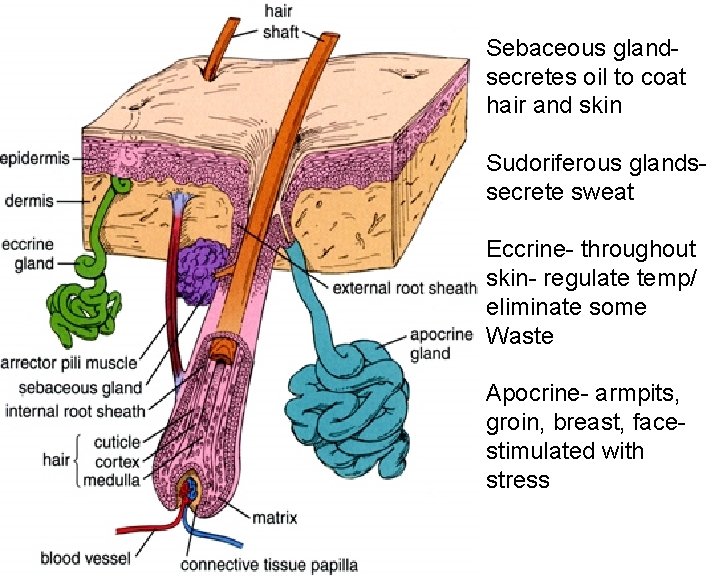
Sebaceous glandsecretes oil to coat hair and skin Sudoriferous glandssecrete sweat Eccrine- throughout skin- regulate temp/ eliminate some Waste Apocrine- armpits, groin, breast, facestimulated with stress
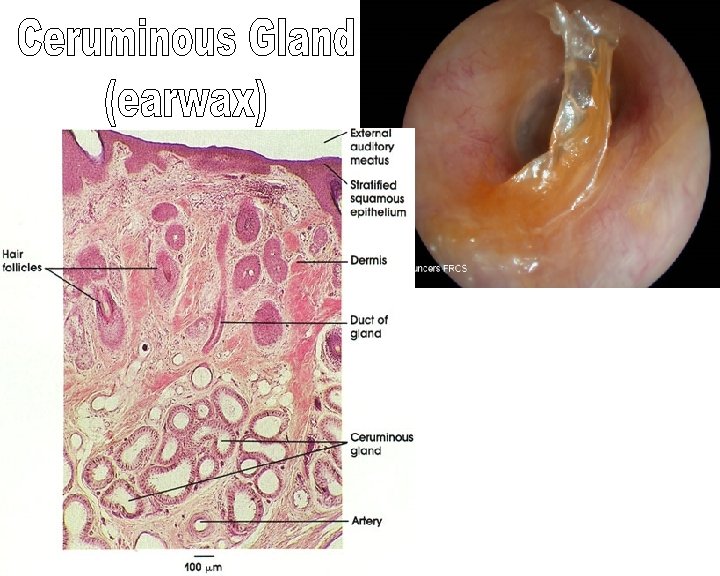
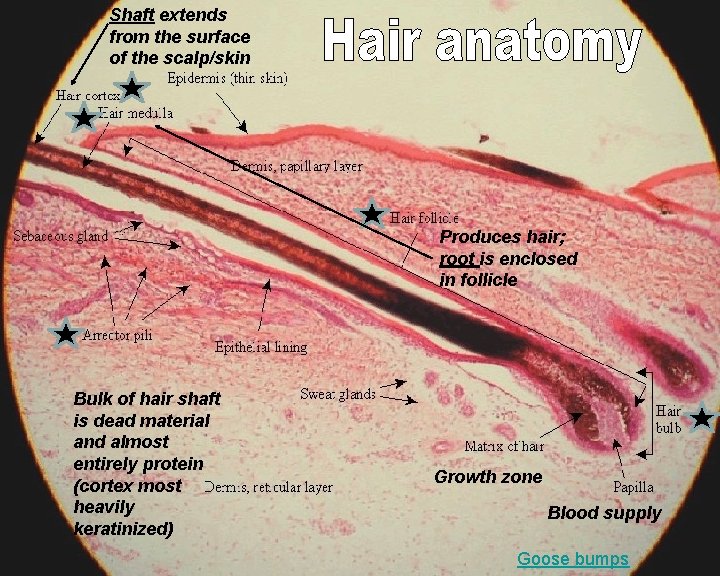
Shaft extends from the surface of the scalp/skin Produces hair; root is enclosed in follicle Bulk of hair shaft is dead material and almost entirely protein (cortex most heavily keratinized) Growth zone Blood supply Goose bumps
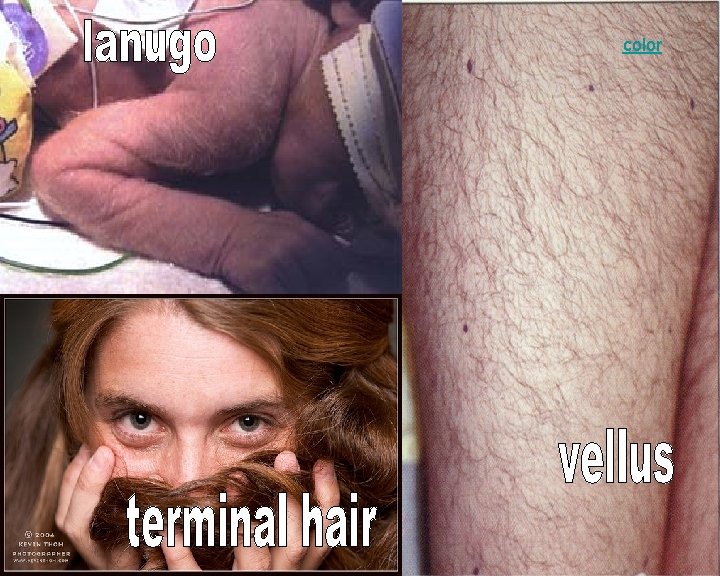
color

Stem cells Record: Tallest Hair | Height: 24 inches Record Holder: Aaron Studham of Massachusetts
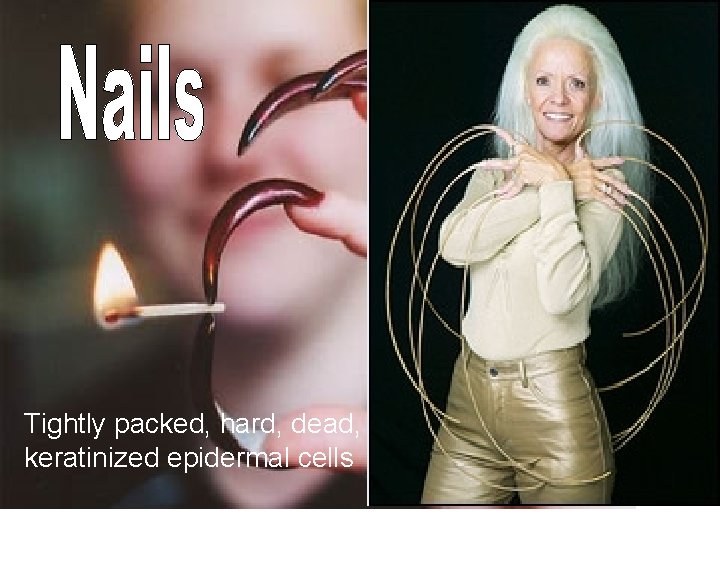
Tightly packed, hard, dead, keratinized epidermal cells
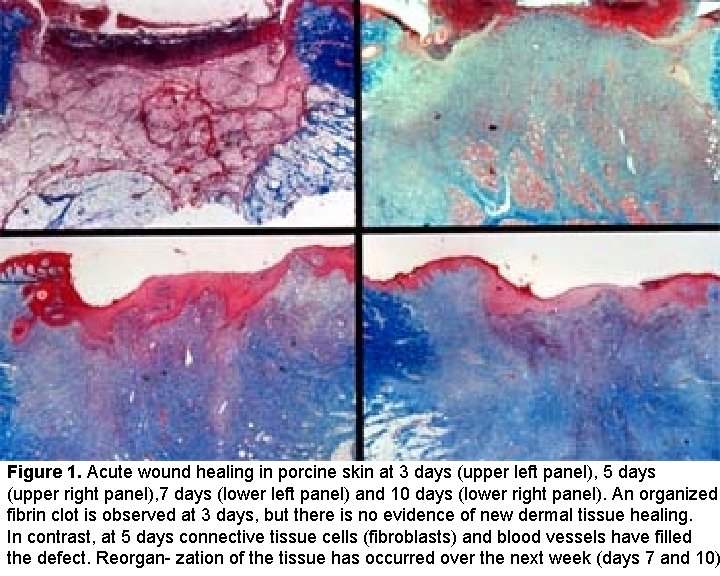
Figure 1. Acute wound healing in porcine skin at 3 days (upper left panel), 5 days (upper right panel), 7 days (lower left panel) and 10 days (lower right panel). An organized fibrin clot is observed at 3 days, but there is no evidence of new dermal tissue healing. In contrast, at 5 days connective tissue cells (fibroblasts) and blood vessels have filled the defect. Reorgan- zation of the tissue has occurred over the next week (days 7 and 10)
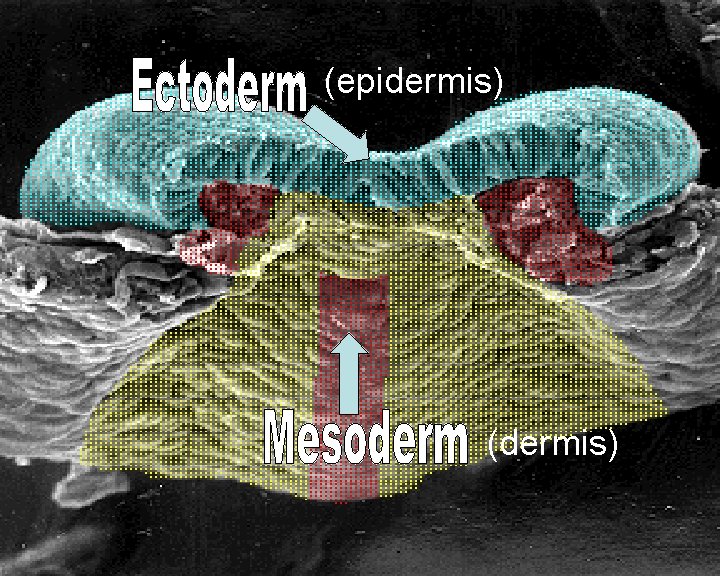
(epidermis) (dermis)

link Mostly dermis- loss of collagen, elasticity of fibers decreases, decreased immune response, less oil and sweat, less melanocytes, skin thins
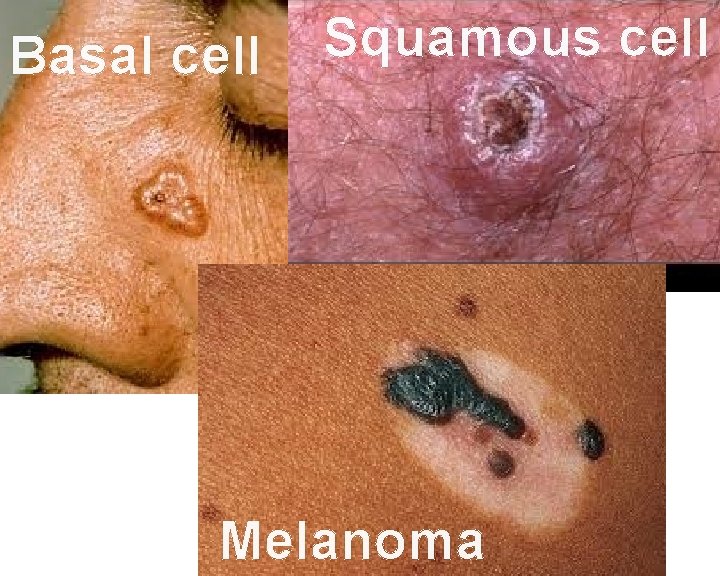
Basal cell Squamous cell Melanoma
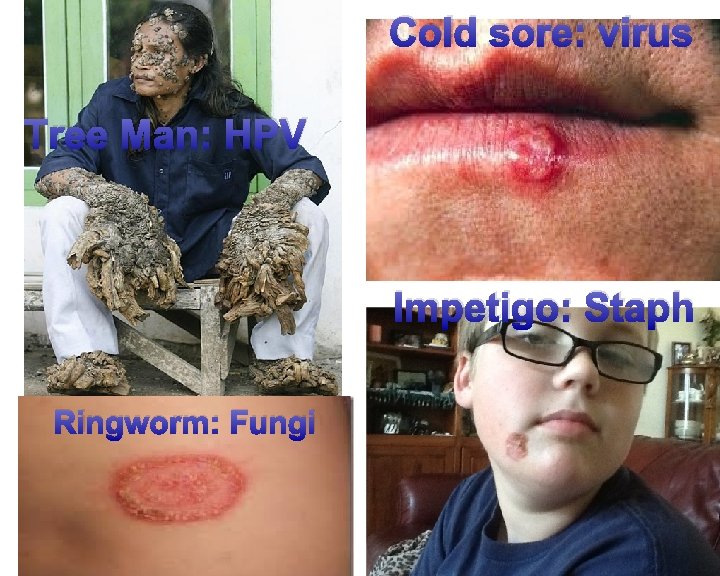
Cold sore: virus Tree Man: HPV Impetigo: Staph Ringworm: Fungi
WHAT IS SKIN FOR? Crash Course #1 Crash Course #2
- Slides: 44