
Skin blood vessels dilate capillaries become flushed with
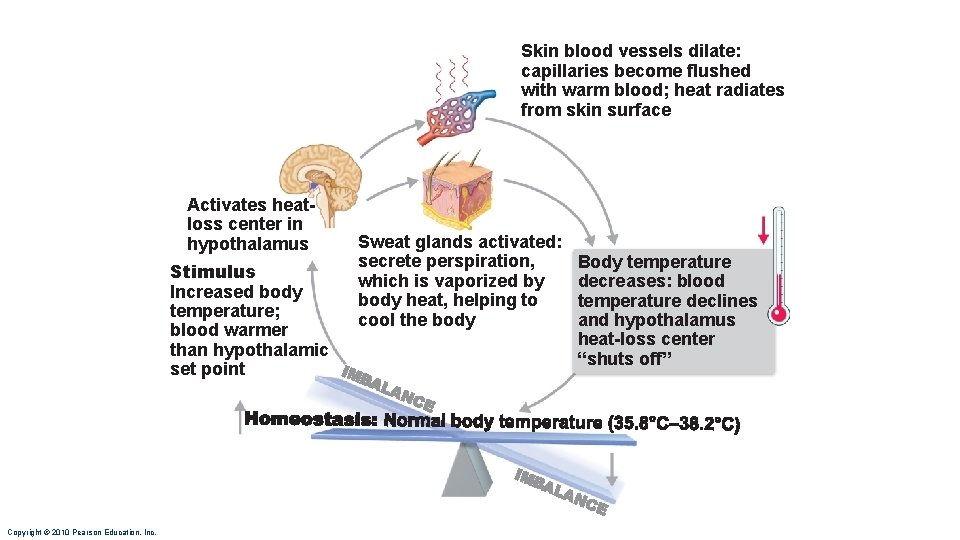
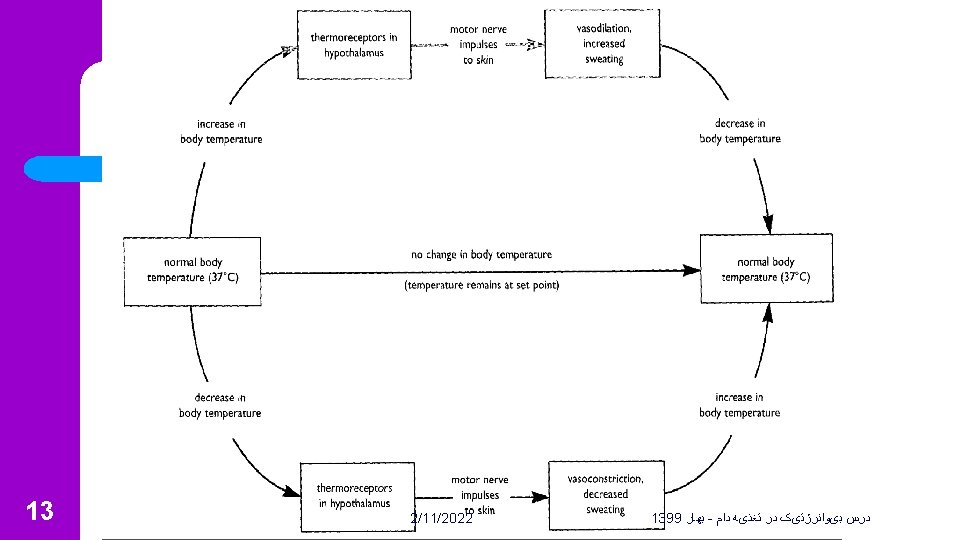
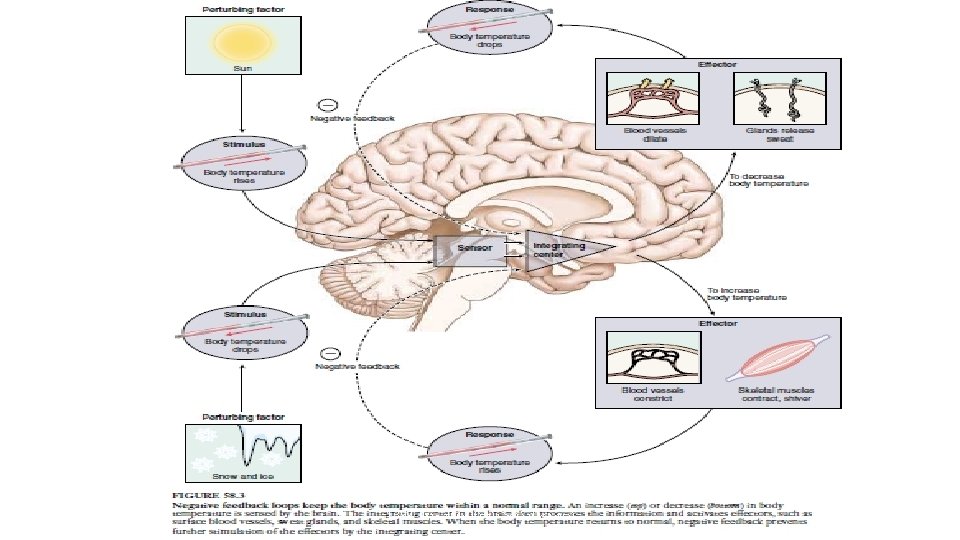
Skin blood vessels dilate: capillaries become flushed with warm blood; heat radiates from skin surface Activates heatloss center in hypothalamus Stimulus Increased body temperature; blood warmer than hypothalamic set point Copyright © 2010 Pearson Education, Inc. Sweat glands activated: secrete perspiration, which is vaporized by body heat, helping to cool the body Body temperature decreases: blood temperature declines and hypothalamus heat-loss center “shuts off”
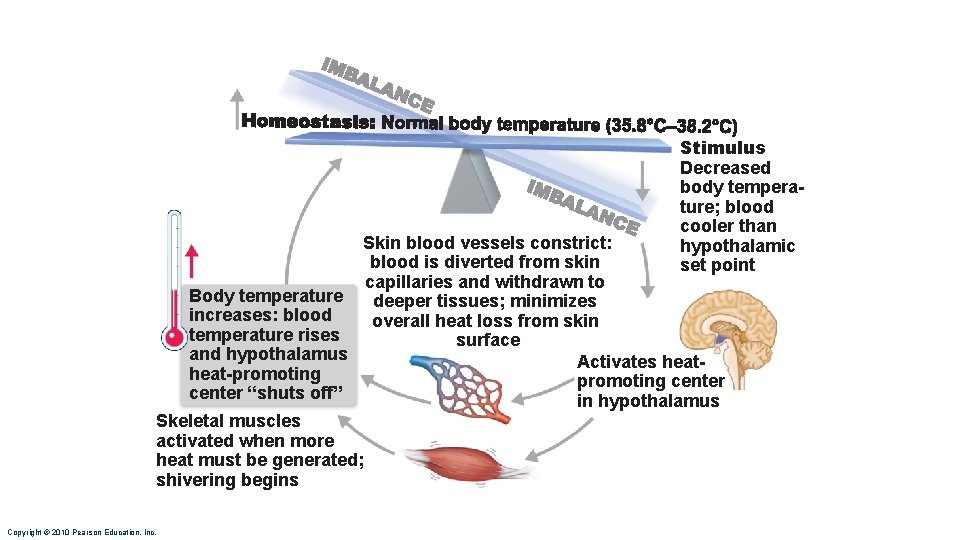
Stimulus Decreased body temperature; blood cooler than hypothalamic set point Skin blood vessels constrict: blood is diverted from skin capillaries and withdrawn to Body temperature deeper tissues; minimizes increases: blood overall heat loss from skin temperature rises surface and hypothalamus Activates heat-promoting center “shuts off” in hypothalamus Skeletal muscles activated when more heat must be generated; shivering begins Copyright © 2010 Pearson Education, Inc.
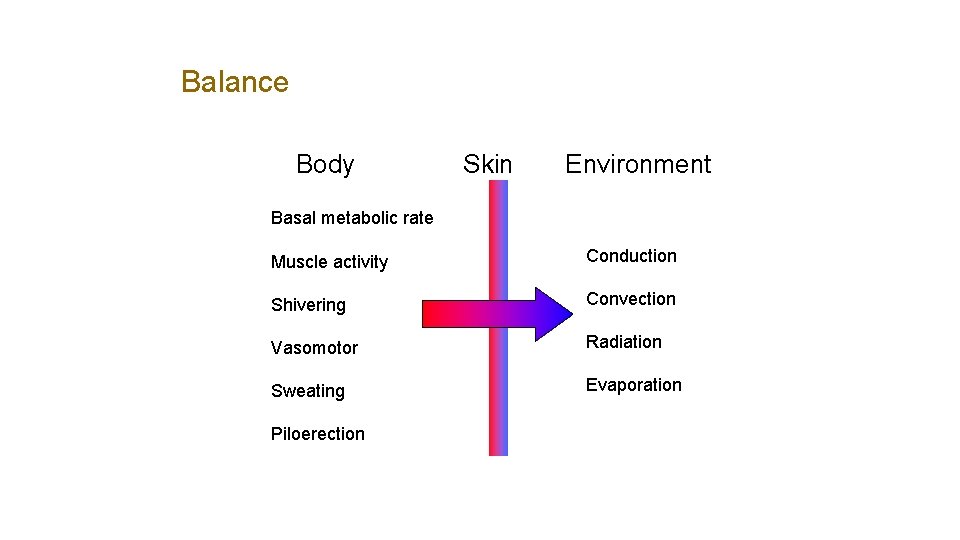
Balance Skin Body Environment Basal metabolic rate Muscle activity Conduction Shivering Convection Vasomotor Radiation Sweating Evaporation Piloerection 2/11/2022 1399 ﺑﻬﺎﺭ - ﺩﺭﺱ ﺑیﻮﺍﻧﺮژﺘیک ﺩﺭ ﺗﻐﺬیﻪ ﺩﺍﻡ 6
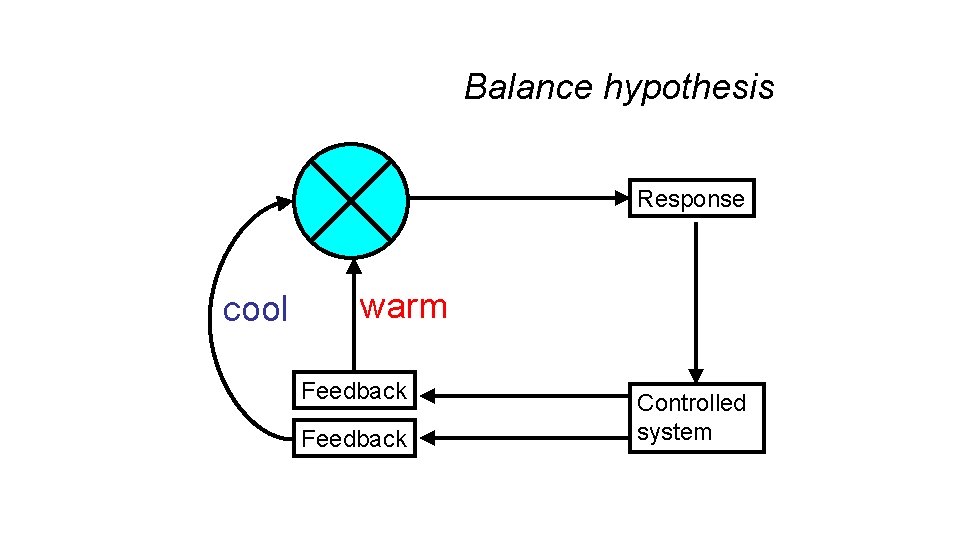
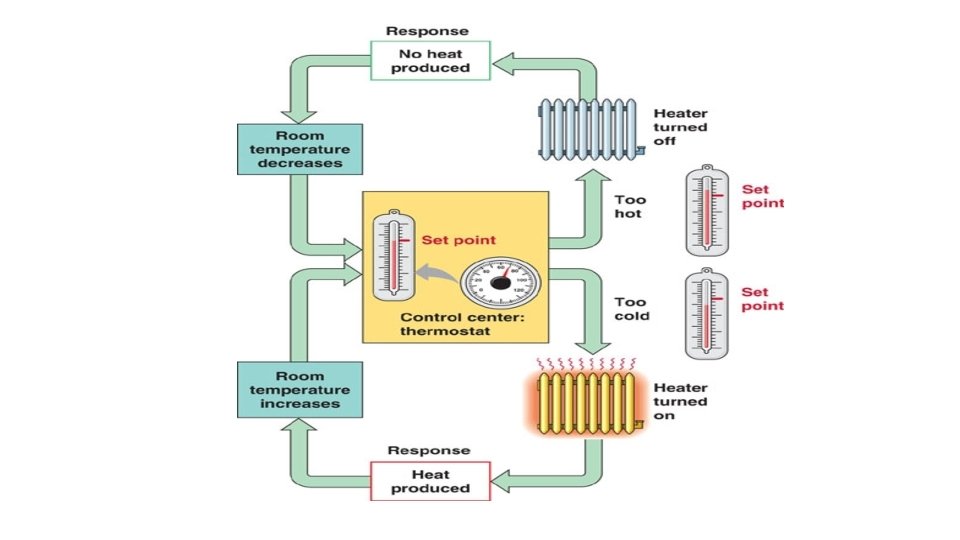
Balance hypothesis Response cool warm Feedback Controlled system
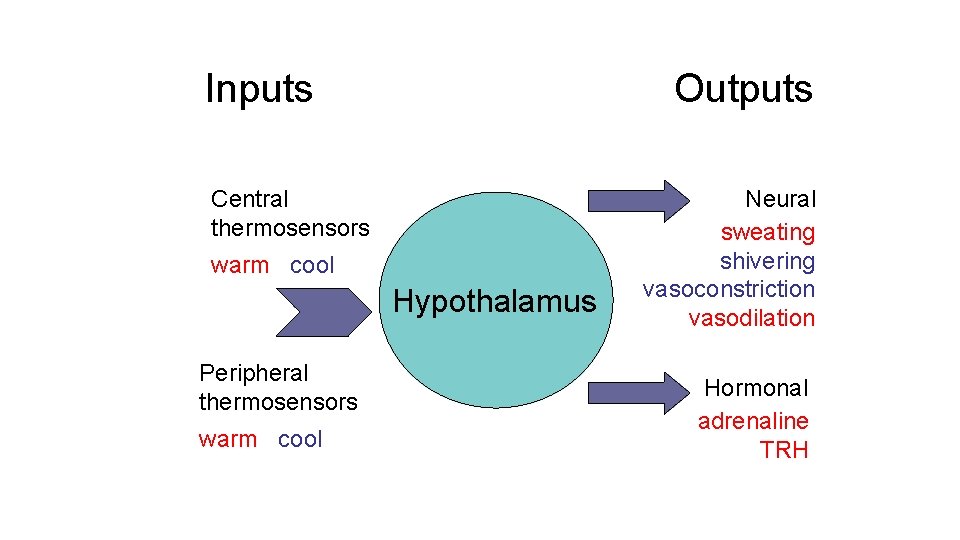
Inputs Outputs Central thermosensors warm cool Hypothalamus Peripheral thermosensors warm cool Neural sweating shivering vasoconstriction vasodilation Hormonal adrenaline TRH
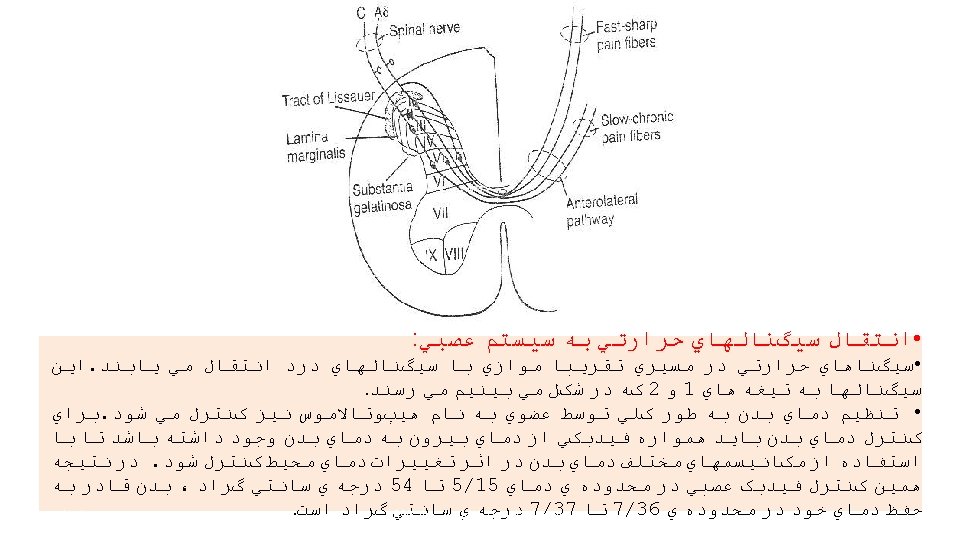
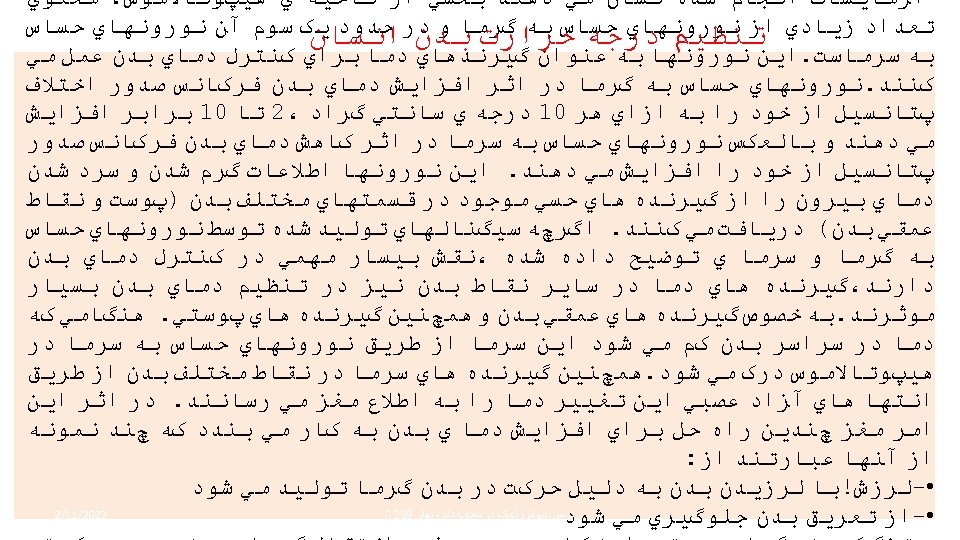
Why do we need to regulate: Internal body temperature l l 14 To provide the optimum conditions for enzymecatalysed reactions to be carried out. Normal internal body temperature is 370 C. Temperatures above this: denature enzymes and block metabolic pathways Temperatures below this: slow down metabolism and affect the brain. 2/11/2022 1399 ﺑﻬﺎﺭ - ﺩﺭﺱ ﺑیﻮﺍﻧﺮژﺘیک ﺩﺭ ﺗﻐﺬیﻪ ﺩﺍﻡ
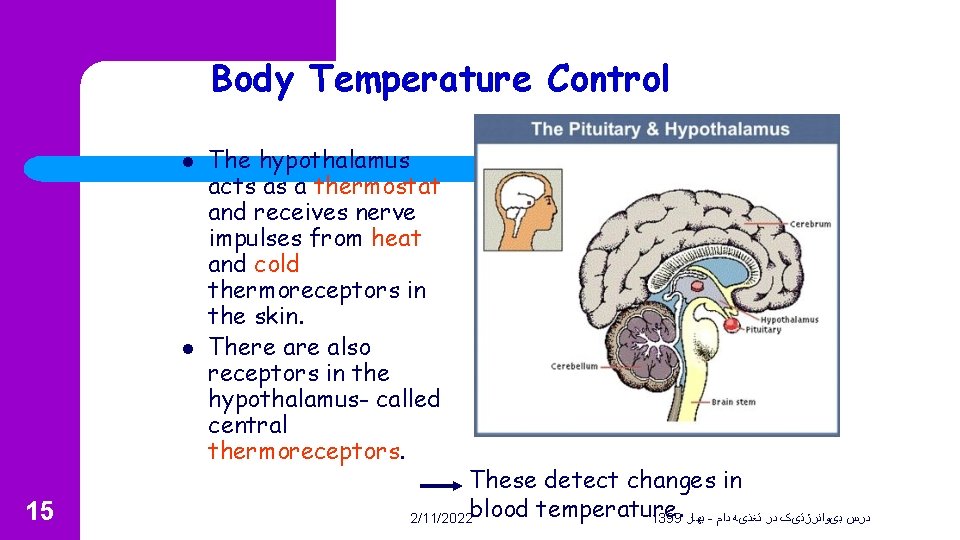
Body Temperature Control l l 15 The hypothalamus acts as a thermostat and receives nerve impulses from heat and cold thermoreceptors in the skin. There also receptors in the hypothalamus- called central thermoreceptors. These detect changes in 2/11/2022 blood temperature. 1399 ﺑﻬﺎﺭ - ﺩﺭﺱ ﺑیﻮﺍﻧﺮژﺘیک ﺩﺭ ﺗﻐﺬیﻪ ﺩﺍﻡ
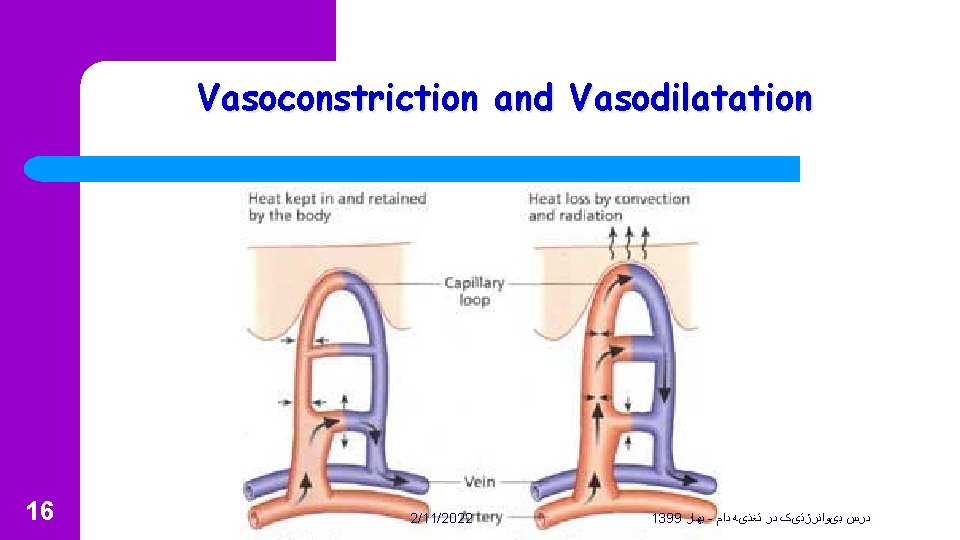
Vasoconstriction and Vasodilatation 16 2/11/2022 1399 ﺑﻬﺎﺭ - ﺩﺭﺱ ﺑیﻮﺍﻧﺮژﺘیک ﺩﺭ ﺗﻐﺬیﻪ ﺩﺍﻡ
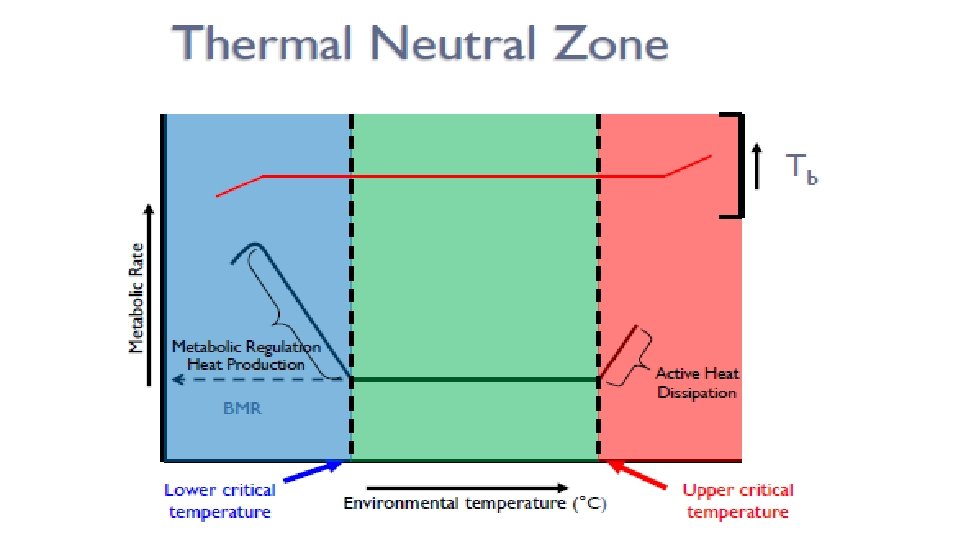
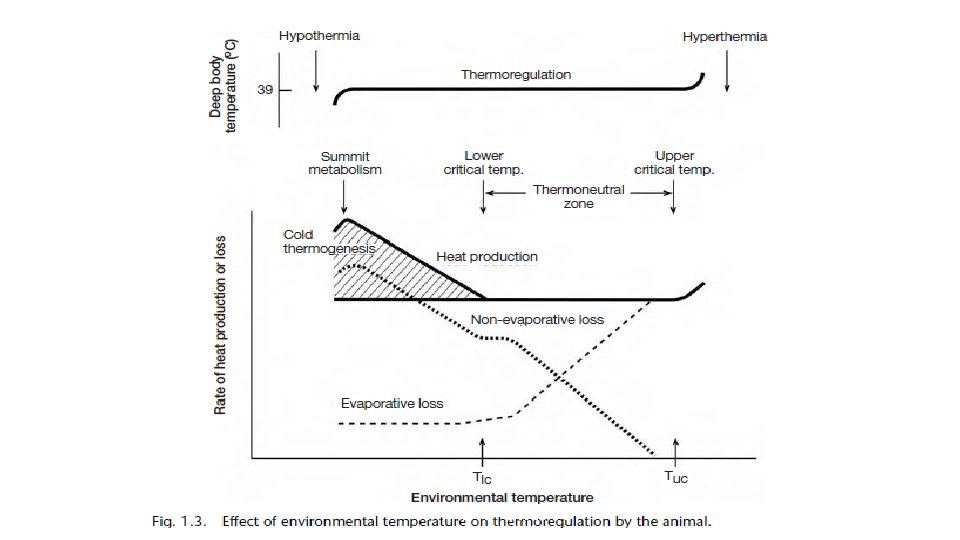
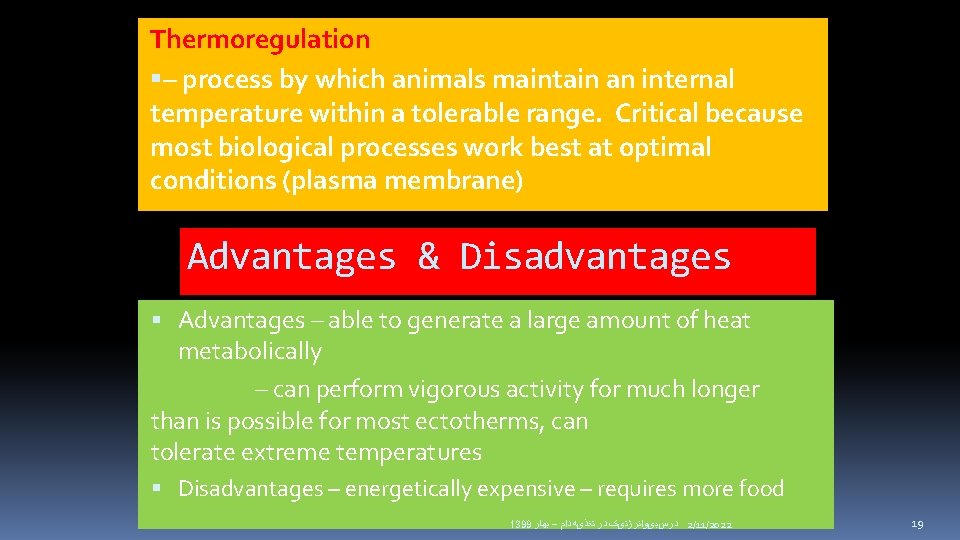
Thermoregulation – process by which animals maintain an internal temperature within a tolerable range. Critical because most biological processes work best at optimal conditions (plasma membrane) Advantages & Disadvantages Advantages – able to generate a large amount of heat metabolically – can perform vigorous activity for much longer than is possible for most ectotherms, can tolerate extreme temperatures Disadvantages – energetically expensive – requires more food 1399 ﺑﻬﺎﺭ - ﺩﺭﺱ ﺑیﻮﺍﻧﺮژﺘیک ﺩﺭ ﺗﻐﺬیﻪ ﺩﺍﻡ 2/11/2022 19
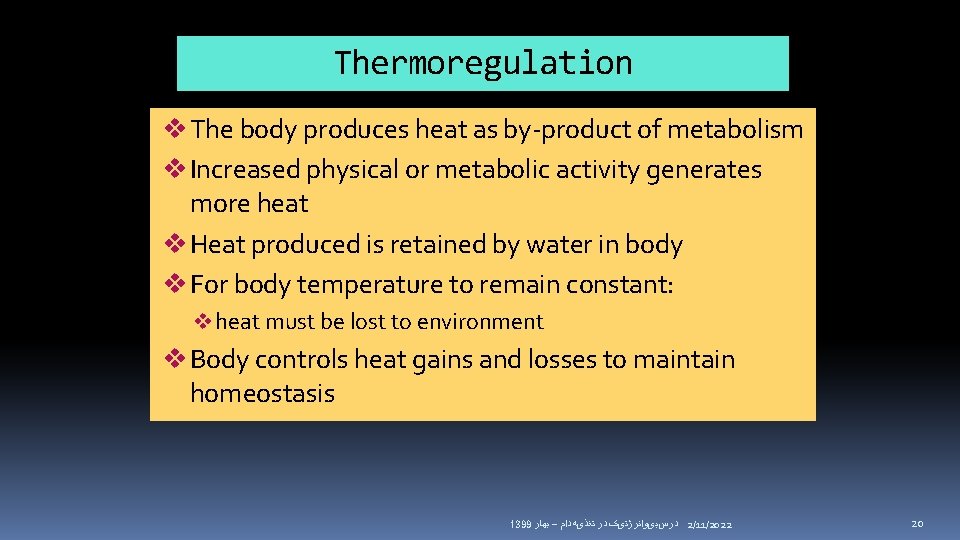
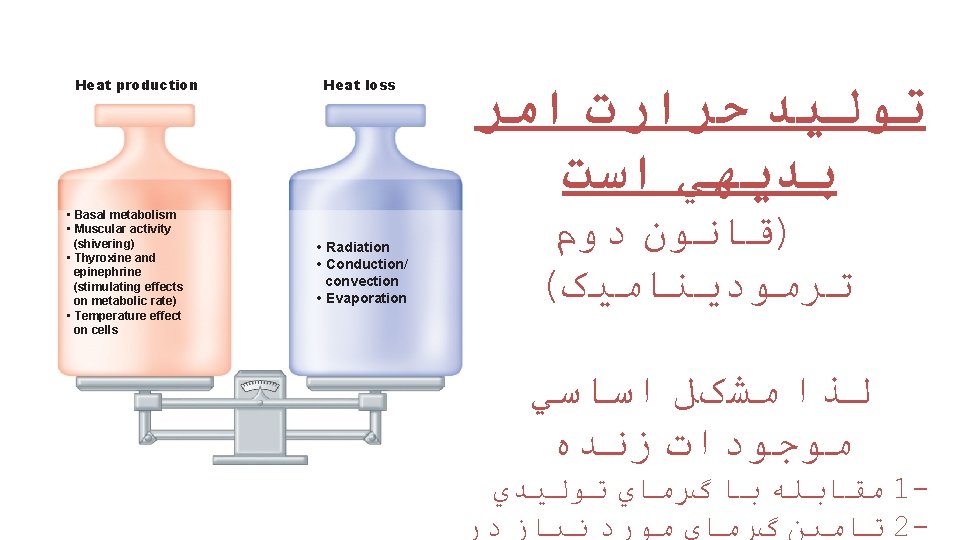
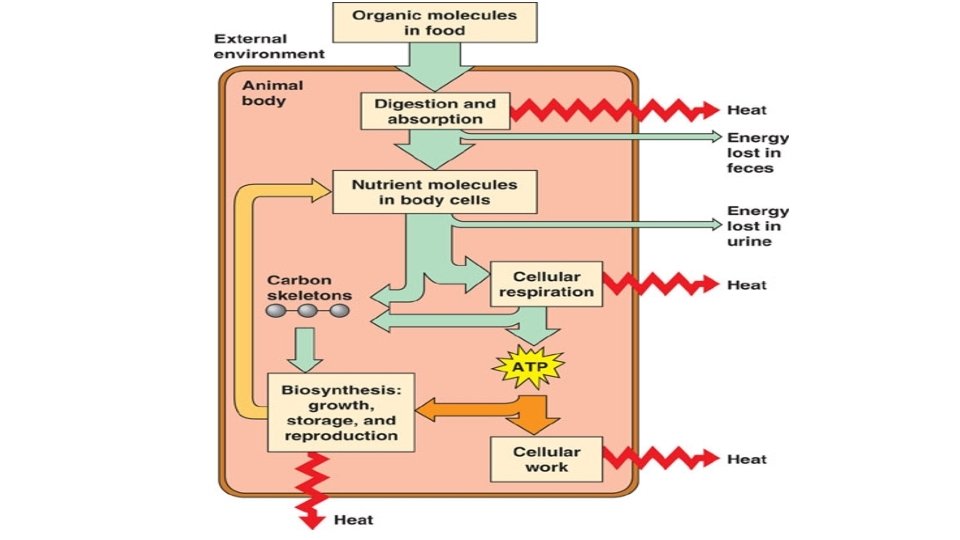
Thermoregulation v The body produces heat as by-product of metabolism v Increased physical or metabolic activity generates more heat v Heat produced is retained by water in body v For body temperature to remain constant: v heat must be lost to environment v Body controls heat gains and losses to maintain homeostasis 1399 ﺑﻬﺎﺭ - ﺩﺭﺱ ﺑیﻮﺍﻧﺮژﺘیک ﺩﺭ ﺗﻐﺬیﻪ ﺩﺍﻡ 2/11/2022 20
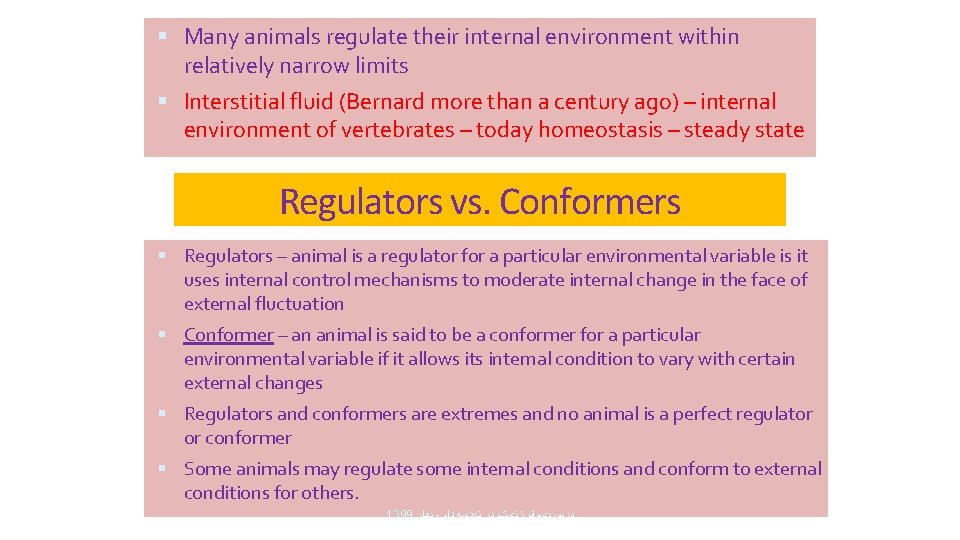
Many animals regulate their internal environment within relatively narrow limits Interstitial fluid (Bernard more than a century ago) – internal environment of vertebrates – today homeostasis – steady state Regulators vs. Conformers Regulators – animal is a regulator for a particular environmental variable is it uses internal control mechanisms to moderate internal change in the face of external fluctuation Conformer – an animal is said to be a conformer for a particular environmental variable if it allows its internal condition to vary with certain external changes Regulators and conformers are extremes and no animal is a perfect regulator or conformer Some animals may regulate some internal conditions and conform to external conditions for others. 2/11/2022 1399 ﺑﻬﺎﺭ - ﺩﺭﺱ ﺑیﻮﺍﻧﺮژﺘیک ﺩﺭ ﺗﻐﺬیﻪ ﺩﺍﻡ 21
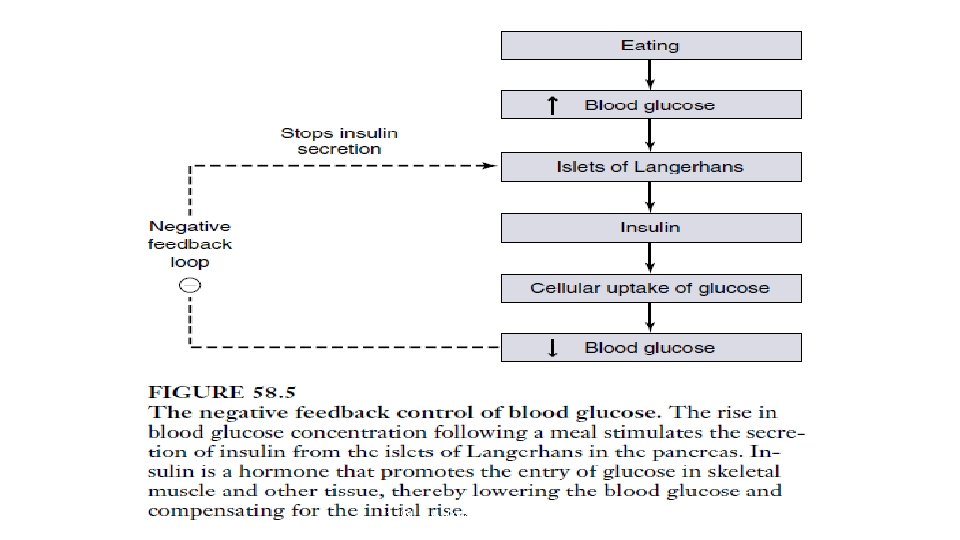
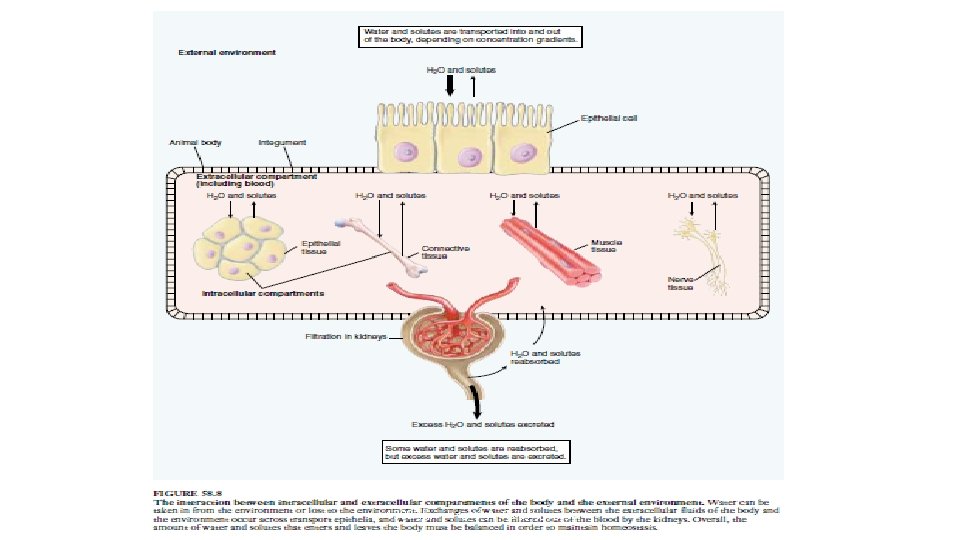
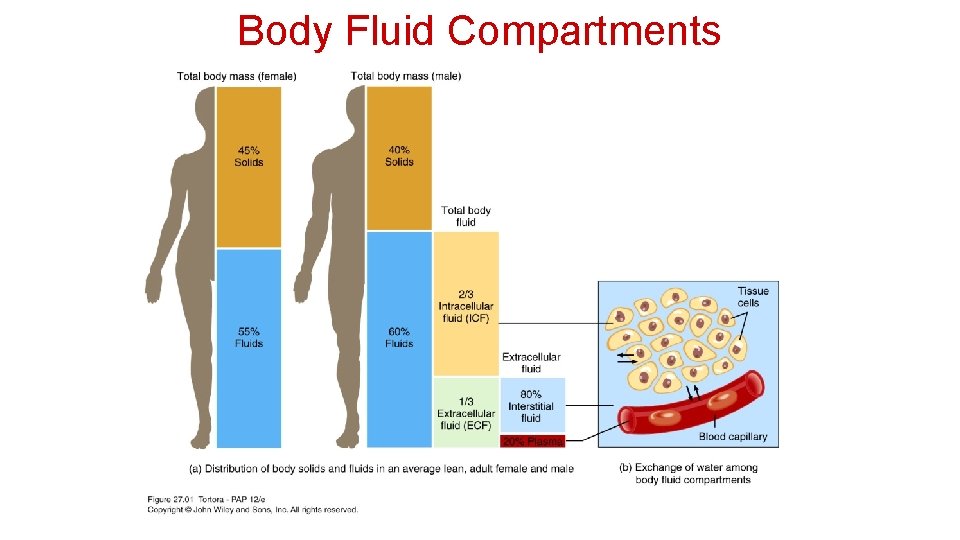
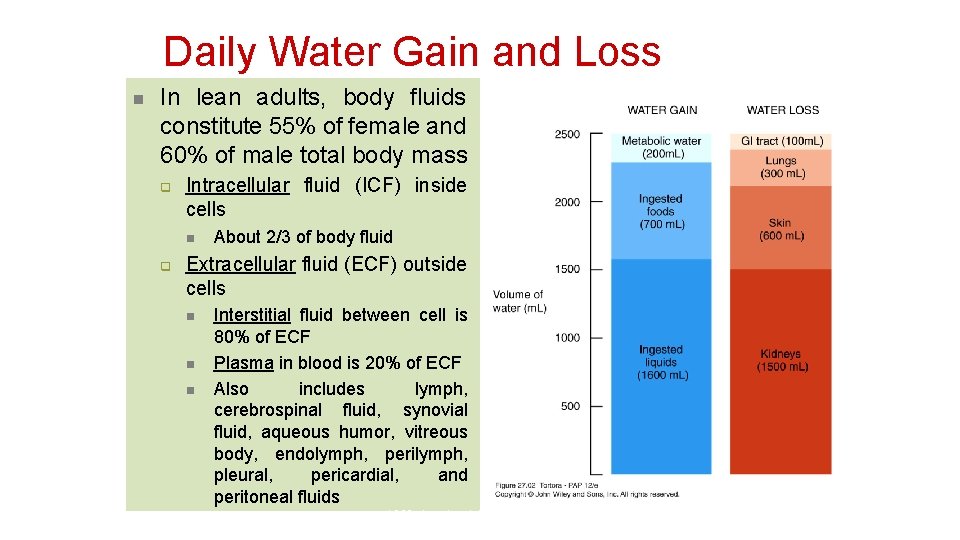
Daily Water Gain and Loss n In lean adults, body fluids constitute 55% of female and 60% of male total body mass q Intracellular fluid (ICF) inside cells n q Extracellular fluid (ECF) outside cells n n n 2/11/2022 About 2/3 of body fluid Interstitial fluid between cell is 80% of ECF Plasma in blood is 20% of ECF Also includes lymph, cerebrospinal fluid, synovial fluid, aqueous humor, vitreous body, endolymph, perilymph, pleural, pericardial, and peritoneal fluids 1399 ﺑﻬﺎﺭ - ﺩﺭﺱ ﺑیﻮﺍﻧﺮژﺘیک ﺩﺭ ﺗﻐﺬیﻪ ﺩﺍﻡ 29
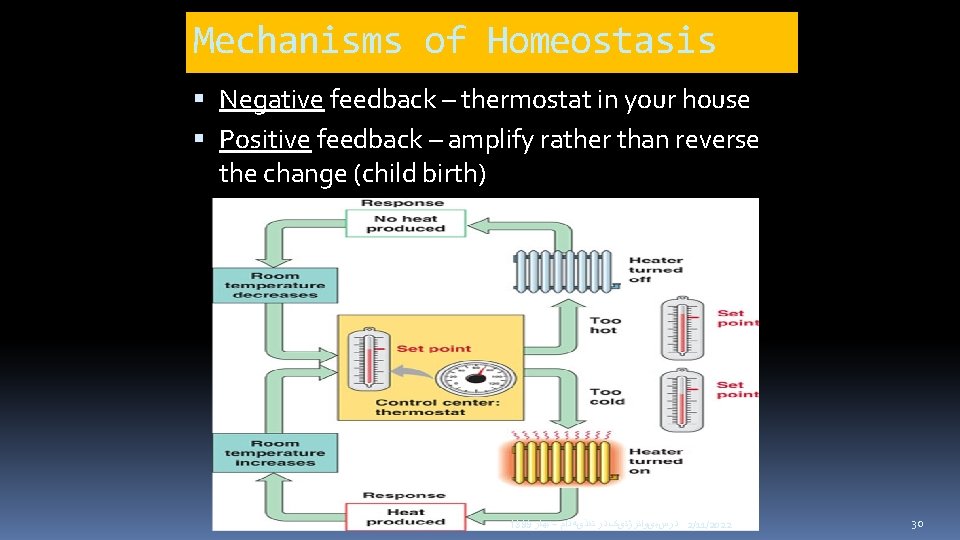
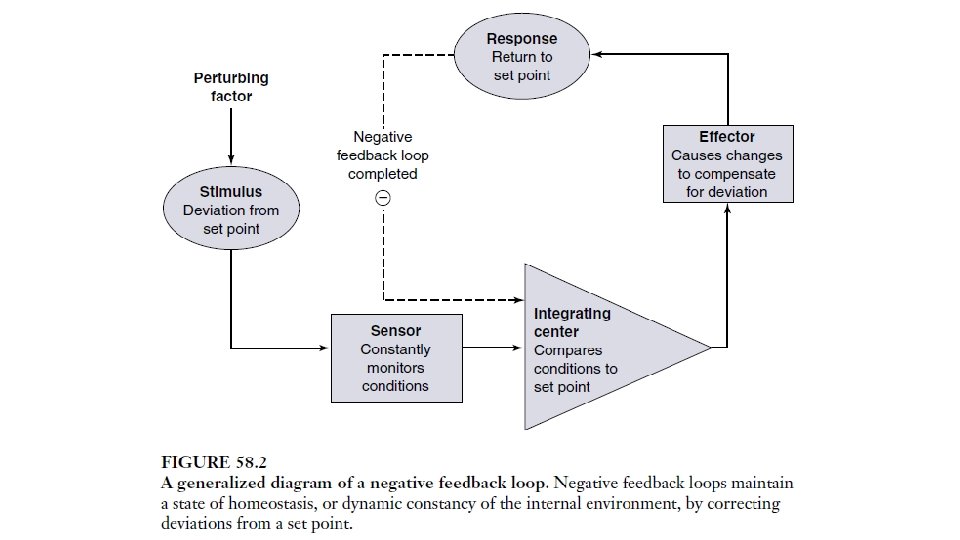
Mechanisms of Homeostasis Negative feedback – thermostat in your house Positive feedback – amplify rather than reverse the change (child birth) 1399 ﺑﻬﺎﺭ - ﺩﺭﺱ ﺑیﻮﺍﻧﺮژﺘیک ﺩﺭ ﺗﻐﺬیﻪ ﺩﺍﻡ 2/11/2022 30
Influences on metabolic rate Size and metabolic rate: amount of energy it takes to maintain each gram of body weight is inversely related to body size. (Example – each gram of a mouse requires about 20 times more calories than a gram of an elephant) Activity and metabolic rate: every animal experiences a range of metabolic rates. Basal Metabolic rate (BMR) – metabolic rate of a non growing endotherm that is at rest, has an empty stomach, and is not experiencing stress. 1, 600 -1, 800 kcal per day for adult male 1, 300 -1, 500 kcal per day for adult female 2/11/2022 1399 ﺑﻬﺎﺭ - ﺩﺭﺱ ﺑیﻮﺍﻧﺮژﺘیک ﺩﺭ ﺗﻐﺬیﻪ ﺩﺍﻡ 31
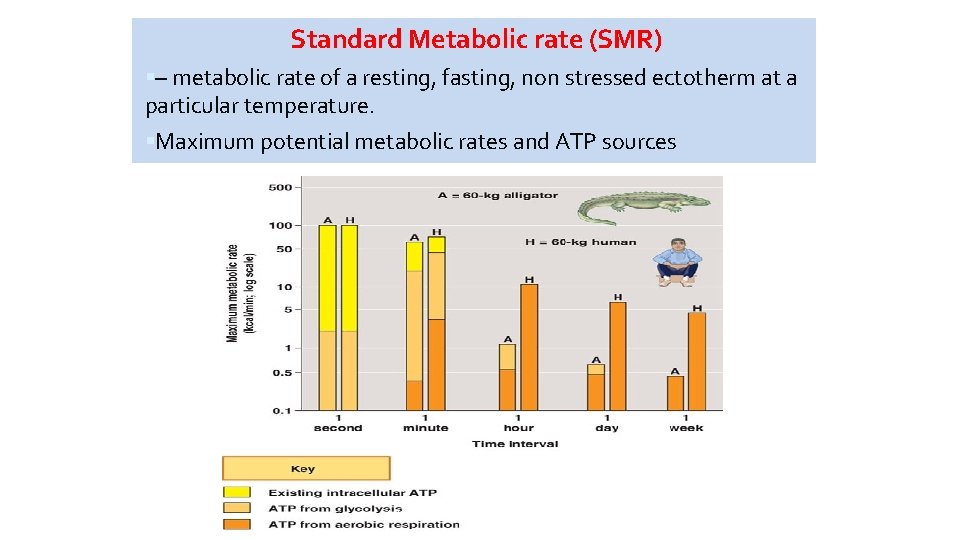
Standard Metabolic rate (SMR) – metabolic rate of a resting, fasting, non stressed ectotherm at a particular temperature. Maximum potential metabolic rates and ATP sources 2/11/2022 1399 ﺑﻬﺎﺭ - ﺩﺭﺱ ﺑیﻮﺍﻧﺮژﺘیک ﺩﺭ ﺗﻐﺬیﻪ ﺩﺍﻡ 32
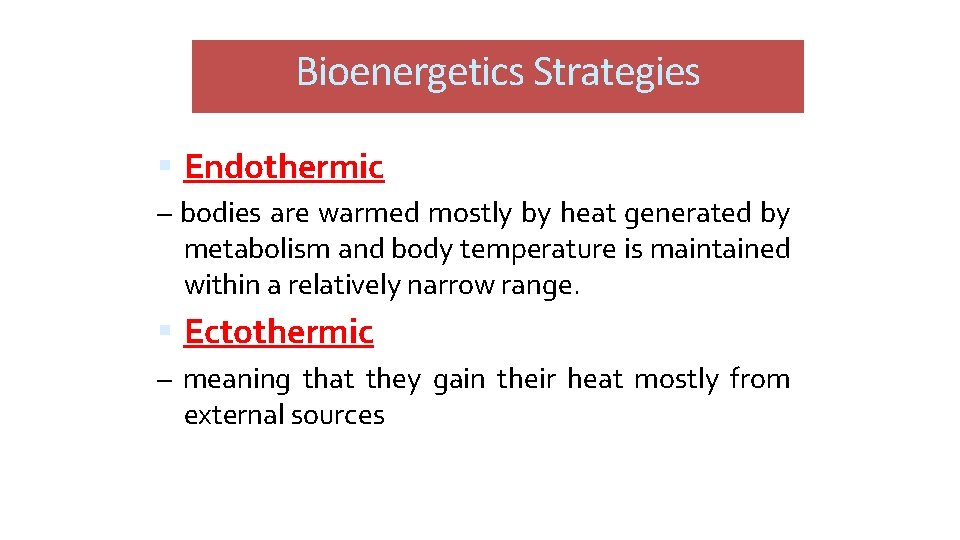
Bioenergetics Strategies Endothermic – bodies are warmed mostly by heat generated by metabolism and body temperature is maintained within a relatively narrow range. Ectothermic – meaning that they gain their heat mostly from external sources 2/11/2022 1399 ﺑﻬﺎﺭ - ﺩﺭﺱ ﺑیﻮﺍﻧﺮژﺘیک ﺩﺭ ﺗﻐﺬیﻪ ﺩﺍﻡ 33
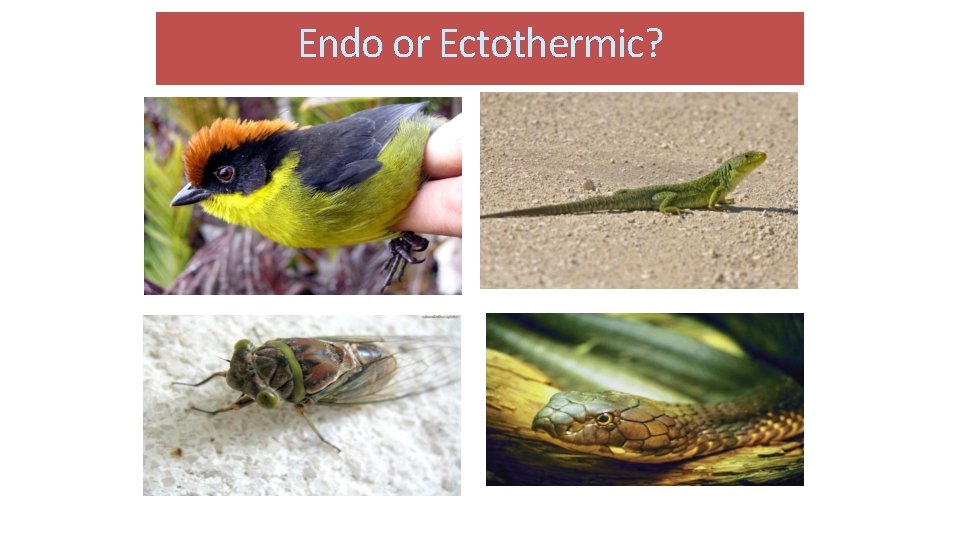
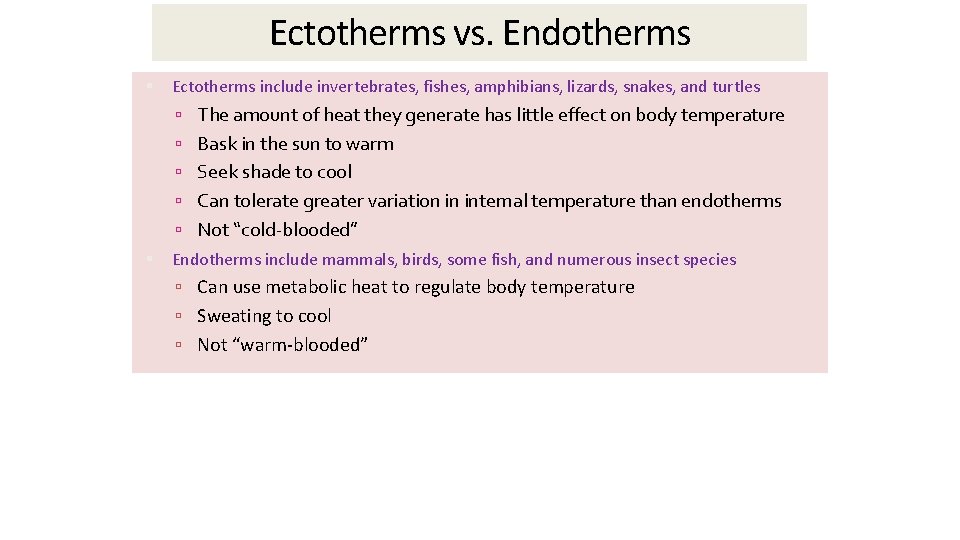
Ectotherms vs. Endotherms Ectotherms include invertebrates, fishes, amphibians, lizards, snakes, and turtles The amount of heat they generate has little effect on body temperature Bask in the sun to warm Seek shade to cool Can tolerate greater variation in internal temperature than endotherms Not “cold-blooded” Endotherms include mammals, birds, some fish, and numerous insect species Can use metabolic heat to regulate body temperature Sweating to cool Not “warm-blooded” 2/11/2022 1399 ﺑﻬﺎﺭ - ﺩﺭﺱ ﺑیﻮﺍﻧﺮژﺘیک ﺩﺭ ﺗﻐﺬیﻪ ﺩﺍﻡ 35
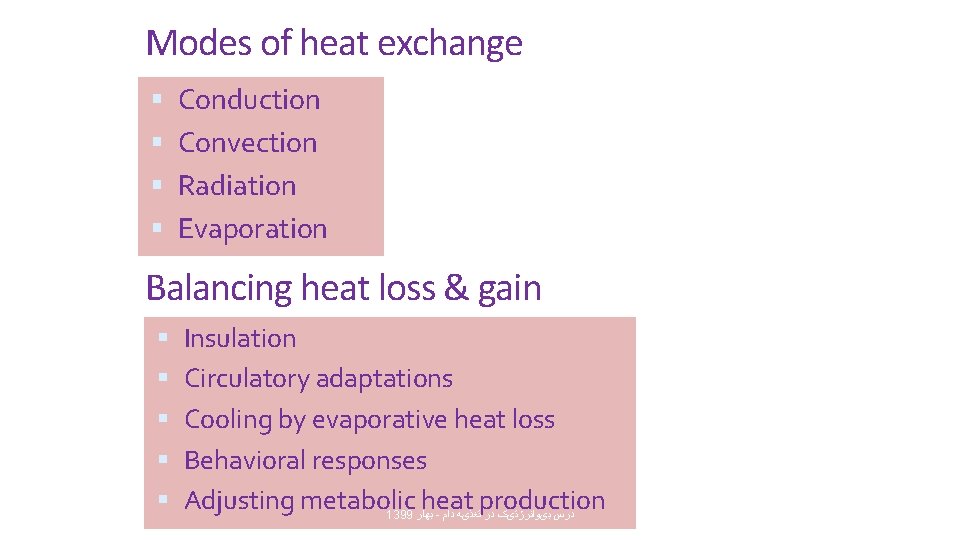
Modes of heat exchange Conduction Convection Radiation Evaporation Balancing heat loss & gain 2/11/2022 Insulation Circulatory adaptations Cooling by evaporative heat loss Behavioral responses Adjusting metabolic heat production 1399 ﺑﻬﺎﺭ - ﺩﺭﺱ ﺑیﻮﺍﻧﺮژﺘیک ﺩﺭ ﺗﻐﺬیﻪ ﺩﺍﻡ 37
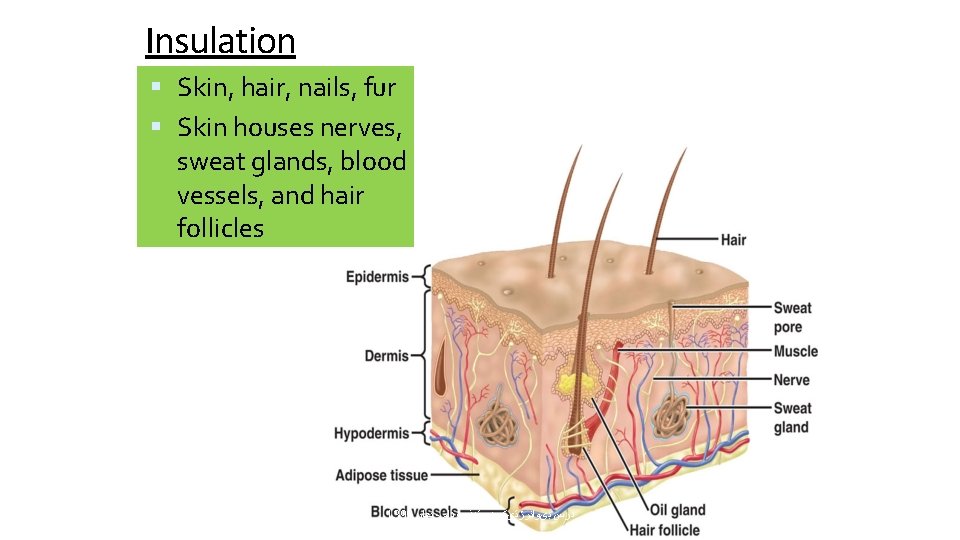
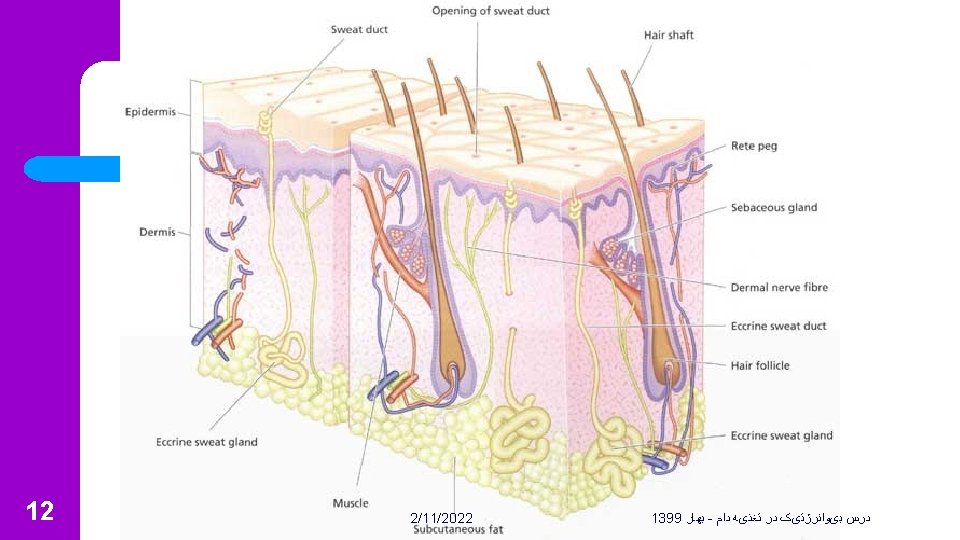
Insulation Skin, hair, nails, fur Skin houses nerves, sweat glands, blood vessels, and hair follicles 2/11/2022 1399 ﺑﻬﺎﺭ - ﺩﺭﺱ ﺑیﻮﺍﻧﺮژﺘیک ﺩﺭ ﺗﻐﺬیﻪ ﺩﺍﻡ 38
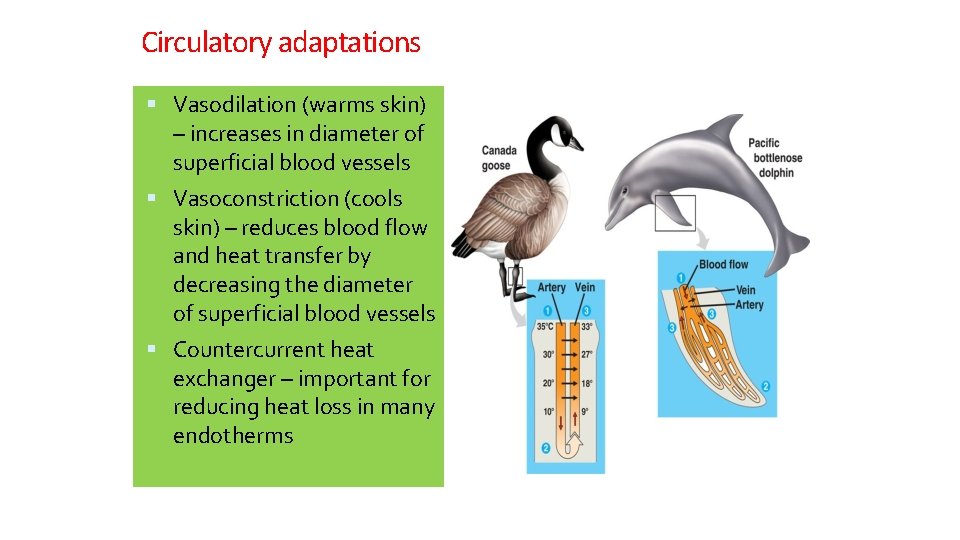
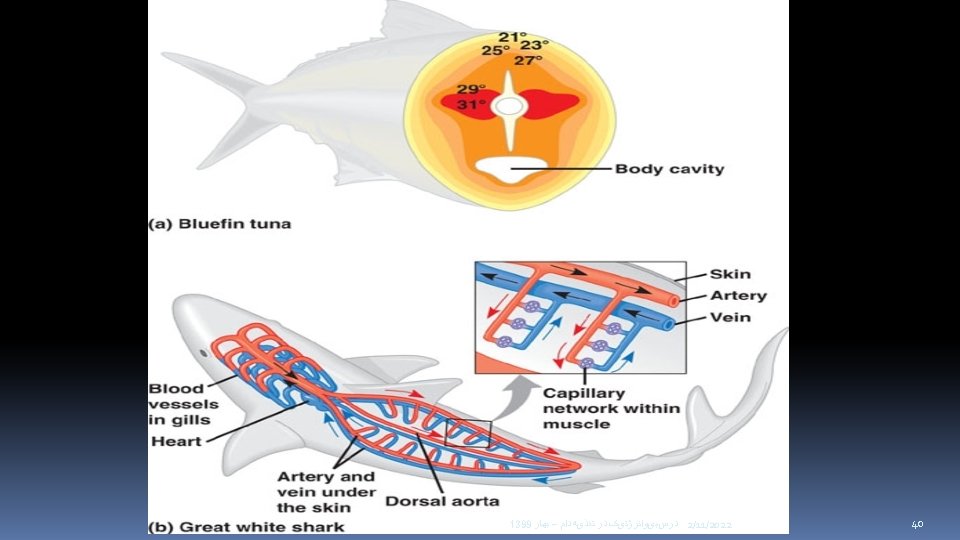
Circulatory adaptations Vasodilation (warms skin) – increases in diameter of superficial blood vessels Vasoconstriction (cools skin) – reduces blood flow and heat transfer by decreasing the diameter of superficial blood vessels Countercurrent heat exchanger – important for reducing heat loss in many endotherms 2/11/2022 1399 ﺑﻬﺎﺭ - ﺩﺭﺱ ﺑیﻮﺍﻧﺮژﺘیک ﺩﺭ ﺗﻐﺬیﻪ ﺩﺍﻡ 39
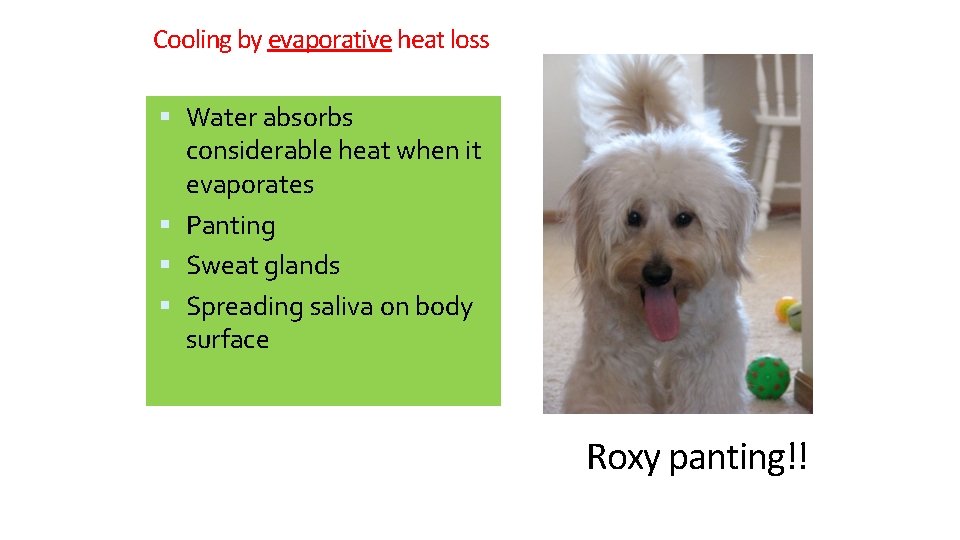
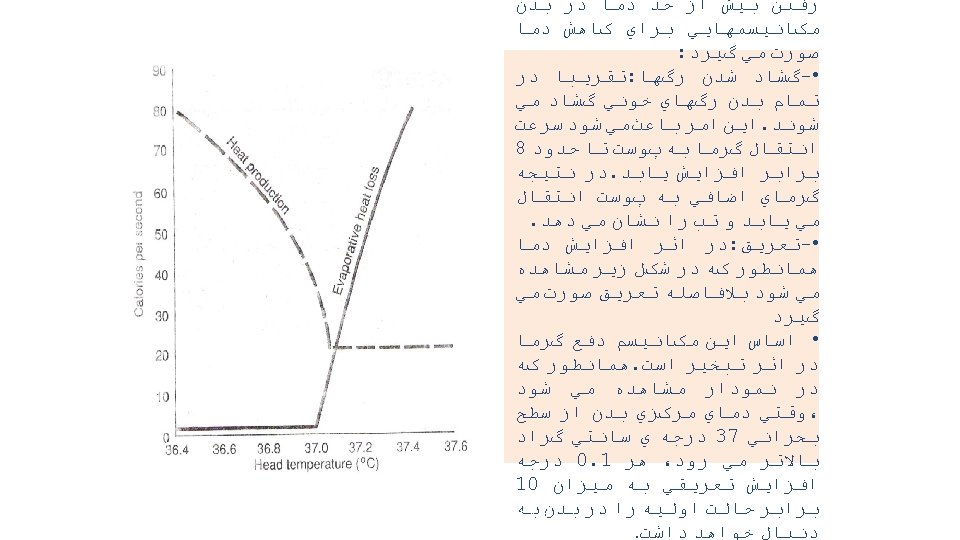
Cooling by evaporative heat loss Water absorbs considerable heat when it evaporates Panting Sweat glands Spreading saliva on body surface Roxy panting!! 2/11/2022 1399 ﺑﻬﺎﺭ - ﺩﺭﺱ ﺑیﻮﺍﻧﺮژﺘیک ﺩﺭ ﺗﻐﺬیﻪ ﺩﺍﻡ 41
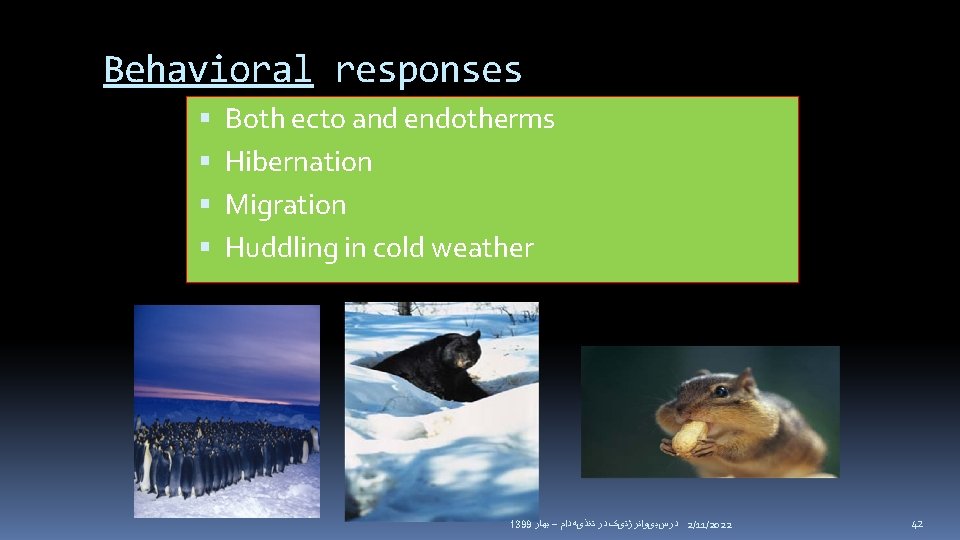
Behavioral responses Both ecto and endotherms Hibernation Migration Huddling in cold weather 1399 ﺑﻬﺎﺭ - ﺩﺭﺱ ﺑیﻮﺍﻧﺮژﺘیک ﺩﺭ ﺗﻐﺬیﻪ ﺩﺍﻡ 2/11/2022 42
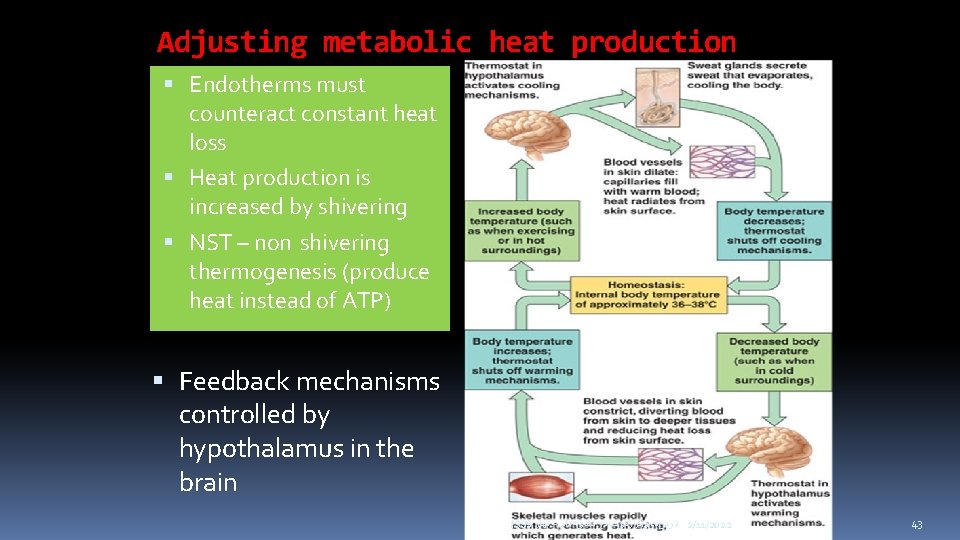
Adjusting metabolic heat production Endotherms must counteract constant heat loss Heat production is increased by shivering NST – non shivering thermogenesis (produce heat instead of ATP) Feedback mechanisms controlled by hypothalamus in the brain 1399 ﺑﻬﺎﺭ - ﺩﺭﺱ ﺑیﻮﺍﻧﺮژﺘیک ﺩﺭ ﺗﻐﺬیﻪ ﺩﺍﻡ 2/11/2022 43
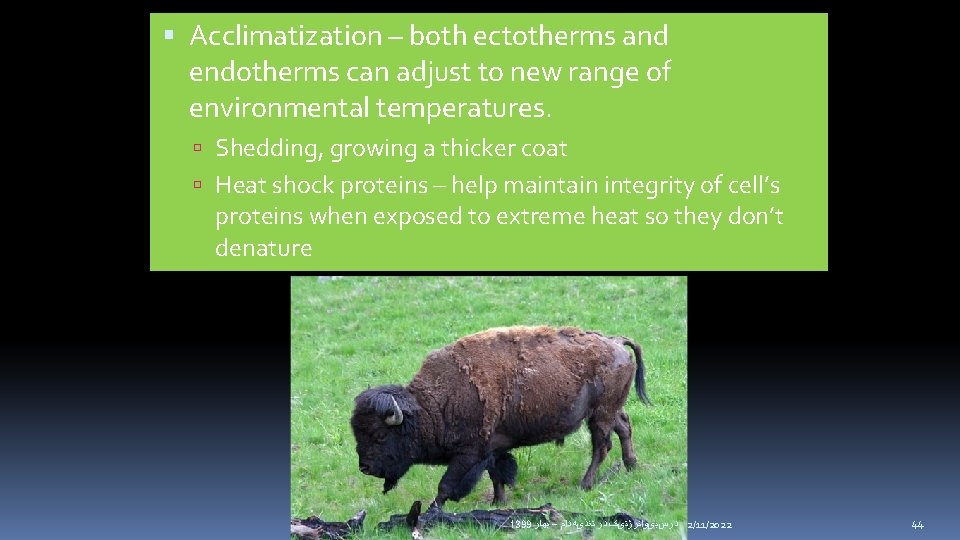
Acclimatization – both ectotherms and endotherms can adjust to new range of environmental temperatures. Shedding, growing a thicker coat Heat shock proteins – help maintain integrity of cell’s proteins when exposed to extreme heat so they don’t denature 1399 ﺑﻬﺎﺭ - ﺩﺭﺱ ﺑیﻮﺍﻧﺮژﺘیک ﺩﺭ ﺗﻐﺬیﻪ ﺩﺍﻡ 2/11/2022 44
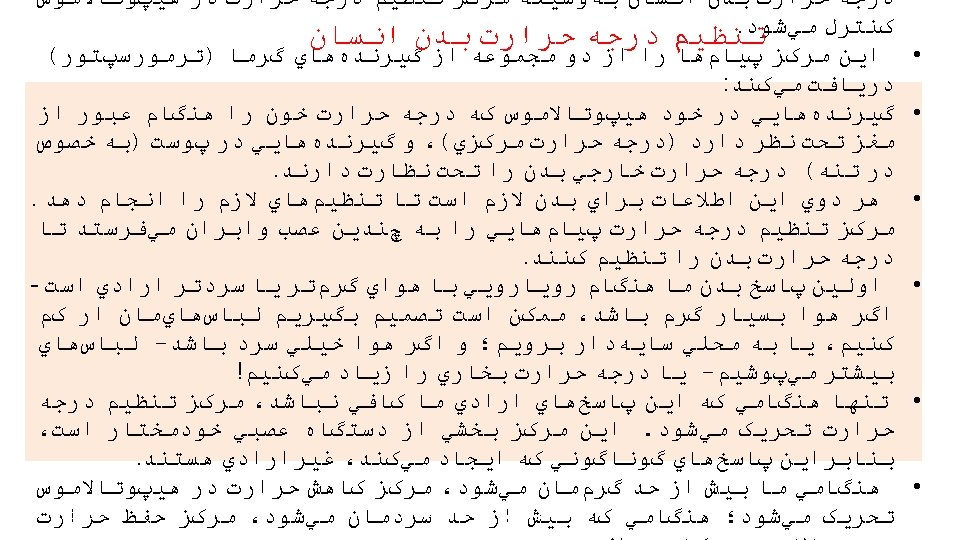
Mechanisms of Thermoregulation • The body uses four mechanisms of heat exchange – Radiation (50%) – loss of heat as infrared rays – Conduction – transfer of heat by direct contact – Convection (15%) – transfer of heat to the surrounding air – Evaporation – heat loss due to the evaporation of water from the lungs, mouth mucosa, and skin (insensible heat loss) • Evaporative heat loss becomes sensible when body temperature rises and sweating produces increased water for vaporization 2/11/2022 1399 ﺑﻬﺎﺭ - ﺩﺭﺱ ﺑیﻮﺍﻧﺮژﺘیک ﺩﺭ ﺗﻐﺬیﻪ ﺩﺍﻡ 45
• Insensible Water Loss - about 20% of indoor heat loss – Each hour, 20– 25 ml of water crosses epithelia & evaporates from alveolar surfaces and skin surface • Sensible Perspiration - from sweat glands – Depends on wide range of activity from inactivity to secretory rates of 2– 4 liters/hr Regulating Heat Gain and Loss • Is coordinated by heat-gain center and heatloss center in anterior hypothalamus 2/11/2022 1399 ﺑﻬﺎﺭ - ﺩﺭﺱ ﺑیﻮﺍﻧﺮژﺘیک ﺩﺭ ﺗﻐﺬیﻪ ﺩﺍﻡ 46
3 Actions of Heat-Loss Center 1. Inhibition of vasomotor center: – causes peripheral vasodilation & warm blood flows to surface of body – skin temperatures rise & radiational and convective losses increase 2. Sweat glands are stimulated to increase secretory output: – perspiration flows across body surface & evaporative heat losses increase 3. Respiratory centers are stimulated: – depth of respiration increases 2/11/2022 1399 ﺑﻬﺎﺭ - ﺩﺭﺱ ﺑیﻮﺍﻧﺮژﺘیک ﺩﺭ ﺗﻐﺬیﻪ ﺩﺍﻡ 47
Mechanisms for Promoting Heat Gain • The heat-gain center prevents low body temperature (hypothermia) • Sympathetic vasomotor center decreases blood flow to dermis reducing losses by radiation, convection, and conduction • In cold conditions blood flow to skin is restricted – blood returning from limbs is shunted to deep, insulated veins (countercurrent exchange) 2/11/2022 1399 ﺑﻬﺎﺭ - ﺩﺭﺱ ﺑیﻮﺍﻧﺮژﺘیک ﺩﺭ ﺗﻐﺬیﻪ ﺩﺍﻡ 48
Countercurrent Exchange • Is heat exchange between fluids moving in opposite directions: – traps heat close to body core & restricts heat loss in cold conditions • Blood is diverted to a network of deep, insulated veins – Venous network wraps around deep arteries • Heat is conducted from warm blood flowing outward to cooler blood returning from periphery 2/11/2022 1399 ﺑﻬﺎﺭ - ﺩﺭﺱ ﺑیﻮﺍﻧﺮژﺘیک ﺩﺭ ﺗﻐﺬیﻪ ﺩﺍﻡ 49
Heat Generation • Shivering thermogenesis – Increased muscle tone increases energy consumption of skeletal muscle…energy consumption produces heat – Involves both agonists and antagonists – Shivering increases heat generation up to 400% • Nonshivering thermogenesis – Releases hormones that increase metabolic activity – Raises heat production in adults 10– 15% over extended time period 2/11/2022 1399 ﺑﻬﺎﺭ - ﺩﺭﺱ ﺑیﻮﺍﻧﺮژﺘیک ﺩﺭ ﺗﻐﺬیﻪ ﺩﺍﻡ 50
Torpor & energy conservation Torpor – a physiological state in which activity is low and metabolism decreases Hibernation – long term torpor to winter cold and food scarcity Estivation – summer torpor Daily torpor – adapted to feeding patterns 1399 ﺑﻬﺎﺭ - ﺩﺭﺱ ﺑیﻮﺍﻧﺮژﺘیک ﺩﺭ ﺗﻐﺬیﻪ ﺩﺍﻡ 2/11/2022 51
- Slides: 51