
Skin Appendages or Accessory Organs of Skin Skin
- Slides: 11
Skin Appendages or Accessory Organs of Skin
Skin Appendages • Derived from epidermis but extend into dermis • Include – Hair and hair follicles – Sebaceous (oil) glands – Sweat (sudoiferous) glands – Nails
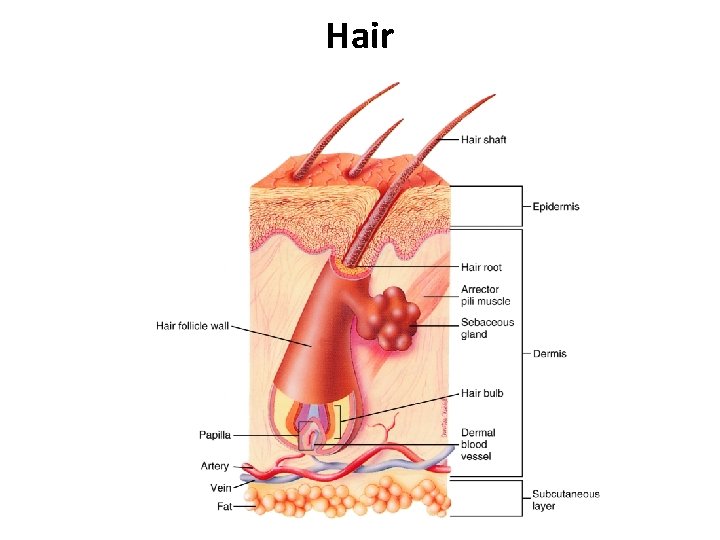
Hairs are present on most skin surfaces except the palms and soles. Hair consists of: • Shaft -- visible • Root -- below the surface • Follicle surrounds root – External root sheath – Internal root sheath – Base of follicle is bulb • Blood vessels
Hair
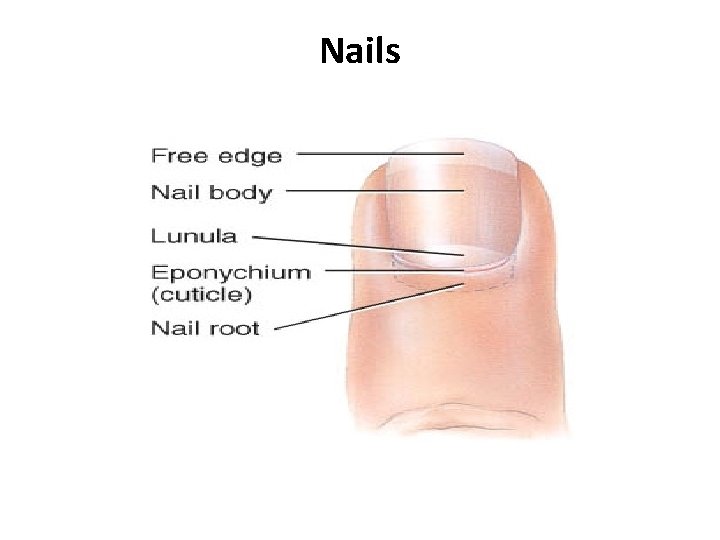
Nails • Tightly packed keratinized cells • Nail body – Visible portion pink due to underlying capillaries – Free edge appears white • Nail root – buried under skin layers – lunula is white due to thickened stratum basale • Eponychium (cuticle)
Nails
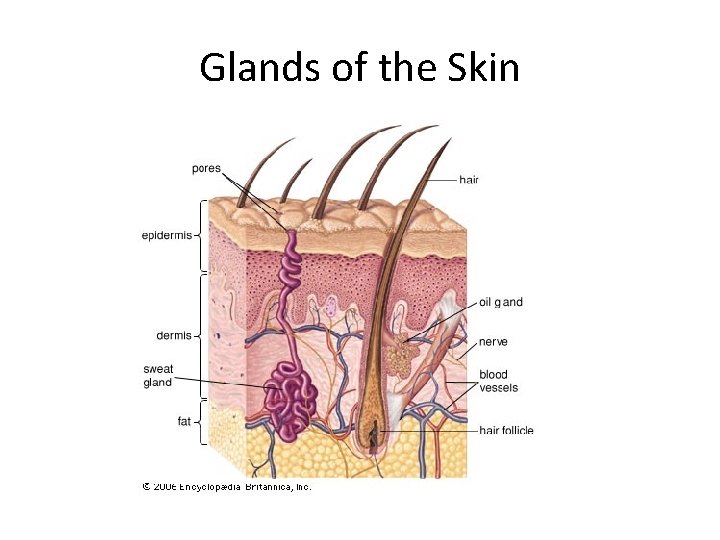
Glands of Skin • Sebaceous (oil) glands are usually connected to hair follicles; they are absent in the palms and soles o Produce sebum o Contain cholestérol, proteins, fats & salts o Moistens hairs o Waterproofs and softens the skin o Inhibits growth of bacteria & fungi (ringworm) o Acne – Bacterial inflammation of glands – Secretions are stimulated by hormones at puberty.
Glands of the Skin
• Sudoriferous (sweat) glands Sweat glands (most areas of skin) – regulate body temperature through evaporation (perspiration) – help eliminate wastes such as urea. Types of sweat glands: • Eccrine or merocrine – Most numerous – True sweat: 99% water, some salts, traces of waste – Open through pores • Apocrine – Axillaries, anal and genital areas only – Ducts open into hair follicles – The organic molecules in it decompose with time - odor • Modified apocrine glands – Ceruminous – secrete earwax – Mammary – secrete milk
Disorders of the Integumentary System • Acne vulgaris – Caused by increased secretion of oil related to increased hormones during puberty • Albinism – Inherited disorder in which melanin is not produced • Alopecia – Baldness • Cellulitis – Bacterial infection of the dermis and subcutaneous layer of the skin • Dandruff – White flakes of dead skin cells from the scalp • Eczema – Group of disorders caused by allergic or irritant reactions
• Hirsutism – Abnormal amount of hair growth in unusual places • Psoriasis – Chronic skin disorder in which too many epidermal cells are produced • Rashes – May result from viral infection, especially in children • Scleroderma – Rare autoimmune disorder that affects blood vessels and connective tissues of the skin • Skin cancer – Three forms are basal, squamous, and melanoma • Wart – Papule caused by a viral infection