
Skin and SoftTissue Infections IMPETIGO ABSCESSES CELLULITIS AND
Skin and Soft-Tissue Infections IMPETIGO, ABSCESSES, CELLULITIS, AND ERYSIPELA 1
Objectives 1. Describe the anatomical structure of skin and soft tissues. 2. Differentiate the various types of skin and soft tissue infections and there clinical presentation. 3. Name bacteria commonly involved in skin and soft tissue infections 4. Describe the pathogenesis of various types of skin and soft tissue infections 5. Recognize specimens that are acceptable and unacceptable for different types of skin and soft tissue infections Describe the microscopic and colony morphology and the results of differentiating 6. bacteria isolates in addition to other non-microbiological investigation Discuss antimicrobial susceptibility testing of anaerobes including methods and 7. antimicrobial agents to be tested. Describe the major approaches to treat of skin and soft tissue infections 8. � 2 either medical or surgical.
3
Introduction �Common �Can be mild to moderate or sever muscle or bone and lungs or heart valves infection. �Staphylococcus aureus and streptococcus are the most cause �Emerging antibiotic resistance among � Staphylococcus aureus (methicillin resistance) �Streptococcus pyogenes (erythromycin resistance) 4
Key to developing an adequate differential diagnosis requires � History � Patient’s immune status, the geographical locale, travel history, recent trauma or surgery, previous antimicrobial therapy, lifestyle, and animal exposure or bites � Physical examination � To determine the severity of infection � Investigation � CBCs, Chemistry � Swab, biopsy or aspiration � Radiographic procedures (X-rays, CT, MRI) �Level of infection and the presence of gas or abscess. � Diagnostic � Surgical and therapeutic exploration or debridement � Antibiotics treatment 5
6
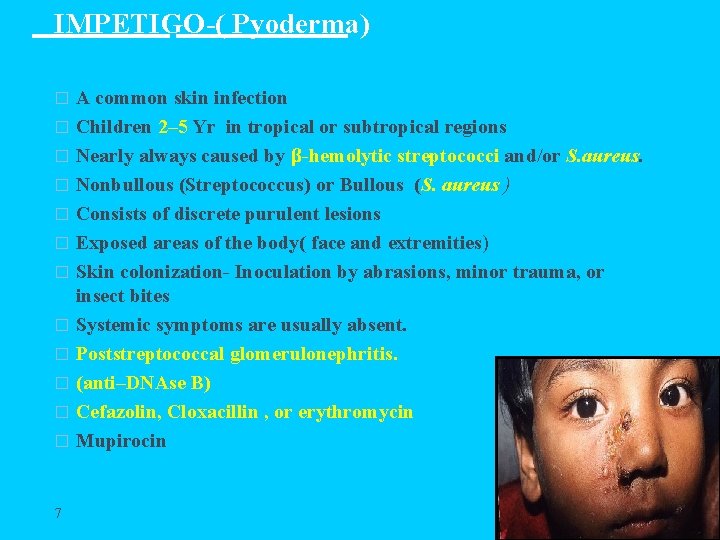
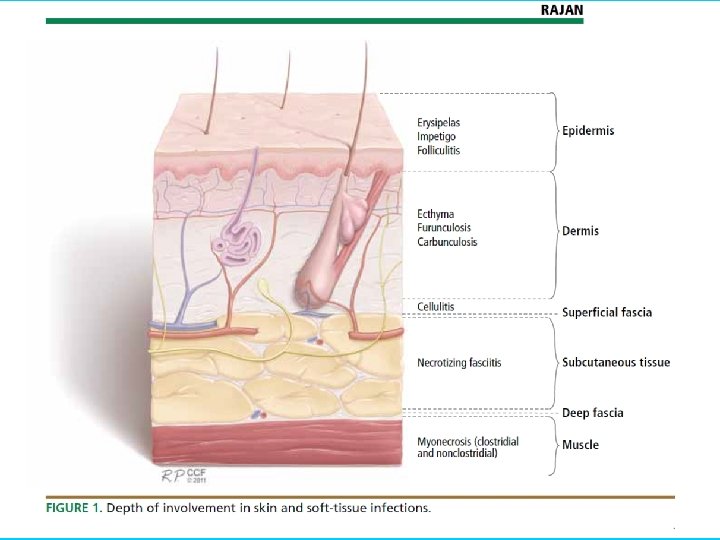
IMPETIGO-( Pyoderma) A common skin infection � Children 2– 5 Yr in tropical or subtropical regions � Nearly always caused by β-hemolytic streptococci and/or S. aureus. � Nonbullous (Streptococcus) or Bullous (S. aureus ) � Consists of discrete purulent lesions � Exposed areas of the body( face and extremities) � Skin colonization- Inoculation by abrasions, minor trauma, or insect bites � Systemic symptoms are usually absent. � Poststreptococcal glomerulonephritis. � (anti–DNAse B) � Cefazolin, Cloxacillin , or erythromycin � Mupirocin � 7
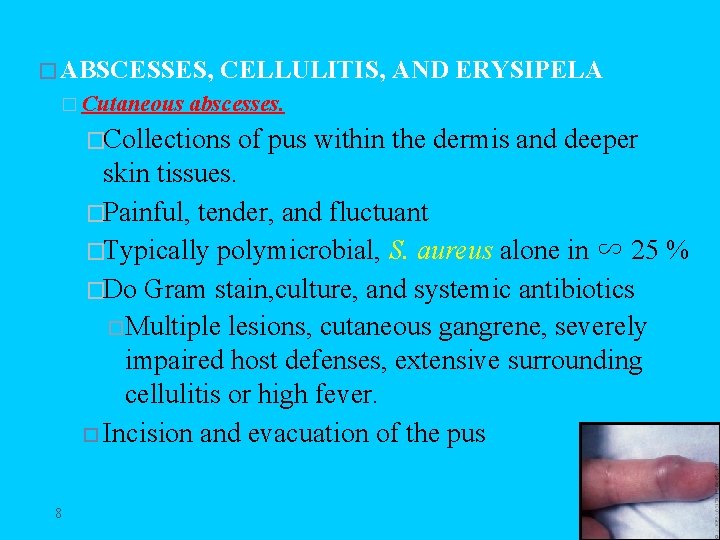
� ABSCESSES, � Cutaneous CELLULITIS, AND ERYSIPELA abscesses. �Collections of pus within the dermis and deeper skin tissues. �Painful, tender, and fluctuant �Typically polymicrobial, S. aureus alone in ∽ 25 % �Do Gram stain, culture, and systemic antibiotics Multiple lesions, cutaneous gangrene, severely impaired host defenses, extensive surrounding cellulitis or high fever. Incision and evacuation of the pus 8

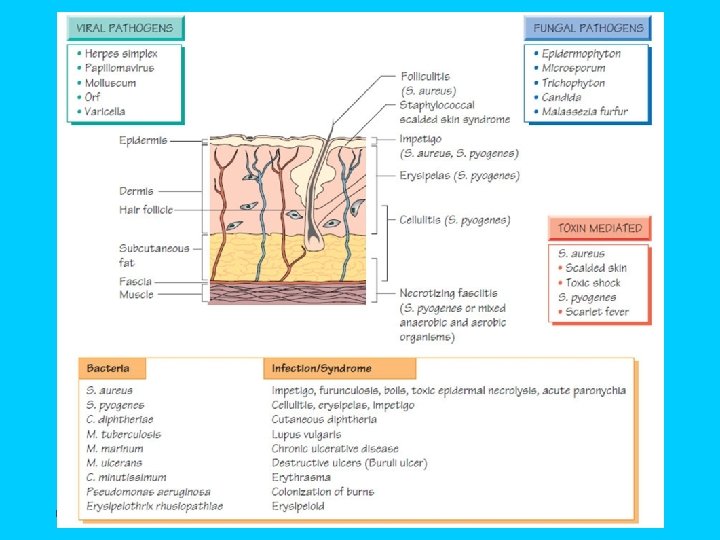
� Furuncles and carbuncles. �Furuncles (or “boils”) are infections of the hair follicle (folliculitis ), usually caused by S. aureus, in which suppuration extends through the dermis into the subcutaneous tissue �Carbuncle- extension to involve several adjacent follicles with coalescent inflammatory mass - back of the neck especially in diabetics �Larger furuncles and all carbuncles require incision and drainage. �Systemic antibiotics are usually unnecessary 9
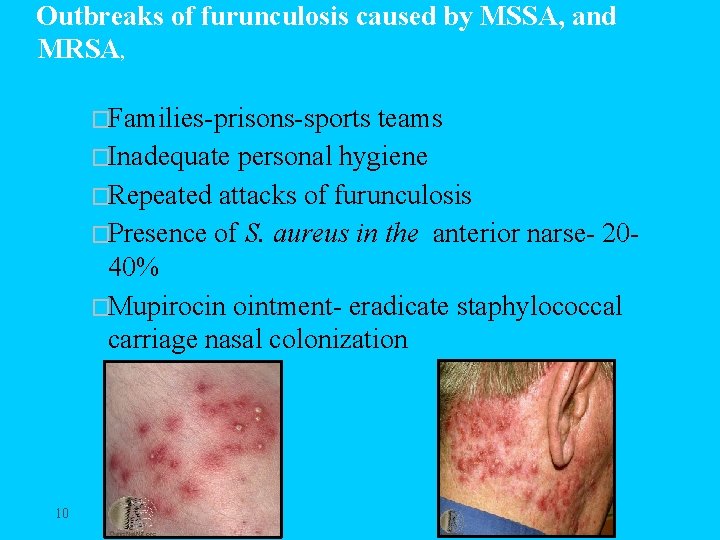
Outbreaks of furunculosis caused by MSSA, and MRSA, �Families-prisons-sports teams �Inadequate personal hygiene �Repeated attacks of furunculosis �Presence of S. aureus in the anterior narse- 2040% �Mupirocin ointment- eradicate staphylococcal carriage nasal colonization 10
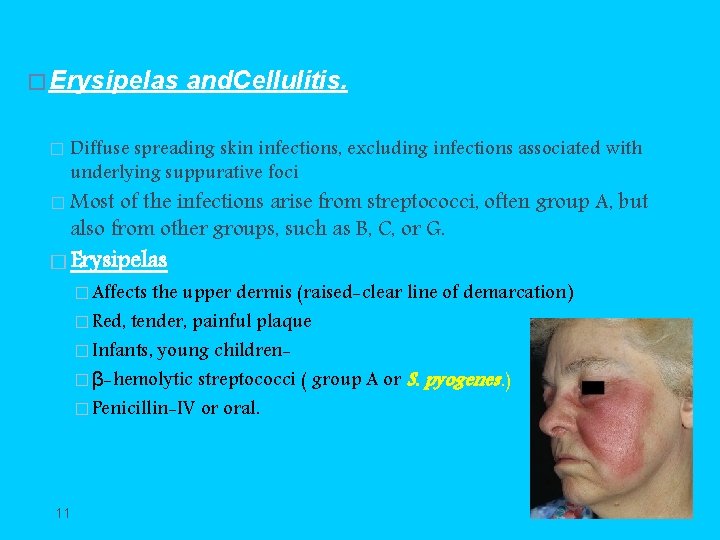
� Erysipelas � and. Cellulitis. Diffuse spreading skin infections, excluding infections associated with underlying suppurative foci � Most of the infections arise from streptococci, often group A, but also from other groups, such as B, C, or G. � Erysipelas � Affects the upper dermis (raised-clear line of demarcation) � Red, tender, painful plaque � Infants, young children� β-hemolytic streptococci ( group A or S. pyogenes. ) � Penicillin-IV or oral. 11
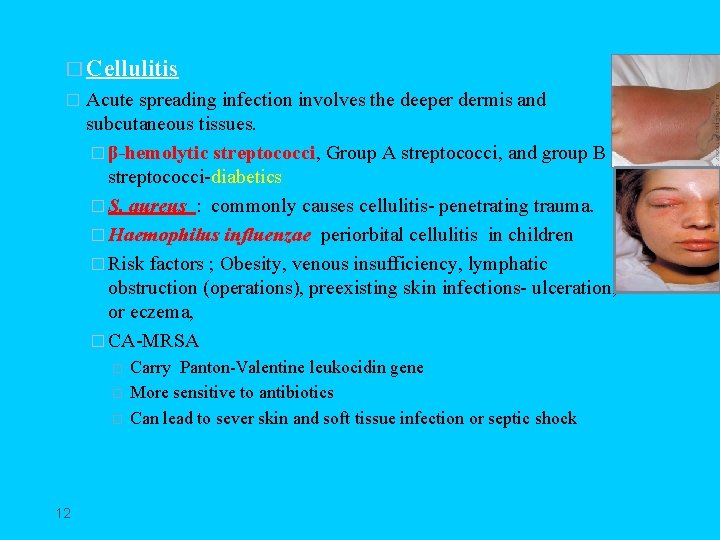
� Cellulitis � Acute spreading infection involves the deeper dermis and subcutaneous tissues. � β-hemolytic streptococci, Group A streptococci, and group B streptococci-diabetics � S. aureus : commonly causes cellulitis- penetrating trauma. � Haemophilus influenzae periorbital cellulitis in children � Risk factors ; Obesity, venous insufficiency, lymphatic obstruction (operations), preexisting skin infections- ulceration, or eczema, � CA-MRSA 12 Carry Panton-Valentine leukocidin gene More sensitive to antibiotics Can lead to sever skin and soft tissue infection or septic shock
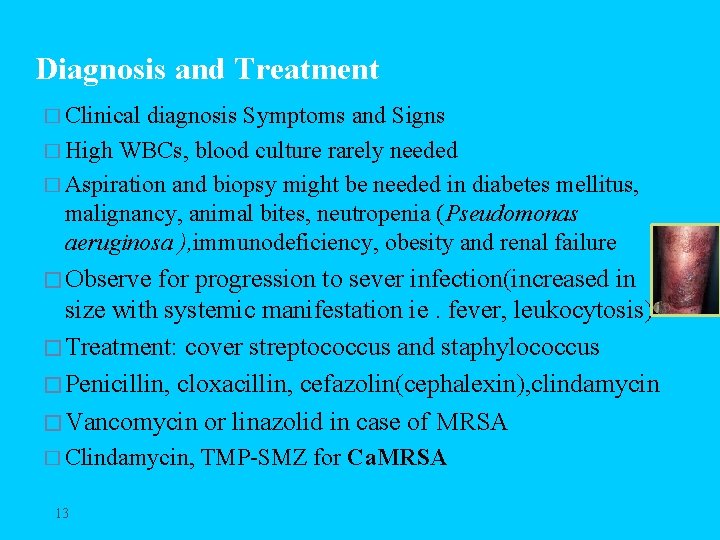
Diagnosis and Treatment � Clinical diagnosis Symptoms and Signs � High WBCs, blood culture rarely needed � Aspiration and biopsy might be needed in diabetes mellitus, malignancy, animal bites, neutropenia (Pseudomonas aeruginosa ), immunodeficiency, obesity and renal failure � Observe for progression to sever infection(increased in size with systemic manifestation ie. fever, leukocytosis) � Treatment: cover streptococcus and staphylococcus � Penicillin, cloxacillin, cefazolin(cephalexin), clindamycin � Vancomycin or linazolid in case of MRSA � Clindamycin, 13 TMP-SMZ for Ca. MRSA
Necrotizing fasciitis Flesh-eating disease 14
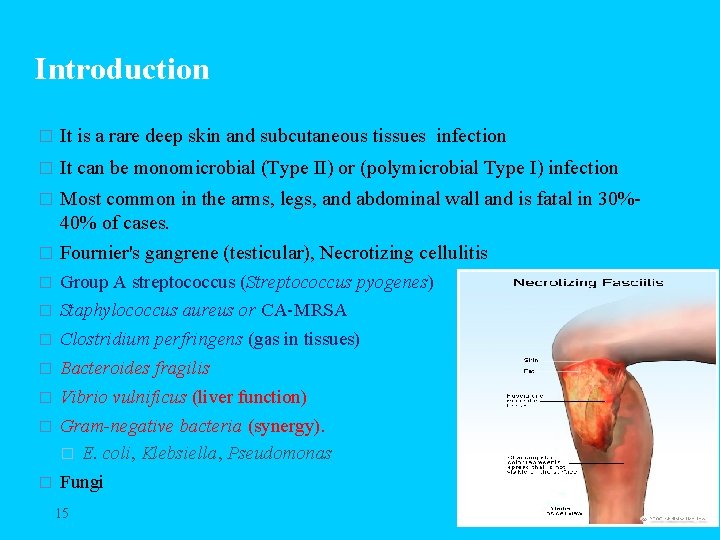
Introduction � It is a rare deep skin and subcutaneous tissues infection � It can be monomicrobial (Type II) or (polymicrobial Type I) infection Most common in the arms, legs, and abdominal wall and is fatal in 30%40% of cases. � Fournier's gangrene (testicular), Necrotizing cellulitis � � Group A streptococcus (Streptococcus pyogenes) � Staphylococcus aureus or CA-MRSA � Clostridium perfringens (gas in tissues) � Bacteroides fragilis � Vibrio vulnificus (liver function) � Gram-negative bacteria (synergy). � E. coli, Klebsiella, Pseudomonas � Fungi 15
Risk factors Immune-suppression � Chronic diseases: ( diabetes, liver and kidney diseases, malignancy � Trauma: (laceration, cut, abrasion, contusion, burn, bite, subcutaneous injection, � operative incision) Recent viral infection rash (chickenpox) � Steroids � Alcoholism � Malnutrition � Idiopathic � 16
Pathophysiology � Destruction of skin and muscle by releasing toxins � Streptococcal pyogenic exotoxins � Superantigen � Non-specific activation of T-cells � Overproduction of cytokines � Severe systemic illness (Toxic shock syndrome) 17
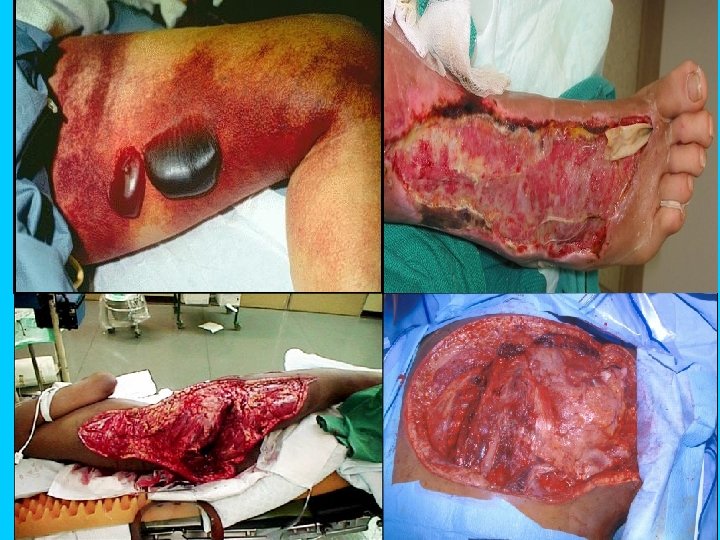
Signs and symptoms � � � 18 Rapid progression of sever pain with fever , chills (typical) Swelling , redness, hotness, blister, gas formation, gangrene and necrosis Blisters with subsequent necrosis , necrotic eschars Diarrhea and vomiting (very ill) Shock organ failure Mortality as high as 73 % if untreated
19
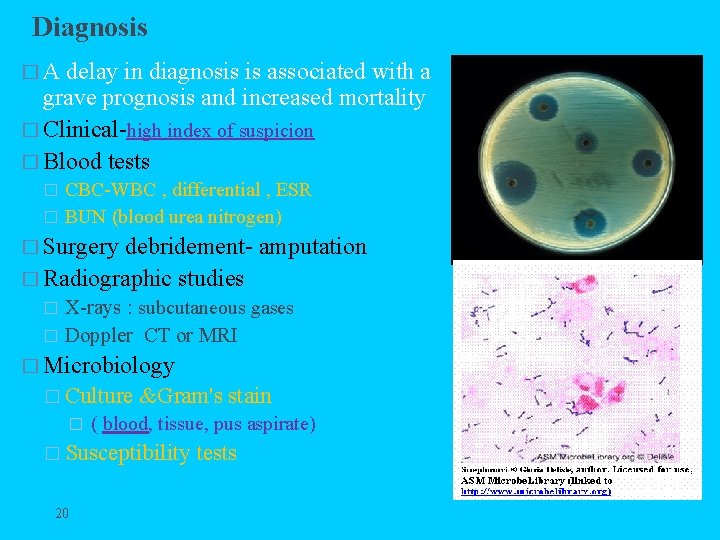
Diagnosis �A delay in diagnosis is associated with a grave prognosis and increased mortality � Clinical-high index of suspicion � Blood tests CBC-WBC , differential , ESR � BUN (blood urea nitrogen) � � Surgery debridement- amputation � Radiographic studies X-rays : subcutaneous gases � Doppler CT or MRI � � Microbiology � Culture � &Gram's stain ( blood, tissue, pus aspirate) � Susceptibility 20 tests
Treatment If clinically suspected patient needs to be hospitalized OR require admission to ICU � Start intravenous antibiotics immediately � Antibiotic selection based on bacteria suspected � broad spectrum antibiotic combinations against � � methicillin-resistant Staphylococcus aureus (MRSA) anaerobic bacteria Gram-negative and gram-positive bacilli � Surgeon consultation � Extensive Debridement of necrotic tissue and collection of tissue samples � 21 Can reduce morbidity and mortality

Treatment � Antibiotics combinations � Penicillin-clindamycin-gentamicin � Ampicillin/sulbactam � Cefazolin plus metronidazol � Piperacillin/tazobactam � Clostridium perfringens - penicillin G � Hyperbaric 22 oxygen therapy (HBO) treatment
Pyomyositis Acute bacterial infection of skeletal muscle, usually caused by Staph. aureus ¡ No predisposing penetrating wound, vascular insufficiency, or contiguous infection ¡ Most cases occur in the tropics ¡ 60% of cases outside of tropics have predisposing RF: DM, Et. OH liver disease, steroid rx, HIV, hematologic malignancy ¡
Pyomyositis Hx of blunt trauma or vigorous exercise (50%), then period of swelling without pain. 10 -21 days later, pain, tenderness, swelling and fever, Pus can be aspirated from muscle. 3 rd stage: sepsis, later metastatic abscesses if untreated ¡ Dx: X-ray, US, MRI or CT ¡ Rx: surgical drainage +abx ¡
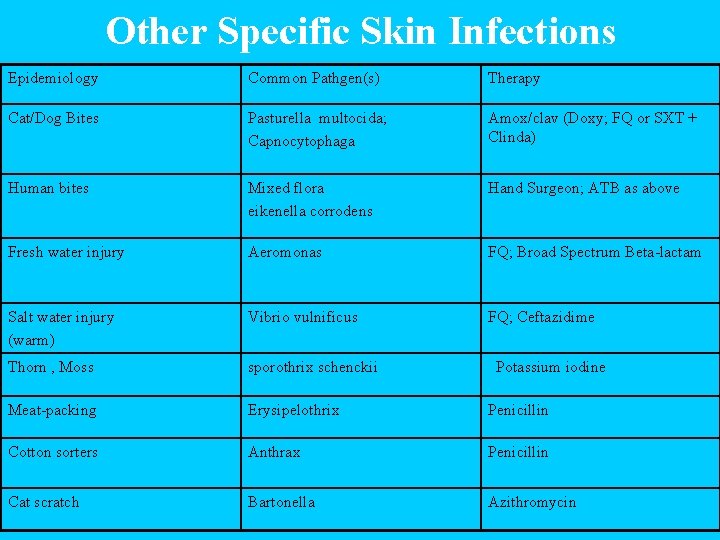
Other Specific Skin Infections Epidemiology Common Pathgen(s) Therapy Cat/Dog Bites Pasturella multocida; Capnocytophaga Amox/clav (Doxy; FQ or SXT + Clinda) Human bites Mixed flora eikenella corrodens Hand Surgeon; ATB as above Fresh water injury Aeromonas FQ; Broad Spectrum Beta-lactam Salt water injury (warm) Vibrio vulnificus FQ; Ceftazidime Thorn , Moss sporothrix schenckii Meat-packing Erysipelothrix Penicillin Cotton sorters Anthrax Penicillin Cat scratch Bartonella Azithromycin Potassium iodine
TAKE HOME POINTS � Most commonly caused by Staphylococcus aureus and Streptococcus pyogenes � Risk factors for developing SSTIs include breakdown of the epidermis, surgical procedures , crowding, comorbidities, venous stasis, lymphedema � Most of the infection are mild and can be managed on an outpatient basis � In case 26
TAKE HOME POINTS � Most SSTIs can be managed on an outpatient basis, although patients with evidence of rapidly progressive infection, high fevers, or other signs of systemic inflammatory response should be monitored in the hospital setting. � Superficial SSTIs typically do not require systemic antibiotic treatment and can be managed with topical antibiotic agents, heat packs, or incision and drainage. � Systemic antibiotic agents that provide coverage for both Staphylococcus aureus and Streptococcus pyogenes are most commonly used as empiric therapy for both uncomplicated and complicated deeper infections. 27

28
- Slides: 28