
Skin and cord care for infection prevention Dr
- Slides: 10
Skin and cord care for infection prevention Dr Shiv Sajan Saini MD, DM (Neonatology) Assistant Professor Department of Pediatrics, PGIMER, Chandigarh
Introduction • Skin- layer of natural defence • Skin of preterm neonate üImmature in immediate postnatal life üEasily be damaged- prone to microbial invasion • Potentially beneficial & harmful interventions affecting skin integrity • Important to recognize
Objectives • Umbilical cord care • Care of the nappy area • Role of vernix caseosa • Role of bathing • Role of emollients • Care during application of adhesives
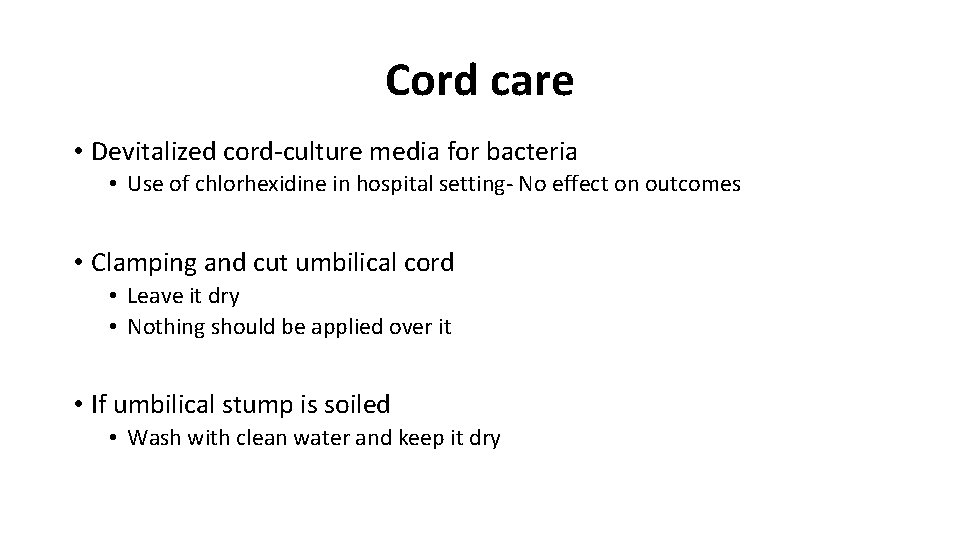
Cord care • Devitalized cord-culture media for bacteria • Use of chlorhexidine in hospital setting- No effect on outcomes • Clamping and cut umbilical cord • Leave it dry • Nothing should be applied over it • If umbilical stump is soiled • Wash with clean water and keep it dry
Diaper area • Skin of diaper area - Moist üProne to maceration, exposed to microorganisms • Good absorbent nappy, frequent changes • Skin - dried and aired between nappy changes • Soiled diaper area üWarm water and soft cotton cloth üWiped from front to back • Napkin rash - emollient application
Vernix caseosa • Lipid rich substance adhered to skin at birth ü Shed automatically by 24 to 48 hrs. • Potential role ü Decreased transepidermal water loss, temperature maintenance ü Might play a role in innate immunity • Attempt to remove damage superficial layers of skin ü Increase chances of microbial invasion • Vernix caseosa should not be removed
Bathing • Stable late preterm neonates • Initial bath - after 24 hours • No bathing in hospital setting • Stable very and moderate preterm neonates • Only sponging • Bathing after cord falls off • Soaps and cleansers - avoided in first few weeks
Emollients for the skin • Oil application • Decreased transepidermal water loss • Improved weight gain • Vegetable oils (like coconut oil, sunflower oil) used for oil massage • Mustard oil - not to be used as irritant • Avoided in ELBW neonates in first week • Extremely fragile skin
Skin care during procedures • Excessive pressure/ rubbing during skin preparation - avoided • Fixing probes, tubes or IV catheters üSemipermeable dressing as base üFurther adhesives - bulky dressings avoided • Skin damage during removal • During removal of adhesive • Apply cotton ball soaked with warm sterile water for 10 mins • Can be easily removed • Use only gel electrodes for preterm neonates
Summary • Cord should be kept dry • Diaper area should be kept dry, apply emollients if macerated • Vernix caseosa should not be forcibly removed after birth • Bathing should be avoided in first 24 hrs. and in hospitals ü Sponging should be done instead • Coconut oil can be used in healthy low birth weight neonates ü Avoided in the first week of life in ELBW neonates • Semipermeable dressings should be used as a base and bulky dressings should be avoided