
Skin and Body Membranes Anatomy and Physiology Chapter
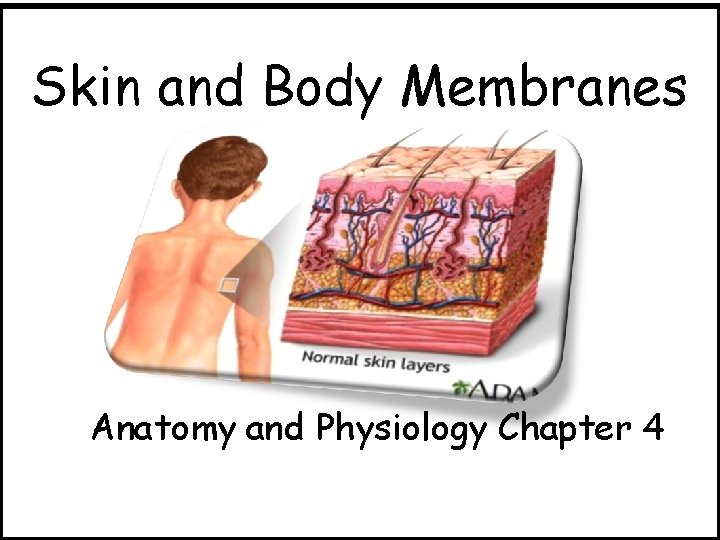
Skin and Body Membranes Anatomy and Physiology Chapter 4
Function of Skin and Membranes § Line or cover body surfaces § Protect body surfaces § Lubricate body surfaces
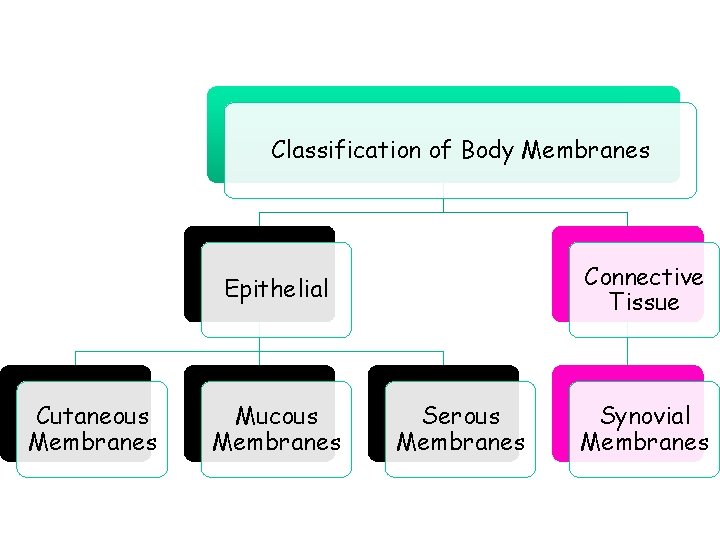
Classification of Body Membranes Connective Tissue Epithelial Cutaneous Membranes Mucous Membranes Serous Membranes Synovial Membranes

Cutaneous Membrane = SKIN § What is it’s job? § Outermost protective boundary § Where is it found? § Superficial epidermis § A dry membrane (exposed to air) § What is it made of? § Keratinized stratified squamous epithelium § Underlying dermis is mostly dense connective tissue

Mucous Membranes § What is it’s job? § Lines all body cavities that open to the exterior body surface § Often adapted for absorption or secretion § Where is it found? § Surface epithelium § What is it made of? § Type depends on site § Underlying loose connective tissue (lamina propria)

Serous Membranes § What is it’s job? § Lines open body cavities that are closed to the exterior of the body § Where is it found? &What is it made of? § Surface simple squamous epithelium § Underlying areolar connective tissue § Serous layers separated by serous fluid Specific serous membranes • Peritoneum: abdominal cavity • Pleura: around the lungs • Pericardium: around the heart
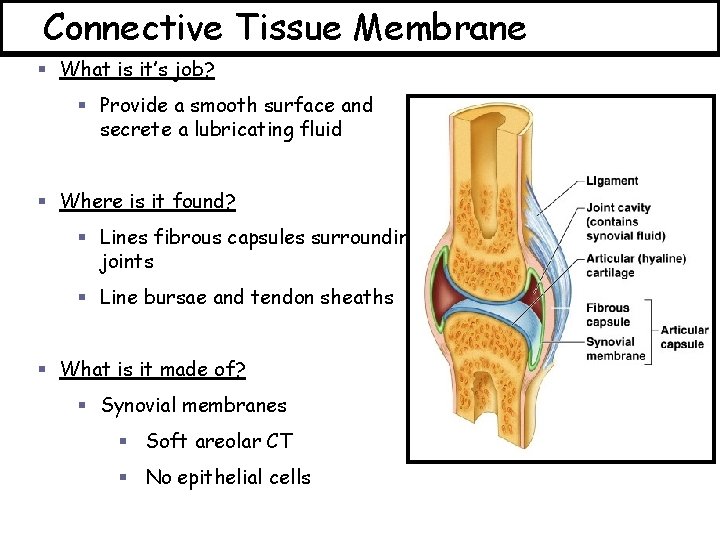
Connective Tissue Membrane § What is it’s job? § Provide a smooth surface and secrete a lubricating fluid § Where is it found? § Lines fibrous capsules surrounding joints § Line bursae and tendon sheaths § What is it made of? § Synovial membranes § Soft areolar CT § No epithelial cells
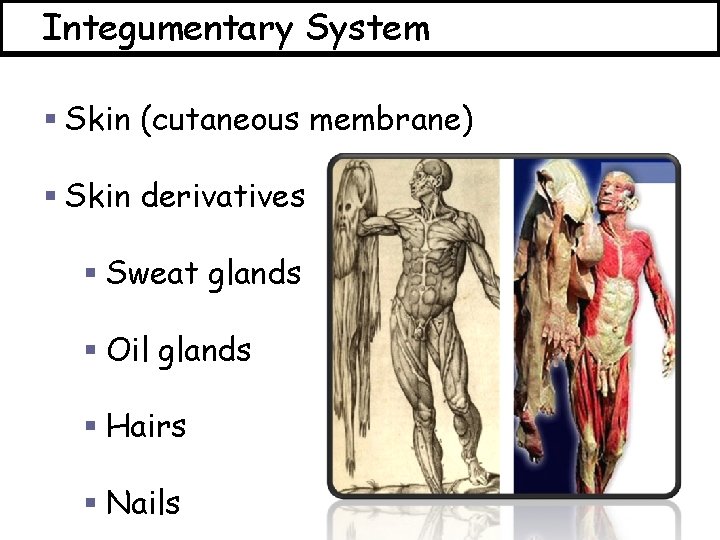
Integumentary System § Skin (cutaneous membrane) § Skin derivatives § Sweat glands § Oil glands § Hairs § Nails
Skin Protects deeper tissues from: Mechanical damage Chemical damage Bacterial damage Thermal damage Ultraviolet radiation Desiccation Functions to: Aid in heat regulation Aid in excretion of urea and uric acid Synthesize vitamin D
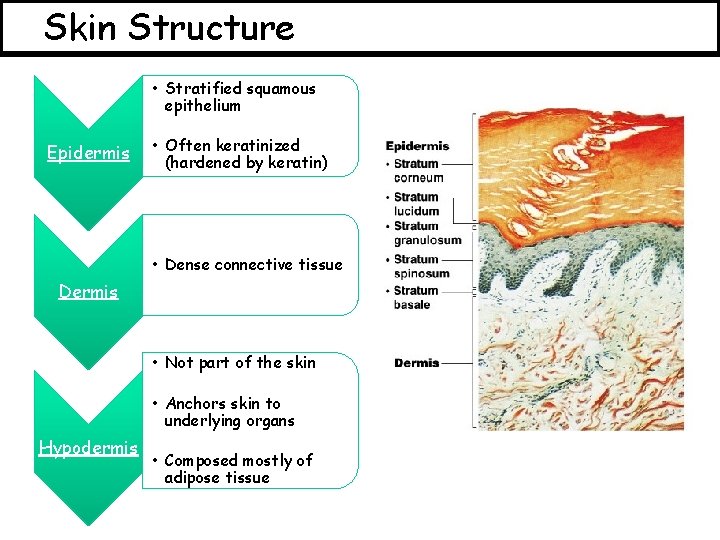
Skin Structure • Stratified squamous epithelium Epidermis • Often keratinized (hardened by keratin) • Dense connective tissue Dermis • Not part of the skin • Anchors skin to underlying organs Hypodermis • Composed mostly of adipose tissue
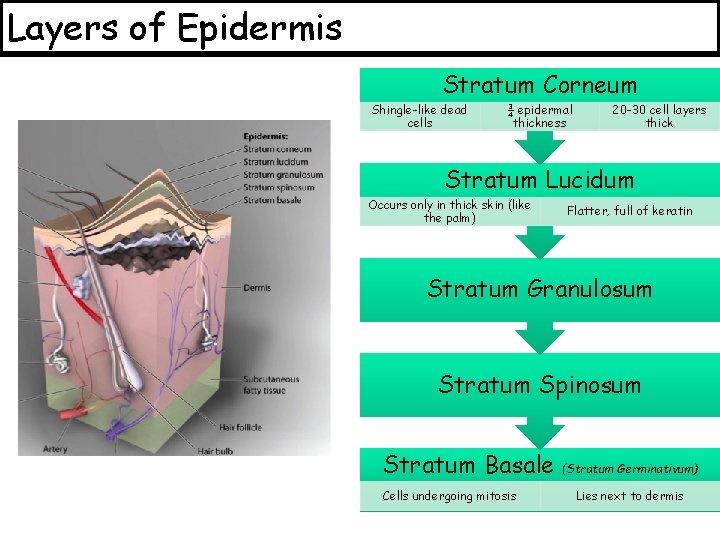
Layers of Epidermis Stratum Corneum Shingle-like dead cells ¾ epidermal thickness 20 -30 cell layers thick Stratum Lucidum Occurs only in thick skin (like the palm) Flatter, full of keratin Stratum Granulosum Stratum Spinosum Stratum Basale Cells undergoing mitosis (Stratum Germinativum) Lies next to dermis

Melanin § Pigment produced by melanocytes § Color is yellow to brown to black § Melanocytes are mostly in the stratum basale § Amount of melanin produced depends upon genetics and exposure to sunlight § NPR Story: http: //www. npr. org/templates/story. php? story. Id=100057939

Dermis: 2 Layers… Animal “hide” Papillary layer • Projections called dermal papillae • Pain receptors • Capillary loops Reticular layer • Blood vessels • Glands • Nerve receptors • Deepest skin layer

Skin Structure
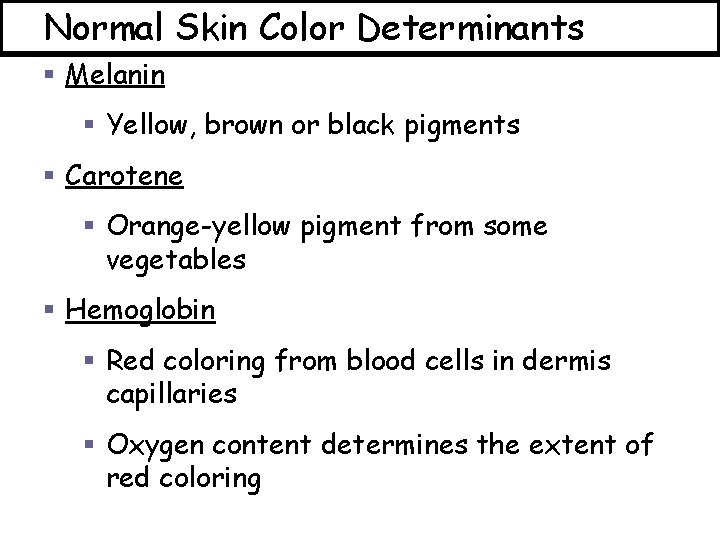
Normal Skin Color Determinants § Melanin § Yellow, brown or black pigments § Carotene § Orange-yellow pigment from some vegetables § Hemoglobin § Red coloring from blood cells in dermis capillaries § Oxygen content determines the extent of red coloring
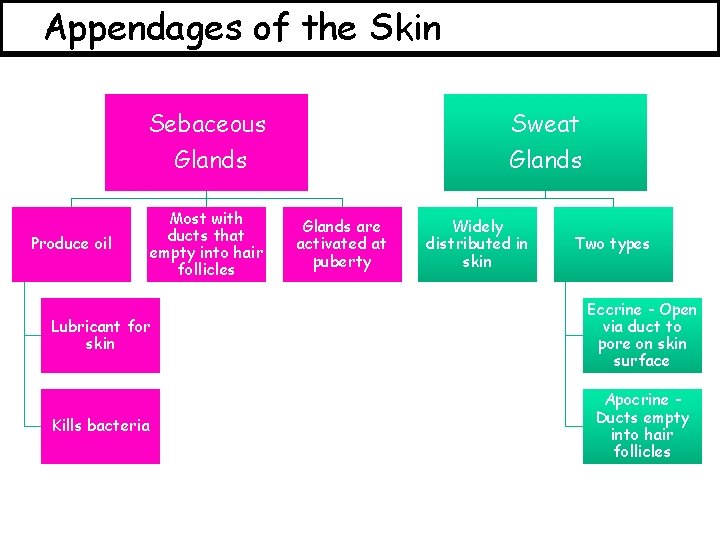
Appendages of the Skin Sebaceous Sweat Glands Produce oil Most with ducts that empty into hair follicles Glands are activated at puberty Widely distributed in skin Two types Lubricant for skin Eccrine - Open via duct to pore on skin surface Kills bacteria Apocrine Ducts empty into hair follicles
- Slides: 16