
Skin Anatomy By Ashlyn Danielle Kyler and Tre
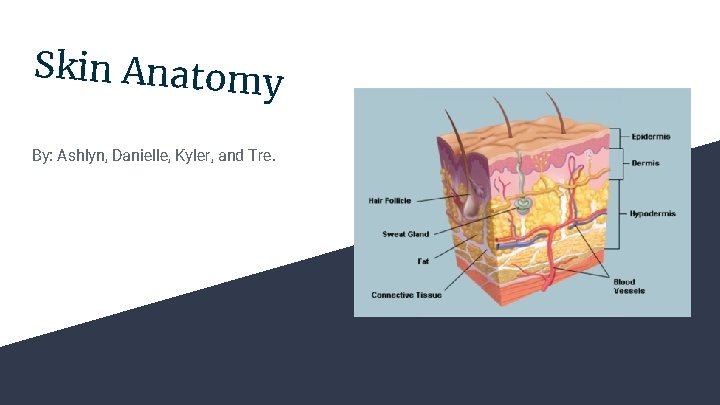
Skin Anatomy By: Ashlyn, Danielle, Kyler, and Tre.
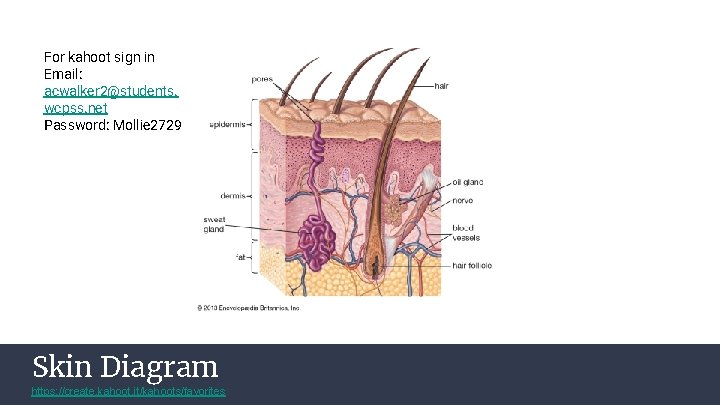
Basic Functions The skin has three basic levels, the Epidermis, Dermis, and the Hypodermis. Protection: against pathogens, langerhans cells in the skin are part of the immune system. Storage: stores lipids and water Sensation: nerve endings detect temperature pressure, vibration, touch, and injury. Water resistance/ controls water loss: skin prevents water from escaping by evaporation, it prevent nutrients from being washed away.
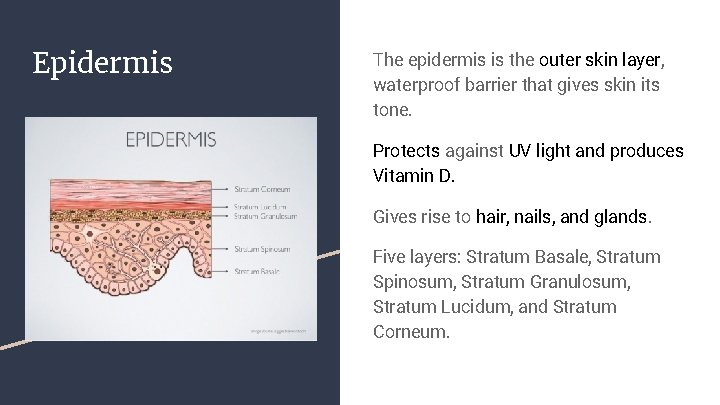
Epidermis The epidermis is the outer skin layer, waterproof barrier that gives skin its tone. Protects against UV light and produces Vitamin D. Gives rise to hair, nails, and glands. Five layers: Stratum Basale, Stratum Spinosum, Stratum Granulosum, Stratum Lucidum, and Stratum Corneum.
Dermis Thick layer of living(connective)tissue below the epidermis which forms the true skin, containing blood capillaries, nerve endings, sweat glands, hair follicles, and other structures. The main role is to make sweat and oil, provides sensations and blood to the skin, grows hair. Consists of dense irregular connective tissue that cushions the body from stress and strain.
Subcutaneous The subcutaneous tissue is NOT part of the skin. It is a loose connective tissue (not epithelial) under the dermis with fatty (adipose) tissue. Provides blood vessels and nerves to supply the dermis. It also attaches to the dermis to provide energy and insulation.
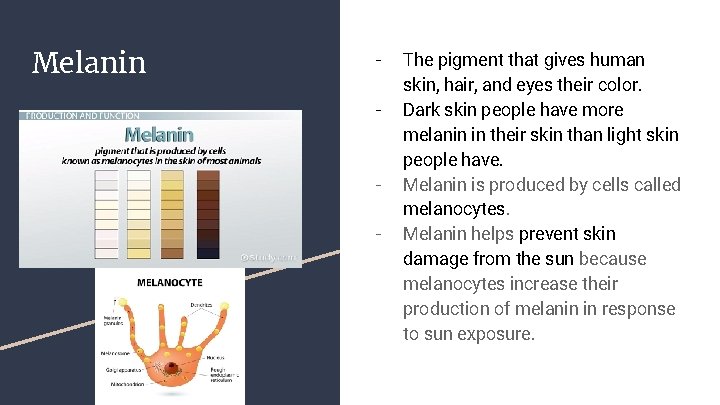
Melanin - - The pigment that gives human skin, hair, and eyes their color. Dark skin people have more melanin in their skin than light skin people have. Melanin is produced by cells called melanocytes. Melanin helps prevent skin damage from the sun because melanocytes increase their production of melanin in response to sun exposure.
For kahoot sign in Email: acwalker 2@students. wcpss. net Password: Mollie 2729 Skin Diagram https: //create. kahoot. it/kahoots/favorites
- Slides: 7