
Skillstreaming Procedures Modeling Skill demonstration by trainers Role
Skillstreaming Procedures Modeling (Skill demonstration by trainers) Role Playing (Skill rehearsal by youth) Performance Feedback (By trainers and youth in group) Generalization Training (To increase both transfer and maintenance) Aggression Replacement Training® 1
Skillstreaming the Adolescent Group I: Beginning Social Skills 1. 2. 3. 4. 5. 6. 7. 8. 2 Listening Starting a Conversation Having a Conversation Asking a Question Saying Thank You Introducing Yourself Introducing Other People Giving a Compliment Aggression Replacement Training®

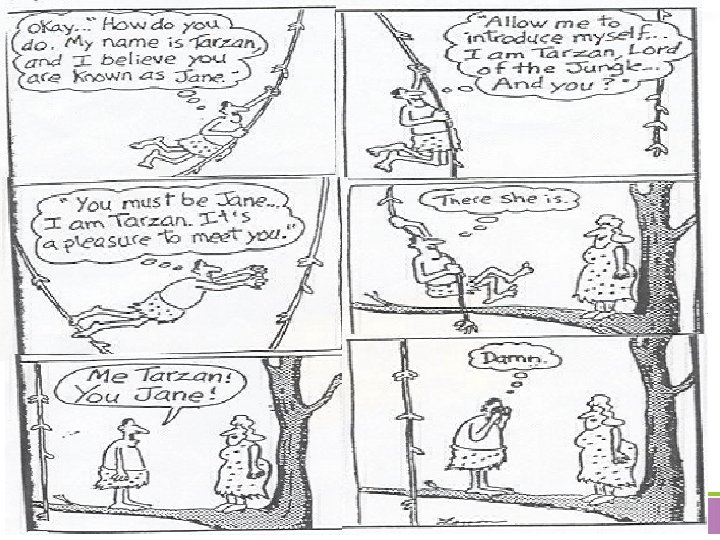
Skillstreaming the Adolescent Skill 6: Introducing Yourself Steps: 1. 2. 3. 4. 3 Choose the right time and place to introduce yourself. Greet the other person and tell your name. Ask the other person his/her name if you need to. Tell or ask the other person something to help start your conversation. Aggression Replacement Training®
Aggression 4 Replacement Training®
Skillstreaming the Adolescent Group II: Advanced Social Skills 9. 10. 11. 12. 13. 14. 5 Asking for Help Joining In Giving Instructions Following Instructions Apologizing Convincing Others Aggression Replacement Training®

Skillstreaming the Adolescent Group III: Skills for Dealing with Feelings 15. Knowing your Feelings 16. Expressing Your Feelings 17. Understanding the Feelings of Others 18. Dealing with Someone Else’s Anger 19. Expressing Affection 20. Dealing with Fear 21. Rewarding Yourself 6 Aggression Replacement Training®
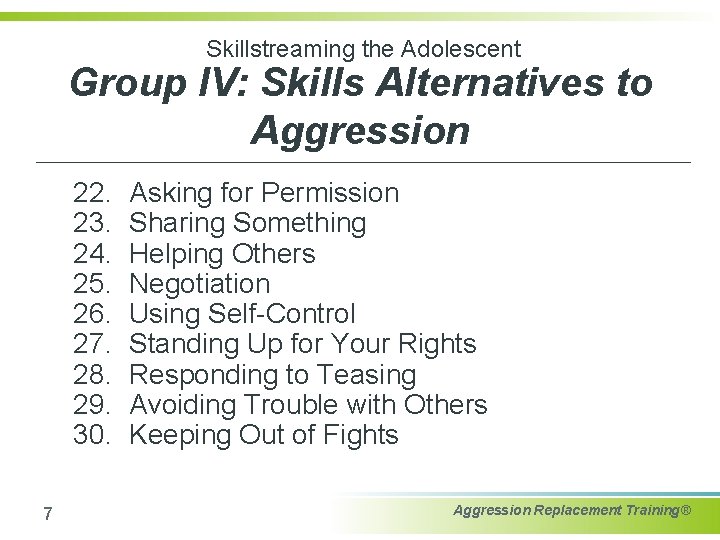
Skillstreaming the Adolescent Group IV: Skills Alternatives to Aggression 22. 23. 24. 25. 26. 27. 28. 29. 30. 7 Asking for Permission Sharing Something Helping Others Negotiation Using Self-Control Standing Up for Your Rights Responding to Teasing Avoiding Trouble with Others Keeping Out of Fights Aggression Replacement Training®

Skillstreaming the Adolescent Group V: Skills Dealing with Stress 31. Making a Complaint Constructively 32. Answering a Complaint 33. Being a Good Sport 34. Dealing with Embarrassment 35. Dealing with Being Left Out 36. Standing up for a Friend 37. Responding to Persuasion 38. Responding to Failure 39. Dealing with Contradictory Messages 40. Dealing with an Accusation 41. Getting Ready for a Difficult Conversation 42. Dealing with Group Pressure 8 Aggression Replacement Training®
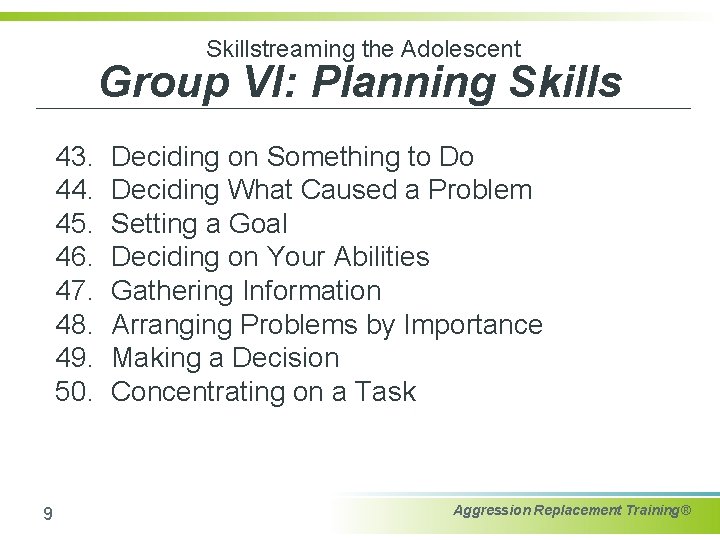
Skillstreaming the Adolescent Group VI: Planning Skills 43. 44. 45. 46. 47. 48. 49. 50. 9 Deciding on Something to Do Deciding What Caused a Problem Setting a Goal Deciding on Your Abilities Gathering Information Arranging Problems by Importance Making a Decision Concentrating on a Task Aggression Replacement Training®

Skillstreaming the Adolescent Skill 2: Starting a Conversation Steps: 1. Greet the other person. 2. Make small talk. 3. Decide if the other person is listening. 4. Bring up the main topic. 10 Aggression Replacement Training®
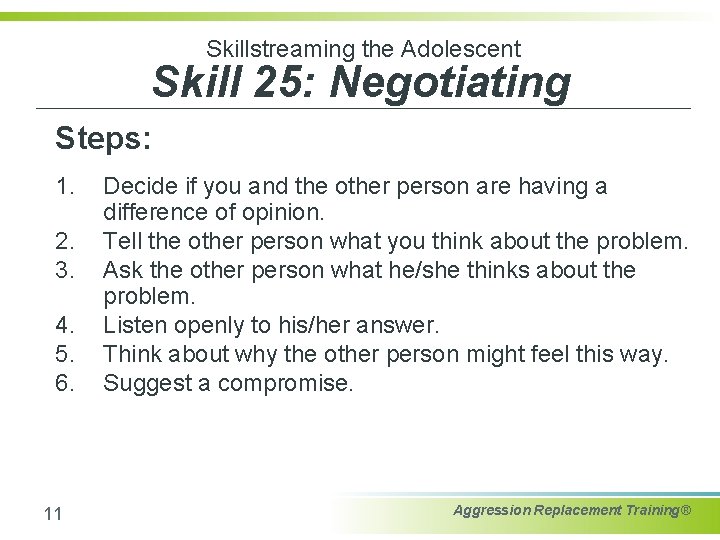
Skillstreaming the Adolescent Skill 25: Negotiating Steps: 1. 2. 3. 4. 5. 6. 11 Decide if you and the other person are having a difference of opinion. Tell the other person what you think about the problem. Ask the other person what he/she thinks about the problem. Listen openly to his/her answer. Think about why the other person might feel this way. Suggest a compromise. Aggression Replacement Training®

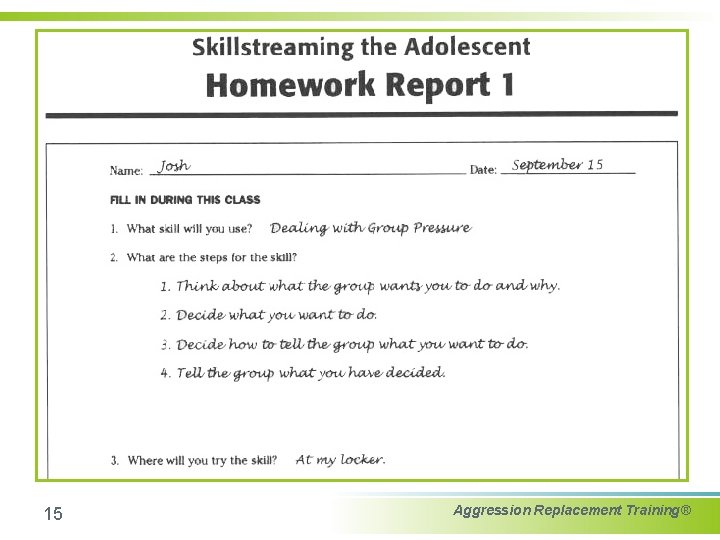
Skillstreaming the Adolescent Skill 42: Dealing with Group Pressure Steps: 1. Think about what the group wants you to do and why. 2. Decide what you want to do. 3. Decide how to tell the group what you want to do. 4. Tell the group what you have decided. 12 Aggression Replacement Training®

Skillstreaming the Adolescent Skill 19: Expressing Affection Steps: 1. Decide if you have good feelings about the other person. 2. Decide if the other person would like to know your feelings. 3. Choose the best way to express your feelings. 4. Choose the best time and place to express your feelings. 5. Express your feelings in a friendly way. 13 Aggression Replacement Training®
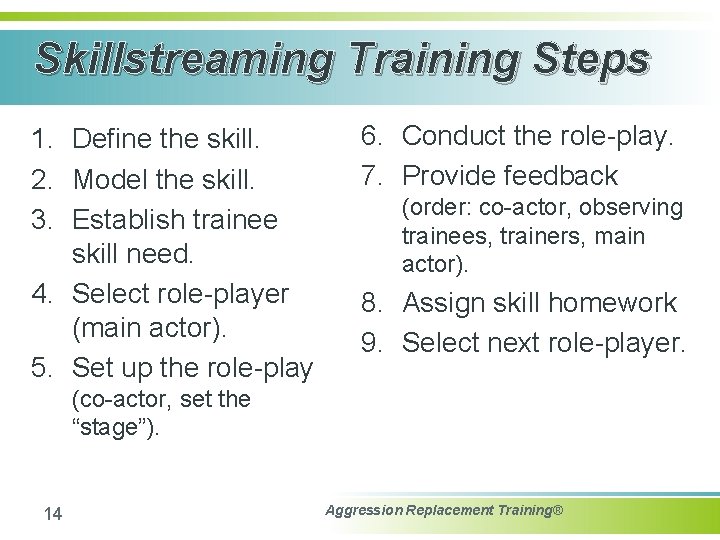
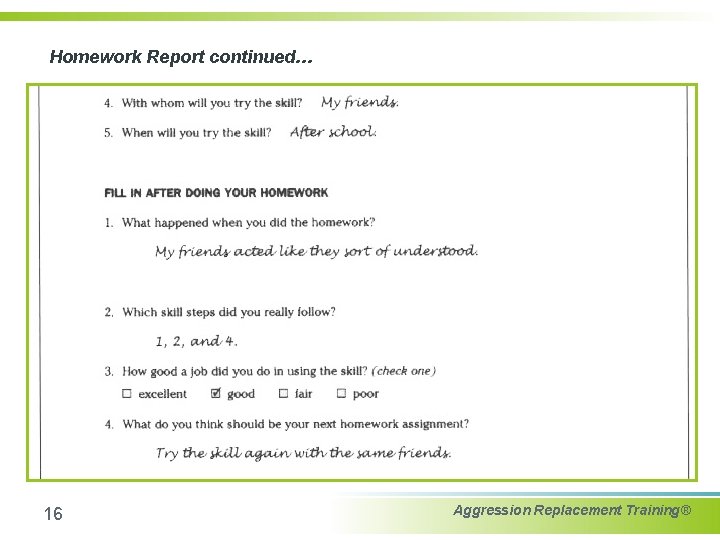
Skillstreaming Training Steps 1. Define the skill. 2. Model the skill. 3. Establish trainee skill need. 4. Select role-player (main actor). 5. Set up the role-play 6. Conduct the role-play. 7. Provide feedback (order: co-actor, observing trainees, trainers, main actor). 8. Assign skill homework 9. Select next role-player. (co-actor, set the “stage”). 14 Aggression Replacement Training®
15 Aggression Replacement Training®
Homework Report continued… 16 Aggression Replacement Training®
17 Aggression Replacement Training®
Teacher/Staff Skillstreaming Checklist continued… 18 Aggression Replacement Training®
SOMETHING YOU LEARNED 19 SOMETHING THAT SURPRISED YOU SOMETHING THAT VALIDATED YOUR CURRENT THINKING Aggression Replacement Training®
- Slides: 19