
Skills Mismatch in the Labour Market How can
“Skills Mismatch in the Labour Market: How can Educational Institutions help to equip the Labour Force with Skills and raise Labour Productivity? ” Anna Vitali (UCL) Economic Growth Forum
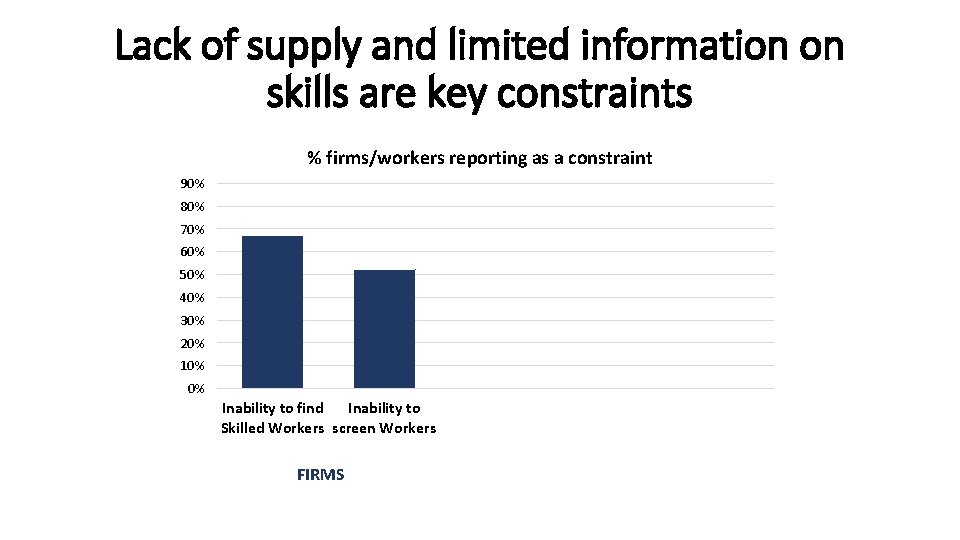
Lack of supply and limited information on skills are key constraints % firms/workers reporting as a constraint 90% 80% 70% 60% 50% 40% 30% 20% 10% 0% Inability to find Inability to Skilled Workers screen Workers FIRMS Difficult to find Difficult to show out about Practical Skills available Jobs WORKERS
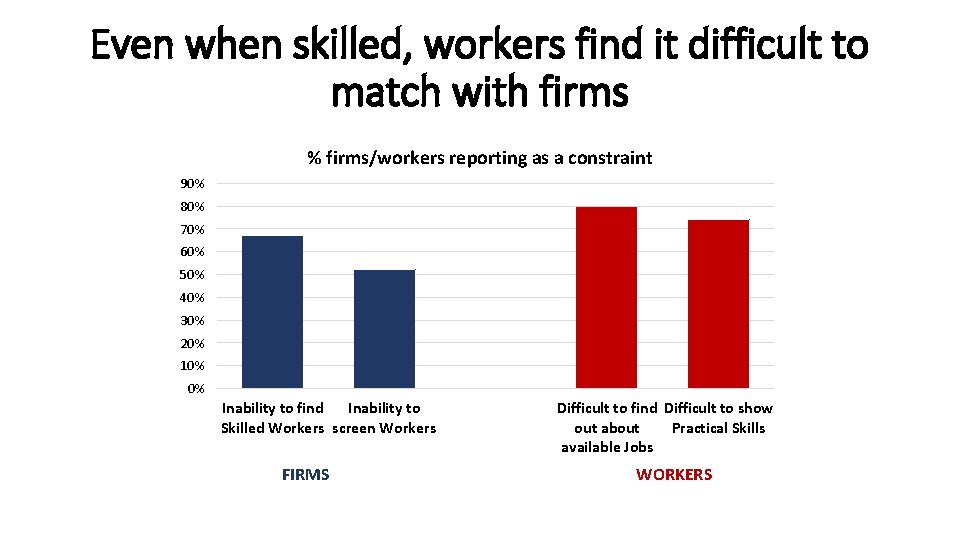
Even when skilled, workers find it difficult to match with firms % firms/workers reporting as a constraint 90% 80% 70% 60% 50% 40% 30% 20% 10% 0% Inability to find Inability to Skilled Workers screen Workers FIRMS Difficult to find Difficult to show out about Practical Skills available Jobs WORKERS
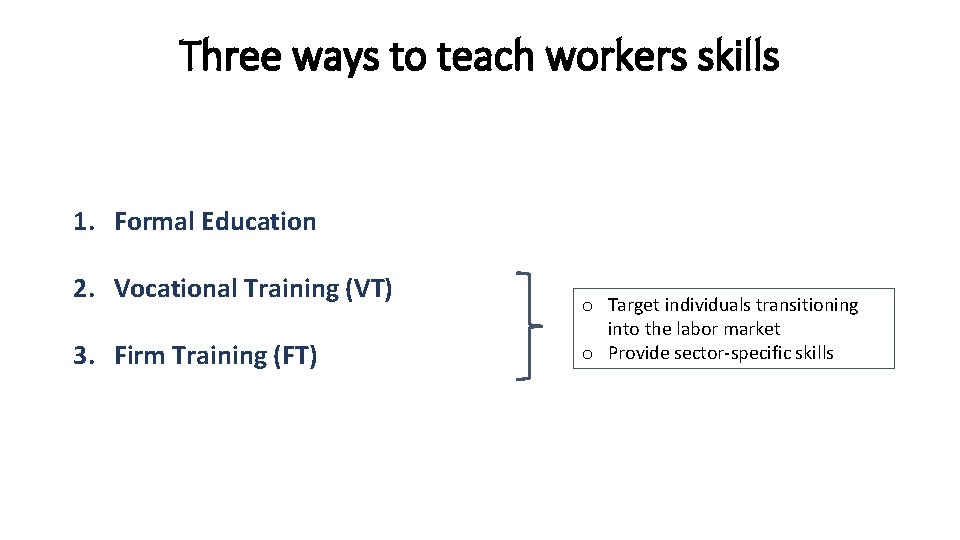
Three ways to teach workers skills 1. Formal Education 2. Vocational Training (VT) 3. Firm Training (FT) o Target individuals transitioning into the labor market o Provide sector-specific skills
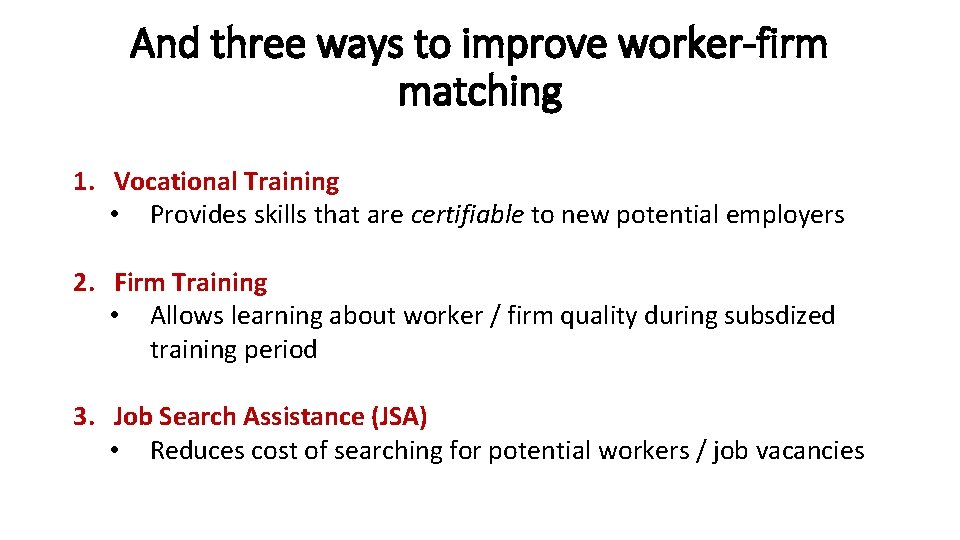
And three ways to improve worker-firm matching 1. Vocational Training • Provides skills that are certifiable to new potential employers 2. Firm Training • Allows learning about worker / firm quality during subsdized training period 3. Job Search Assistance (JSA) • Reduces cost of searching for potential workers / job vacancies
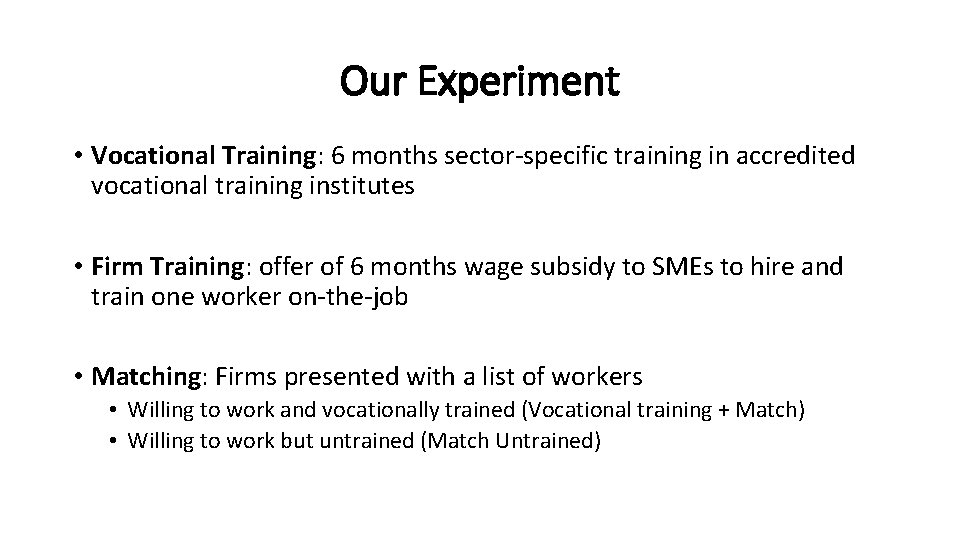
Our Experiment • Vocational Training: 6 months sector-specific training in accredited vocational training institutes • Firm Training: offer of 6 months wage subsidy to SMEs to hire and train one worker on-the-job • Matching: Firms presented with a list of workers • Willing to work and vocationally trained (Vocational training + Match) • Willing to work but untrained (Match Untrained)
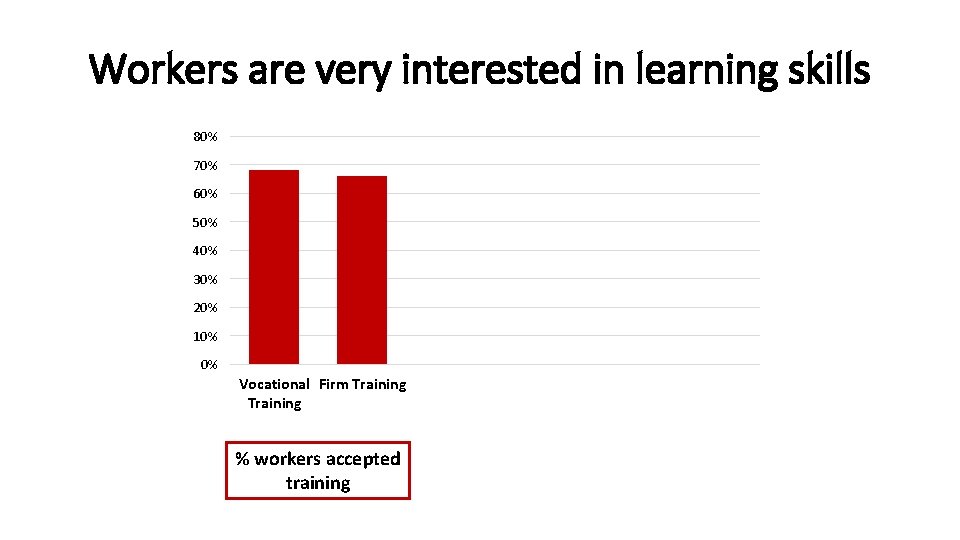
Workers are very interested in learning skills 80% 70% 60% 50% 40% 30% 20% 10% 0% Vocational Firm Training % workers accepted training Firm Training Vocational Training + Match Untrained % firms accepted to hire/train a worker
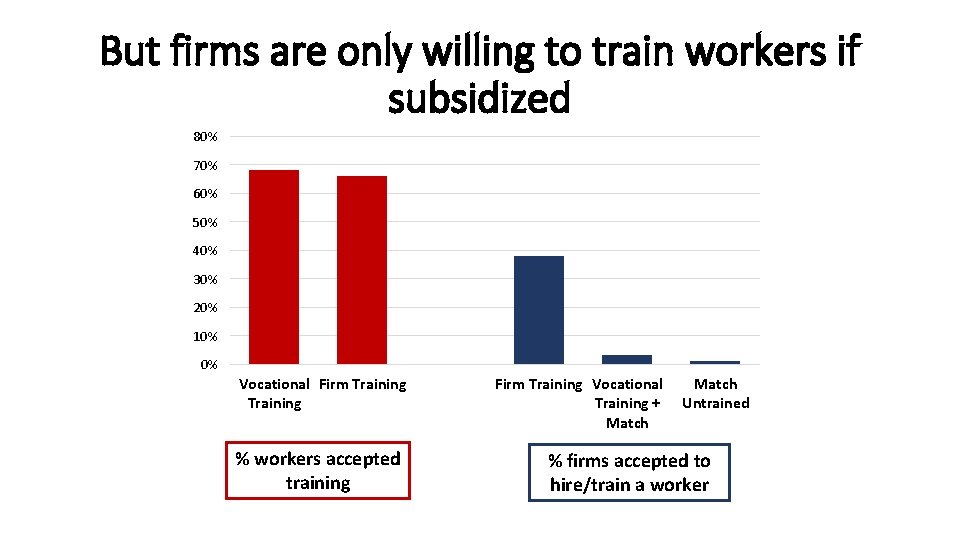
But firms are only willing to train workers if subsidized 80% 70% 60% 50% 40% 30% 20% 10% 0% Vocational Firm Training % workers accepted training Firm Training Vocational Training + Match Untrained % firms accepted to hire/train a worker
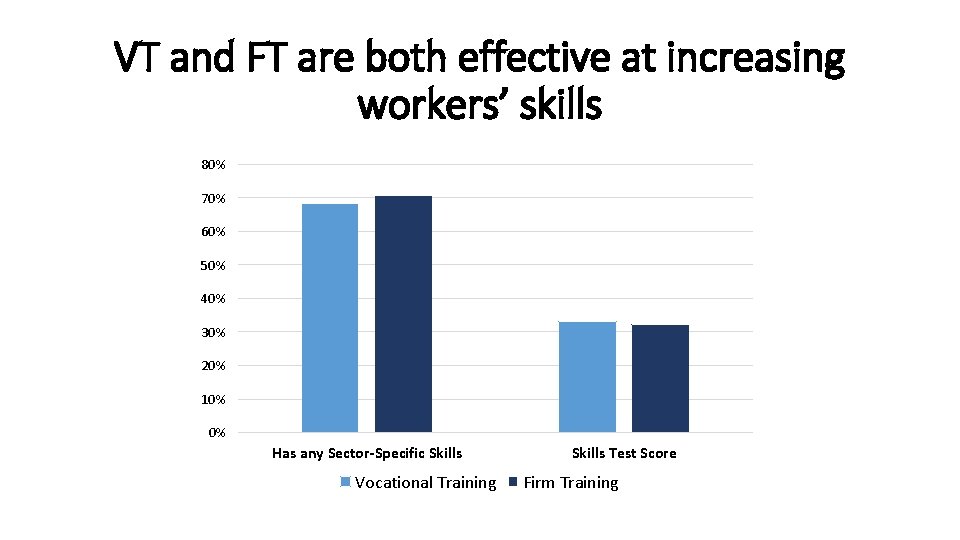
VT and FT are both effective at increasing workers’ skills 80% 70% 60% 50% 40% 30% 20% 10% 0% Has any Sector-Specific Skills Vocational Training Skills Test Score Firm Training
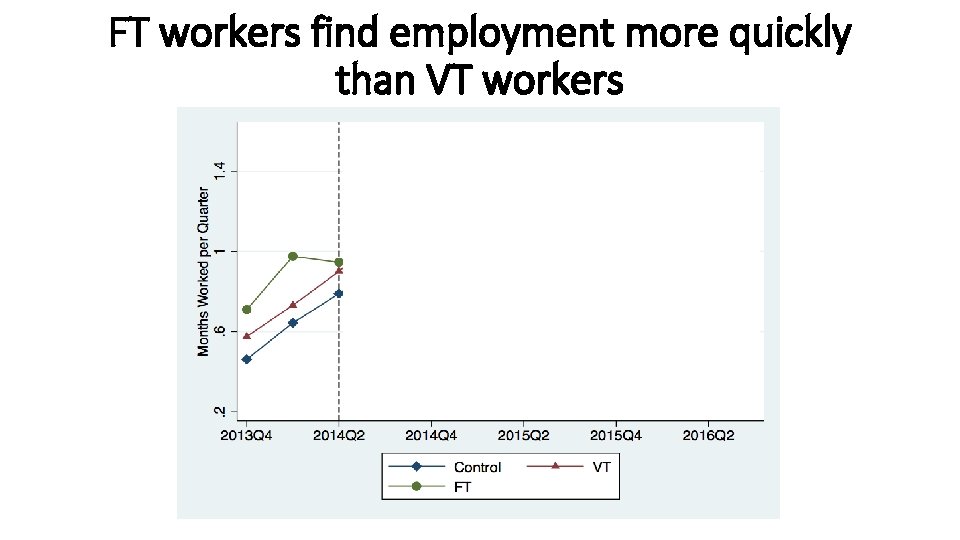
FT workers find employment more quickly than VT workers
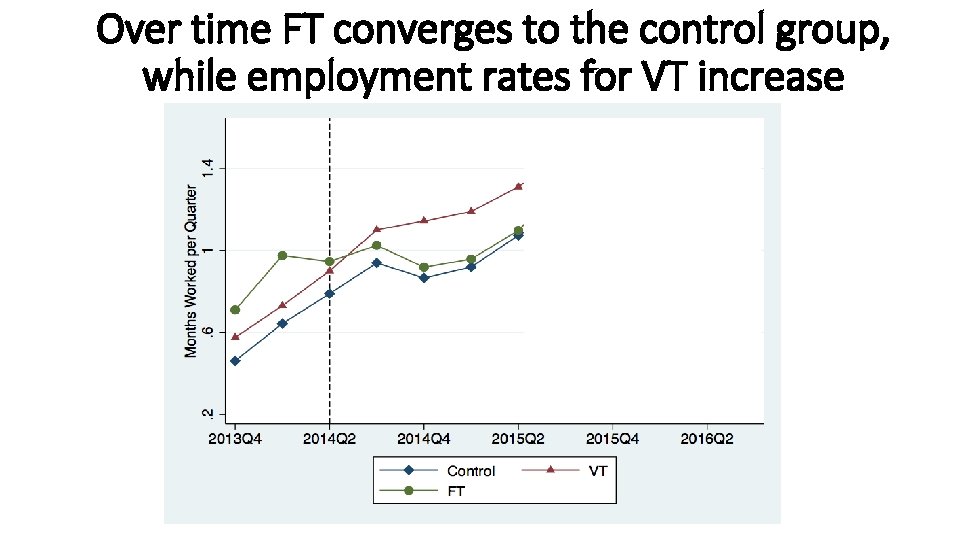
Over time FT converges to the control group, while employment rates for VT increase
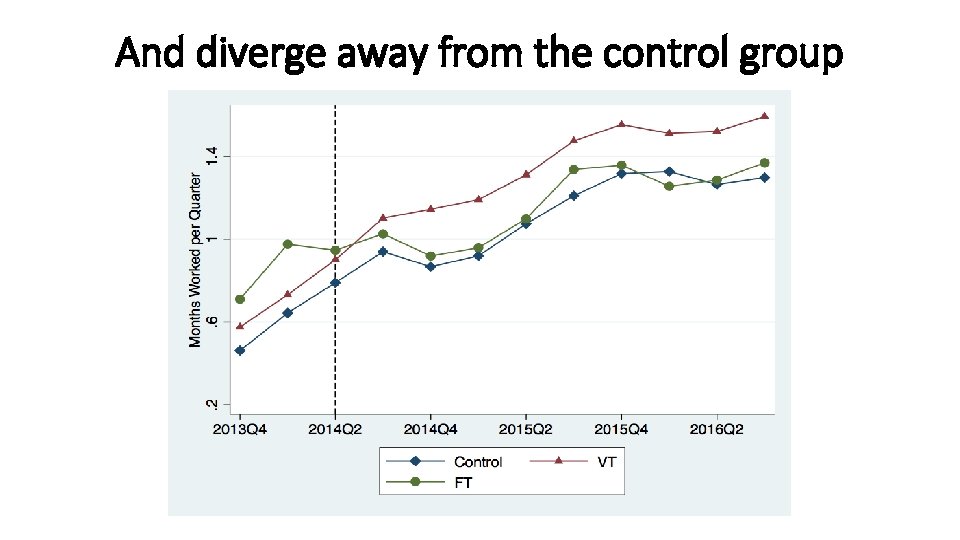
And diverge away from the control group
Overall, VT is more effective than FT at tackling youth unemployment • VT and FT workers acquire a similar level of skills o Once employed, both types of workers are equally productive • Key difference between treatments is certifiability of skills o When unemployed, VT workers are more likely than FT workers to find a job • Extremely important for policy purposes to track outcomes over the long-run
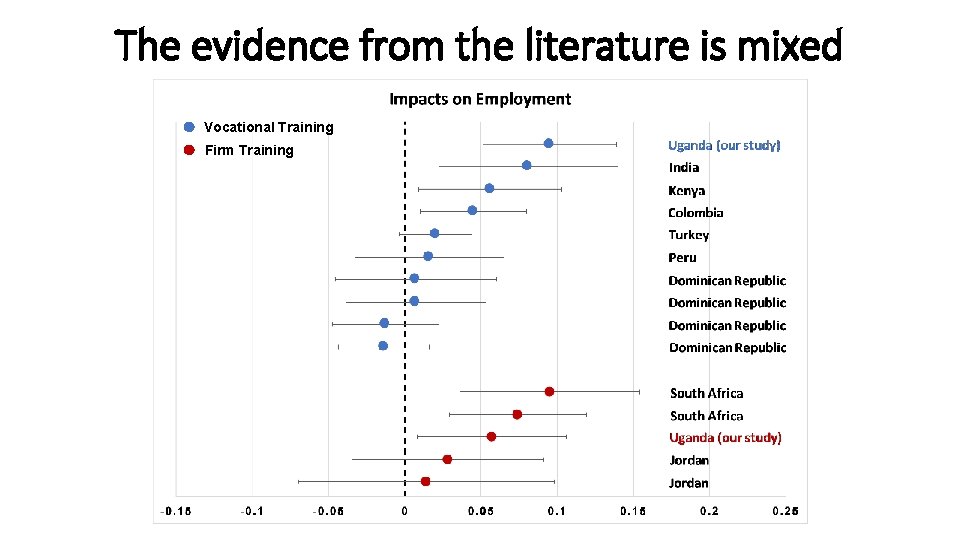
The evidence from the literature is mixed Vocational Training Firm Training
VT: What did we learn? • Addressing Worker Take-up and Drop-out o Our study: staggered payment structure to VTIs to ensure completion o Our study: lower take-up among women – childcare provision? o India: monthly deposit only repaid to trainees unpon completion • Matching Demand for Skills o Our study: targeted sectors that jointly employ 23% of Ugandan youth o Kenya: sectors in which growth was expected according to the national development plan o Kenya: private employers involved in defining competences and developing training plans o Kenya, Colombia, Dominican Republic, Peru, Bangladesh: combination of classroom and on-the-job training • Ensuring Certifiability of Skills o Our study: accredited VTIs, reputation of high-quality o Turkey: larger impacts for private vs. public providers
FT: What did we learn? • Addressing Firm Take-up o Argetina, South Africa: no take-up due to labor regulations associated with new hires o Our study, Jordan, Sri Lanka: take-up 24 -50%, mostly among less productive firms – credit constraints key limiting factor • Monitoring Training Provision o Our study: close monitoring through attendance registry and random spotchecks o Our study: explicit contractual agreement establishing payback of entire subsidy if worker not trained • Ensuring Certifiability of Skills o Our study, Jordan, Sri Lanka: workers leave firms after the end of the subsidy; no long-term effect on employment as skills not certifiable o Uganda, South Africa: high returns of certifying workers’ skills / work experience through formal certificates and reference letters
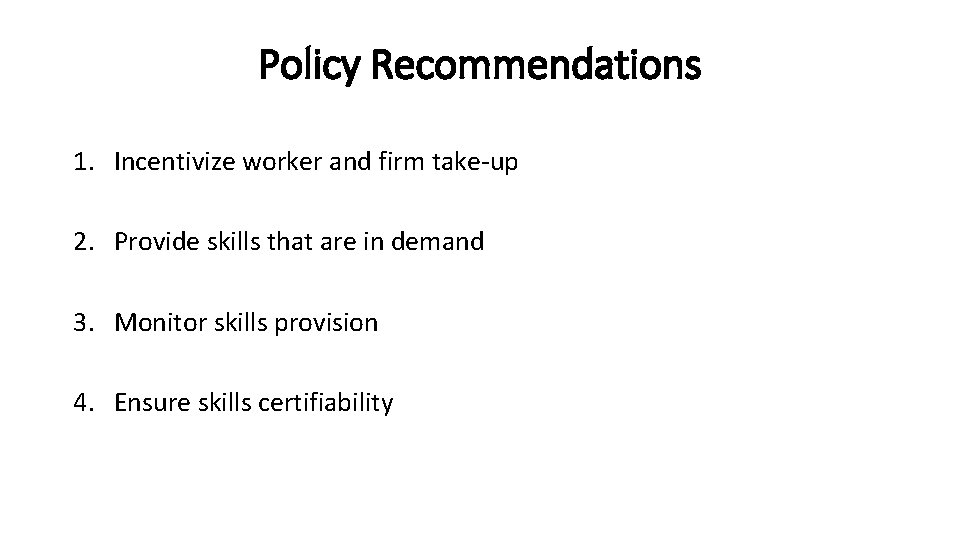
Policy Recommendations 1. Incentivize worker and firm take-up 2. Provide skills that are in demand 3. Monitor skills provision 4. Ensure skills certifiability
- Slides: 17