
Skills for LongTerm Residential Care Charlene Harrington Ph

- Slides: 10
Skills for Long-Term Residential Care Charlene Harrington, Ph. D, RN Professor Emeritus University of California San Francisco Workshop May 20, 2015
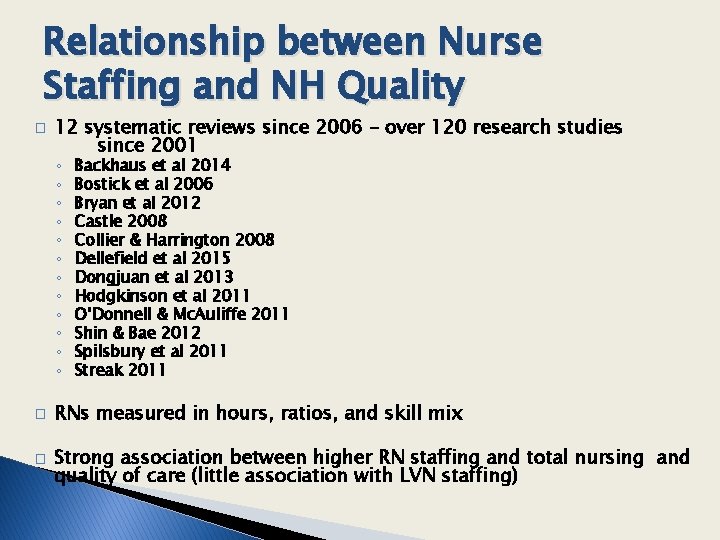
Relationship between Nurse Staffing and NH Quality � 12 systematic reviews since 2006 – over 120 research studies since 2001 ◦ ◦ ◦ � � Backhaus et al 2014 Bostick et al 2006 Bryan et al 2012 Castle 2008 Collier & Harrington 2008 Dellefield et al 2015 Dongjuan et al 2013 Hodgkinson et al 2011 O’Donnell & Mc. Auliffe 2011 Shin & Bae 2012 Spilsbury et al 2011 Streak 2011 RNs measured in hours, ratios, and skill mix Strong association between higher RN staffing and total nursing and quality of care (little association with LVN staffing)
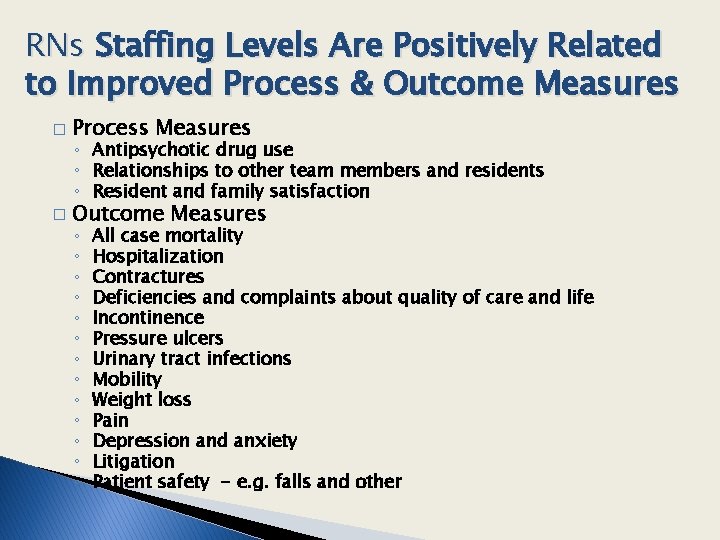
RNs Staffing Levels Are Positively Related to Improved Process & Outcome Measures � Process Measures � Outcome Measures ◦ Antipsychotic drug use ◦ Relationships to other team members and residents ◦ Resident and family satisfaction ◦ ◦ ◦ ◦ All case mortality Hospitalization Contractures Deficiencies and complaints about quality of care and life Incontinence Pressure ulcers Urinary tract infections Mobility Weight loss Pain Depression and anxiety Litigation Patient safety - e. g. falls and other
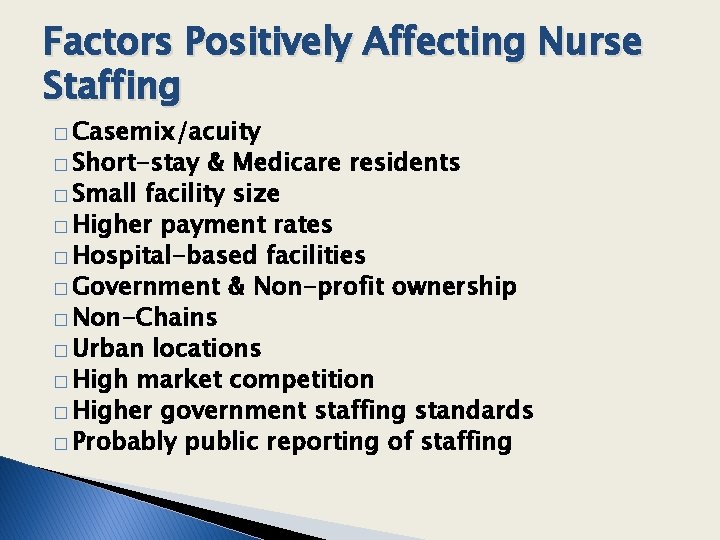
Factors Positively Affecting Nurse Staffing � Casemix/acuity � Short-stay & Medicare residents � Small facility size � Higher payment rates � Hospital-based facilities � Government & Non-profit ownership � Non-Chains � Urban locations � High market competition � Higher government staffing standards � Probably public reporting of staffing
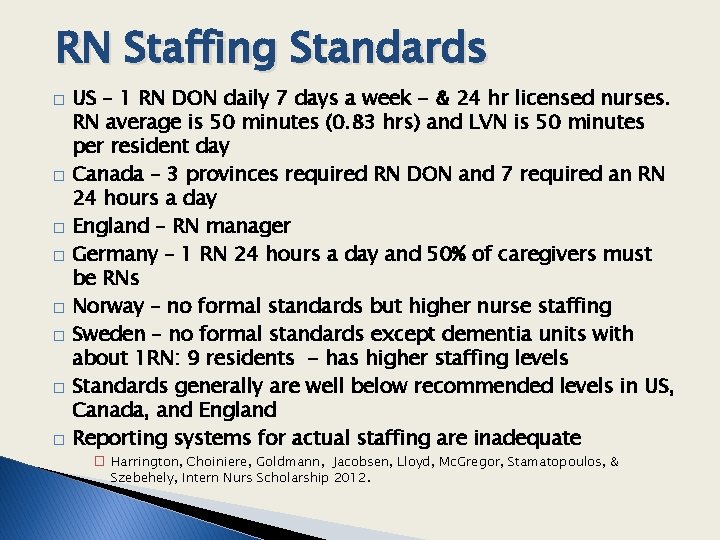
RN Staffing Standards � � � � US – 1 RN DON daily 7 days a week - & 24 hr licensed nurses. RN average is 50 minutes (0. 83 hrs) and LVN is 50 minutes per resident day Canada – 3 provinces required RN DON and 7 required an RN 24 hours a day England – RN manager Germany – 1 RN 24 hours a day and 50% of caregivers must be RNs Norway – no formal standards but higher nurse staffing Sweden – no formal standards except dementia units with about 1 RN: 9 residents - has higher staffing levels Standards generally are well below recommended levels in US, Canada, and England Reporting systems for actual staffing are inadequate � Harrington, Choiniere, Goldmann, Jacobsen, Lloyd, Mc. Gregor, Stamatopoulos, & Szebehely, Intern Nurs Scholarship 2012.
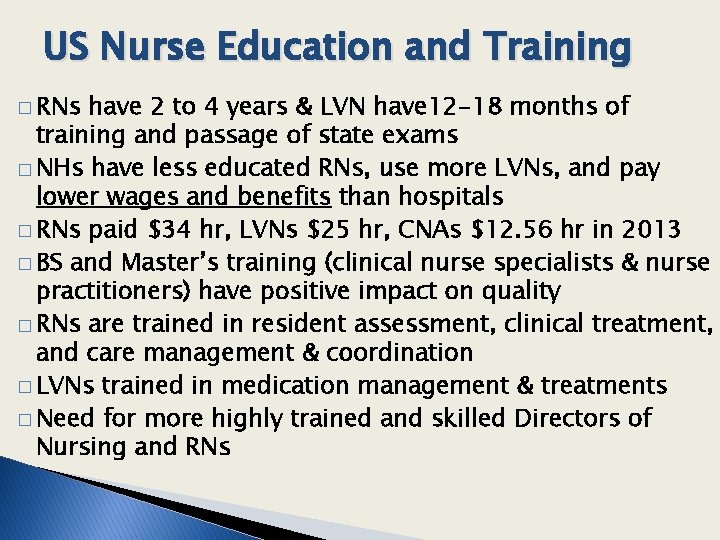
US Nurse Education and Training � RNs have 2 to 4 years & LVN have 12 -18 months of training and passage of state exams � NHs have less educated RNs, use more LVNs, and pay lower wages and benefits than hospitals � RNs paid $34 hr, LVNs $25 hr, CNAs $12. 56 hr in 2013 � BS and Master’s training (clinical nurse specialists & nurse practitioners) have positive impact on quality � RNs are trained in resident assessment, clinical treatment, and care management & coordination � LVNs trained in medication management & treatments � Need for more highly trained and skilled Directors of Nursing and RNs
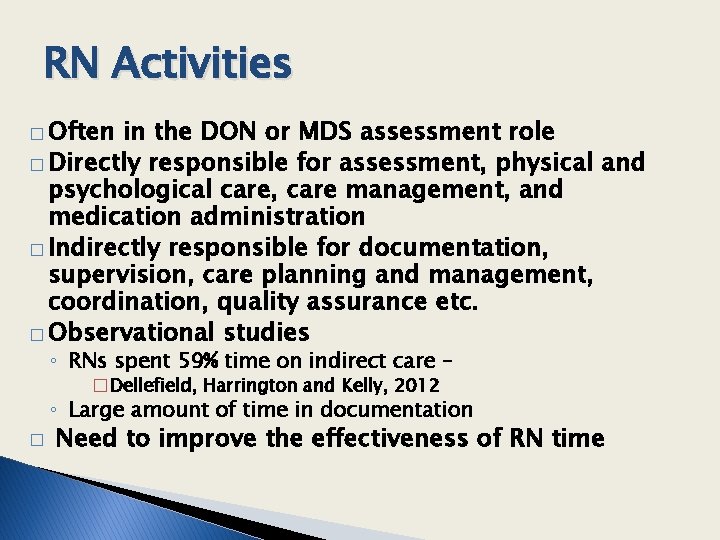
RN Activities � Often in the DON or MDS assessment role � Directly responsible for assessment, physical and psychological care, care management, and medication administration � Indirectly responsible for documentation, supervision, care planning and management, coordination, quality assurance etc. � Observational studies ◦ RNs spent 59% time on indirect care – �Dellefield, Harrington and Kelly, 2012 ◦ Large amount of time in documentation � Need to improve the effectiveness of RN time
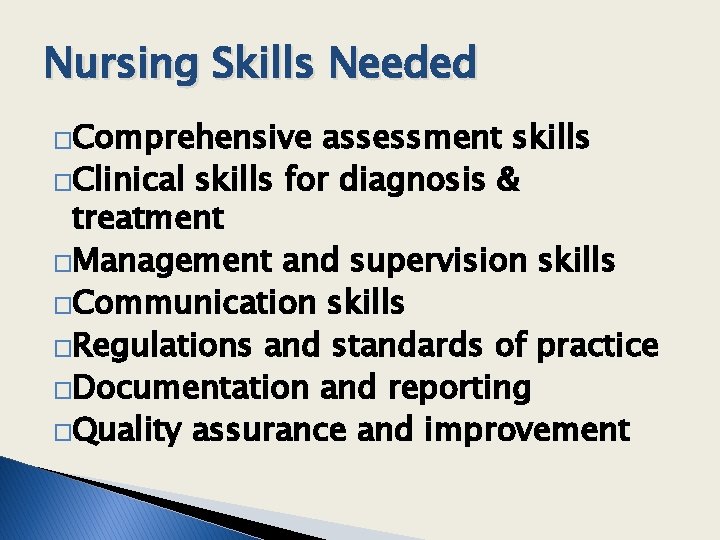
Nursing Skills Needed �Comprehensive assessment skills �Clinical skills for diagnosis & treatment �Management and supervision skills �Communication skills �Regulations and standards of practice �Documentation and reporting �Quality assurance and improvement
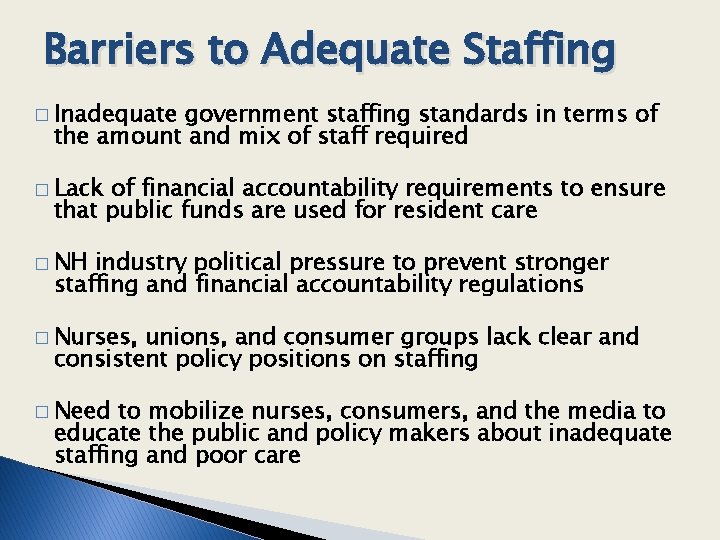
Barriers to Adequate Staffing � Inadequate government staffing standards in terms of the amount and mix of staff required � Lack of financial accountability requirements to ensure that public funds are used for resident care � NH industry political pressure to prevent stronger staffing and financial accountability regulations � Nurses, unions, and consumer groups lack clear and consistent policy positions on staffing � Need to mobilize nurses, consumers, and the media to educate the public and policy makers about inadequate staffing and poor care
Conclusion � Need to build a highly skilled, well-paid, and stable nursing workforce � Need adequate nurse staffing levels to ensure high quality long term care