
Skills for Effective Parent Advocacy A curriculum created
- Slides: 24
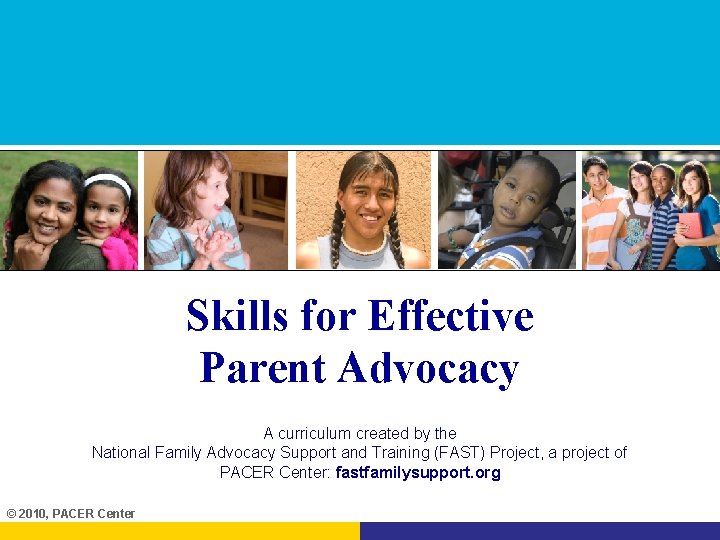
Skills for Effective Parent Advocacy A curriculum created by the National Family Advocacy Support and Training (FAST) Project, a project of PACER Center: fastfamilysupport. org © 2010, PACER Center
Skills for Effective Parent Advocacy A curriculum created by the National Family Advocacy Support and Training (FAST) Project Page 2
Agenda You will learn: • What advocacy means • How to improve your advocacy skills • How you can make a difference! Page 3
Use Your Power “The most common way people give up their power is by thinking they don’t have any. ” —Alice Walker Page 4
What is an Advocate? Advocates speak up for themselves or others to make things better. Have you ever? • Met with your child’s teacher about any issue? • Spoke at a local gathering about a project you care about? • Told a cashier that an item was not ringing up correctly? Page 5
Why be an Advocate? • Your experiences are valuable and can be used to improve things • You know when something is or isn’t working • You have ideas how to make things better • You have the only long-term connection to this child Page 6
Six Skills To be an effective advocate: 1. Understand your child’s disability 2. Know the key players 3. Know your rights and responsibilities 4. Become well organized 5. Use clear and effective communication 6. Know how to resolve disagreements Page 7
In Other Words: 1. 2. 3. 4. 5. Who is the “star”? Who are the players? What are the rules? What is my plan of action? What do I say when it’s my turn? 6. What do we do when we disagree? Page 8
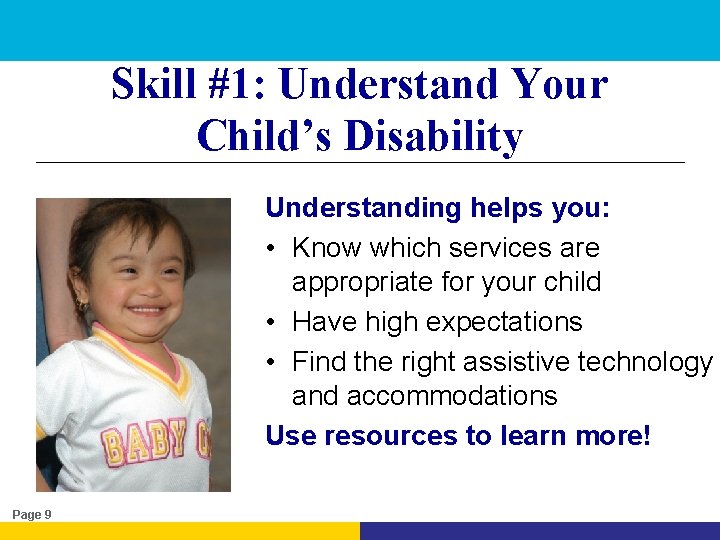
Skill #1: Understand Your Child’s Disability Understanding helps you: • Know which services are appropriate for your child • Have high expectations • Find the right assistive technology and accommodations Use resources to learn more! Page 9
Skill #2: Know the Key Players • Who is the director or decision maker? • Are staff people public, non-profit, or private employees? • How can you find a person’s name? Page 10
Skill #3: Know Your Rights and Responsibilities Learn about them by: • Reading Web sites • Asking how service is funded • Asking to see laws and policies • Asking questions • Joining a group Page 11
Parents as Partners Parents and professionals can be partners and: • Work together • Share goals • Have individual roles • Share authority • Have different skills • Solve problems Page 12
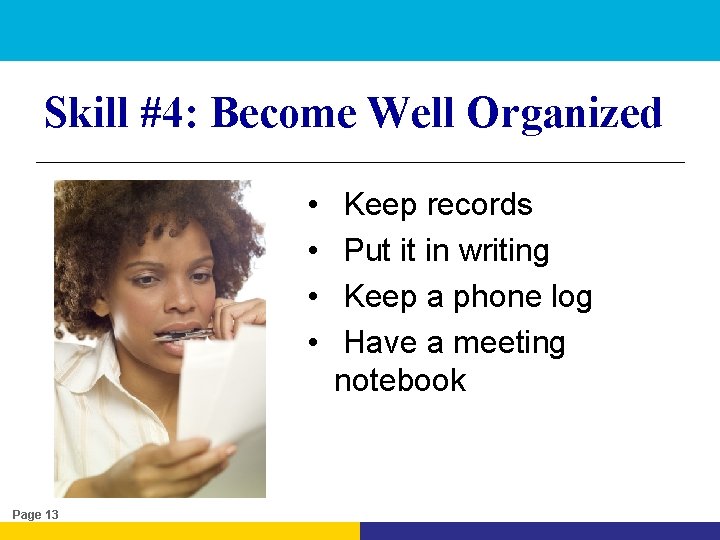
Skill #4: Become Well Organized • • Page 13 Keep records Put it in writing Keep a phone log Have a meeting notebook
Skill #5: Use Clear and Effective Communication • Keep your eyes on the “prize” – the right service for your child! • Listen and ask questions Page 14
Skill #5: Use Clear and Effective Communication • Focus on needs of the child • Problem solve together to find solutions Page 15
Skill # 5: Use Clear and Effective Communication • Speak clearly • Avoid making people feel defensive • Turn negatives into positives • Summarize Page 16
Tips for Good Communication at a Meeting • • • Page 17 Focus on your goal Show respect and expect it from others Manage your emotions Ask questions Rephrase for clarification Say thanks
Tips for Written Communication Letters should: • Be sent to person who can make a change • Be dated and signed • Focus on one or two issues • Be no longer than one page • Set a deadline if a reply is requested • Give your contact information Remember to keep a copy for yourself! Page 18
When You Disagree • • • Page 19 Disagree without being disagreeable Apologize if needed Separate the person from the problem Realize NO ONE has all the answers Make sure your facts are correct Choose your battles
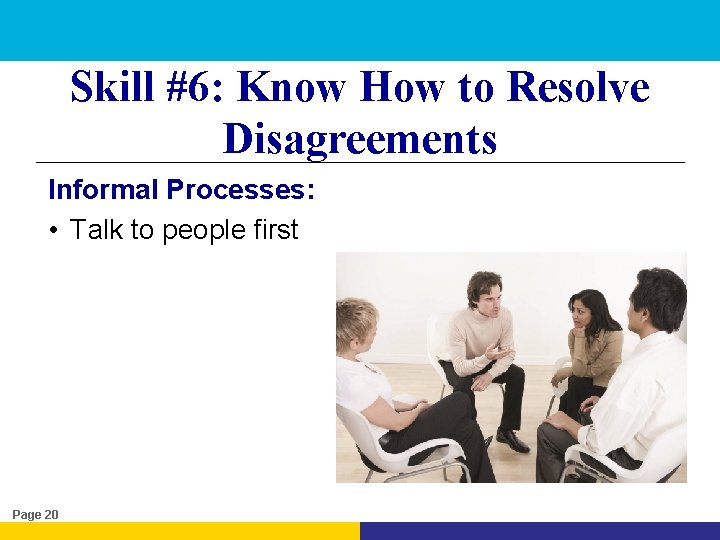
Skill #6: Know How to Resolve Disagreements Informal Processes: • Talk to people first Page 20
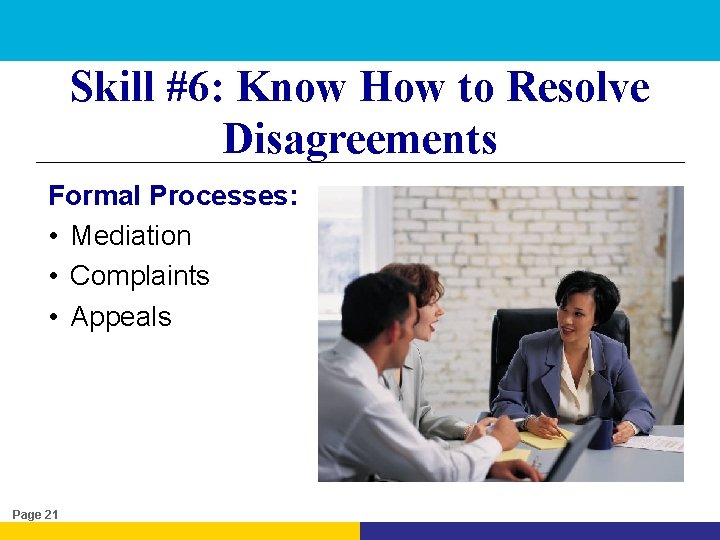
Skill #6: Know How to Resolve Disagreements Formal Processes: • Mediation • Complaints • Appeals Page 21
Skills Checklist ü What have you learned? ü Is there a skill you hope to improve? ü Do you need more resources? ü Do you need more support? Page 22
Summary “I am only one, but still I am one. I cannot do everything, but still I can do something. I will not refuse to do the something that I can do. ” —Helen Keller Page 23
Contact Information National Family Advocacy Supports and Training (FAST) Project: fastfamilysupport. org 888. 248. 0822 (toll-free nationwide) The FAST Project is funded by the Administration on Developmental Disabilities (ADD) as a Project of National Significance. FAST is a project of: PACER. org | 952. 838. 9000 | 888. 248. 0822 Page 24