
Skills and Economic Growth High Performing Systems David

- Slides: 19
Skills and Economic Growth – High Performing Systems David Harbourne Director of Policy and Research
The Edge Foundation is an independent education charity. We champion technical, practical and vocational learning. We believe all young people should have the opportunity to achieve their potential and the UK’s future workforce needs to be equipped with the skills to be successful in the modern, global economy. Learning by doing should be valued equally with academic learning and that all learners should experience a mix of both. There are many paths to success.
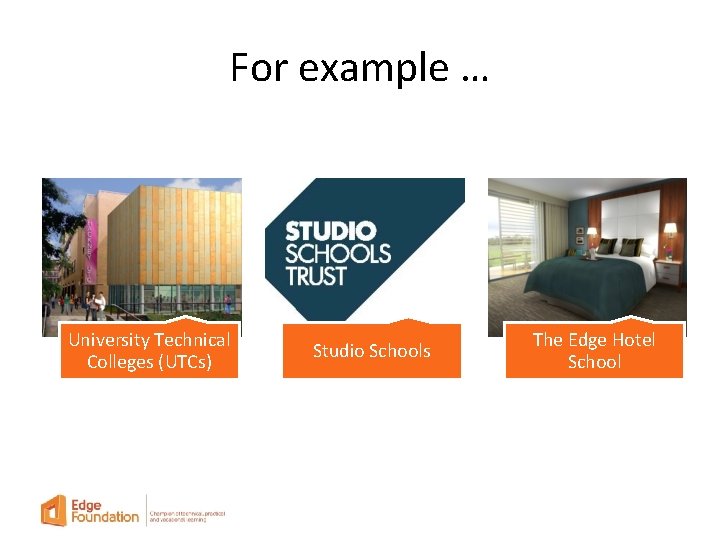
For example … University Technical Colleges (UTCs) Studio Schools The Edge Hotel School
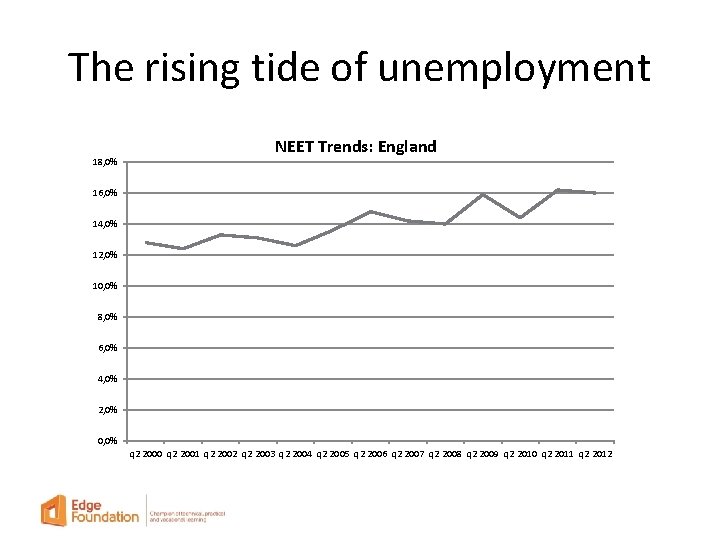
The rising tide of unemployment 18, 0% NEET Trends: England 16, 0% 14, 0% 12, 0% 10, 0% 8, 0% 6, 0% 4, 0% 2, 0% 0, 0% q 2 2000 q 2 2001 q 2 2002 q 2 2003 q 2 2004 q 2 2005 q 2 2006 q 2 2007 q 2 2008 q 2 2009 q 2 2010 q 2 2011 q 2 2012
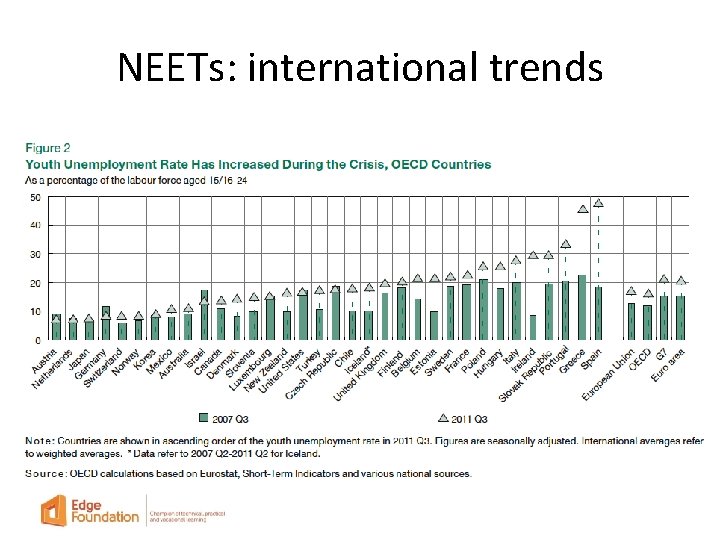
NEETs: international trends
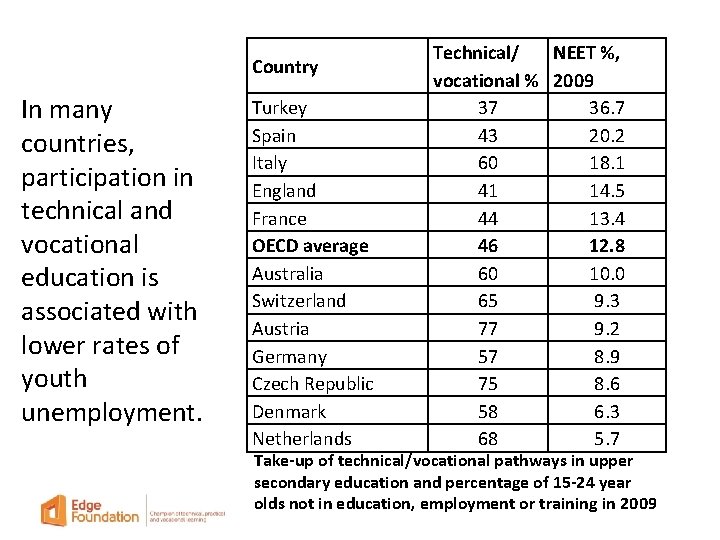
Country In many countries, participation in technical and vocational education is associated with lower rates of youth unemployment. Turkey Spain Italy England France OECD average Australia Switzerland Austria Germany Czech Republic Denmark Netherlands Technical/ NEET %, vocational % 2009 37 36. 7 43 20. 2 60 18. 1 41 14. 5 44 13. 4 46 12. 8 60 10. 0 65 9. 3 77 9. 2 57 8. 9 75 8. 6 58 6. 3 68 5. 7 Take-up of technical/vocational pathways in upper secondary education and percentage of 15 -24 year olds not in education, employment or training in 2009
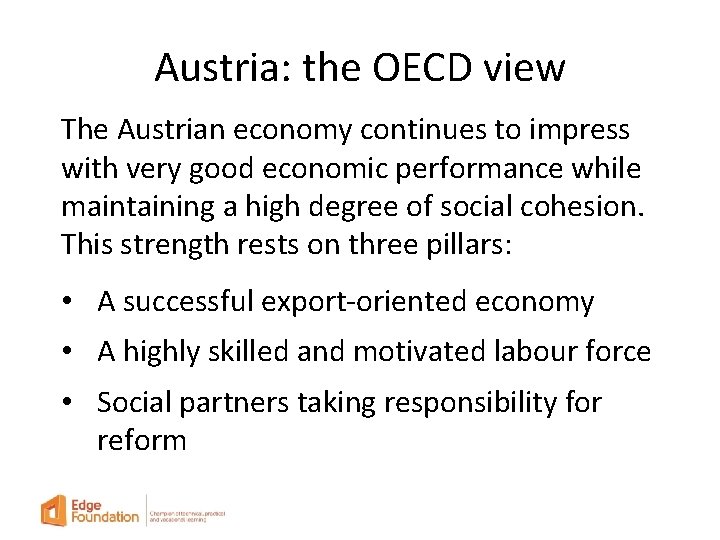
Austria: the OECD view The Austrian economy continues to impress with very good economic performance while maintaining a high degree of social cohesion. This strength rests on three pillars: • A successful export-oriented economy • A highly skilled and motivated labour force • Social partners taking responsibility for reform
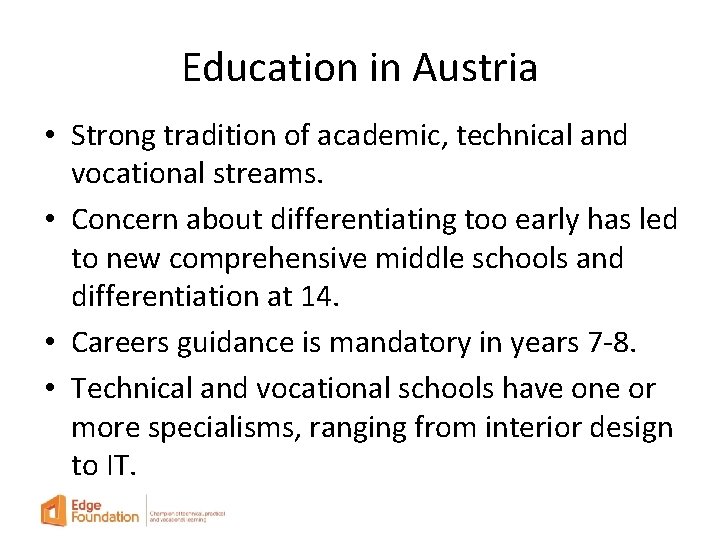
Education in Austria • Strong tradition of academic, technical and vocational streams. • Concern about differentiating too early has led to new comprehensive middle schools and differentiation at 14. • Careers guidance is mandatory in years 7 -8. • Technical and vocational schools have one or more specialisms, ranging from interior design to IT.
Singapore • History of rapid growth: GDP grew by 14. 5% in 2010. • Ranked third in the World Economic Forum’s Global Competitiveness Report behind Switzerland Sweden. • One of the lowest rates of unemployment in the world. • Highly skilled and well educated.
Education in Singapore • Very high performing system - eg high O level pass rates – but the Government believes there’s too much “passive rote learning”. • “We need a mountain range of excellence, not just one peak, to inspire all our young people to find their passions and climb as far as they can. ” • Careers education starts in primary school.
Technical/vocational education • In 1992, Singapore decided to transform vocational education, leading to the creation of the Institute for Technical Education (ITE). • Enrolment has doubled since 1995, and ITE now recruits about 25% of the post-secondary cohort.
Canada: the OECD view • Canada has made great strides in macroeconomic and structural policy. • The economy withstood the global economic crisis well. • Innovation is high on the government’s agenda. • Empirical evidence supports a significant impact of educational attainment on growth.
Education in Ontario • The Ontario Curriculum was introduced in 2000; education has been compulsory to age 18 since 2008. • Students work towards high school graduation by achieving credits – this includes compulsory career studies. • High school graduation has risen from 68 per cent in 2003 -04 to 82 per cent in 2010 -11.
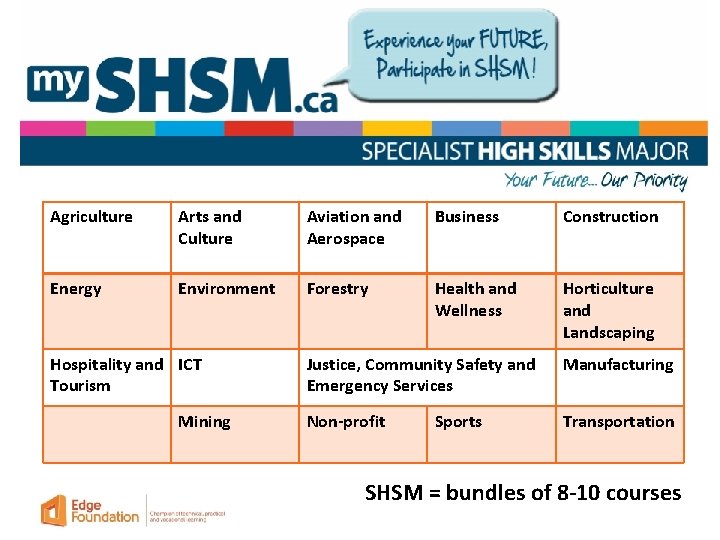
Agriculture Arts and Culture Aviation and Aerospace Business Construction Energy Environment Forestry Health and Wellness Horticulture and Landscaping Hospitality and ICT Tourism Mining Justice, Community Safety and Emergency Services Manufacturing Non-profit Transportation Sports SHSM = bundles of 8 -10 courses
Six Steps for change We want the education and training system to: 1. Recognise that there are many talents and paths to success 2. Ensure that “learning by doing” is valued equally with academic learning 3. Provide technical, practical and vocational learning as an integral and valued part of every young person’s education and as a recognised route to success 4. From the age of 14, give young people a choice of learning experiences and paths based on their motivation, talents and career aspirations 5. Ensure that the technical, practical and vocational education and qualifications offered in schools, FE and HE are high quality and recognised by employers 6. Ensure all young people, whatever their different abilities and interests, leave the system with confidence, ambition and the skills to succeed and the skills the economy needs
Step 4 in more detail • Four-year programmes of study for 14 -18 year olds, combining academic and hands-on subjects. • Access to impartial careers information, advice and guidance from the age of 11. • Teachers and parents need better information, too.
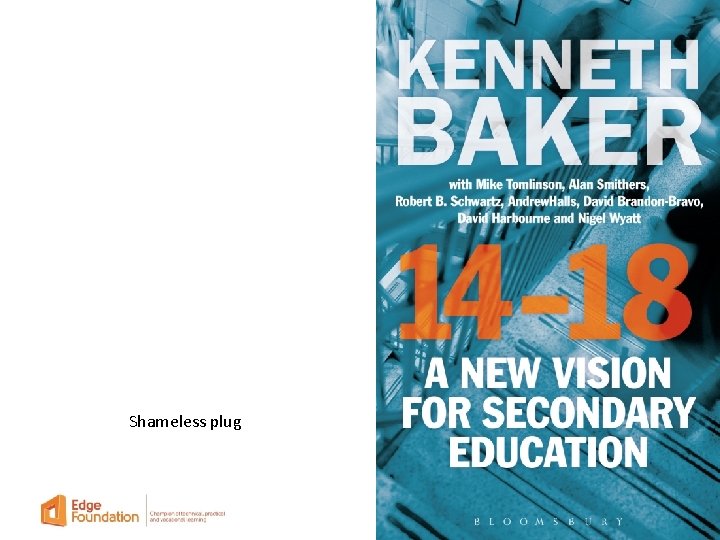
Shameless plug