
Skill understand the journey of a river Rivers
- Slides: 10
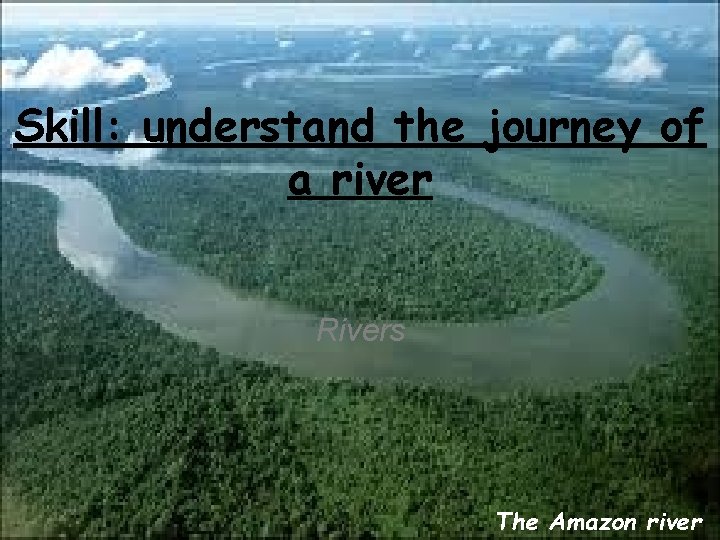
Skill: understand the journey of a river Rivers The Amazon river
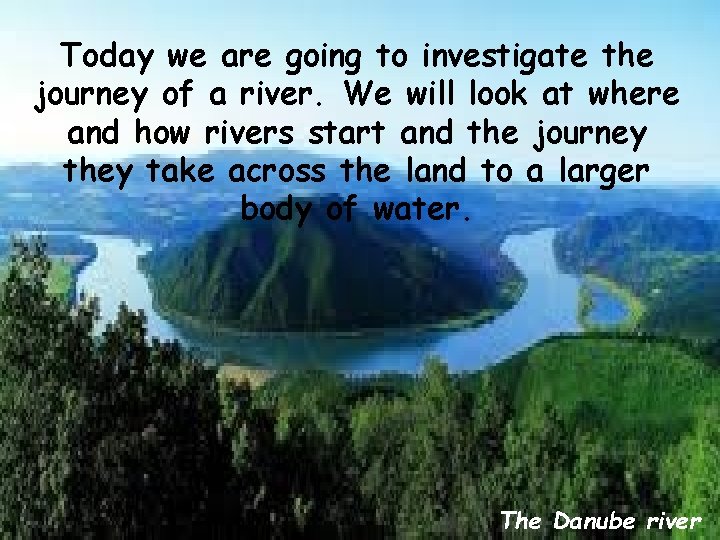
Today we are going to investigate the journey of a river. We will look at where and how rivers start and the journey they take across the land to a larger body of water. The Danube river
Where do rivers begin? How do rivers begin? . The Ganges river
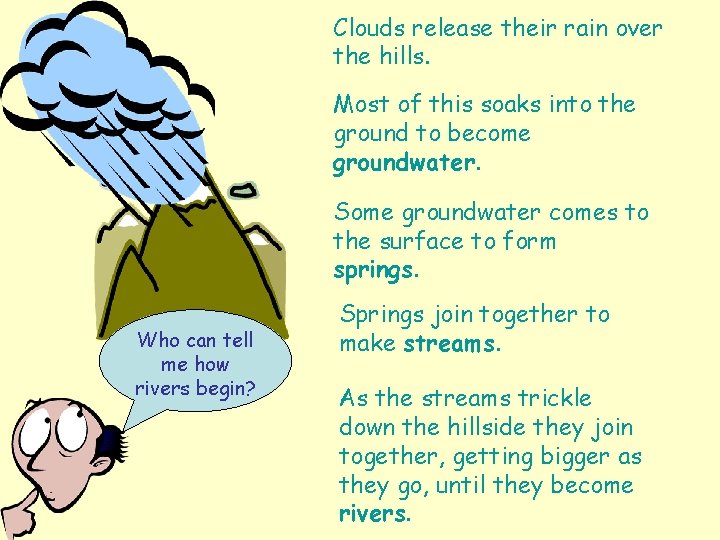
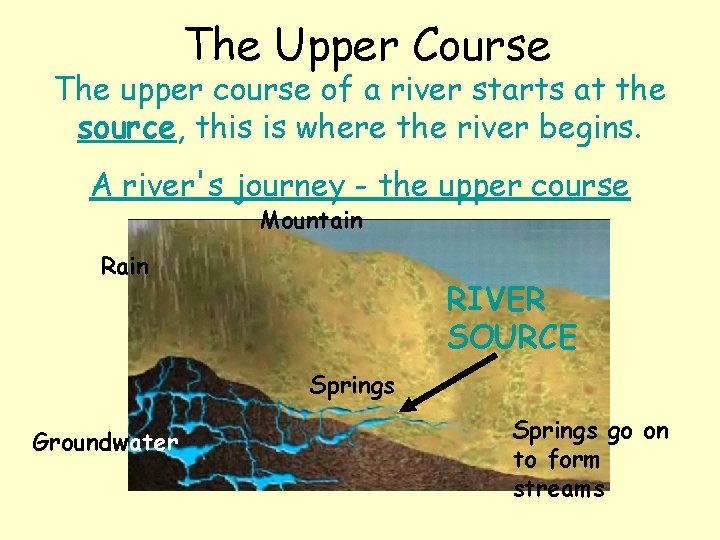
Clouds release their rain over the hills. Most of this soaks into the ground to become groundwater. Some groundwater comes to the surface to form springs. Who can tell me how rivers begin? Springs join together to make streams. As the streams trickle down the hillside they join together, getting bigger as they go, until they become rivers.
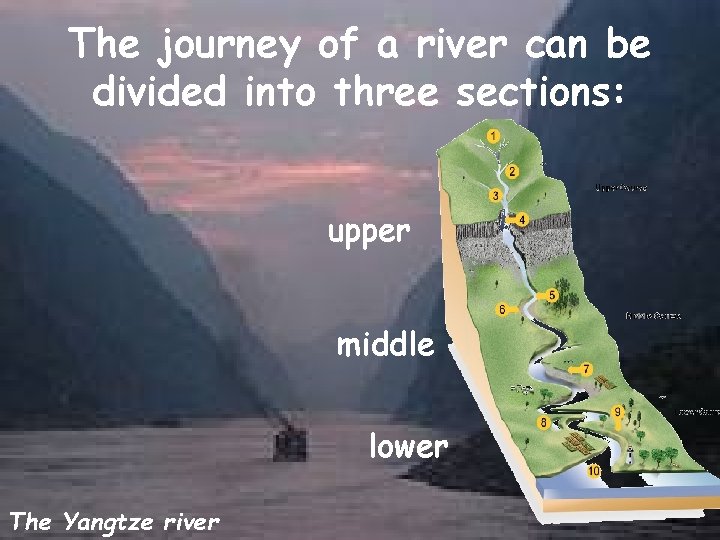
The journey of a river can be divided into three sections: upper middle lower The Yangtze river
The Upper Course The upper course of a river starts at the source, this is where the river begins. A river's journey - the upper course Mountain RIVER SOURCE Springs Groundwater Springs go on to form streams
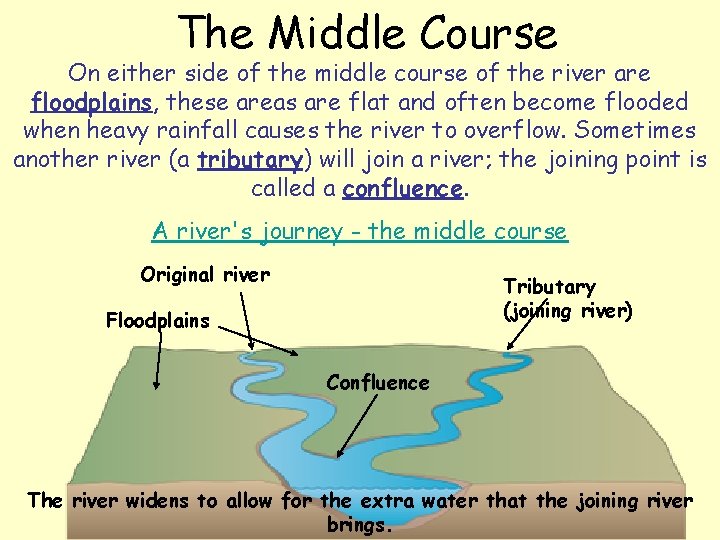
The Middle Course On either side of the middle course of the river are floodplains, these areas are flat and often become flooded when heavy rainfall causes the river to overflow. Sometimes another river (a tributary) will join a river; the joining point is called a confluence. A river's journey - the middle course Original river Tributary (joining river) Floodplains Confluence The river widens to allow for the extra water that the joining river brings.
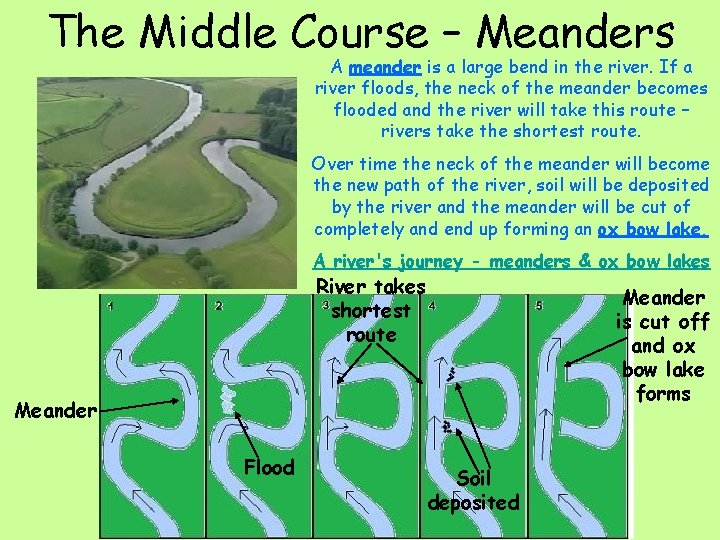
The Middle Course – Meanders A meander is a large bend in the river. If a river floods, the neck of the meander becomes flooded and the river will take this route – rivers take the shortest route. Over time the neck of the meander will become the new path of the river, soil will be deposited by the river and the meander will be cut of completely and end up forming an ox bow lake. A river's journey - meanders & ox bow lakes River takes shortest route Meander is cut off and ox bow lake forms Meander Flood Soil deposited
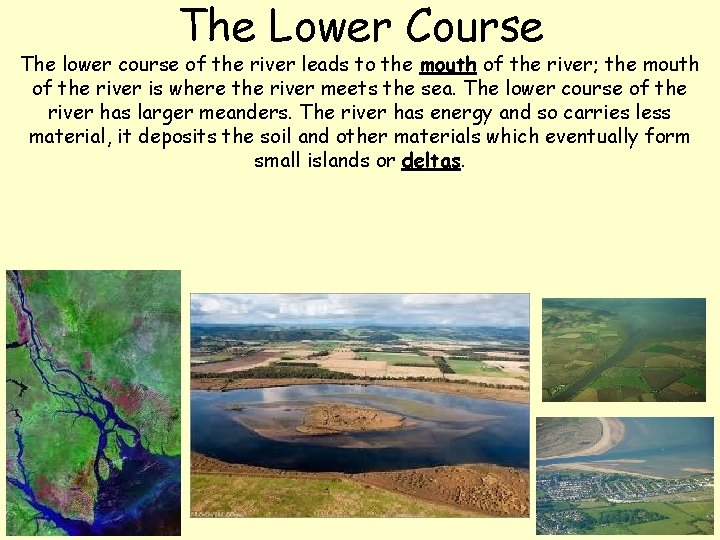
The Lower Course The lower course of the river leads to the mouth of the river; the mouth of the river is where the river meets the sea. The lower course of the river has larger meanders. The river has energy and so carries less material, it deposits the soil and other materials which eventually form small islands or deltas.
• • • Key Words Source – the beginning of a river. Groundwater – rain that soaks into the ground. Spring – groundwater that comes up to the surface. Stream – a small river. River – a large natural stream of water. Floodplain – area of flat land either side, likely to flood. Confluence – the point where a tributary joins a river. Tributary – a stream or river that joins another river. Meander – a bend in a river. Ox bow lake – a lake created when a meander is cut off. Mouth – the place where a river meets the sea. Delta – a small island created by deposited material (soil).