
Skill Standards Certification and Assessment for Technicians in


- Slides: 42
Skill Standards, Certification and Assessment for Technicians in the Information & Communications Technology (ICT) Industries
Topics v Current State v Certification Overview v ICT Skill Standards v Phases of research v Status of research
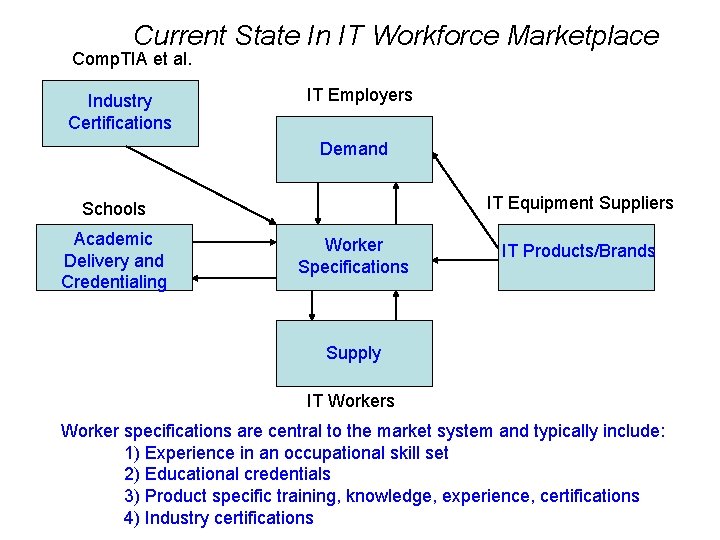
Current State In IT Workforce Marketplace Comp. TIA et al. Industry Certifications IT Employers Demand IT Equipment Suppliers Schools Academic Delivery and Credentialing Worker Specifications IT Products/Brands Supply IT Workers Worker specifications are central to the market system and typically include: 1) Experience in an occupational skill set 2) Educational credentials 3) Product specific training, knowledge, experience, certifications 4) Industry certifications
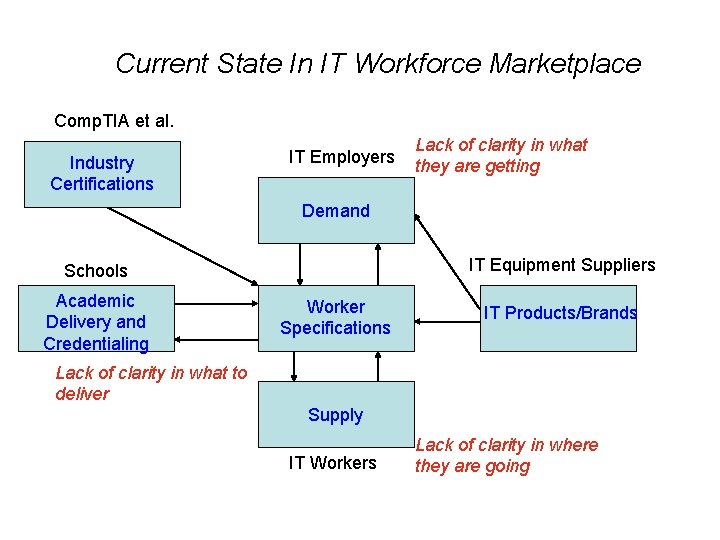
Current State In IT Workforce Marketplace Comp. TIA et al. Industry Certifications IT Employers Lack of clarity in what they are getting Demand IT Equipment Suppliers Schools Academic Delivery and Credentialing Worker Specifications IT Products/Brands Lack of clarity in what to deliver Supply IT Workers Lack of clarity in where they are going
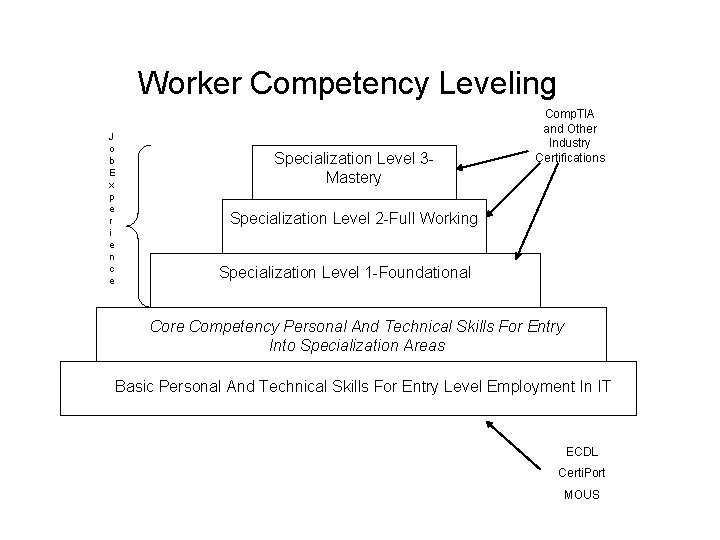
Worker Competency Leveling J o b E x p e r i e n c e Specialization Level 3 Mastery Comp. TIA and Other Industry Certifications Specialization Level 2 -Full Working Specialization Level 1 -Foundational Core Competency Personal And Technical Skills For Entry Into Specialization Areas Basic Personal And Technical Skills For Entry Level Employment In IT ECDL Certi. Port MOUS
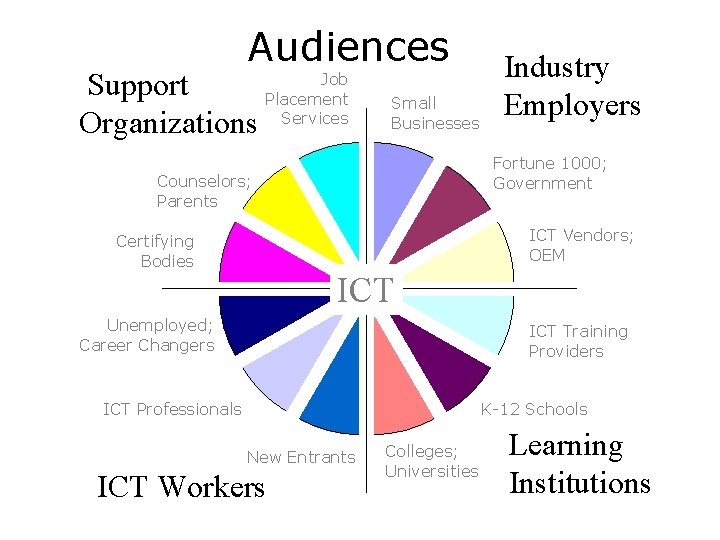
Audiences Support Organizations Job Placement Services Small Businesses Industry Employers Fortune 1000; Government Counselors; Parents ICT Vendors; OEM Certifying Bodies ICT Unemployed; Career Changers ICT Training Providers ICT Professionals K-12 Schools New Entrants ICT Workers Colleges; Universities Learning Institutions
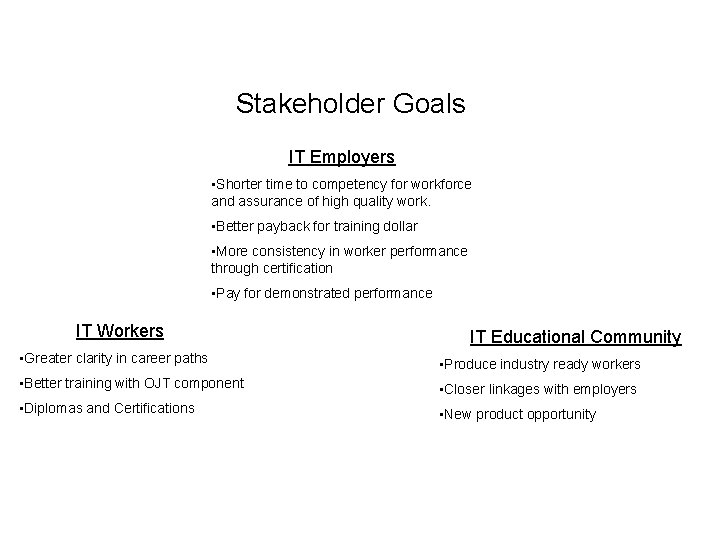
Stakeholder Goals IT Employers • Shorter time to competency for workforce and assurance of high quality work. • Better payback for training dollar • More consistency in worker performance through certification • Pay for demonstrated performance IT Workers IT Educational Community • Greater clarity in career paths • Produce industry ready workers • Better training with OJT component • Closer linkages with employers • Diplomas and Certifications • New product opportunity
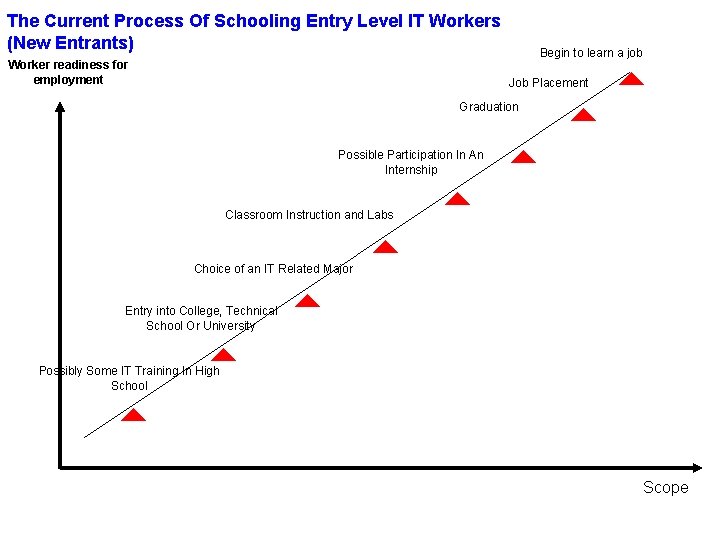
The Current Process Of Schooling Entry Level IT Workers (New Entrants) Worker readiness for employment Begin to learn a job Job Placement Graduation Possible Participation In An Internship Classroom Instruction and Labs Choice of an IT Related Major Entry into College, Technical School Or University Possibly Some IT Training In High School Scope
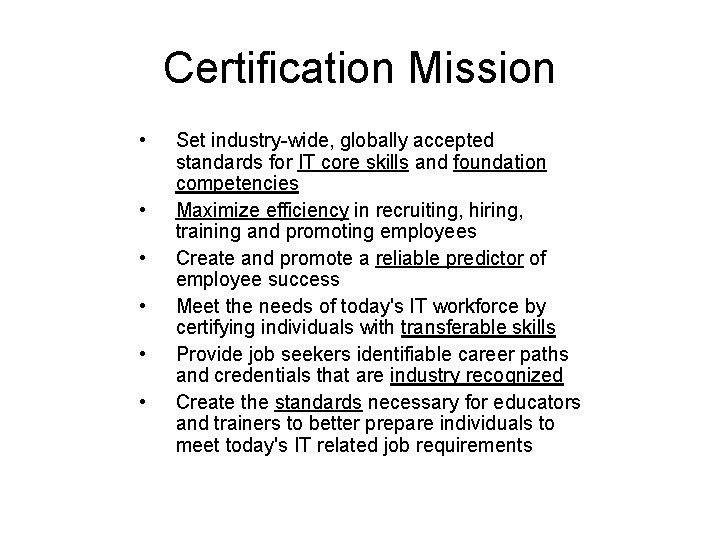
Certification Mission • • • Set industry-wide, globally accepted standards for IT core skills and foundation competencies Maximize efficiency in recruiting, hiring, training and promoting employees Create and promote a reliable predictor of employee success Meet the needs of today's IT workforce by certifying individuals with transferable skills Provide job seekers identifiable career paths and credentials that are industry recognized Create the standards necessary for educators and trainers to better prepare individuals to meet today's IT related job requirements
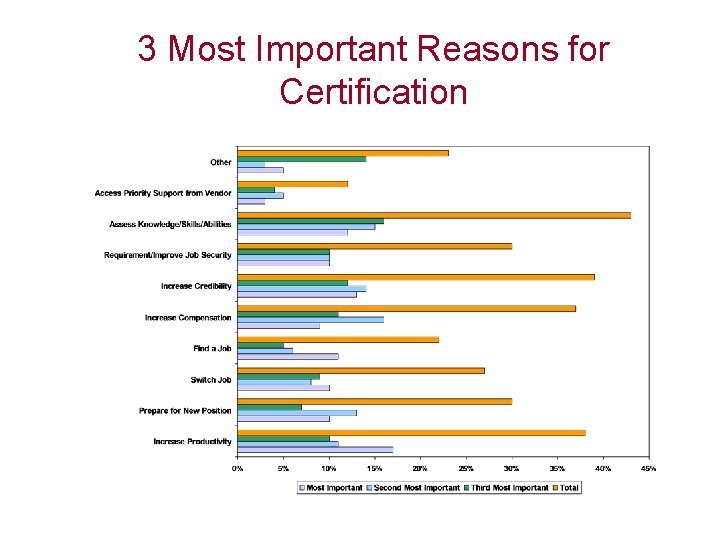
3 Most Important Reasons for Certification
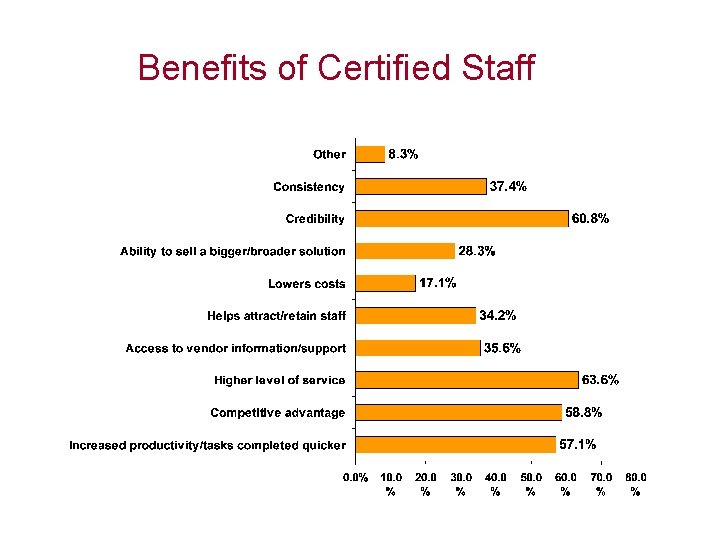
Benefits of Certified Staff
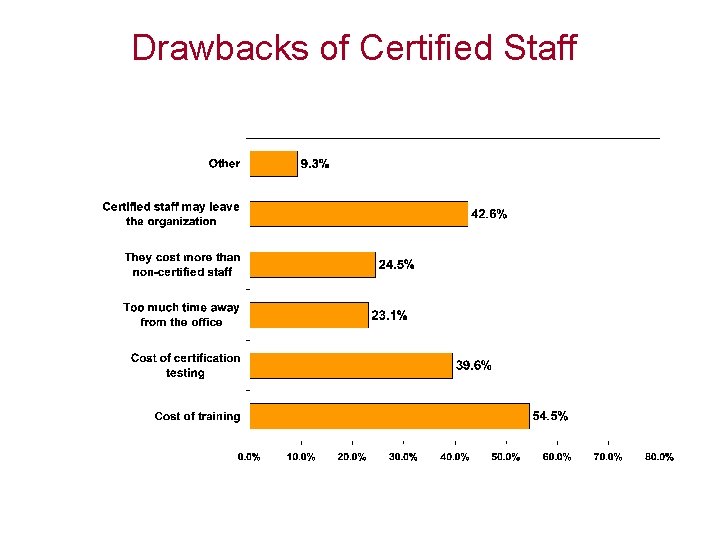
Drawbacks of Certified Staff
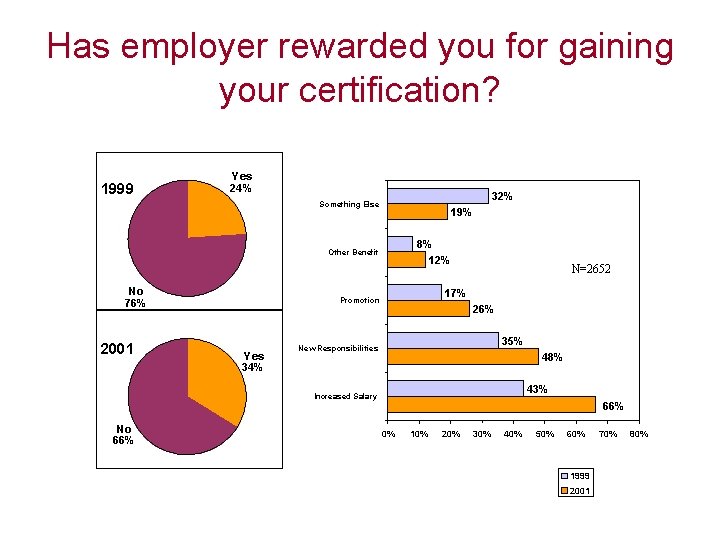
Has employer rewarded you for gaining your certification? 1999 Yes 24% 32% Something Else 19% 8% 12% Other Benefit No 76% 2001 17% Promotion Yes 34% N=2652 26% 35% New Responsibilities 48% 43% Increased Salary No 66% 0% 10% 20% 30% 40% 50% 60% 1999 2001 70% 80%
Certification Program Elements • • • • Ø Business / education goals Ø Funding model Ø Definition of certification Ø Defined audience Ø Linkage to partner or accreditation programs Ø Defined benefits for certification Ø Criteria for product / subject inclusion Ø Testing and scoring goals Ø Legal policies Ø Development plan Ø Implementation plan Ø Marketing / communications plan Ø Compliance plan Ø Recertification / maintenance plan – Evaluation / reporting plan
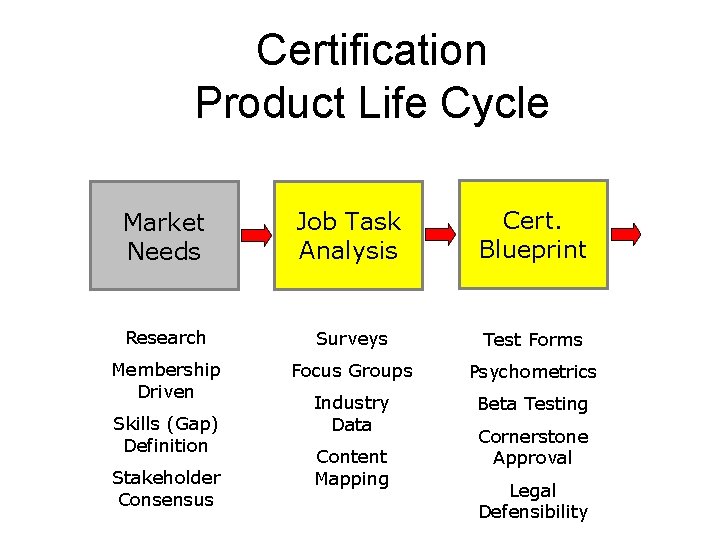
Certification Product Life Cycle Market Needs Job Task Analysis Cert. Blueprint Research Surveys Test Forms Membership Driven Focus Groups Psychometrics Industry Data Beta Testing Skills (Gap) Definition Stakeholder Consensus Content Mapping Cornerstone Approval Legal Defensibility
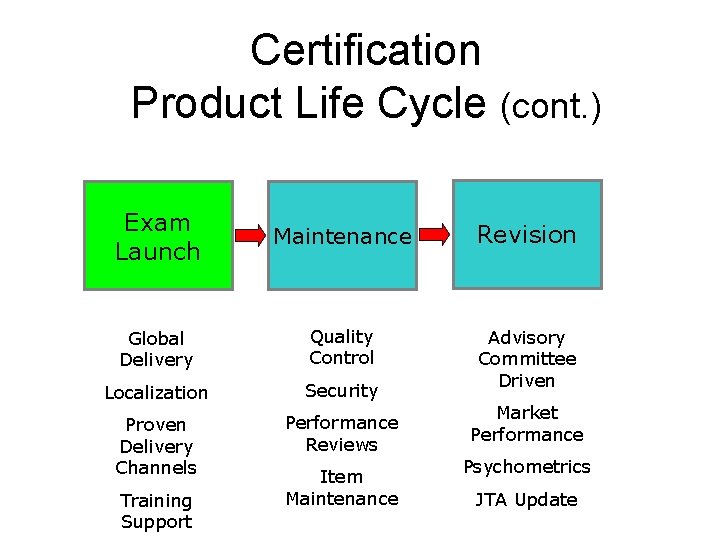
Certification Product Life Cycle (cont. ) Exam Launch Maintenance Revision Global Delivery Quality Control Localization Security Advisory Committee Driven Proven Delivery Channels Performance Reviews Training Support Item Maintenance Market Performance Psychometrics JTA Update
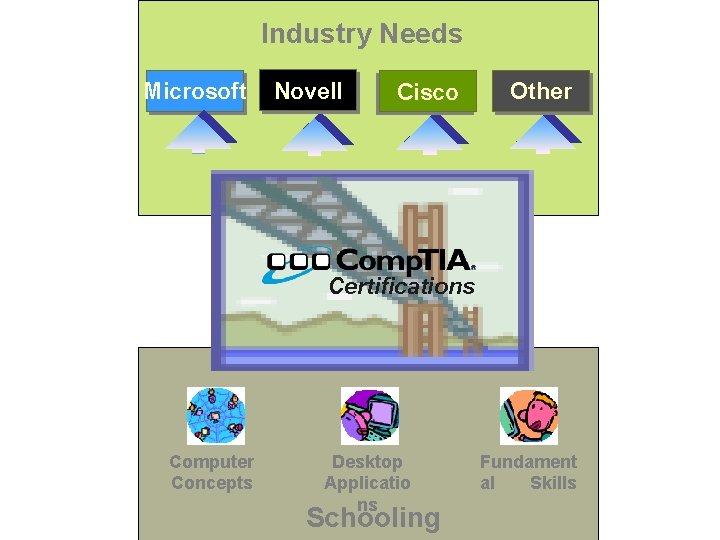
Industry Needs Microsoft Novell Cisco Other Certifications Computer Concepts Desktop Applicatio ns Schooling Fundament al Skills
National ICT Skill Standards Project
Governance v Lead by Voluntary Partnerships v. Business leaders v. Educators v. Labor leaders v. State officials v. Interest groups v Research by VP and technical team
Comp. TIA is VP lead, other VP Members include: • • • ITAA GWEC NWCET IBM CWA Lucent • • • Microsoft HP Cisco Novell North Carolina Courseware Pubs.
Scope v Skill Standards v Certification Tests v Key Jobs
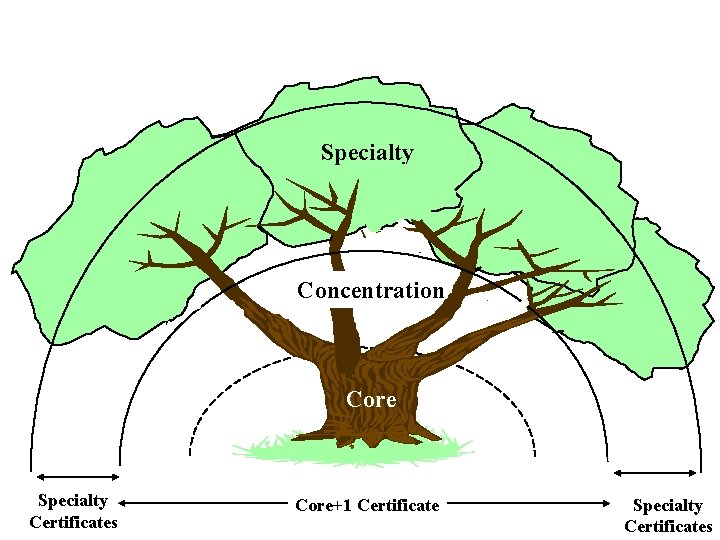
Specialty Concentration Core Specialty Certificates Core+1 Certificate Specialty Certificates
About Skill Standards
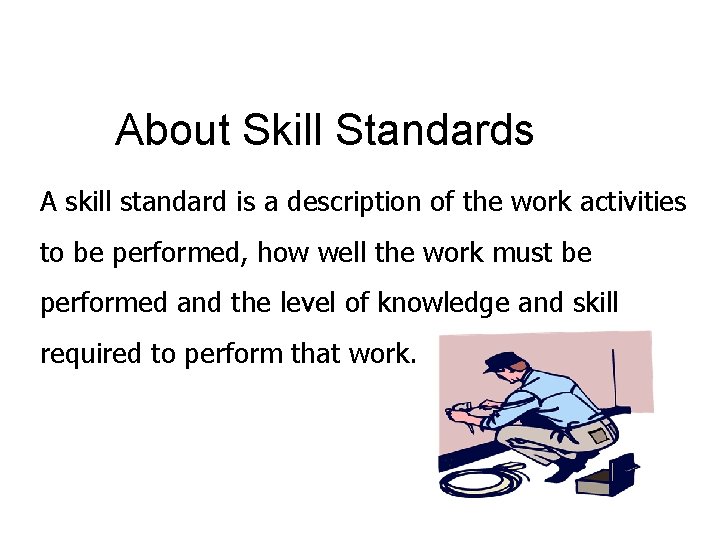
About Skill Standards A skill standard is a description of the work activities to be performed, how well the work must be performed and the level of knowledge and skill required to perform that work.
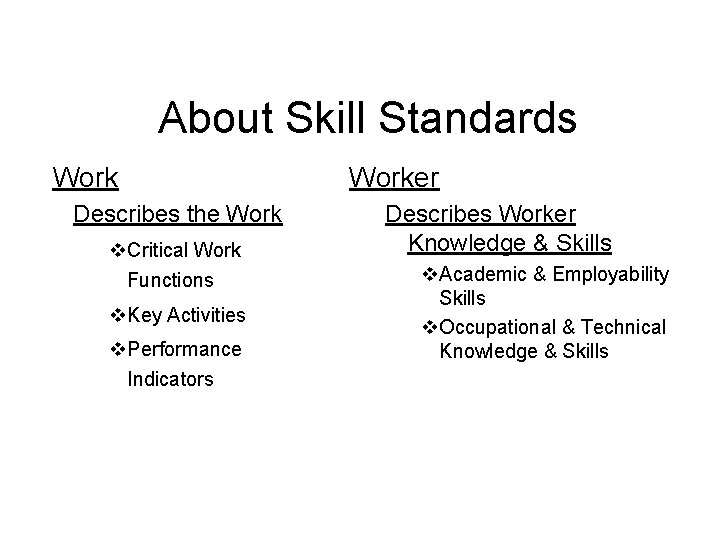
About Skill Standards Work Describes the Work v. Critical Work Functions v. Key Activities v. Performance Indicators Worker Describes Worker Knowledge & Skills v. Academic & Employability Skills v. Occupational & Technical Knowledge & Skills
Phases of Research
Three Phases of Research 1 a. Define the Industry v v v v Telephony Internet Service Providers System Integrators Cable Wireless Satellite Software Broadcast, Radio and TV
Three Phases of Research 1 b. Develop Concentrations v v v v Network Operations Database Programming Field Operations Technical Support Web Development Digital Media Technical Writer
Three Phases of Research 2. Develop the Work & Worker Components v Thought leaders v Senior expert focus groups v Worker focus groups
Three Phases of Research 3. National Survey v Gather ratings to validate focus group findings v Three surveys v CWF-KA v OTKS v High Performance Work Group v Target sample size = 1, 500 per concentration
Reviews and Approvals v ERP review and approval v Voluntary Partnership review and approval v NSSB review and approval v 30 days of public comment
Status of Research
Status of Research Completed: v. Phase 1 a - Industry definition v. Phase 1 b - Concentration definition v. Phase 2 – Develop work & worker components
Status of Research: Concentrations v Network Operations v Database v Programming v Technical Writer v Technical Support v Web Development v Digital Media
Status of Research: Future Work v Phase 2 b – We have issues v Phase 3 – National validation survey v Phase 3 - A&E validation
Status of Research: Current Issues Phase 2 b v. Technical Support & Field Operations v. Web Development & Network Operations v. Digital Media & Technical Writer v. More telecommunications v. More refined OTKS v. Align other skill standards
Status of Research: National Validation Survey Phase 3 v. Gather ratings to validate focus group findings v. Three surveys v CWF-KA v OTKS v High Performance Work Group v. Target sample size = 1, 500 per concentration
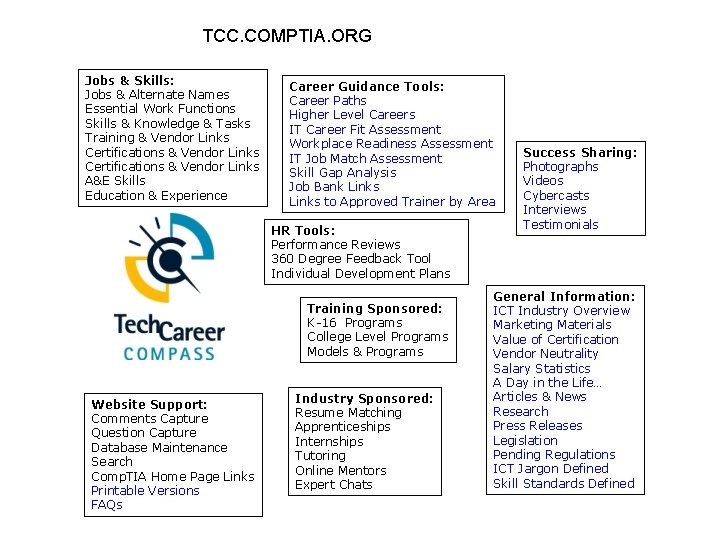
We are already developing tools… : for the Industry to manage workforce performance and training : for the Individual to enable management of careers : for the Trainers and Certifying Bodies to plan curricula to meet industry requirements
TCC. COMPTIA. ORG Jobs & Skills: Jobs & Alternate Names Essential Work Functions Skills & Knowledge & Tasks Training & Vendor Links Certifications & Vendor Links A&E Skills Education & Experience Career Guidance Tools: Career Paths Higher Level Careers IT Career Fit Assessment Workplace Readiness Assessment IT Job Match Assessment Skill Gap Analysis Job Bank Links to Approved Trainer by Area HR Tools: Performance Reviews 360 Degree Feedback Tool Individual Development Plans Training Sponsored: K-16 Programs College Level Programs Models & Programs Website Support: Comments Capture Question Capture Database Maintenance Search Comp. TIA Home Page Links Printable Versions FAQs Industry Sponsored: Resume Matching Apprenticeships Internships Tutoring Online Mentors Expert Chats Success Sharing: Photographs Videos Cybercasts Interviews Testimonials General Information: ICT Industry Overview Marketing Materials Value of Certification Vendor Neutrality Salary Statistics A Day in the Life… Articles & News Research Press Releases Legislation Pending Regulations ICT Jargon Defined Skill Standards Defined
Project Mission Our mission is to: explore ICT certification and assessment system built on job roles as an approach for: 1) increasing the supply of competent IT workers in US and Denmark 2) facilitating the cost-effective attainment of IT worker competency leading to new entrants becoming “industry ready” in a shorter period of time, 3) providing a “best practices” methodology for adding new skill sets to IT existing workers and/or migrating existing workers to new specializations within IT, 4) ensuring the competency and quality of IT workers through industry certification, and 5) clarifying the career paths, skill sets and professional standards of IT workers. While the terms “explore and assess” imply a research orientation, we will add product development and marketing dimensions.
Benefits v. More competent technicians v. Greater competitiveness v. Up-to-date curricula v. Source of skilled technicians v. Compare “high performance” level to others
Questions? www. comptia. org John Engman 630 -678 -8352 Jengman@comptia. org