
Skill Focus E 1 18A use conventions of


- Slides: 30
Skill Focus: E 1. 18(A) use conventions of capitalization STAAR/EOC Readiness Standard Writing Coach pages 546 -550 Capitalization in Sentences
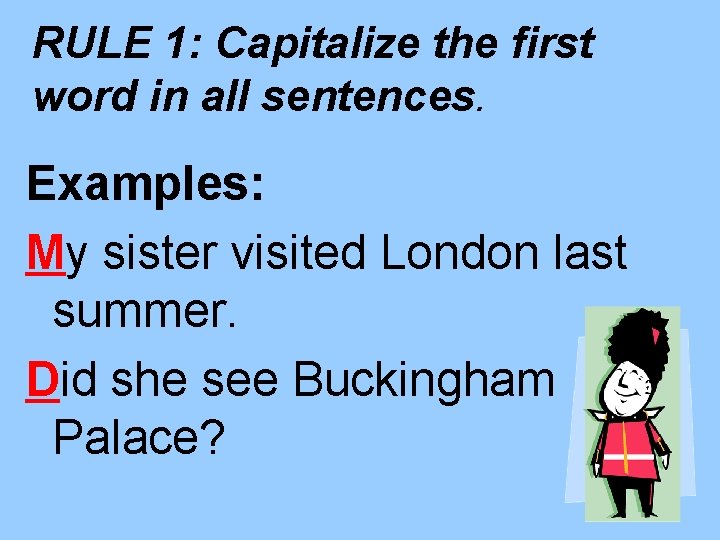
RULE 1: Capitalize the first word in all sentences. Examples: My sister visited London last summer. Did she see Buckingham Palace?
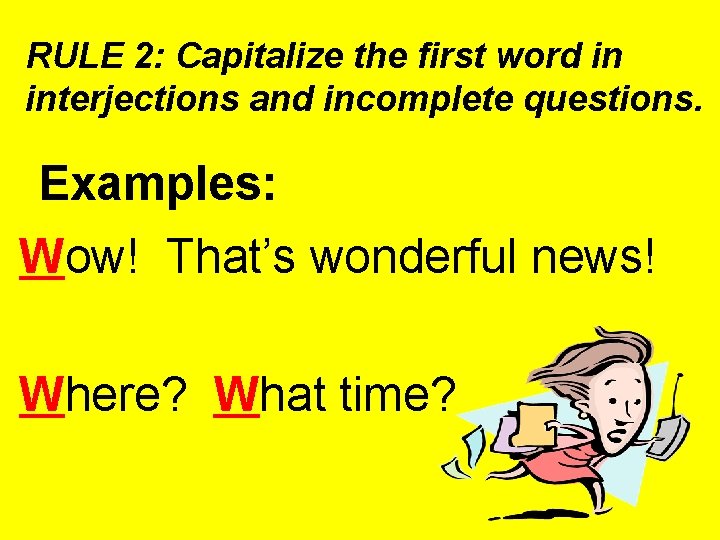
RULE 2: Capitalize the first word in interjections and incomplete questions. Examples: Wow! That’s wonderful news! Where? What time?
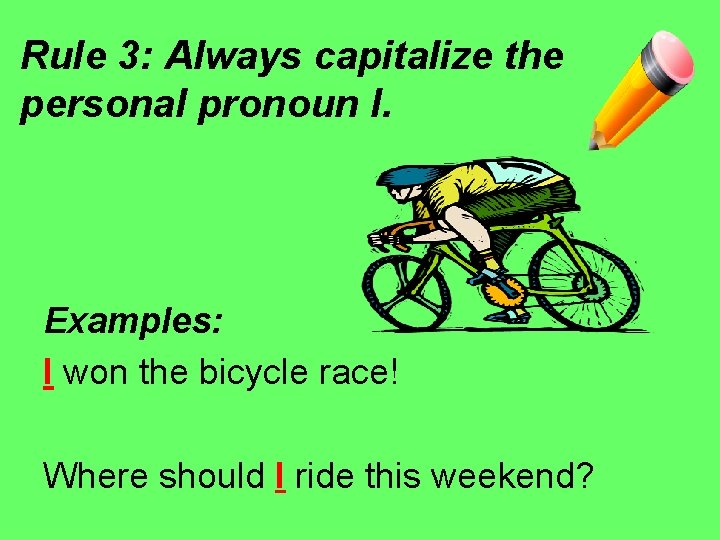
Rule 3: Always capitalize the personal pronoun I. Examples: I won the bicycle race! Where should I ride this weekend?
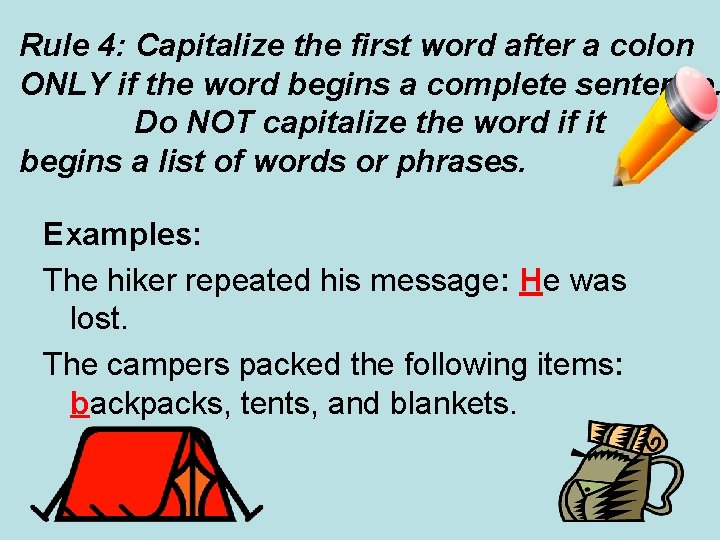
Rule 4: Capitalize the first word after a colon ONLY if the word begins a complete sentence. Do NOT capitalize the word if it begins a list of words or phrases. Examples: The hiker repeated his message: He was lost. The campers packed the following items: backpacks, tents, and blankets.
Rule 5: Capitalize the first word in each line of traditional poetry, even if the line does not start a new sentence. Examples: My heart leaps up when I behold A rainbow in the sky… --William Wordsworth “My Heart Leaps Up”
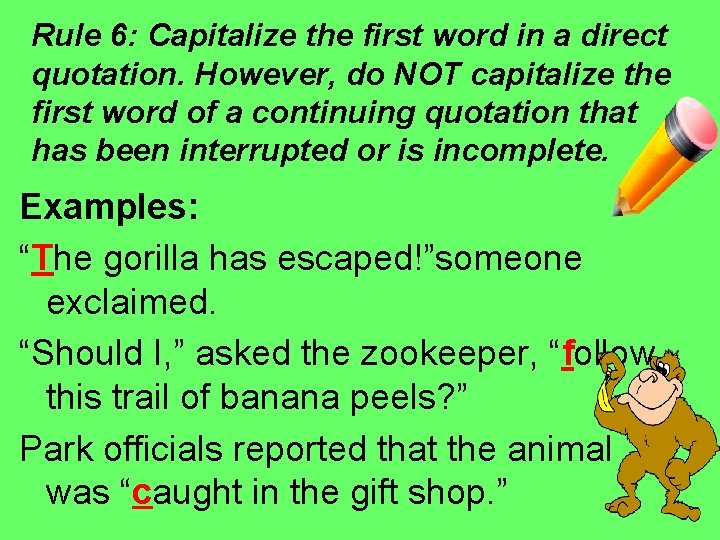
Rule 6: Capitalize the first word in a direct quotation. However, do NOT capitalize the first word of a continuing quotation that has been interrupted or is incomplete. Examples: “The gorilla has escaped!”someone exclaimed. “Should I, ” asked the zookeeper, “follow this trail of banana peels? ” Park officials reported that the animal was “caught in the gift shop. ”
Skill Focus: E 1. 18(A) use conventions of capitalization STAAR/EOC Readiness Standard Writing Coach pages 551 -558 Capitalization with Proper Nouns
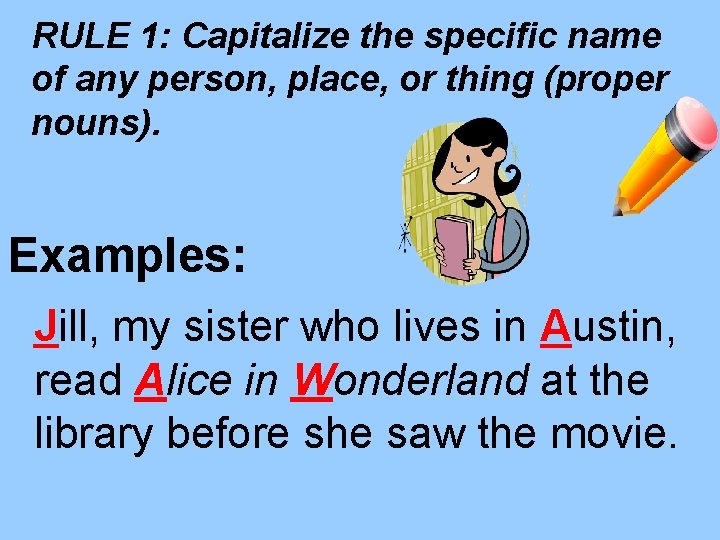
RULE 1: Capitalize the specific name of any person, place, or thing (proper nouns). Examples: Jill, my sister who lives in Austin, read Alice in Wonderland at the library before she saw the movie.
RULE 2: Capitalize each part of a person’s name even when the full name is not used. Examples: My favorite authors include Ray Bradbury, J. R. R. Tolkien, and Edgar Allan Poe.
Rule 3: Capitalize names found on maps and place names (streets, countries, lakes, buildings, schools, etc. ) Examples: We turned west on Gandy Street and arrived at the Forth Worth Museum of Science and History.
• Words indicating direction are capitalized only when they refer to a section or region of the country. Examples: The North fought against the South during the Civil War. Union soldiers marched south across the battlefield.
• Capitalize names of celestial bodies (planets, etc. ) except for moon and sun. Examples: We watched the moon pass between the sun and Earth during the eclipse.
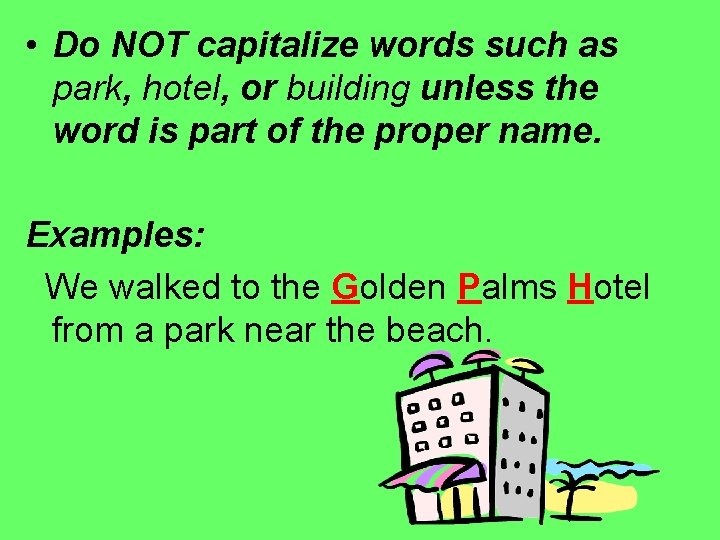
• Do NOT capitalize words such as park, hotel, or building unless the word is part of the proper name. Examples: We walked to the Golden Palms Hotel from a park near the beach.
Rule 4: Capitalize major historical events, time periods, and documents as well as dates and holidays. Examples: Memorial Day was instituted at the end of World War I to honor fallen soldiers.
* Capitalize days of the week and months of the year, but do NOT capitalize the names of seasons. Examples: The first Monday in September is the next holiday after our summer vacation.
RULE 5: Capitalize names of organizations, governmental bodies, political parties, races, nationalities, languages, and religions. Examples: A group of Israeli exchange students sponsored by the Knights of Columbus attended a lecture on Judaism.
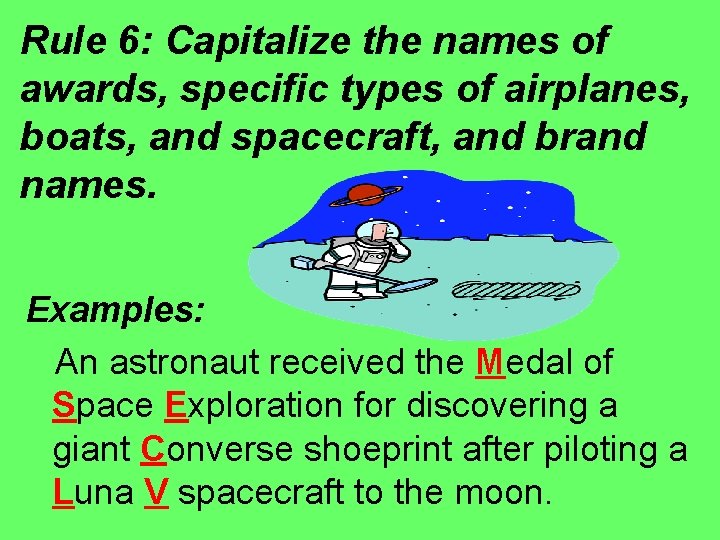
Rule 6: Capitalize the names of awards, specific types of airplanes, boats, and spacecraft, and brand names. Examples: An astronaut received the Medal of Space Exploration for discovering a giant Converse shoeprint after piloting a Luna V spacecraft to the moon.
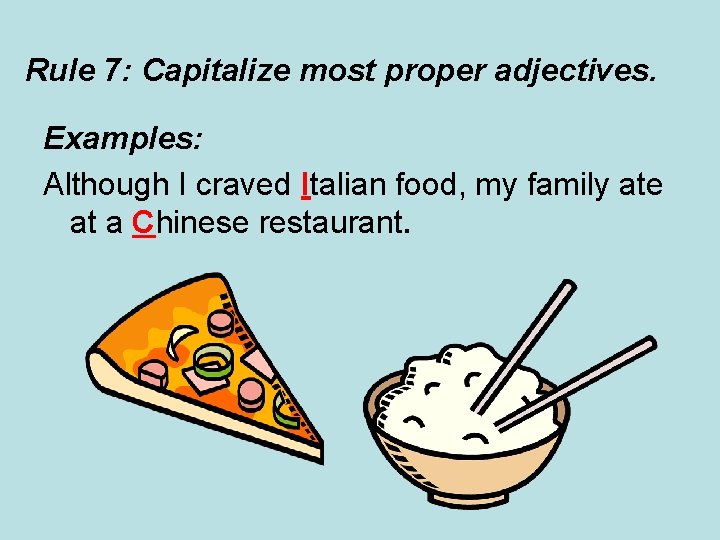
Rule 7: Capitalize most proper adjectives. Examples: Although I craved Italian food, my family ate at a Chinese restaurant.
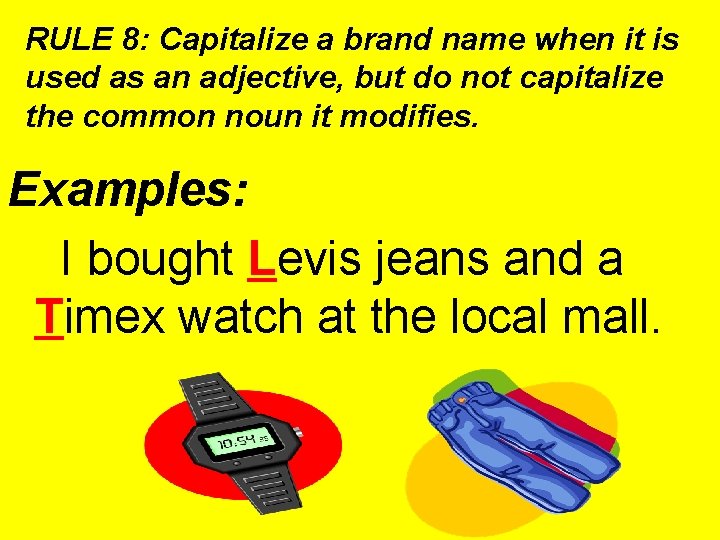
RULE 8: Capitalize a brand name when it is used as an adjective, but do not capitalize the common noun it modifies. Examples: I bought Levis jeans and a Timex watch at the local mall.
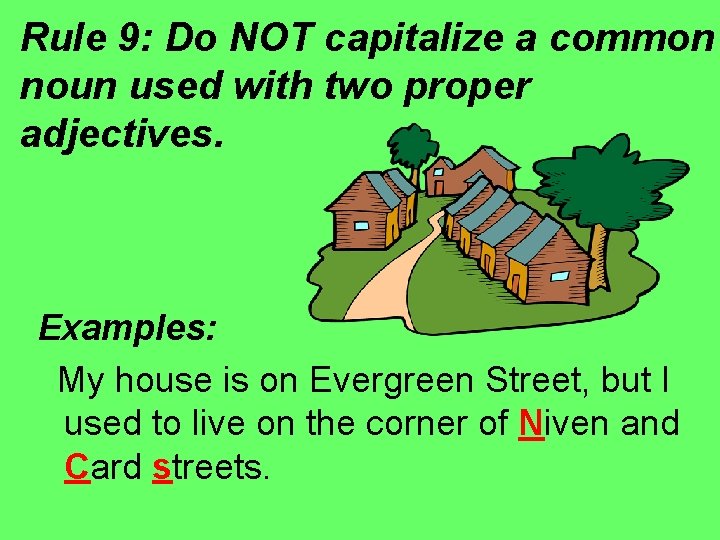
Rule 9: Do NOT capitalize a common noun used with two proper adjectives. Examples: My house is on Evergreen Street, but I used to live on the corner of Niven and Card streets.
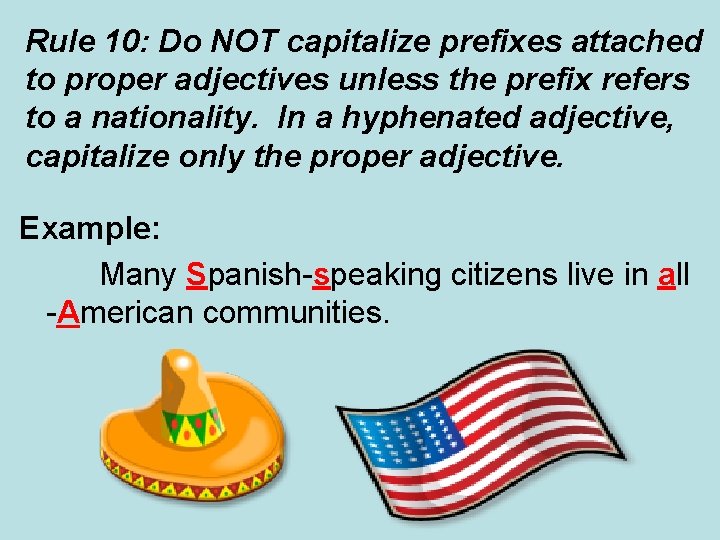
Rule 10: Do NOT capitalize prefixes attached to proper adjectives unless the prefix refers to a nationality. In a hyphenated adjective, capitalize only the proper adjective. Example: Many Spanish-speaking citizens live in all -American communities.
Skill Focus: E 1. 18(A) use conventions of capitalization STAAR/EOC Readiness Standard Writing Coach pages 559 -564 Other Uses of Capitals
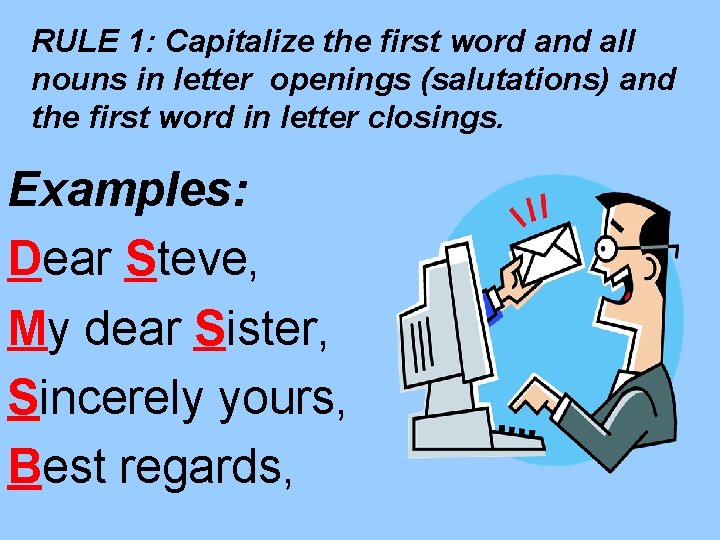
RULE 1: Capitalize the first word and all nouns in letter openings (salutations) and the first word in letter closings. Examples: Dear Steve, My dear Sister, Sincerely yours, Best regards,
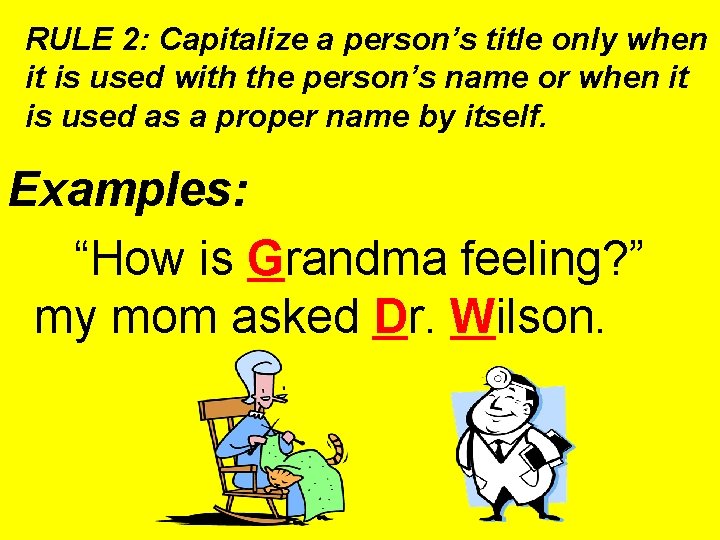
RULE 2: Capitalize a person’s title only when it is used with the person’s name or when it is used as a proper name by itself. Examples: “How is Grandma feeling? ” my mom asked Dr. Wilson.
Rule 3: Capitalize certain honorary titles held by government officials as a sign of respect. Examples: The First Lady gave a speech at our library!
Rule 4: When referring to relatives, only capitalize when the title is used with or in place of the person’s actual name. Example: Uncle Leo only gives my brother a dollar for his birthday, a fact which upsets Mother.
RULE 5: Do NOT capitalize titles showing family relationships when they have a word that shows ownership in front of them. Examples: My aunt married Jeff’s father while Grandma cried her eyes out.
Rule 6: Capitalize the first word and all other important words in titles of books, movies, songs, etc. Example: Willow listened to “The Blitzkrieg Bop” by the Ramones while reading Poe’s “The Fall of the House of Usher. ”
Rule 7: Capitalize titles of classes only if they are language courses, are followed by a number, or are used with an adjective. Examples: Although I enjoyed Spanish last year, my favorite classes were probably History II, Honors Physics, and math.