
Skill Development at its Best Principles of Management
Skill Development at it’s Best Principles of Management Lecture 101112 (The Constraints – Organizational Culture & Environment) By: Farhan Mir Copyright 2017@MIRS
Skill Development at it’s Best Topics • Introduction – Management • Overview and key components • Management as a Field – What are Organizations? – Management Functions & Roles & Importance • History and Evolution of Management – Important Contributions – Trends and Issues • Organizational & Environmental Constraints – – Environmental Effects Important Environmental Elements Internal Vs. External Environment Global Environment & Management Copyright 2017@MIRS
Management and Constraints Skill Development at it’s Best • Management’s task becomes more difficult in the context of open system theory (as it has to manage internal as well as external factors) • The Organizational Environment is classified into two major categories – Internal (commonly known as “Culture” – External Environment (simply called “Environment”) • Specific • General Copyright 2017@MIRS

Skill Development at it’s Best The Constraints Two Perspectives on Management Omnipotent View Vs. Symbolic View Copyright 2017@MIRS

Skill Development at it’s Best The Manager: How Much Control? • Omnipotent View – Managers are directly responsible for an organization’s success or failure – The quality of the organization is determined by the quality of its managers – Managers are held most accountable for an organization’s performance, yet it is difficult to attribute good or poor performance directly to their influence on the organization Copyright 2017@MIRS

Skill Development at it’s Best The Manager: How Much Control? (cont’d) • Symbolic View – Much of an organization’s success or failure is due to external forces outside of managers’ control – The ability of managers to affect outcomes is influenced and constrained by external factors: • The economy, customers, governmental policies, competitors, industry conditions, technology, and the actions of previous managers – Managers symbolize control and influence through their action Copyright 2017@MIRS
Skill Development at it’s Best Organizational Culture – Internal Environment (Heavily effected by the norms and values shared by members of the organization) • What is Organizational Culture? • The 7 Dimensions of Organizational Culture – Risk, Attention to Detail, Outcome Orientation, People Orientation, Team Orientation, Aggressiveness & Stability • Types (Strong Vs. Weak Culture) • Sources of Culture • How employees learn organizational culture – Stories, Rituals, Material Symbols & Language Copyright 2017@MIRS
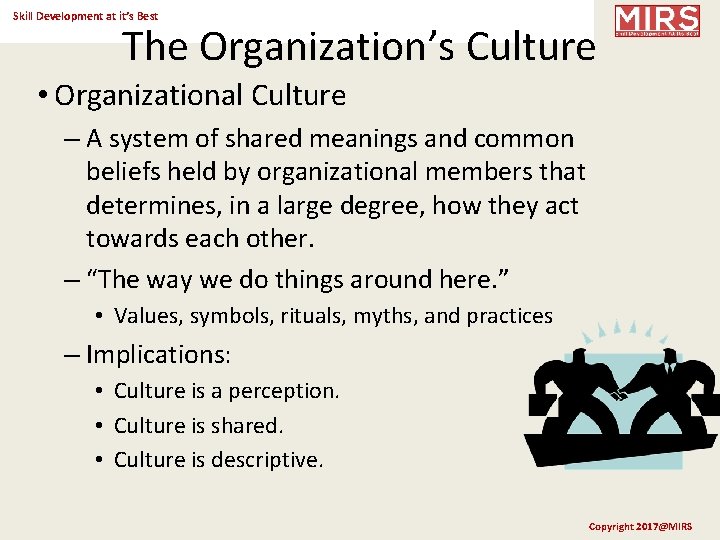
Skill Development at it’s Best The Organization’s Culture • Organizational Culture – A system of shared meanings and common beliefs held by organizational members that determines, in a large degree, how they act towards each other. – “The way we do things around here. ” • Values, symbols, rituals, myths, and practices – Implications: • Culture is a perception. • Culture is shared. • Culture is descriptive. Copyright 2017@MIRS
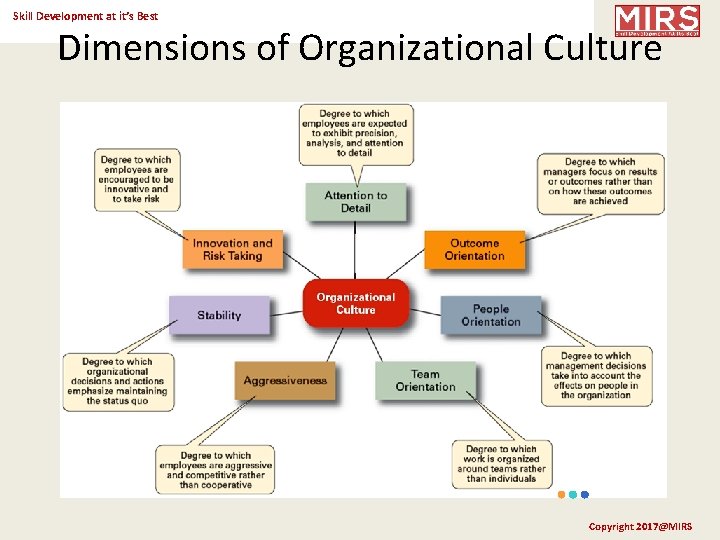
Skill Development at it’s Best Dimensions of Organizational Culture Copyright 2017@MIRS
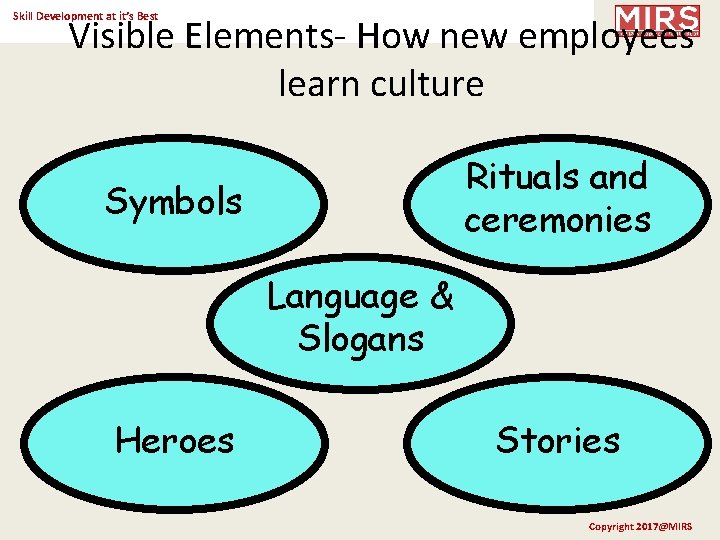
Skill Development at it’s Best Visible Elements- How new employees learn culture Rituals and ceremonies Symbols Language & Slogans Heroes Stories Copyright 2017@MIRS
Strong versus Weak Cultures Skill Development at it’s Best • Strong Cultures – Are cultures in which key values are deeply held and widely held. – Have a strong influence on organizational members. • Factors Influencing the Strength of Culture – Size of the organization – Age of the organization – Rate of employee turnover – Strength of the original culture – Clarity of cultural values and beliefs Copyright 2017@MIRS
Skill Development at it’s Best Benefits of a Strong Culture • Creates a stronger employee commitment to the organization. • Aids in the recruitment and socialization of new employees. • Fosters higher organizational performance by instilling and promoting employee initiative. Copyright 2017@MIRS
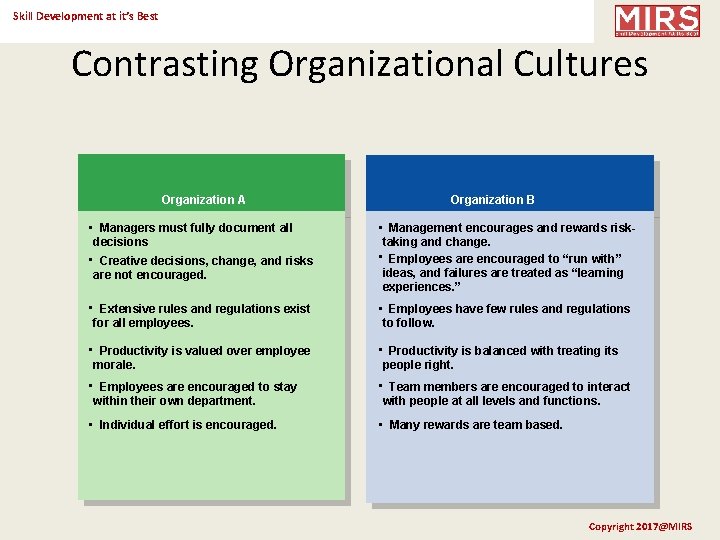
Skill Development at it’s Best Contrasting Organizational Cultures Organization A Organization B • Managers must fully document all decisions • Creative decisions, change, and risks are not encouraged. • Management encourages and rewards risktaking and change. • Employees are encouraged to “run with” ideas, and failures are treated as “learning experiences. ” • Extensive rules and regulations exist for all employees. • Employees have few rules and regulations to follow. • Productivity is valued over employee morale. • Productivity is balanced with treating its people right. • Employees are encouraged to stay within their own department. • Team members are encouraged to interact with people at all levels and functions. • Individual effort is encouraged. • Many rewards are team based. Copyright 2017@MIRS
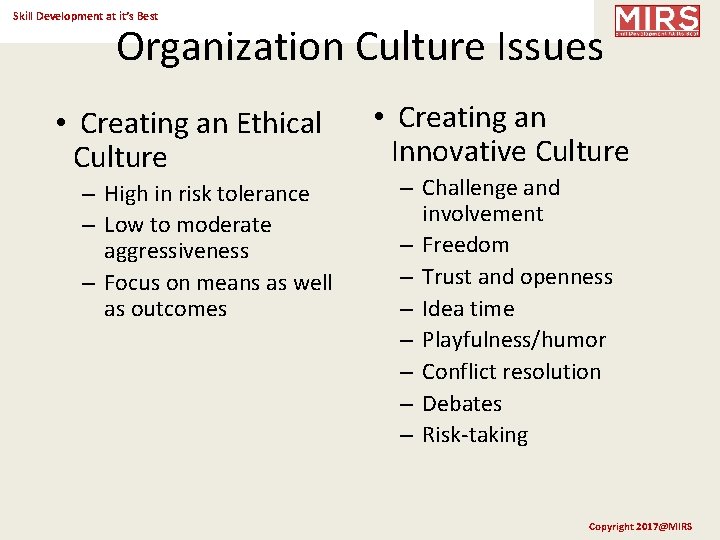
Skill Development at it’s Best Organization Culture Issues • Creating an Ethical Culture – High in risk tolerance – Low to moderate aggressiveness – Focus on means as well as outcomes • Creating an Innovative Culture – Challenge and involvement – Freedom – Trust and openness – Idea time – Playfulness/humor – Conflict resolution – Debates – Risk-taking Copyright 2017@MIRS
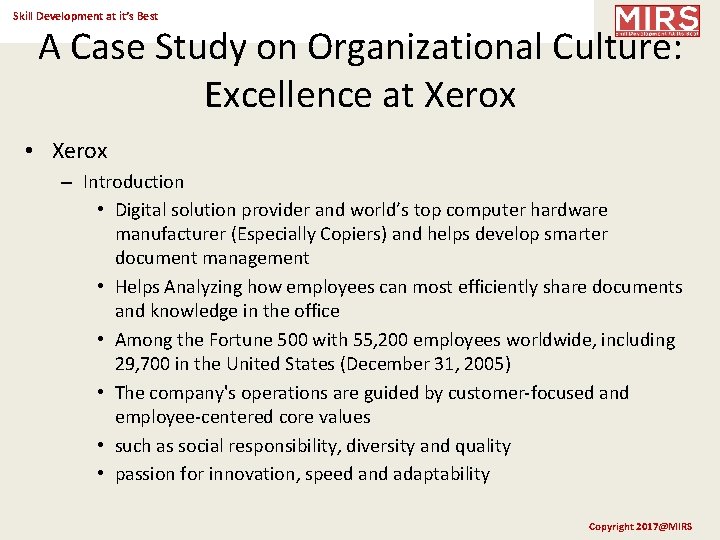
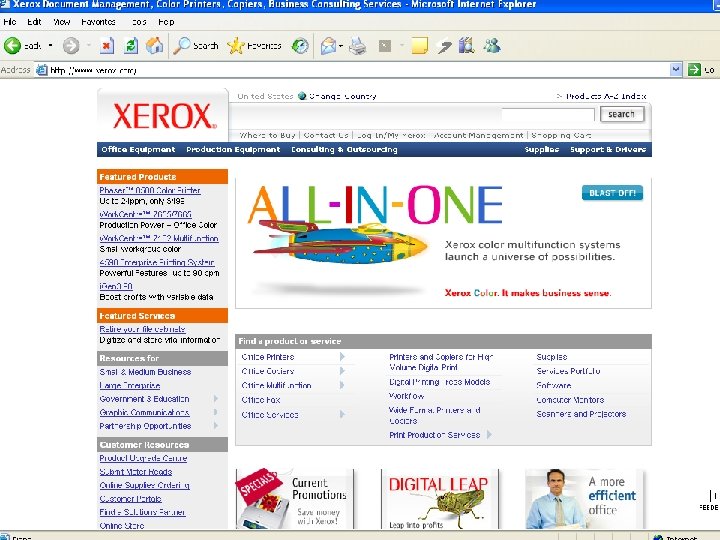
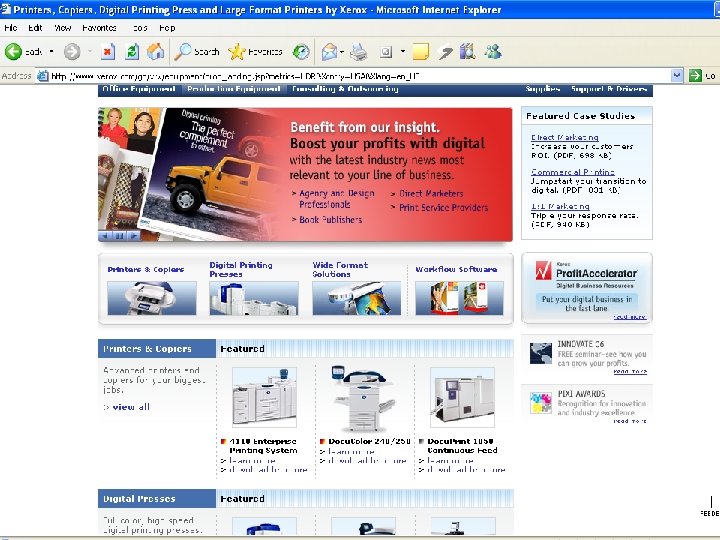
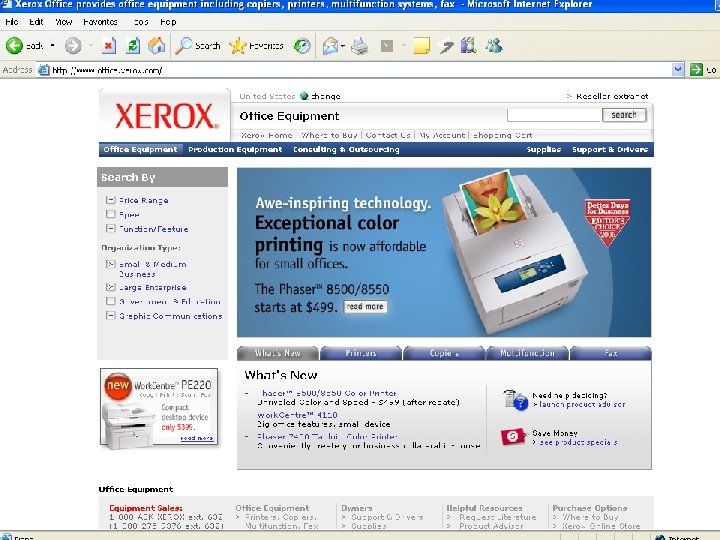
Skill Development at it’s Best A Case Study on Organizational Culture: Excellence at Xerox • Xerox – Introduction • Digital solution provider and world’s top computer hardware manufacturer (Especially Copiers) and helps develop smarter document management • Helps Analyzing how employees can most efficiently share documents and knowledge in the office • Among the Fortune 500 with 55, 200 employees worldwide, including 29, 700 in the United States (December 31, 2005) • The company's operations are guided by customer-focused and employee-centered core values • such as social responsibility, diversity and quality • passion for innovation, speed and adaptability Copyright 2017@MIRS
Skill Development at it’s Best Copyright 2017@MIRS
Skill Development at it’s Best Copyright 2017@MIRS
Skill Development at it’s Best Copyright 2017@MIRS
Skill Development at it’s Best Excellence at Xerox – Xerox Strategy • They are committed towards quality products for their customers and for providing a world-class working environment for their employees • To do so they need to attract and retain world-class people • Xerox Employment Trademark “e. Xpress yourself” yields for them innovation and leading working environment due to: – Passion – Diversity – Ideas – Contribution from everyone Copyright 2017@MIRS
Skill Development at it’s Best Xerox: Excellence • The Problem Era – Just few years back the company was fighting for it’s survival and no focus on improving it’s HR practices – In year 2000 the company was facing $17 billion in debt and it’s stock price dropped from $63 to about $4 – Company suffered loses for 7 consecutive quarters and investigations were called against the accounting matters • The Comeback – Shifted it’s product mix and offered desktop copiers for offices and quality printers for publishers – Company had an increased income to $222 million from just $19 million – The reasons behind this turnaround • Focus on Customers • Thinking about employees as a core (People Orientation) • With strong values of social responsibility, diversity, quality and innovation Copyright 2017@MIRS
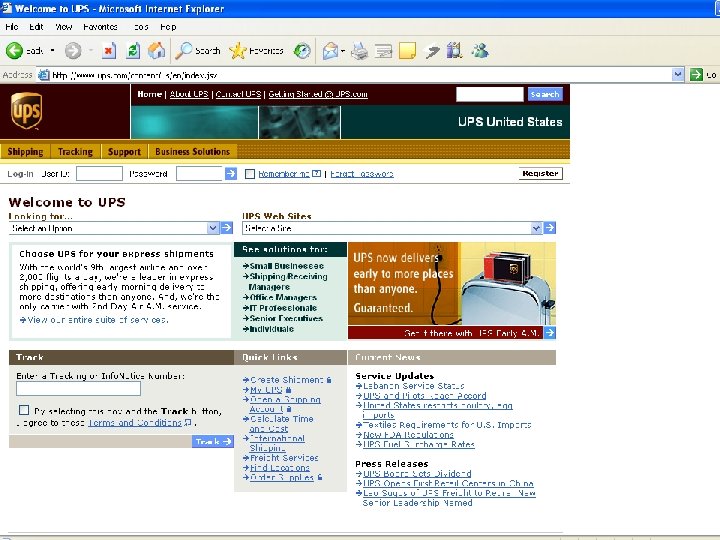
Skill Development at it’s Best Diversity for Success: Case Study on UPS • UPS – Introduction • Founded in 1907 as a messenger company in the United States • the world's largest package delivery company and a leading global provider of specialized transportation and logistics services • Manage the flow of goods, funds, and information in more than 200 countries and territories worldwide. • The Company has got a global posture • UPS´s workforce is multicultural, multidimensional, and reflective of the broad attributes of our global communities • FORTUNE® magazine as one of the "50 Best Companies for Minorities Copyright 2017@MIRS
Skill Development at it’s Best Copyright 2017@MIRS
Skill Development at it’s Best UPS and Diversity – Views about workforce • It is not about race or gender or background rather the focus is about how much employees care about the company or good at their jobs • 1/3 of the employees are from minorities • Representation of minorities is also at each level of the organization • Has a supplier diversity Program encouraging small and minority group suppliers – Diversity driving UPS towards success (may be other factors but diversified workforce with new ideas and flavors is a strong contributing factor Copyright 2017@MIRS
Skill Development at it’s Best UPS and Diversity • African-Americans, Hispanics, Asian-Pacific Americans and other minorities make up 35 percent of the company´s 348, 400 employees in the United States. • Minorities accounted for half of UPS´s new employees in 2005. • Women represent 28 percent of the U. S. management team and 20 percent of the overall workforce, holding jobs from package handlers, to drivers, to senior management and to the UPS Board of Directors. • Among the company´s 63, 000 U. S. managers, minorities hold nearly 30 percent of those executive positions. Positions held include district managers, the UPS Management Committee, and UPS´s Board of Directors. Copyright 2017@MIRS
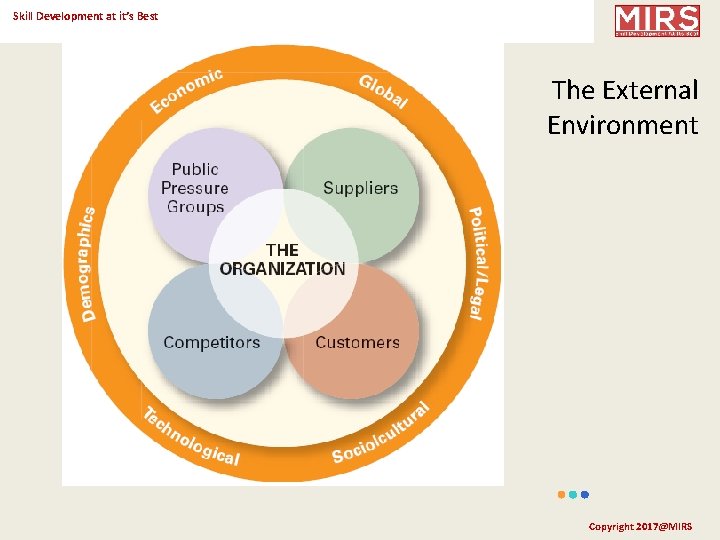
Skill Development at it’s Best The External Environment Copyright 2017@MIRS
Skill Development at it’s Best Task Environment • Task Environment: forces from suppliers, distributors, customers, and competitors. • Suppliers: provide organization with inputs – – – Managers need to secure reliable input sources. Suppliers provide raw materials, components, and even labor. • Working with suppliers can be hard due to shortages, unions, and lack of substitutes. • Suppliers with scarce items can raise the price and are in a good bargaining position. Managers often prefer to have many, similar suppliers of each item. Copyright 2017@MIRS
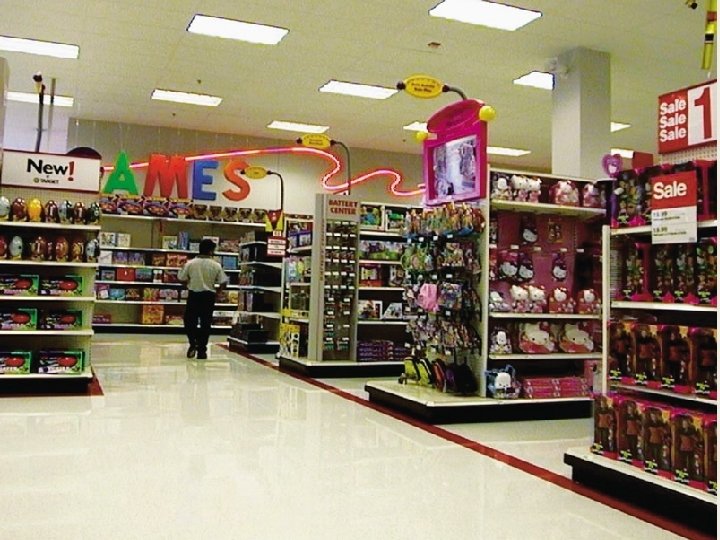
Skill Development at it’s Best Task Environment • Distributors: organizations that help others to sell goods. – – Compaq Computer first used special computer stores to sell their computers but later sold through discount stores to reduce costs. Some distributors like Wal-Mart have strong bargaining power. • They can threaten not to carry your product. • Customers: people who buy the goods. – Usually, there are several groups of customers. • For Compaq, there are business, home, & government buyers. Copyright 2017@MIRS

Skill Development at it’s Best Copyright 2017@MIRS
Skill Development at it’s Best Copyright 2017@MIRS

Skill Development at it’s Best Copyright 2017@MIRS
Skill Development at it’s Best Task Environment • Competitors: other organizations that produce similar goods. – – – Rivalry between competitors is usually the most serious force facing managers. High levels of rivalry often means lower prices. • Profits become hard to find. Barriers to entry keep new competitors out and result from: • Economies of scale: cost advantages due to large scale production. • Brand loyalty: customers prefer a given product. Copyright 2017@MIRS
Organizational Environment Skill Development at it’s Best • Organizational Environment: those forces outside its boundaries that can impact it. – Forces can change over time and are made up of Opportunities and Threats. • Opportunities: openings for managers to enhance revenues or open markets. – New technologies, new markets and ideas. • Threats: issues that can harm an organization. – economic recessions, oil shortages. • Managers must seek opportunities and avoid threats. Copyright 2017@MIRS
Skill Development at it’s Best The General Environment • Consists of the wide economic, technological, demographic and similar issues. – – Managers usually cannot impact or control these. Forces have profound impact on the firm. • Economic forces: affect the national economy and the organization. – – Includes interest rate changes, unemployment rates, economic growth. When there is a strong economy, people have more money to spend on goods and services. Copyright 2017@MIRS
Skill Development at it’s Best • Technological forces: skills & equipment used in design, production and distribution. – – – Result in new opportunities or threats to managers. Often make products obsolete very quickly. Can change how we manage. • Socialcultural forces: result from changes in the social or national culture of society. – – – Social structure refers to the relationships between people and groups. • Different societies have vastly different social structures. National culture includes the values that characterize a society. • Values and norms differ widely throughout the world. These forces differ between cultures and over time. Copyright 2017@MIRS
Skill Development at it’s Best • Demographic forces: result from changes in the nature, composition and diversity of a population. – – These include gender, age, ethnic origin, etc. • For example, during the past 20 years, women have entered the workforce in increasing numbers. Currently, most industrial countries are aging. • This will change the opportunities for firms competing in these areas. • New demand for health care, assisting living can be forecast. Copyright 2017@MIRS
Skill Development at it’s Best • Political-legal forces: result from changes in the political arena. – – These are often seen in the laws of a society. Today, there is increasing deregulation of many state-run firms. • Global forces: result from changes in international relationships between countries. – – – Perhaps the most important is the increase in economic integration of countries. Free-trade agreements (GATT, NAFTA, EU) decreases former barriers to trade. Provide new opportunities and threats to managers. Copyright 2017@MIRS
Skill Development at it’s Best How the Environment Affects Managers • Environmental Uncertainty – The extent to which managers have knowledge of and are able to predict change their organization’s external environment is affected by: • Complexity of the environment: the number of components in an organization’s external environment. • Degree of change in environmental components: how dynamic or stable the external environment is. Copyright 2017@MIRS
Skill Development at it’s Best Reducing Environmental Impact • Managers can counter environmental threats by reducing the number of forces. – Many firms have sought to reduce the number of suppliers it deals with which reduces uncertainty. • All levels of managers should work to minimize the potential impact of environmental forces. – Examples include reduction of waste by first line managers, determining competitor’s moves by middle managers, or the creation of a new strategy by top managers. Copyright 2017@MIRS
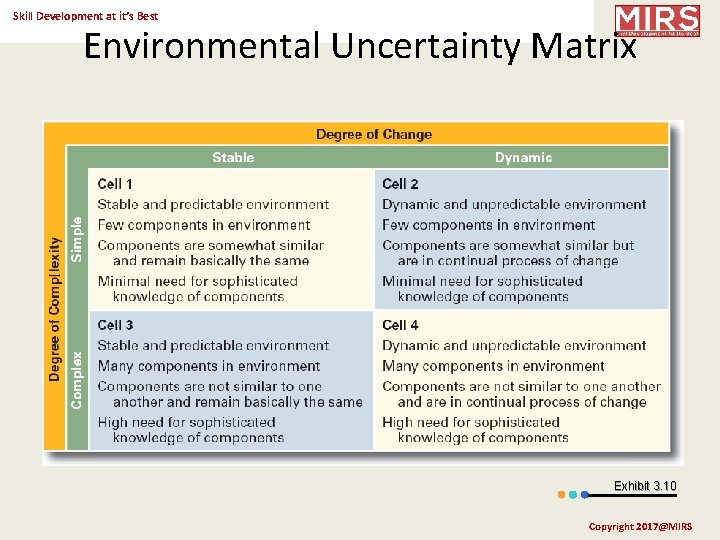
Skill Development at it’s Best Environmental Uncertainty Matrix Exhibit 3. 10 Copyright 2017@MIRS
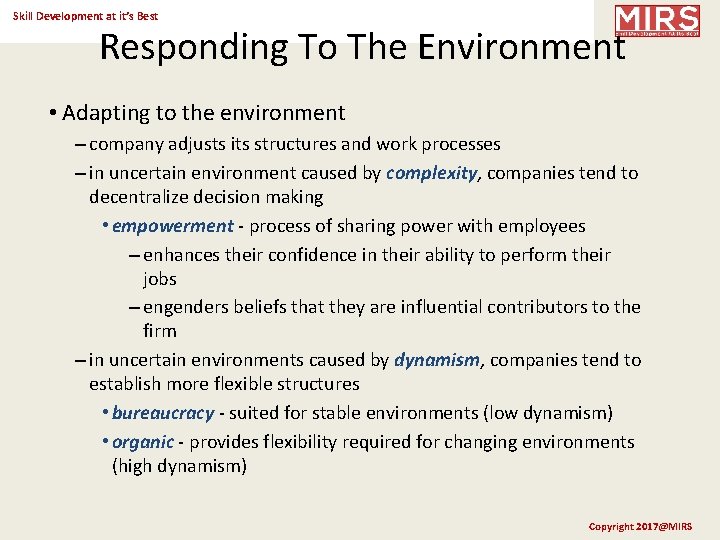
Skill Development at it’s Best Responding To The Environment • Adapting to the environment – company adjusts its structures and work processes – in uncertain environment caused by complexity, companies tend to decentralize decision making • empowerment - process of sharing power with employees – enhances their confidence in their ability to perform their jobs – engenders beliefs that they are influential contributors to the firm – in uncertain environments caused by dynamism, companies tend to establish more flexible structures • bureaucracy - suited for stable environments (low dynamism) • organic - provides flexibility required for changing environments (high dynamism) Copyright 2017@MIRS
Skill Development at it’s Best Boundary Spanning • Managers must gain access to information needed to forecast future issues. • Boundary spanning is the practice of relating to people outside the organization. – – Seek ways to respond and influence stakeholder perception. By gaining information outside, managers can make better decisions about change. • More management levels involved in spanning, yields better overall decision making. Copyright 2017@MIRS
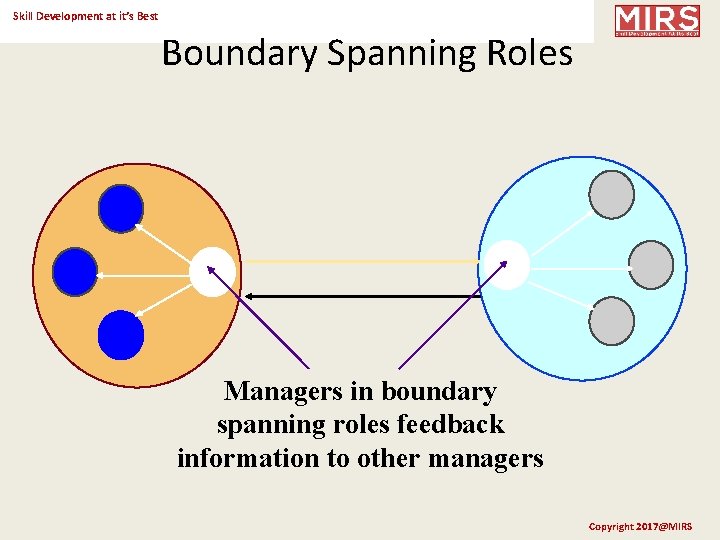
Skill Development at it’s Best Boundary Spanning Roles Managers in boundary spanning roles feedback information to other managers Copyright 2017@MIRS
Skill Development at it’s Best Scanning and Monitoring • Environmental scanning is an important boundary spanning activity. – Includes reading trade journals, attending trade shows, and the like. • Gatekeeping: the boundary spanner decides what information to allow into organization and what to keep out. – Must be careful not to let bias decide what comes in. • Interorganizational Relations: firms need alliances globally to best utilize resources. – Managers can become agents of change and impact the environment. Copyright 2017@MIRS
Skill Development at it’s Best Stakeholder Relationships • Stakeholders – Any constituencies in the organization’s external environment that are affected by the organization’s decisions and actions • Why Manage Stakeholder Relationships? – It can lead to improved organizational performance. – It’s the “right” thing to do given the interdependence of the organization and its external stakeholders. Copyright 2017@MIRS
Skill Development at it’s Best Managing Stakeholder Relationships 1. Identify the organization’s external stakeholders. 2. Determine the particular interests and concerns of the external stakeholders. 3. Decide how critical each external stakeholder is to the organization. 4. Determine how to manage each individual external stakeholder relationship. Copyright 2017@MIRS
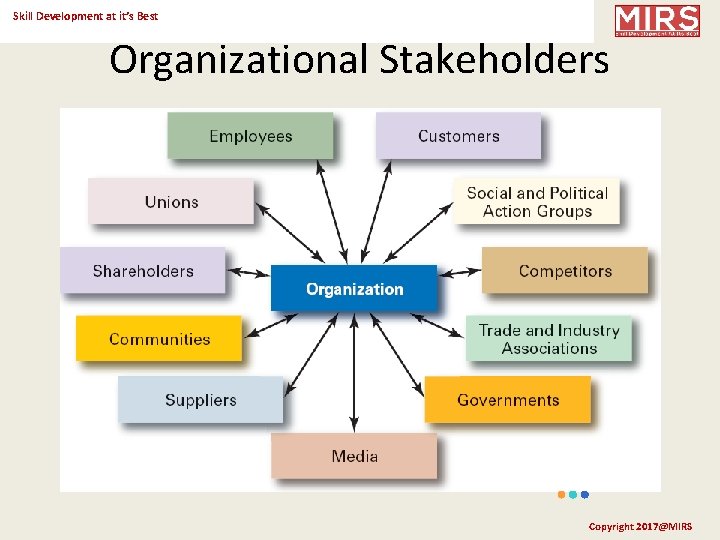
Skill Development at it’s Best Organizational Stakeholders Copyright 2017@MIRS
Skill Development at it’s Best Managers Must þ Remain alert to internal and external environments. þ Must forecast and plan for the changes they suspect will come. þ Must cultivate a sensible and controlled reactive behavior toward changes. þ Provide an imaginative program to manage and capitalize on changes. Copyright 2017@MIRS
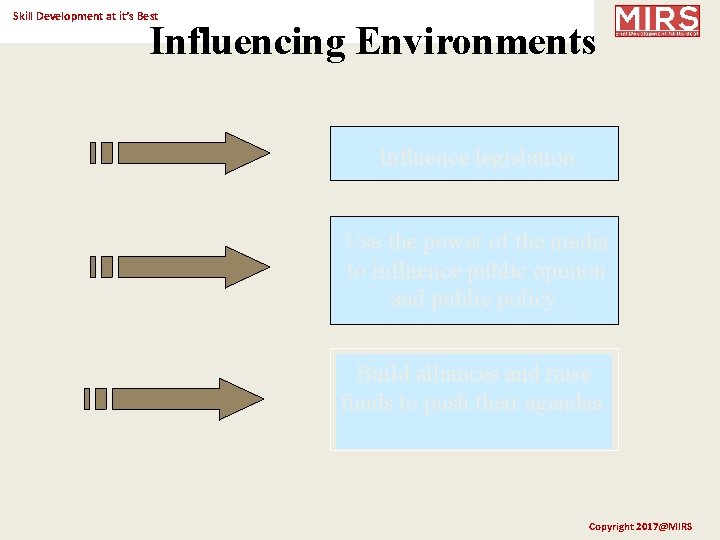
Skill Development at it’s Best Influencing Environments Influence legislation. Use the power of the media to influence public opinion and public policy. Build alliances and raise funds to push their agendas. Copyright 2017@MIRS
- Slides: 48