
Skeleton Extraction from Binary Images Kalman Palagyi University

Skeleton Extraction from Binary Images Kalman Palagyi University of Szeged, Hungary
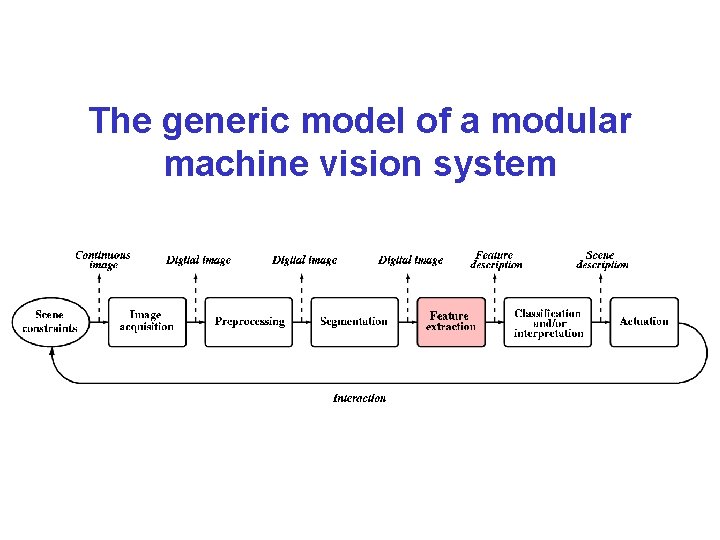
The generic model of a modular machine vision system
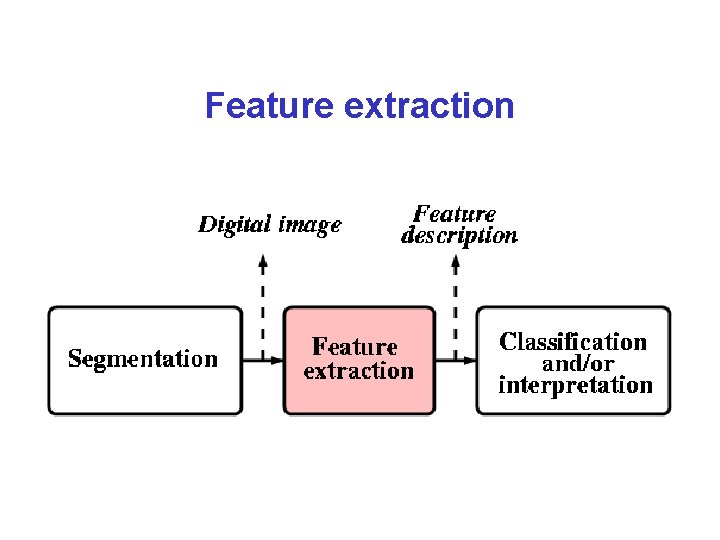
Feature extraction
Shape representation • to describe the boundary that surrounds an object; • to describe the region that is occupied by an object.
Skeleton • result of the Medial Axis Transform: object points having at least two nearest boundary points; • praire-fire analogy: the boundary is set on fire and skeleton is formed by the loci where the fire fronts meet and quench each other; • the locus of the centers of all the maximal inscribed hyper-spheres.

Nearest boundary points and inscribed hyper-spheres
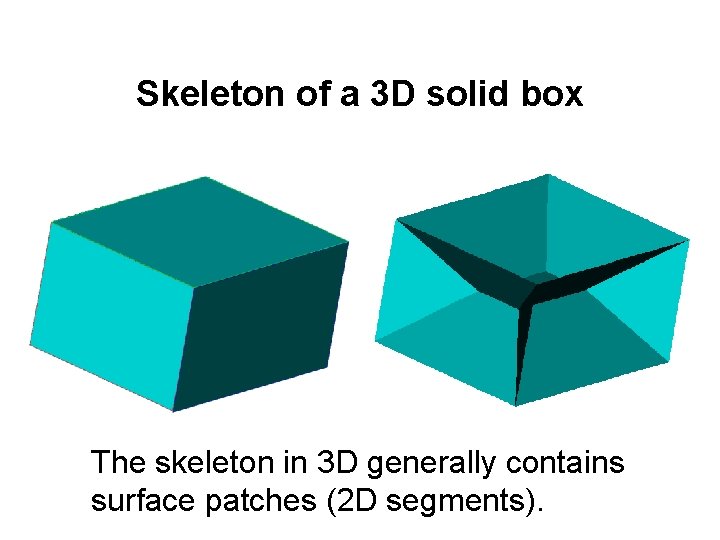
Skeleton of a 3 D solid box The skeleton in 3 D generally contains surface patches (2 D segments).
Properties: • It represents – the general form of an object, – the topological structure of an object, and – local object symmetries. • It is invariant to – translation, – rotation, and – (uniform) scale change. • It is thin.
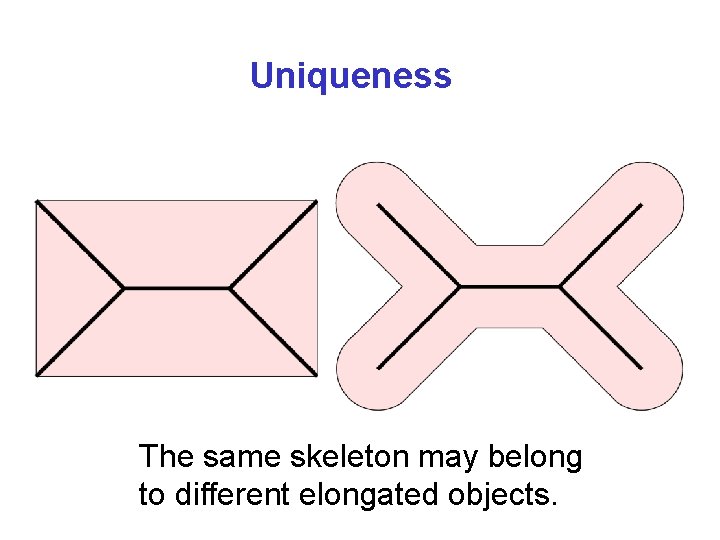
Uniqueness The same skeleton may belong to different elongated objects.
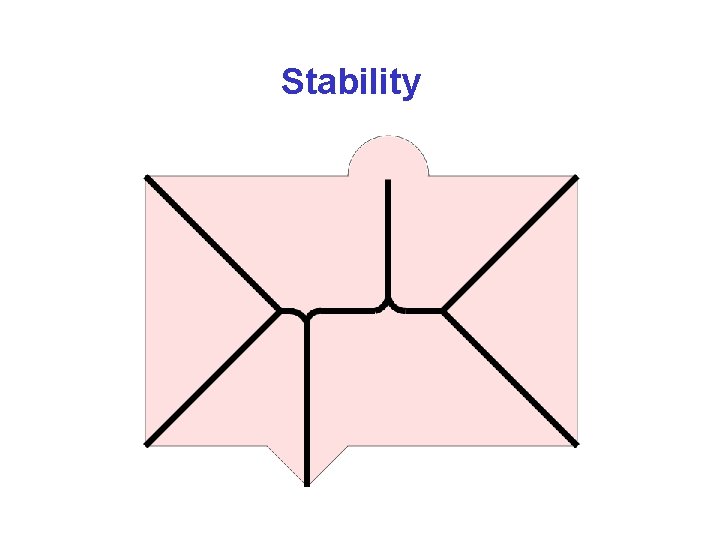
Stability
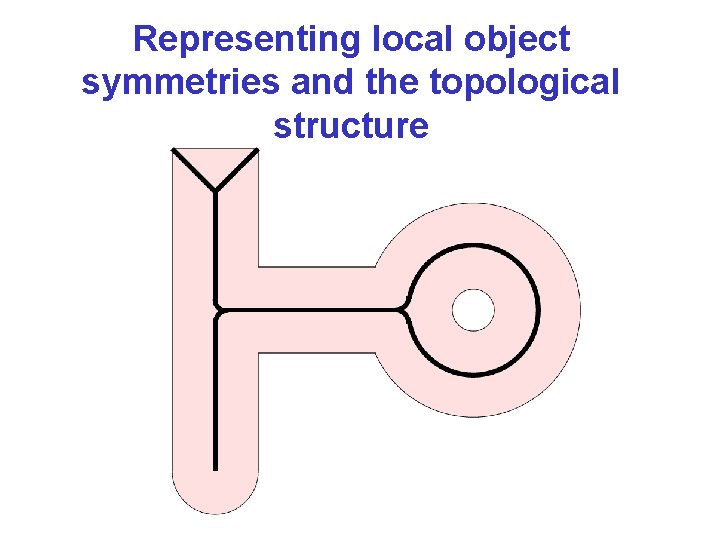
Representing local object symmetries and the topological structure
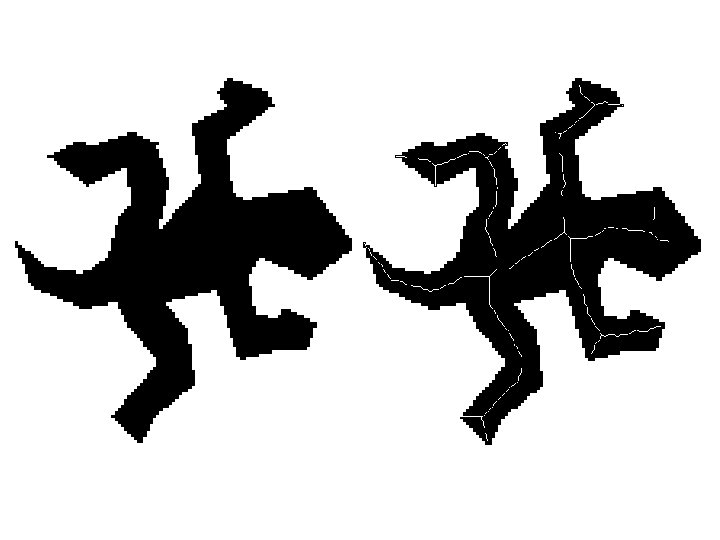
Skeletonization techniques • distance transform, • Voronoi diagram, and • thinning.
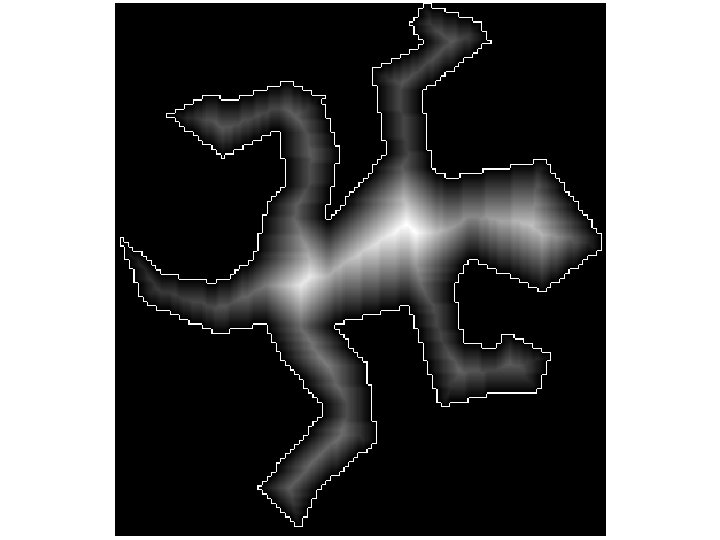
Distance transform Input: Binary array A containing feature elements (1’s) and non-feature elements (0’s). Output: Non-binary array B containing the distance to the nearest feature element.
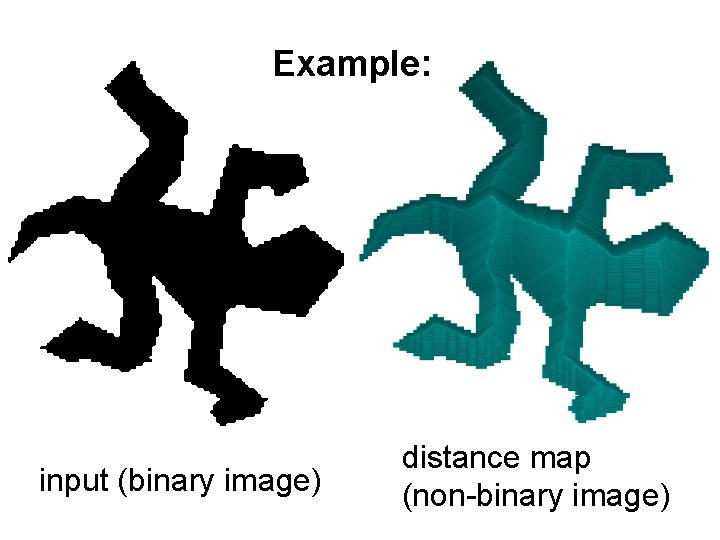
Example: input (binary image) distance map (non-binary image)
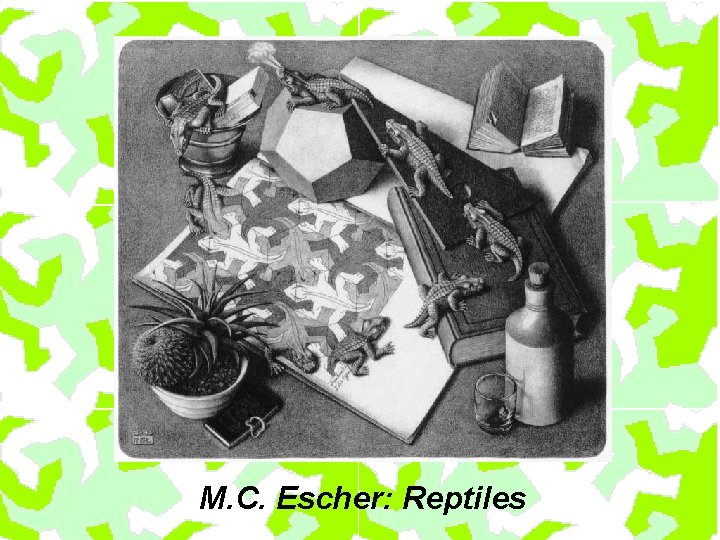
M. C. Escher: Reptiles
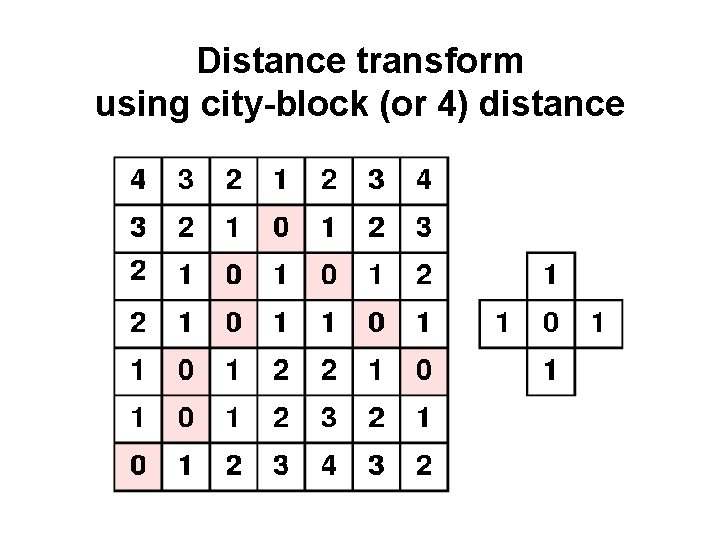
Distance transform using city-block (or 4) distance
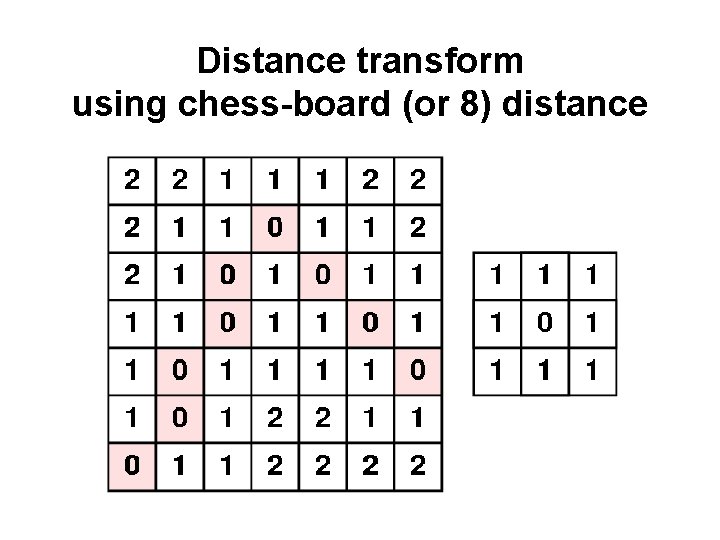
Distance transform using chess-board (or 8) distance
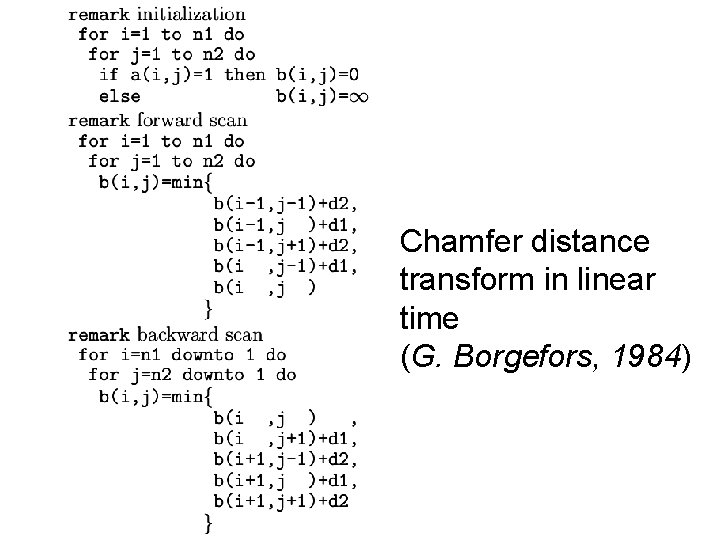
Chamfer distance transform in linear time (G. Borgefors, 1984)
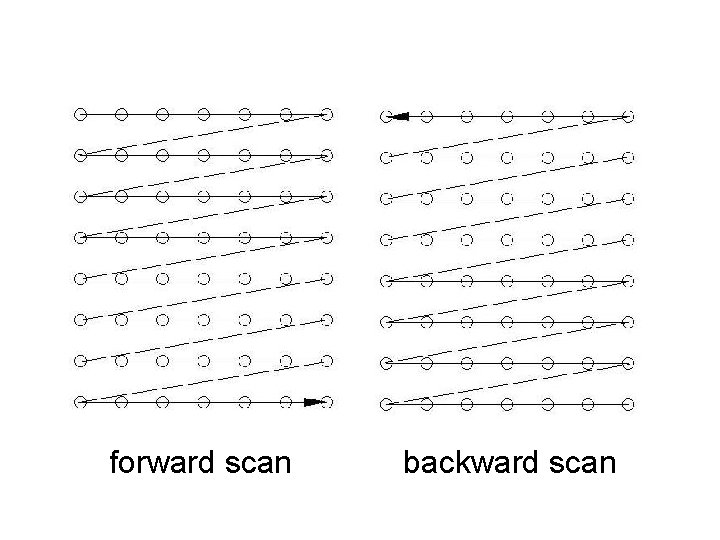
forward scan backward scan
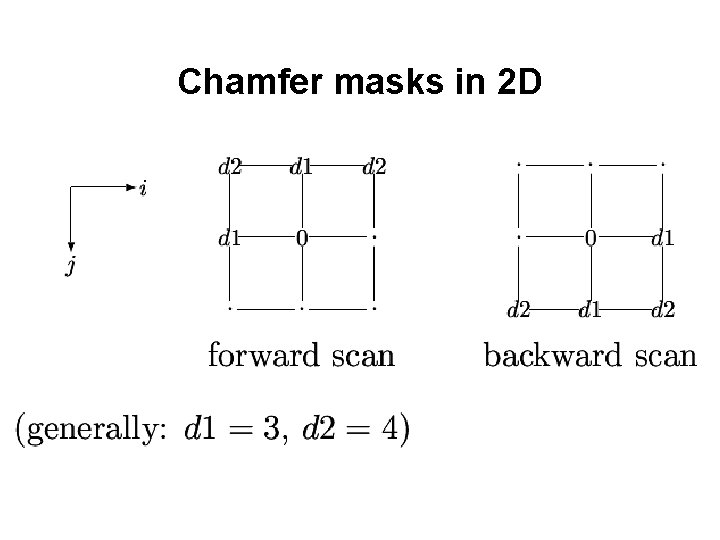
Chamfer masks in 2 D
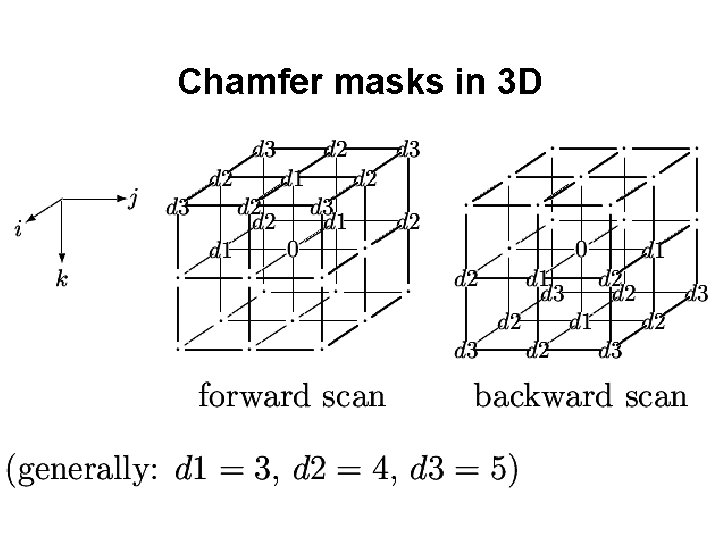
Chamfer masks in 3 D
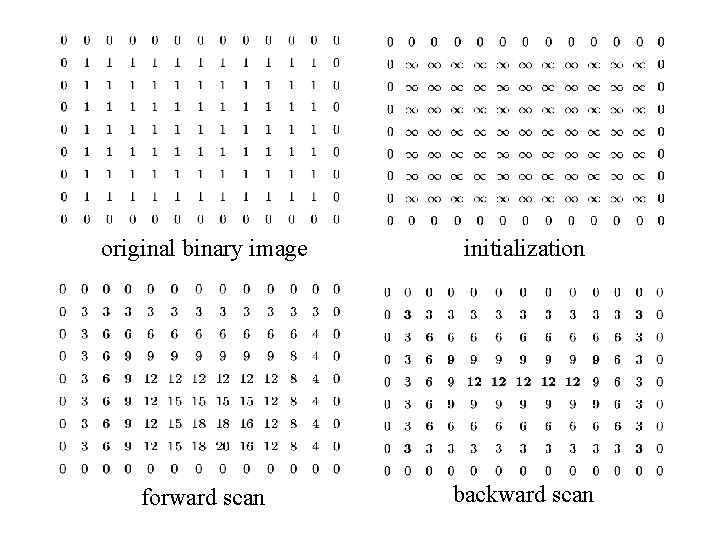
original binary image initialization forward scan backward scan
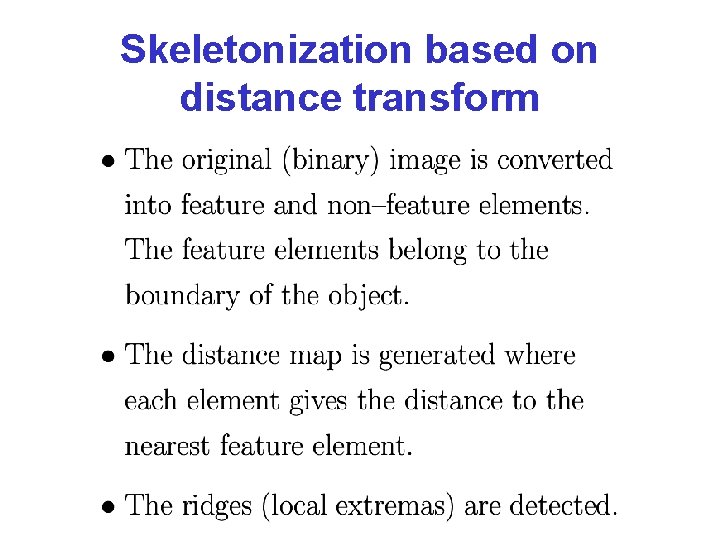
Skeletonization based on distance transform
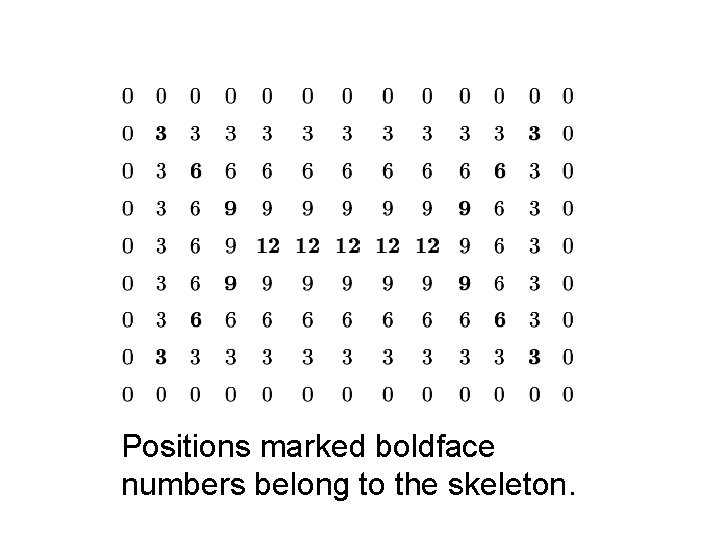
Positions marked boldface numbers belong to the skeleton.
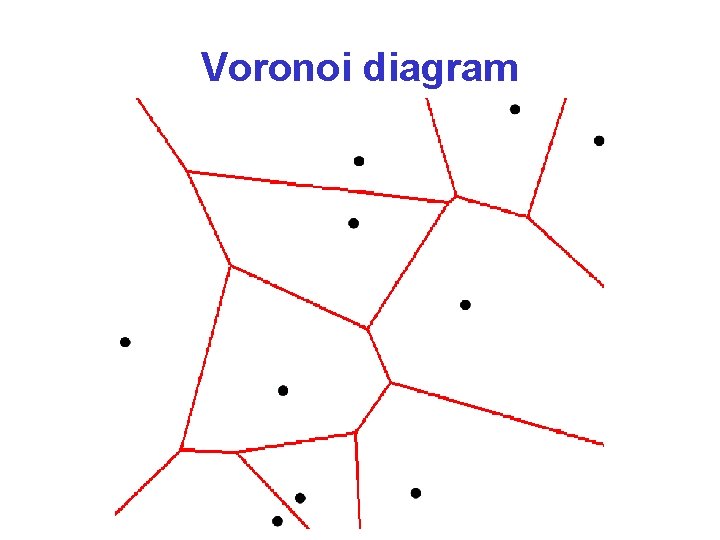
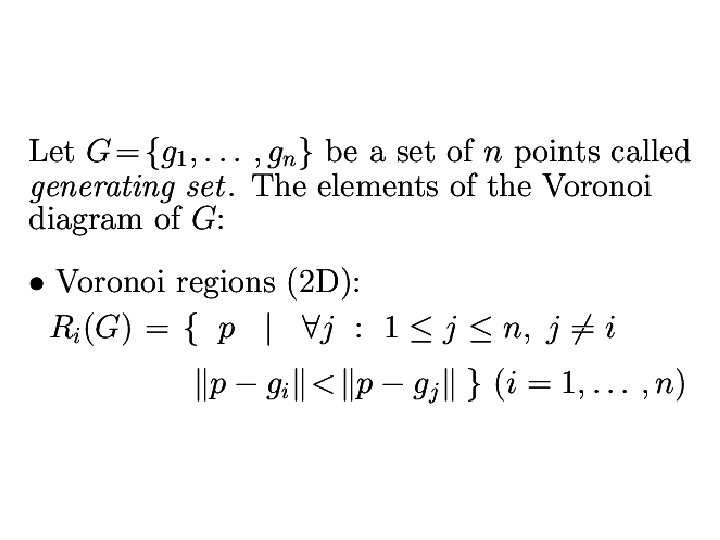
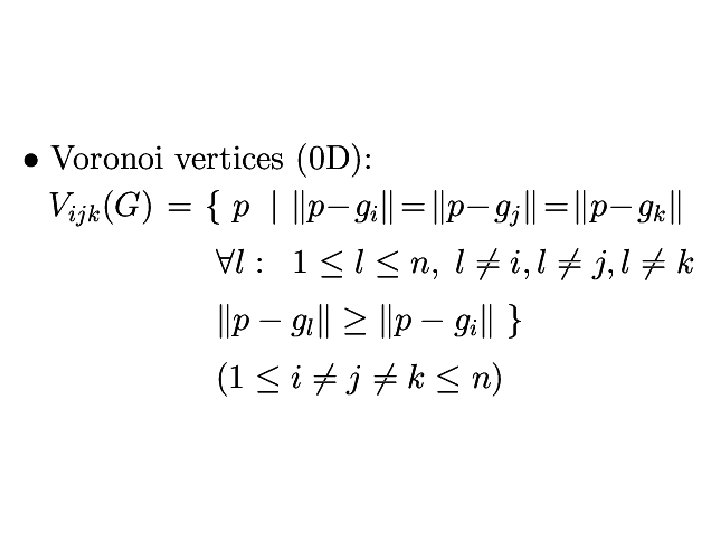
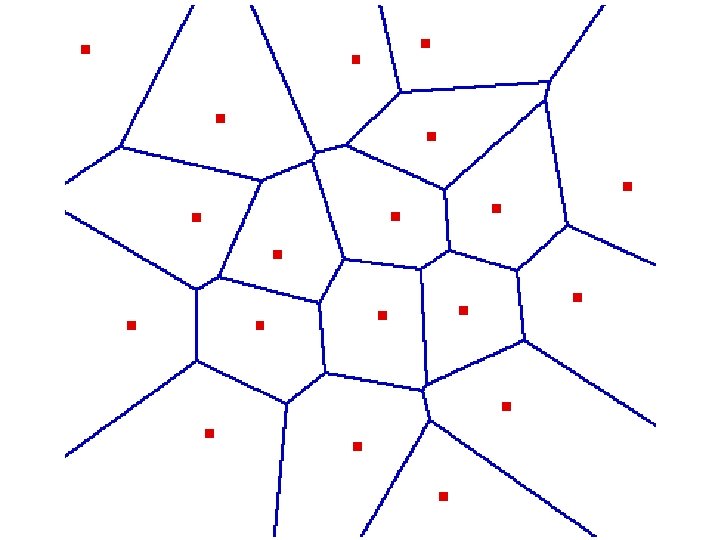
Voronoi diagram

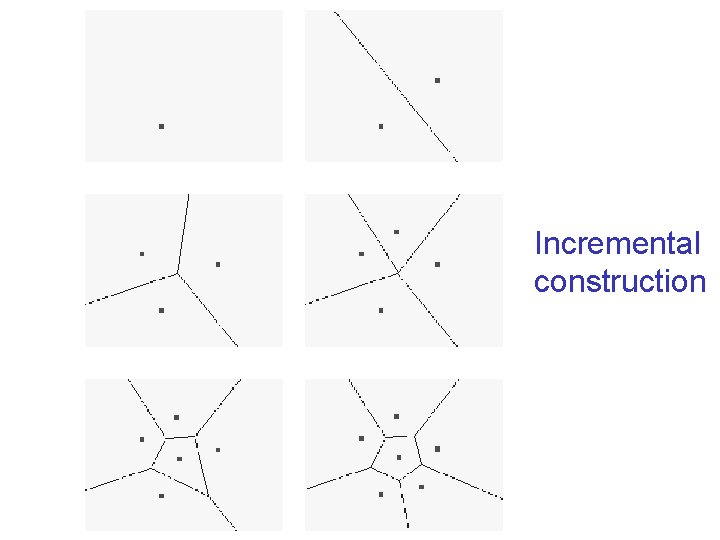
Incremental construction
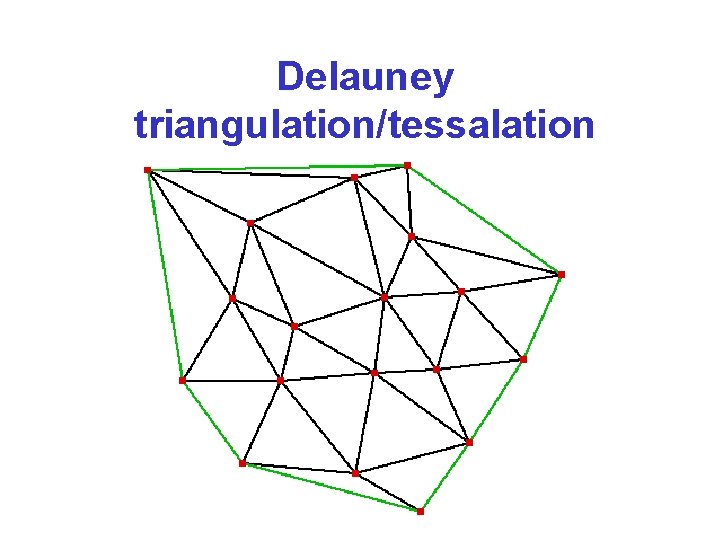
Delauney triangulation/tessalation
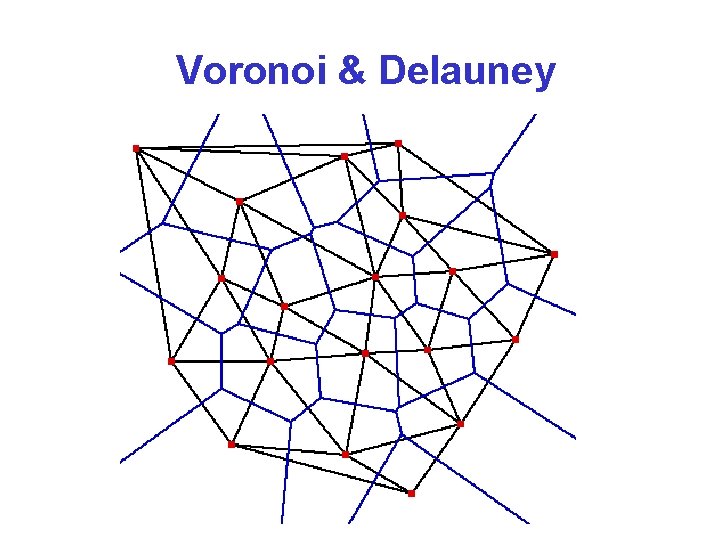
Voronoi & Delauney
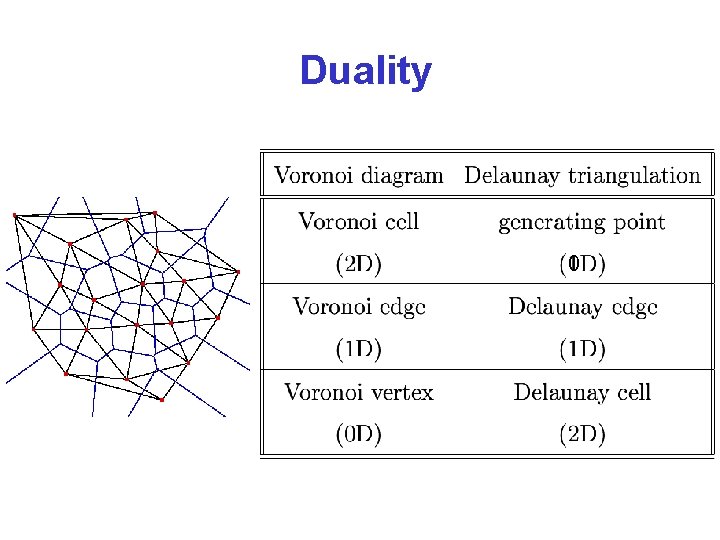
Duality 0
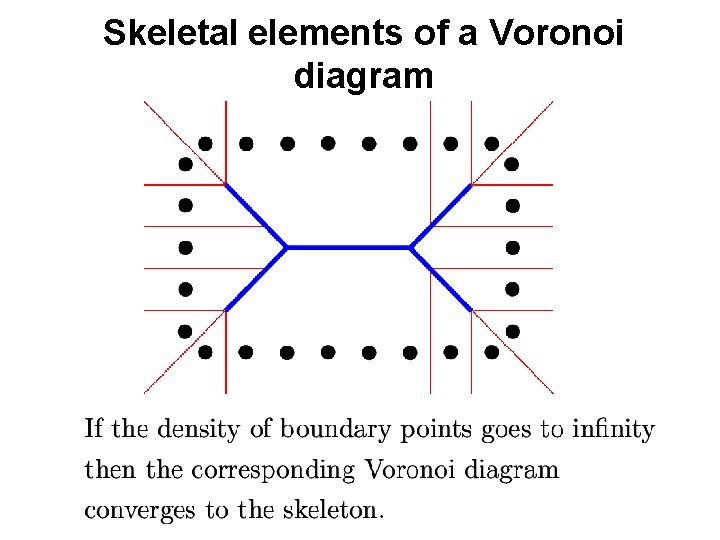
Skeletal elements of a Voronoi diagram
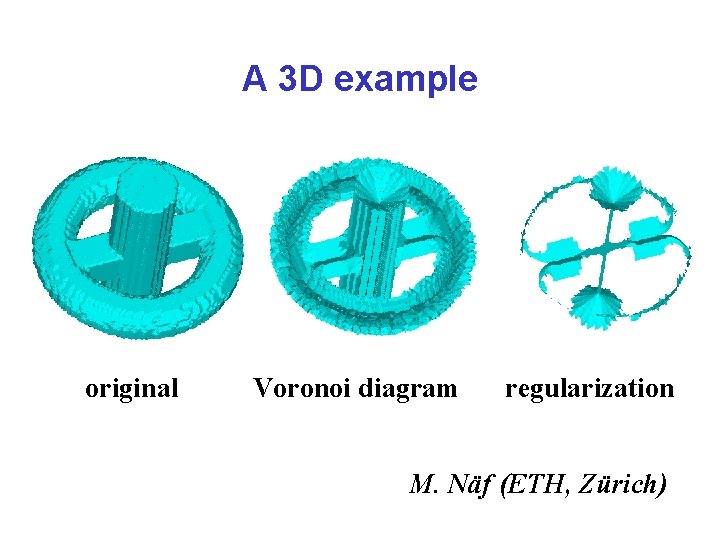
A 3 D example original Voronoi diagram regularization M. Näf (ETH, Zürich)

‘Thinning’ before after
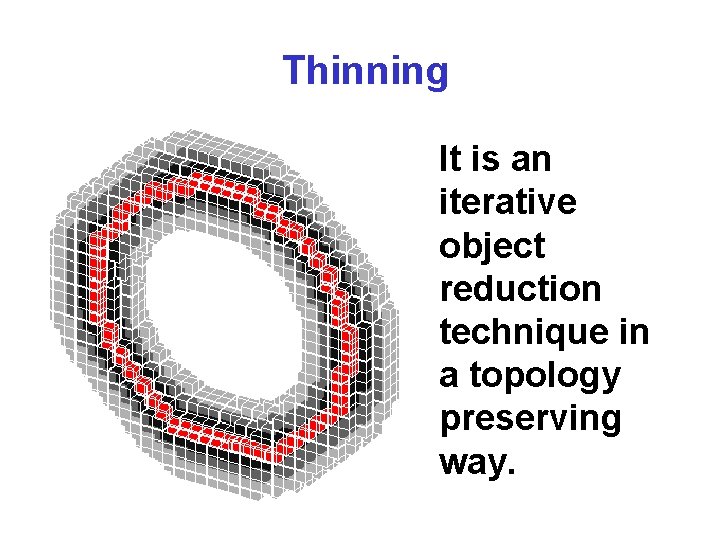
Thinning It is an iterative object reduction technique in a topology preserving way.
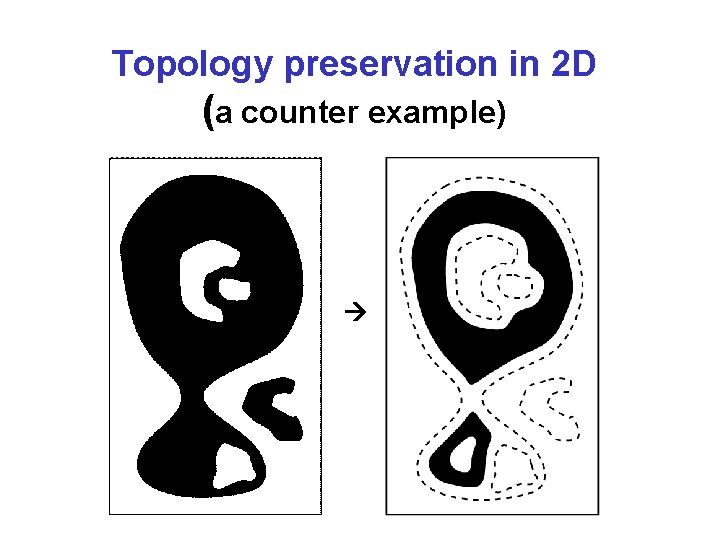
Topology preservation in 2 D (a counter example)
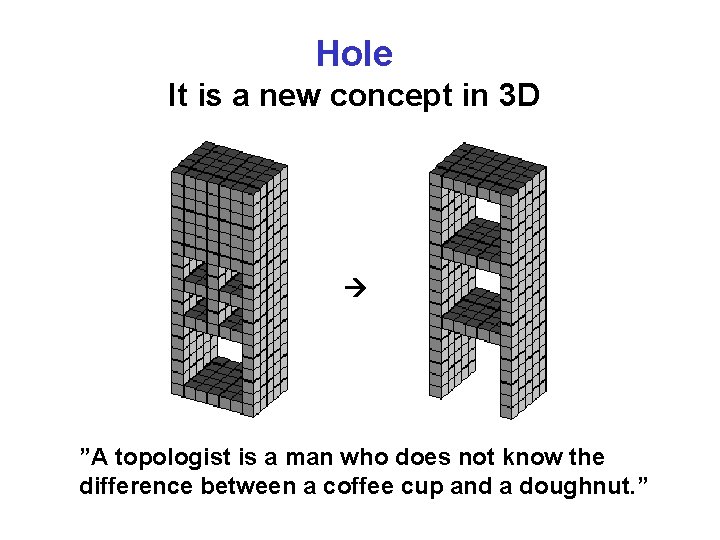
Hole It is a new concept in 3 D ”A topologist is a man who does not know the difference between a coffee cup and a doughnut. ”

Shape preservation
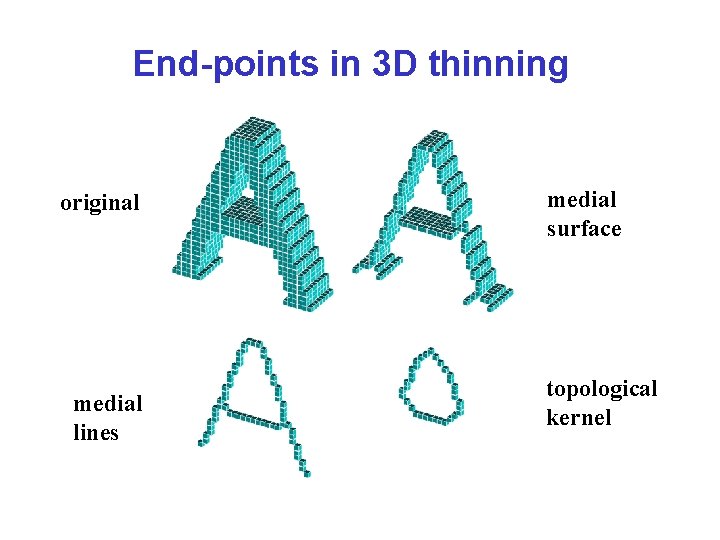
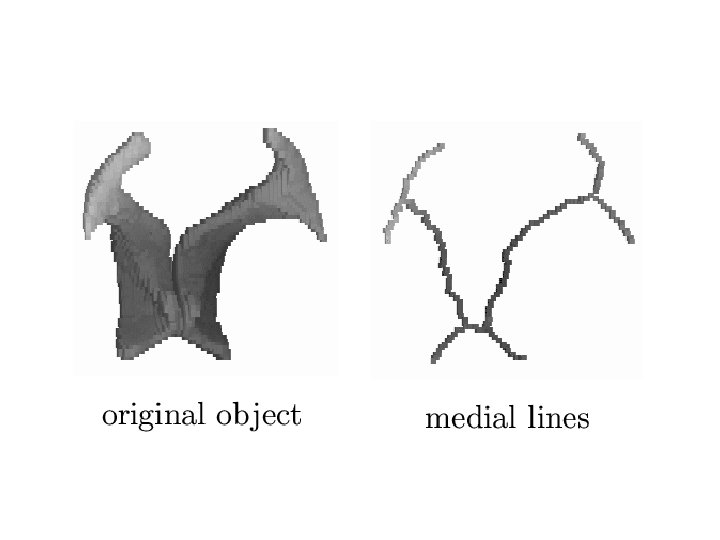
End-points in 3 D thinning original medial lines medial surface topological kernel
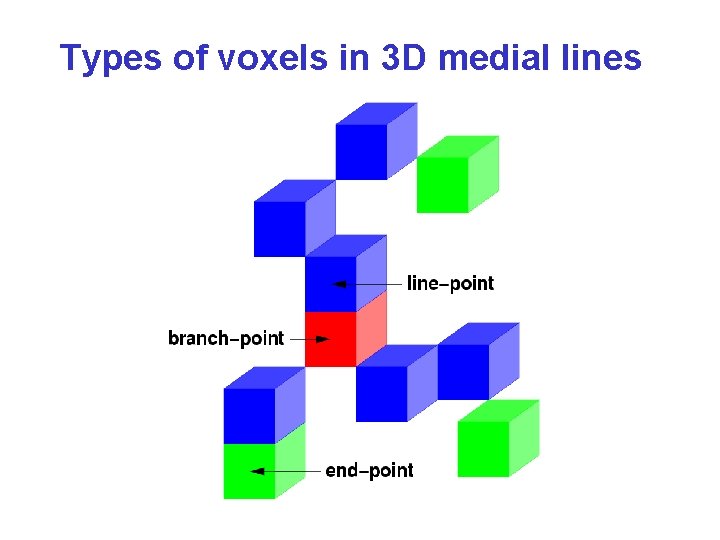
Types of voxels in 3 D medial lines
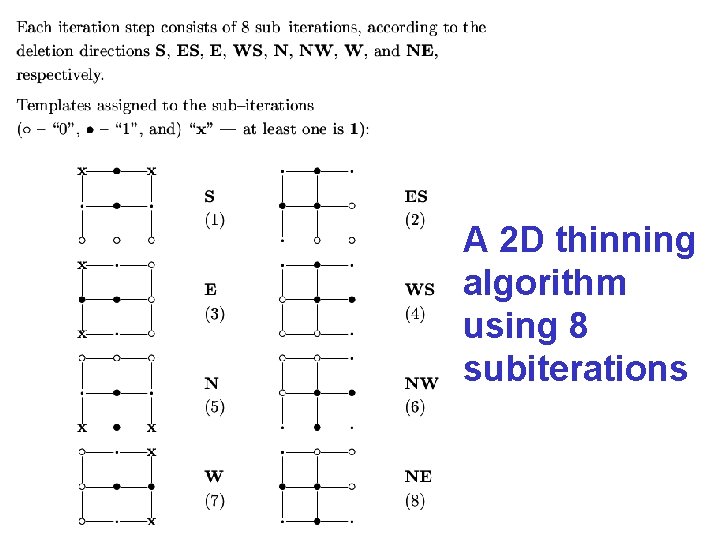
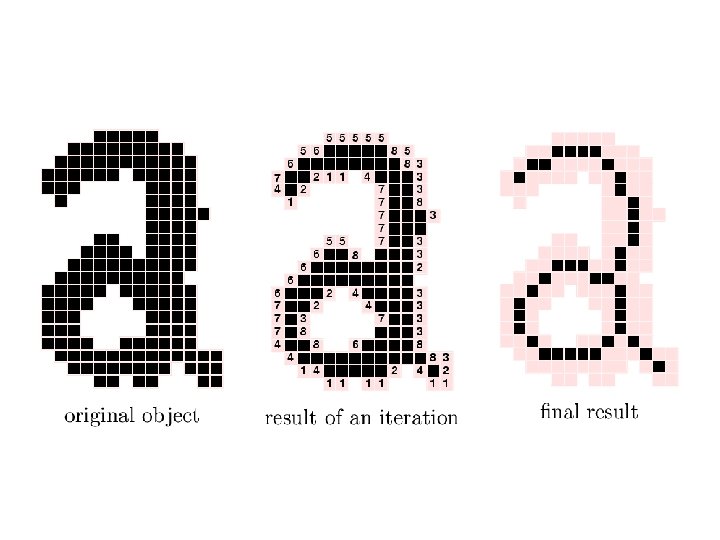
A 2 D thinning algorithm using 8 subiterations
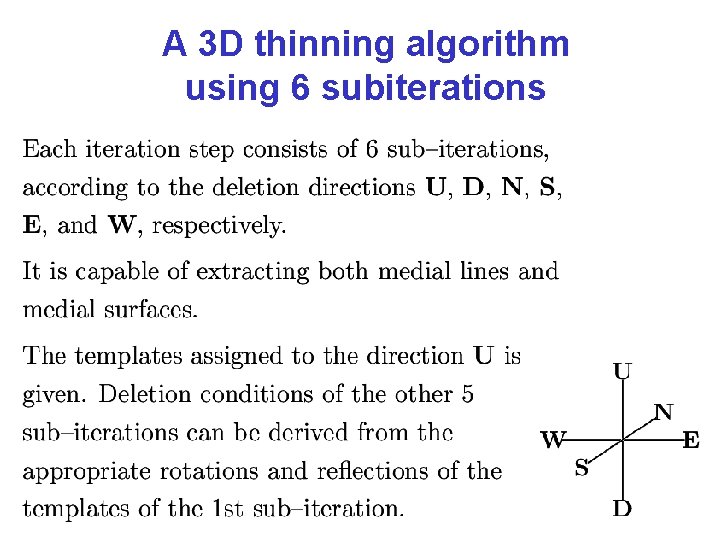
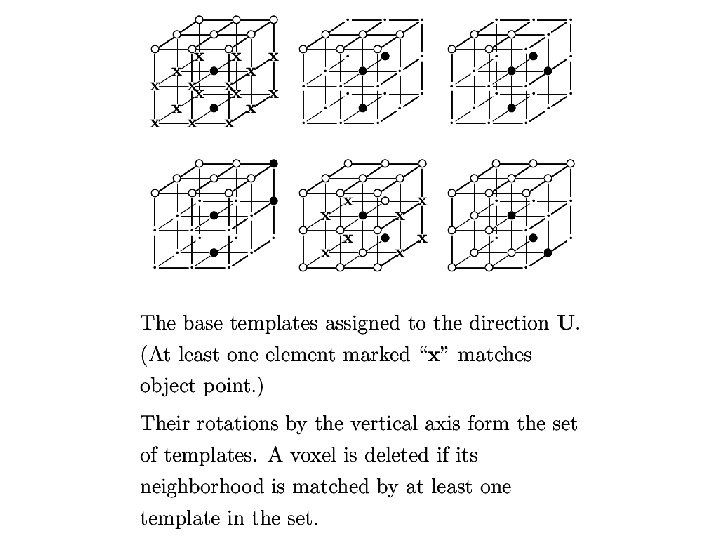
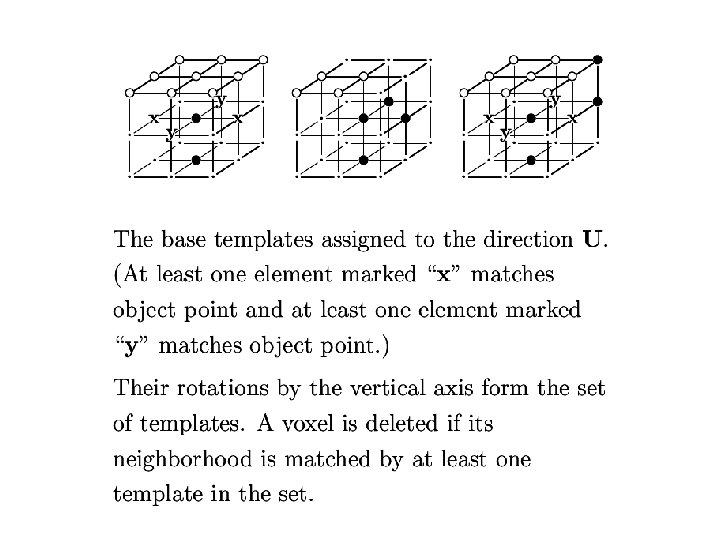
A 3 D thinning algorithm using 6 subiterations

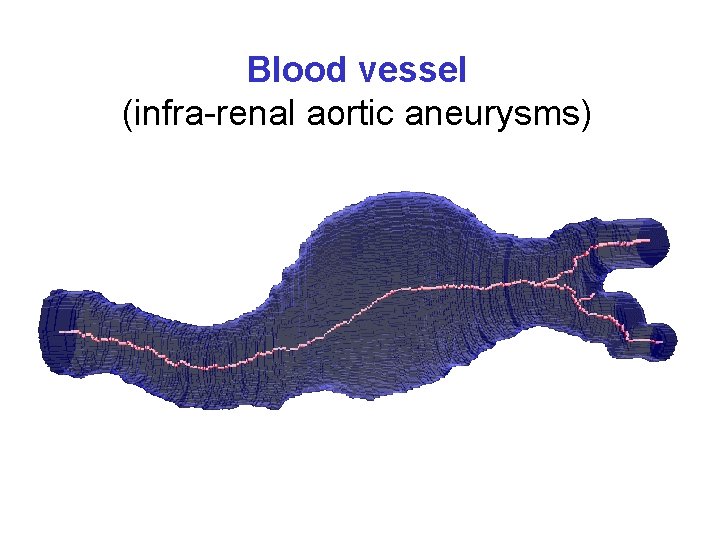
Blood vessel (infra-renal aortic aneurysms)
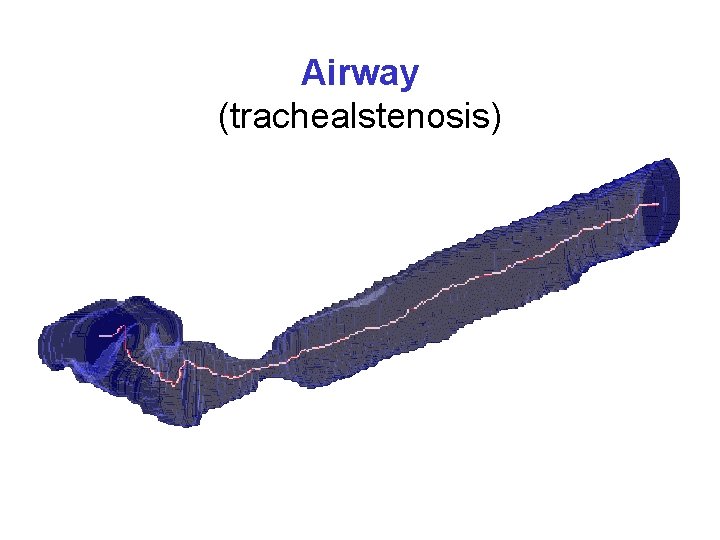
Airway (trachealstenosis)
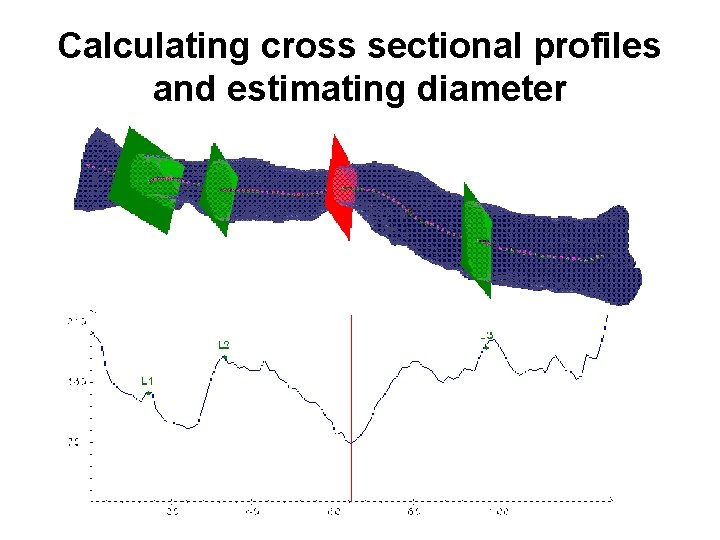
Calculating cross sectional profiles and estimating diameter
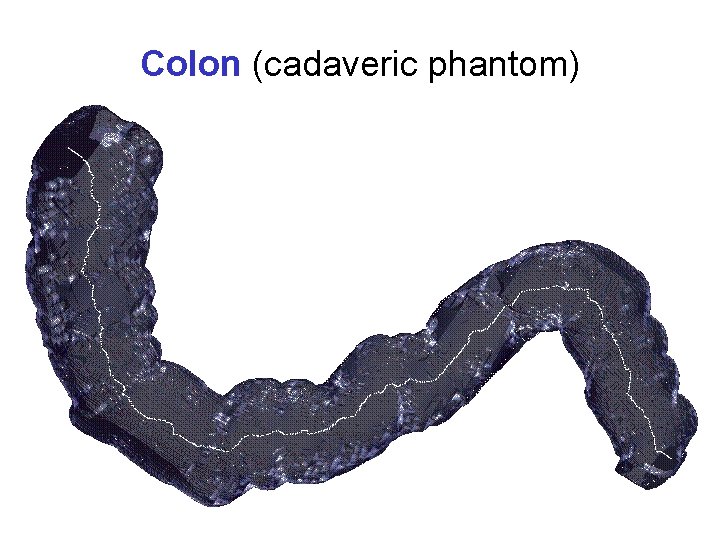
Colon (cadaveric phantom)
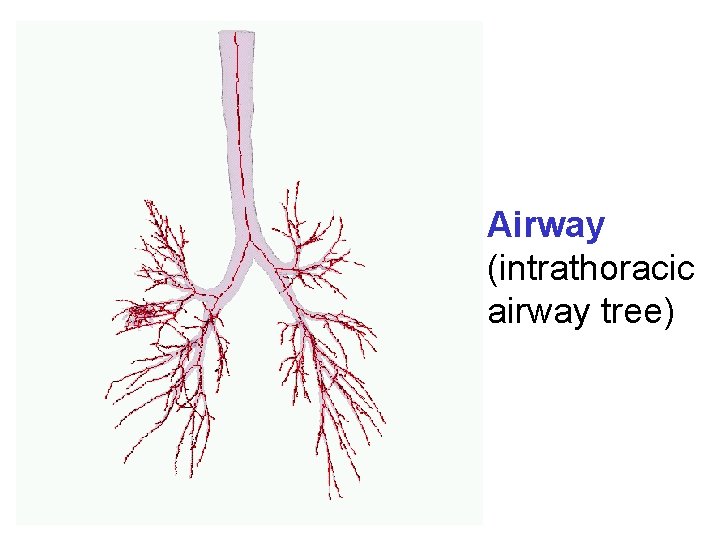
Airway (intrathoracic airway tree)
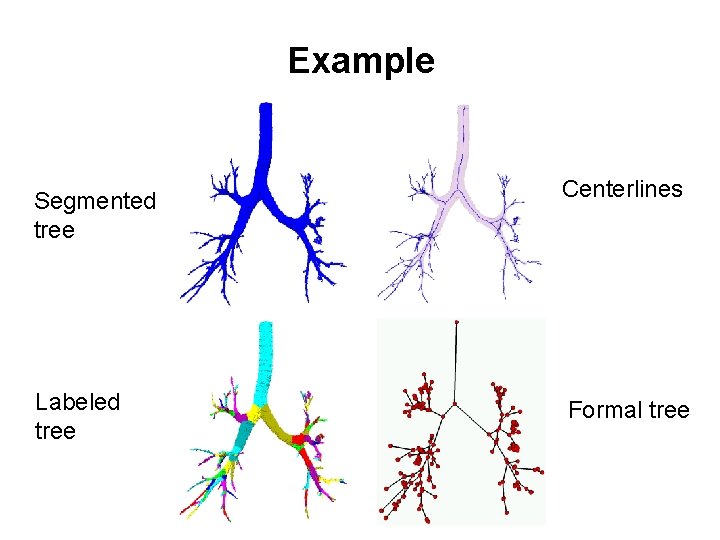
Example Segmented tree Labeled tree Centerlines Formal tree
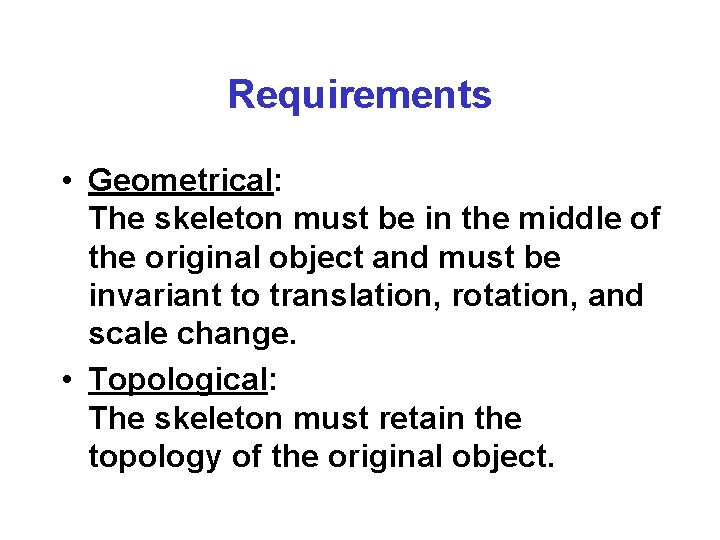
Requirements • Geometrical: The skeleton must be in the middle of the original object and must be invariant to translation, rotation, and scale change. • Topological: The skeleton must retain the topology of the original object.
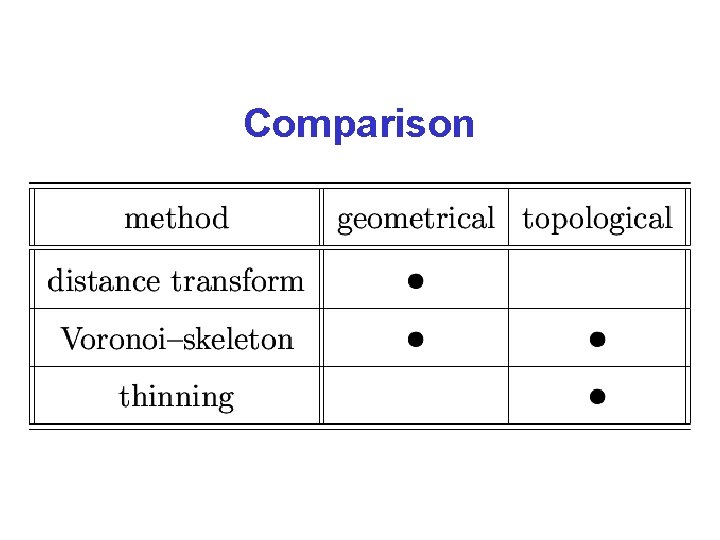
Comparison
- Slides: 62