
Skeletal System Unit 6 4 6 th Edition
- Slides: 17
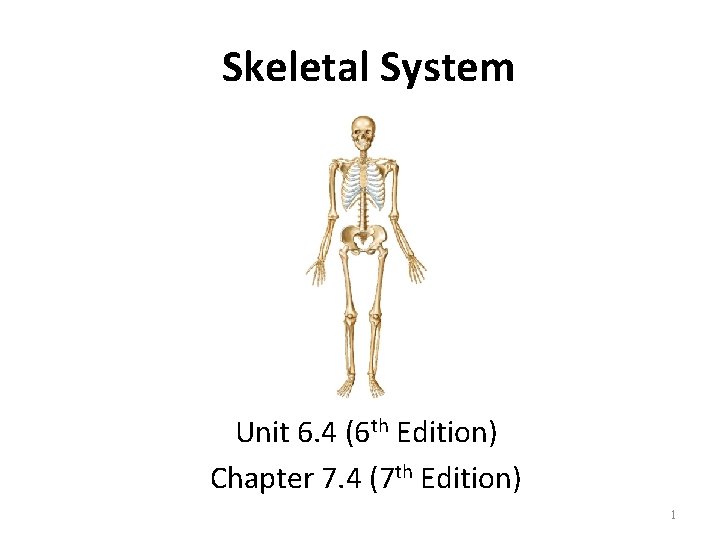
Skeletal System Unit 6. 4 (6 th Edition) Chapter 7. 4 (7 th Edition) 1
Fun Facts About the Human Skeleton • • • Adult humans have 206 bones You are born with 300 bones Bones fuse together as you age As human develops in mother’s womb, majority of skeleton is cartilage, not yet ossified bone The strongest and longest bone in the femur (thigh) The smallest bone is the stapes bone in the ear Ounce for ounce, bone is stronger than steel and reinforced concrete However, in a given year, doctors around the world treat tens of millions of broken bones! One out of 20 people have an extra rib 2
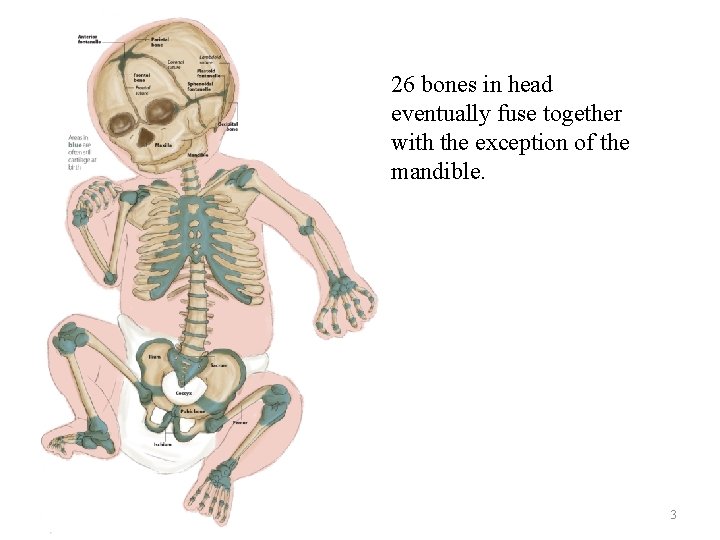
26 bones in head eventually fuse together with the exception of the mandible. 3
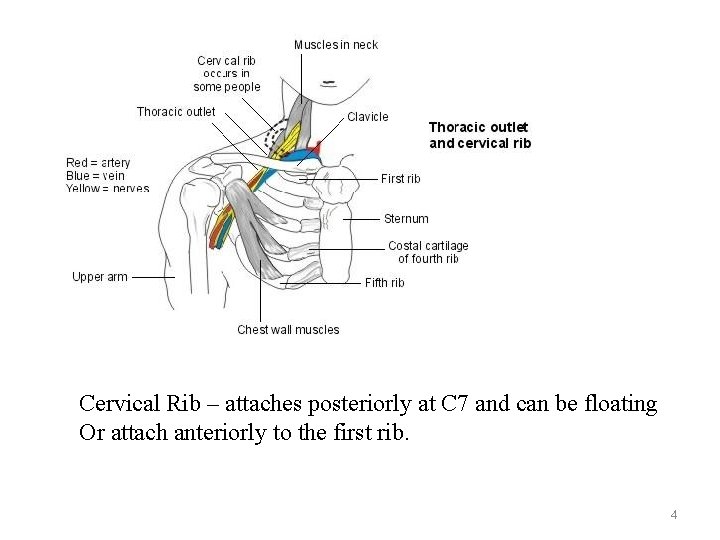
Cervical Rib – attaches posteriorly at C 7 and can be floating Or attach anteriorly to the first rib. 4
Bone Functions (Physiology) • Framework – support the body’s muscles, fat, and skin • Protection – surround vital organs to protect them • Levers – muscles attach to bones to help provide movement • Blood Cell Production – produce red and white blood cells and platelets • Storage – store most of calcium supply of body 5
Bone Cells - Specialization Osteoclast –multi-nuclei, Mitochondria are numerous, there is little rough endoplasmic reticulum and many lysosomes FXN: destroy bone Osteoblast –Single nuclei, many rough endoplasmic reticulum FXN: make b Osteocyte -long branches for increased SA. FXN: sense mechanical strain on the bone and can secrete growth factors to direct bone growth in response to the environment Lining cells – old osteoblasts which have become flat and pancake-shaped and line the entire surface of the bone. FXN: release of calcium from the bone if the blood calcium is too low. They also have receptors for hormones and factors that initiate bone remodeling. 6
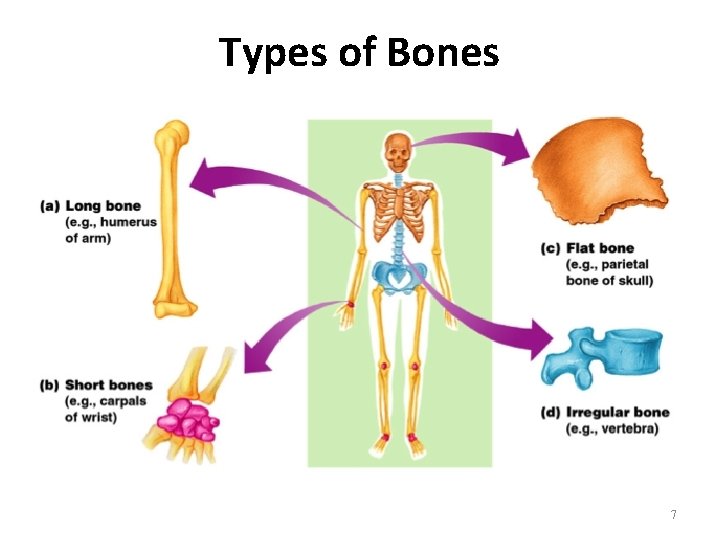
Types of Bones 7
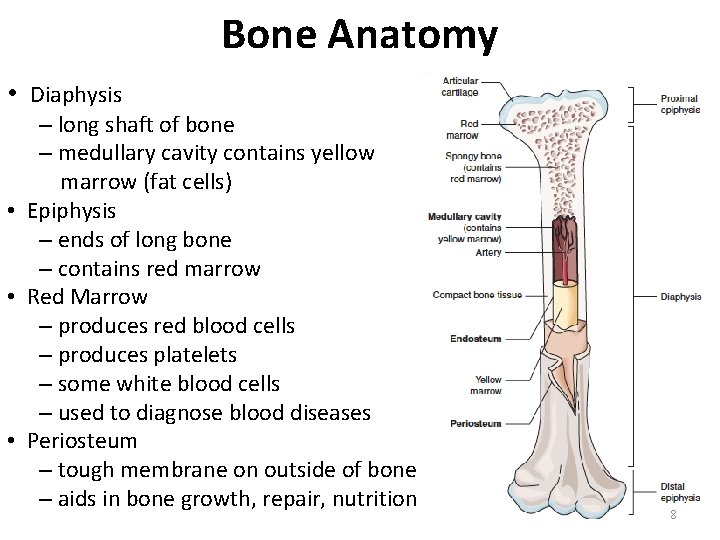
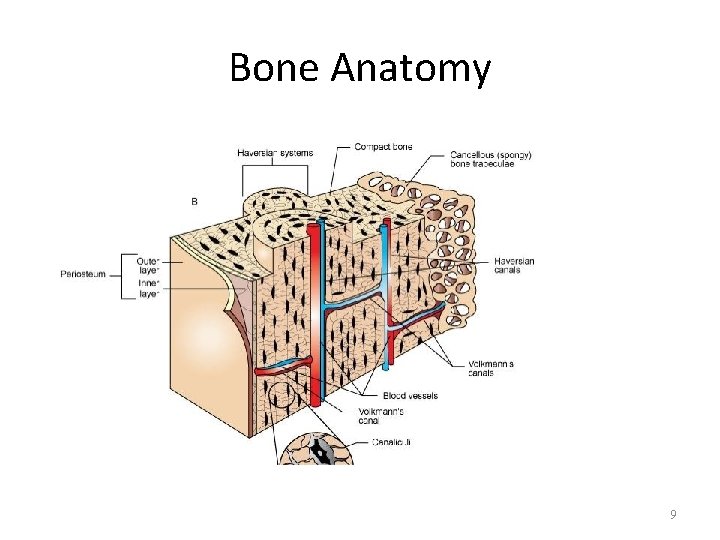
Bone Anatomy • Diaphysis – long shaft of bone – medullary cavity contains yellow marrow (fat cells) • Epiphysis – ends of long bone – contains red marrow • Red Marrow – produces red blood cells – produces platelets – some white blood cells – used to diagnose blood diseases • Periosteum – tough membrane on outside of bone – aids in bone growth, repair, nutrition 8
Bone Anatomy 9
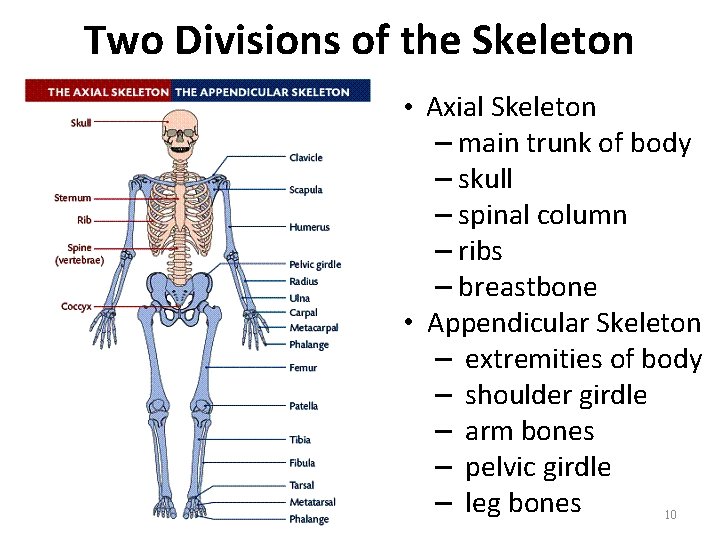
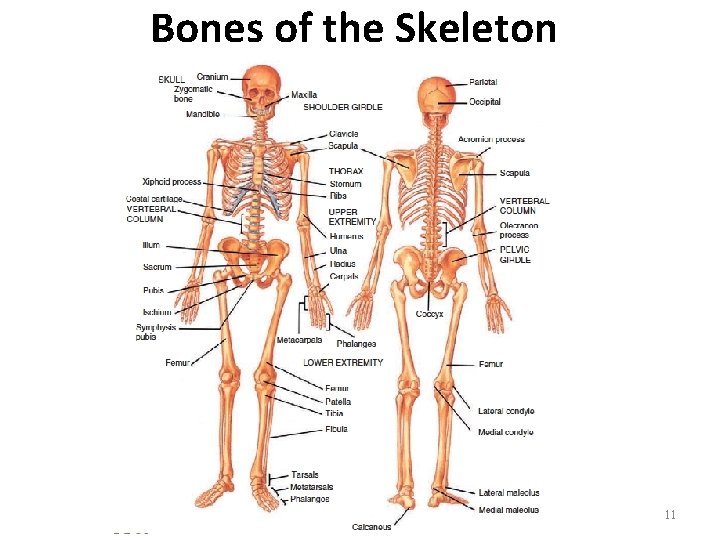
Two Divisions of the Skeleton • Axial Skeleton – main trunk of body – skull – spinal column – ribs – breastbone • Appendicular Skeleton – extremities of body – shoulder girdle – arm bones – pelvic girdle – leg bones 10
Bones of the Skeleton 11
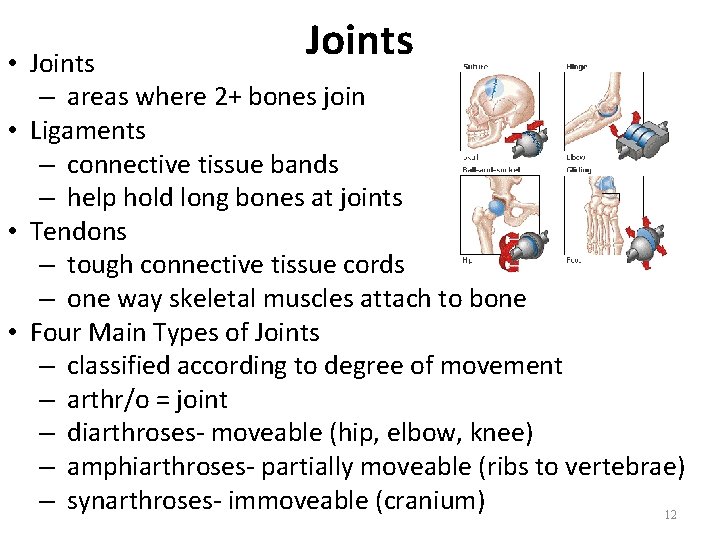
Joints • Joints – areas where 2+ bones join • Ligaments – connective tissue bands – help hold long bones at joints • Tendons – tough connective tissue cords – one way skeletal muscles attach to bone • Four Main Types of Joints – classified according to degree of movement – arthr/o = joint – diarthroses- moveable (hip, elbow, knee) – amphiarthroses- partially moveable (ribs to vertebrae) – synarthroses- immoveable (cranium) 12
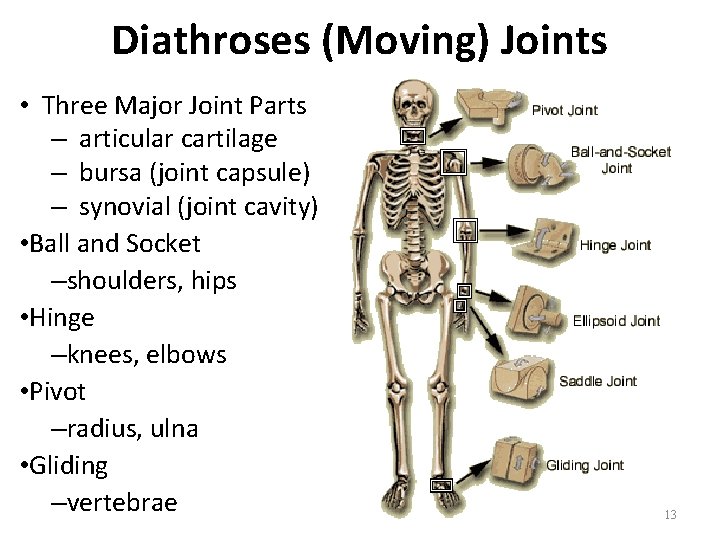
Diathroses (Moving) Joints • Three Major Joint Parts – articular cartilage – bursa (joint capsule) – synovial (joint cavity) • Ball and Socket –shoulders, hips • Hinge –knees, elbows • Pivot –radius, ulna • Gliding –vertebrae 13
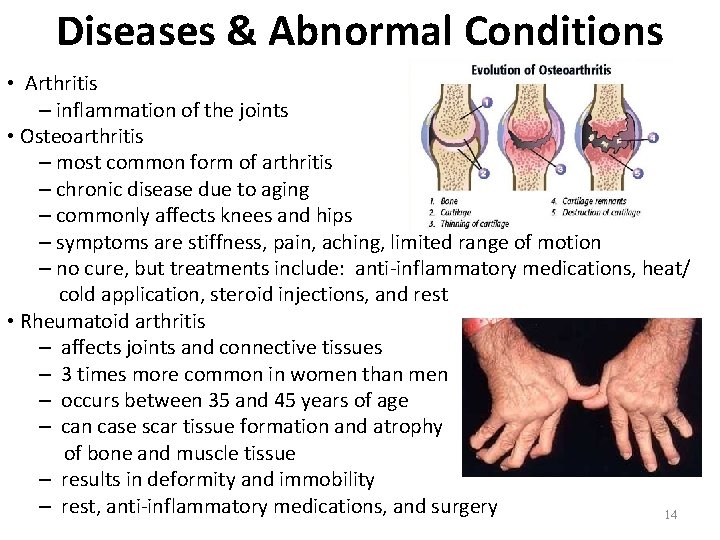
Diseases & Abnormal Conditions • Arthritis – inflammation of the joints • Osteoarthritis – most common form of arthritis – chronic disease due to aging – commonly affects knees and hips – symptoms are stiffness, pain, aching, limited range of motion – no cure, but treatments include: anti-inflammatory medications, heat/ cold application, steroid injections, and rest • Rheumatoid arthritis – affects joints and connective tissues – 3 times more common in women than men – occurs between 35 and 45 years of age – can case scar tissue formation and atrophy of bone and muscle tissue – results in deformity and immobility – rest, anti-inflammatory medications, and surgery 14
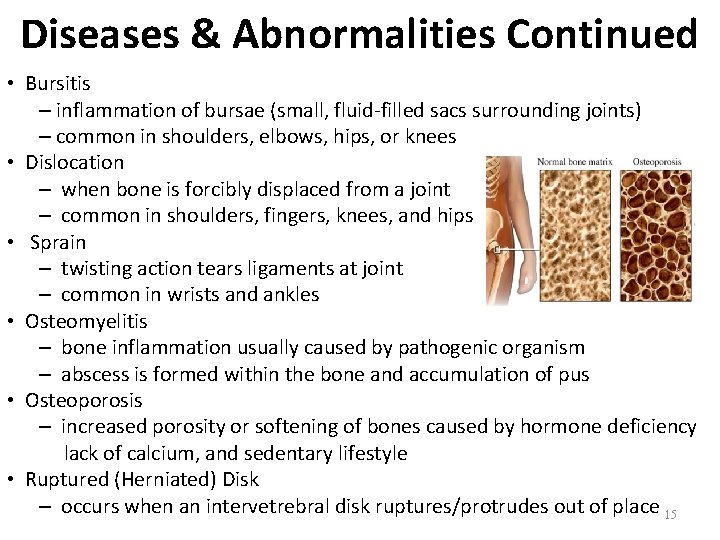
Diseases & Abnormalities Continued • Bursitis – inflammation of bursae (small, fluid-filled sacs surrounding joints) – common in shoulders, elbows, hips, or knees • Dislocation – when bone is forcibly displaced from a joint – common in shoulders, fingers, knees, and hips • Sprain – twisting action tears ligaments at joint – common in wrists and ankles • Osteomyelitis – bone inflammation usually caused by pathogenic organism – abscess is formed within the bone and accumulation of pus • Osteoporosis – increased porosity or softening of bones caused by hormone deficiency lack of calcium, and sedentary lifestyle • Ruptured (Herniated) Disk – occurs when an intervetrebral disk ruptures/protrudes out of place 15
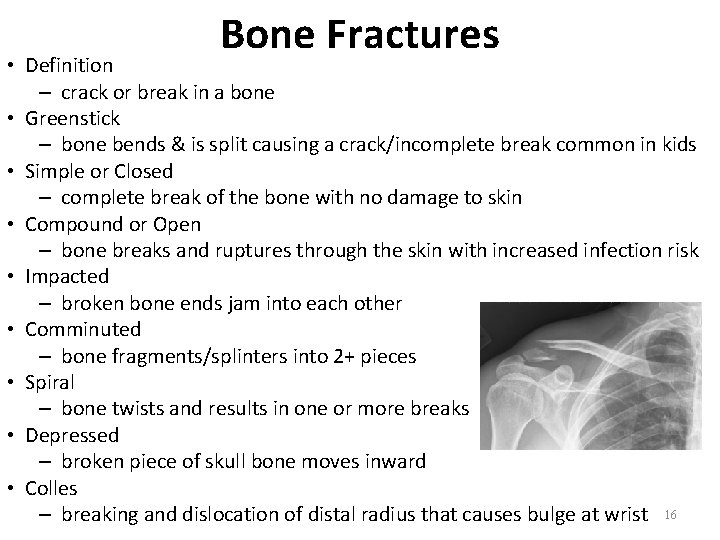
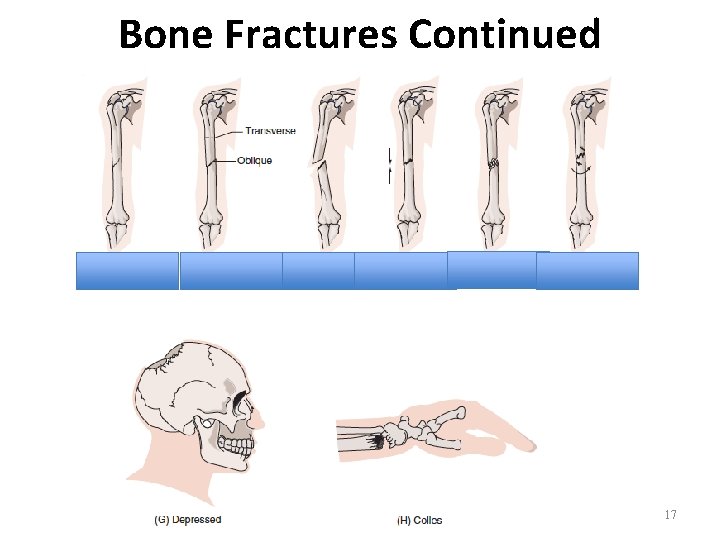
Bone Fractures • Definition – crack or break in a bone • Greenstick – bone bends & is split causing a crack/incomplete break common in kids • Simple or Closed – complete break of the bone with no damage to skin • Compound or Open – bone breaks and ruptures through the skin with increased infection risk • Impacted – broken bone ends jam into each other • Comminuted – bone fragments/splinters into 2+ pieces • Spiral – bone twists and results in one or more breaks • Depressed – broken piece of skull bone moves inward • Colles – breaking and dislocation of distal radius that causes bulge at wrist 16
Bone Fractures Continued 17