
Skeletal System Skeletal Functions 1 2 3 4


- Slides: 28
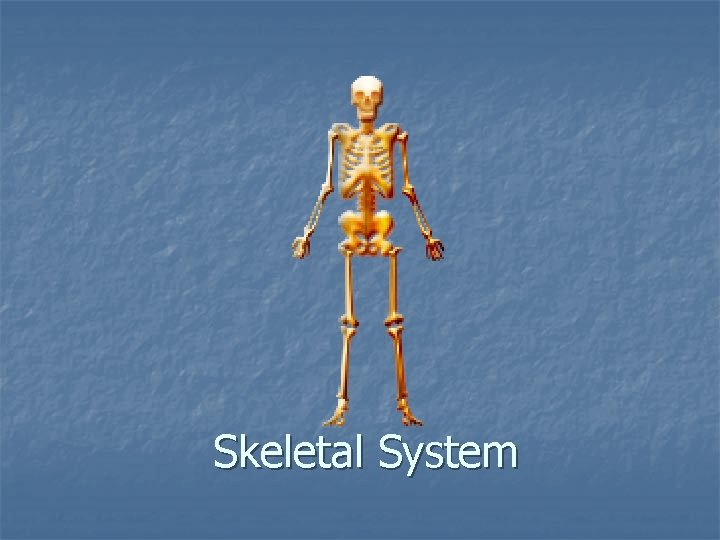
Skeletal System
Skeletal Functions 1. 2. 3. 4. 5. Provides shape and support. Enables us to move. Protects your internal organs. Produces blood cells. Stores minerals such as calcium and phosphorous.
Bone Formation and Growth n n n As a baby, most of your skeletal system is made up of cartilage. Cartilage is broken down and replaced with calcium and phosphorous to make hard bone Babies have over 300 bones Adults only have 206 bones because they fuse together as you get older. Bones are continuously being formed and reformed as they are worn down or broken.
Bone Structure n n Bones are lightweight yet very strong. They can absorb more force than concrete, granite, or steel.
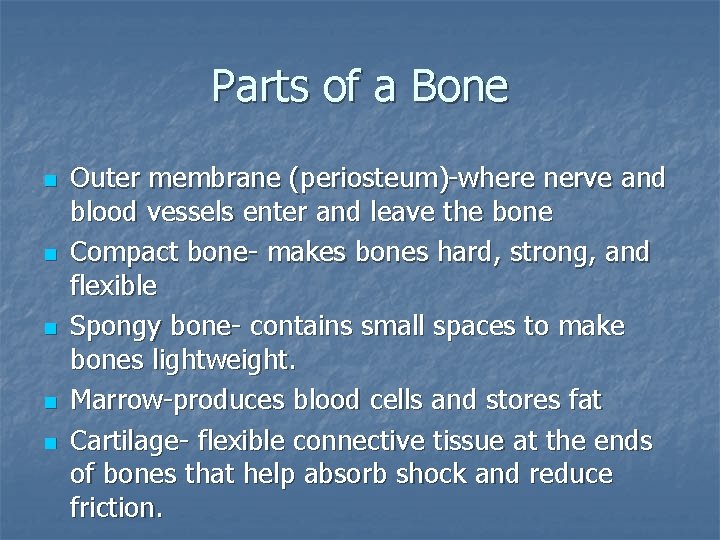
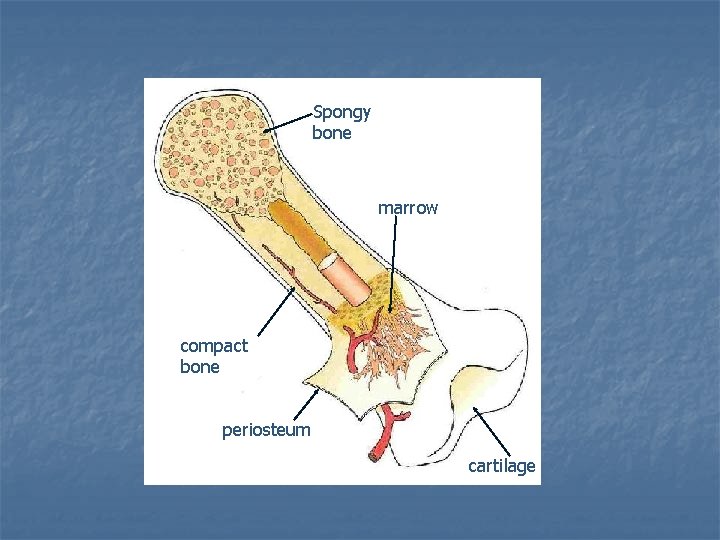
Parts of a Bone n n n Outer membrane (periosteum)-where nerve and blood vessels enter and leave the bone Compact bone- makes bones hard, strong, and flexible Spongy bone- contains small spaces to make bones lightweight. Marrow-produces blood cells and stores fat Cartilage- flexible connective tissue at the ends of bones that help absorb shock and reduce friction.
Spongy bone marrow compact bone periosteum cartilage
Joints n n n Places where two bones meet. Held together by ligaments, which are strong bands of connective tissues Two types Immovable (Fixed) n Movable n
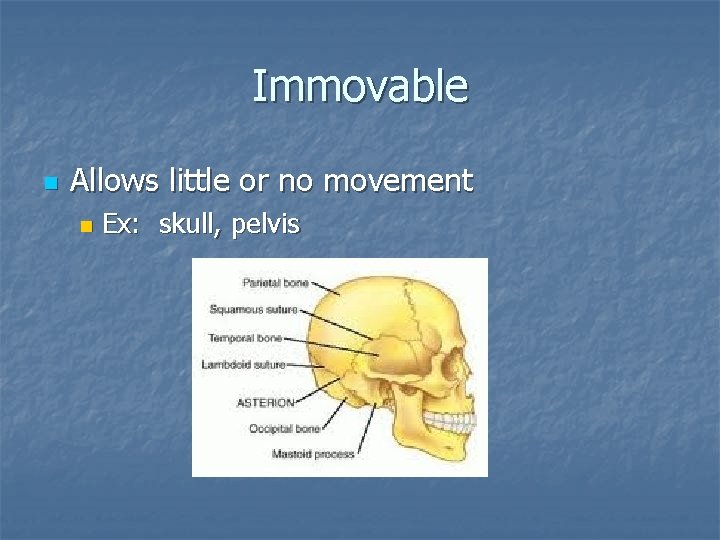
Immovable n Allows little or no movement n Ex: skull, pelvis
Movable Joint n n Allow wide range of movement Four types: Hinge n Pivot n Ball and Socket n Gliding n
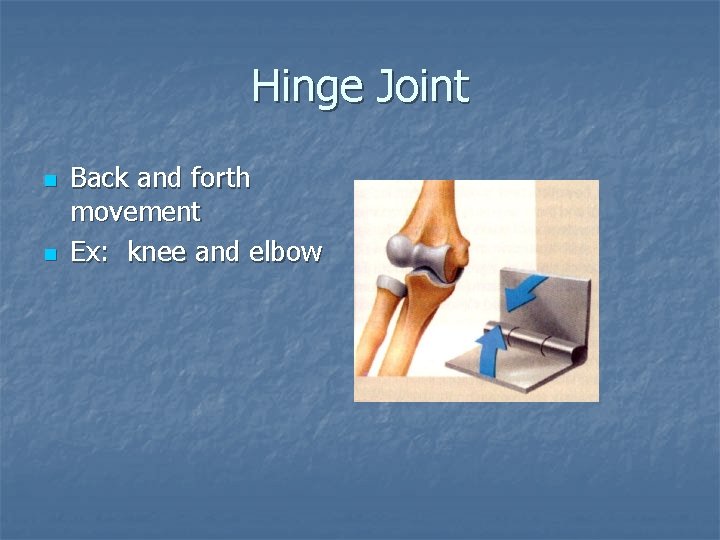
Hinge Joint n n Back and forth movement Ex: knee and elbow
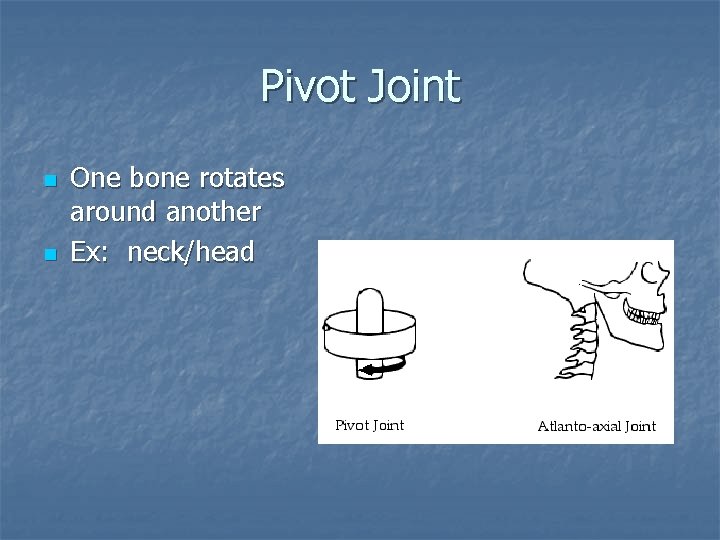
Pivot Joint n n One bone rotates around another Ex: neck/head
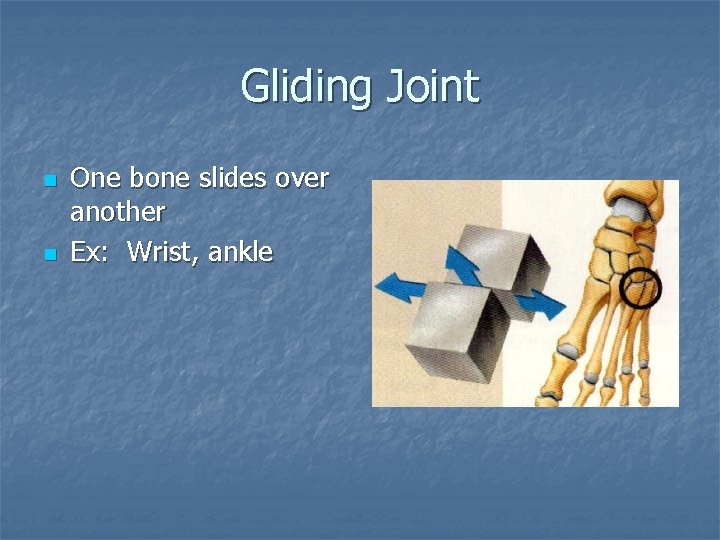
Gliding Joint n n One bone slides over another Ex: Wrist, ankle
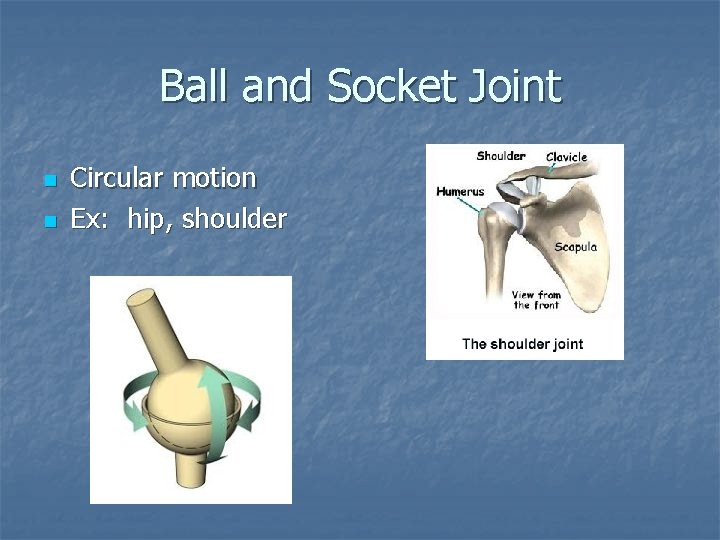
Ball and Socket Joint n n Circular motion Ex: hip, shoulder
n Joint animation
Taking care of your bones n n Well balanced diet of foods rich in calcium and phosphorous (dairy, meats, whole grains, and leafy green vegetables) Exercise Stretching Wear protective gear (helmets, pads)
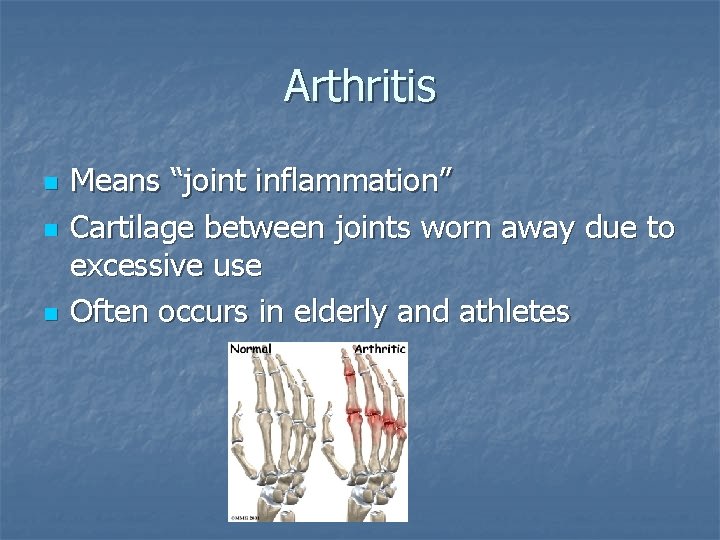
Arthritis n n n Means “joint inflammation” Cartilage between joints worn away due to excessive use Often occurs in elderly and athletes
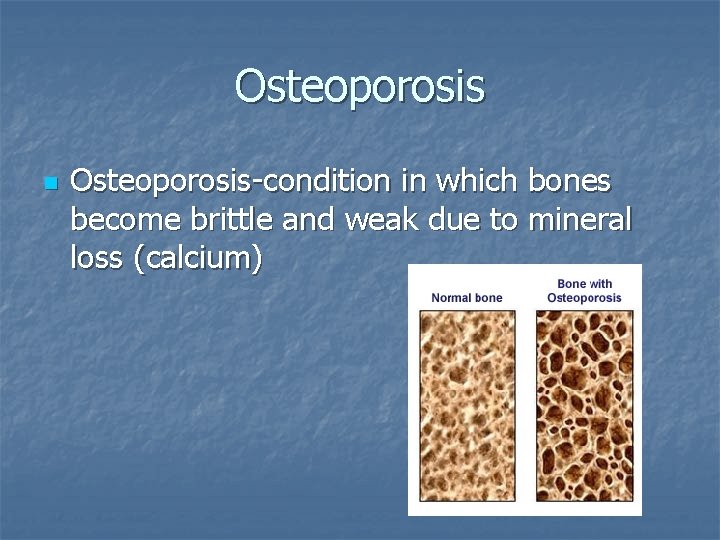
Osteoporosis n Osteoporosis-condition in which bones become brittle and weak due to mineral loss (calcium)
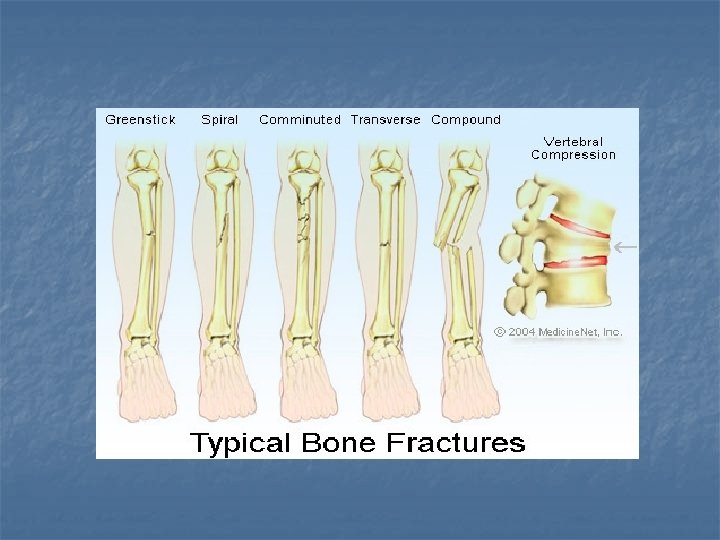
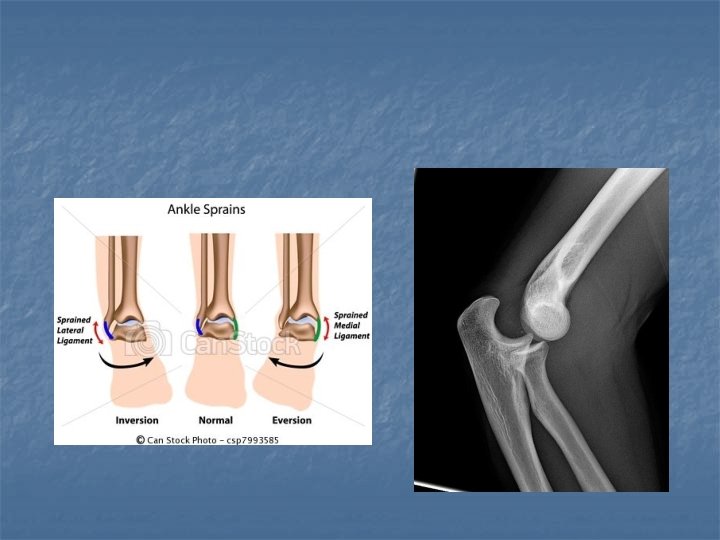
Bone Injuries n n n Fractures Dislocation Sprains
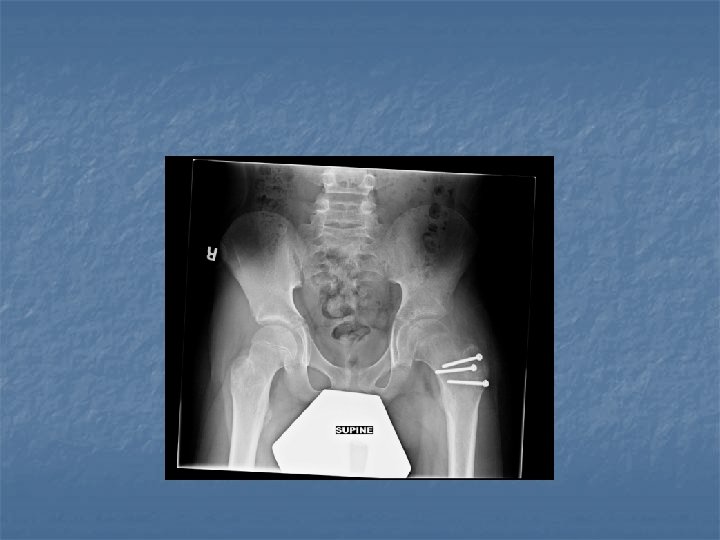
Diagnosing Bone Injuries n n X-rays MRI
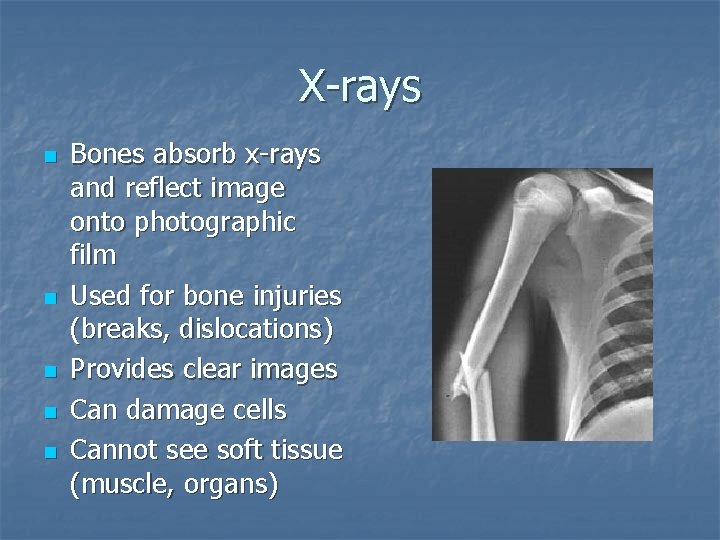
X-rays n n n Bones absorb x-rays and reflect image onto photographic film Used for bone injuries (breaks, dislocations) Provides clear images Can damage cells Cannot see soft tissue (muscle, organs)
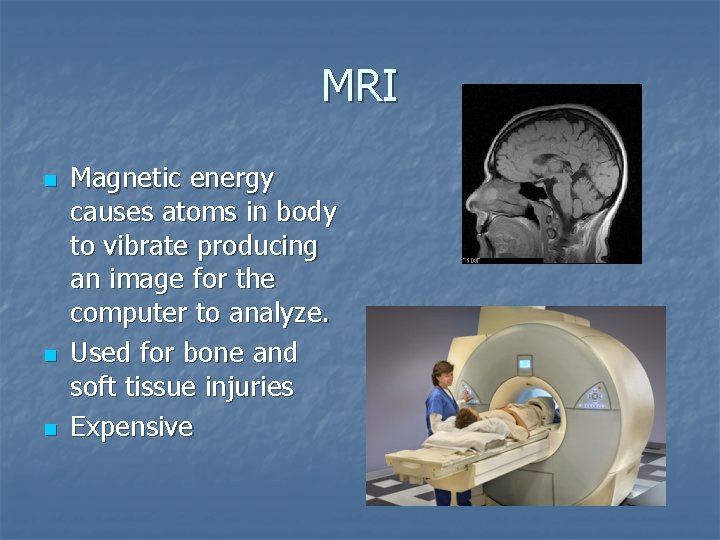
MRI n n n Magnetic energy causes atoms in body to vibrate producing an image for the computer to analyze. Used for bone and soft tissue injuries Expensive
Treating Bone Injuries n n n Cast Joint replacement Arthroscopy
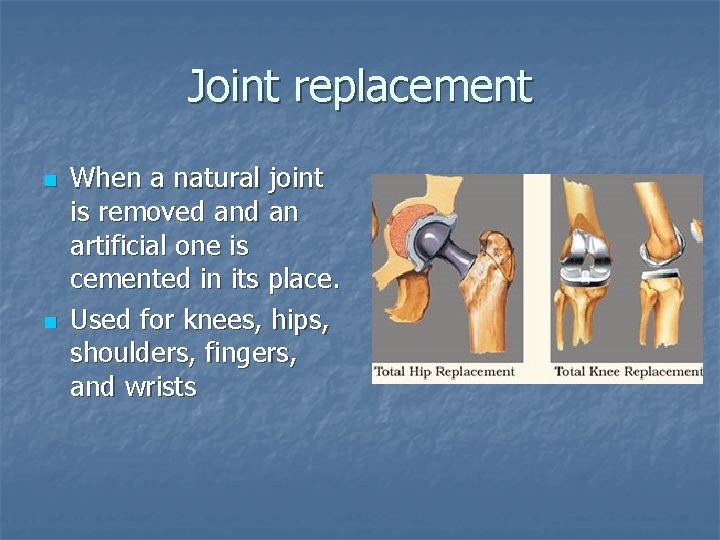
Joint replacement n n When a natural joint is removed an artificial one is cemented in its place. Used for knees, hips, shoulders, fingers, and wrists
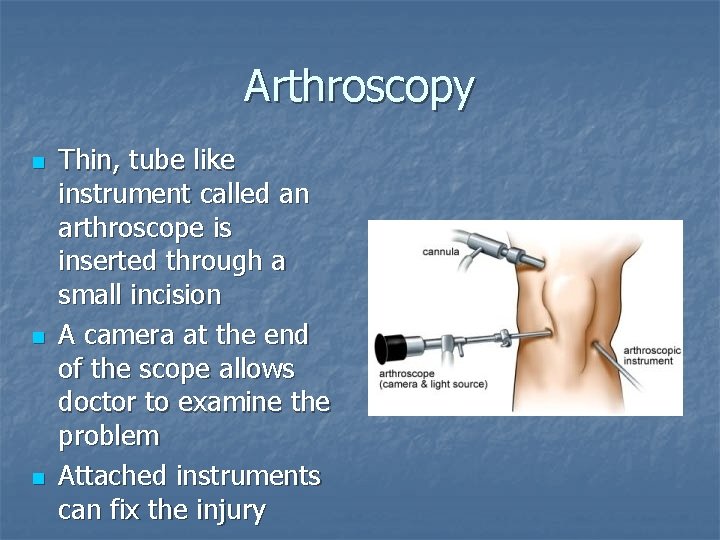
Arthroscopy n n n Thin, tube like instrument called an arthroscope is inserted through a small incision A camera at the end of the scope allows doctor to examine the problem Attached instruments can fix the injury